(For those of you receiving email notifications of the post, please don’t forget to click on the blog title to take you to the on-line version so you can see the video clips…..)
On a road trip in northwest Namibia, one encounters people from several local ethnic groups….. the most prevalent of which are the Himba and Herero people.
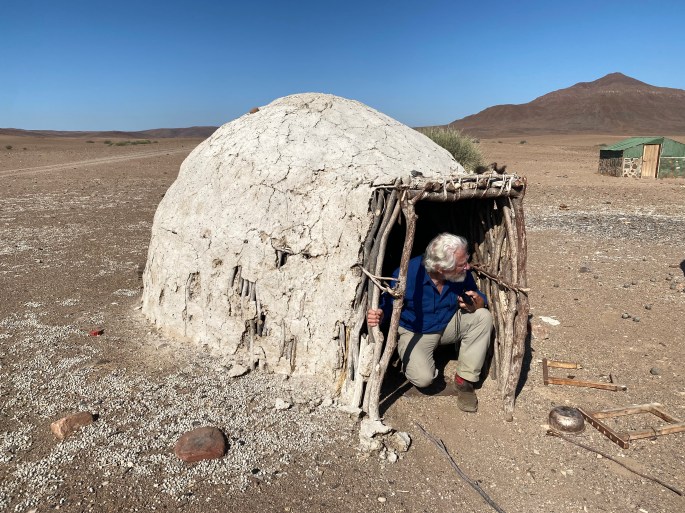
The Himba are semi-nomadic livestock farmers in rural areas, usually living in small extended-family communities in tiny huts with mud and dung walls….
The most striking thing about the Himba is the traditional dress and style of the women….. it is hard to mistake them for any other ethnic group.
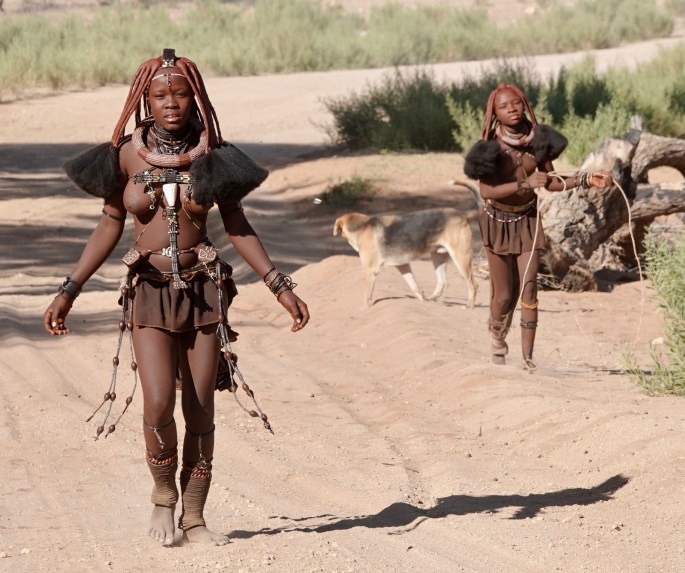
Adult women use a butterfat and ochre concoction to dress their hair in elaborate coiffures and to beautify and protect their skin, giving it a striking reddish hue. The regimen can take an hour or two a day.
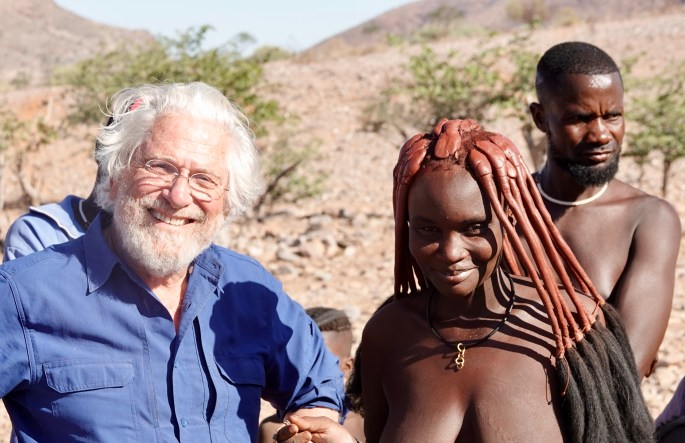
The women are the most active in commerce, selling beaded jewelry and trinkets, while young children tend the goats and cattle.
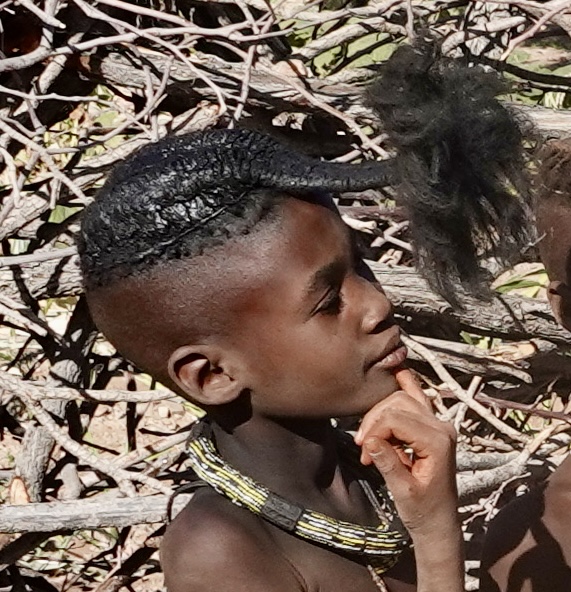
Little girls also have a distinctive hairstyle….
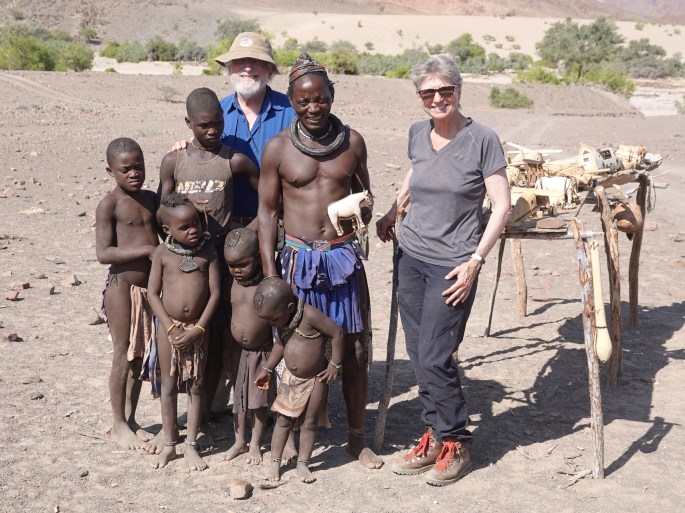
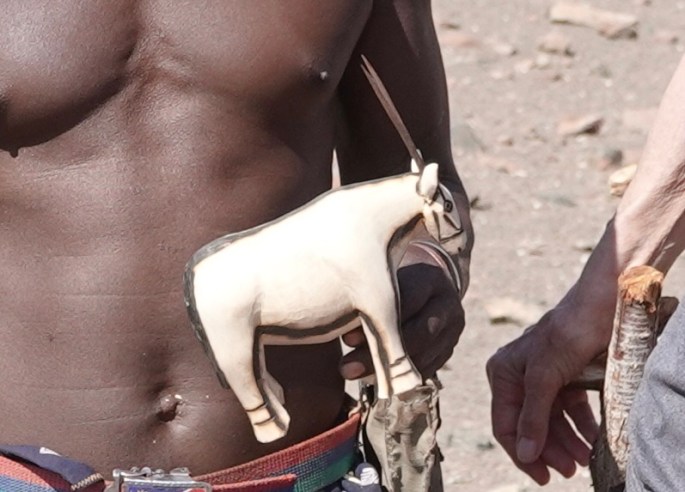
The men….. well, they don’t seem to be terribly busy or festively attired – but we did encounter this gentleman who had sculpted some wooden figures that he had casually put up for sale at the side of the road.
I love this oryx piece…… for its simple but expressive shape. The markings are not paint, but burned onto the surface of the wood. Brilliantly engineered, its horns are removable so they don’t get broken when packed for travel.
The Herero people share a distant past with the Himba; however, they are more settled pastoralists, keeping livestock and growing maize (corn). The women are also gorgeously attired, but in a very different fashion.

The long skirts and covered tops were borrowed from the German missionaries who settled in this area in the late 19th/early 20th century. The Herero have made the style truly their own by sporting this otherwise dreary attire in vivid colors.
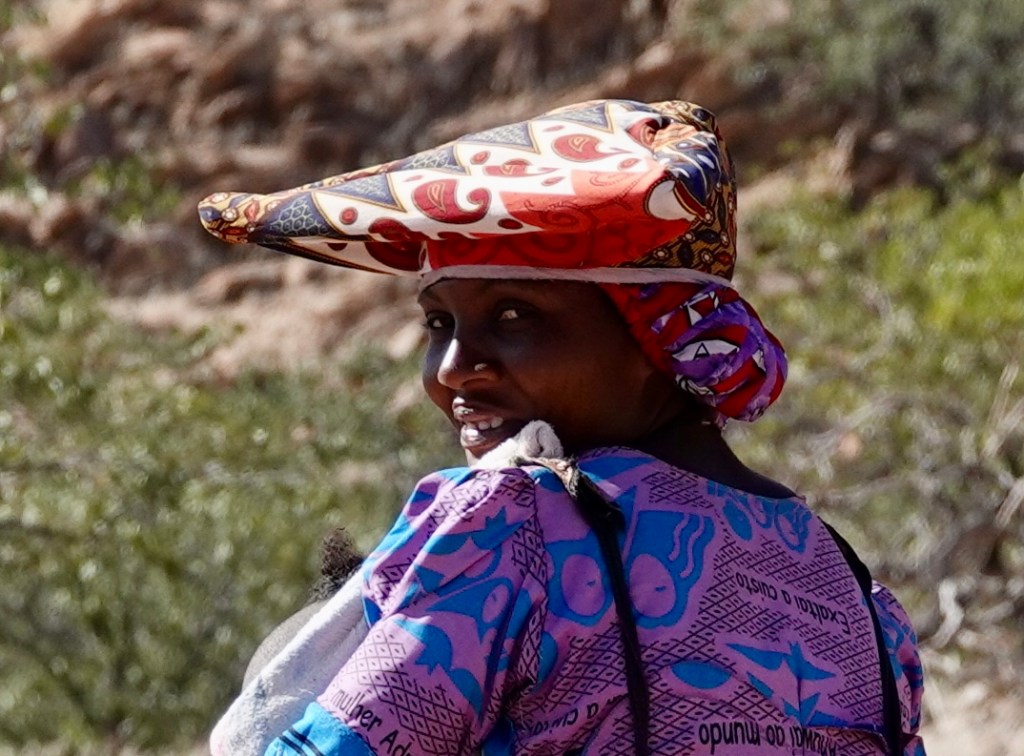
The headdress mimics the horns of the cattle that are the fundamental unit of the Herero economy.
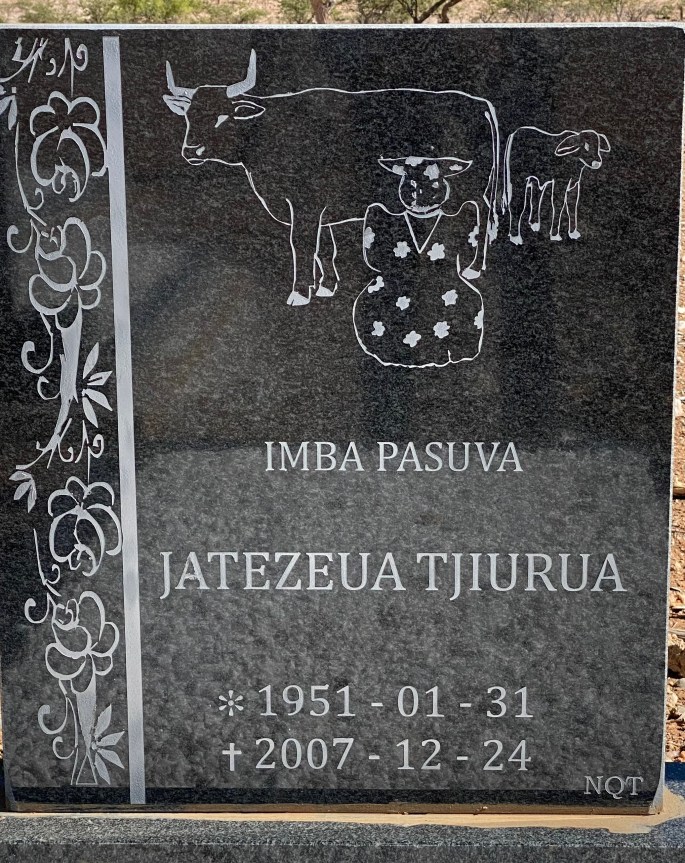
Herero men seem to mostly sit under shade trees and smoke, women and children being the most active workers in the community. Even in death, a woman’s memory is treasured for her milking prowess.
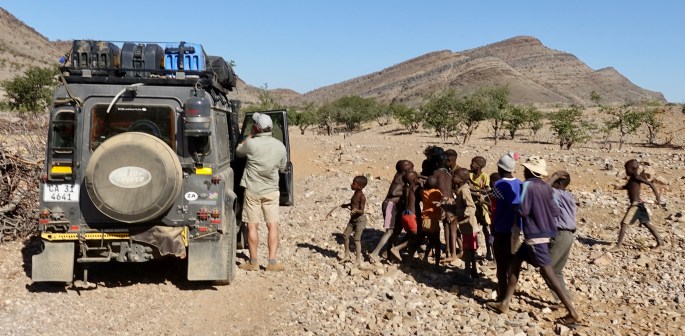
The sad reality here – as in several other African nations – is the pervasive poverty. Numerous children, lack of clean water, limited food supplies and distant healthcare… all these conditions of scarcity mean that people from ethnic groups (whose culture might otherwise dictate a remote existence) often resort to insistent begging from strangers. A short stop by the side of the road can bring folks running to ask for food, money and sometimes medicine.
One camping spot was close to a Herero village.
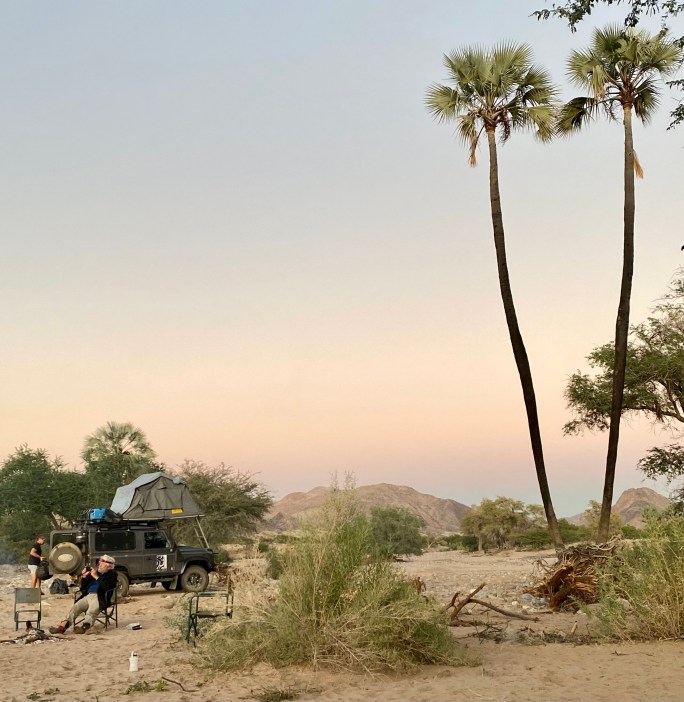
Tertius deferred the rush of interest in our presence by promising to take care of the locals the next morning; by sunrise 20 children between the ages of about 6 to 14 descended upon our campsite. They were curious about us and very cute, but also cold and underfed.
One boy had an infected dog bite….. Henry and Ty cleaned and treated the wound, and we provided his mother with clean dressings and a series of antibiotic pills.
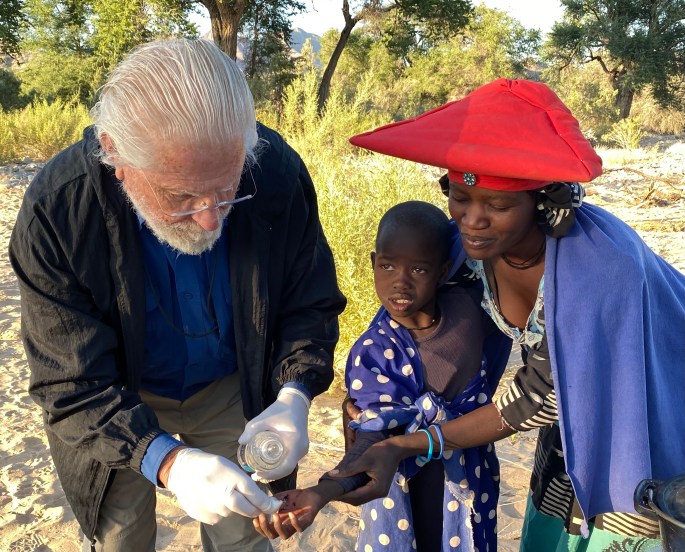
We also packed up some groceries for them to take back to the village.

While walking across a parking lot during a refueling stop in a small town, I was pursued by more than 30 people asking for money and food. When I indicated that I had no money, one woman even insisted that I could get some from the nearby ATM. The only thought I had was that there was no way to do enough for these folks. Handing out some granola bars or some cash would only bring more and more people asking for more and more. The feeling of futility and uselessness was overwhelming.
In the short term, Henry has the best policy – from those who have shown the initiative to make and sell something, buy a piece from everybody and pay the price they ask. These ladies sold him a lot of bracelets, and were very happy to have met him…..
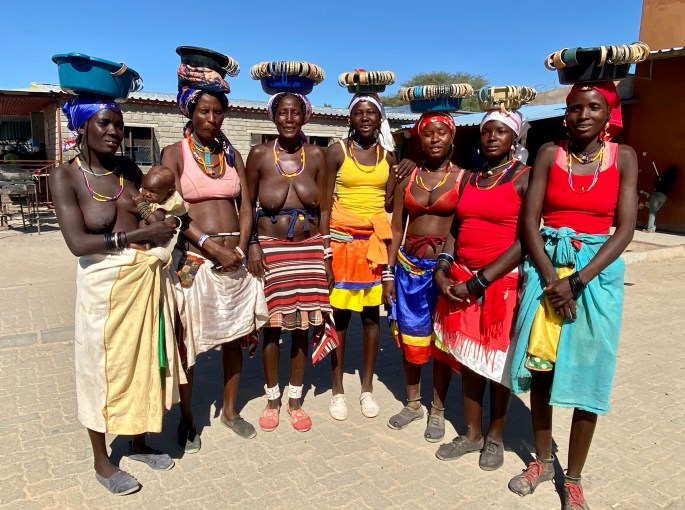
The other approach – which we hope and have faith will help in the long term – is for us to visit these countries and spend our dollars…. and to invest in charities that are dedicated to women’s health and economic opportunity, and also those that cultivate the natural assets these countries have and encourage local communities to be good stewards over and beneficiaries of those assets. It may only amount to a drop in the ocean, but we have to do something…..
Other uplifting images… some thanks to Tertius, who captured a few of the striking photos above as well…….
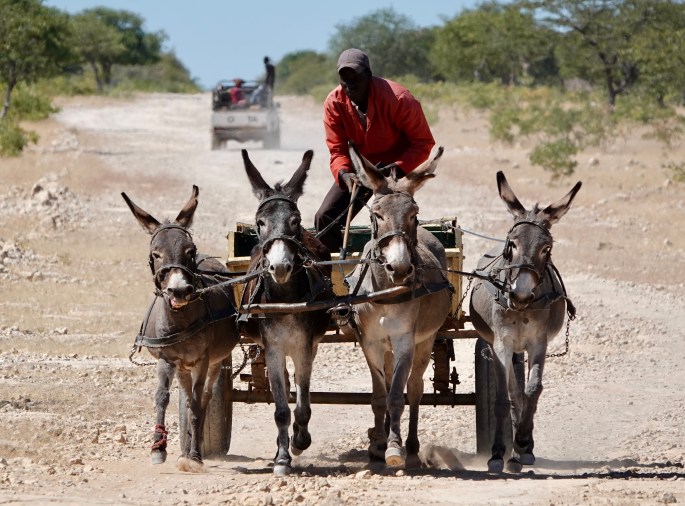
One Sunday morning, we came upon a happy group giving vocal praise…. especially enjoyed the young one in yellow who apparently had had enough….
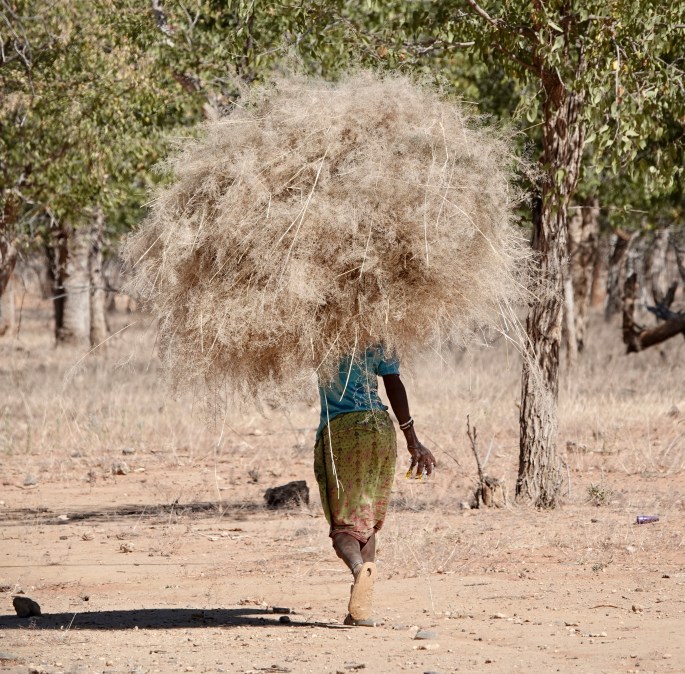
And finally, it’s always nice to meet a like-minded fellow traveler. We met Reiner in the parking lot of the hotel in Swakopmund early on our roadtrip….. and kept bumping into him periodically over the next few weeks, including at the side of the road where we stopped to watch some cows drinking at a borehole…..

Reiner is Swiss…. traveling in a rig similar to our own on a very similar route. We would enjoy meeting him again.
Sorry for the long break between blog posts….. will hope to catch up a bit in the next week or two. Hope you are all well and happy.
 Travels with Henberta
The poverty aspect struck me the most. You’re right to care but not to try solve the whole thing. It reinforces my gratitude for the blessings given to me and the need to be a faithful steward.
I look forward to the remaining posts once you get a chance to write them up.
LikeLike
More amazing pictures! What a trip. Can’t wait to visit and hear all the details.
Take care and be safe!
Lisa
Sent from my iPhone
>
LikeLike