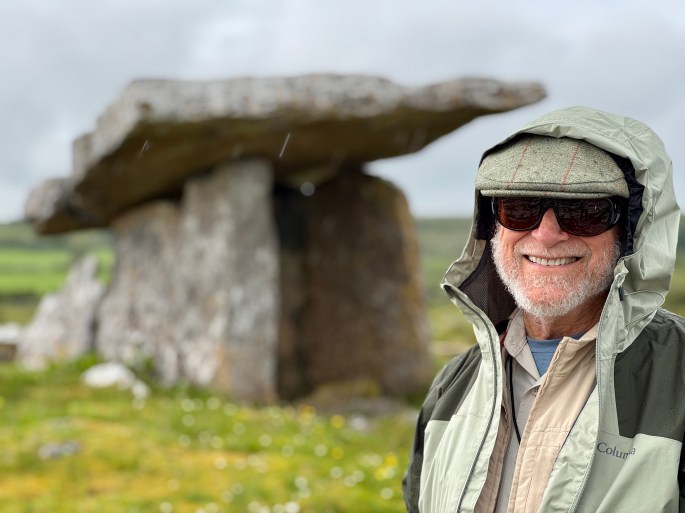
Little is known of the people who built this prehistoric dolmen (burial tomb) in about 3500 BCE (over 5500 years ago).
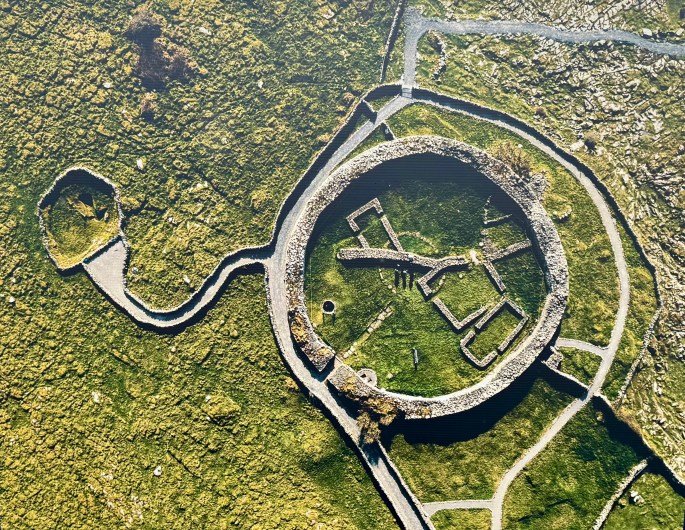
The vestiges of stone forts appear occasionally – fascinating constructs where clans of 50-100 souls lived collectively behind a defensive circular wall meant to deter invaders. They generally date back 1000 years or so…
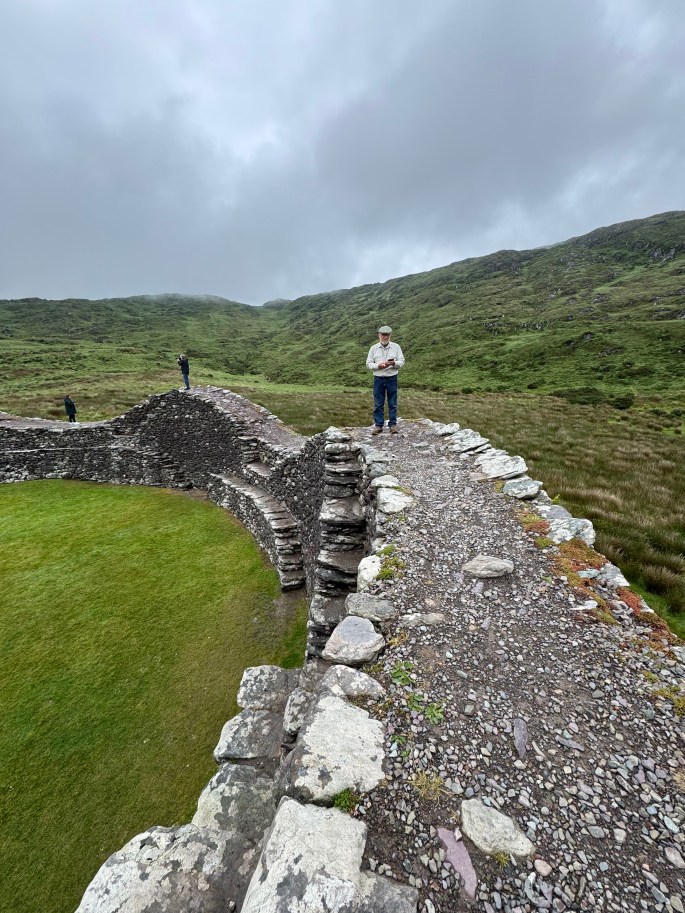
It’s fun to climb up on the walls and imagine dwelling in such a place back when other clans, Vikings and eventually Englishmen were attacking and invading…. But life was otherwise pretty simple.
A tower from the same era at Glendalough, a monastery that dates back to the very early Christian era.

You will note the door about 10 feet above the ground…. Access was by ladder, which could be pulled up when the holy brethren were under attack. Isn’t it interesting that so many of the remains are defensive barriers…. Walled communities and inaccessible towers and …. oops – guess we have the same things today!
Driving in Ireland can be a challenge for Americans – not just because you drive on the left, but there can also be hedgerows and stone walls restricting your vision…. And sometimes animal interference.
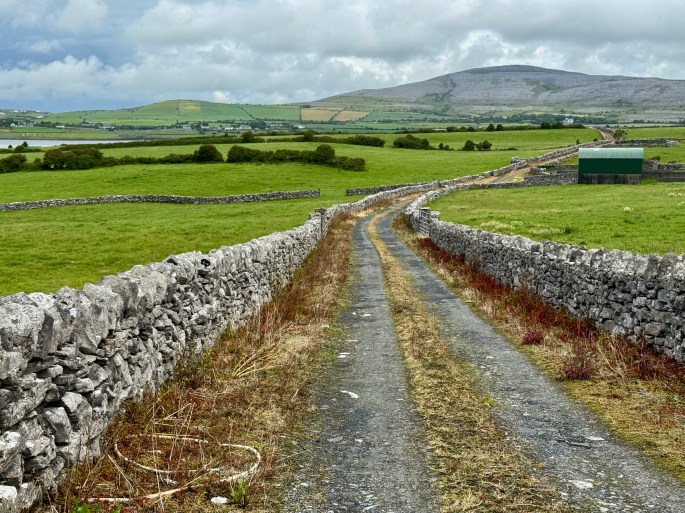
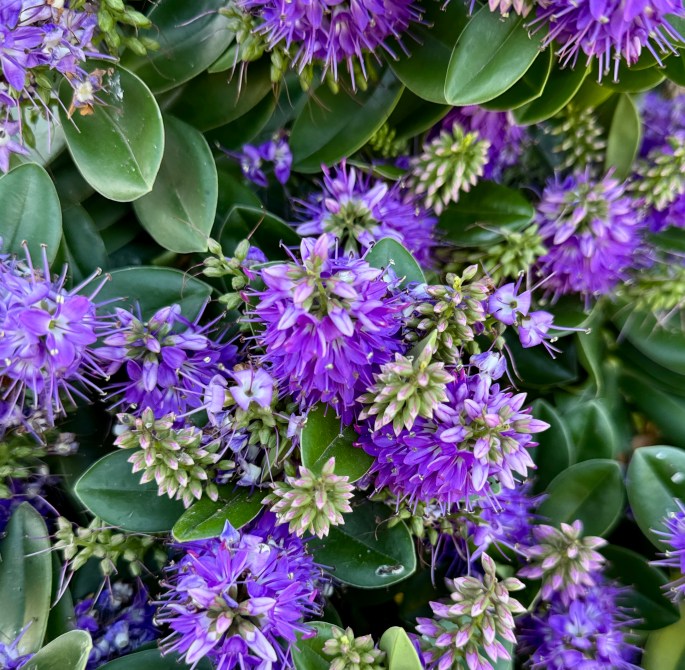
Some pretty pictures from along the way…
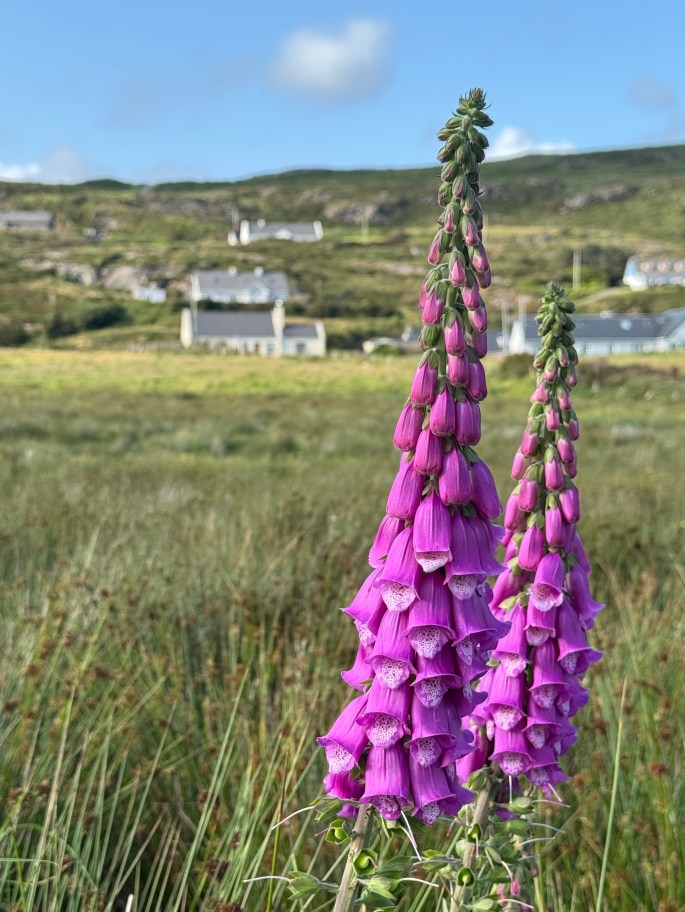
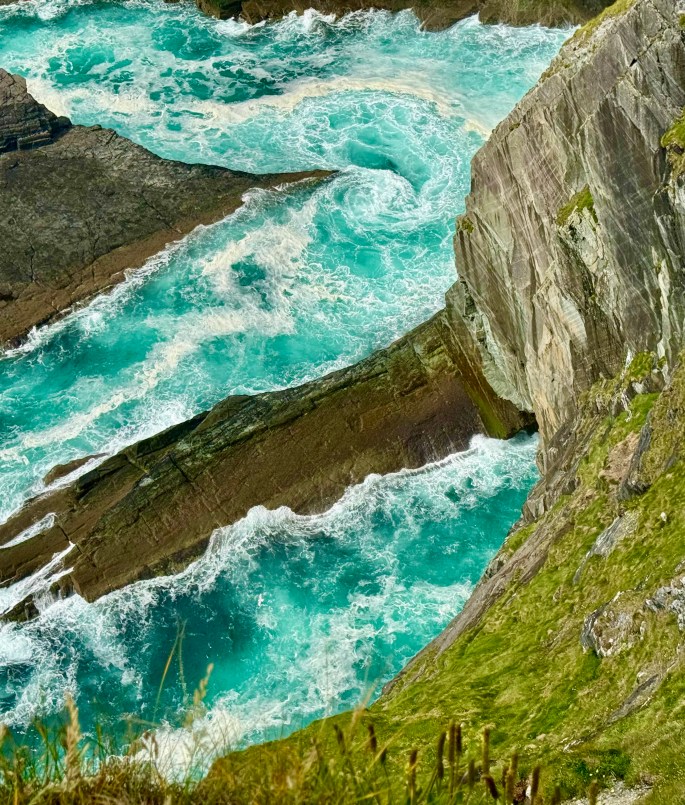
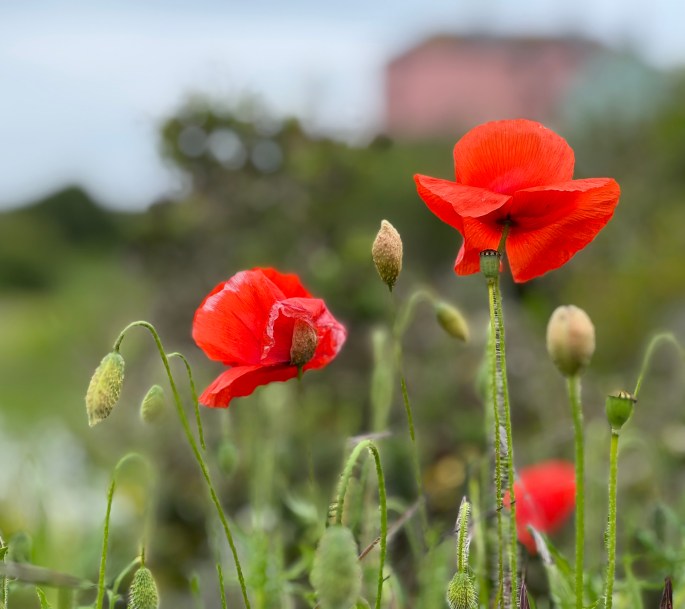

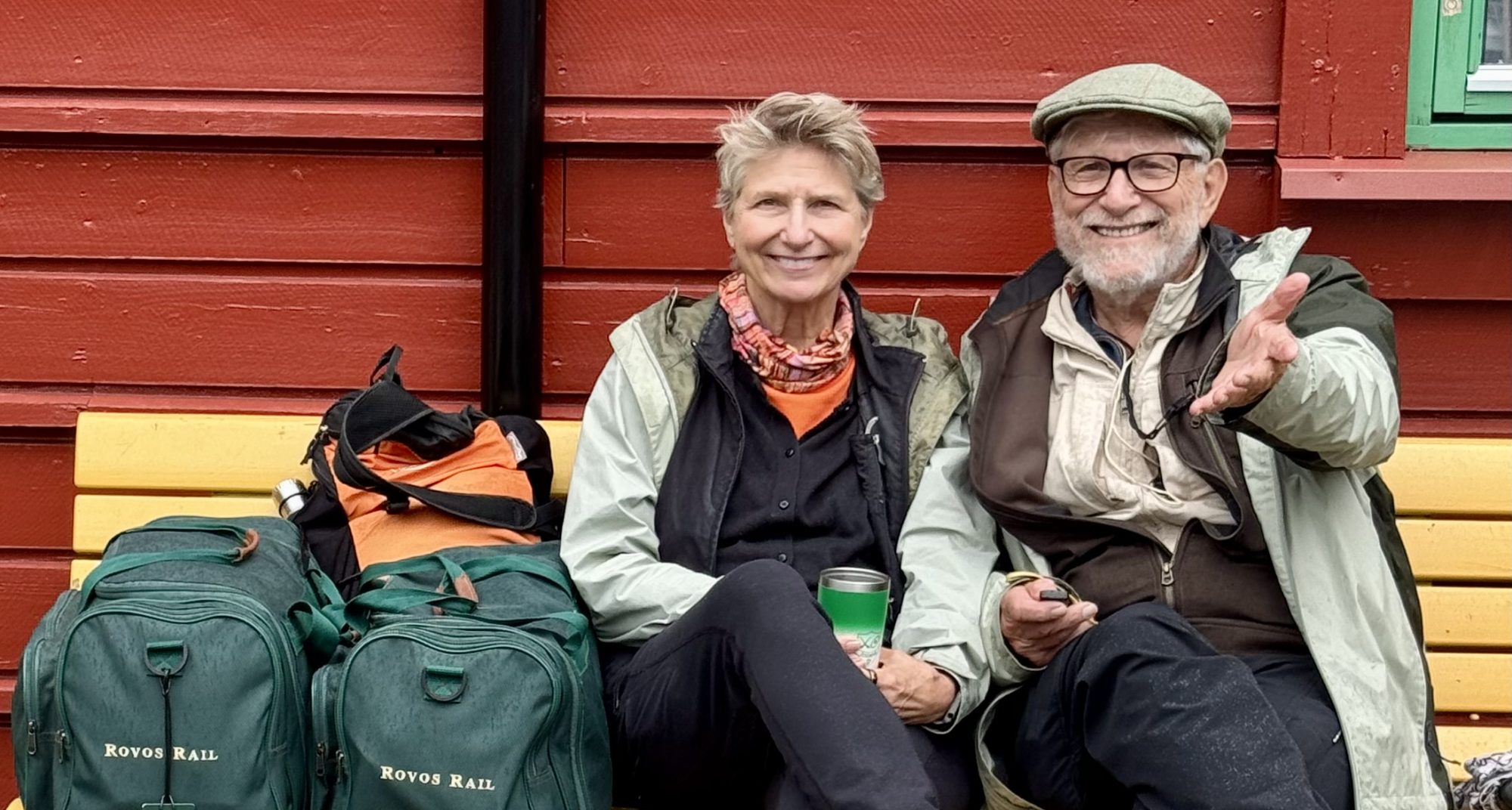
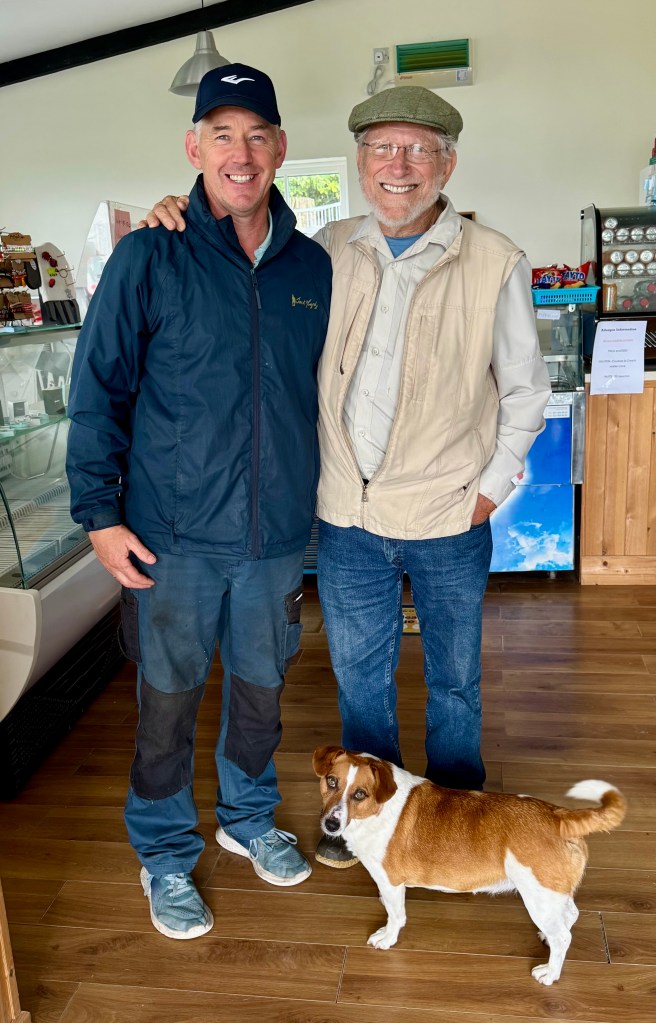
Henry meets people well…. Some of those with whom he found an affinity….


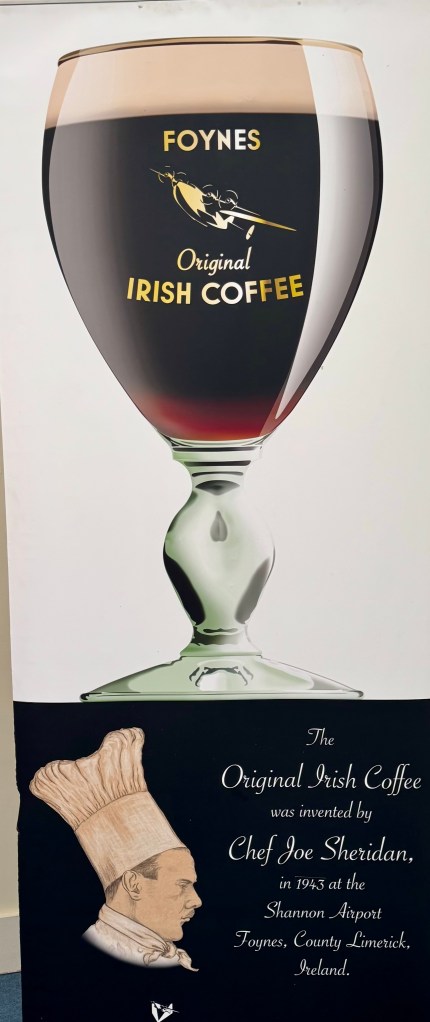
Foynes on the River Shannon was the site in the late 1930s of an airbase that was used for the short-lived flying boat, a transatlantic airship that took off and landed on water. Pan American Airways was the American partner….
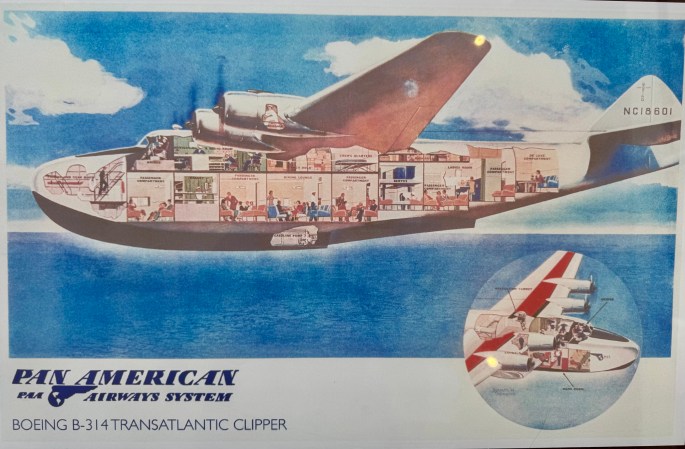
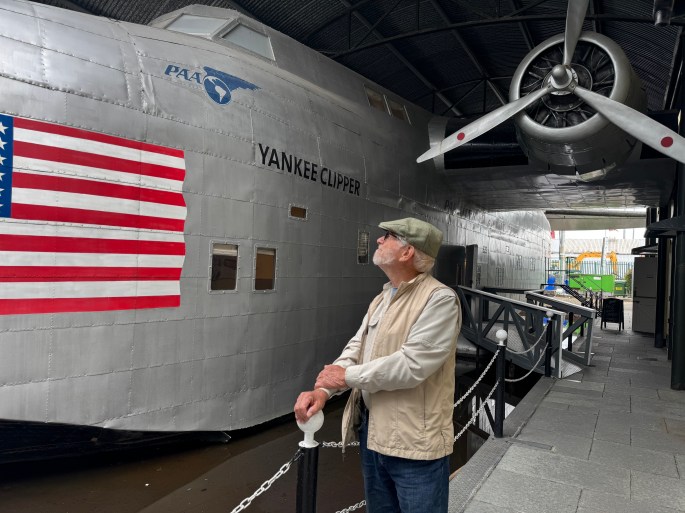
Some time after World War II broke out, the flying boat was deemed to be impractical… and air traffic in any event was soon directed to the newly-constructed Shannon Airport on the other side of the river. But not until after a clever chef in 1943 created a beverage designed to take the chill off the experience of a long flight into an often cold and drizzly destination… the Irish coffee!
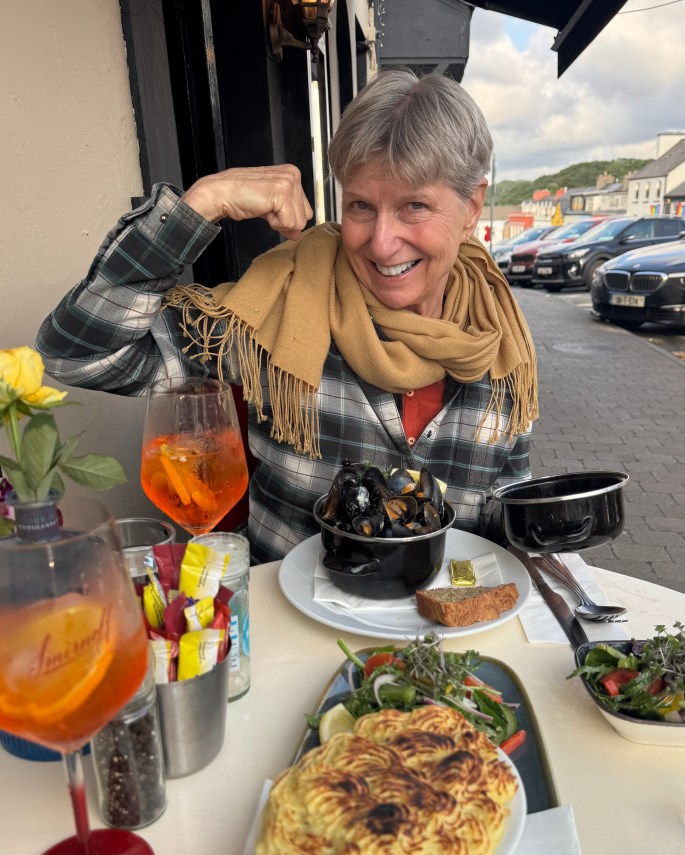
Food in Ireland is not just stew and potatoes and soda bread….. it’s an island, so excellent seafood is plentiful….. here, about to dig into a pot of fresh mussels.
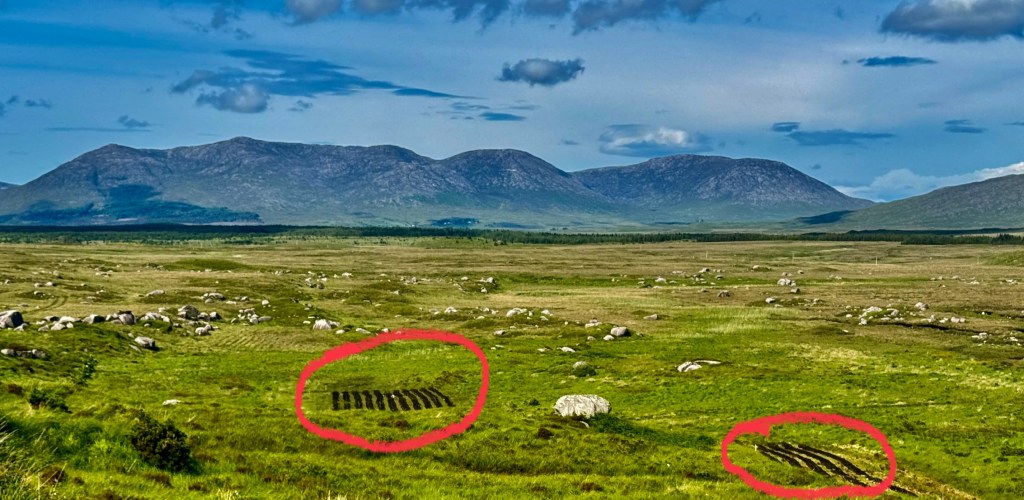
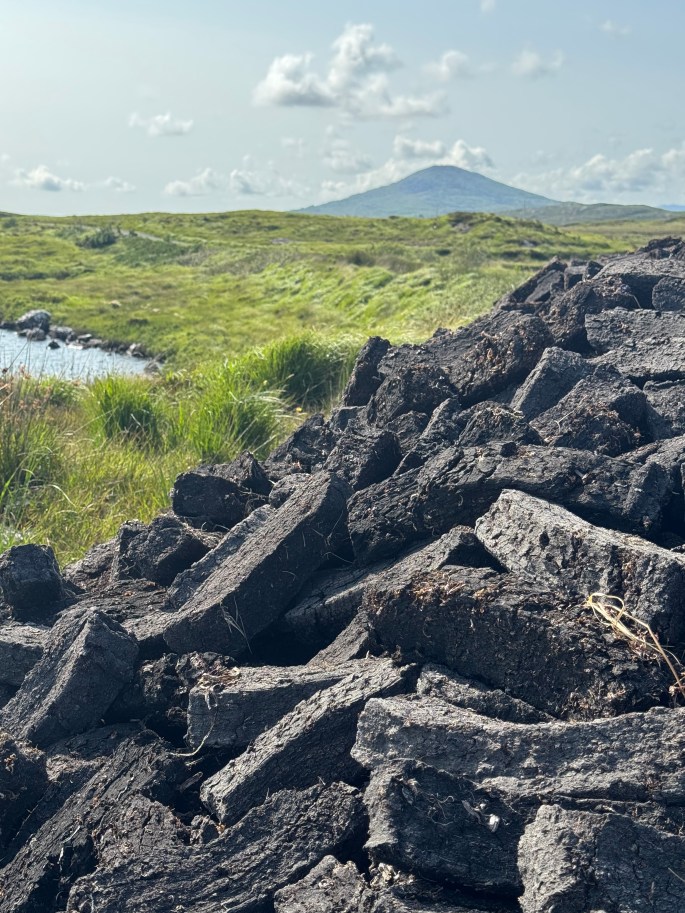
Something a little odd in this otherwise striking landscape turned out to be a peat-cutting operation…
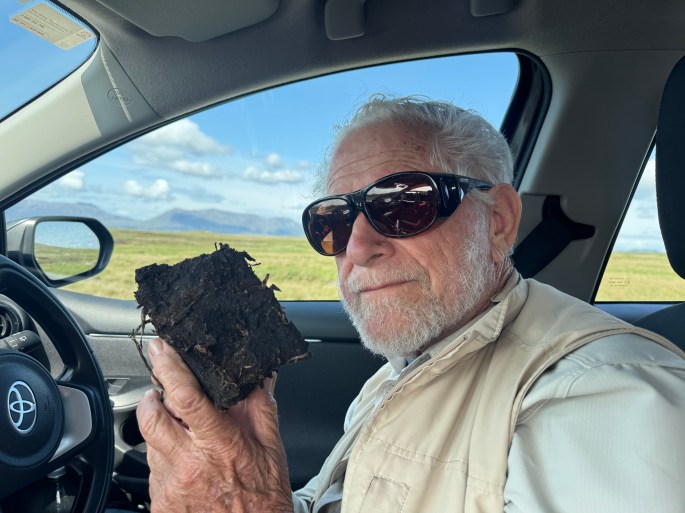
Peat is a spongy deposit of partially decayed organic matter found in wetlands. It has been harvested by hand and used as a fuel source for many years…. Here’s a traditional peat cutter, some cut peat stacked to dry, and an individual “brick”.
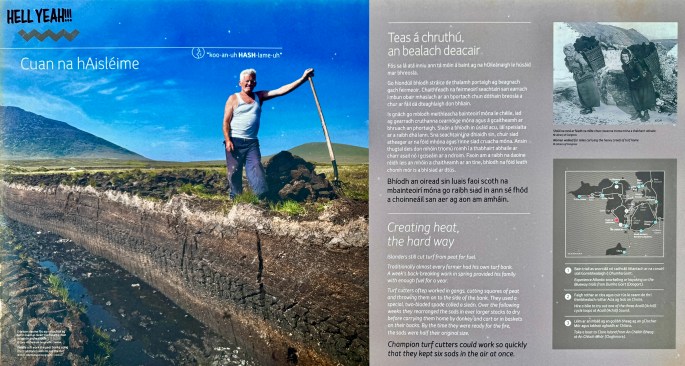
Much more (probably way more than you want to know) about peat later…..
Other topics will be covered too, so please don’t let the peat content deter you from checking future posts from the Emerald Isle!
 Travels with Henberta
We remember our Killarney adventure well and still have the lamps we bought there (in the animal barn now, unfortunately). You sure dug deeper than we did! Keep the updates coming…
LikeLike