Tempus Fugit

Twenty years from now you will be more disappointed by the things you didn’t do than by the things you did do. So throw off the bowlines, sail away from the safe harbor. Catch the trade winds in your sails. Explore. Dream. Discover.

Mark Twain

Gosh, we don’t know if we even have 20 years left! Almost certainly not 20 active years. We lost two years to the pandemic, so need to make up for lost time with an ambitious and exciting journey.

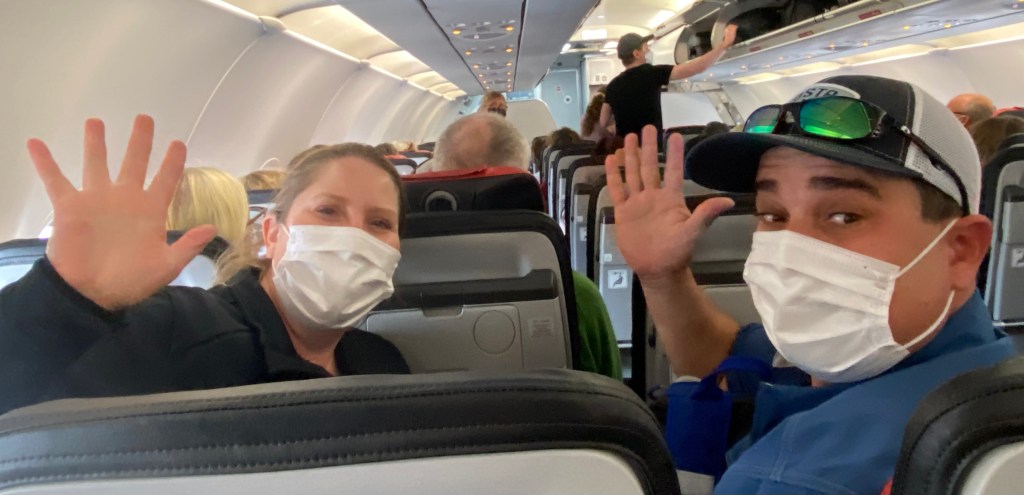
Isn’t there risk? Sure. The plane could fall out of the sky; a terrorist could blow up the cafe we’re in; we could pick up Covid from another person’s sneeze. Overall, these are risks we are willing to take. Concerning Covid, we are confident that we are maximally shielded, being healthy and strong for our age, and with the gold standard of vaccine plus booster protection. Masking and distancing will help a lot.

Moreover, our first destinations – Ecuador and Chile – have vaccination rates of 82% and 92%, respectively, which compares shockingly favorably to the rate of 43% in Nacogdoches County, our home. (What a very sad commentary on US society ….. and perhaps reason enough to get away from it for a while.)

All that said, we will not be surprised to test positive at some point along the way; if so, our plan is to recover quickly and pick up where we left off.

Initially, we head south of the border (which is the name of this blog chapter in Spanish, al Sur de la frontera). First major stop will be the Galapagos; from there we make our way even further south through Chile, then cross the ocean to Cape Town, gateway to the people, wildlife and haunting landscapes of Africa. From there, our schedule is open; will make the call as to further wandering later, but we do expect to be gone at least 5 months and maybe a couple more…..

Henry’s daughter Holly and husband Matt will join us for the first 10 days or so as we explore the Galapagos.

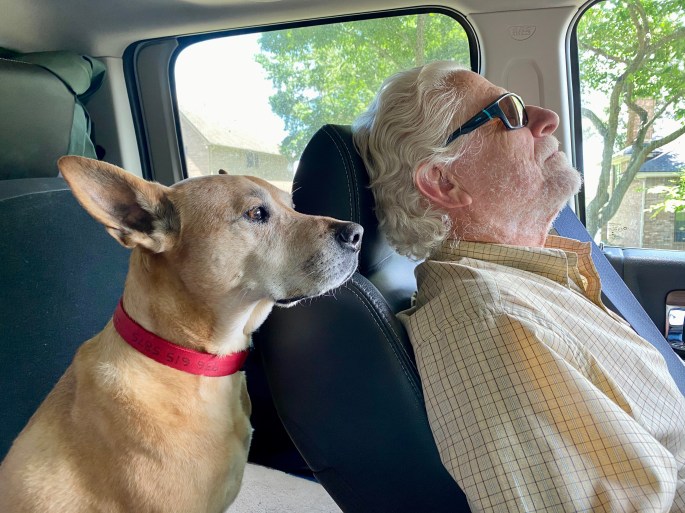
Our faithful canine companion from pandemic isolation, Raider, has returned to the family that originally rescued and loves him (Henry’s son Cliff, his wife Laura and two kids, Mallori and Jake). And yes, we are both quite sad to bid him farewell. He has been there for every moment of peace, frustration, joy, and disillusionment over more than two years, always with a steady and comforting presence.
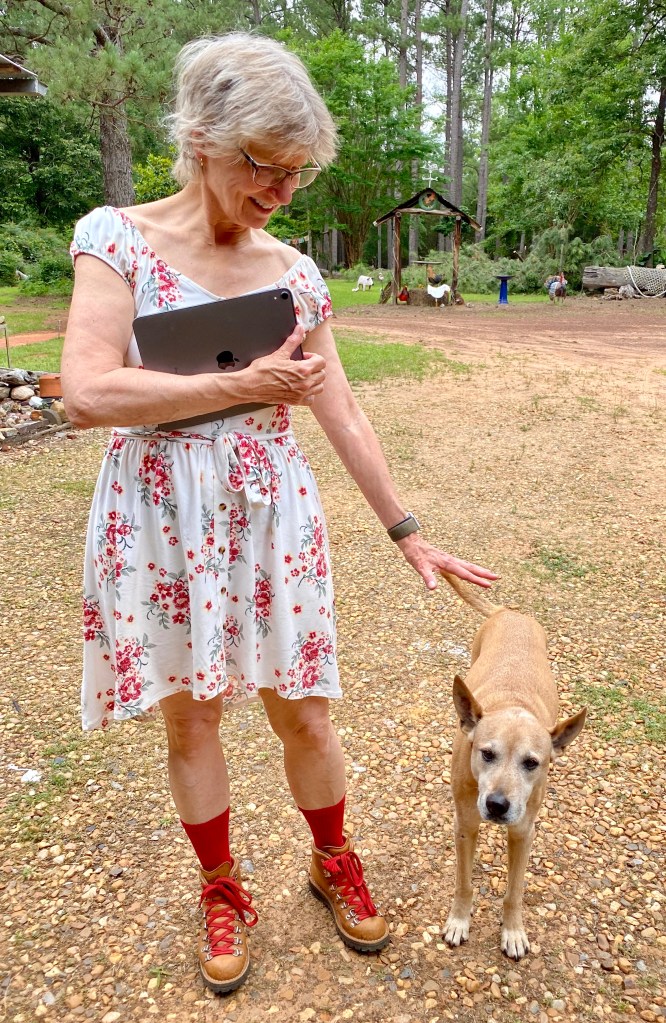
For a short while, we had another little friend with us, a scarred and badly-neglected chihuahua mix who showed up at our front door, bleeding and emaciated. We ended up calling him Basil Pesto. We took care of his medical needs and helped him reestablish trust with humans….. but could not keep him because of our travel schedule. My dear friend Jane connected us with the animal welfare equivalent of the Underground Railroad…. Basil Pesto ended up making the trip in a caravan from Houston all the way to the middle of Michigan, where kind people will find him a loving and responsible home very soon. More tears as we said adieu…
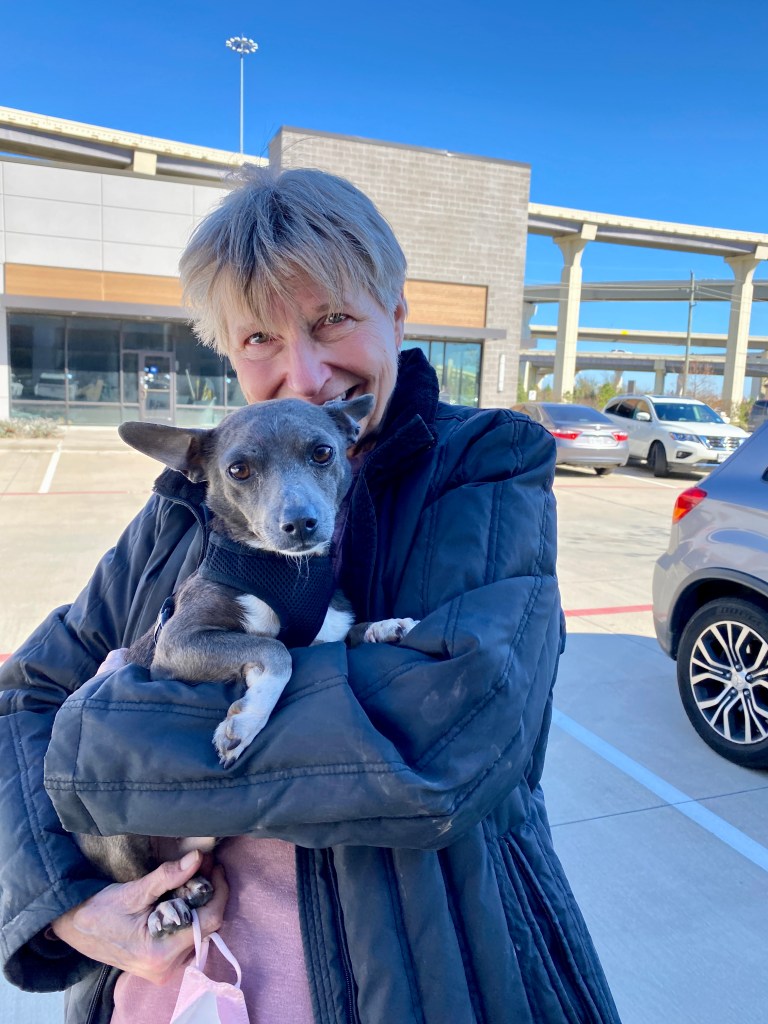
Both pups will be well cared for….. we are sorry to see them go, but compelled to pursue new adventures.

But first, we must clear the Covid hurdles and navigate the possible ice storm that threatens our area. If all goes to plan, we fly to Miami on Friday and Guayaquil, Ecuador on Saturday.

Wish us luck, dear friends, and stay tuned!
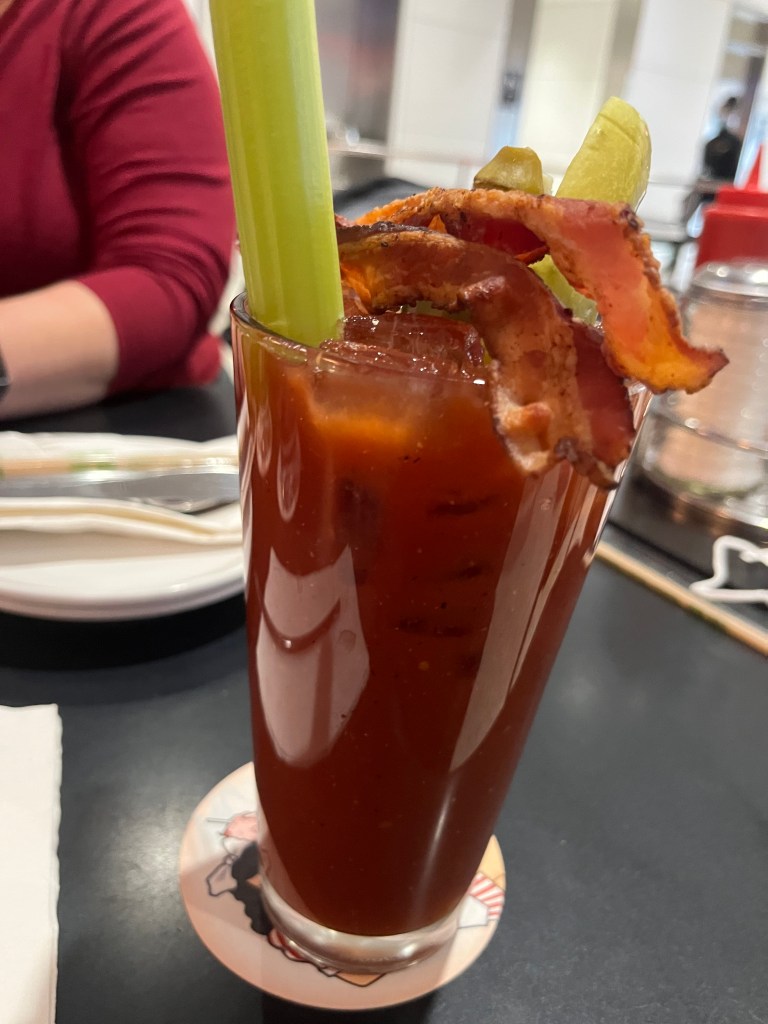
Stumble and Recovery

The traditional firecracker send off marked the end of months of planning and anticipating, and the actual start of our new journey.

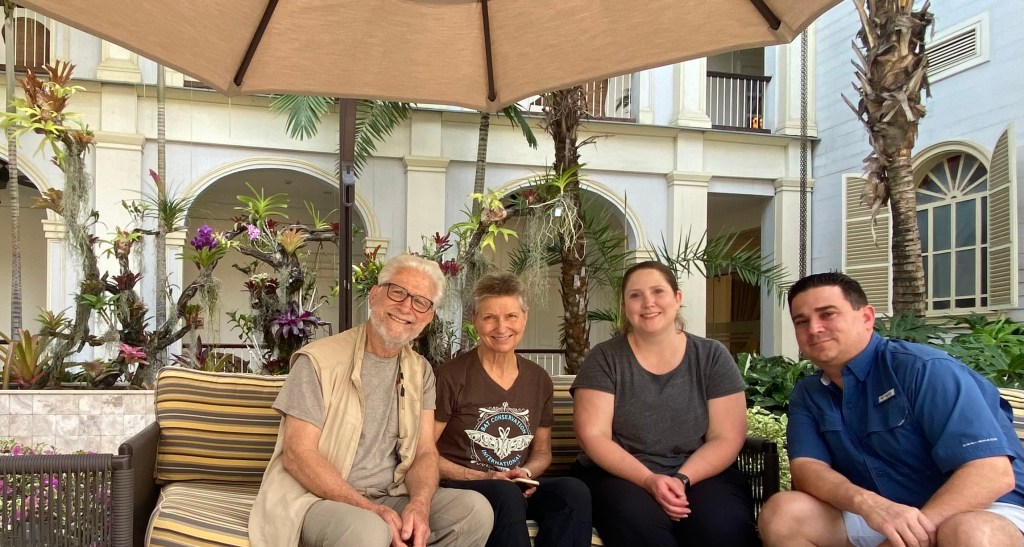
At the Houston airport, we met up with Holly and Matt, happy and excited like children staying up for Santa Claus.

But as the airline postponed our flight to Miami six times in the space of three hours, a foreshadowing of doom began to cast a pall.  

Finally, the flight was called and loaded…. As we prepared to pull away from the gate, phones began dinging all over the plane, followed by disbelieving gasps.  The flight had been cancelled.

We deplaned and I was glumly concluding that there would be no way to get to Miami, connect to a flight to Guayaquil and make it to our ship in the Galapagos by the appointed time.    

Suddenly the gate agent raced through the area shouting, “The flight’s been reinstated!  We’re going to reboard!”
Whaaat?  All righty, then.  Re-board we did.   Only once we were away from the gate and moving on the tarmac did a very weary and careworn captain advise us that in 30 years of flying, he had never seen such a mish-mosh, revealing that the flight had come a hair’s breadth from being cancelled again after the second boarding.

We will never know what was going on with this airline that shall remain nameless (a very large international passenger carrier based in Dallas……..).  We arrived at about 1 am in Miami, weaved our way through throngs of people filing lost-baggage claims, and thankfully retrieved our bags to repair to the fleabag airport hotel where we had the foresight to book rooms.

As I not so much fell asleep as drifted into numbness, my sole coherent thought was that the only direction for this trip would be up……..

And surely enough, the next day we winged our way south to Guayaquil…..

Passed a quiet afternoon and night preparing for the next leg…..

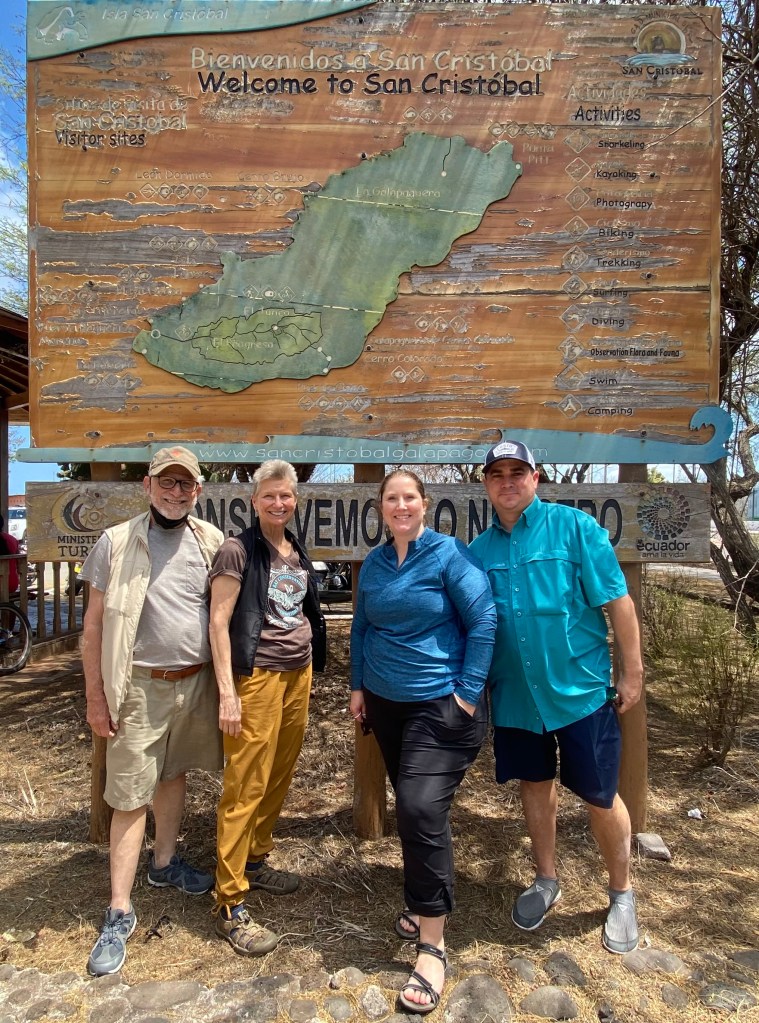
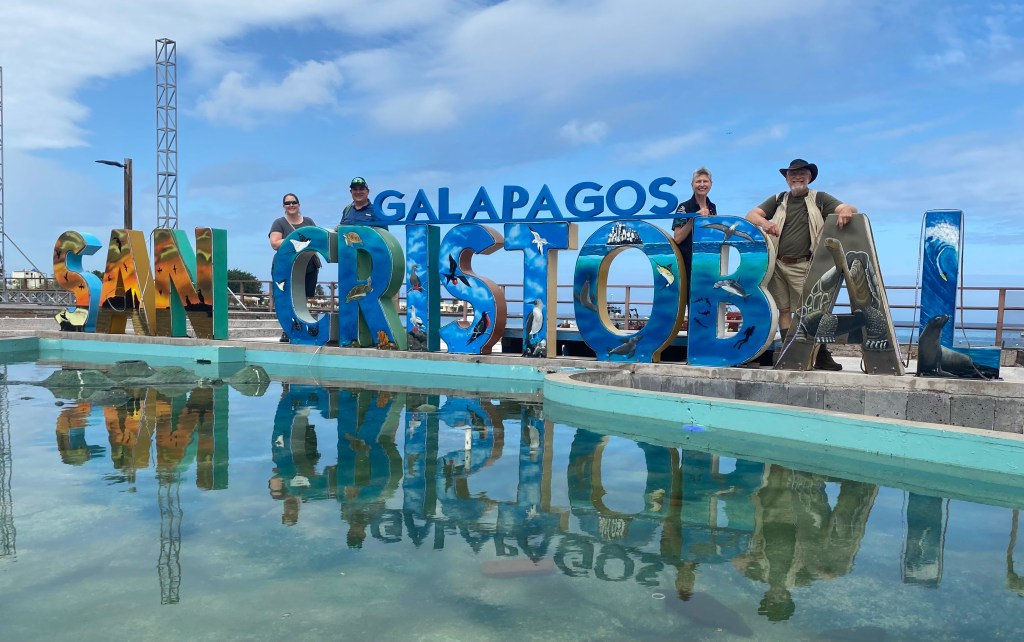
And finally arrived in San Cristobal…….

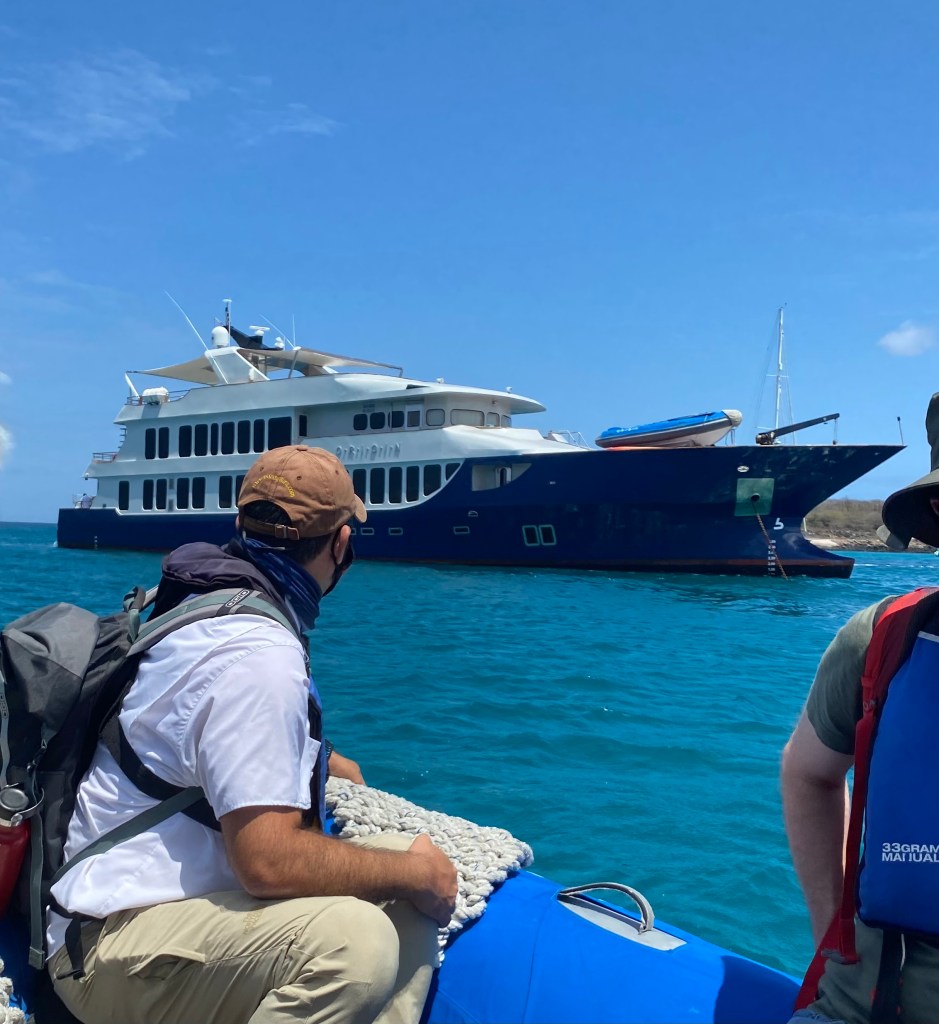
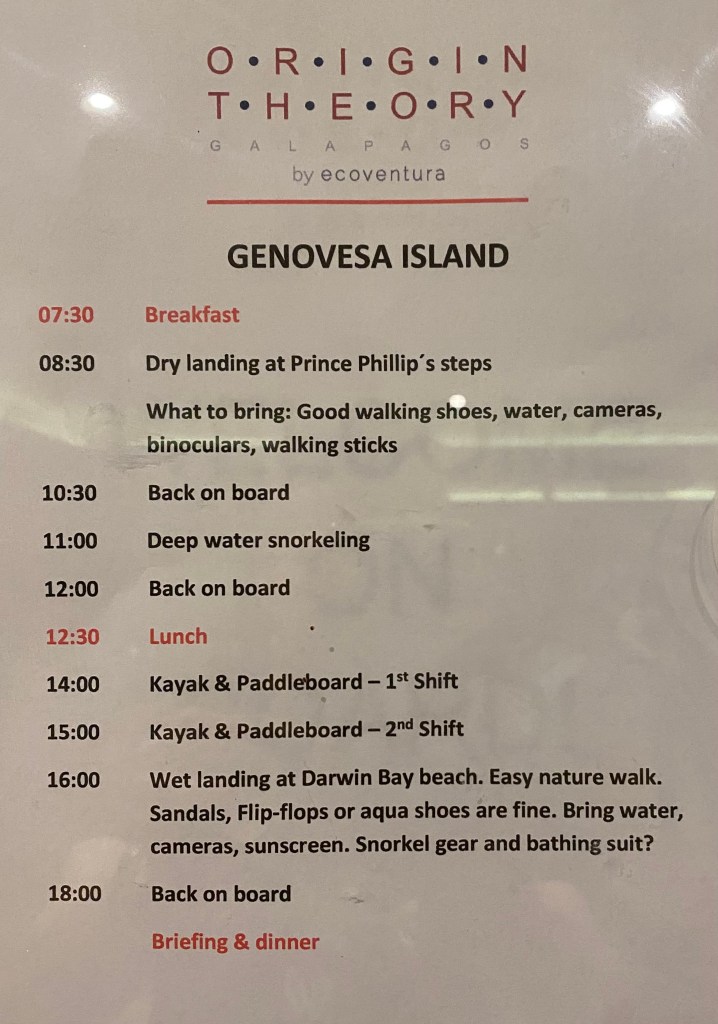
…… the jumping-off point for a week’s voyage through Galapagos on the good ship Origin.  

Whew! Thanks be to the powers that be, we are well and truly on our way!

Galapagos

A visit to the Galapagos is definitely not for everybody. Herman Melville, the author of Moby Dick, visited in 1841 and detested “the Enchanted Isles” – clearly preferring the green familiarity of his home in Massachusetts.

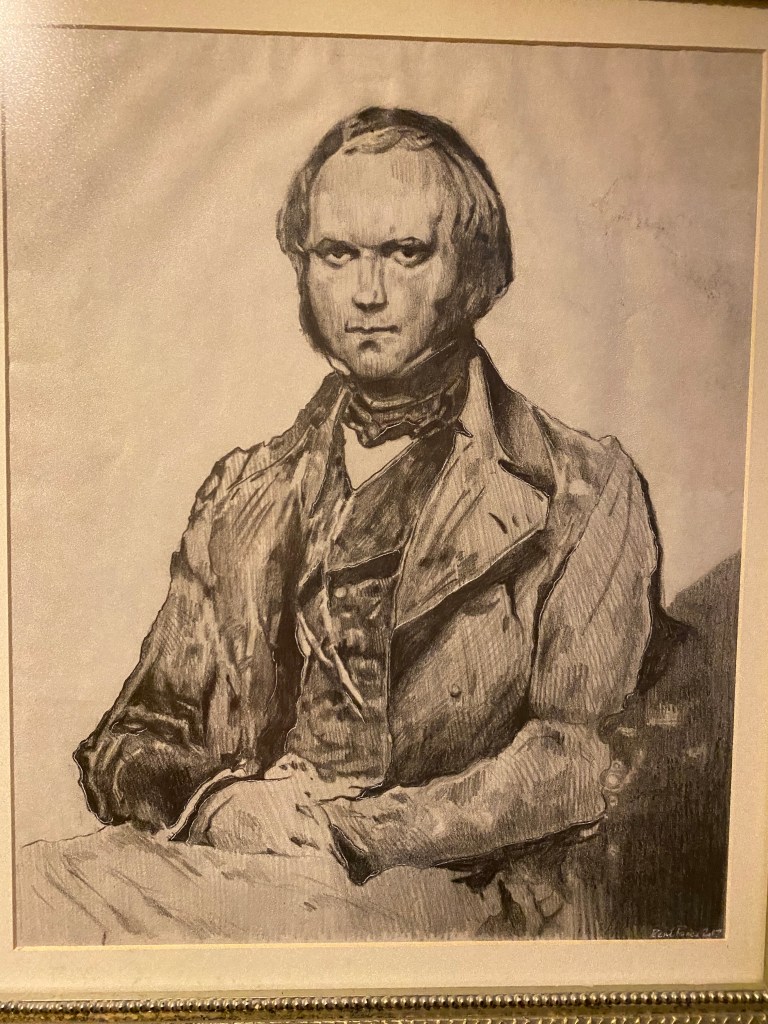
On the other hand, you have Darwin, whose voyage on the Beagle took him there six years earlier…..

He truly was enchanted – first with the extraordinary geological formations of these volcanic islands, but then of course with the diversity of the animal and plant life, unique to this part of the world.

We enjoyed it too.

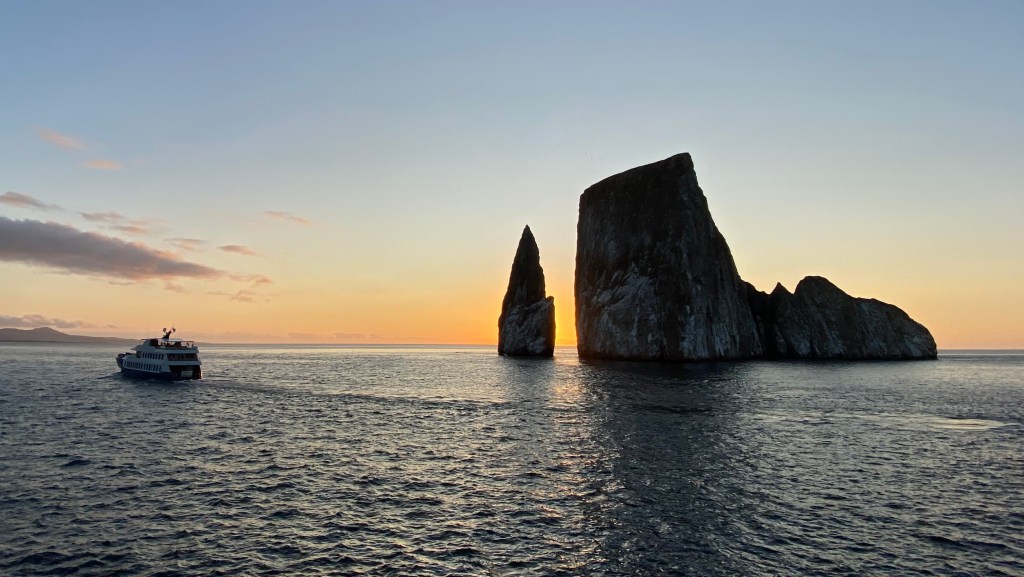
Today’s visitor, as in the past, must be comfortable on a boat, as it’s the only way to see the sights, such as Kicker Rock…..

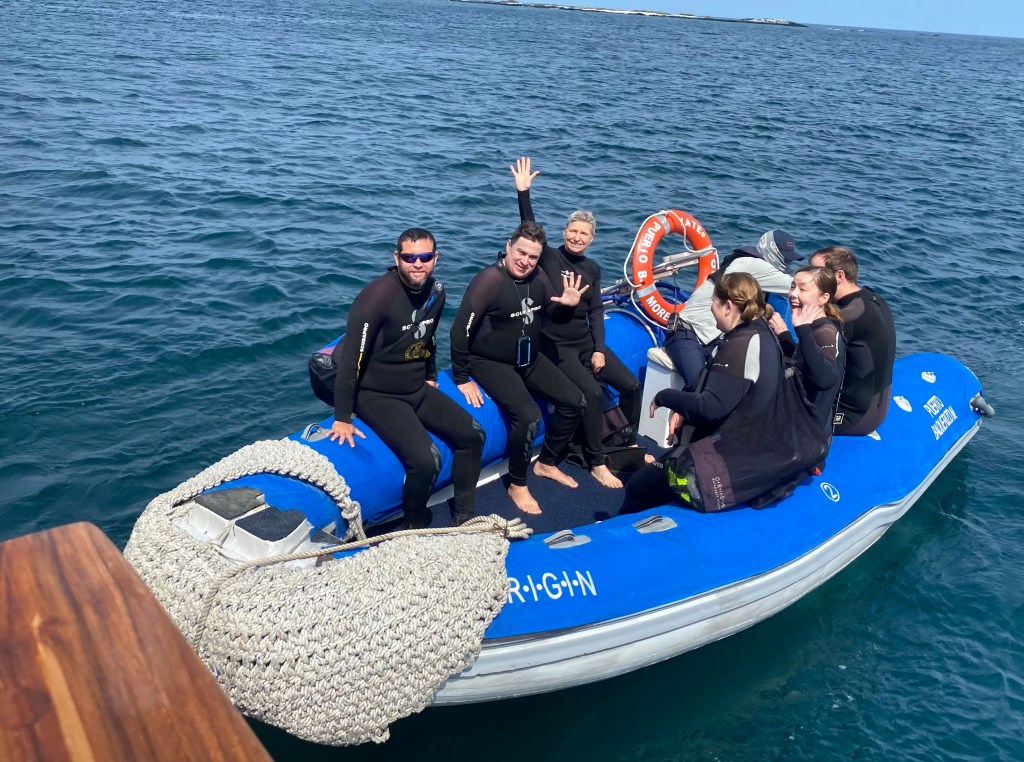
Ships nowadays much more comfortable than the Beagle….. guests are ferried by panga (a very stable rubber raft) several times a day for shore visits, coastline cruises and snorkeling adventures.

Naturalists lead the nature walks on the shore…. And while not every outing is a big winner, many have surprises in store.

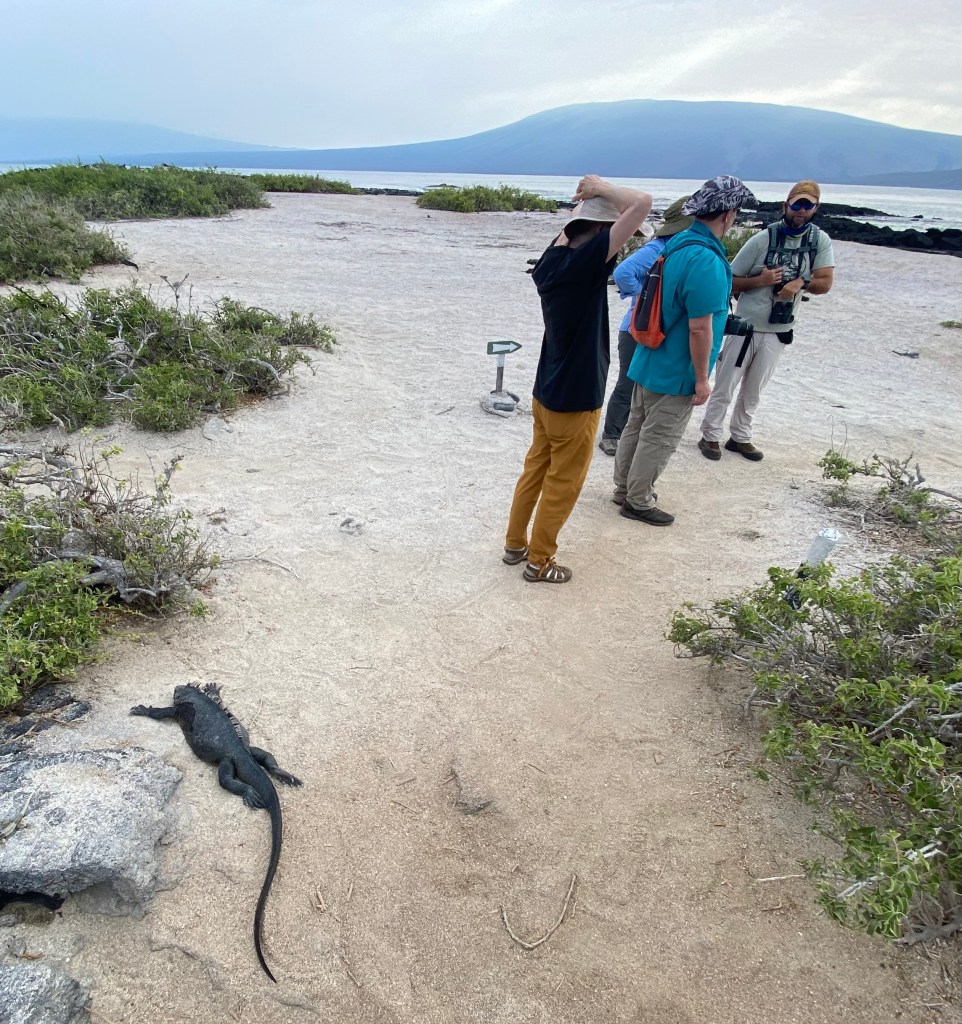
Marine iguana eavesdropping…..
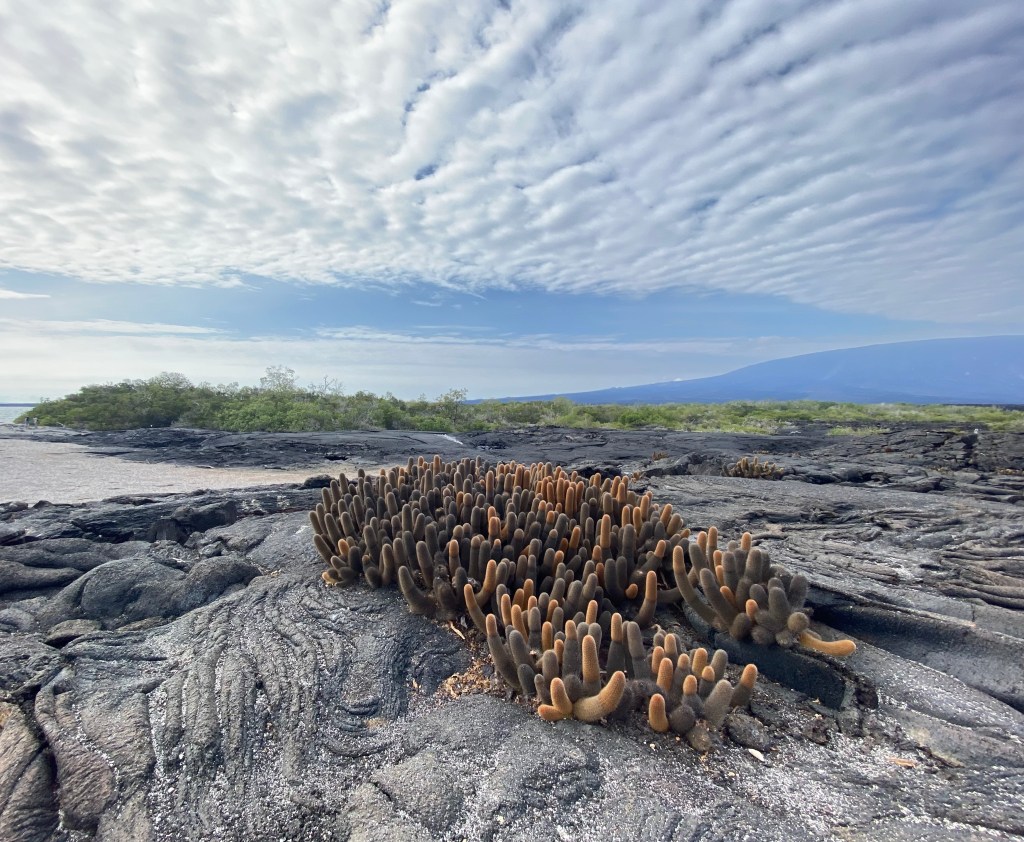
Cactus growing from solid lava!

We were very lucky to witness a couple of the famous blue-footed boobies courting……

Wooing a reluctant lady….
But she soon decides he’s the one…..

The turtles for whom the islands were named…..

Land turtle helped a bit by the magic of editing….
Sea turtle much more graceful than his land-based cousin……

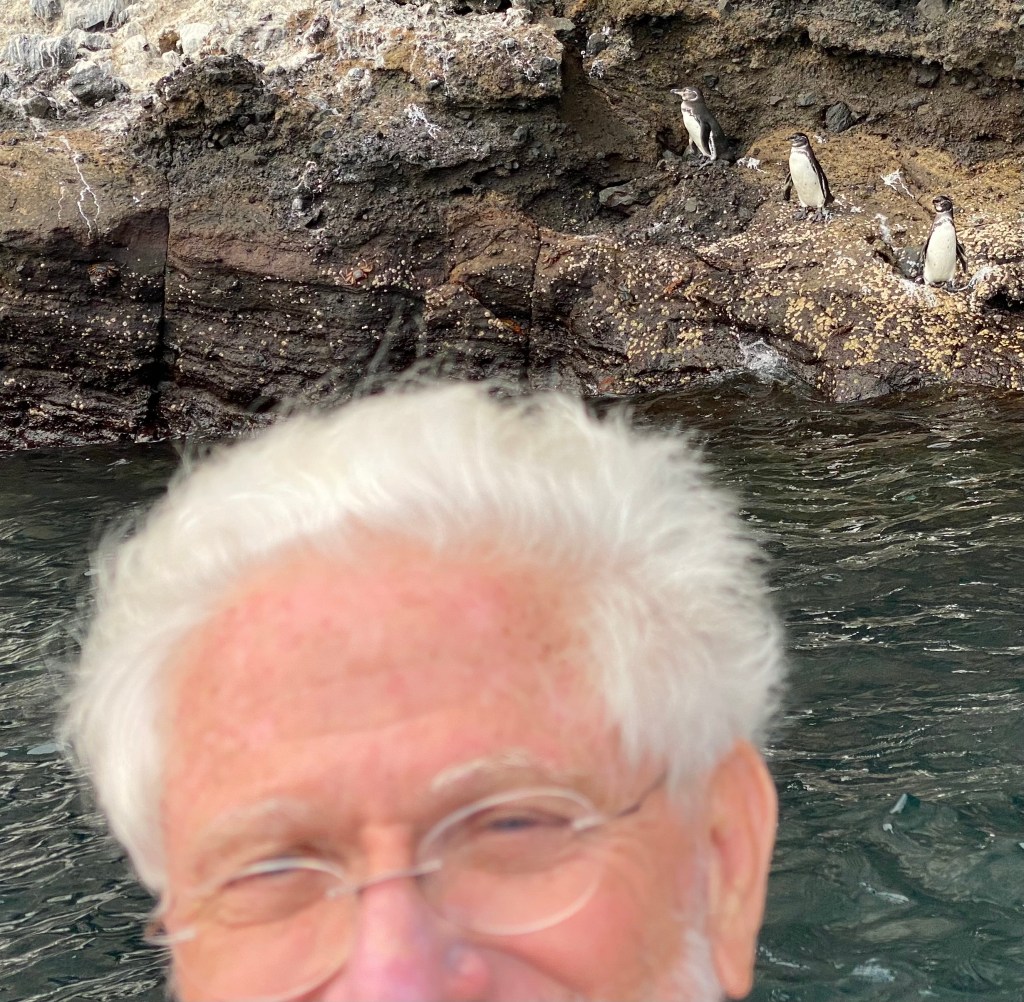
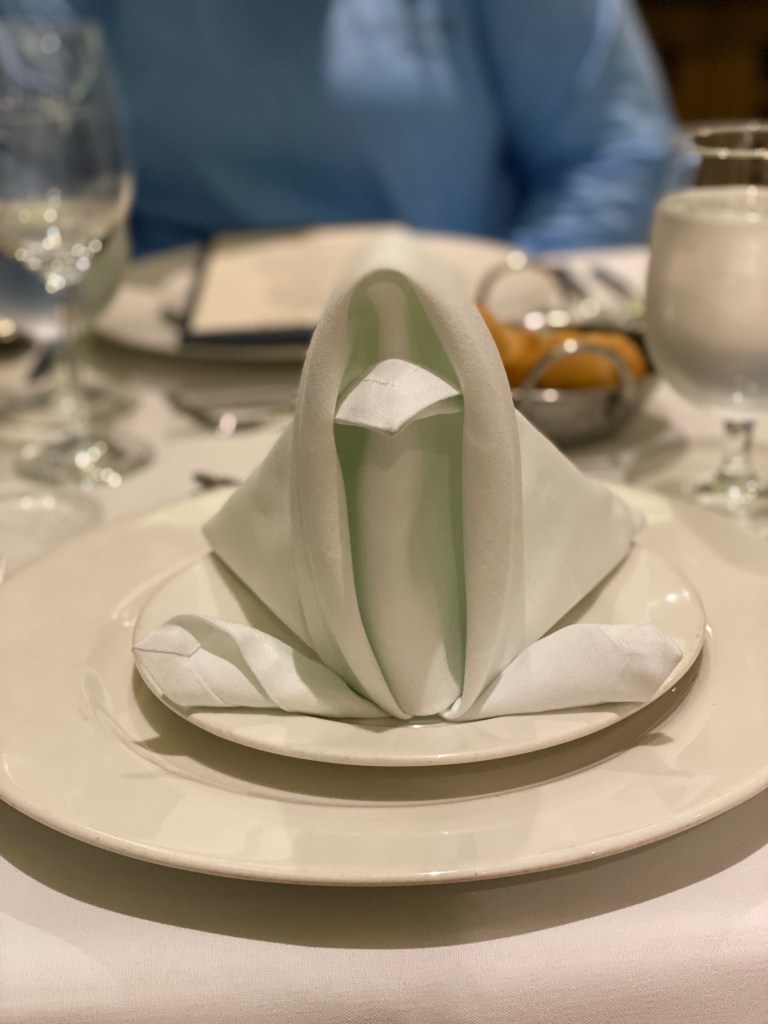
Penguins were hard to catch a good view of…. except at dinner…..

Thanks to a clever crew member….

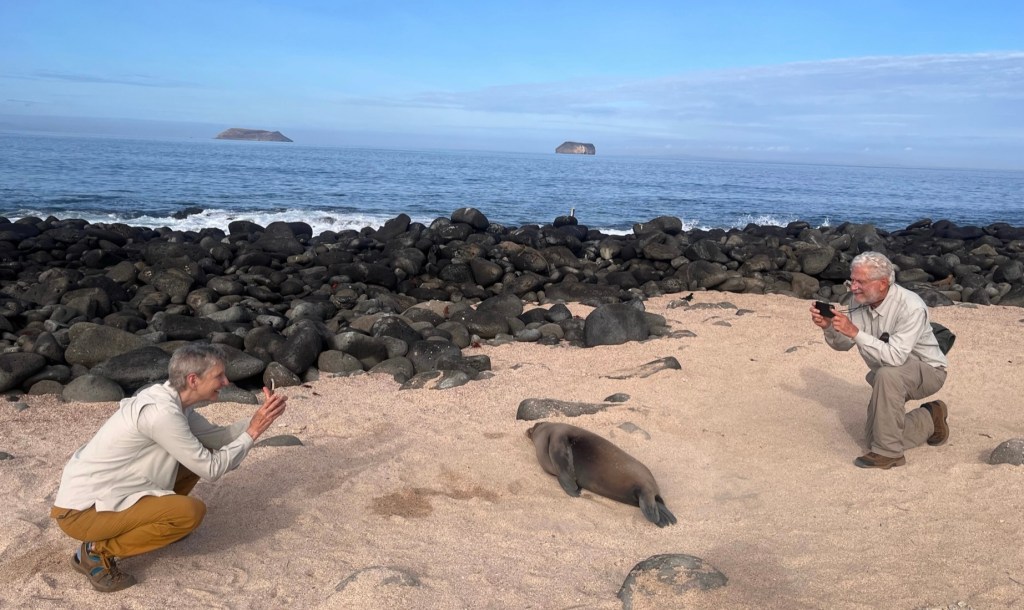
Sea lions are everywhere…….

Thanks to Matt and Holly for some great photography on some of these shots, including all the underwater clips!

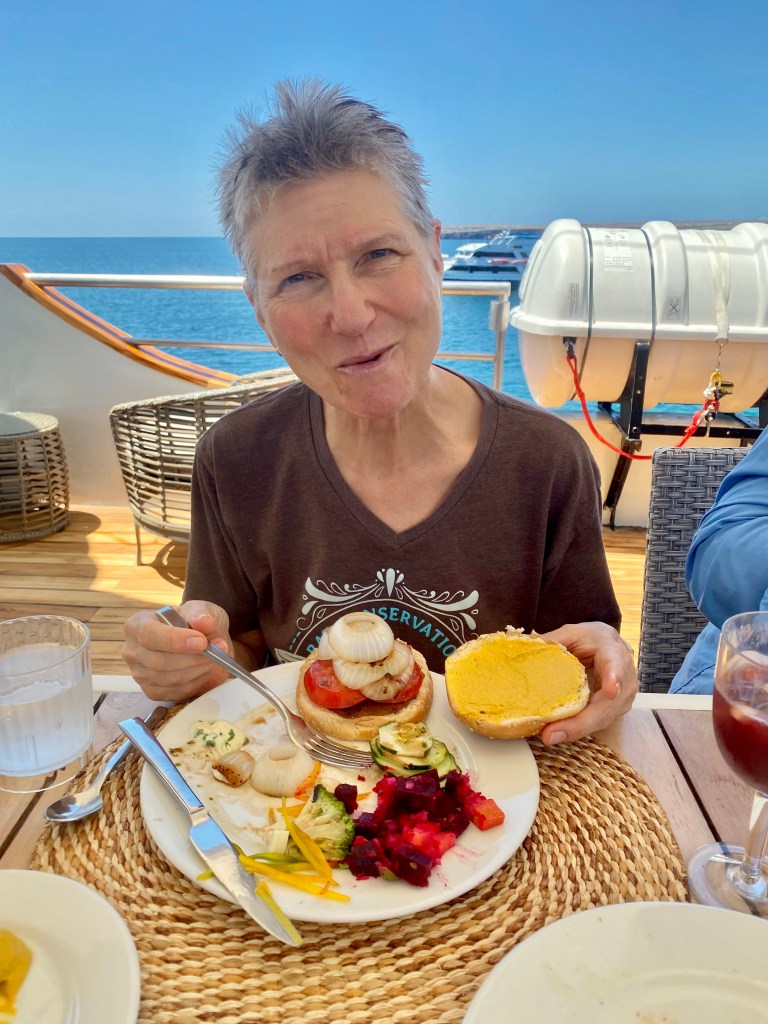
Unfortunately, early on in the voyage I was hors de combat for a day due to a stomach bug…… something on this plate or in that glass simply did not agree with me…

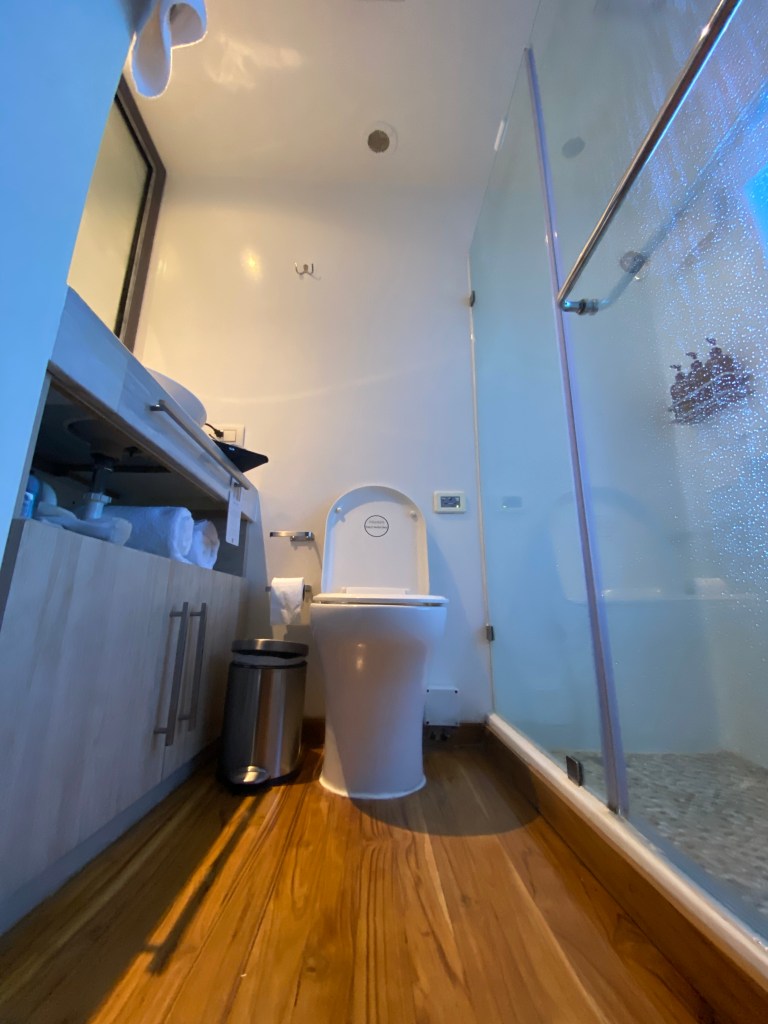
And I spent too much time getting to know our onboard facilities…..

But it was only a day, and I rallied quickly.

The voyage over too soon, we returned to San Cristobal…

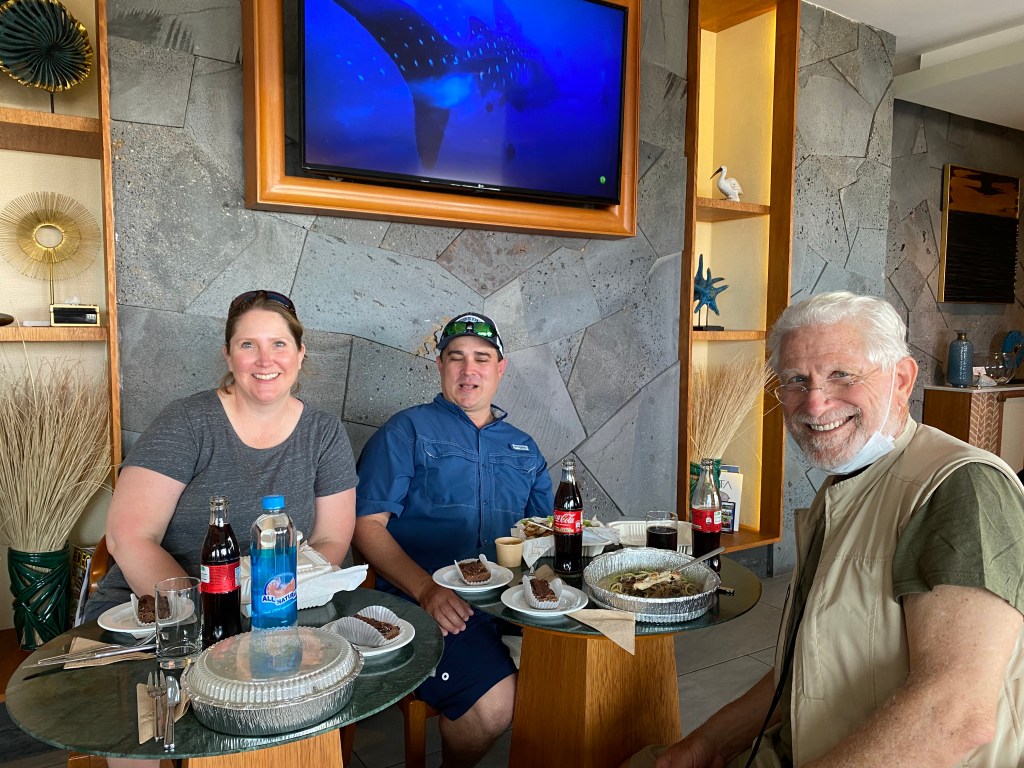
A major benefit of using a travel agency (thanks, Blue Parallel) …… getting whisked through the check-in line at the airport to a nice, cool lounge for a bite of lunch before returning to the real world.

And then we said farewell to Holly and Matt, who at this writing are still trying to negotiate themselves through delays back through Miami to home. Thanks for sharing the adventure. Good luck and bon voyage!

After a couple of days in Quito, Henry and I are moving on to more wildlife encounters in the Ecuadorian rain forest…..

Along the Ecuadorean Equator

Did you know…..?

Ecuador is the only country in the world named for a geographical feature.  The equator runs only very slightly north of the capital city, Quito.

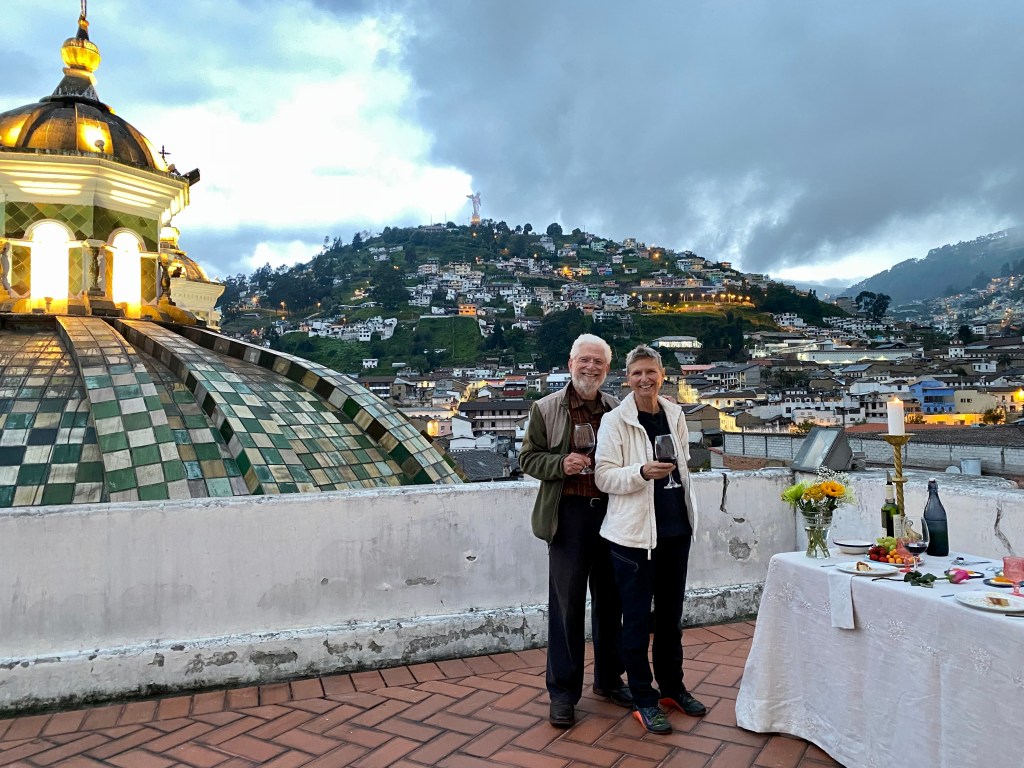
A rainy evening in the Quito main square

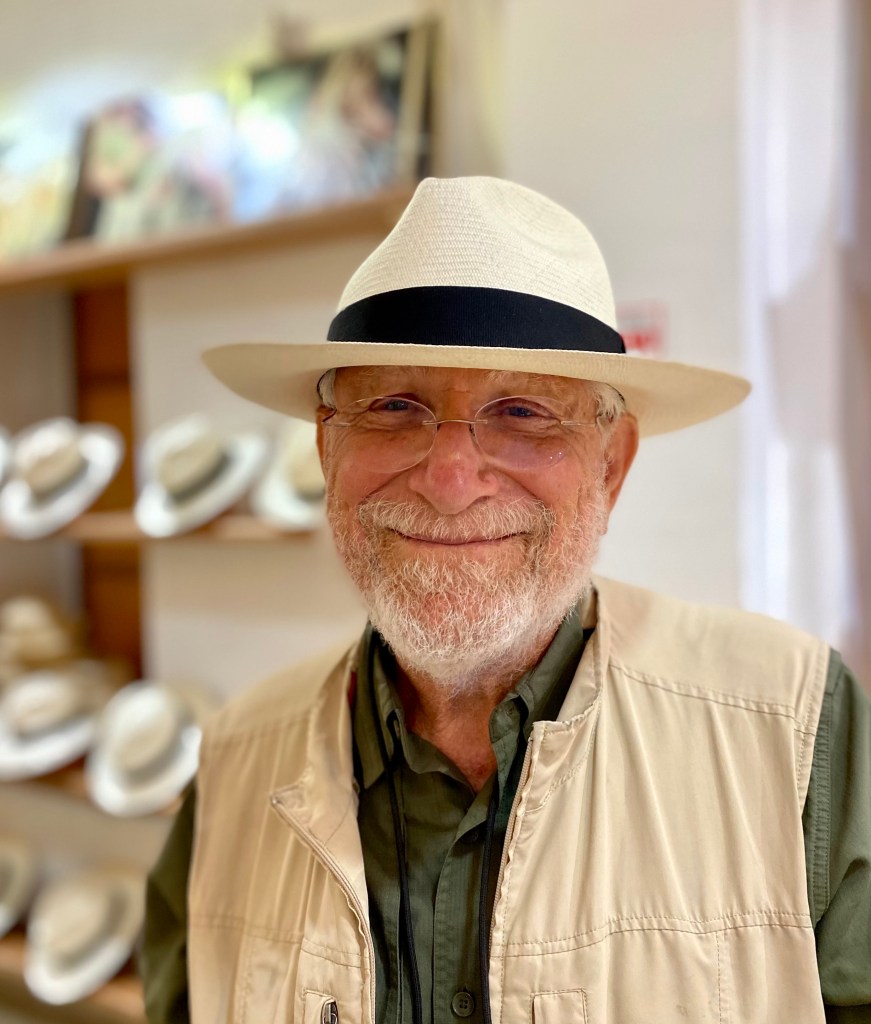
The authentic Panama hat actually comes from and is made in Ecuador.

All other things being equal, you weigh a pound less in Quito than in any other capitol city.  (This has to do with lesser gravitational pull at an altitude of almost 10,000 feet.) Also, Ecuador is reputed to be the top exporter of bananas in the world!
Ecuador is closer to space than any other country. The highest point on earth is its Mount Chimborazo (whose position along the Equator means it is actually higher than the world’s tallest mountain, Everest).

Not Mount Chimborazo, but still pretty high!

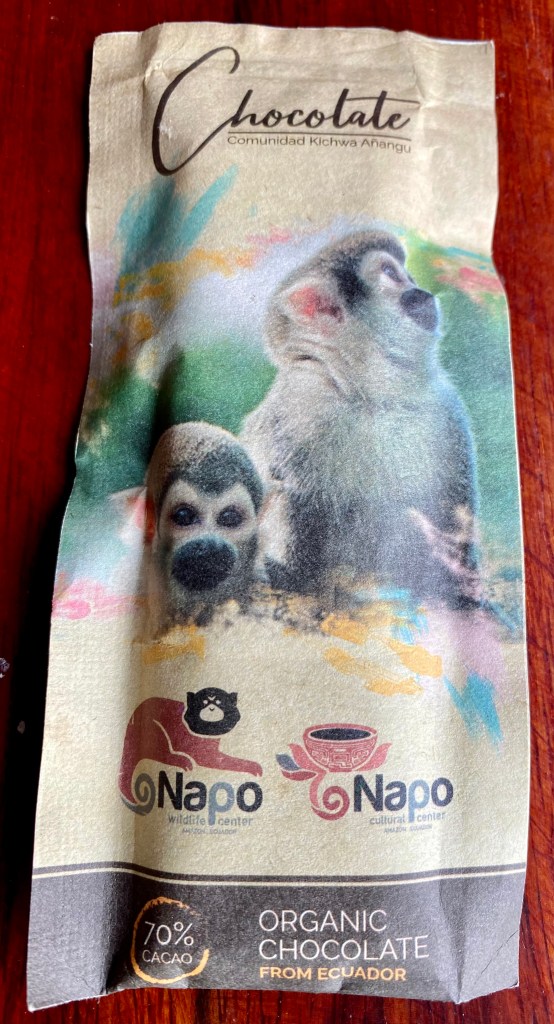
Chocolate was “invented” in Ecuador (maybe).  Cacao has been grown and consumed here for more than 5,000 years.

Ecuador has more birds per square kilometer than anywhere else on earth.

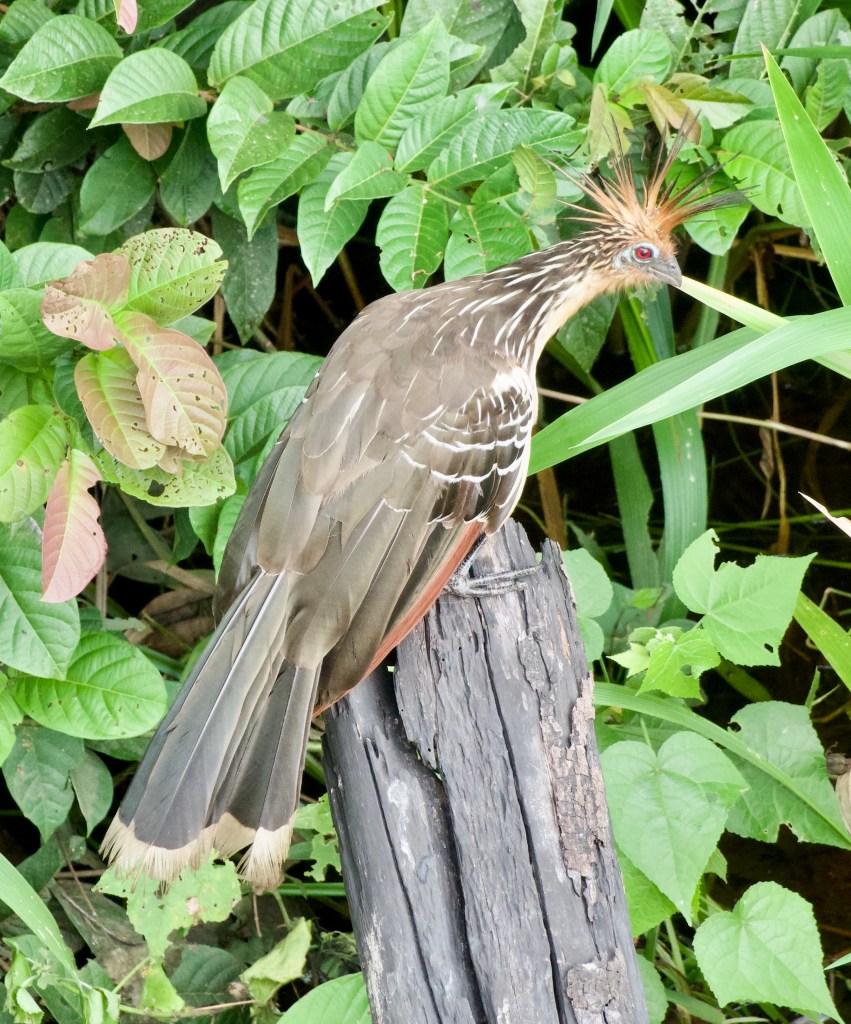
Our favorite rainforest bird, the stinky turkey

The constitution of Ecuador includes a clause recognizing the rights of Mother Nature to exist and flourish.

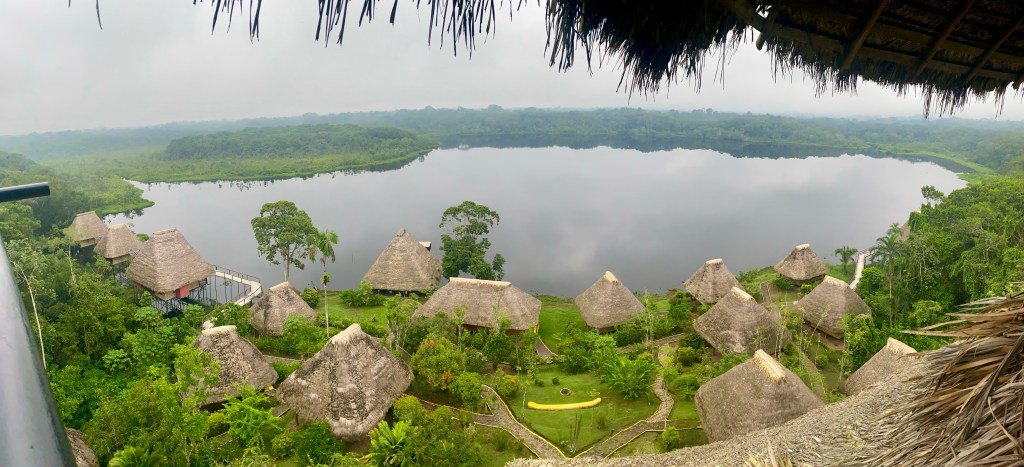
Which brings us to the Ecuadorian rainforest in the Amazon basin….. a 45-minute flight east of Quito, followed by two hours in a motorboat, then another two hours by paddle canoe brought us to the Napo Wildlife Center…..

Only way to get around here is by paddle canoe….

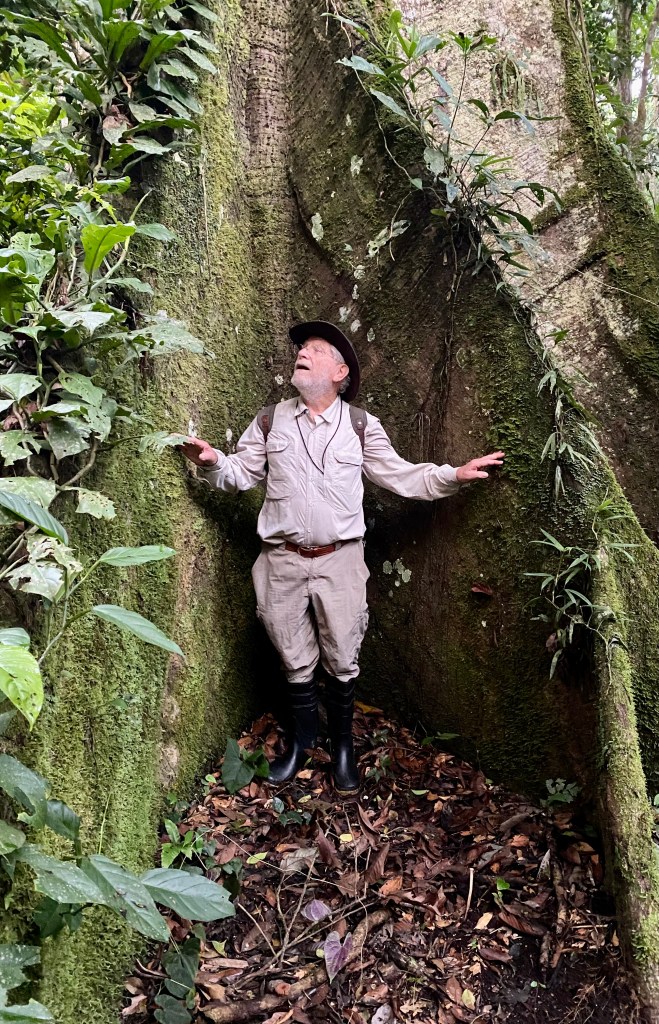
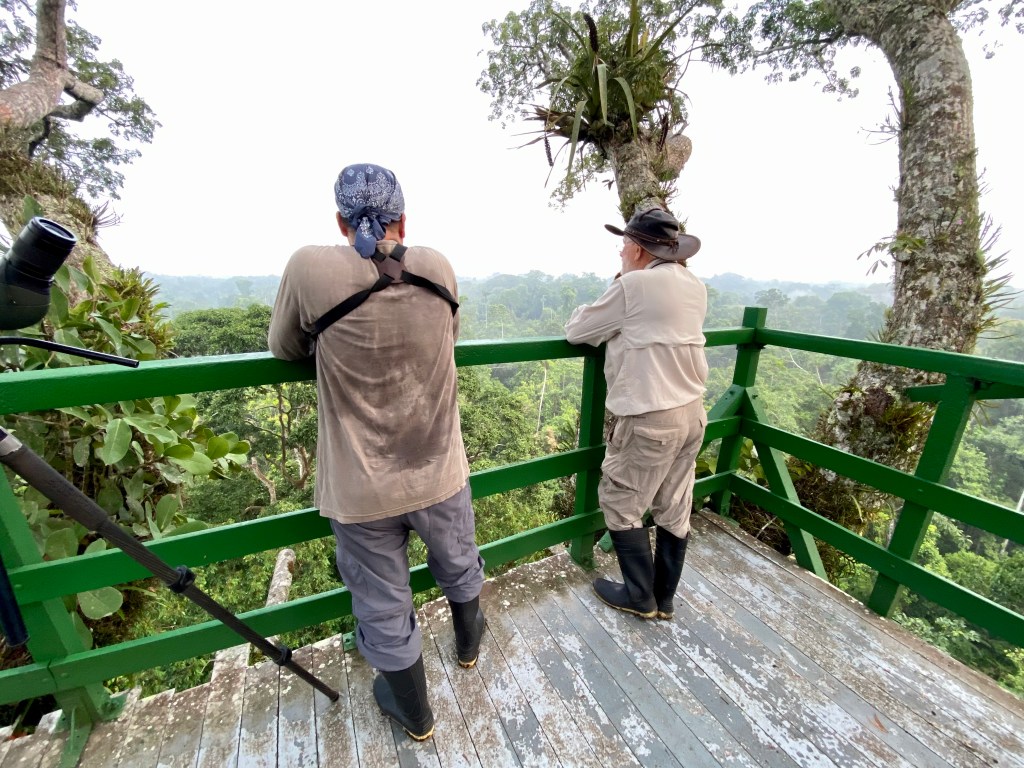
From the foot of this giant kapok tree…….

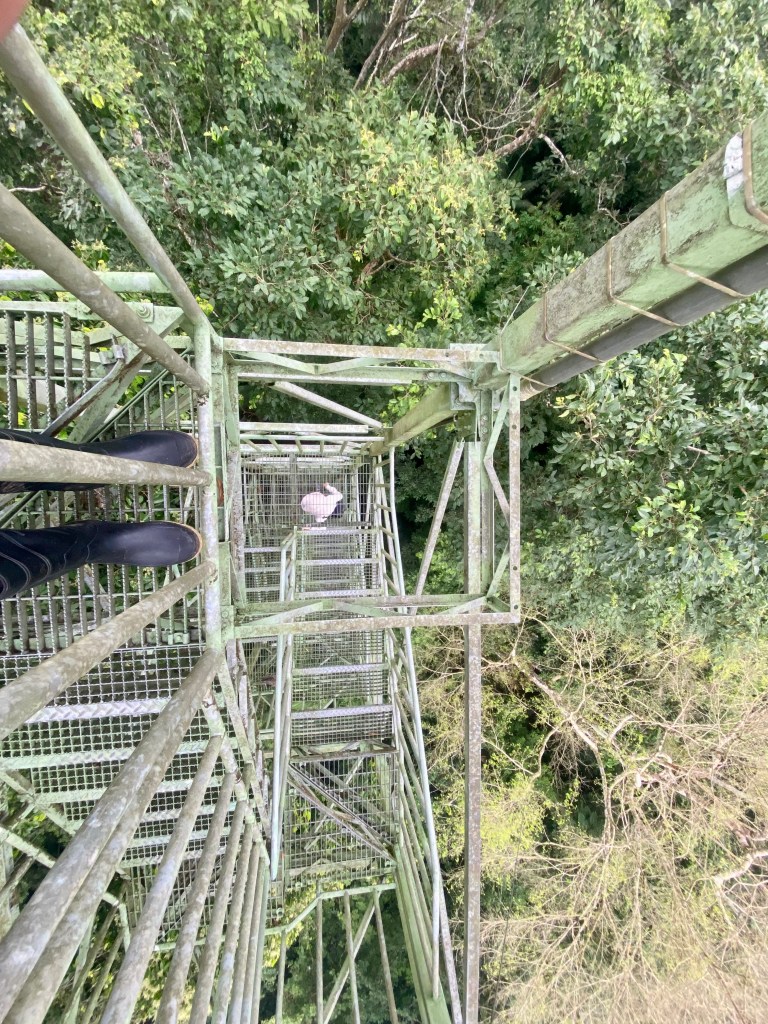
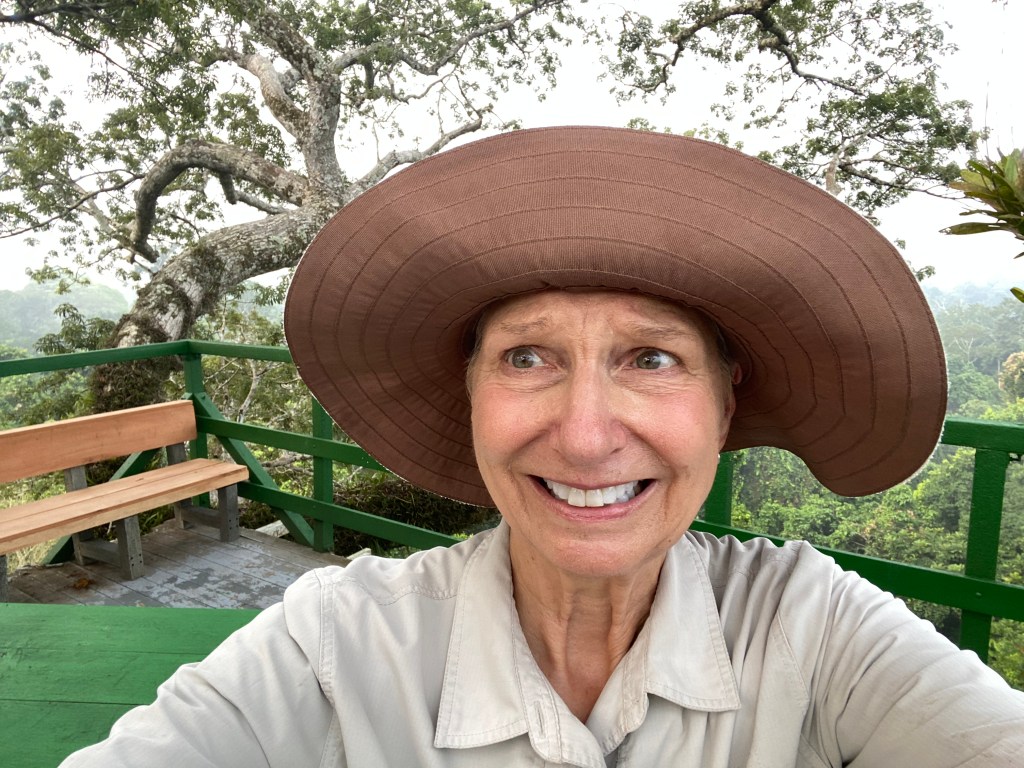
…we climbed this tower, me white-knuckling it the whole way…..

To a view from above the canopy of the rainforest…….

Some people are comfortable with heights….
And some aren’t comfortable with heights…..

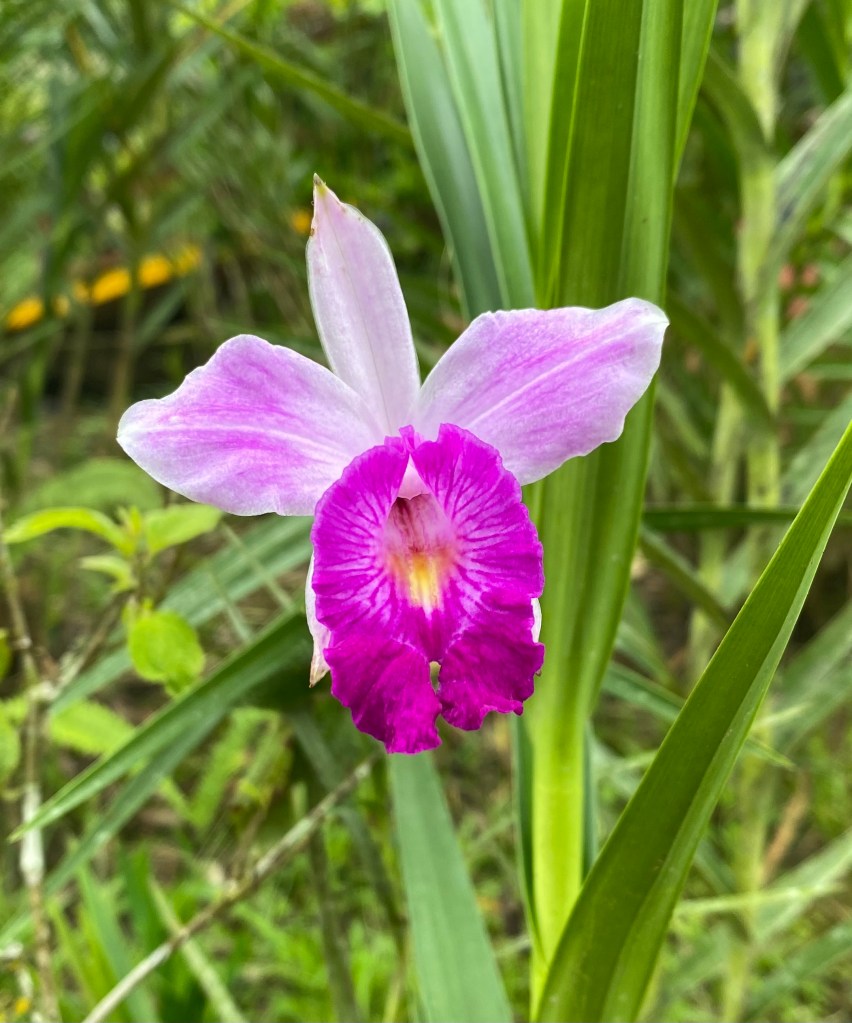
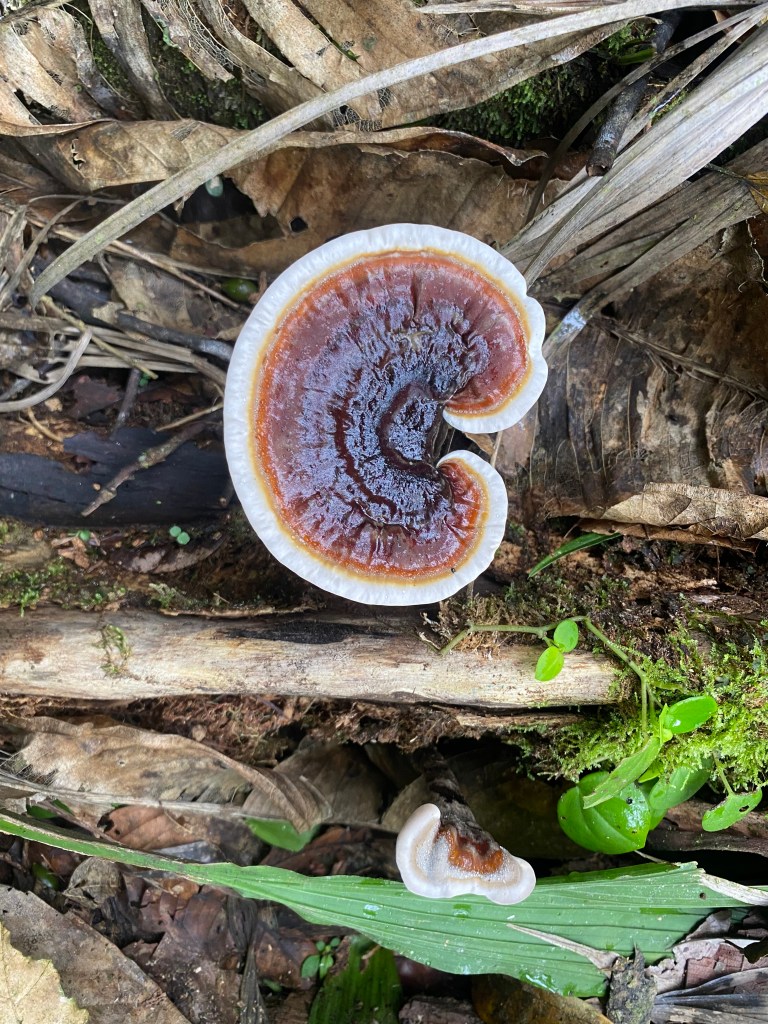
Except for bugs, wildlife is extremely hard to spot…… monkeys and birds are concealed in the treetops and sightings are usually fleeting. But we spent several hours walking through the undergrowth and saw some of Mother Nature’s work up close.

You do not want to fall into the water…..

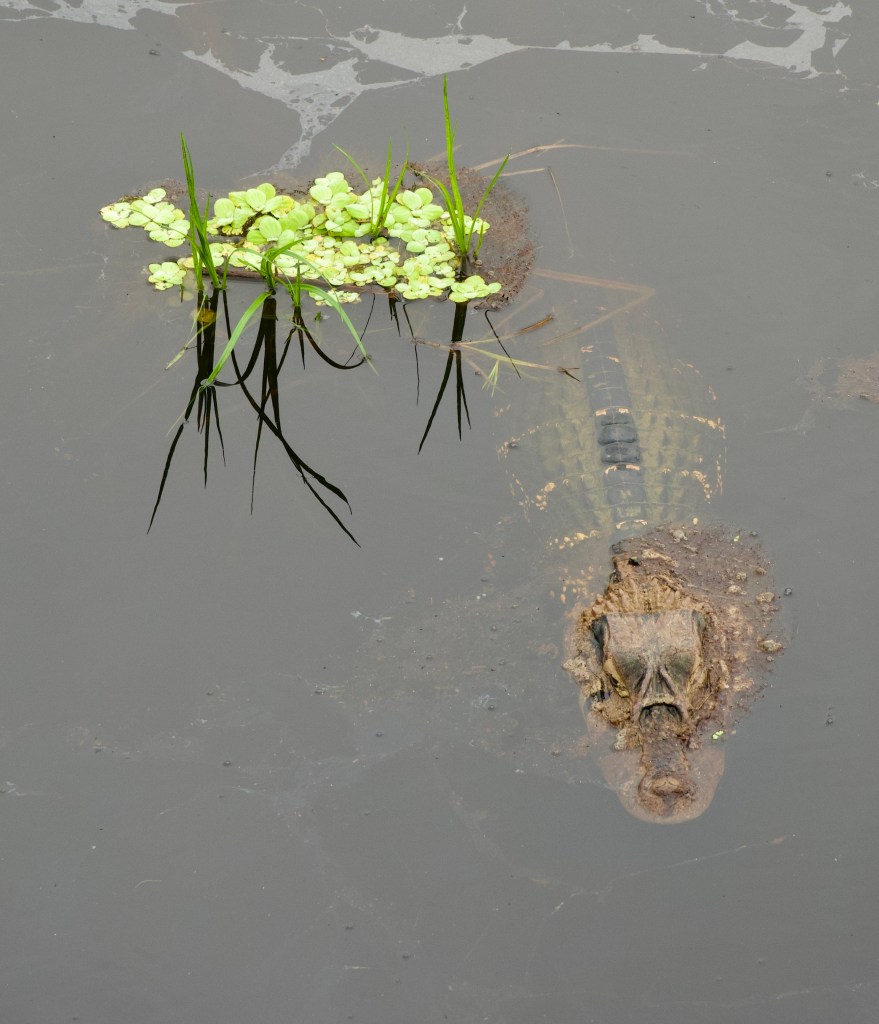
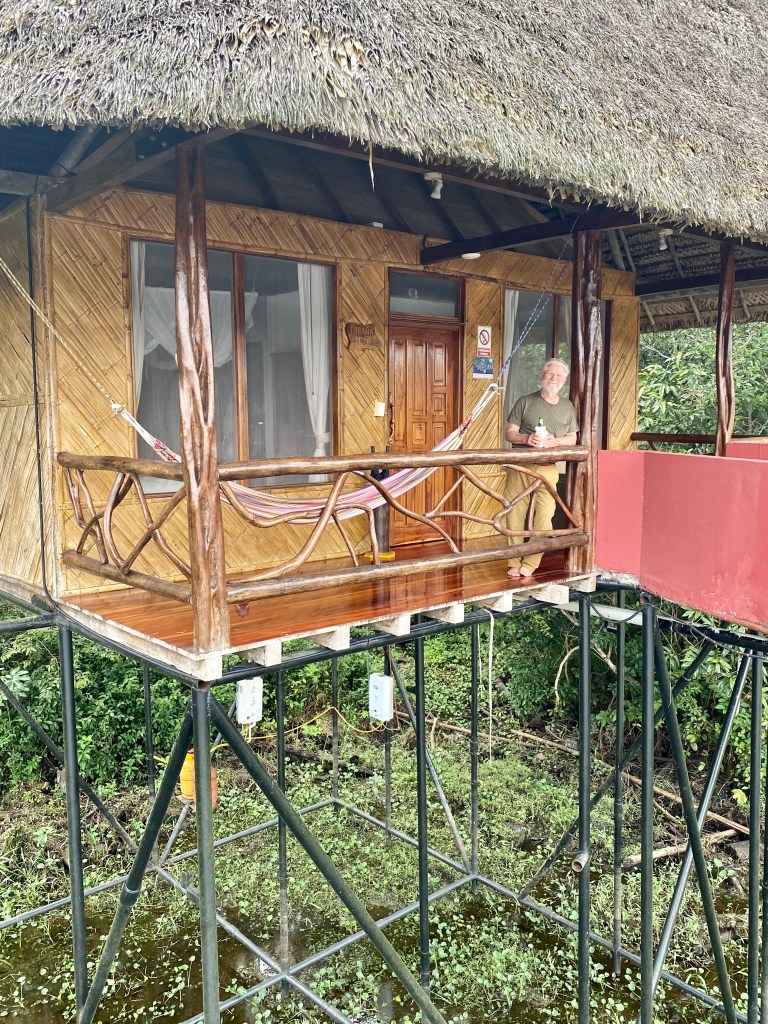
Back at the lodge, this caiman was lurking around in the lake under our room on stilts…..

The return to civilization started long before sunrise in our good ol’ trusty canoe through a spooky marshy forest…..

The rainforest is maybe not our favorite environment – extremely humid and sticky – but a unique place that we are happy to have visited, and a lush contrast with the barrenness of the Galapagos, as well as our next destination – Chile’s Atacama Desert.

Atacama Desert, Chile

Unlike the rainforest, whose encompassing darkness tends to turn the human spirit inward, vast stretches of open desert stretching out to distant volcanic mountains open us up…..

And sometimes a dribble of water surfaces, turning the landscape into colorful striations….

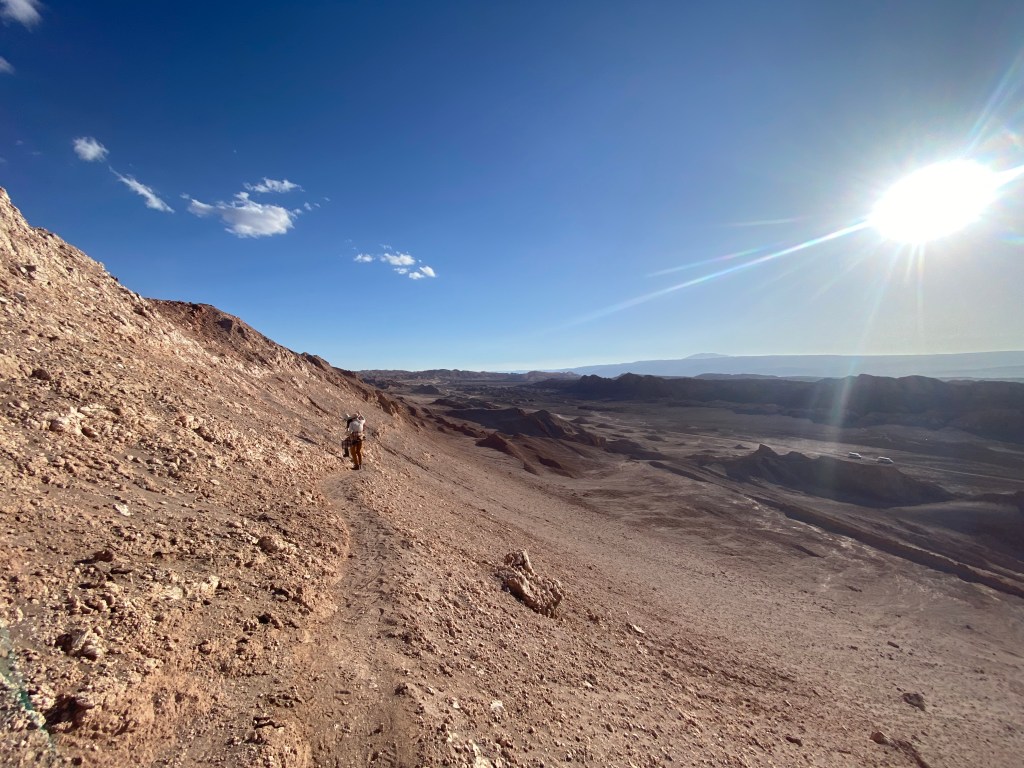
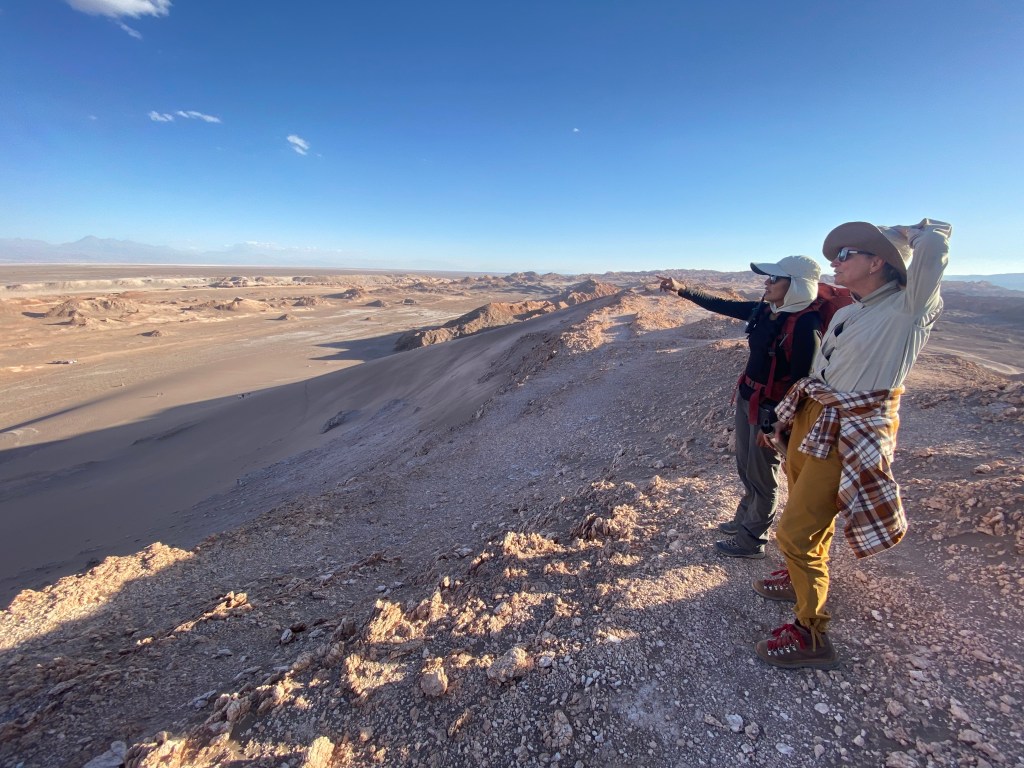
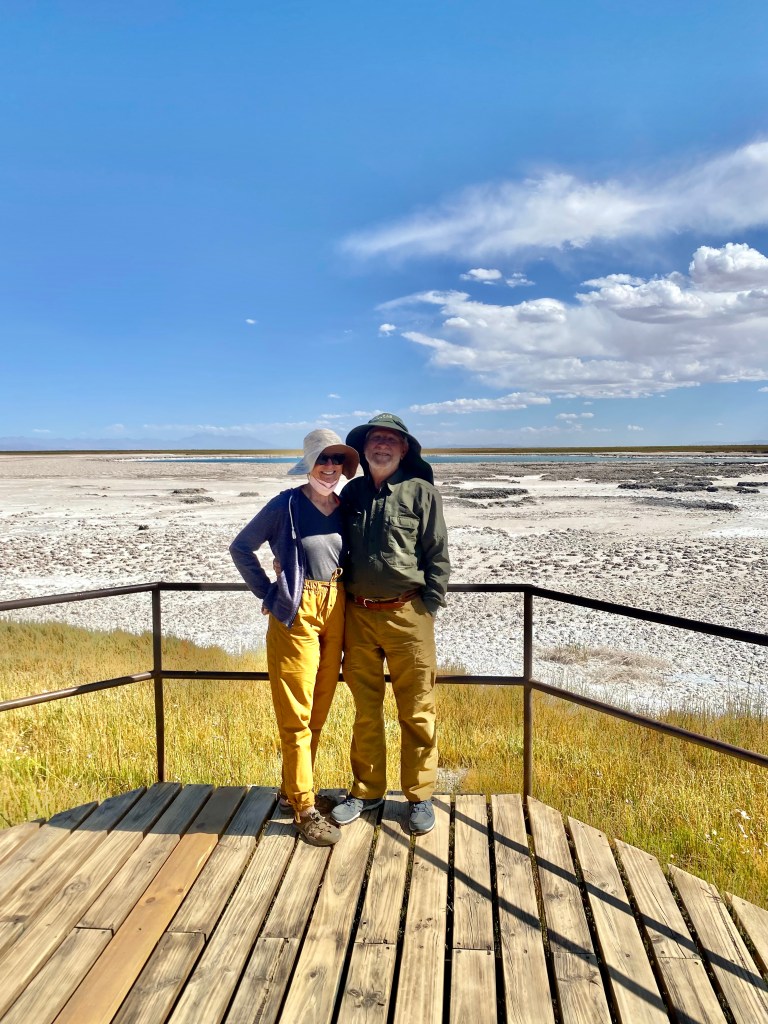
The Atacama Desert is “at altitude”, as they say – almost 8,000 feet, stretching through northern Chile to Bolivia. The closest city of large size is Antofagasta, on the Pacific Coast about 4 hours’ drive west.

Everybody who visits seems to follow the same series of outdoor activities….. which was actually great and not too crowded. We climbed up one side of a ”moonscape” to a very windy summit….. and some of us jogged down.

A hike through a gorge to see the cactus plants provided some fun challenges.

Henry takes a mighty leap, but not quite as gazelle-like as our guide, Caro.
Almost lost the phone! Caro saved it….. and caught me later from a fall into the rocks!

Another day brought a visit to a deep salt-water lagoon for a refreshing and buoyant dip.

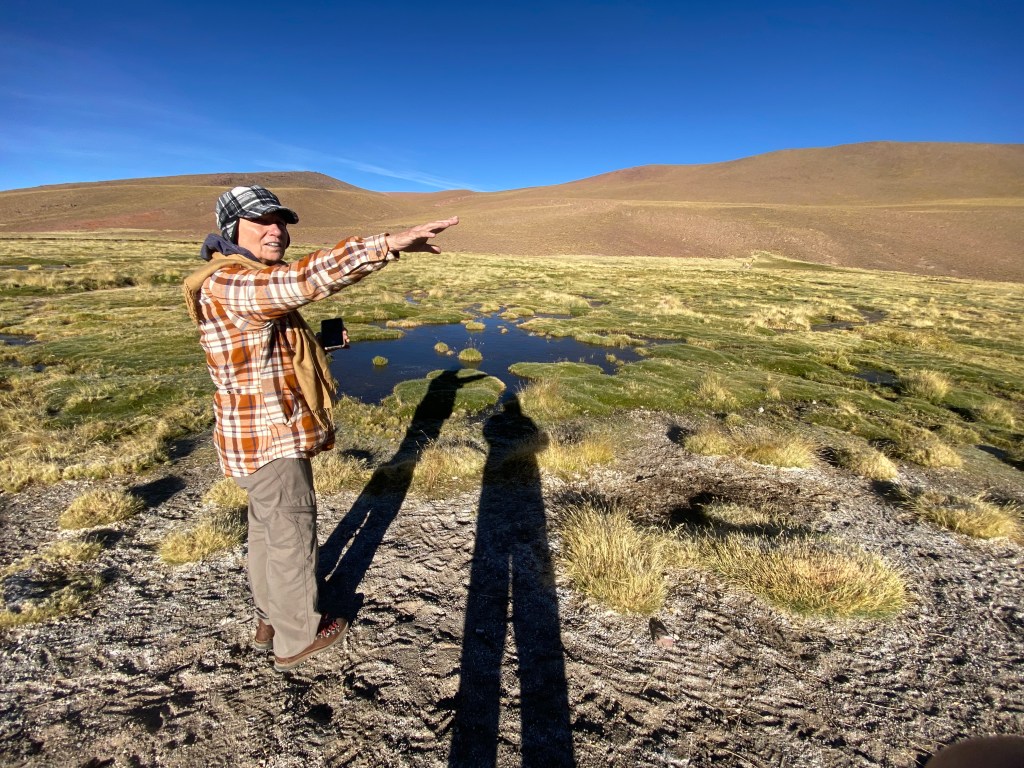
On our last day in the desert – maximally adapted to the altitude (for us) – we ventured toward the Bolivian border to see the geysers at an elevation of over 14,000 feet.

Henry got a little dehydrated…..

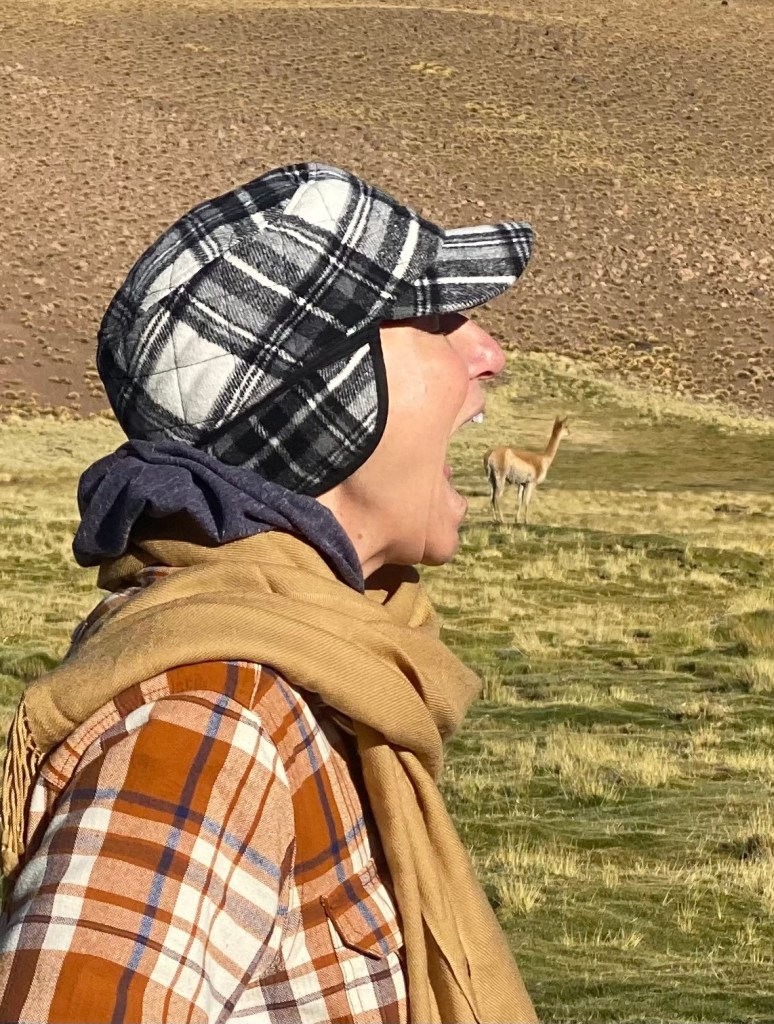
Finally got to see wildlife. Vicunas are a type of camel, related to the llama, who are rarely seen at altitudes below 11,000 feet.

Can you see the vicuna?

How about now?

Back at the Alto Atacama resort, a few of the vicuna’s cousins are kept to entertain the guests…… a llama parade!

And a feeding…..

The desert – so stark and clean and honest. A specific and often brutal form of beauty, where sometimes the heat, salt content, and lack of moisture are such that life itself is not possible. How amazing.

Now to work our way south along the length of Chile…..

Good Fences Make Good Neighbors

Sorry, Robert Frost – Something there is that DOES love a wall.

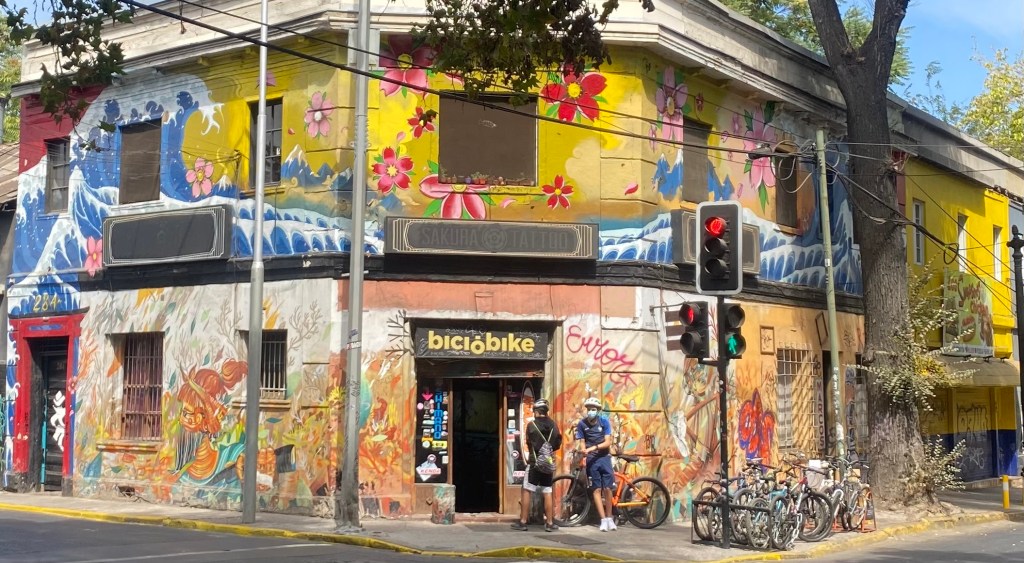
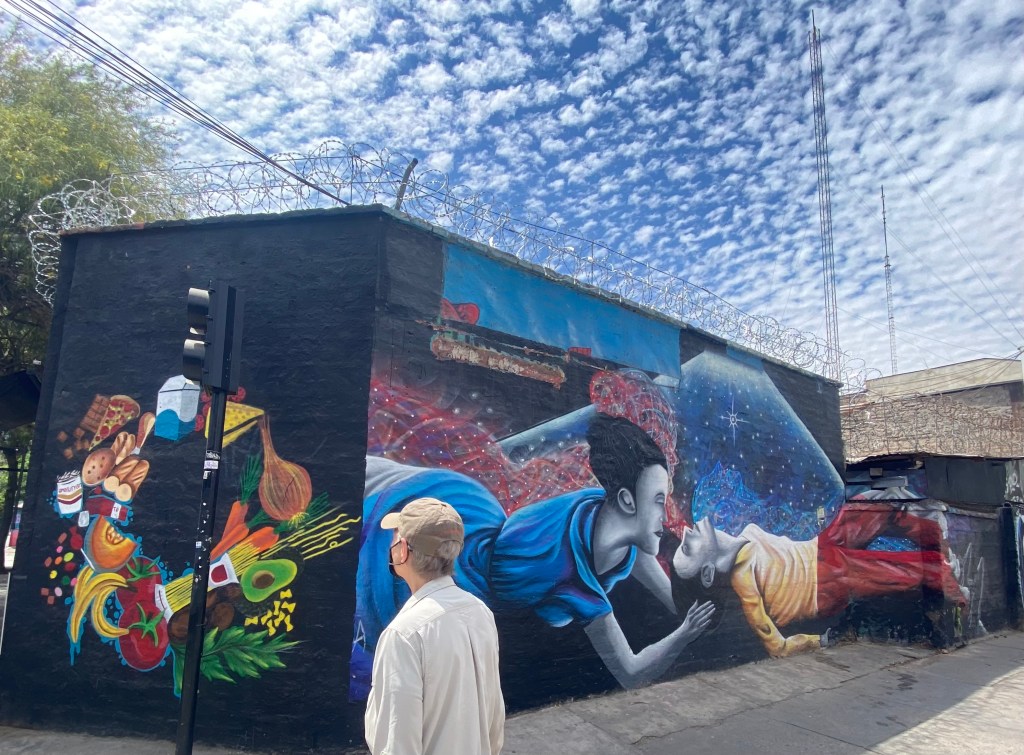
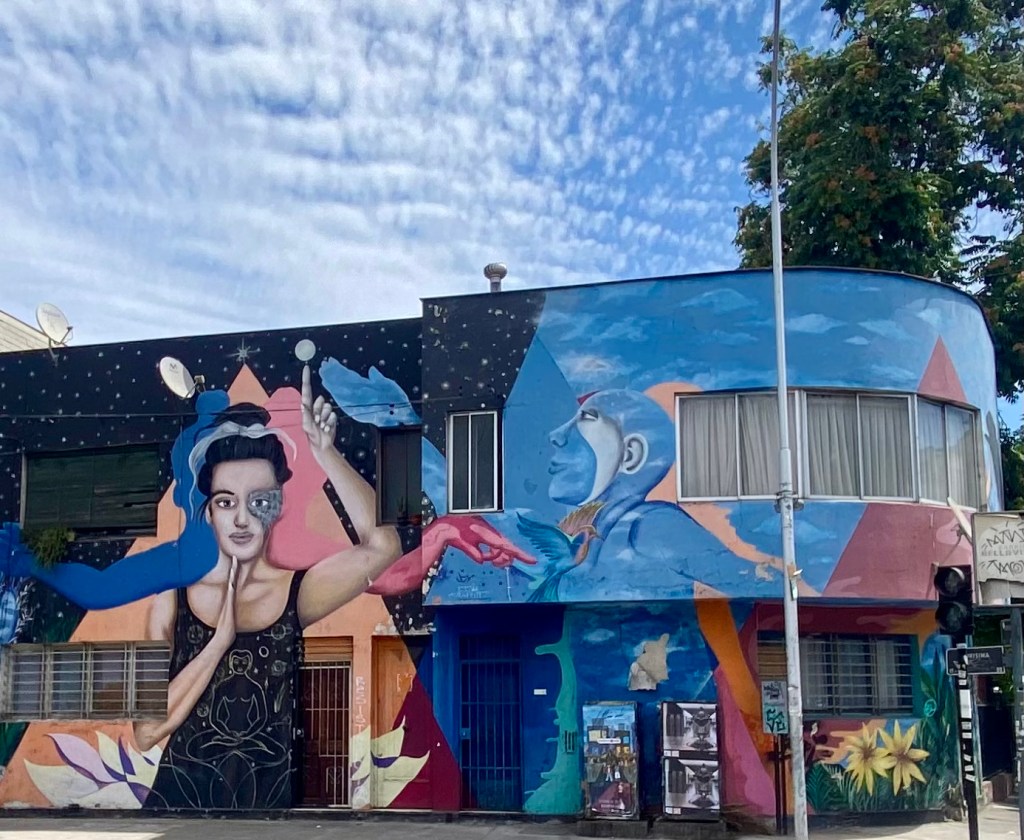
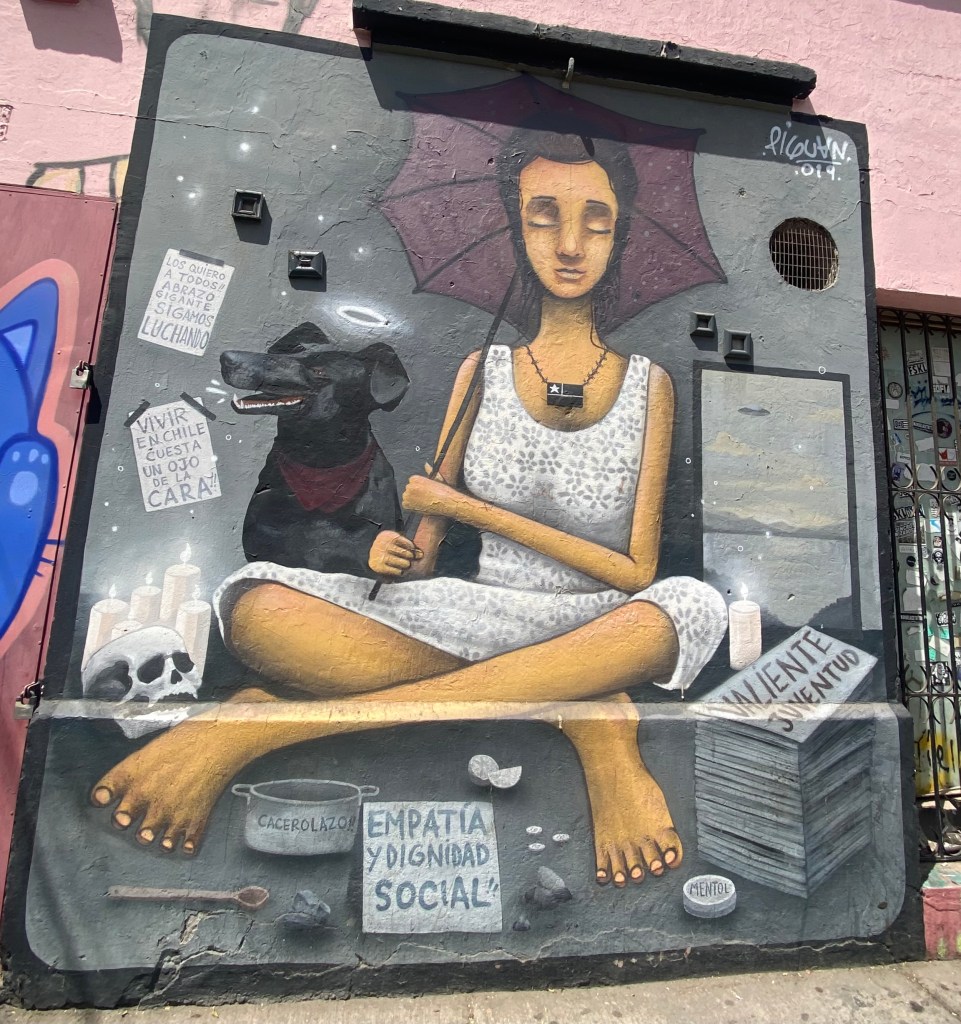
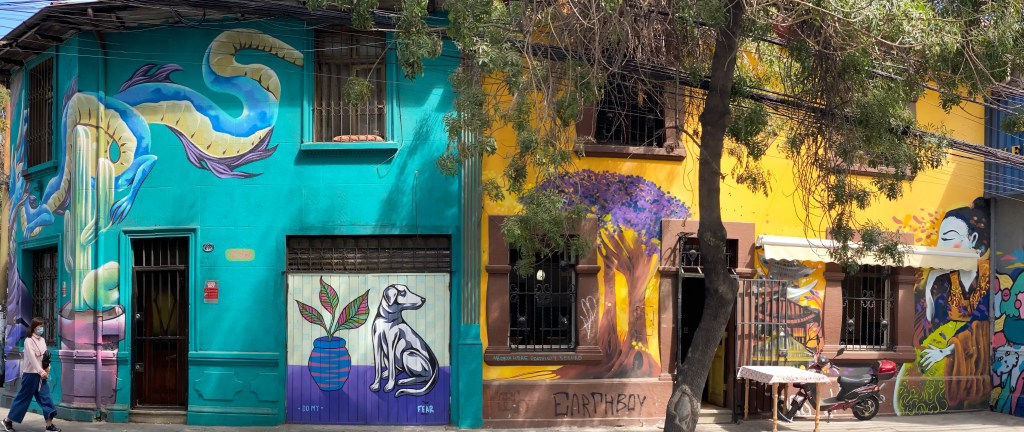
Or at least if we don’t love them, we love decorating them. Witness the vibrant art works that are common in some areas of Santiago, Chile’s capital city.

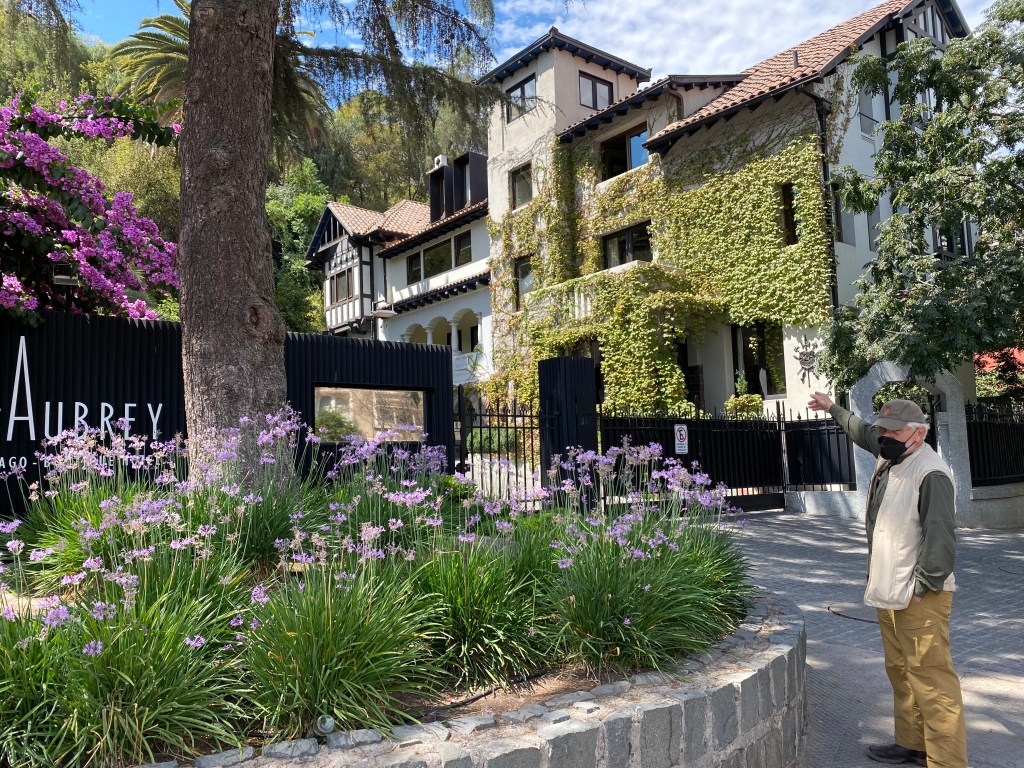
Our hotel was partially hidden behind a wall festooned with ivy and flowers….

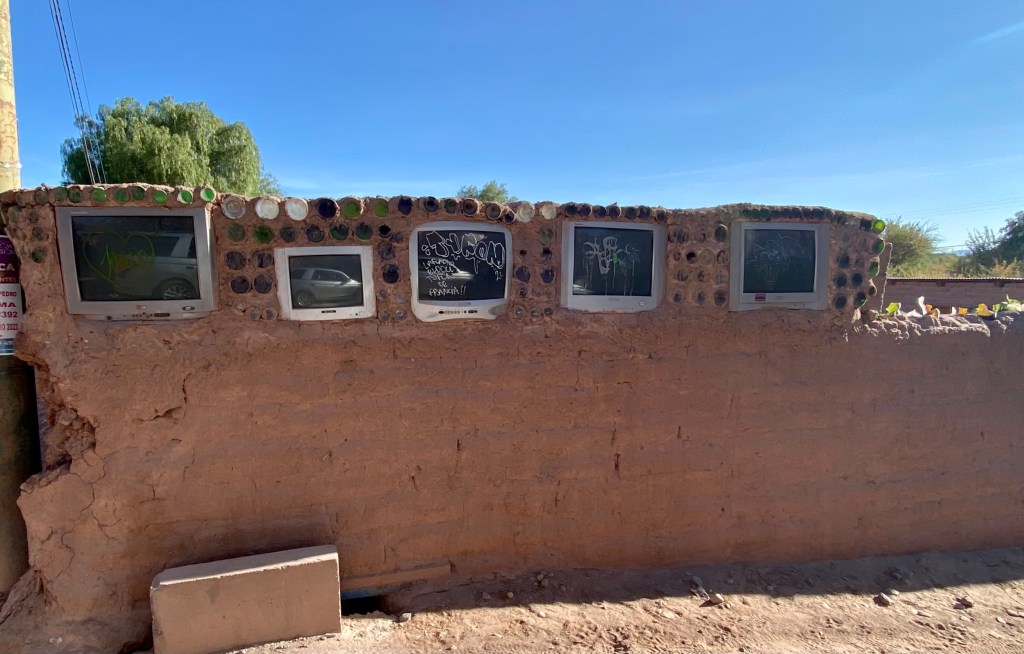
Even in sleepy St. Pedro de Atacama in the north, people have expressed themselves by adorning the structures that define their living spaces…..

Yes, those are old television screens and monitors imbedded in the town wall……

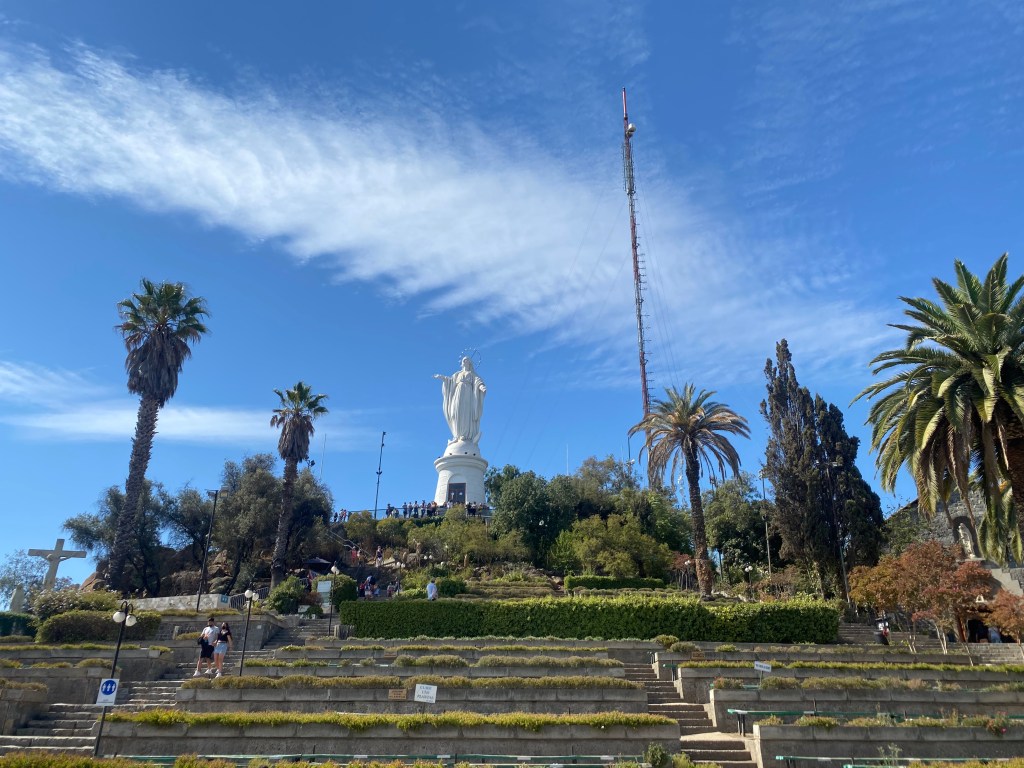
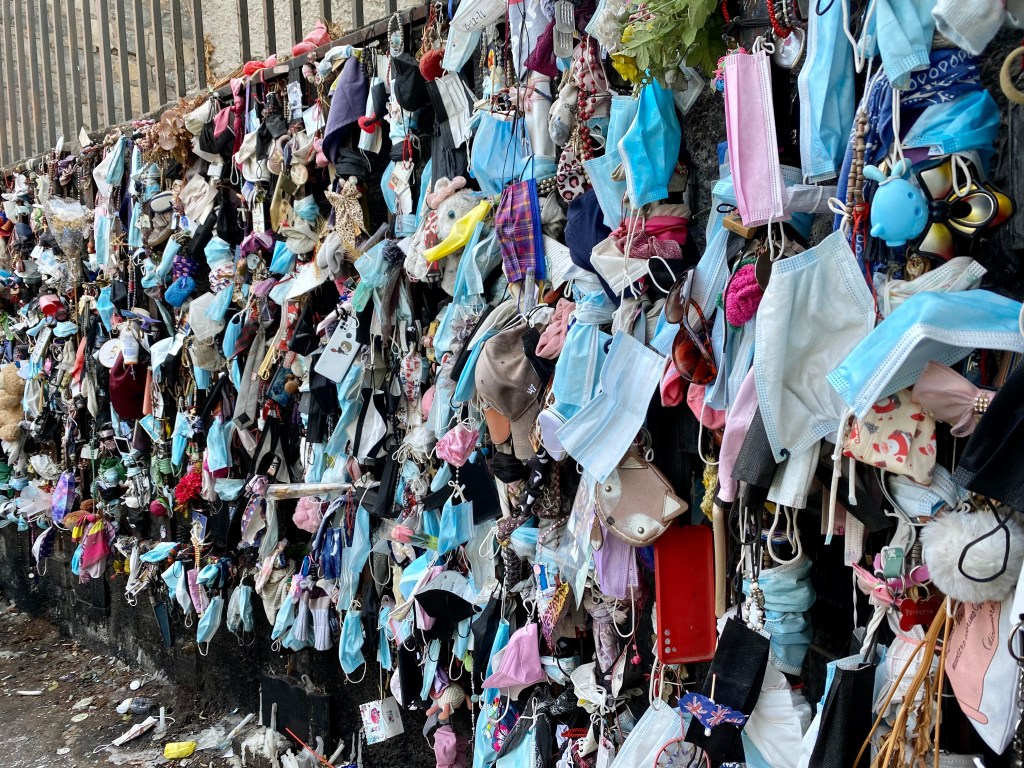
High on St Cristobal Hill overlooking Santiago is a big statue of Jesus’ mother Mary, who is especially revered within the Catholic religion. Believers have covered an adjacent wall with tributes to Mary for loved ones who recovered from Covid-19, presumably in response to prayers for her divine intervention.

Each mask denotes belief in a miraculous recovery from Covid 19…….

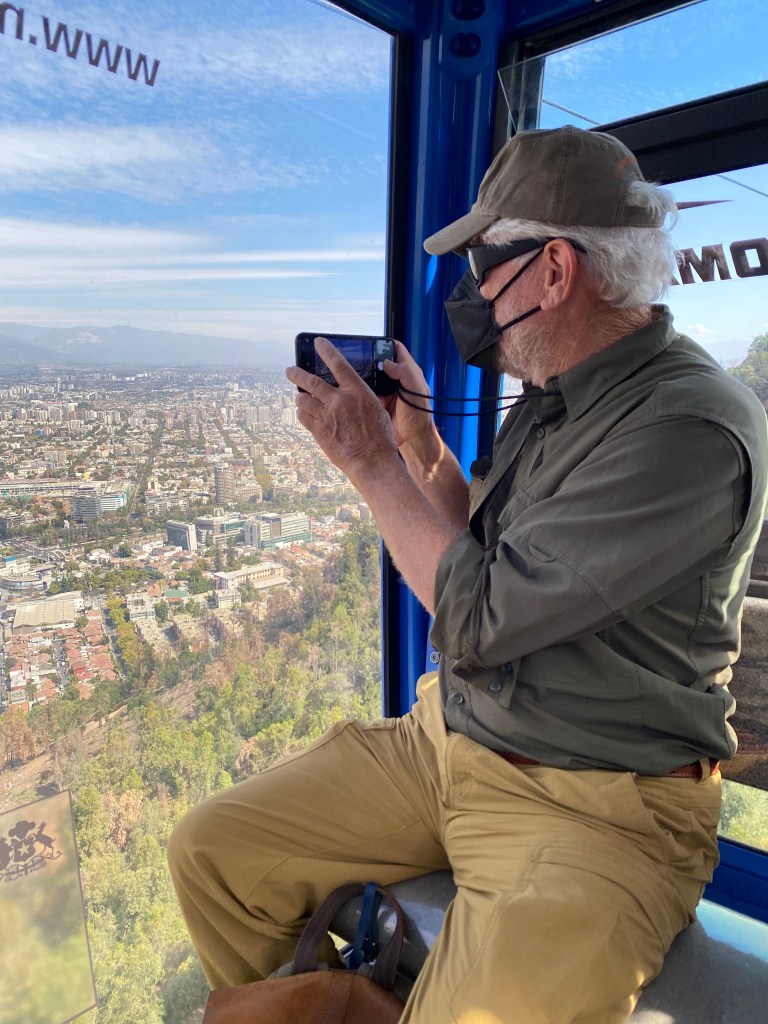
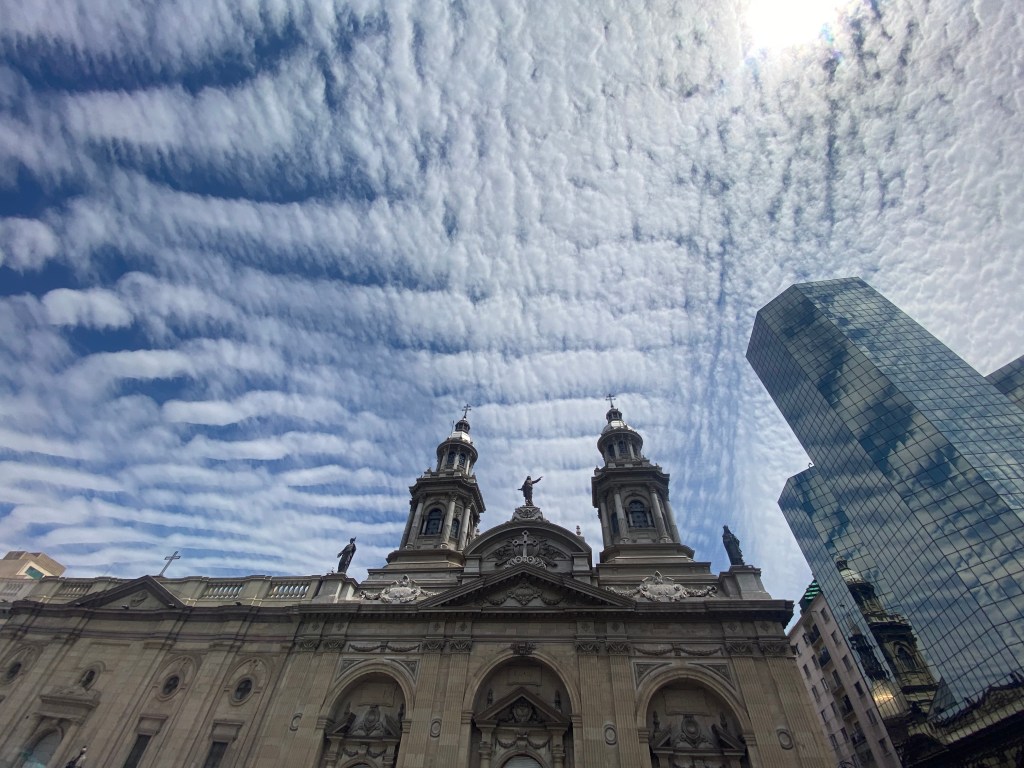
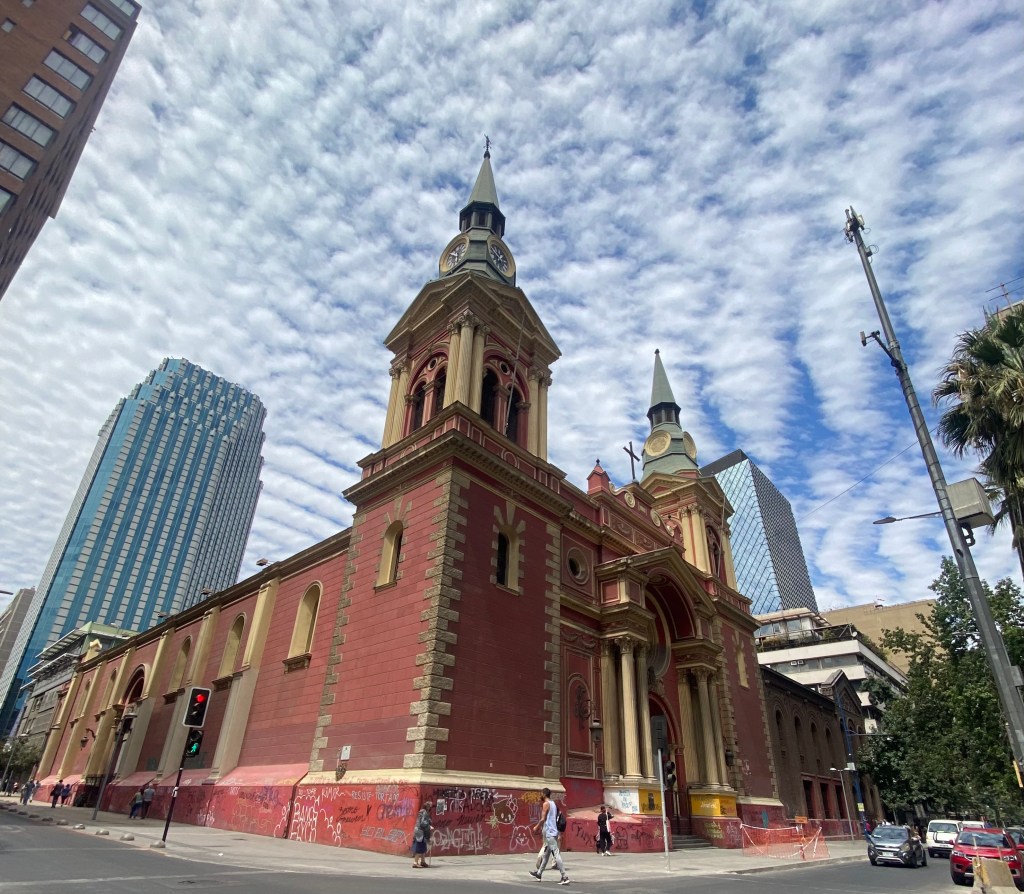
Perhaps you noticed the fabulous cloud formations over Santiago….. Henry got some really good perspectives with them.

And a couple of last notes from Santiago…… Not surprisingly, it has a lively street scene, including this fellow who practices a performance art that is embedded in the local culture.

He had trouble collecting tips from patrons of a nearby cafe….. who probably would have preferred to have been left in peace.

Another happy circumstance was meeting an interesting couple from New York, both university professors, who had spontaneously decided to escape the city for a couple of months in Santiago. We had a great time visiting with them over drinks.

Next we continue further south for a few days in the Lake District near Puerto Montt.

Patagonia, Part I

The southern part of South America is a huge region that Chile and Argentina share, called Patagonia.

From Santiago, we flew to Puerto Montt, in the more disciplined northern part of the region called the Lake District.

We were marooned in Puerto Varas on Lake Llanquihue for most of a day due to an administrative issue with our Chilean mobility passes. (The mobility pass is the individual record of Covid vaccination that is required of every resident and visitor who wants to do things outside the home – such as shop, eat in a restaurant, fly on an airplane, etc. The Chileans take their public safety measures very seriously.)

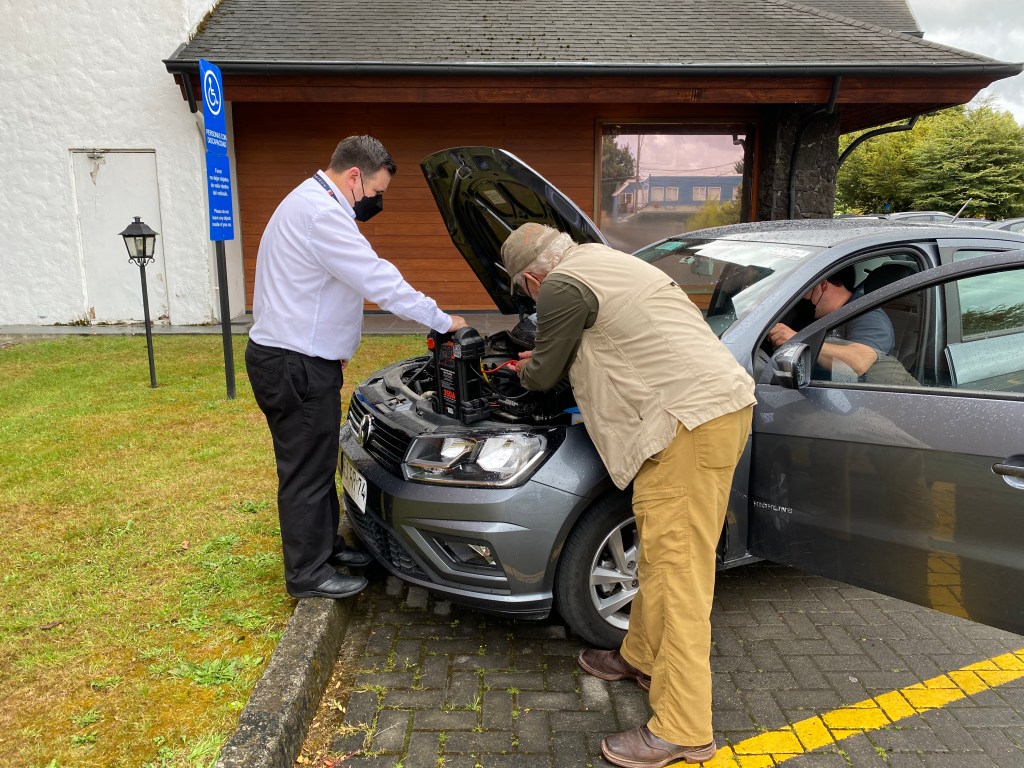
Issue resolved, another delay presented itself when the rental car battery went dead….

And yes, in Chile you wear your mask at virtually all times, even outdoors while trying to jump-start a car battery! (And nobody seems to complain about it.)

Finally fixed, there was time only for a trip around the lake and to the ski area near the top of the Osorno volcano. (No skiing yet – it’s just the early stages of fall in the Southern Hemisphere.)

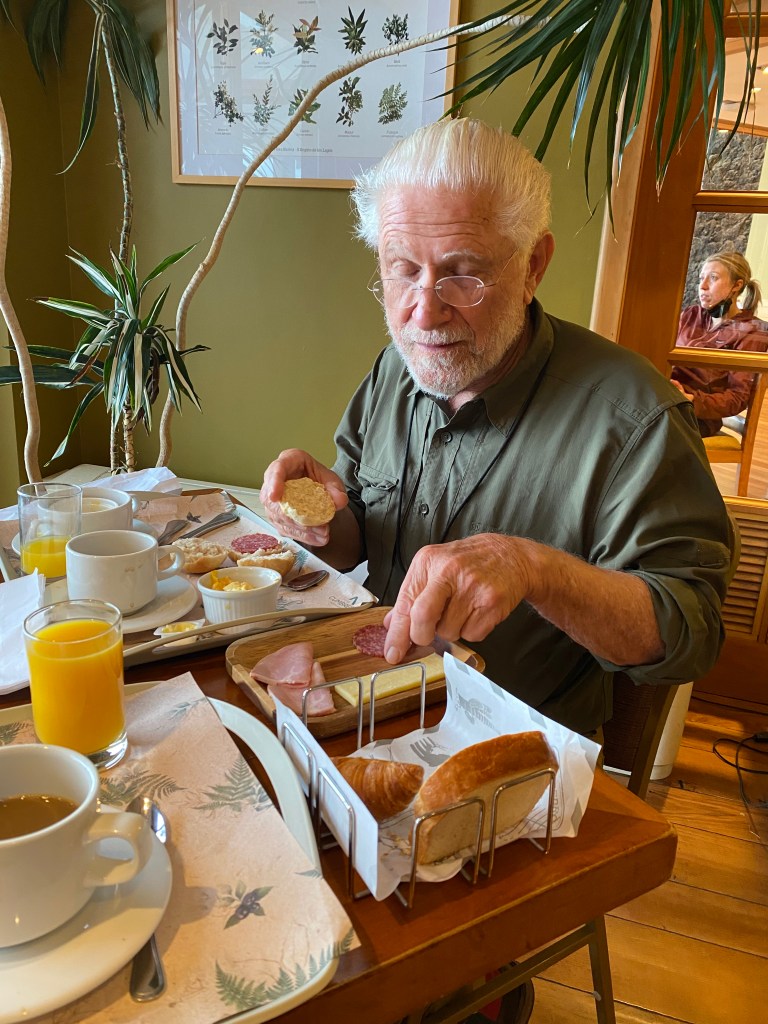
From the lake to the Pacific coast was another 2 to 3 hour drive; Henry made sure we had adequate human fuel for the journey.

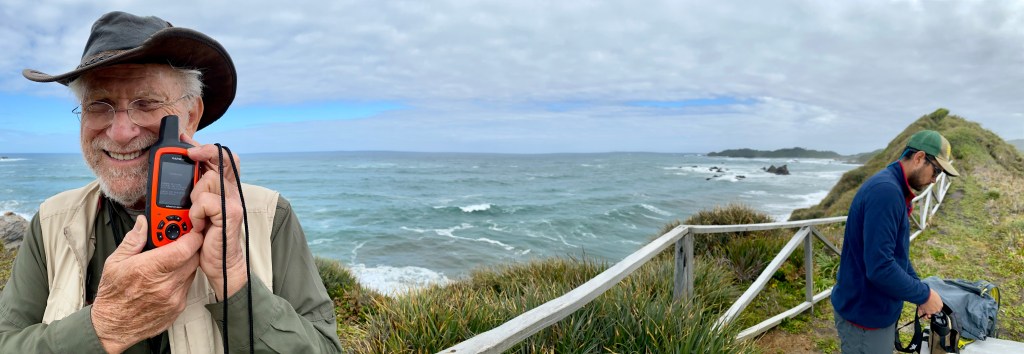
The coastline is spectacular. A satellite location message was sent from this lookout point.

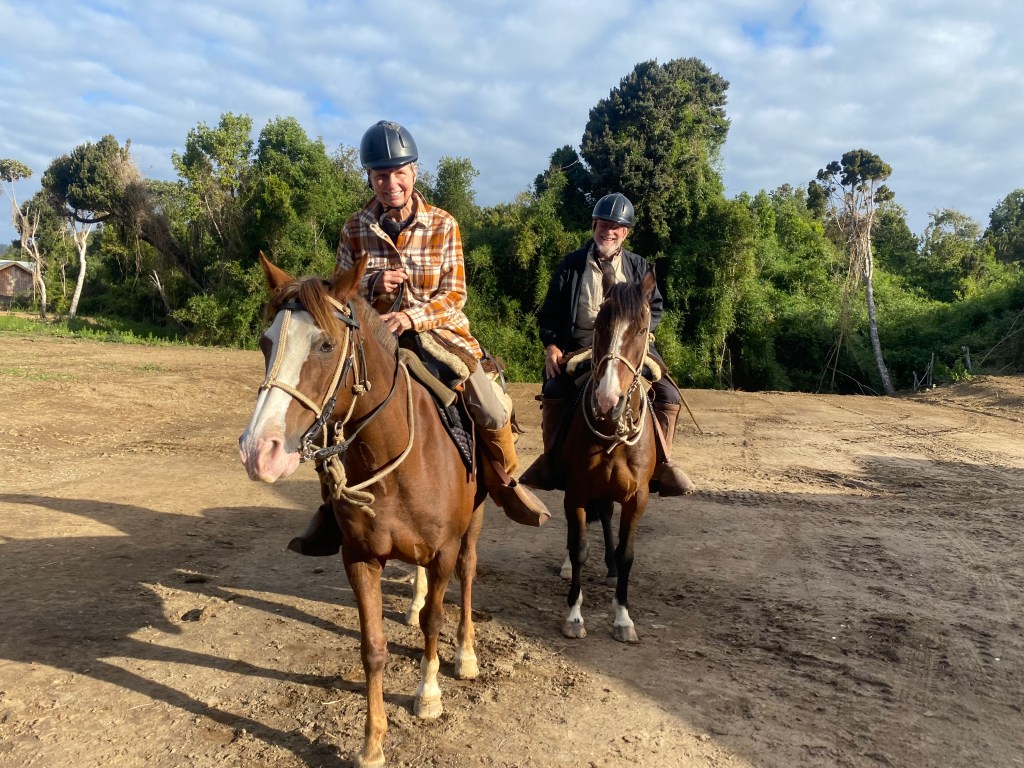
A short horseback ride along the beach…..

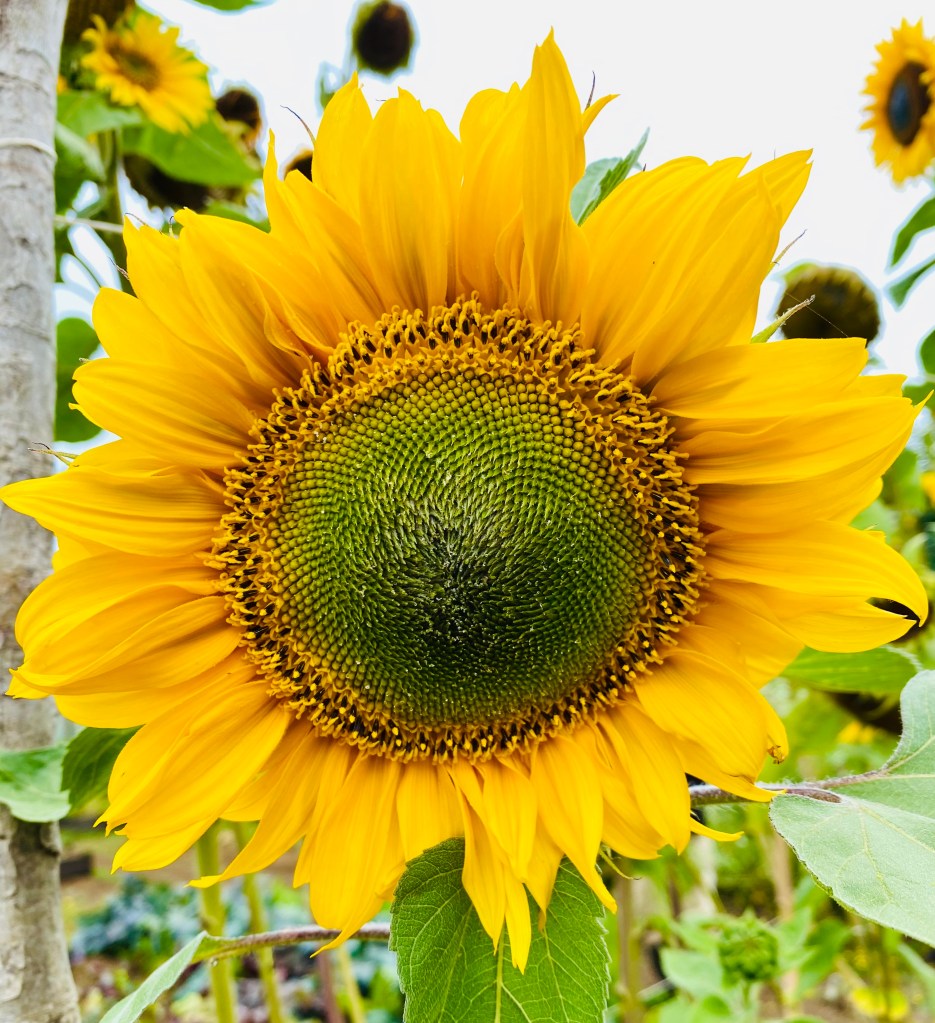
And a visit to the farm dedicated to providing much of the food consumed at the lodge. Lots of lovely chickens, and a perfect sunflower!

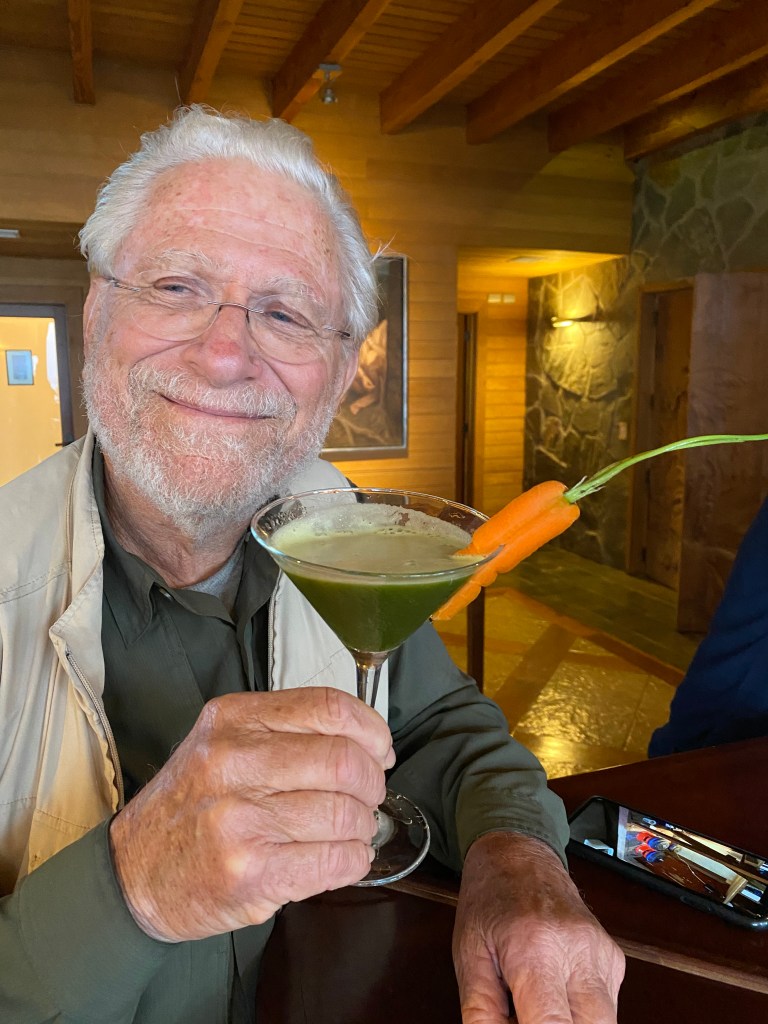
Farm produce provided the basis for this surprisingly delicious arugula martini!

The lodge has bragging rights to the only ”player piano” of its type in South America…. a pristine Steinway that exactly reproduces actual performances by renowned artists.

Ain’t technology amazing?

From here, we will fly further south to Puerto Natales, gateway to wilder Patagonia and the stunning Torres del Paine national park.

Patagonia, Part II

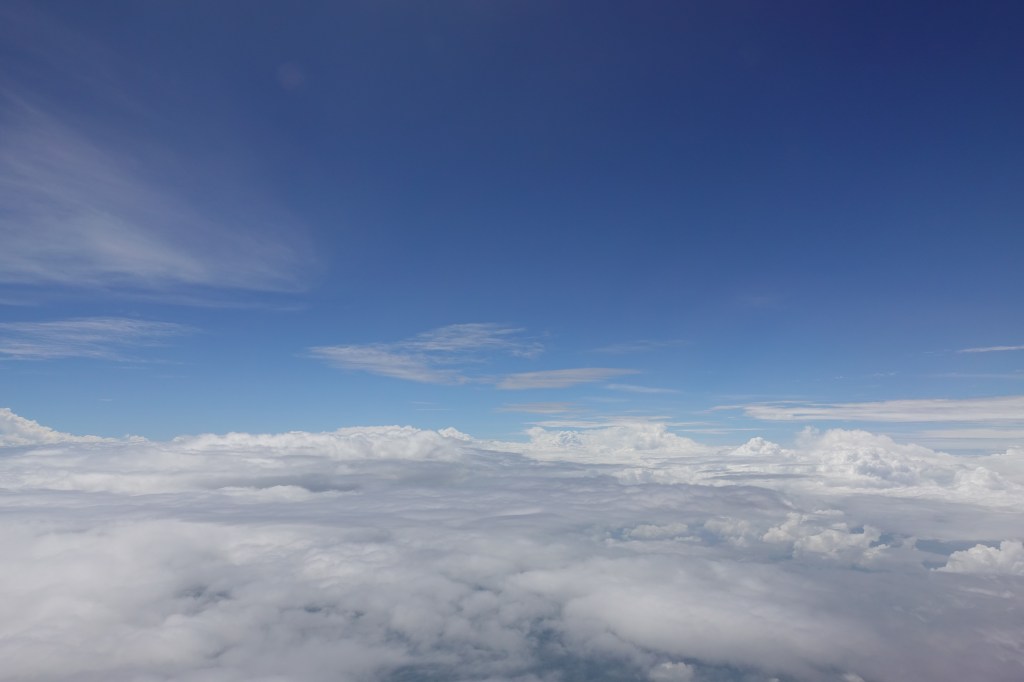
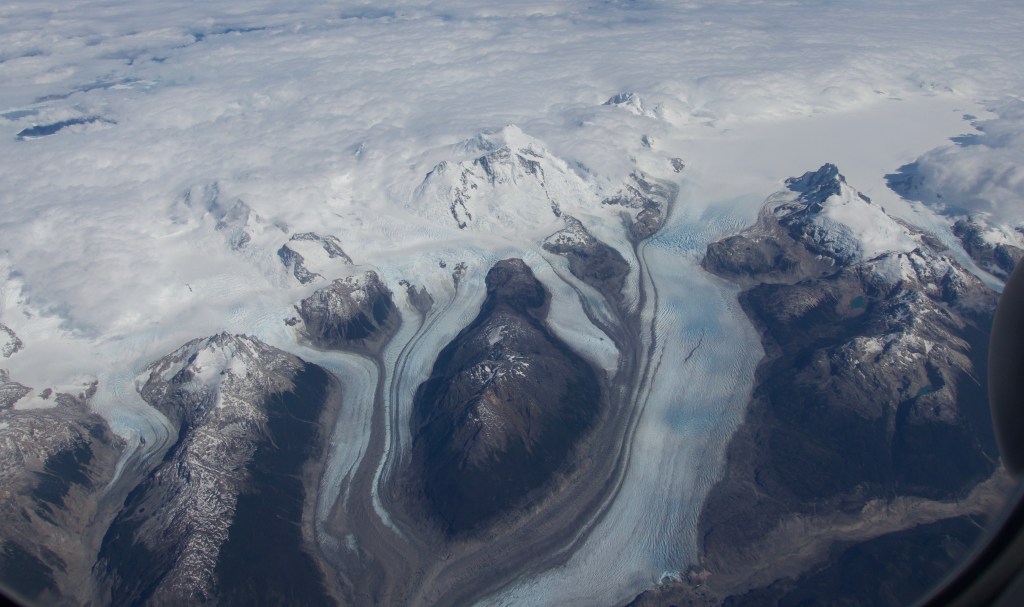
Flying south from Puerto Montt, Henry captured an extraordinary photo – once again from an airplane window! – of ice fields and glaciers among mountains and volcanoes on Chile’s Pacific coast. Wow!

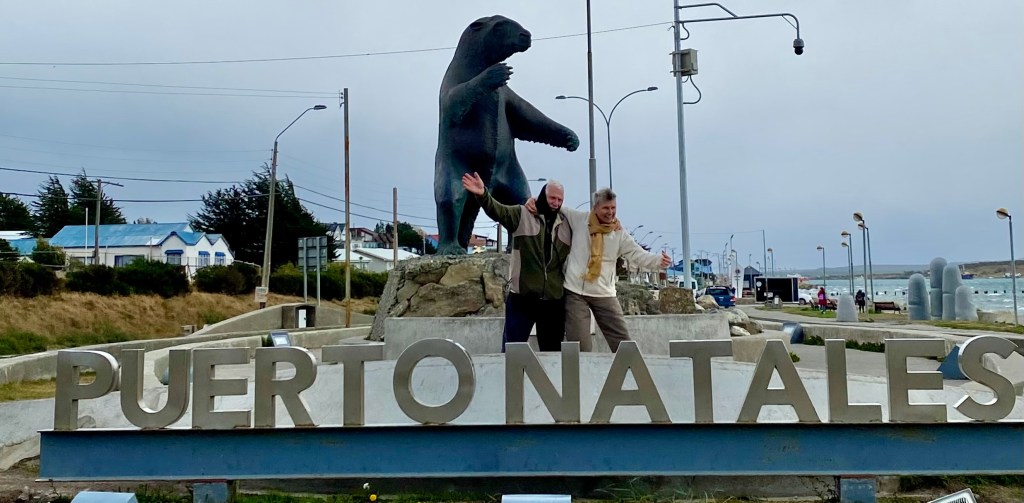
Wind also defines this part of the world. In Puerto Natales, the ferry to the estancia (ranch) where we were to have spent a day was shut down due to the gale-force winds. So there we stayed, visiting the Mylodon statue, a tribute to a prehistoric creature reputed to have made these parts his home….

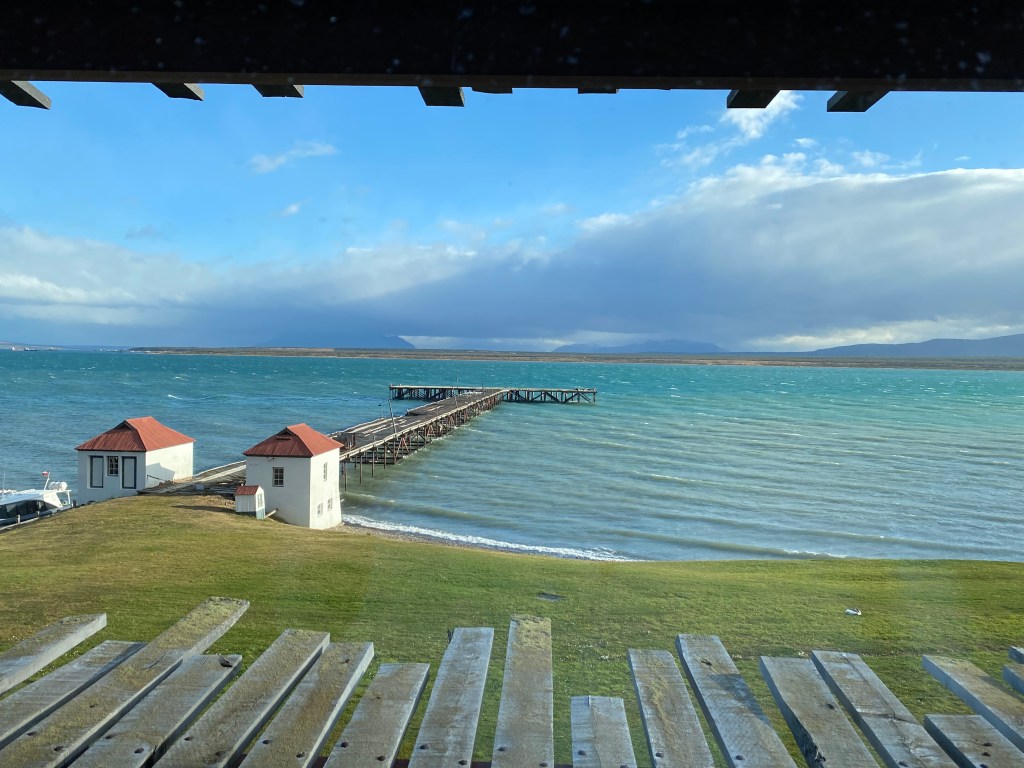
The hotel – in a former sheep-processing plant – faced the Ultima Esperanza (Last Hope) Sound, layers of blues and greens emerging during a rare moment of sunlight.

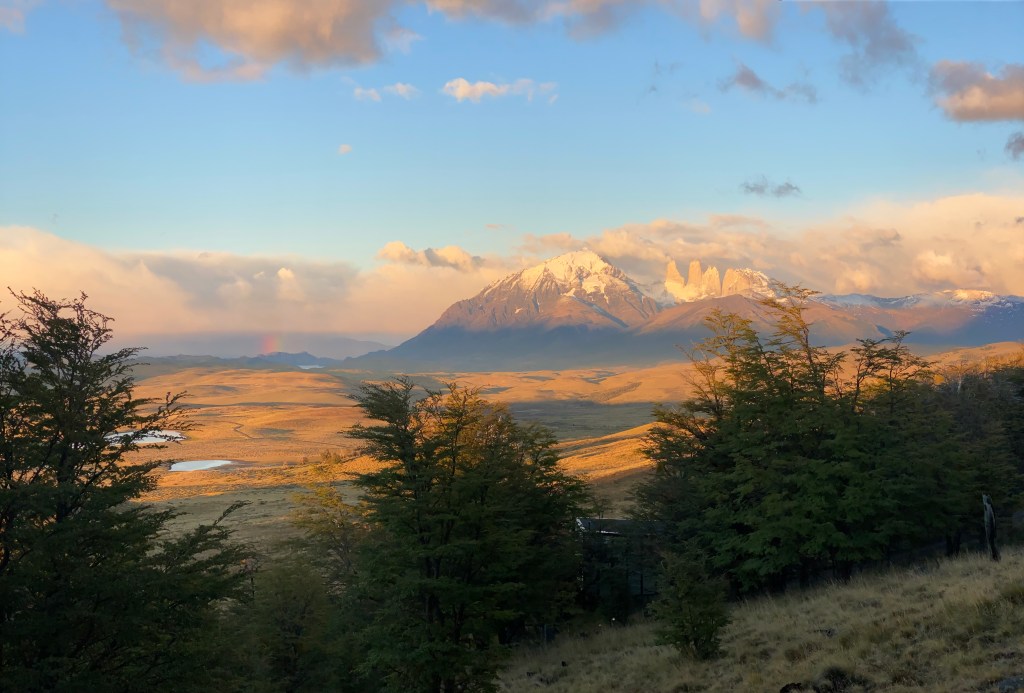
And from there to Torres del Paine, and a breath-taking vista from the lodge…..

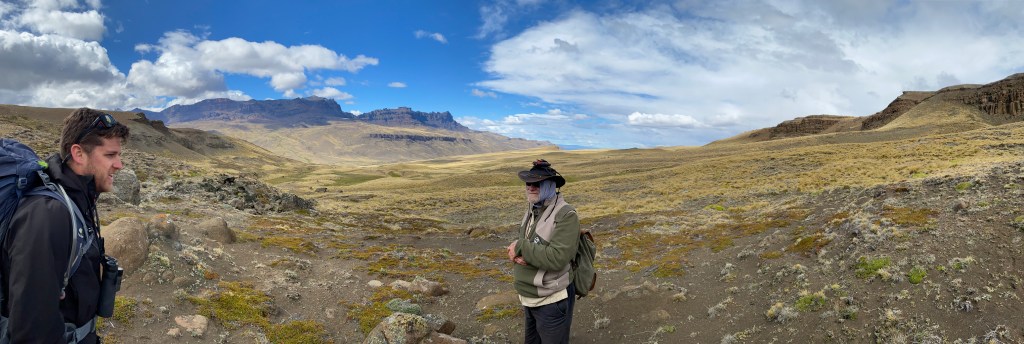
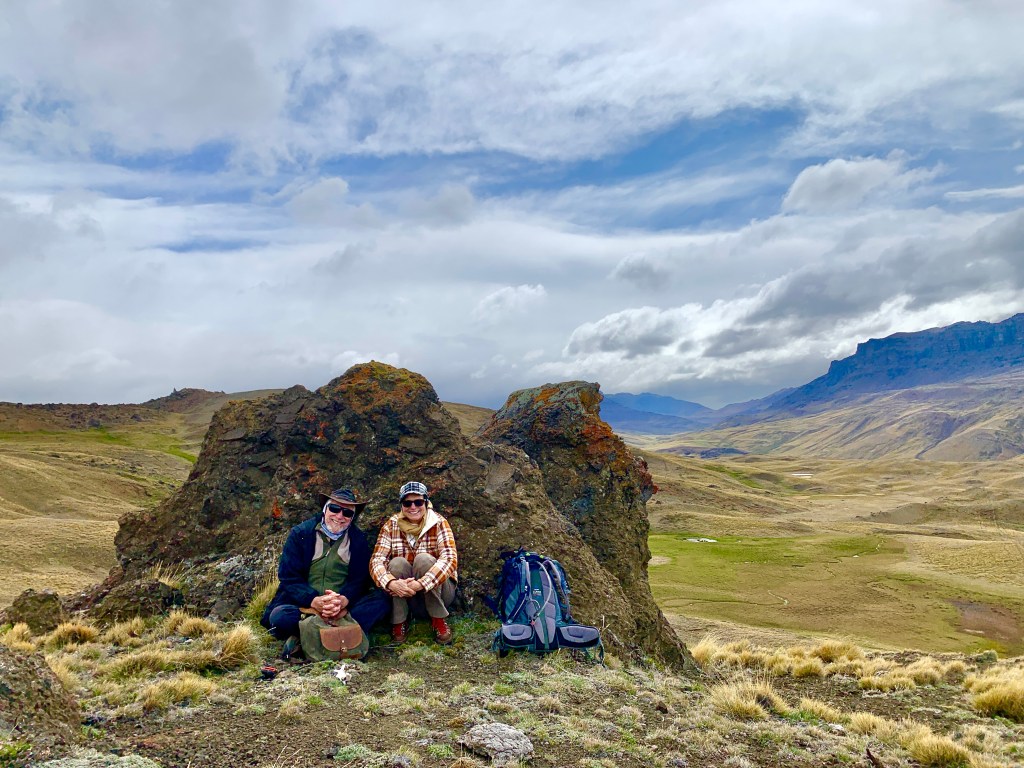
A breezy hike along a nearby ridge…. with a little shelter from the wind behind a convenient rock.

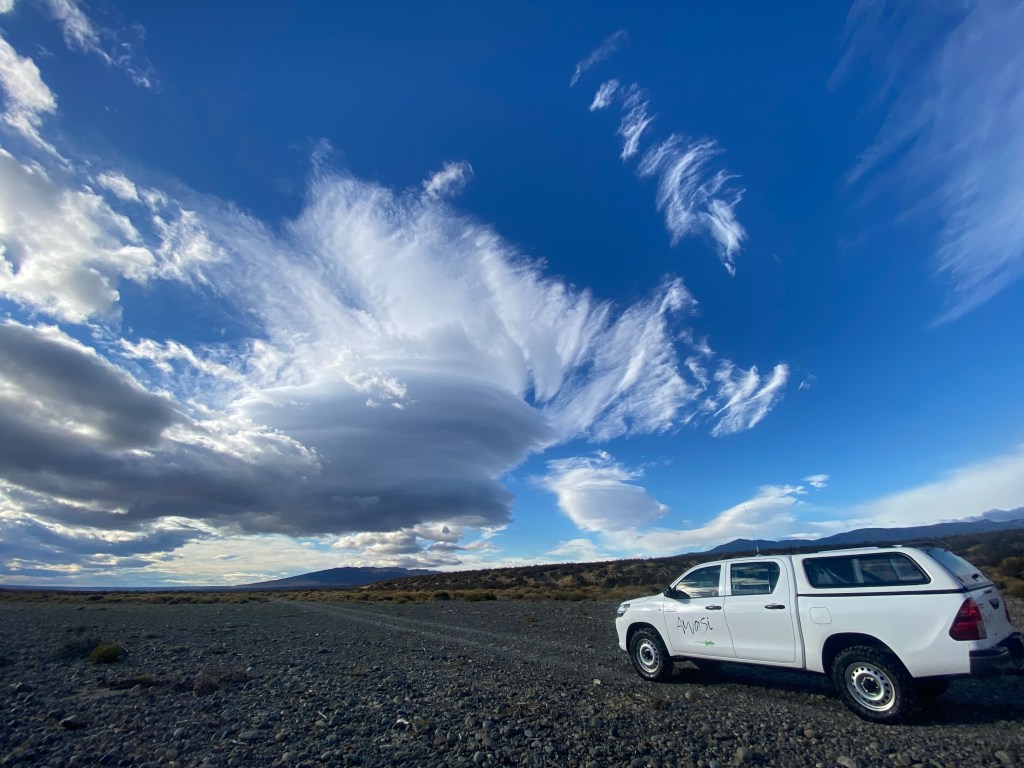
Henry has been thoroughly taken by the cloud formations, a result of rapidly changing climactic conditions and quite striking due to the big-sky nature of the place.

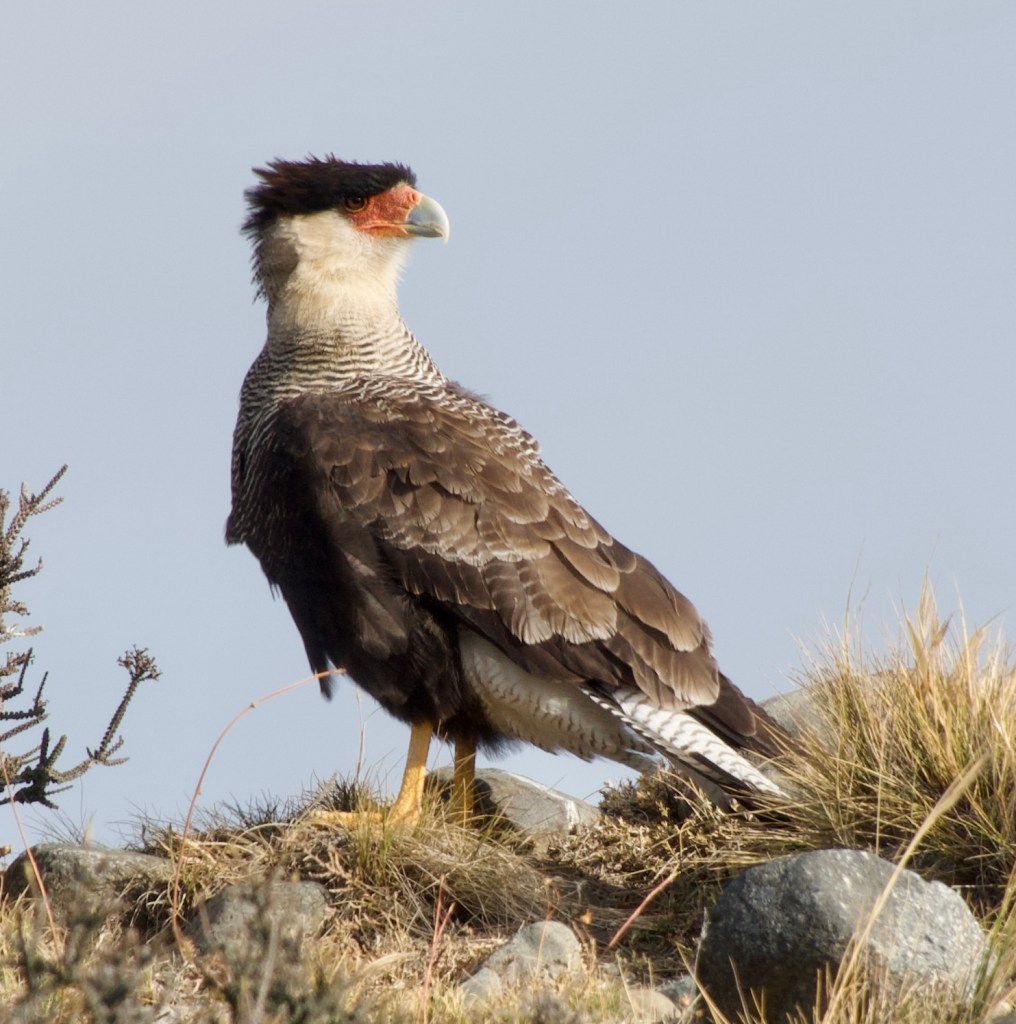
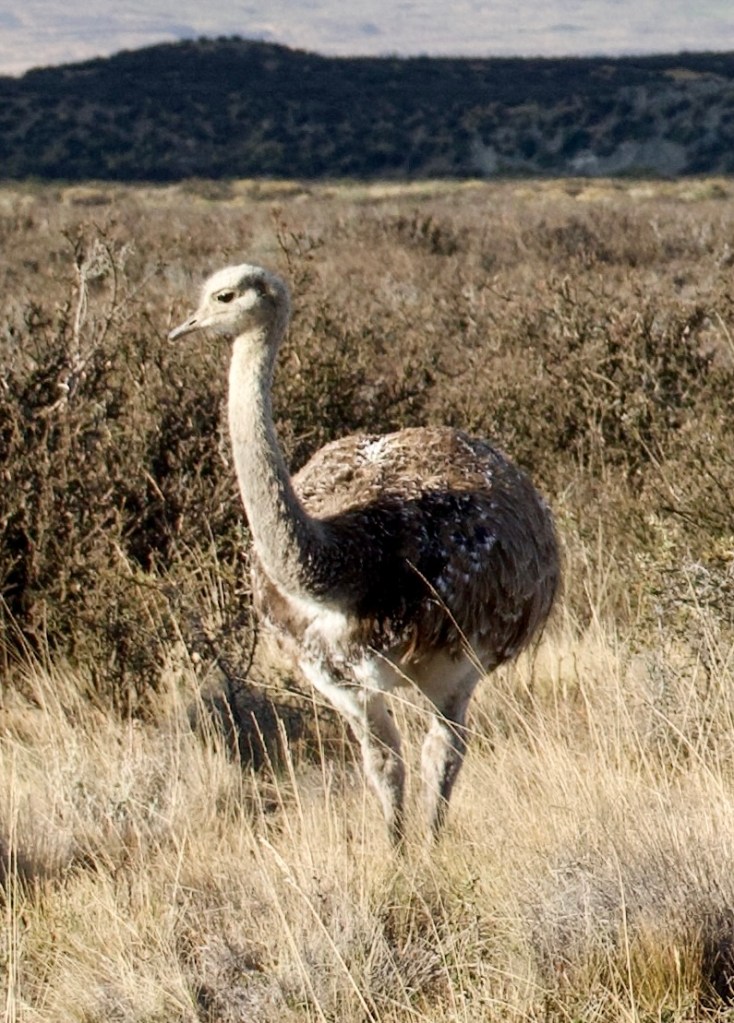
Not a lot in the way of viewable wildlife – here’s a handsome caracara (a member of the falcon family), and an ostrich-like rhea.

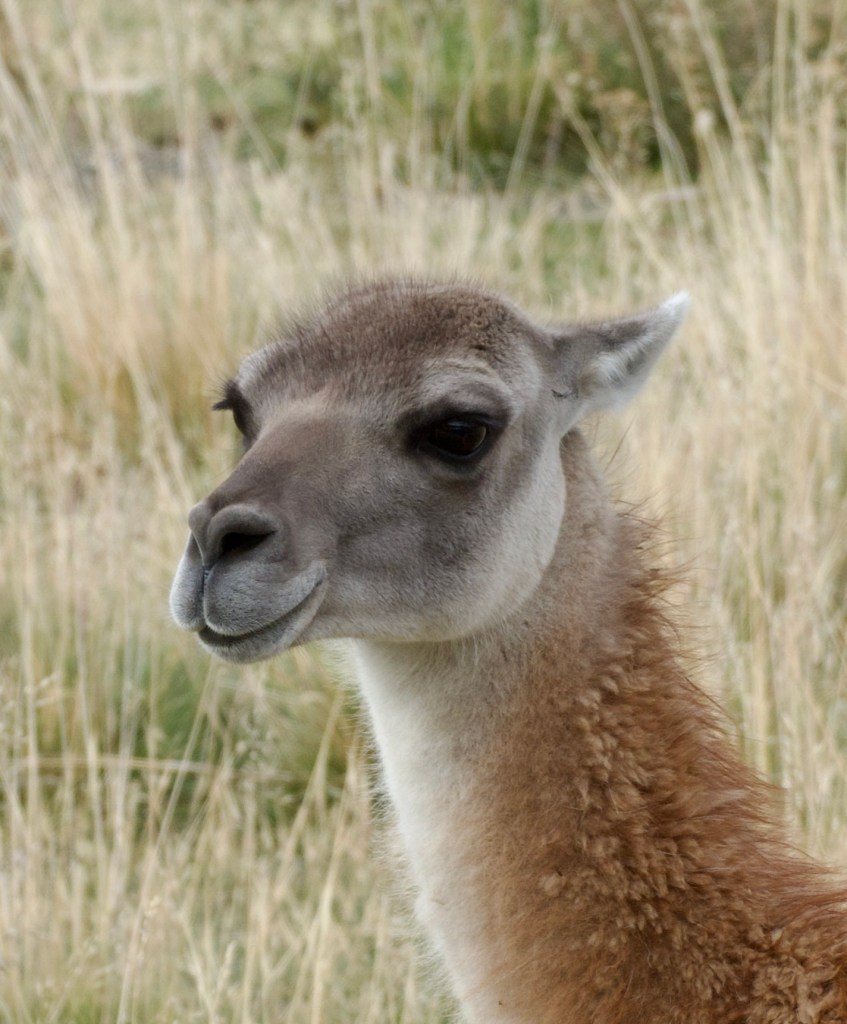
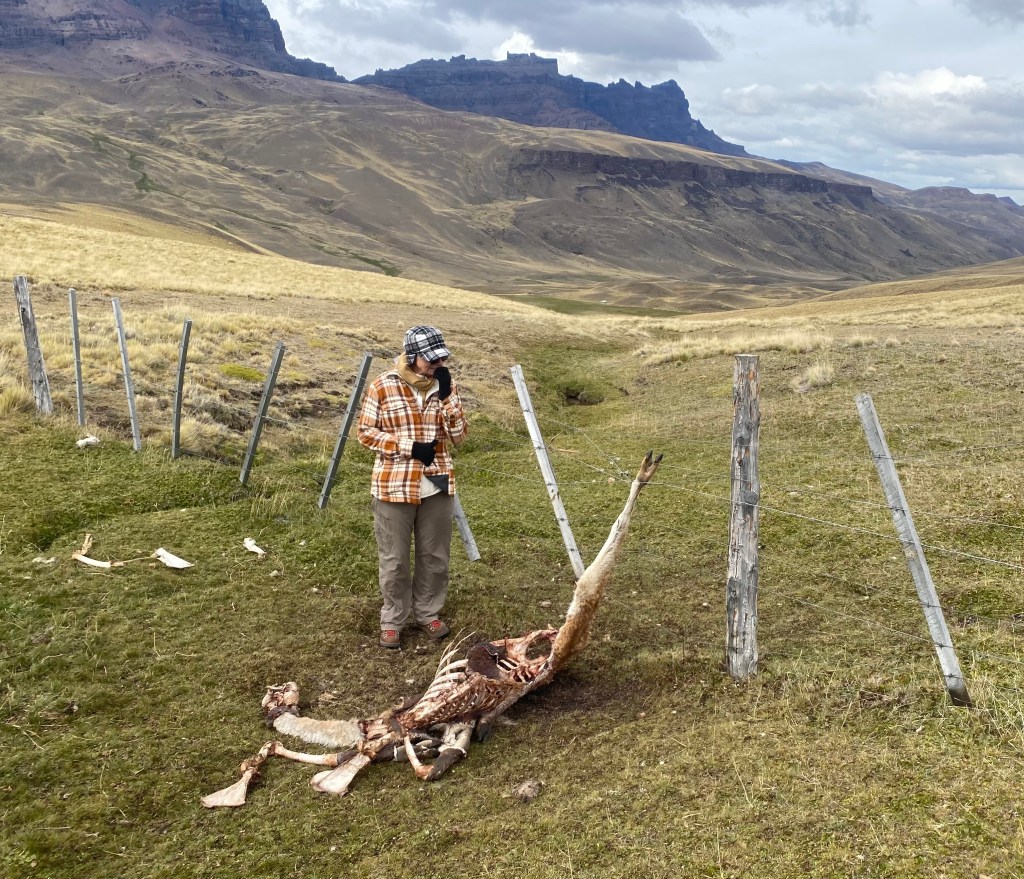
The most prevalent endemic wild mammal is the guanaco, a relative of the camel (and the llama and the vicuna). They mingle in herds, and have winsome faces, with Mona Lisa smiles and thick eyelashes.

Sadly, they sometimes run afoul of the fences that keep the domesticated sheep and cattle contained. Hopefully, this one was quickly dispatched by a puma after getting caught in the barbed wire……

(Pumas, a type of cougar that can weigh up to 200 pounds, are very hard to spot. We didn’t see any, but certainly tried.)

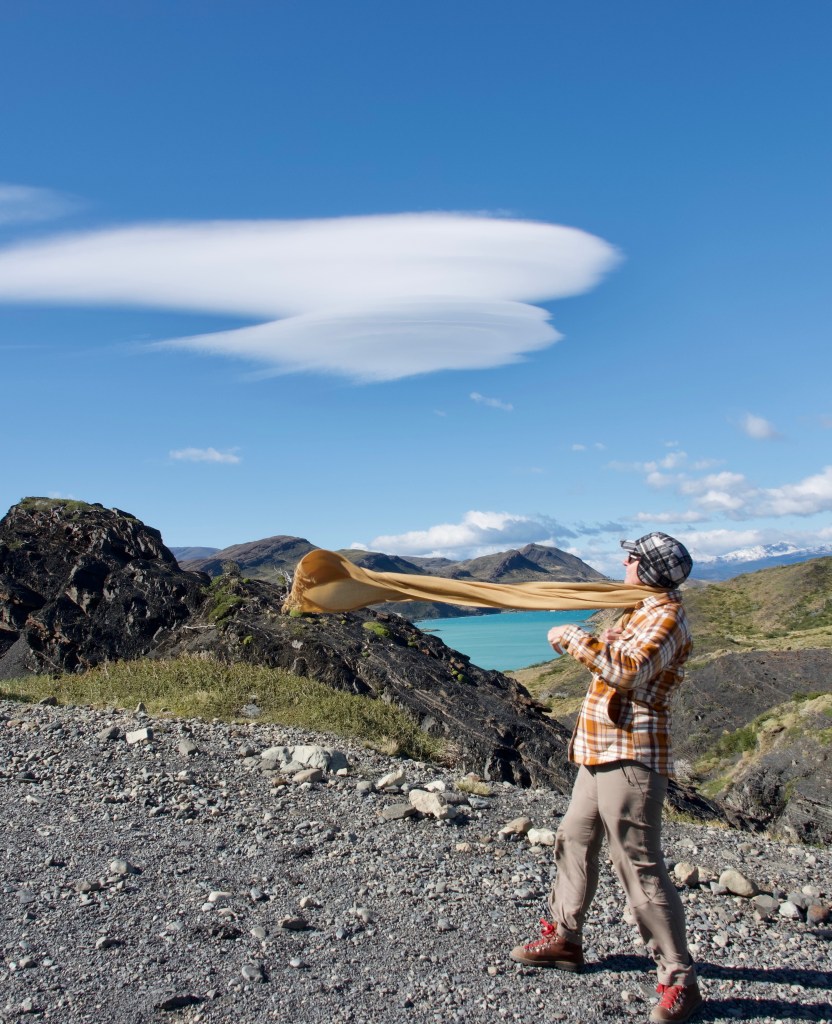
Did I mention the wind?

Easily 50 miles per hour, and fully capable of knocking you off your feet if you’re not careful…..

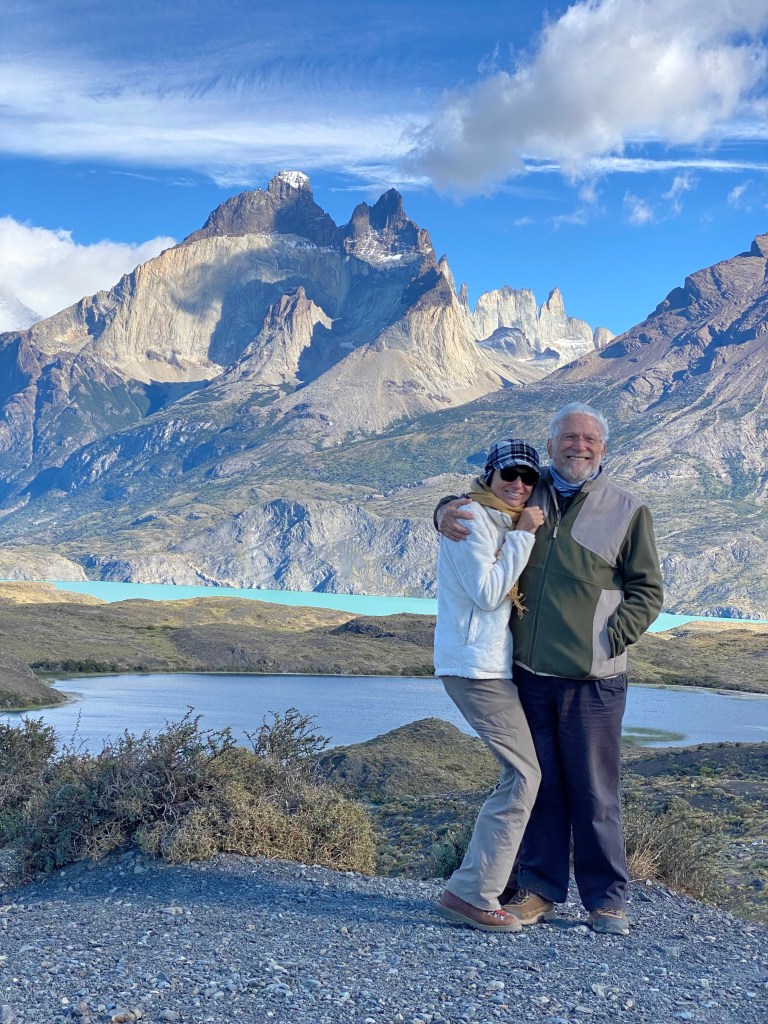
Another view of the main mountain range of the Torres…..

Henry’s grand-niece Amy sent a note that she and a friend would be in Torres del Paine to hike the famous W trek, 45 miles or so around the base of the mountains shown above. We just missed each other by a day or two, but it’s a very cool coincidence to be in the same remote part of the world at the same time. We envy the youth and strength and determination that will enable them to endure the cold, wind and probable rain to get through a rugged challenge like this. They will see incredible sights and have great stories to tell…… looking forward to hearing all about it!

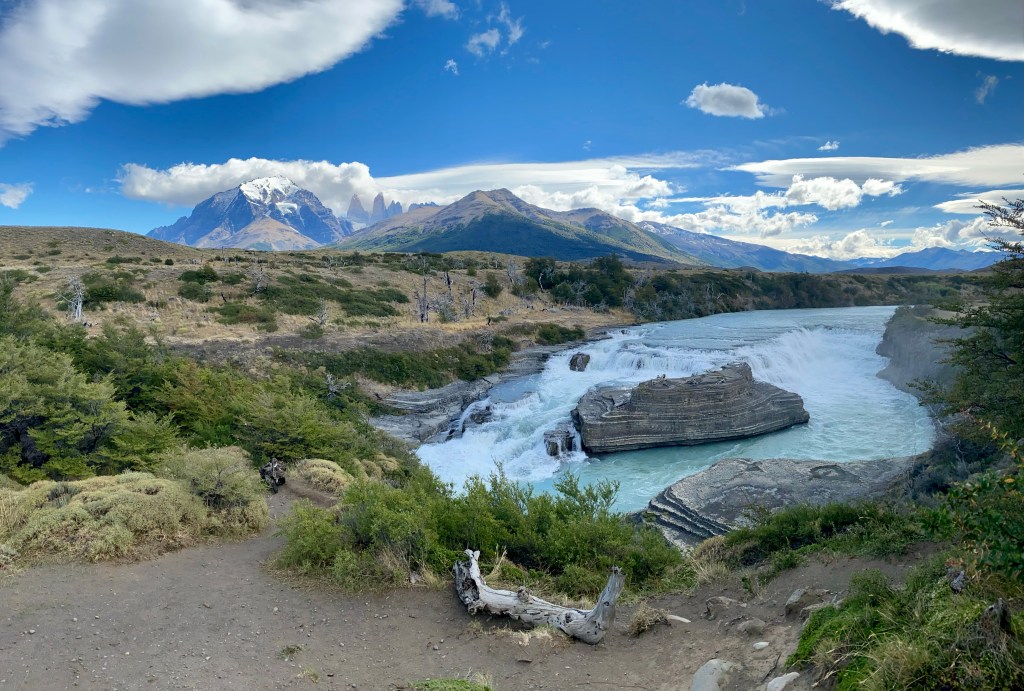
Turquoise rivers and waterfalls come from the mountain snowmelt.

Almost certainly unlike Amy and her friend, we were very well taken care of during our time in the park……

With an al fresco meal….

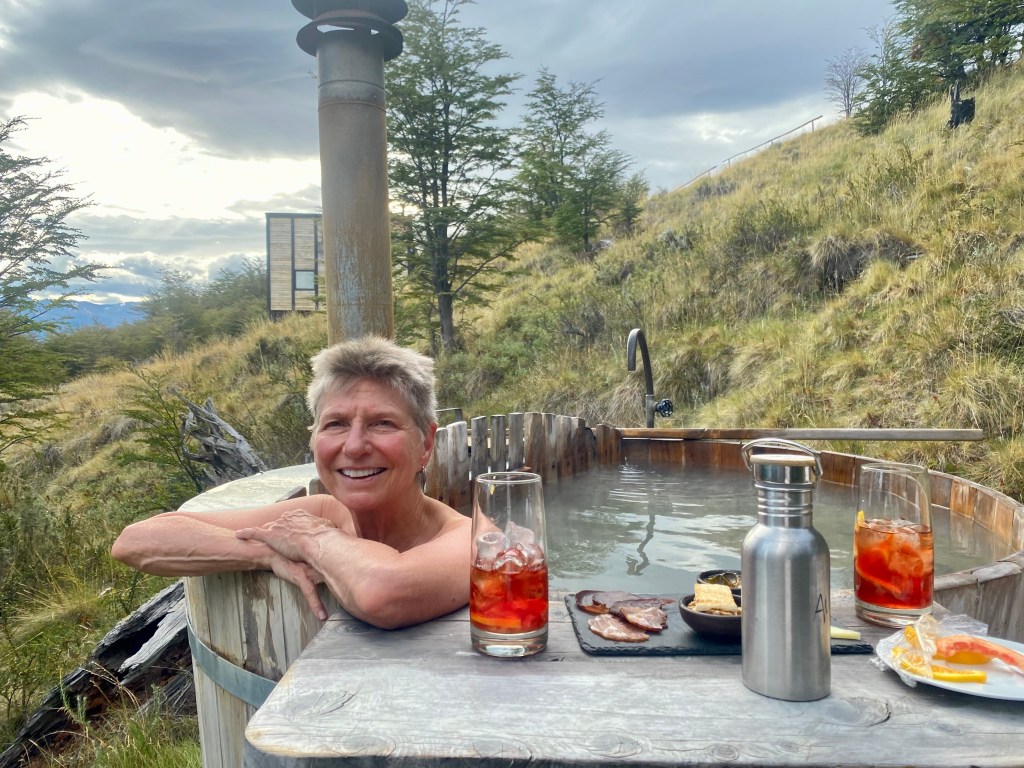
And a wood-fired hot tub at the end of the day….

After our first night, Henry complained that the water in the tub was a little icky…. so they emptied, scrubbed and refilled it, adding a nice tray of drinks and goodies for our next soak!

Life is bueno!

Adios, Chile!

It’s been invigorating visiting a couple of our neighbors to the south over the last month, especially after a lengthy hiatus. Ecuador is rich in natural wonders…… but the diversity and grandeur of Chile has really bowled us over. The people, too, have been welcoming….. patient with our American ways….. but without being excessively solicitous of seniors like us.

Henry got a warm response when he flashed people a glimpse of his Boot Barn boots, emblazoned with a representation of the Texas flag…..

…… which looks very much like the Chilean flag (here flapping in a mild wind)……. so they create an instant if fleeting bond with Chilean folks of all ages.

Through a series of circumstances related to Covid protocols and weather-related limitations, we had to fly half the length of Chile back to Santiago for PCR tests….. and will fly this afternoon south once again for our ongoing voyage.

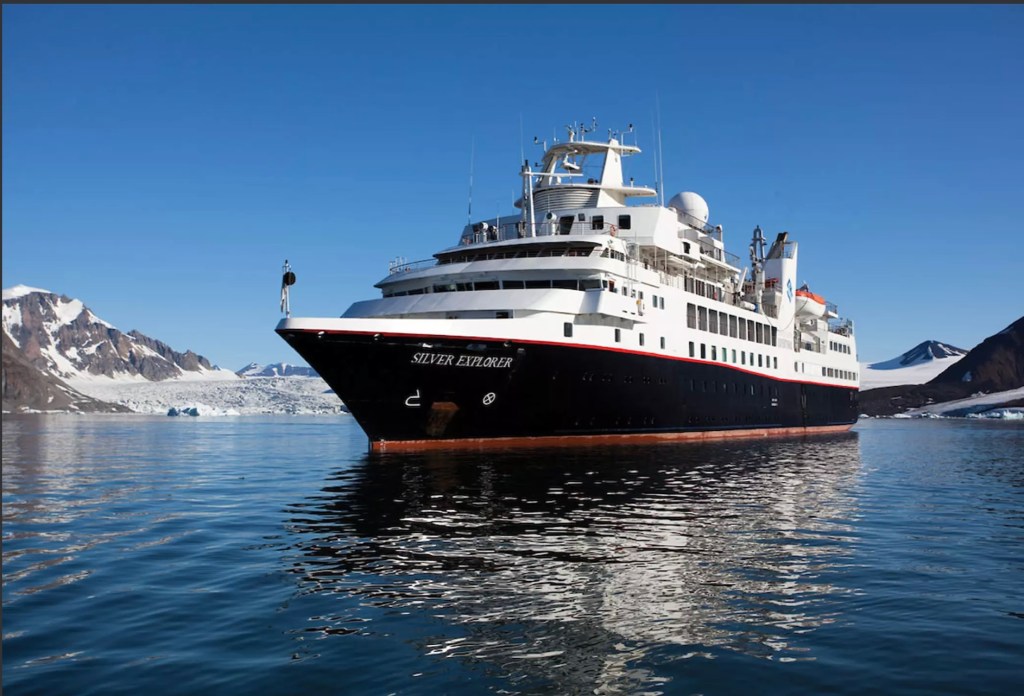
We will board the Silversea Explorer in Puerto Williams, Chile. The ship normally accommodates up to 144 passengers, but apparently there will be only 40 to 50 on this cruise! Still plenty of new friends to make!

Puerto Williams is on the Chilean side of the Tierra del Fuego archipelago, at the southern tip of the continent. It’s a little further south from Ushuaia in Argentina, a popular jumping-off point for cruises to Antarctica. Here is our planned route:

Originally, we were to have stopped a day or two in the Malvinas, aka Falkland Islands, but for Covid and/or weather reasons, they are closed to visitors. Instead, the next 3 weeks we’ll be sailing to Cape Town, South Africa.… along the way visiting the British territory of South Georgia for wildlife viewing, and several islands in Tristan de Cunha, another British territory that is the most remote inhabited archipelago in the world. It’s 1,732 miles from the African continent, and is home to about 250 hardy souls.

In Cape Town, we will join up with our friend Tertius* who has planned a nice long sojourn for us in southern Africa…… all of which will be a subject for another series of blog posts. With limited internet on the ship, we won’t be posting again until we reach dry land around the first of April.

In the meantime, we wish you all happy trails! Thanks for watching!

  • Tertius operates a wonderful boutique travel firm called Eye See Africa. He put together our first trip to Africa in 2018 and it was fabulous…… You must contact him if you are pondering a safari….. http://www.eyeseeafrica.net.

Subantarctic Wildlife

At last we have arrived in Cape Town! A future post will describe our experience on the long cruise from Puerto Williams, Chile. For now, however, we will just look at some of the interesting creatures we saw during our stops in South Georgia along the way. If you don’t like penguins and seals, however, you can easily skip this entry. You will also need good internet service, as there are lots of video clips.

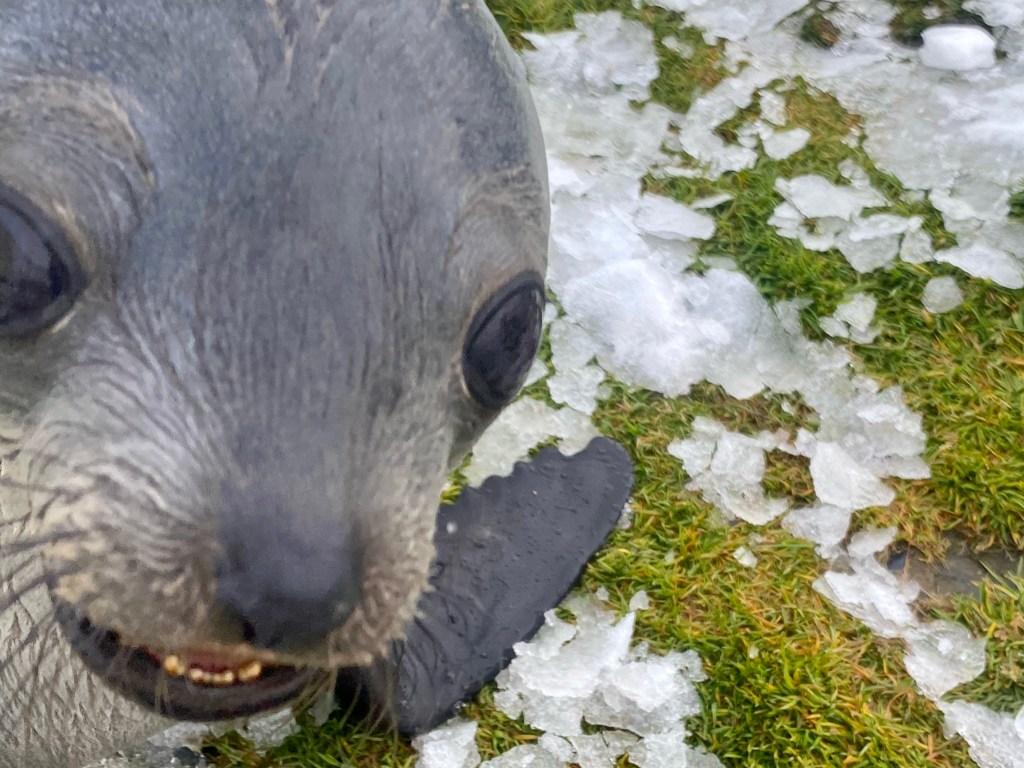
What is it about these animals that is so appealing to us? Part of it may be that they do not fear us, but instead are quite interested in our visit to their habitat. Witness Henry with a little fur seal…..

Also some clownish moments….

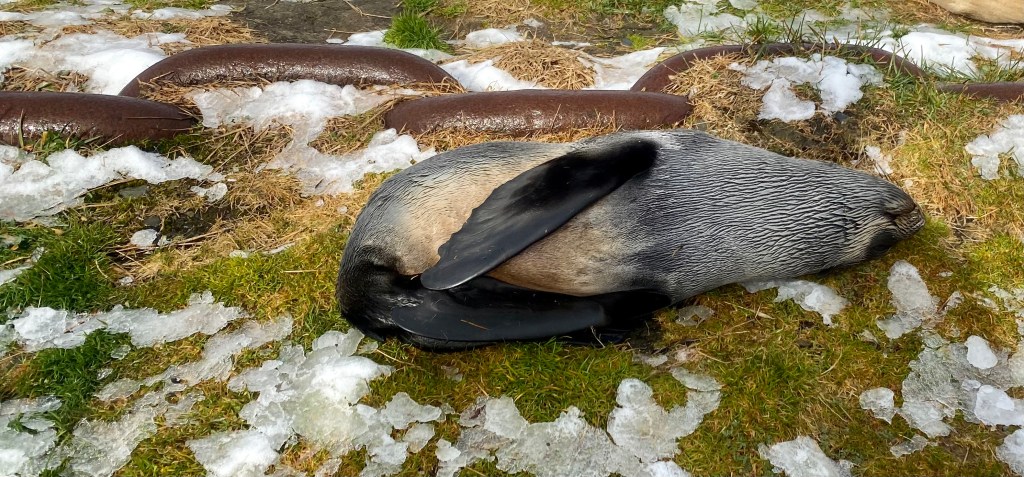
You don’t want to get too close, as their bite is reputed to be quite painful. Fortunately, however, most of the larger ones are pretty darned busy catching up on some zzzzzs.

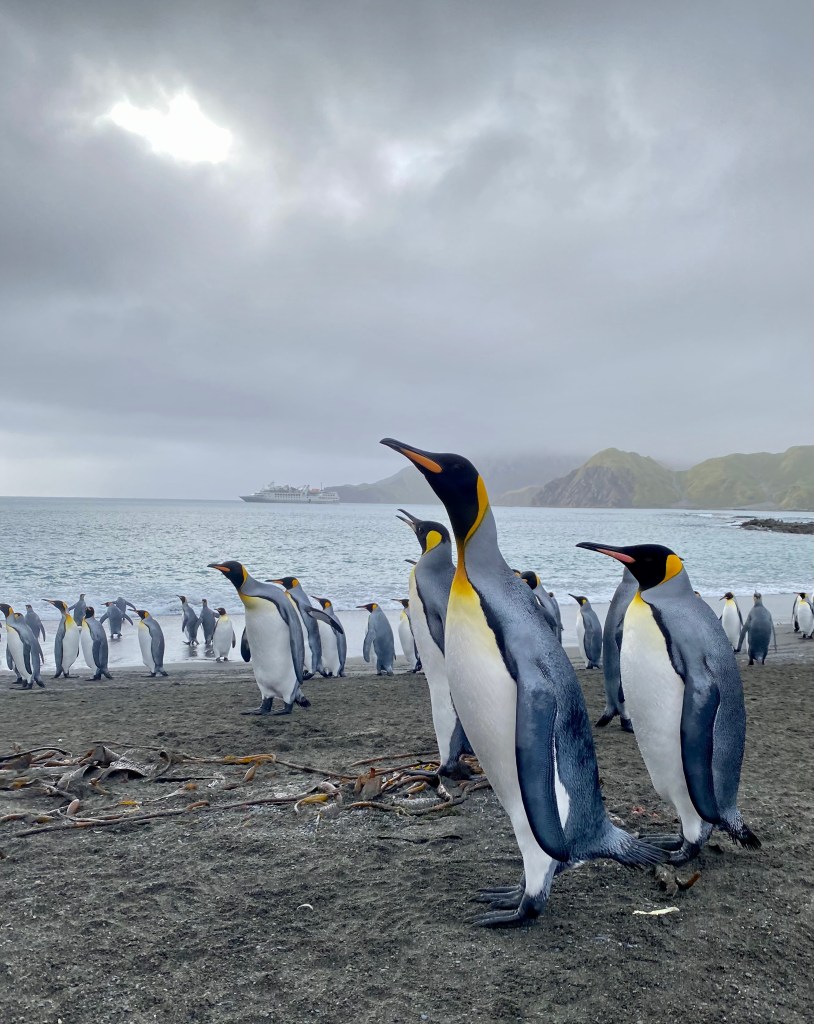
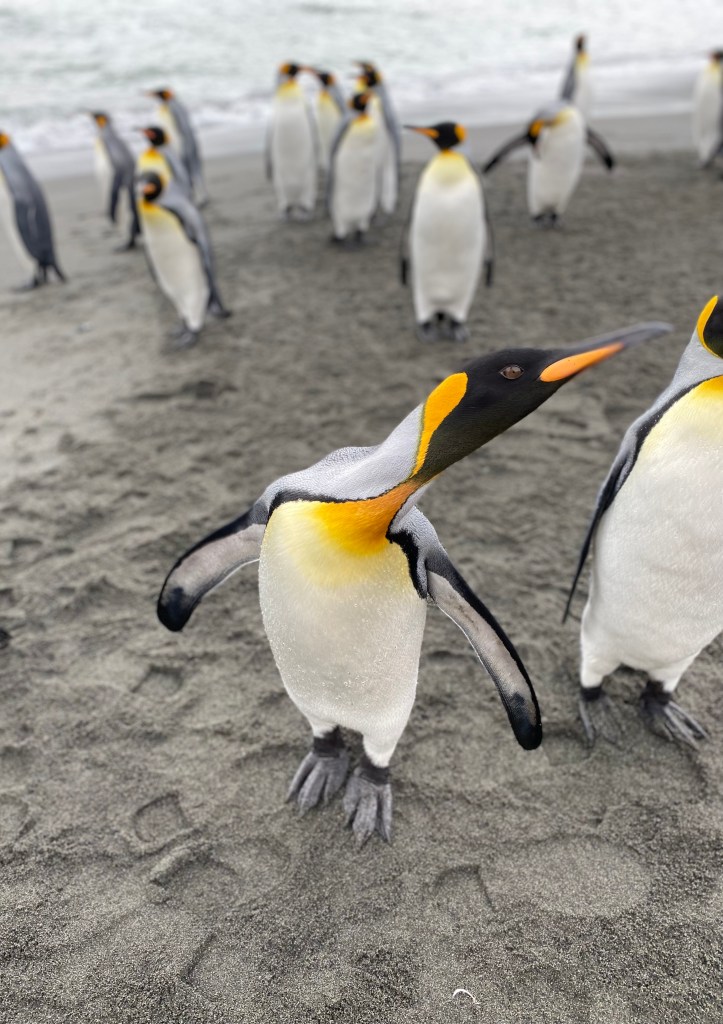
King penguins are gregarious and numerous, to say the least. Something like 400,000 breeding pairs live in South Georgia, more than 10,000 in this colony alone.

Friendly characters….. when Zodiacs full of people land on the beach, they waddle there to see what’s going on…..

They are absolutely gorgeous individually…..

…. but somehow in groups, you expect them to break into song or ask a penetrating question about the nature of existence. Or just do a goofy comedy routine.

Elephant seals are huge – females weigh up to a ton, and males up to 4 tons! During their molting season, they tend to flop around together in rafts, only occasionally breaking into ungainly activity.

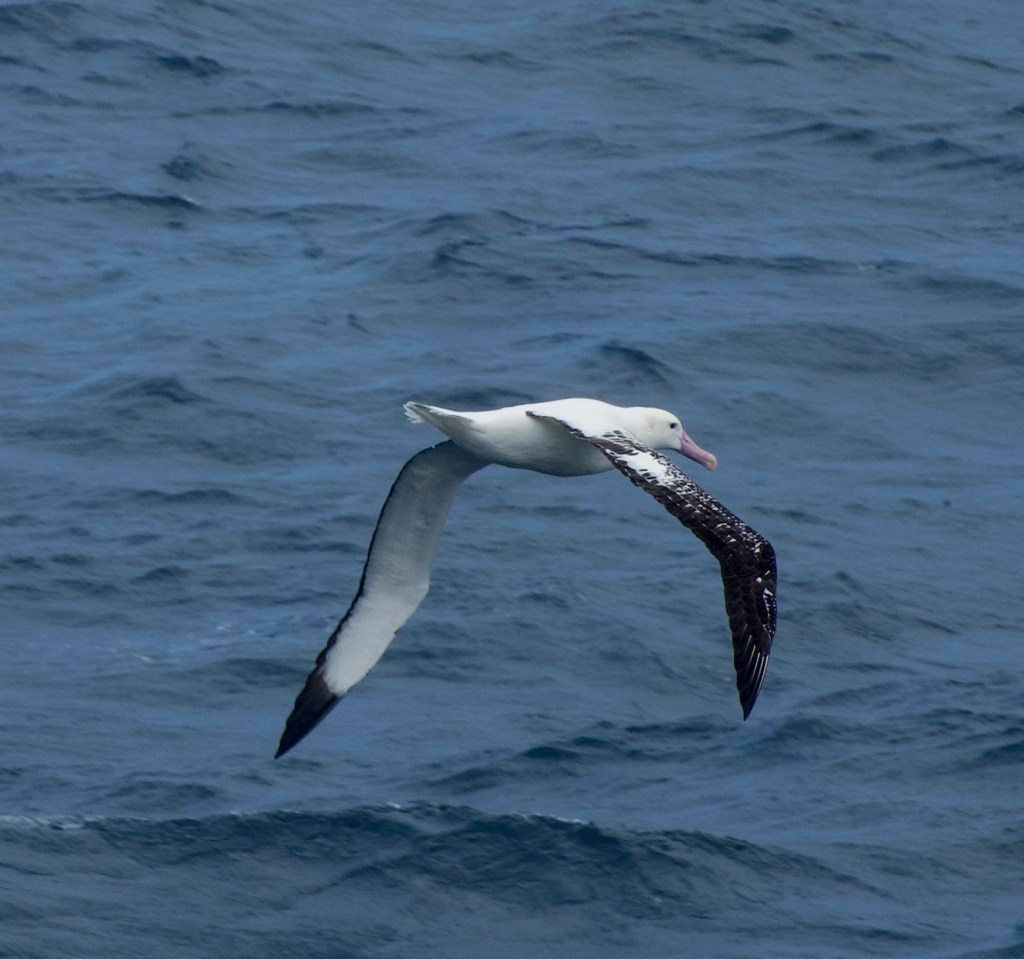
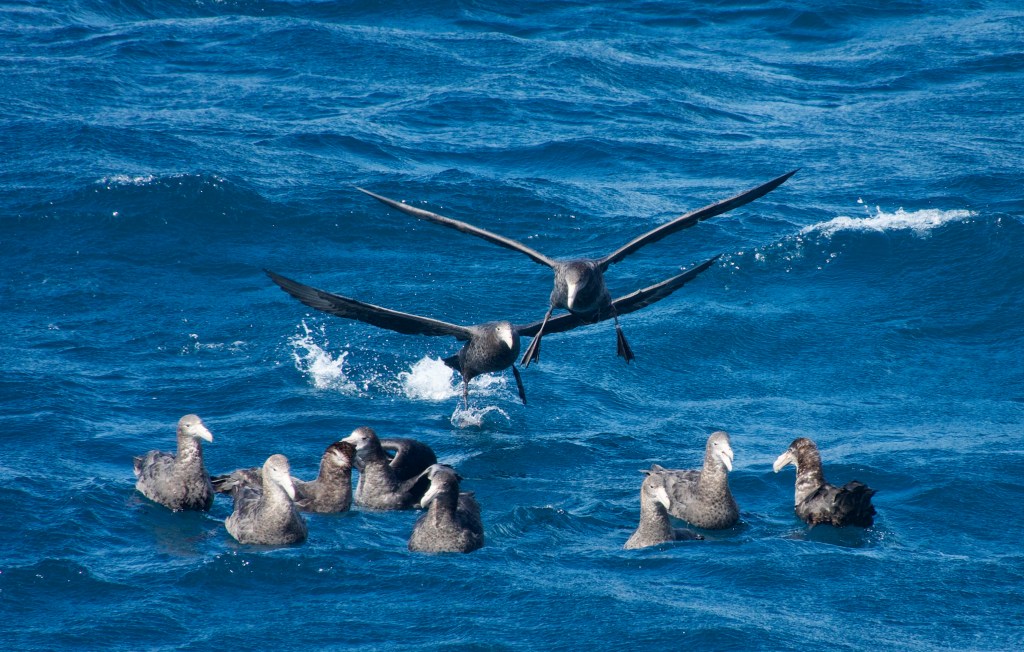
Especially near land, albatrosses soar around the ship. They are magnificent birds.

These animals can only exist in their current circumstances in the extremely remote, cold and pristine environment of the subantarctic. It’s not an area that everyone wants to visit, and that’s good. Hopefully they will continue to thrive.

We did not get a chance to spend much time on land due to weather (to be explained further later.) A couple of shots from one of the rare excursions……

More soon!