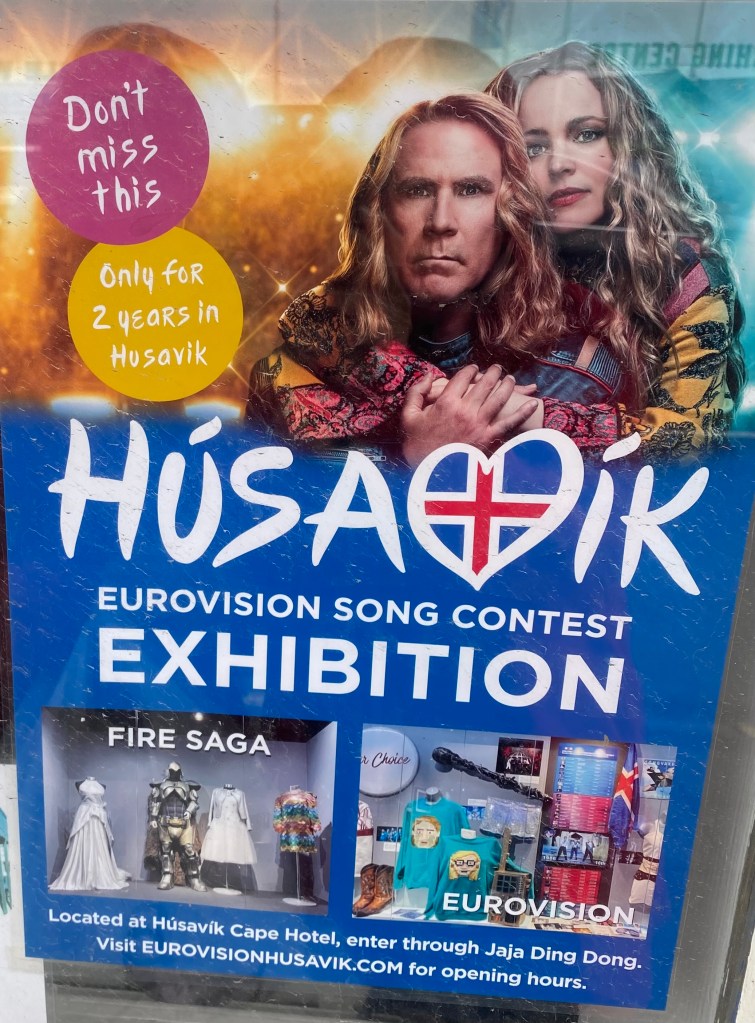
Husavík, on the north coast, is the Whale-Watching Capital of Iceland…. Also the location for the film “Eurovision Song Contest – Fire Saga”, a cute comedy with Will Farrell and Amy McAdams that was largely filmed in this small town.
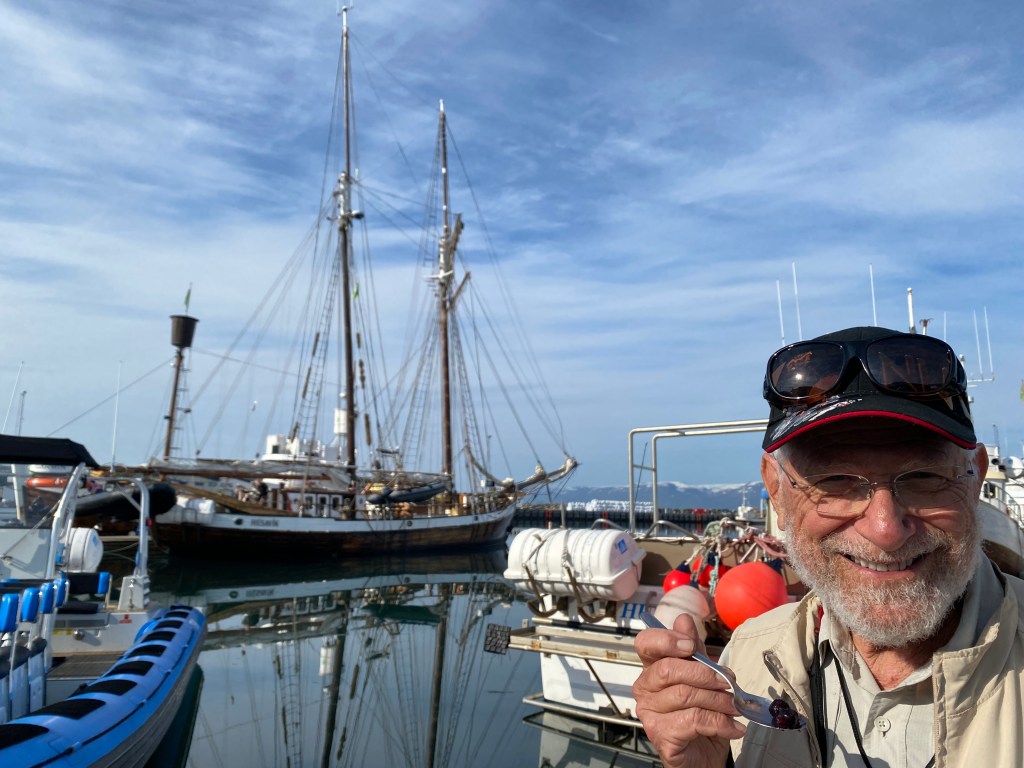
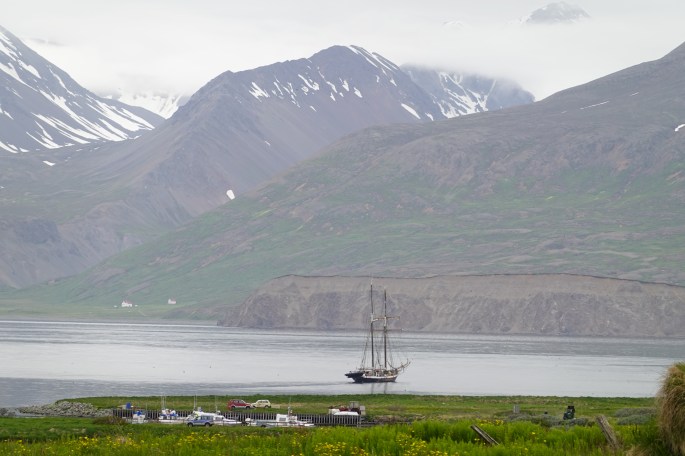
The movie is not great cinema (although its theme song was nominated for an Oscar!), but it is a charming travelogue for the area. Many scenes were shot in the harbor in front of the sailing schooner Opal, which was our home for 3 days, along with 10 other passengers and crew members.
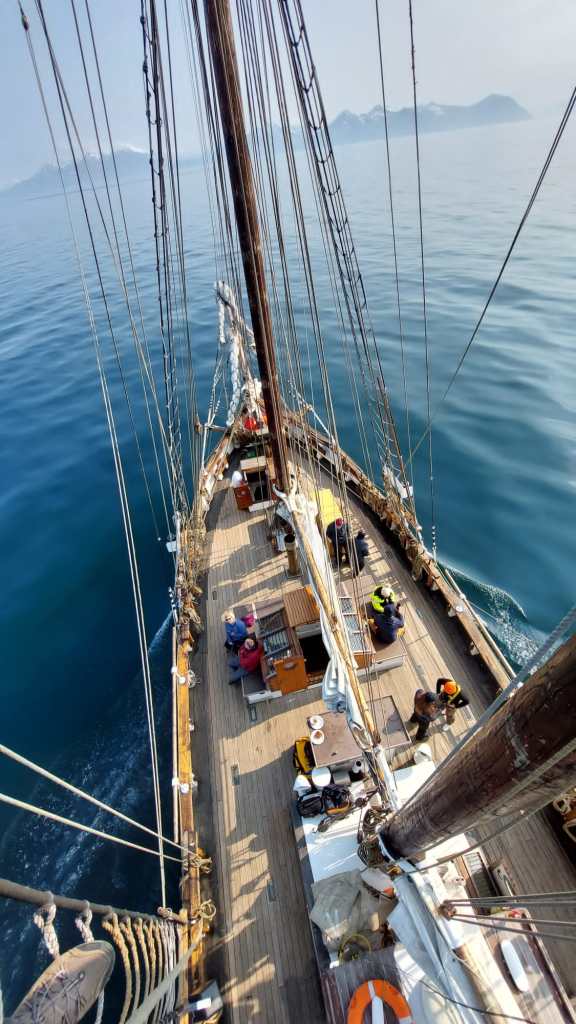
The Opal is a sailing ship….. and when not under sail, it is powered silently by its hybrid electric motor, which makes for peaceful cruising that is far less likely to startle the surrounding marine life.
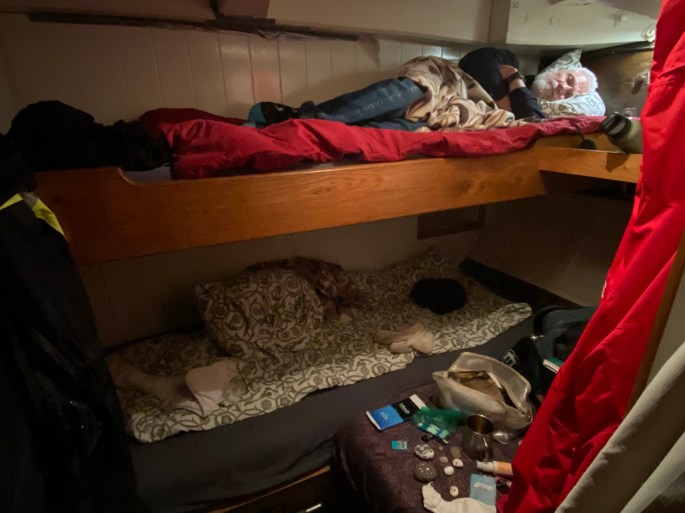
With teeny cabins….
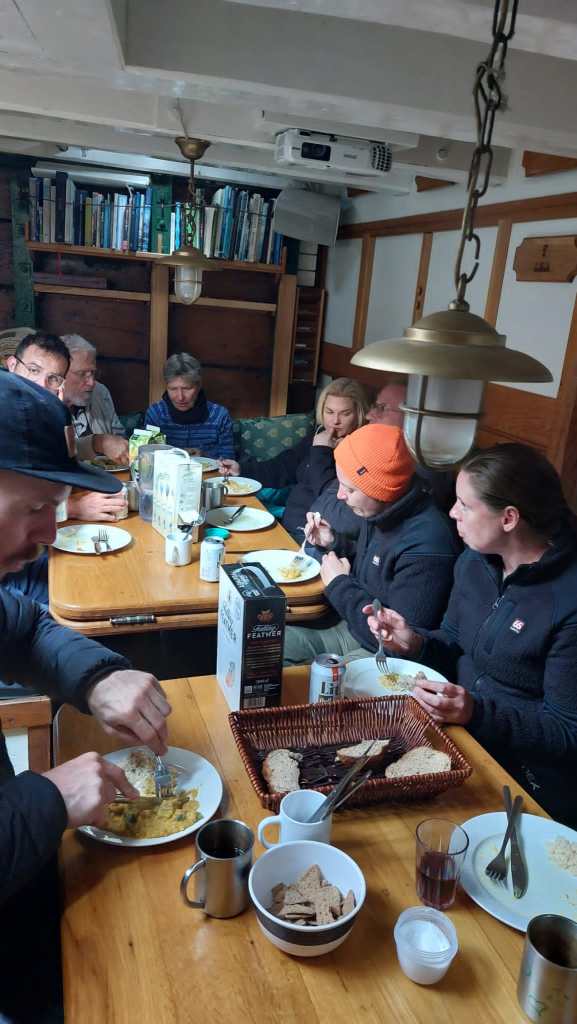
Cosy dining room…
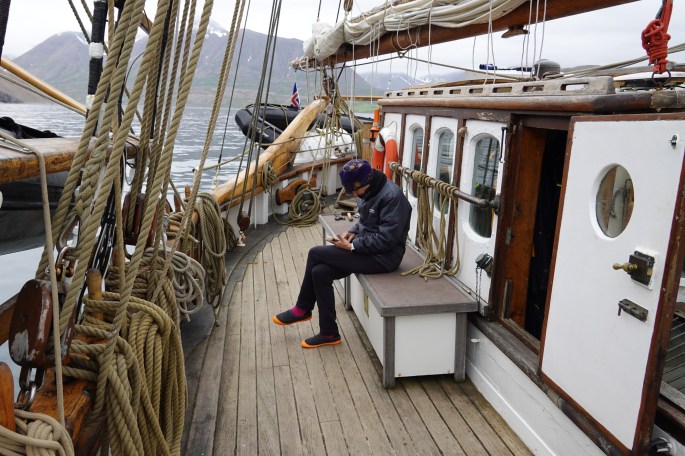
But lots of deck space and incredible weather….
There was even an onboard hot tub!
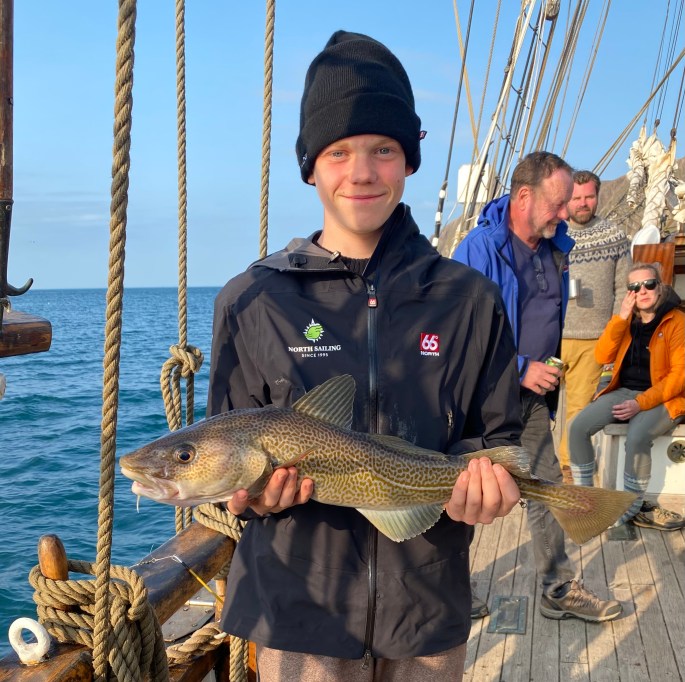
The first mate caught a fish!
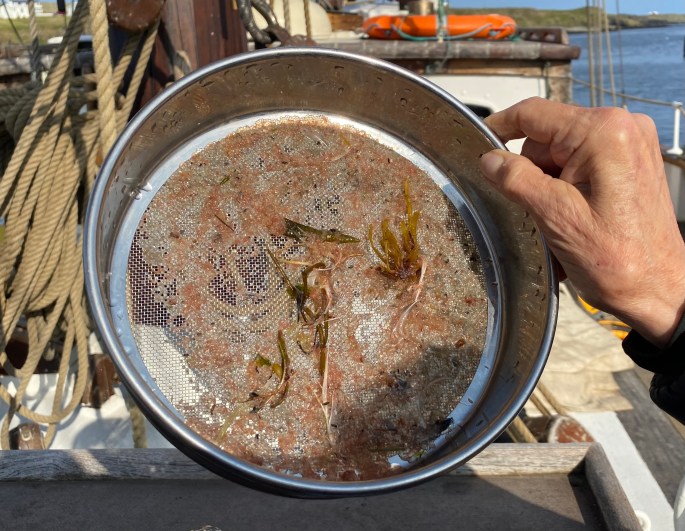
The onboard marine biologist dredged the water from time to time, expecting to find lots of plastic and other pollutants, but it actually came up pretty clean (the pinkish material is a marine invertebrate, kind of like krill).
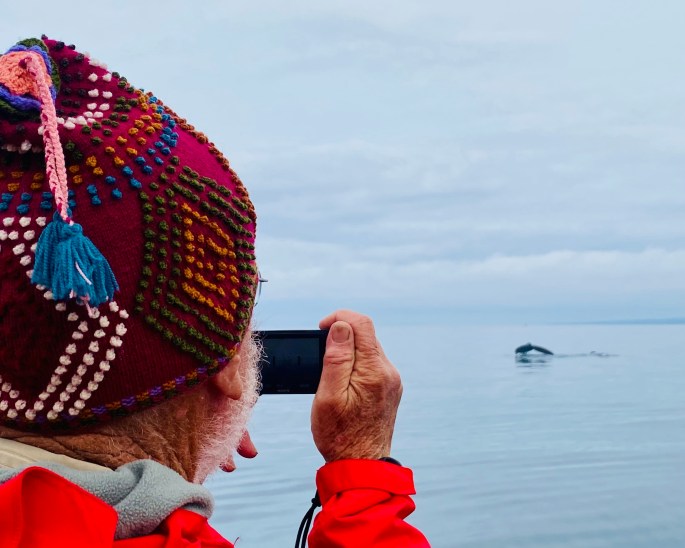
A major activity was looking for whales… blue whales and lots of humpbacks were spotted…
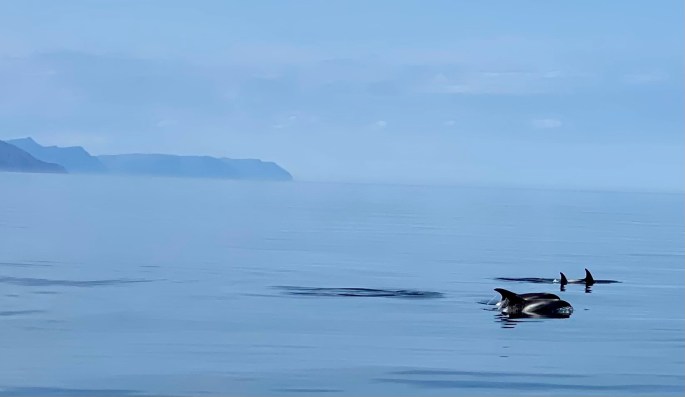
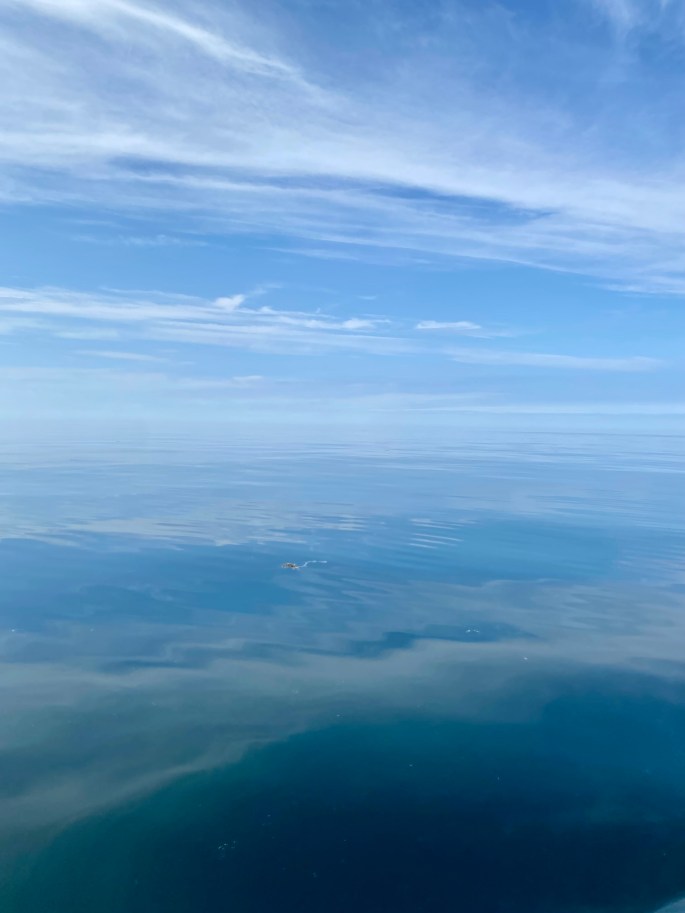
White-beaked dolphins and beautiful calm seas….
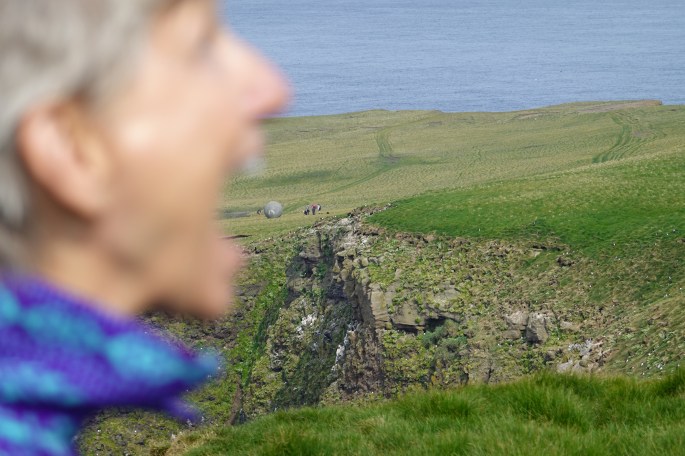
The itinerary included Grimsey Island, where a giant gray sphere denotes the location of the Arctic Circle.
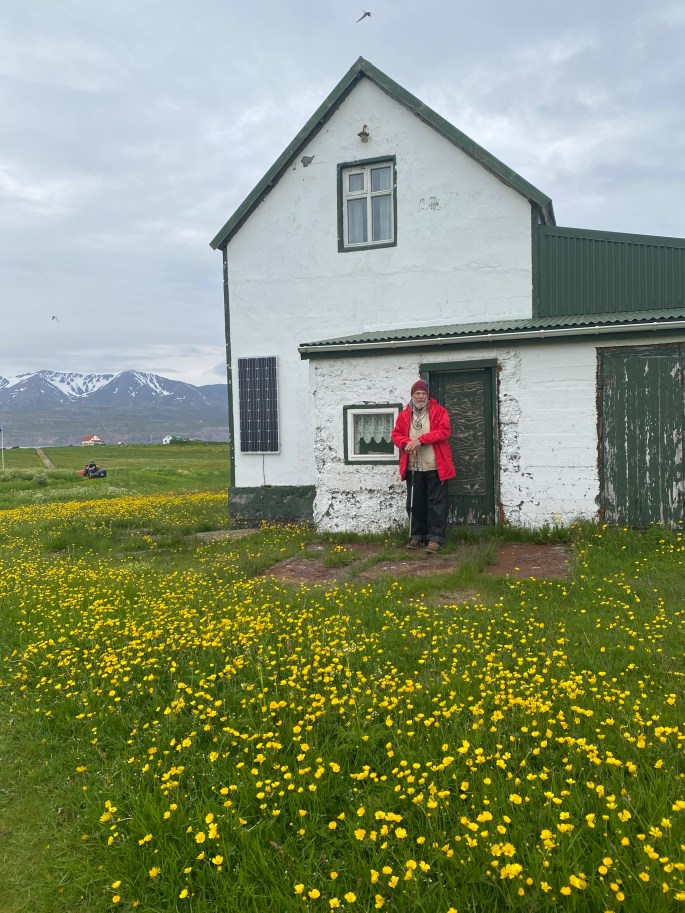
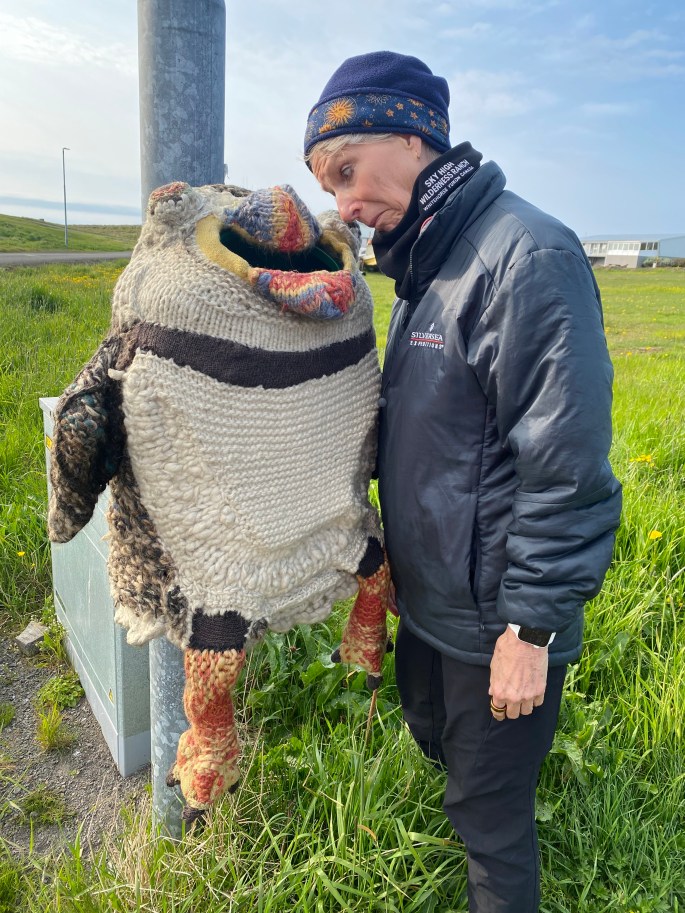
Also onshore were semi-abandoned villages …. And a cunningly-designed knitted cover for the township trash container.
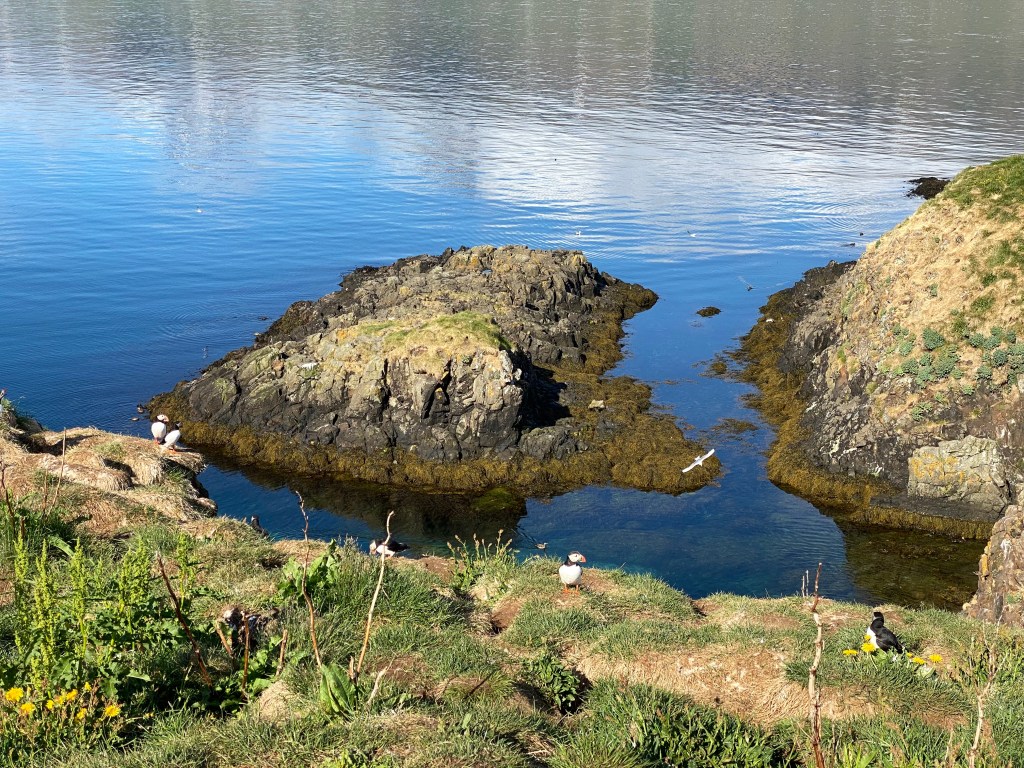
And puffins nesting among rocks on the shore!
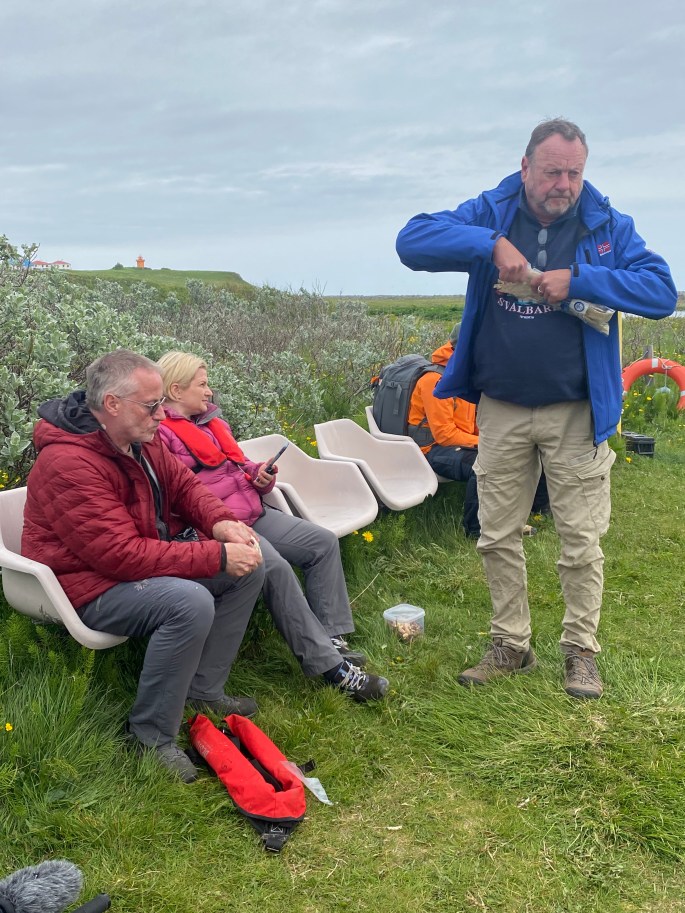
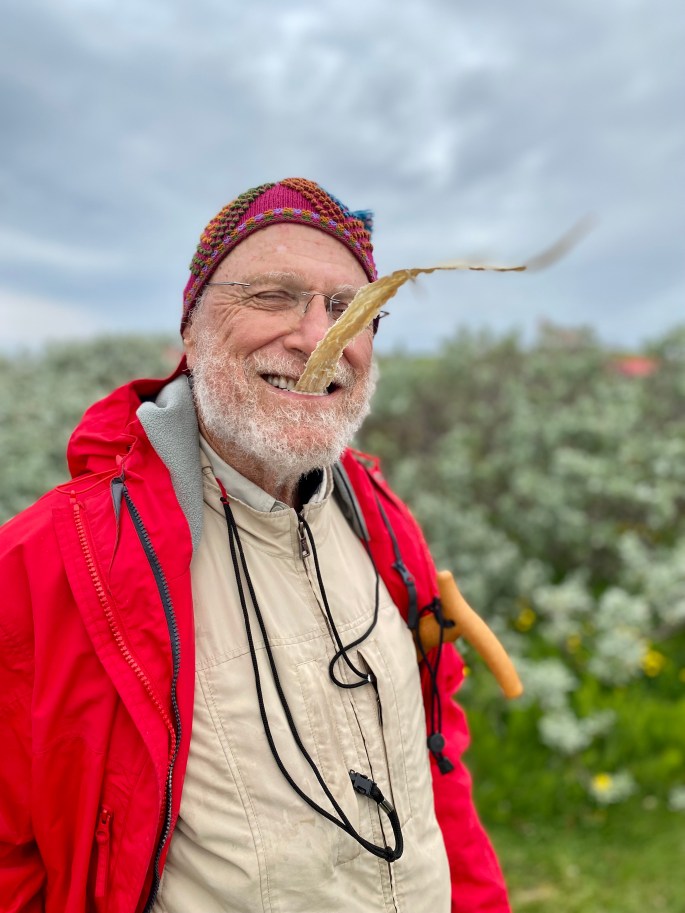
A fellow passenger breaks out some hardfiskur, a traditional dried fish snack that is quite popular….. although some people like to play with their food before they eat it.
The sailing experience was a wonderful way to meet local people and see the island from a different perspective.
Here are some of the things you will notice on a road trip in Iceland.
Well, first and foremost …..
BREATH-TAKING SCENERY
Of course, more of this later..
You will also see…….
WATERFALLS
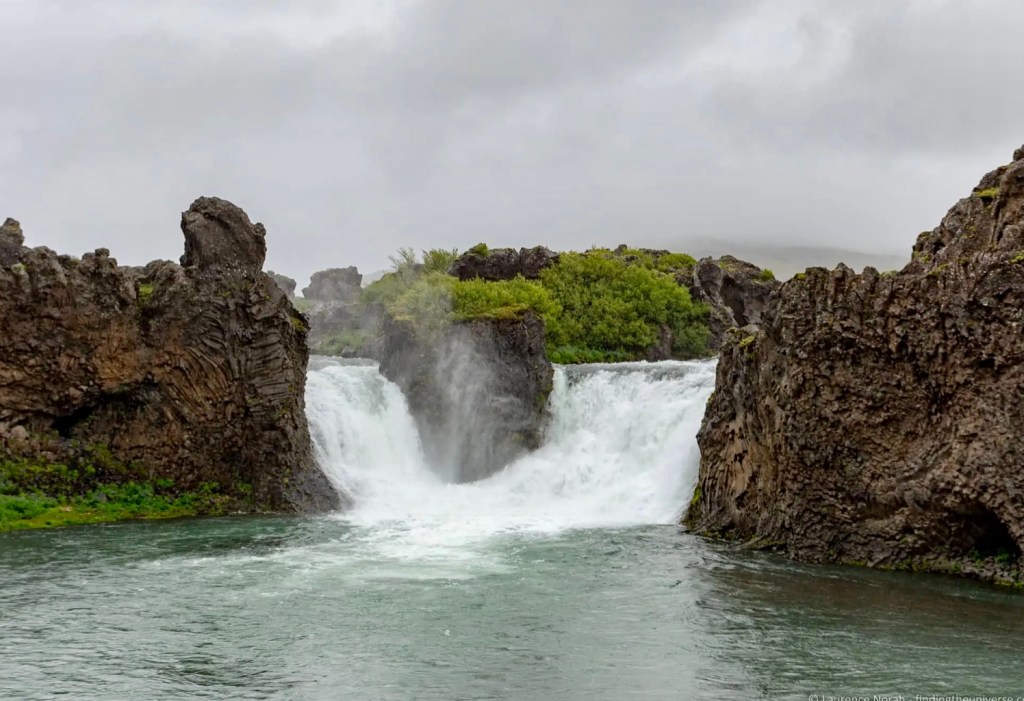
Mountainous terrain + glaciers + plenty of water = lots of waterfalls.
It’s a pity because after a while, you simply don’t notice any more just how spectacular they are.
Did I mention……
GLACIERS?
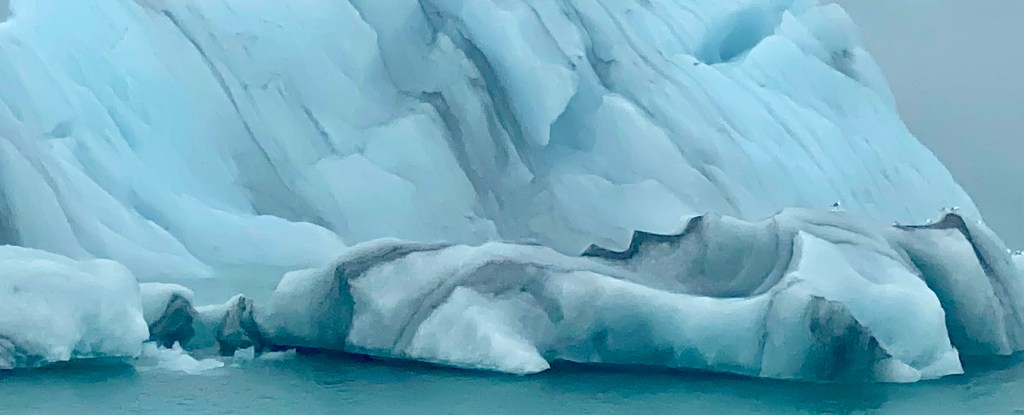
About 11 percent of Iceland’s land area is covered by glaciers. Lots of people like to hike or take a boat ride to see them up close.
One thing you will not see is…
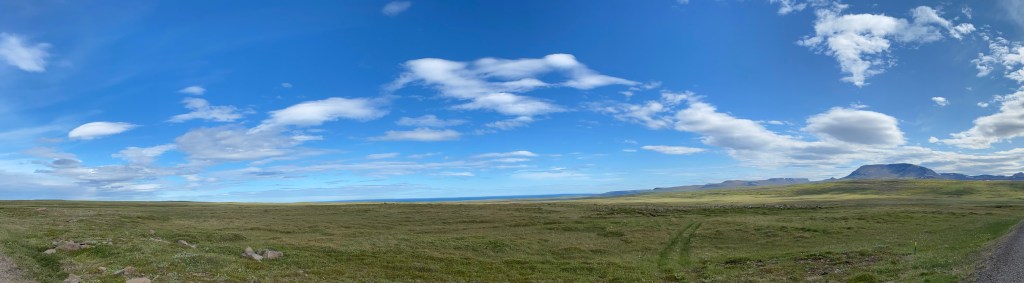
TREES!
Iceland was first settled in about the 9th century by Norwegians….. and one of the first things they did was to clear those pesky trees to make way for raising livestock and planting crops. What they did not appreciate is that poor soil and a harsh climate would inhibit natural regrowth, and the island was stripped of trees in only about 3 centuries.
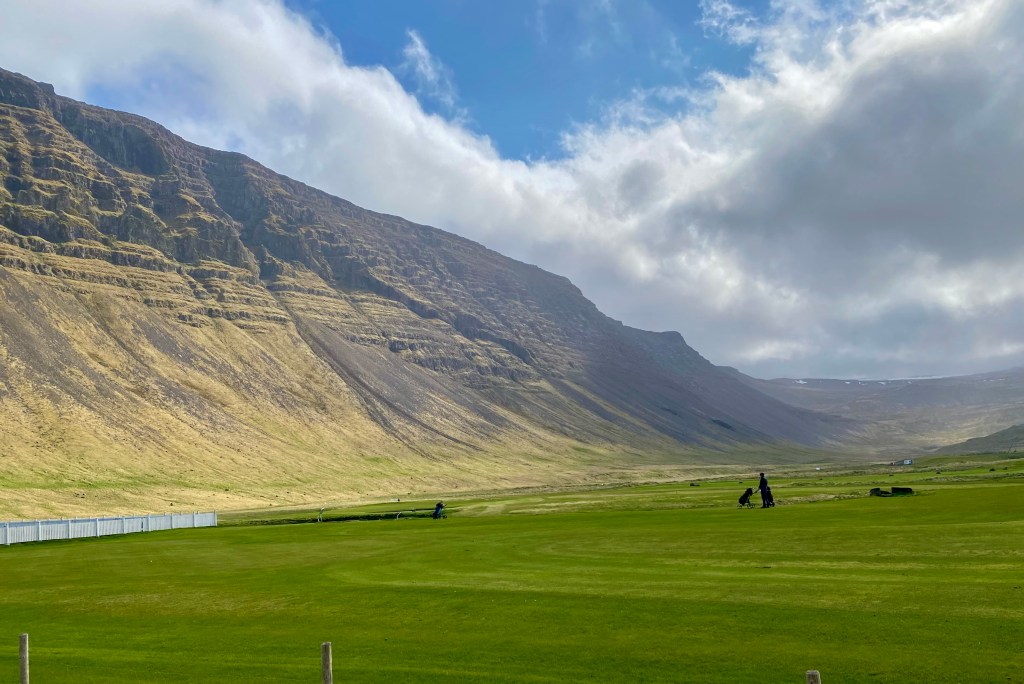
This is a treeless golf course…. !
To be fair, there are significant reforestation and soil conservation efforts under way, but they are up against so many years of neglect. It would be easy to become discouraged. As one Icelander pointed out to Henry, it can take 17 years for a seedling to grow to just shoulder height….. to which the wise forester replied, “The tree you don’t plant will never grow at all.”
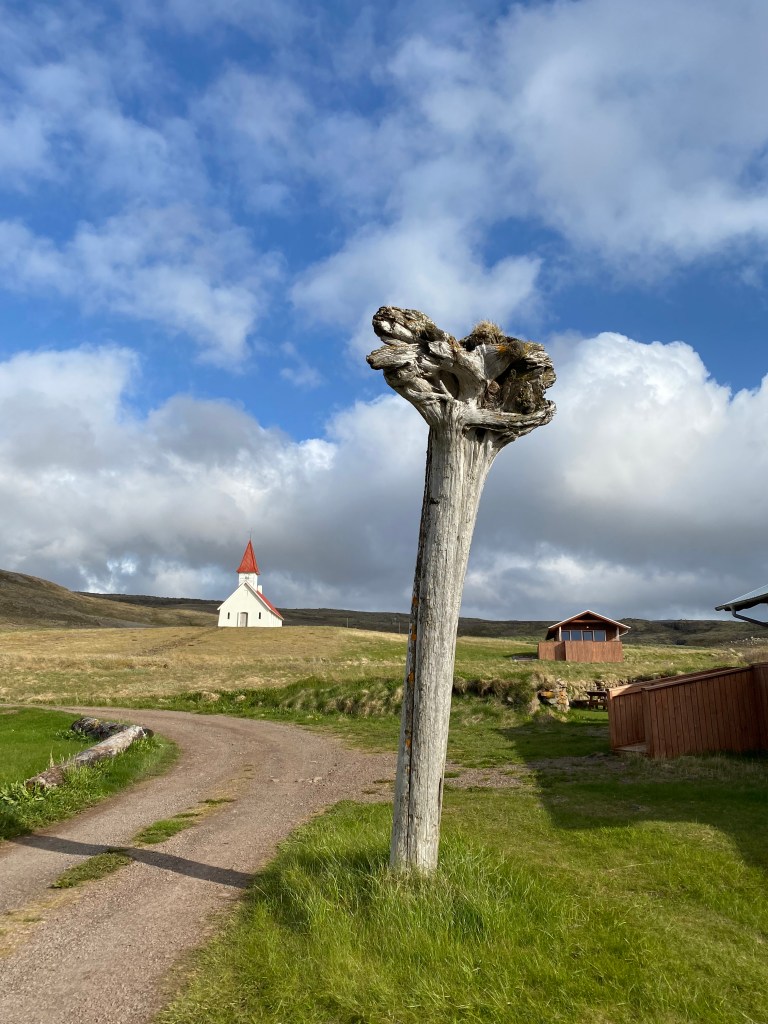
And although not actual trees, you do see a lot of upside-down driftwood (most of which we are told comes from Russia) used as decoration or signposts…
And then there are the descendants of the livestock the Norwegians were so anxious to establish here….
SHEEP
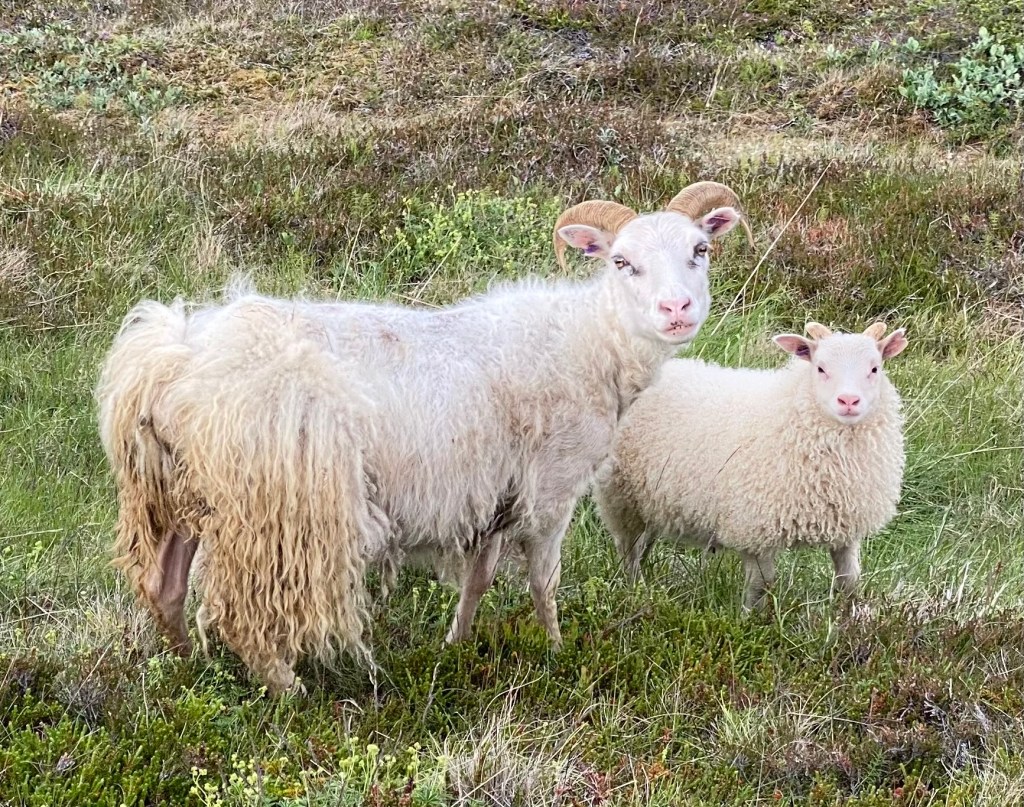
Sheep are everywhere. There are more than twice as many sheep as people in Iceland.
At this time of year, the adult females always have two babies with them (don’t ask about other seasons….. lamb is a very popular dish here).
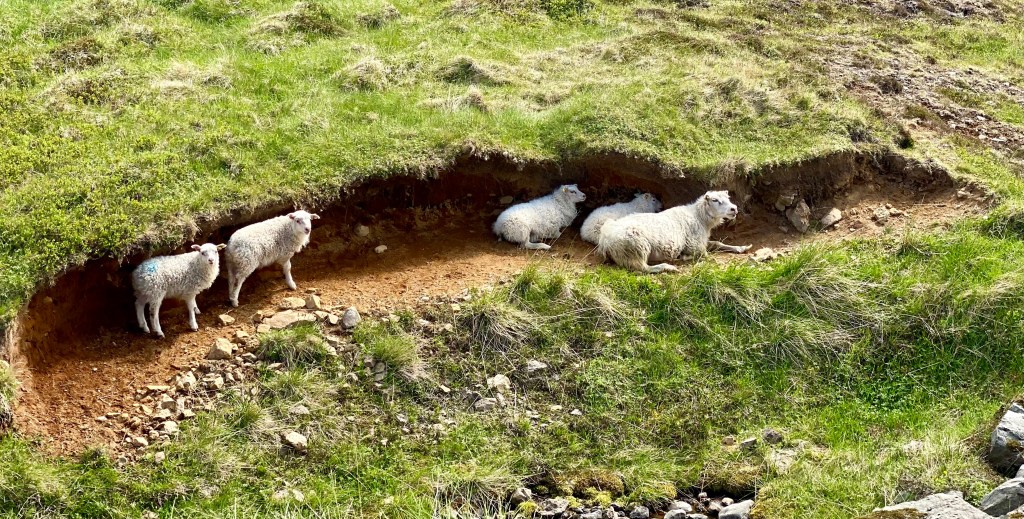
During the frequent rainy, cold and/or windy weather, they get a little shelter in hollows in the hillsides….
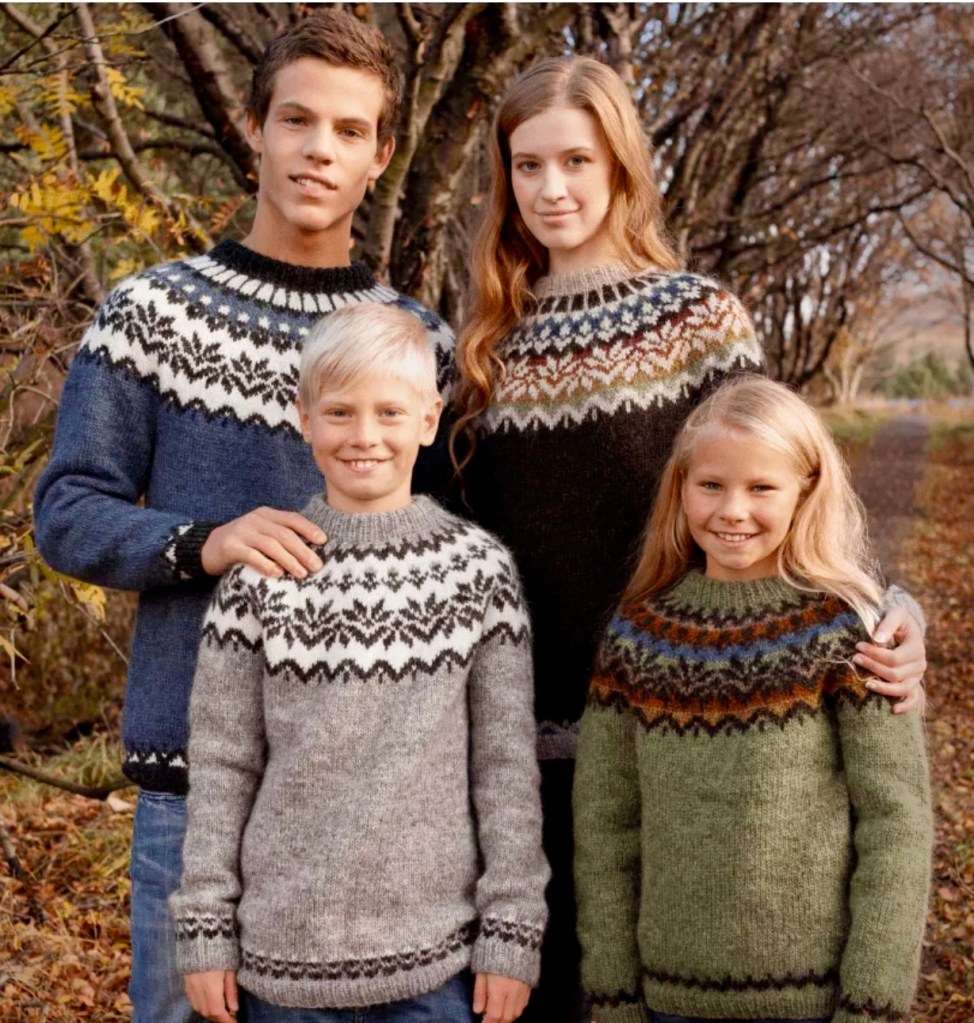
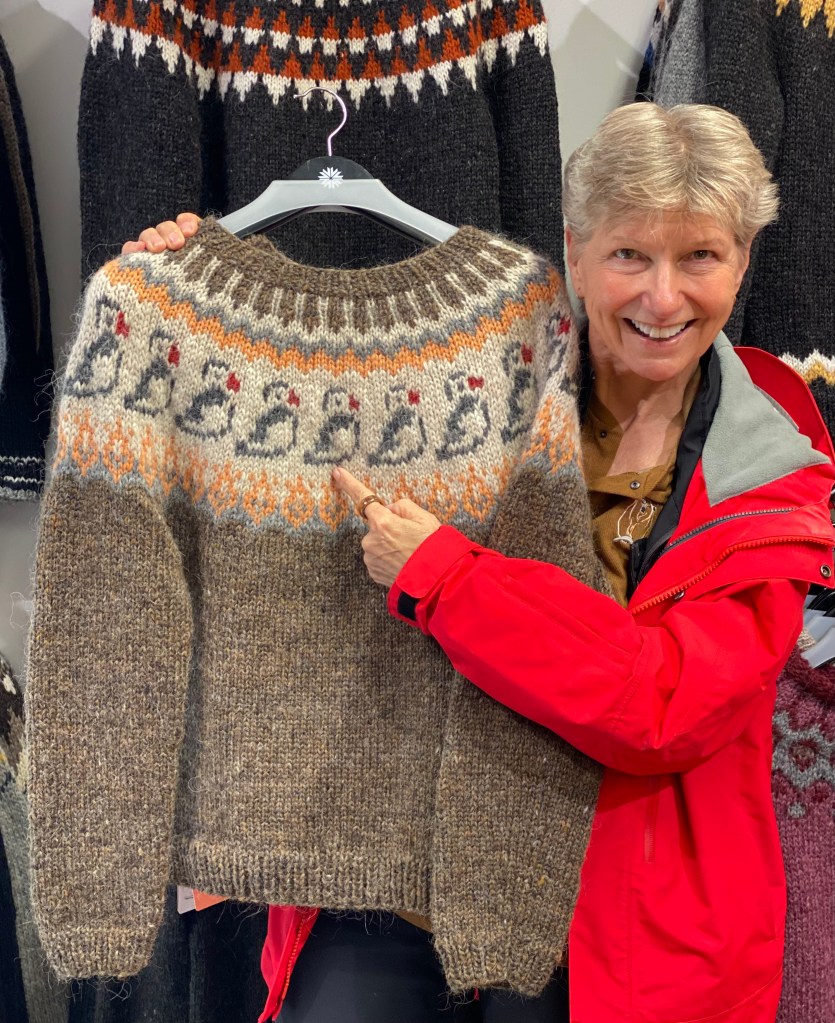
In addition to providing meat, the sheep produce wool which is most popularly used for knitting….
ICELANDIC SWEATERS or LOPAPEYSA
Knitting has always been a pastime in Iceland – a good way for both men and women and even children to spend the long winter nights. People have knitted here for hundreds of years, but the lopapeysa gained popularity in the mid-20th century, possibly as a symbol of Icelandic identity after it gained its independence from Denmark in 1944.
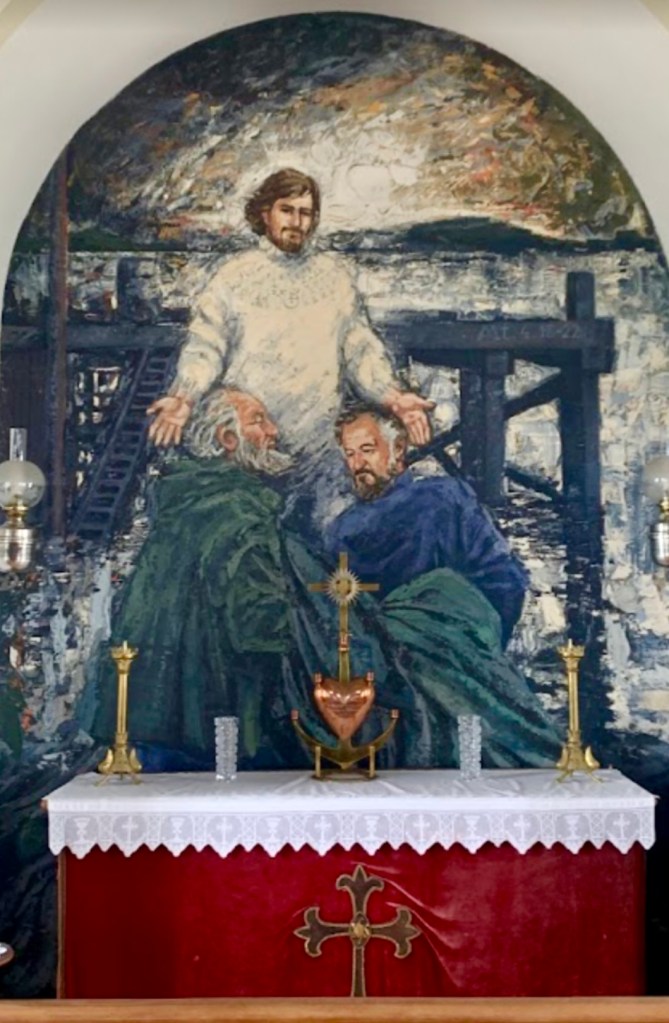
Even Jesus is depicted wearing one on an altarpiece in a Christian church on Flatey Island…
Getting back to the after-effects of deforestation, one bit of flora you see all over Iceland is …..
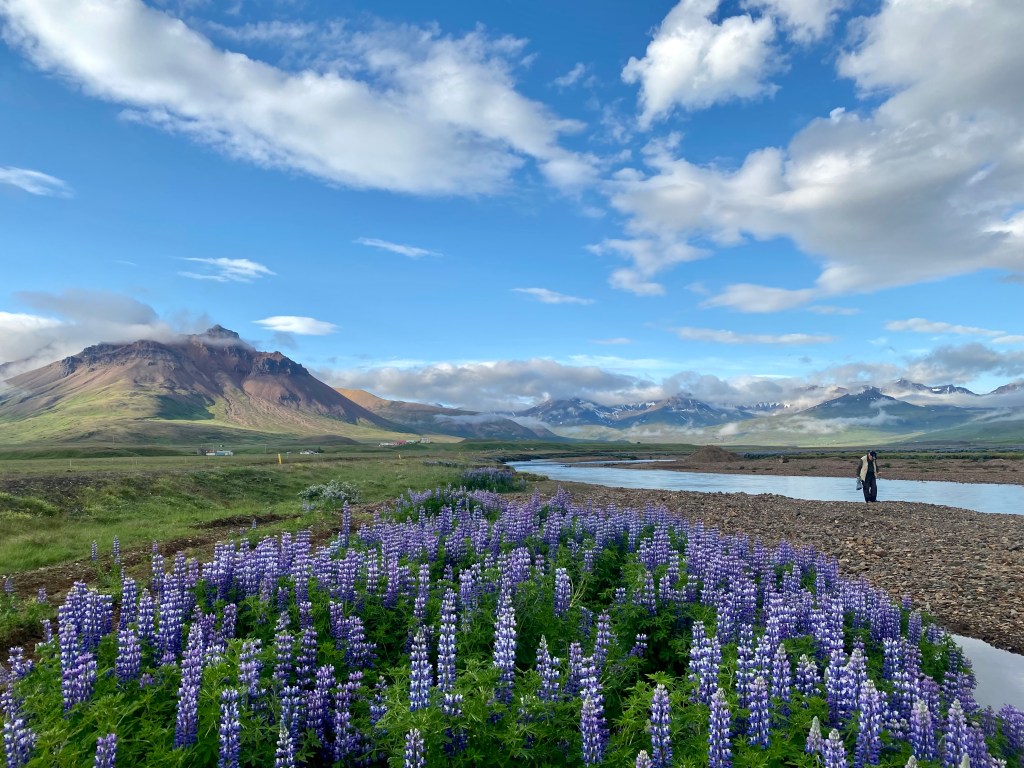
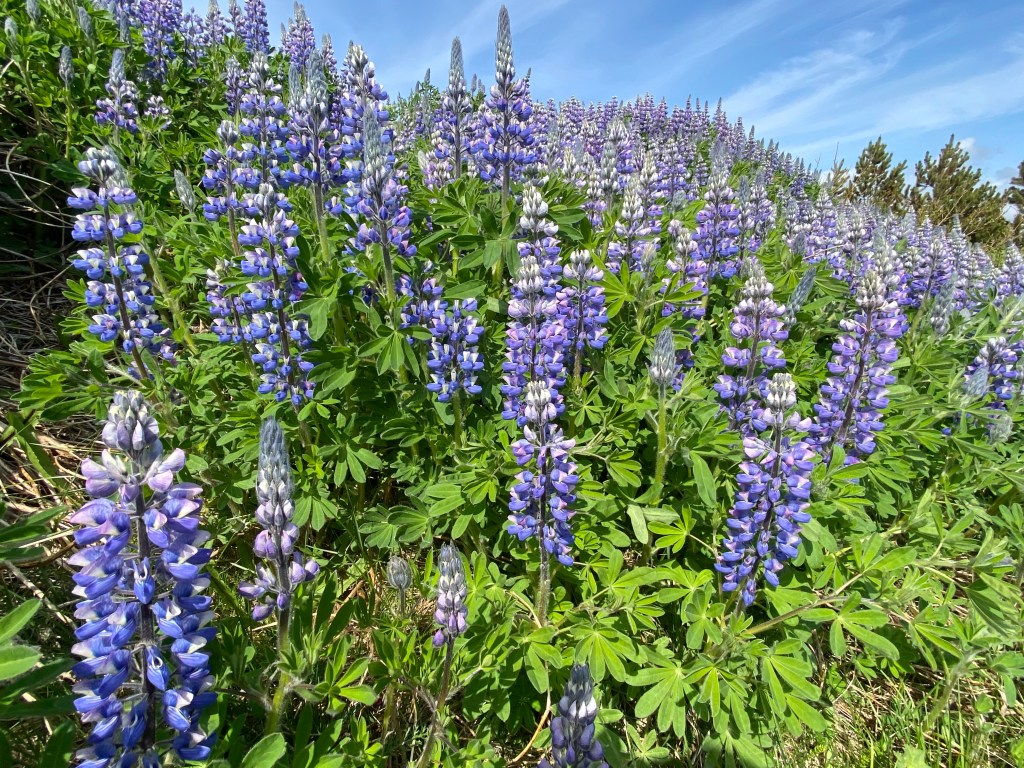
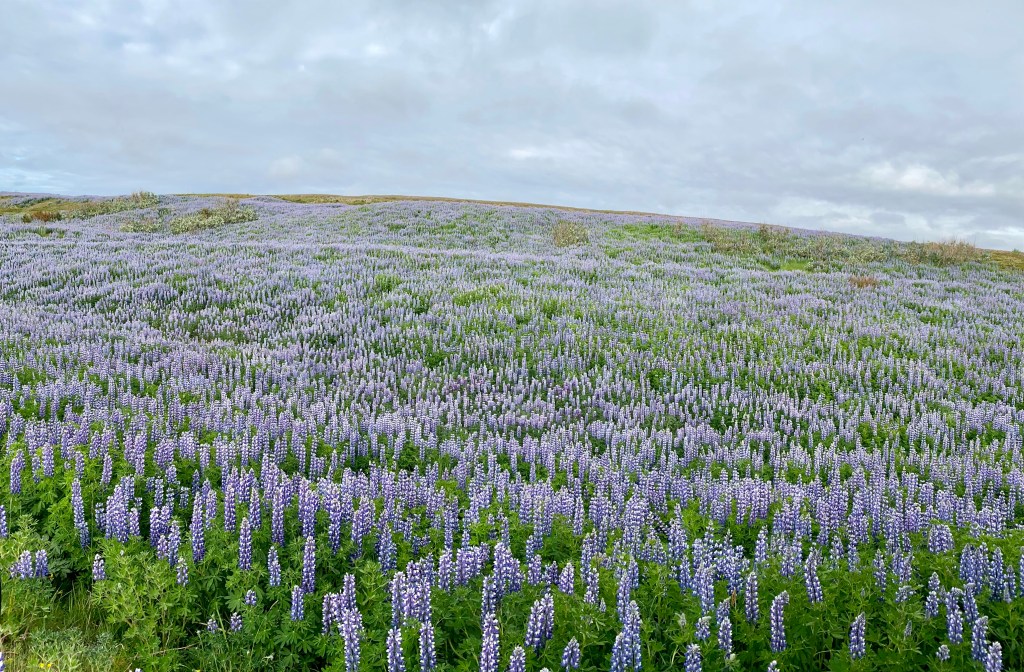
LUPINE (pronounced loop-en in English)
After World War II, Iceland decided to try to reinvigorate the vegetation which had been destroyed in the past by finding new plants and trees that could establish quickly and hold and nourish the soil. Its Forest Service director went to Alaska and brought back several species, most notably the Alaskan lupine, which was introduced in 1945.
A pretty flower – not unlike the Texas bluebonnet on steroids – it has spread all over the country. And although it has been wildly successful in enriching the soil, there are Icelanders who consider it an invasive species and are dedicated to eradicating it from many areas. Love it or hate it, lupine has become a distinctive part of the landscape.
Another part of the scenery….
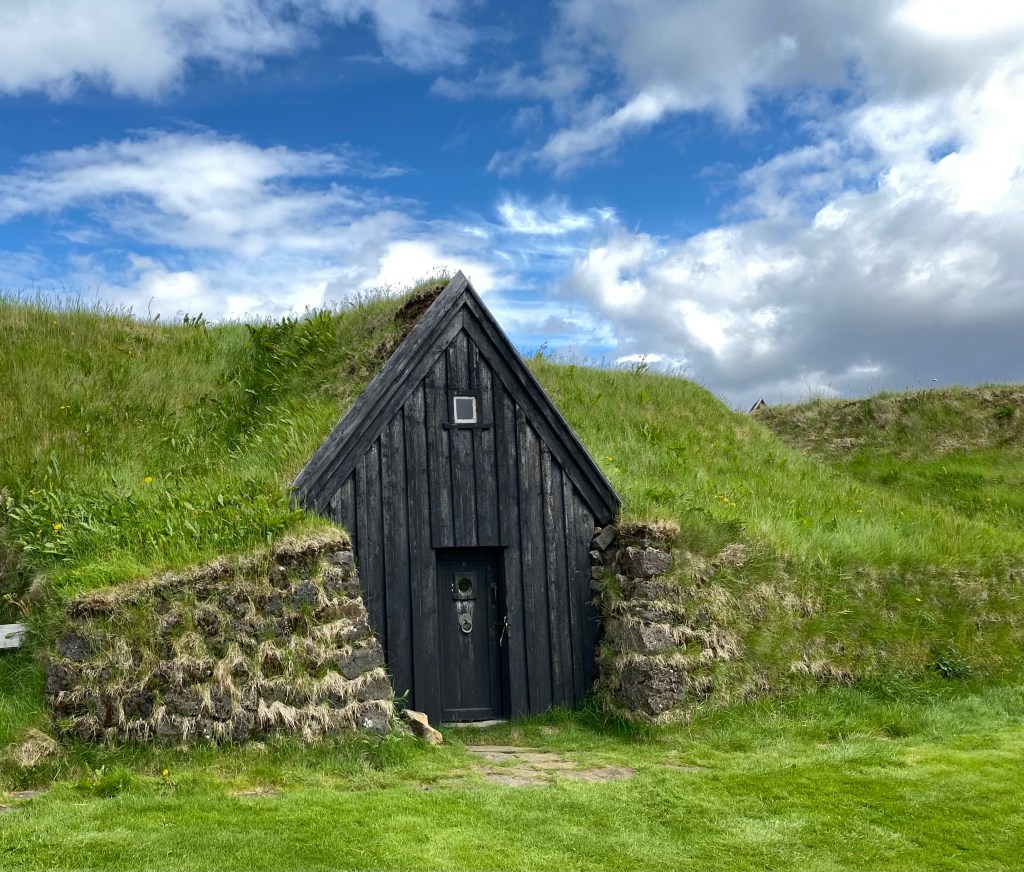
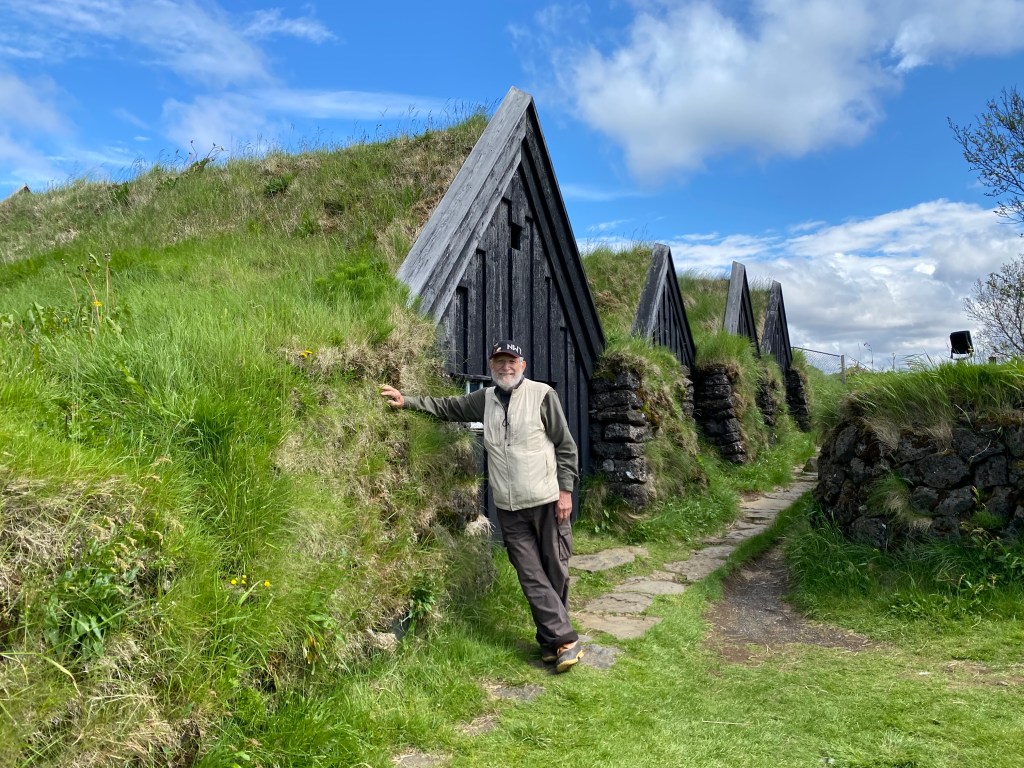
TURF HOUSES
With a lack of lumber following deforestation, Icelanders began using turf in building (the above dating to the 12th century). Turf provides good insulation in a cold environment, and was abundant in inhabited areas.
More from the road later!
(Just a reminder – if you receive the e-mail version of the blog, be sure to click on it to open it in your browser so you can see the videos!)
Puffins are without doubt the biggest wildlife draw in Iceland. They are completely adorable. Click on this photo to see a brief example…..
What is the appeal? Maybe because they have an unusual appearance – the clown eyes, duck-like feet, short wings. Unlike penguins, they can fly, but are pretty clumsy-looking when they do (which is very endearing). Or they just seem to have something to express – flapping their wings, twisting their heads around to check out the surroundings, bumping beaks, hopping around. Our tendency is to give human attributes to these behaviors, when instead they are all simply part of being a puffin. But the cute doesn’t stop there; baby puffins are called…….pufflings! Just adorable.
Many places in Iceland claim to be the best or biggest puffin colony, but this one at Borgarfjördur Eystri gives the easiest access to them, as well as several other types of birds.
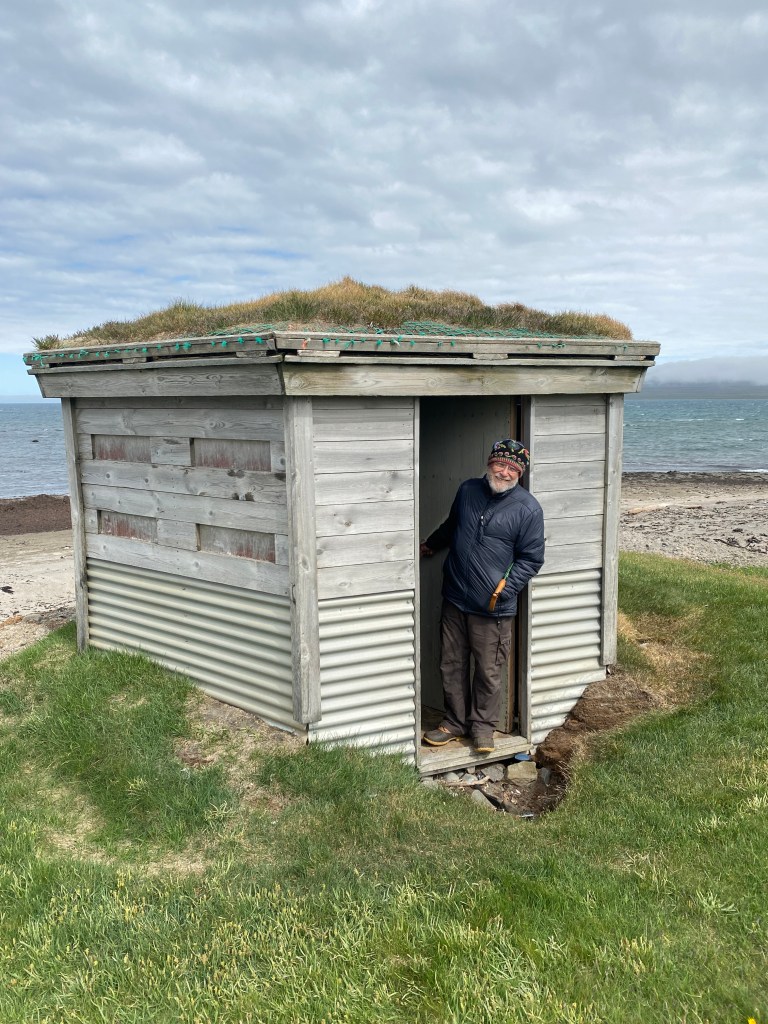
There is even a blind where you can watch them comfortably for as long as you like….
It’s easy to laugh at their less-than-elegant flying, but they are also quite accomplished swimmers and divers, and have a unique beak that allows them to spear multiple fish at one time….
Full disclosure – we did not take this photo. You can see versions of it all over Iceland…
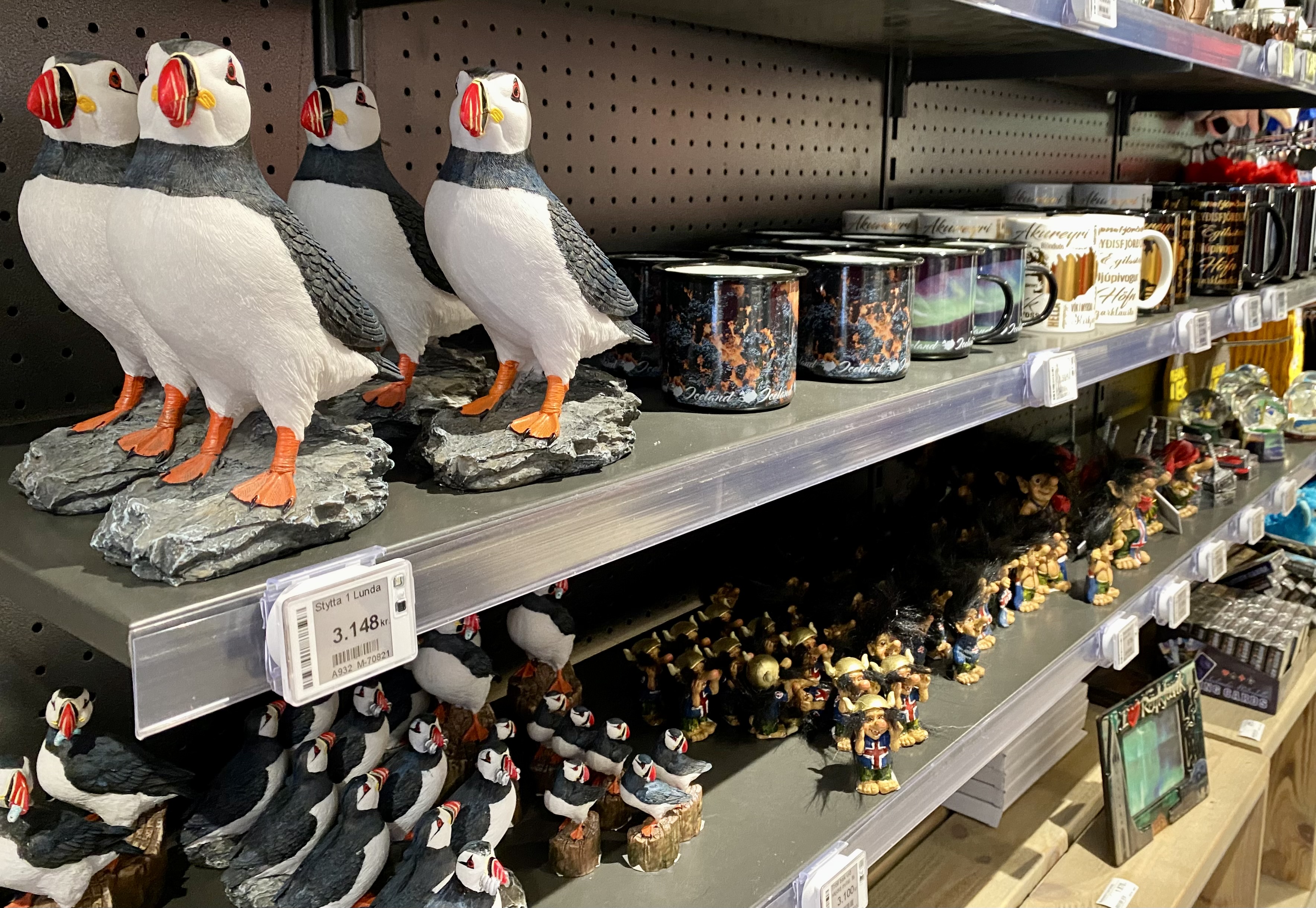
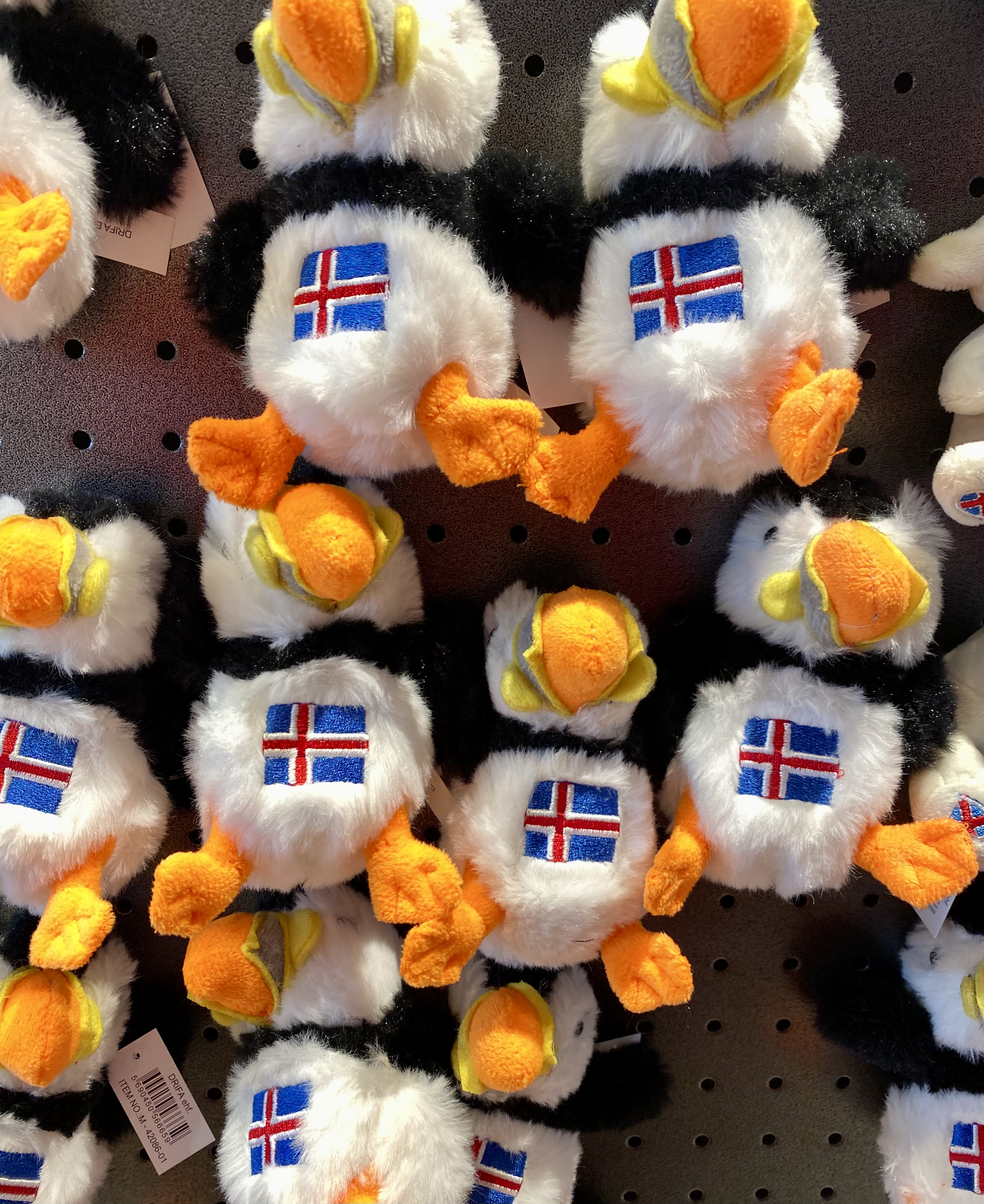
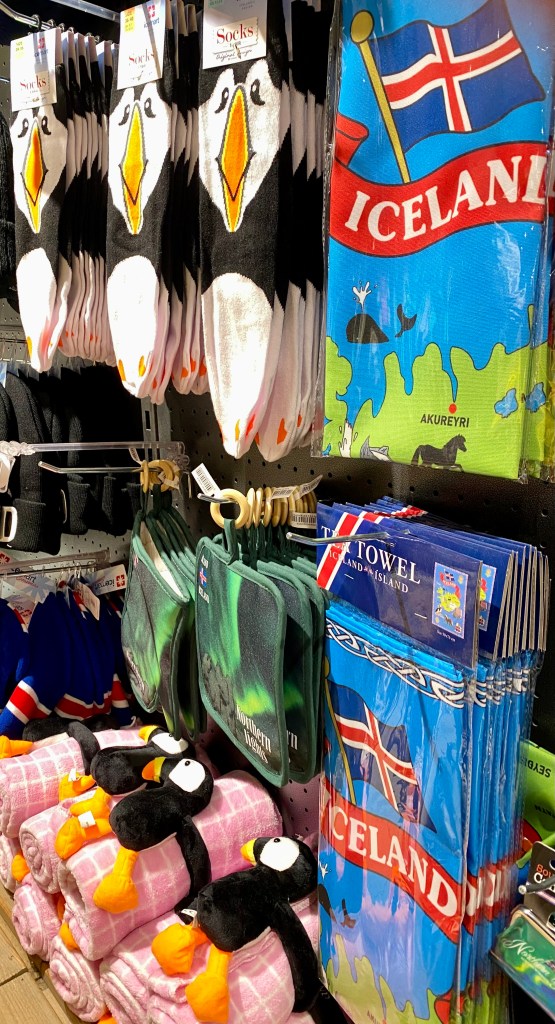
Puffins are so popular that most souvenir shops feature extensive puffin-inspired merchandise.
….. so prevalent that souvenir stands here are called “puffin shops”.
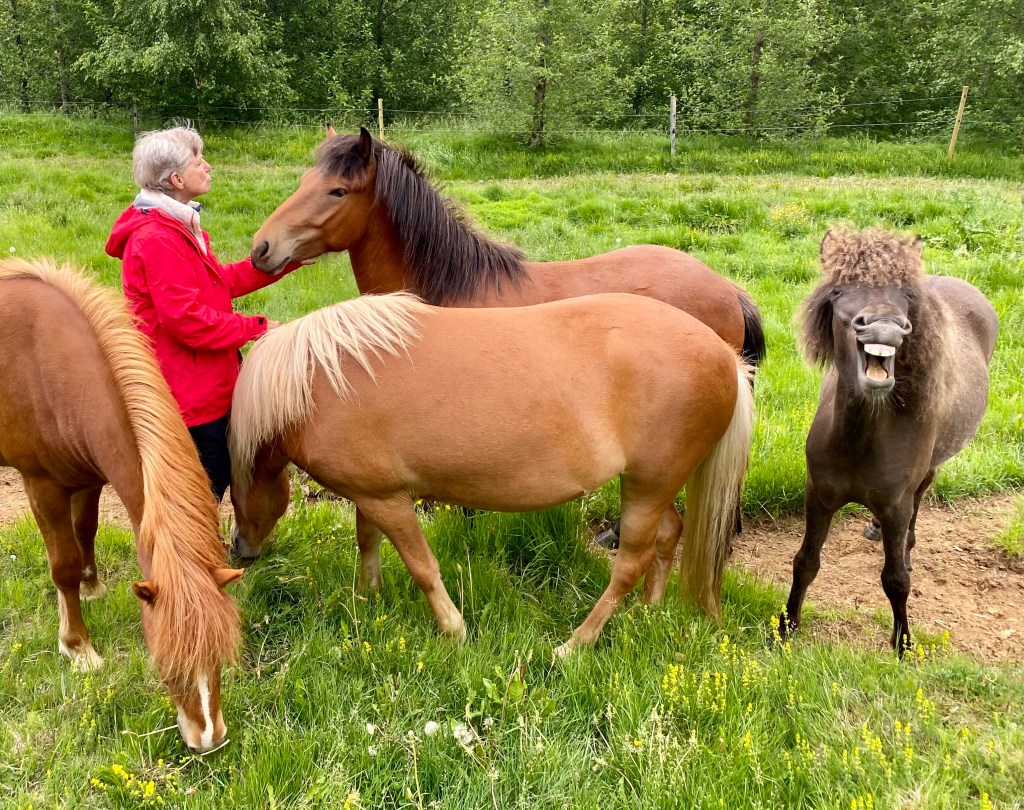
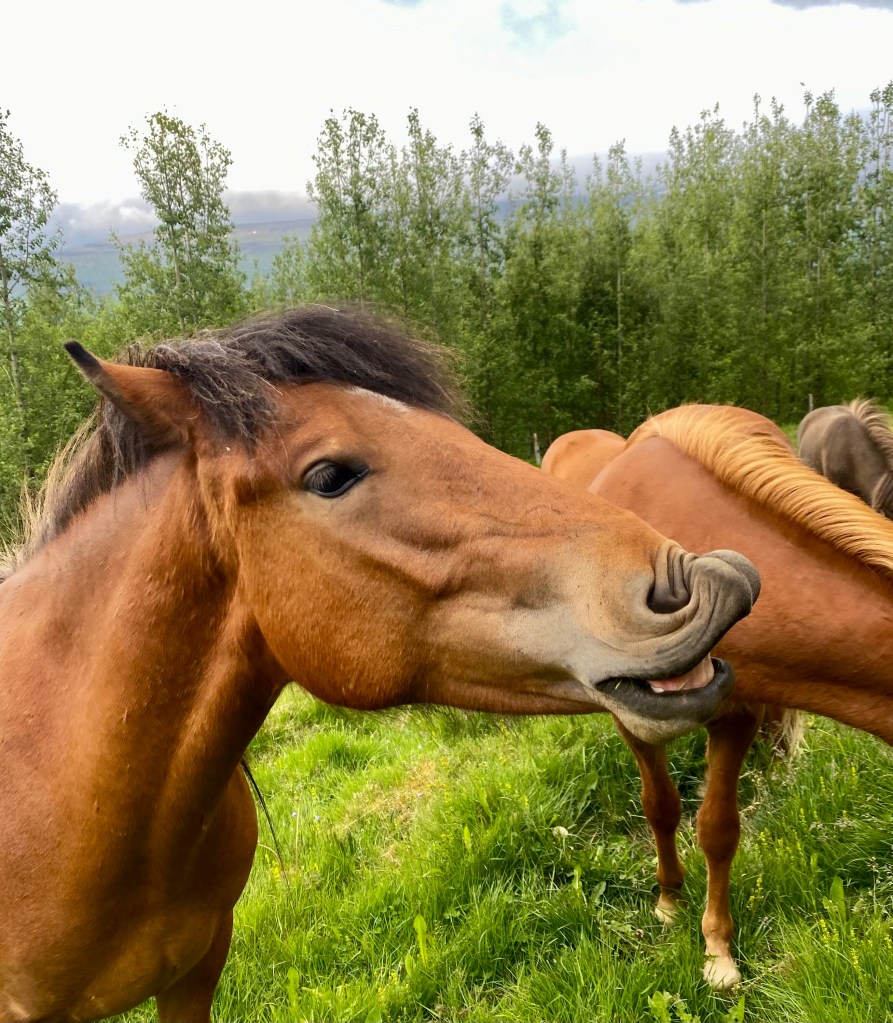
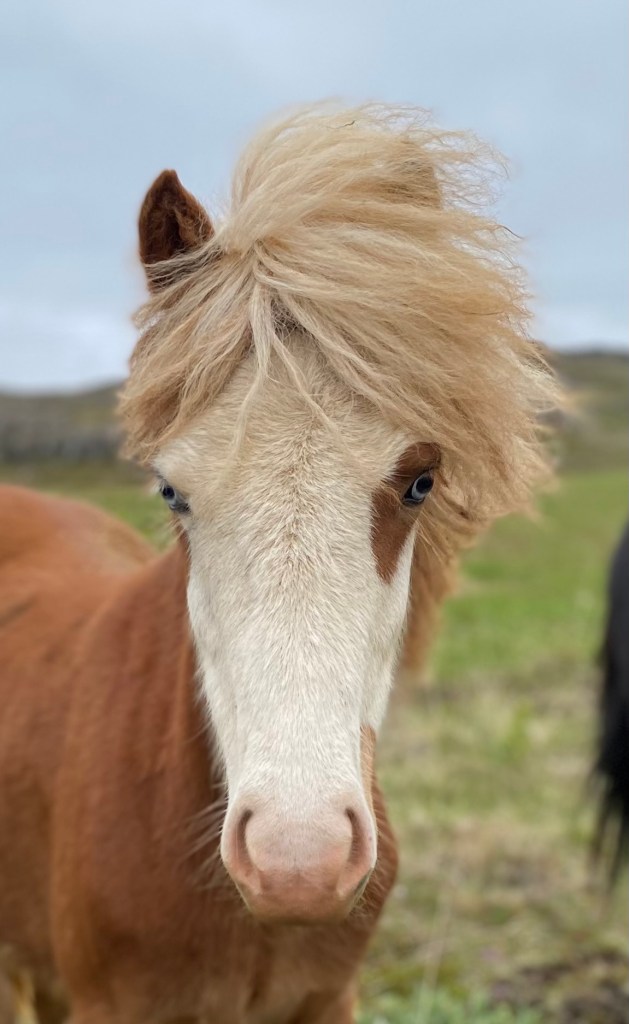
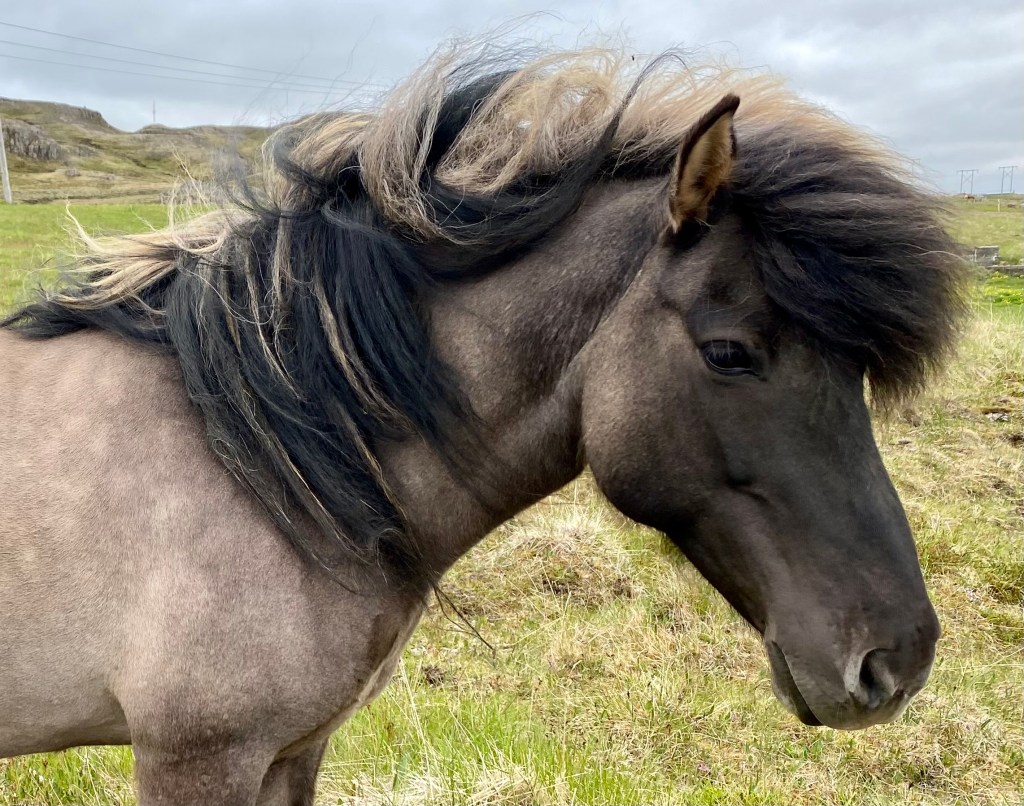
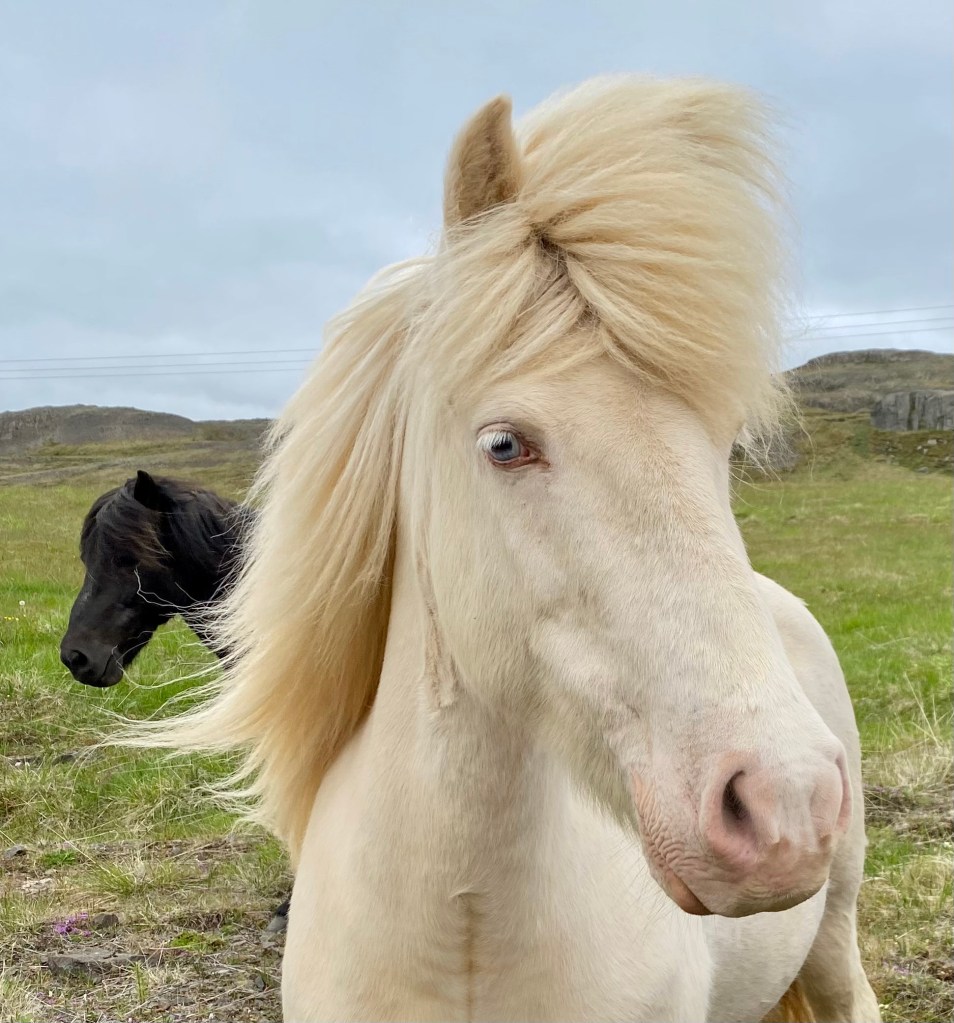
More about this later, but we would give a huge second place in the animal popularity contest to the Icelandic horse.
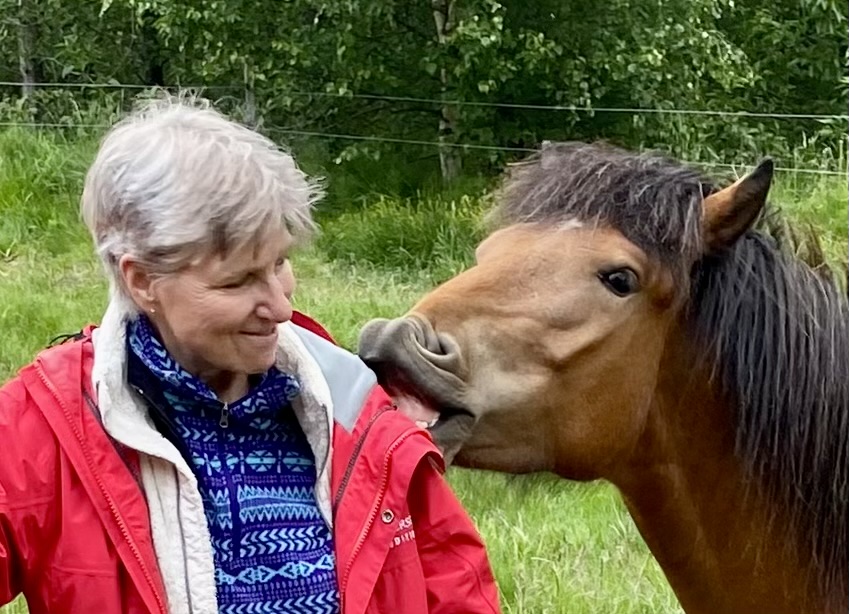
Striking creatures – with compact, sturdy bodies and long manes, they are also very friendly and fun-loving!
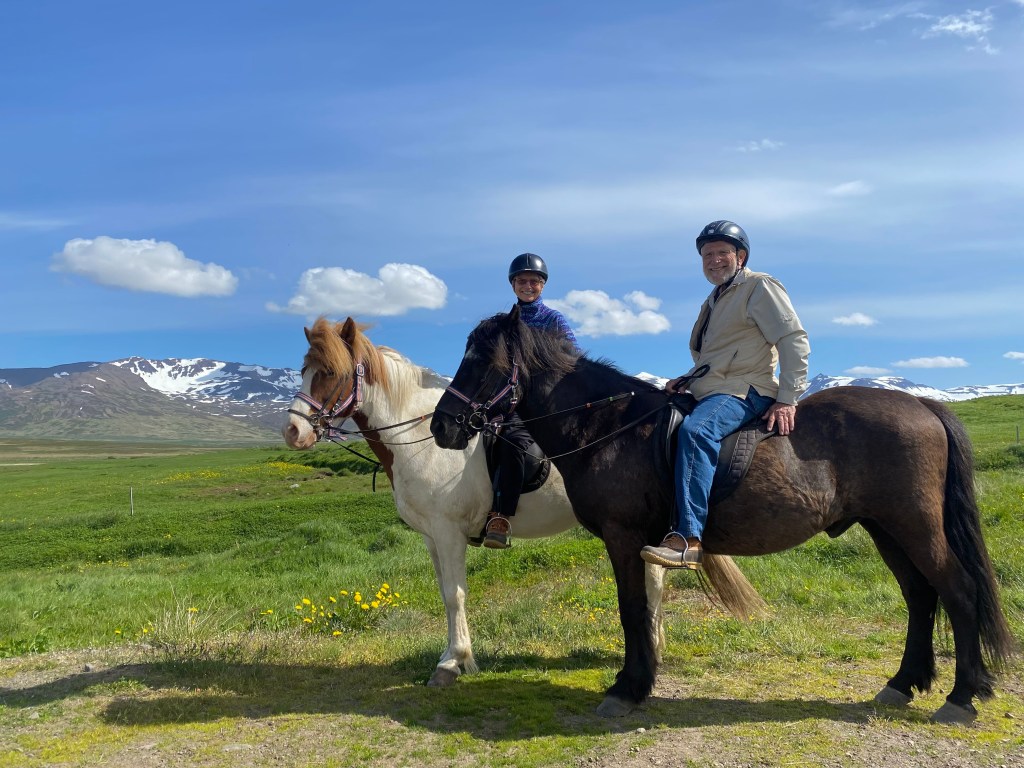
We just had to go for a ride….
Most horses have three gaits – walk, trot and canter/gallop. Icelandic horses have at least four (sometimes five), which always include a faster-than-a-walk but smoother-than-a-trot gait called “tölt””
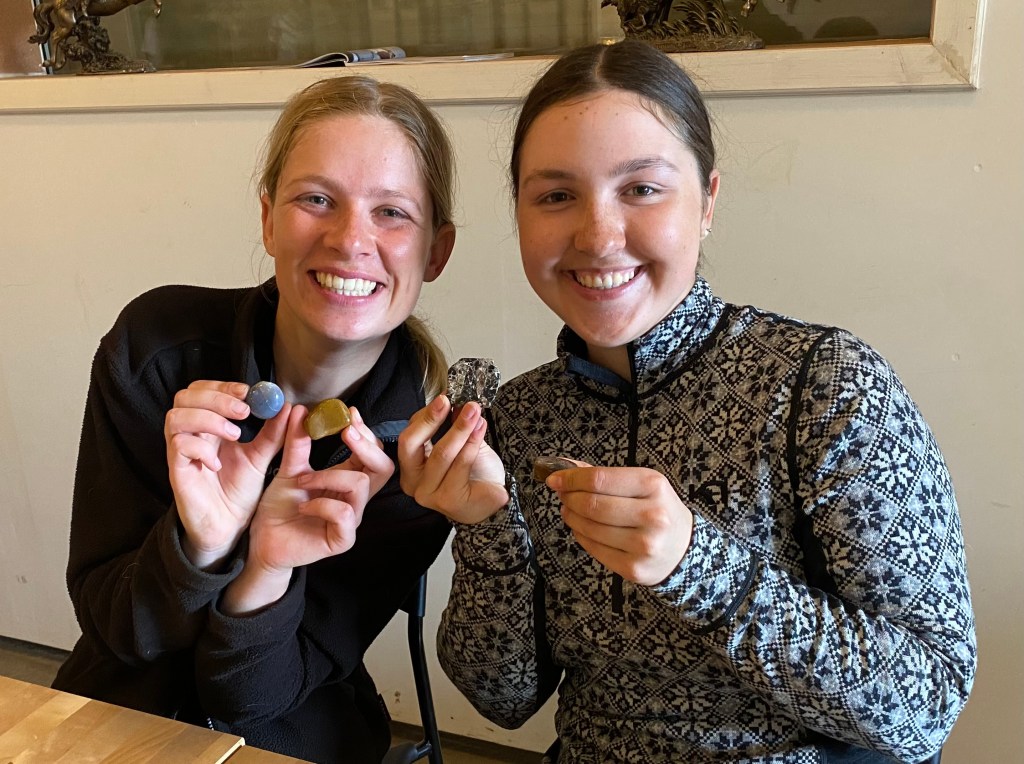
Our companions on the horse outing were excited to receive special polished rocks from Henry’s collection! (One is from the Netherlands, the other from Spain….. seems like no one here in the tourist industry is local….)
Catching up on the blog postings….. more to come in the next few days!
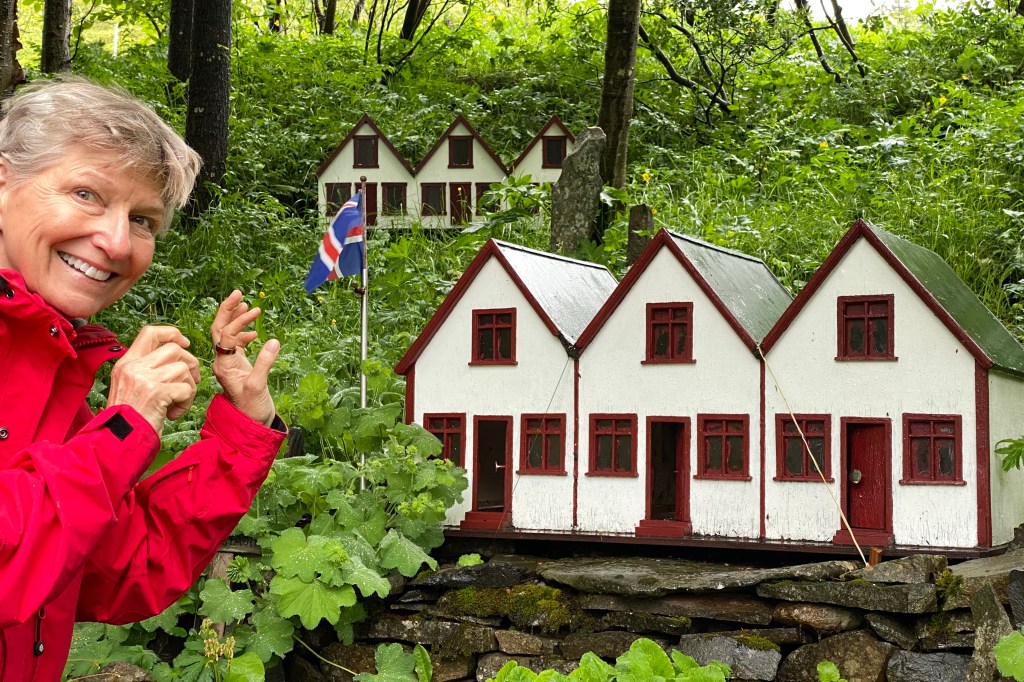
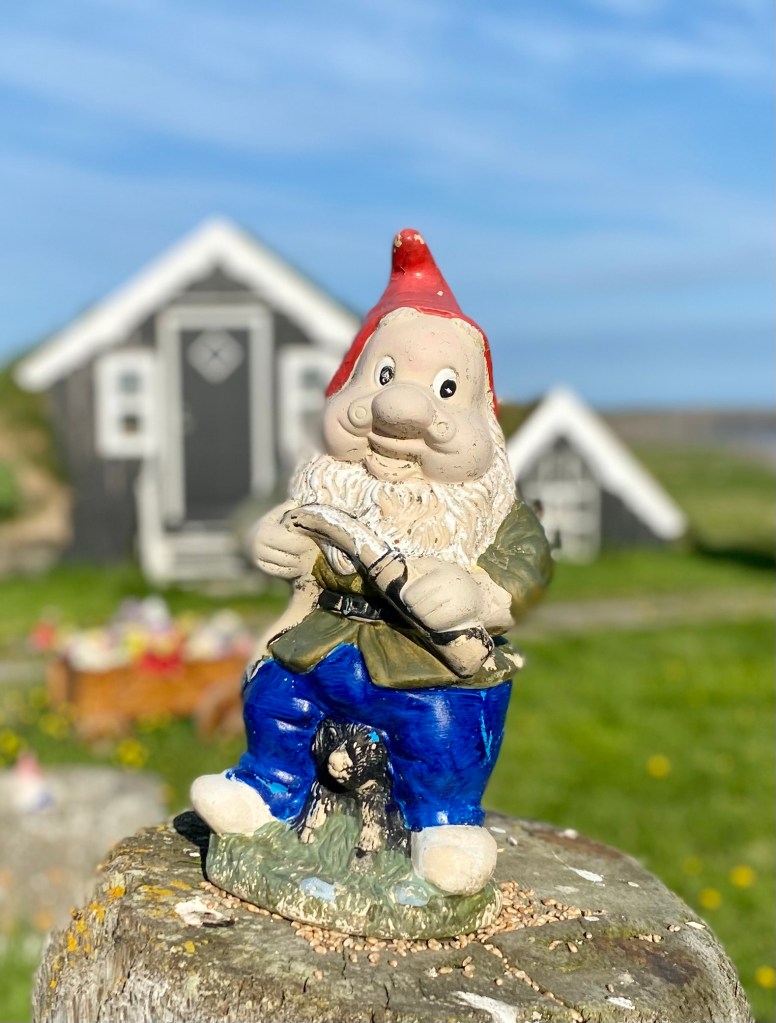
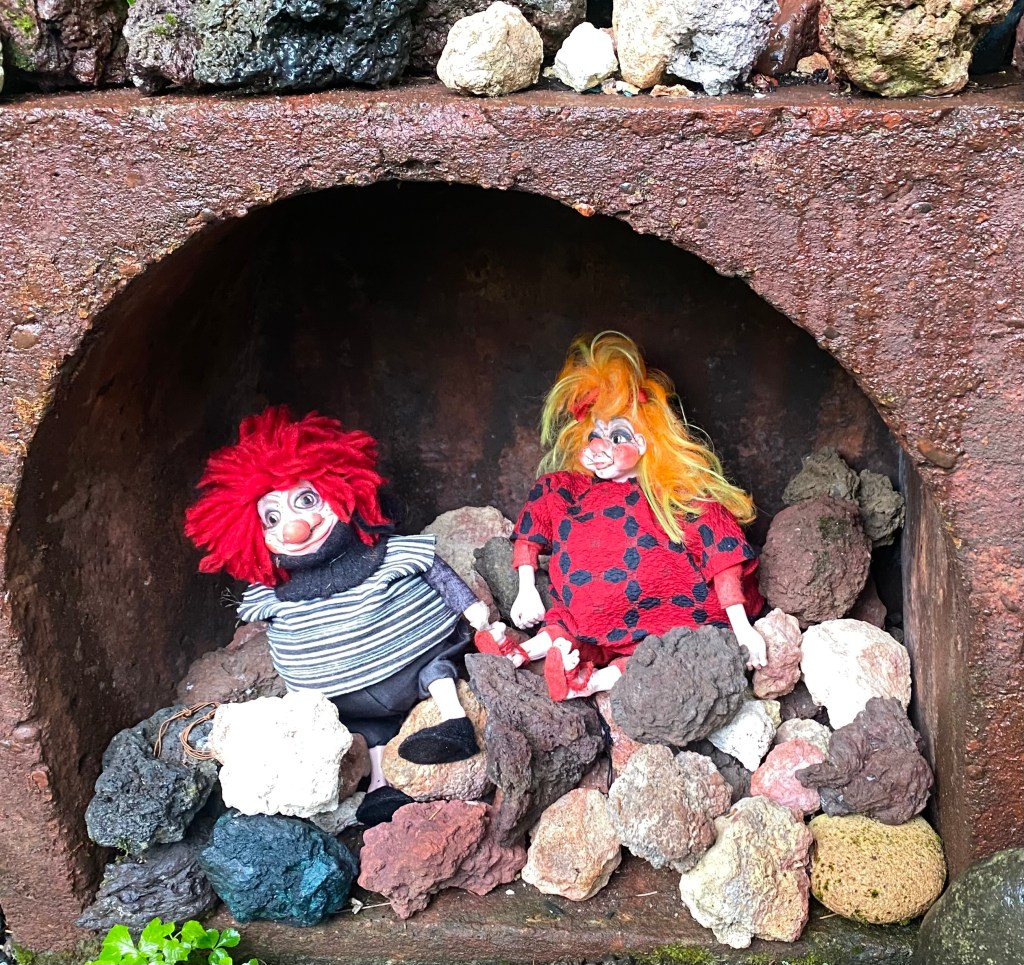
A survey showed that more than 50 percent of Icelanders believe to some extent in elves! There are many theories as to why – which we will not delve into here – but you can see evidence of this in …..
ELF HOUSES
Sometimes you see representatives of the inhabitants, but one characteristic of elves is that you cannot see them… unless they want to be seen.
Kind of creepy…. In the aforementioned Will Ferrell movie, elves possibly played a pivotal and gruesome role in the direction of the plot!
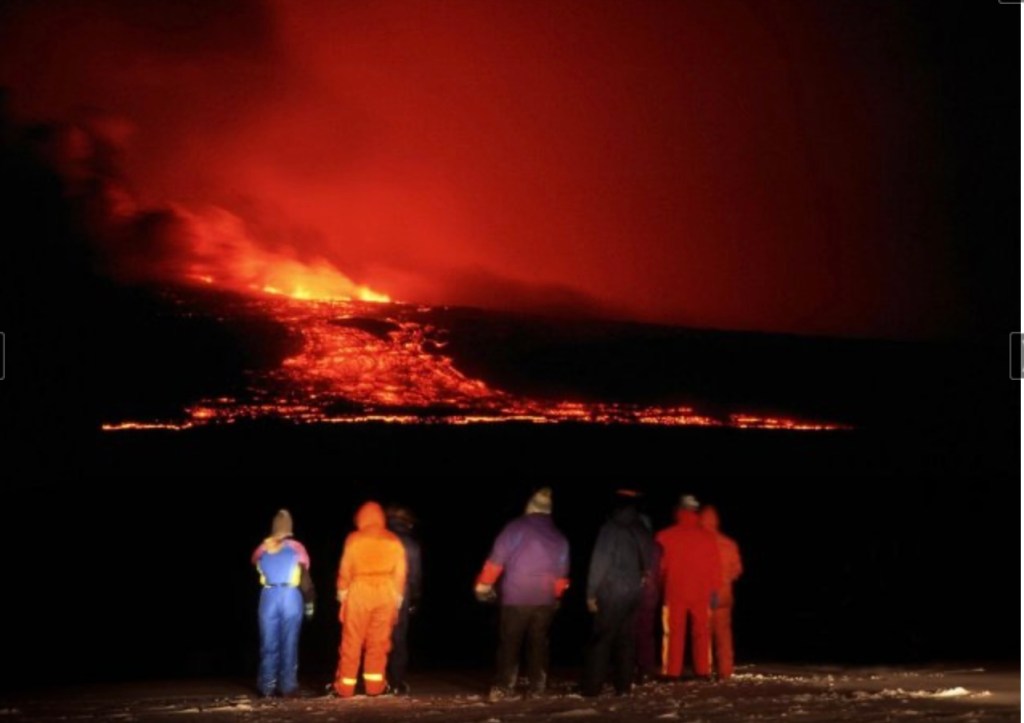
The “fire” part of the Land of Fire and Ice has to do with geothermal activity, including notably…..
VOLCANOES
The most historically active volcano in Iceland is Hekla – here is its last big eruption in 2000.
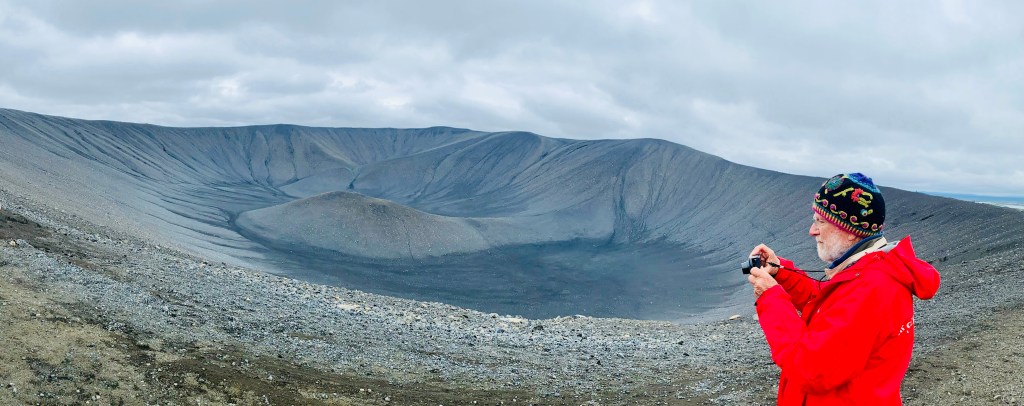
And now (not quite so visually exciting)…..
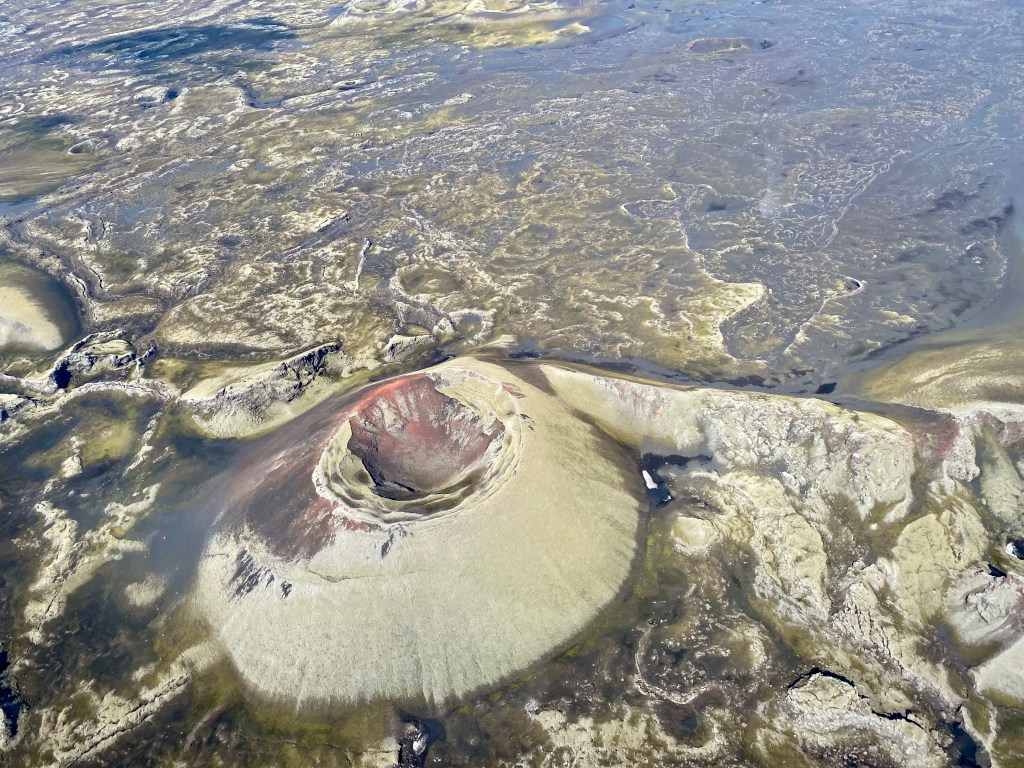
A couple of other inactive volcanos today….
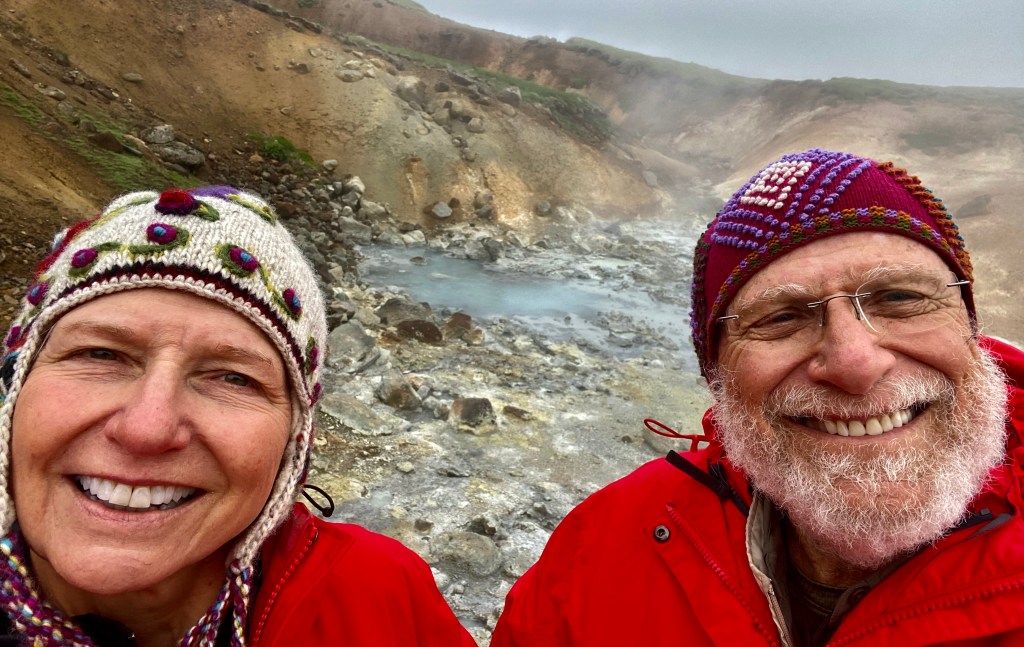
All of this geothermal activity gives rise to hot springs with fumaroles and mud pots….
which Icelanders love to corral into pools and soaking tubs they call….
HOT POTS
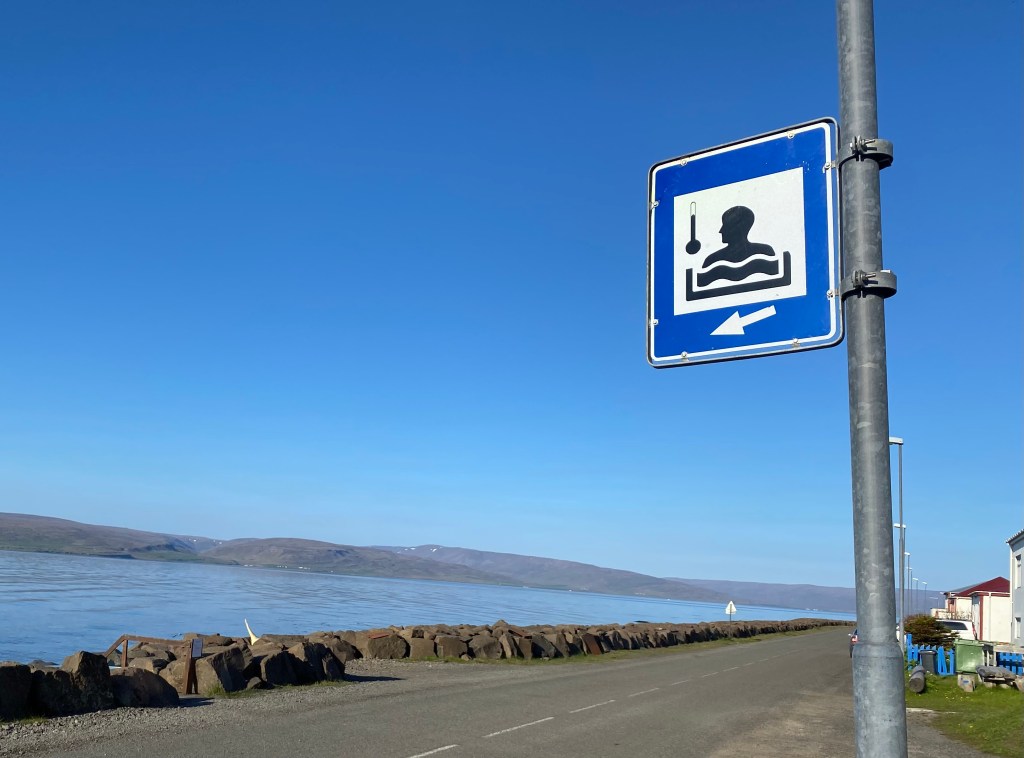
Often you see this sign at the side of the road.
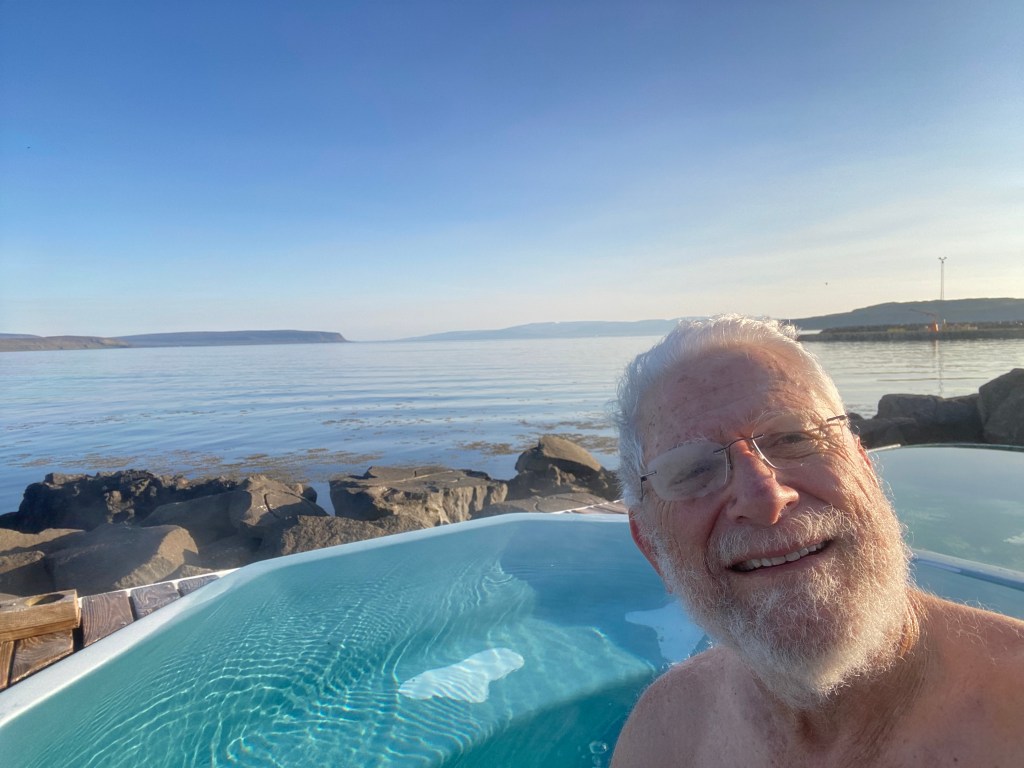
This means there is a hot spring, pool or tub available for public use…. In this case, the village built these tubs overlooking the fjord.
A beautiful site for soaking away the aches of elderly limbs.
The abundance of water from glaciers and springs means that you see almost…..
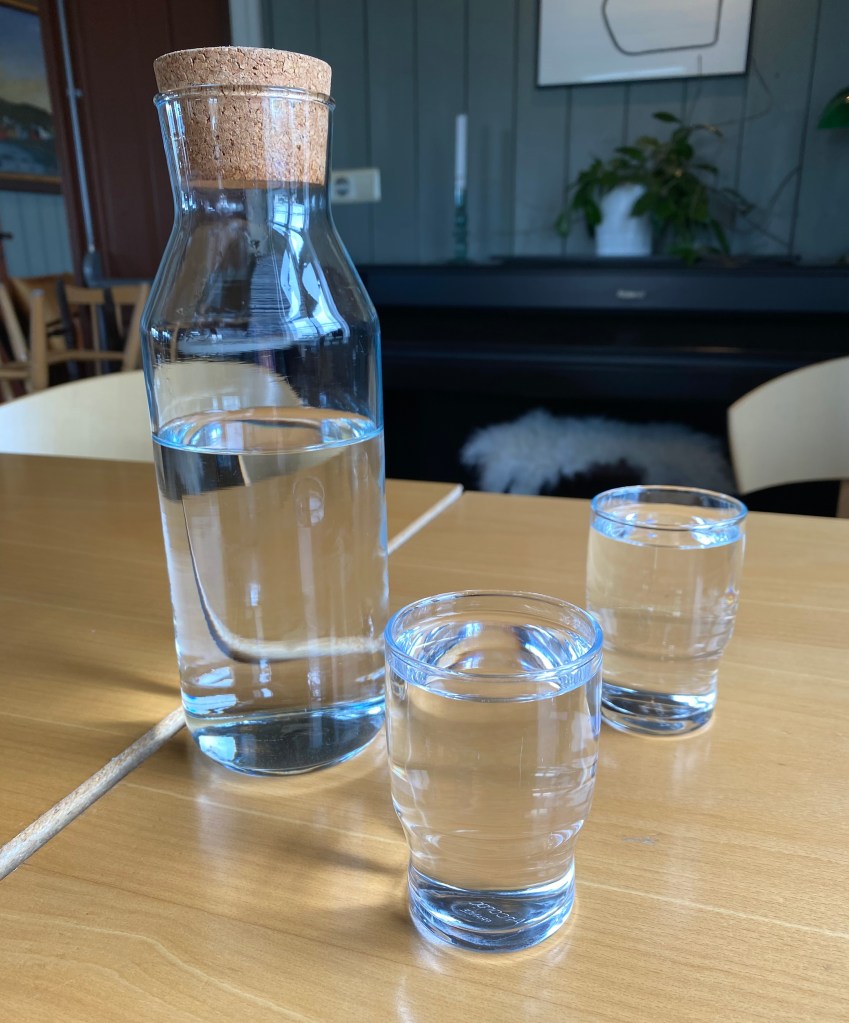
NO PLASTIC BOTTLES
Delicious water for drinking comes straight from the tap. In a country like this where restaurant meals are quite expensive, the best bargain – which is absolutely free of charge – is…..
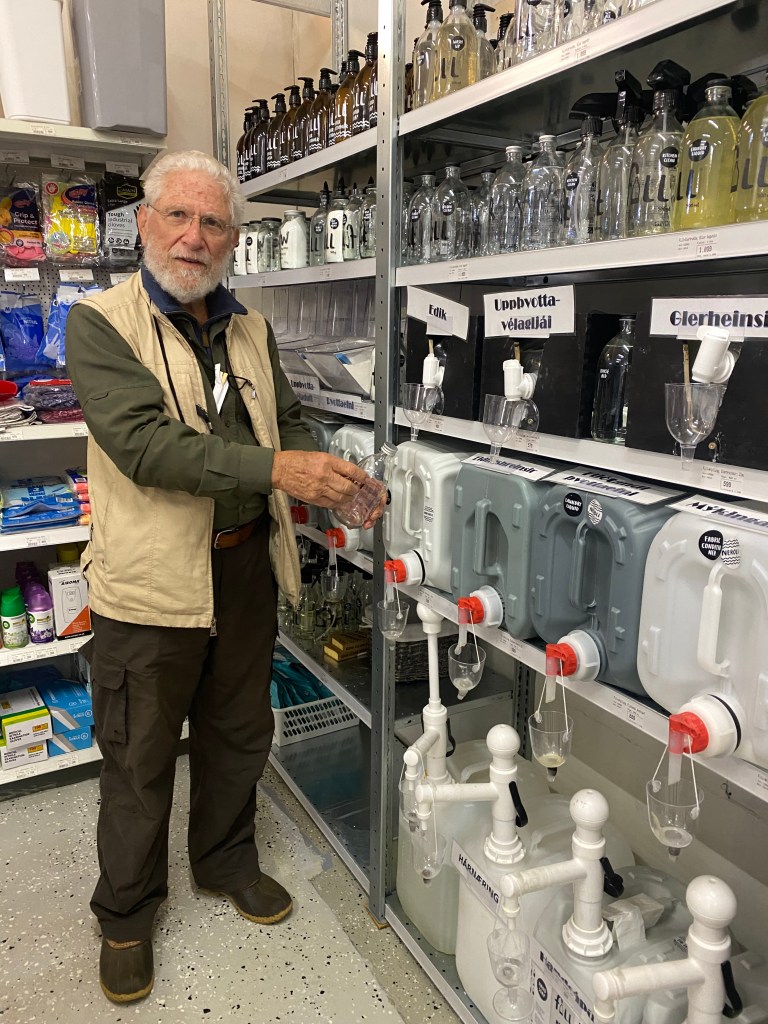
Icelanders are serious about caring for the planet…. A village grocery store has this center for filling reusable containers of soap, shampoo and cleaning products.
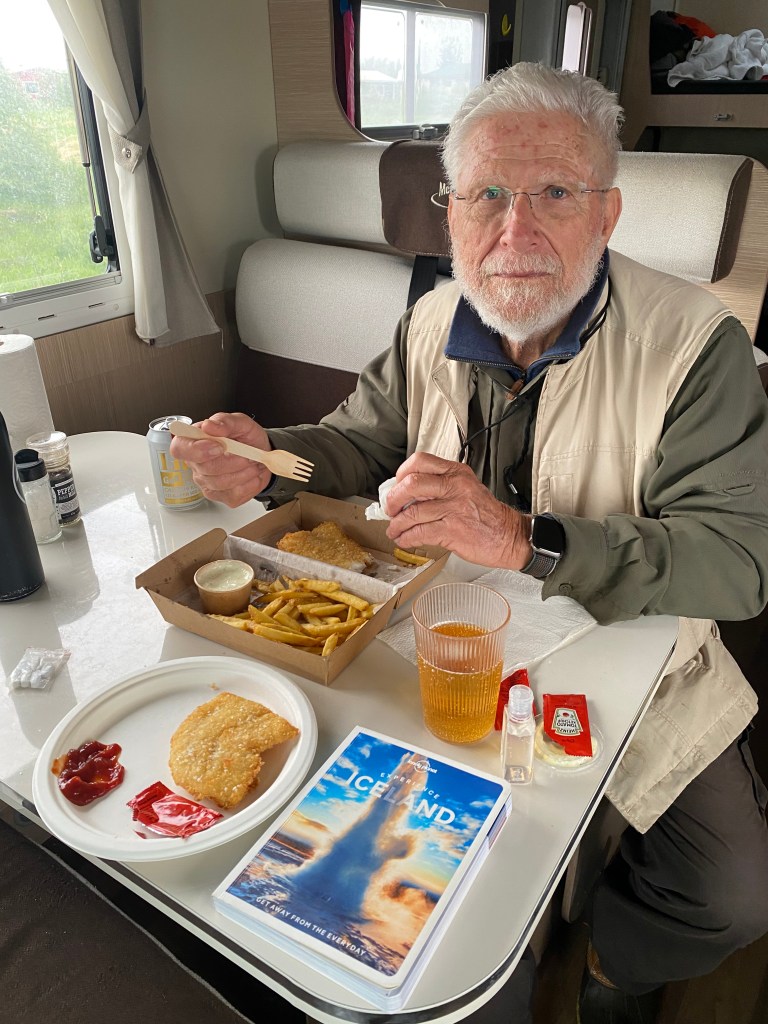
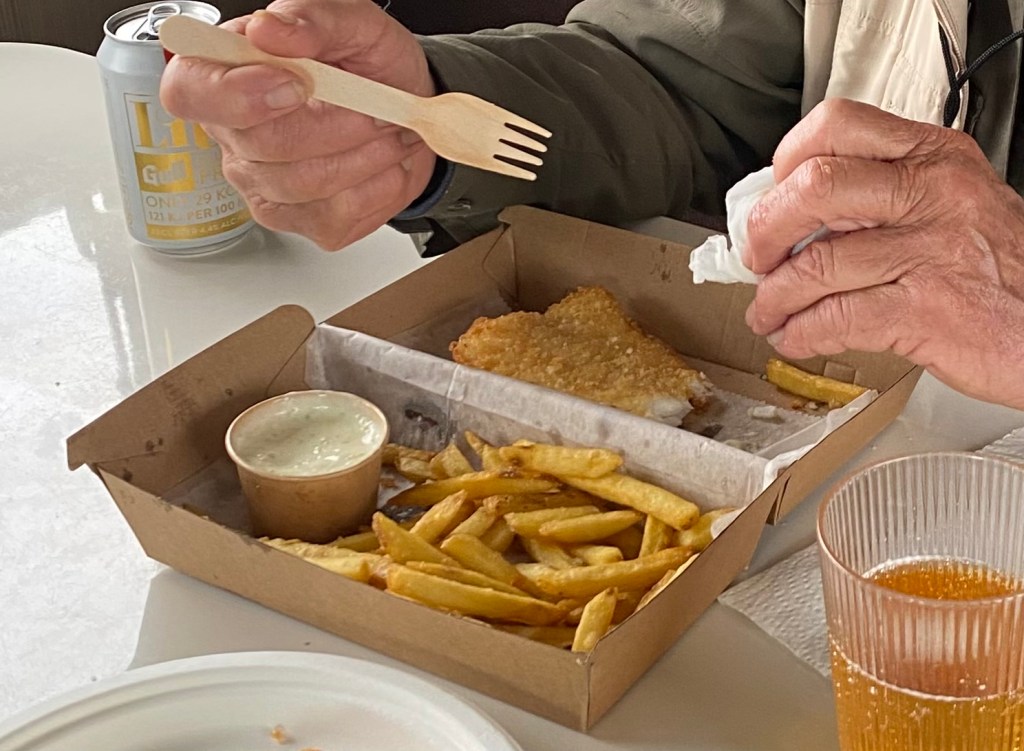
Enjoying our favorite informal meal – an order of fresh fish and chips….
Note that every service item is paper-based, and therefore compostable and renewable.
Not a speck of styrofoam in evidence!
Vegetable and fruit crops are hard to grow here due to the short growing season. Ambitious farmers are turning to….
HOTHOUSES
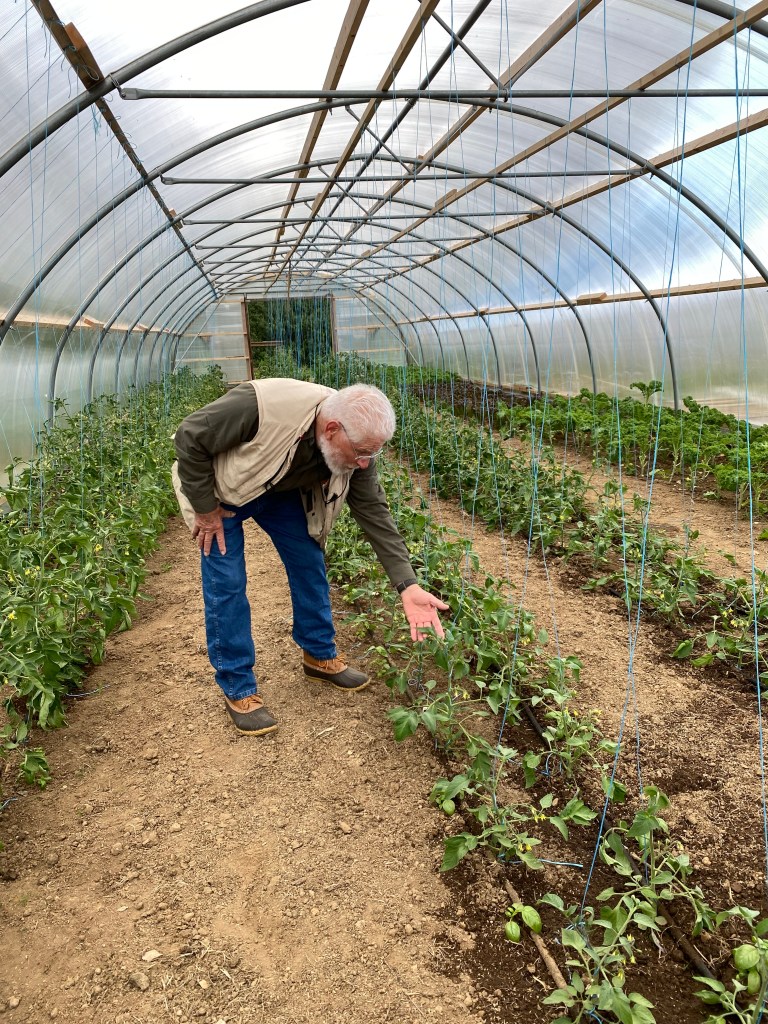
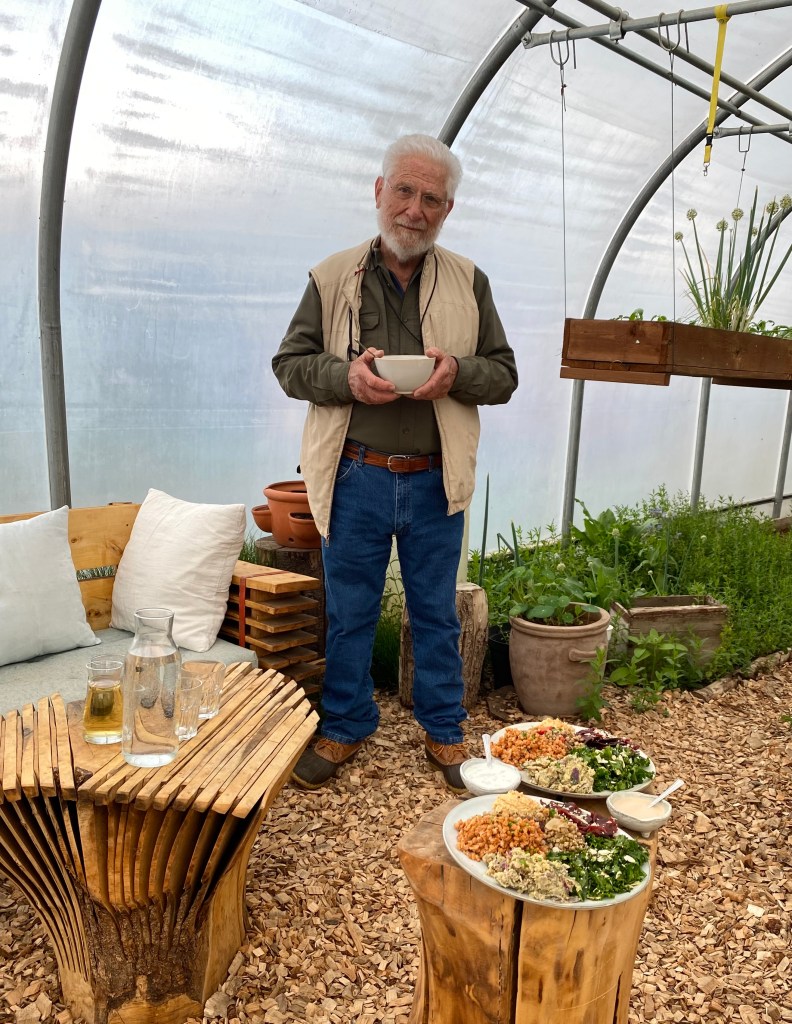
for growing seasonal produce. Móthir Jörth near Egilsstathir is an organic farm that has traditionally produced mostly barley …… now branching out into hothouse tomatoes….
The proprietors have lovely accommodations in a rare woodland setting, and also serve fabulous vegetarian meals with fresh food grown in their gardens.
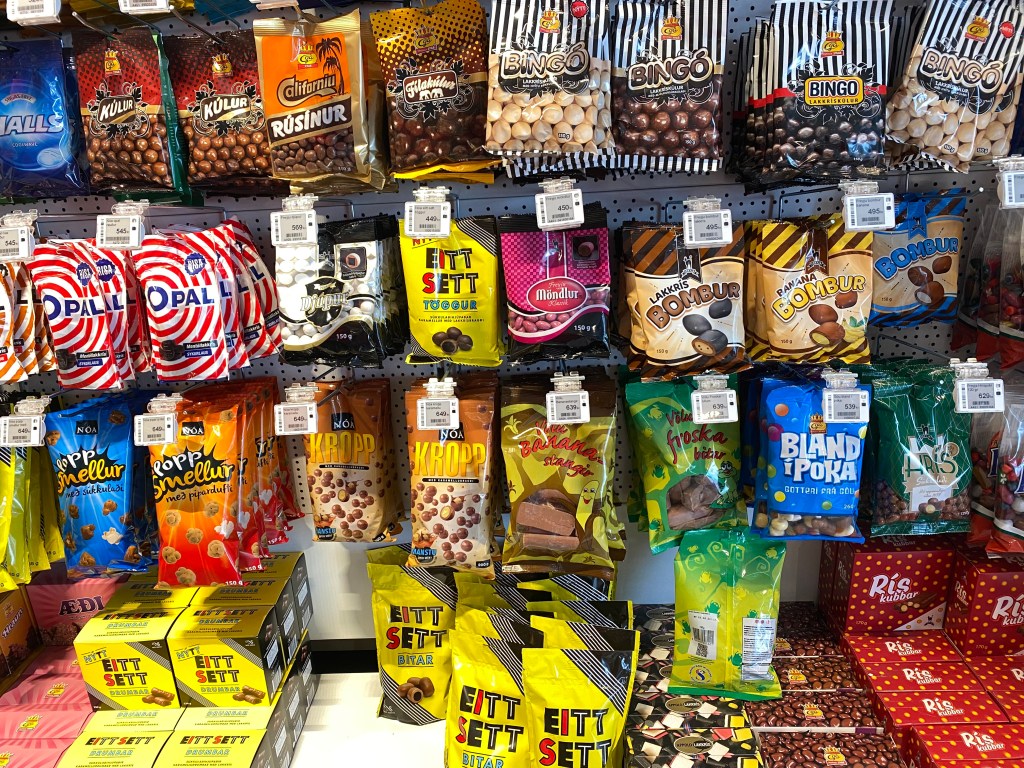
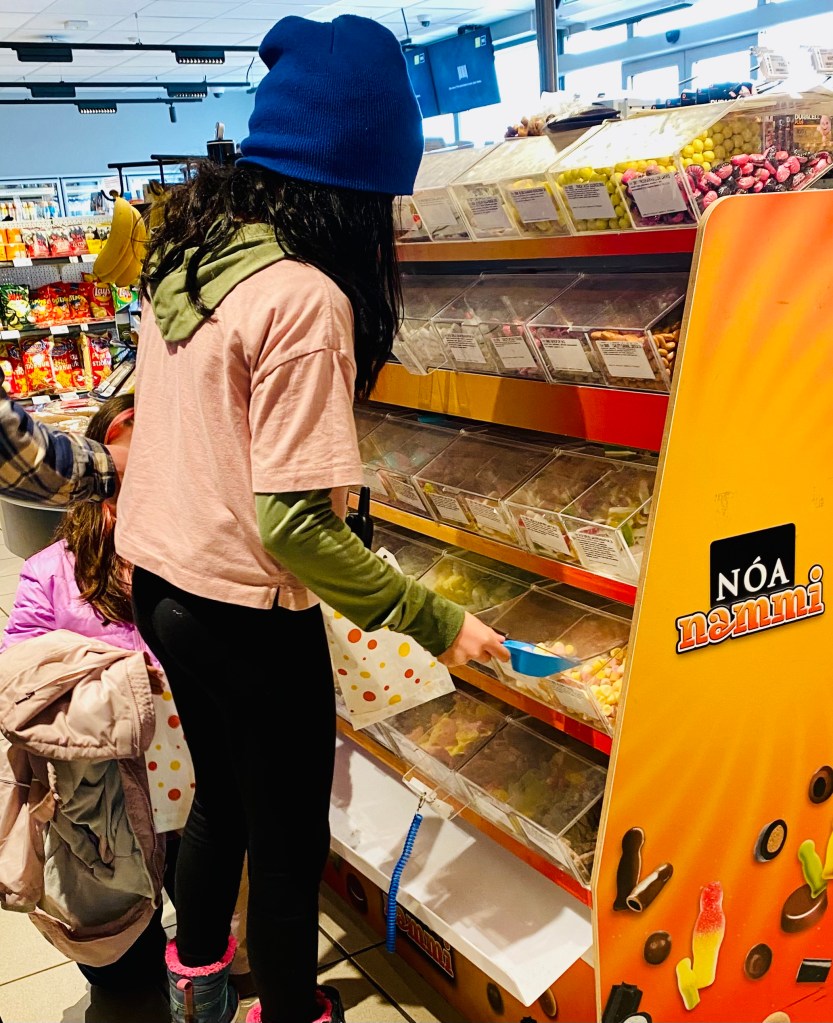
Less healthful is the Icelanders’ affection for candy, generally called…
NAMMI
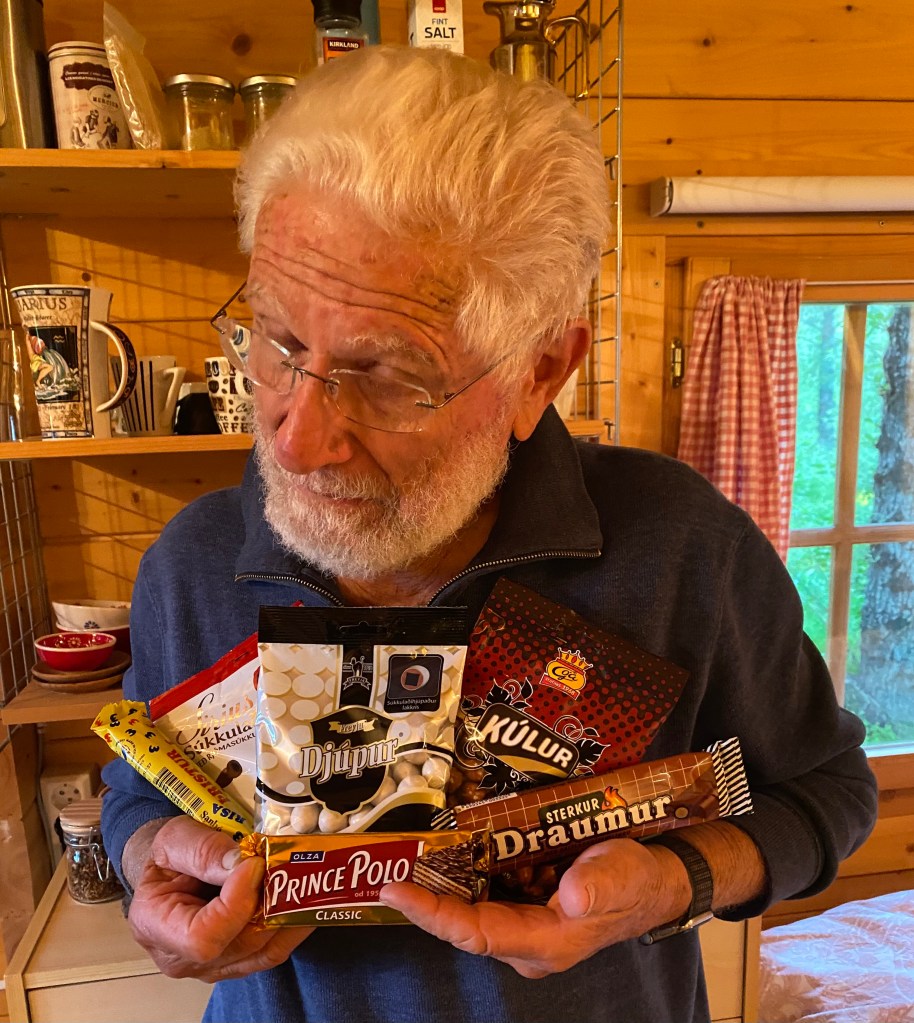
Over time, their taste in sweets has centered on licorice….. especially (and strangely to our palates) paired with chocolate.
In the name of adventure, we had to try a selection.
These candies are such a popular treat that they are often sold on Saturdays at a special discount in bulk…. And the kids go crazy.
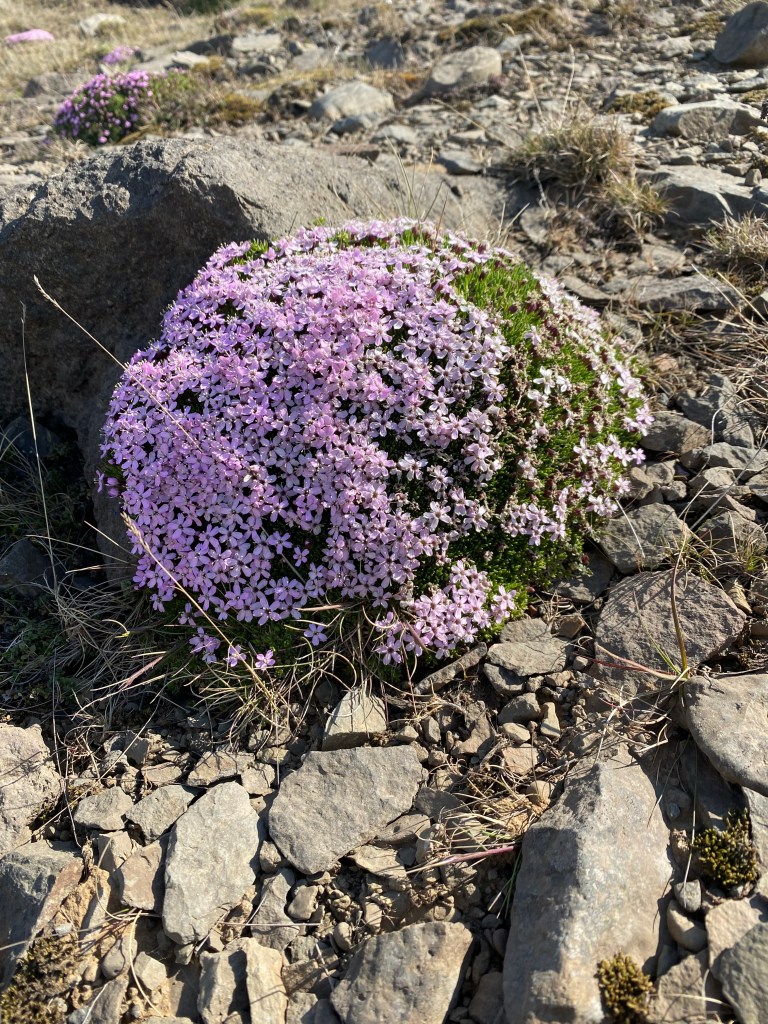
These plants grow on top of rocks, assuming a round bowling-ball appearance. They are from the carnation family and are also called compass plants, since flowers always appear first on the south side of the growing area.
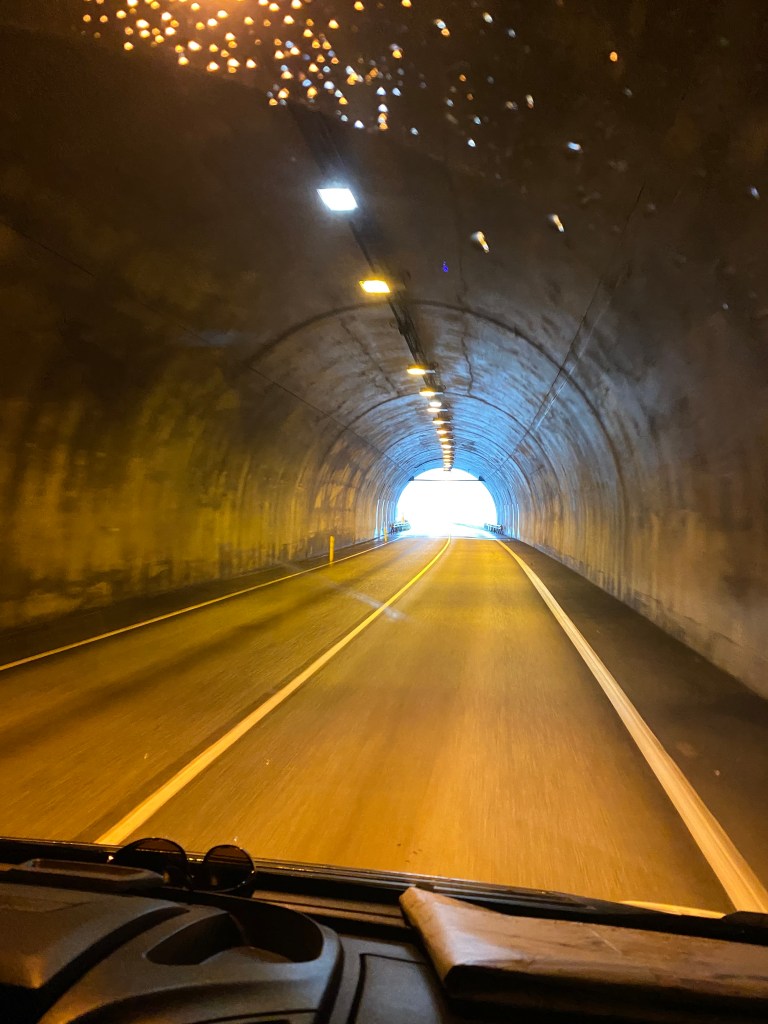
On our road trip to Iceland we did not expect to drive through so many…..
TUNNELS
It makes sense, however, to build a road through the mountains between fjords rather than winding around on top of them! But they are very long tunnels….. the longest is almost 6 kilometers, or 3.5 miles! If not prepared, you might think you will never emerge.
Iceland is home to…
MILLIONS OF BIRDS
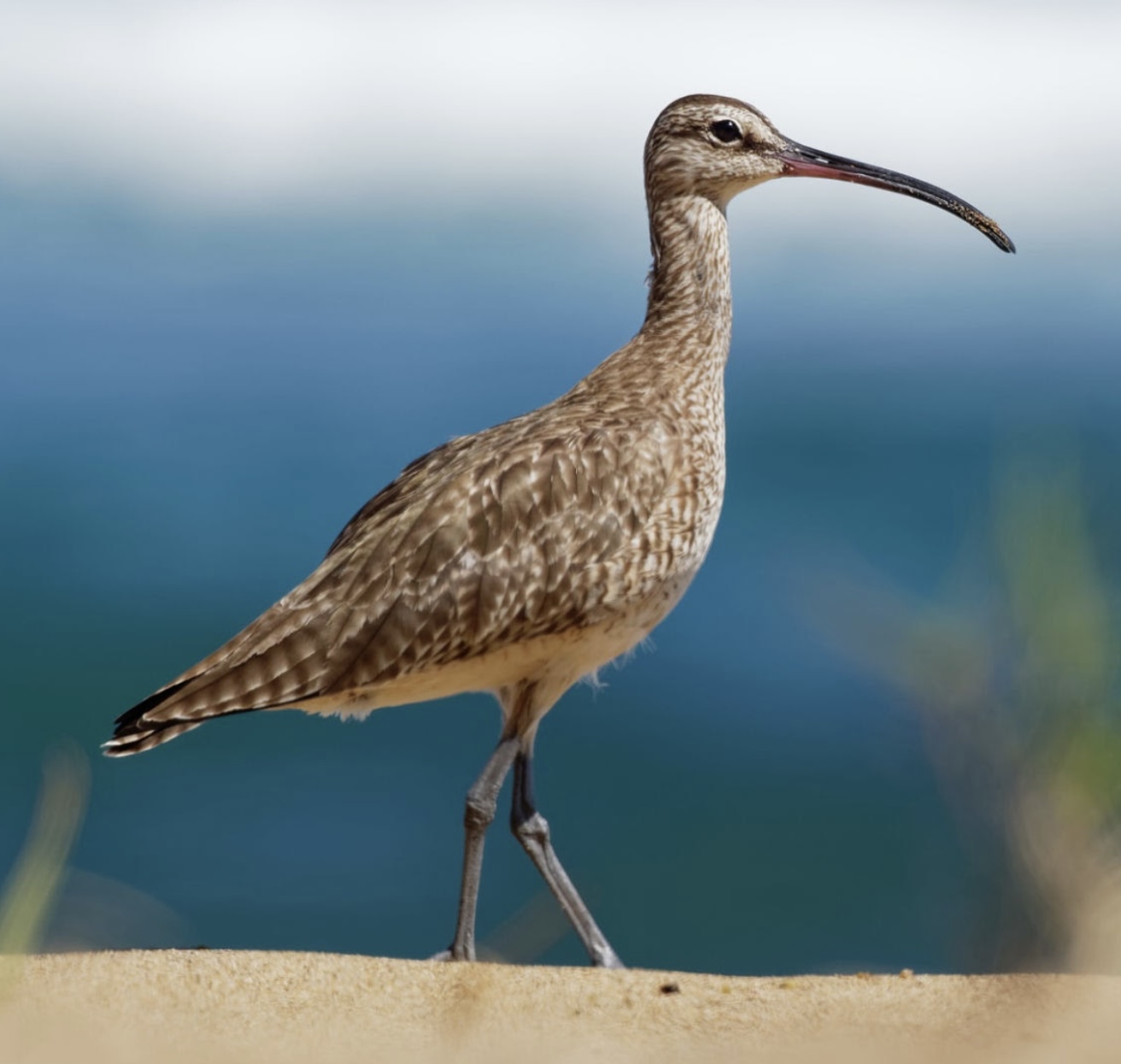
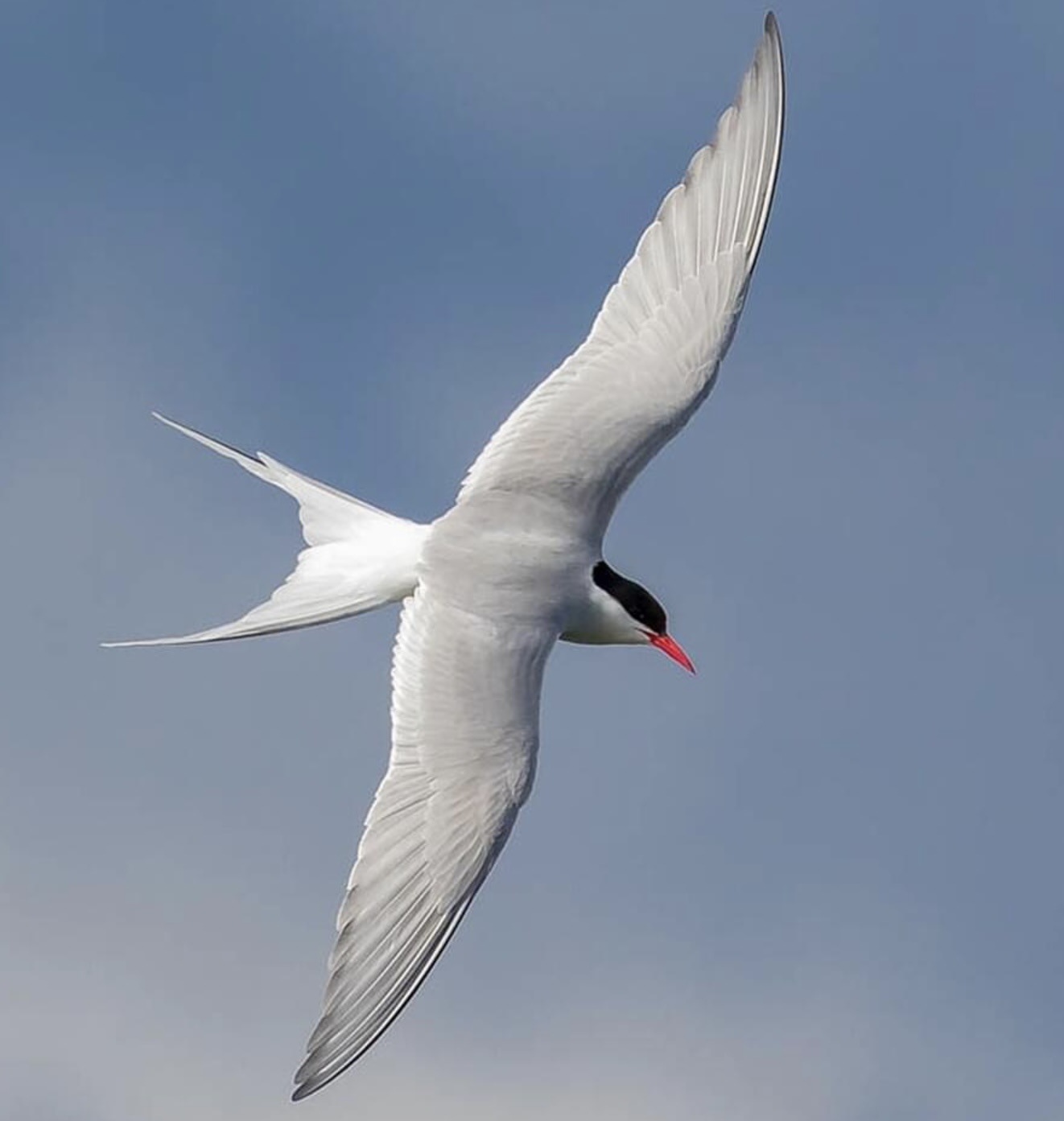
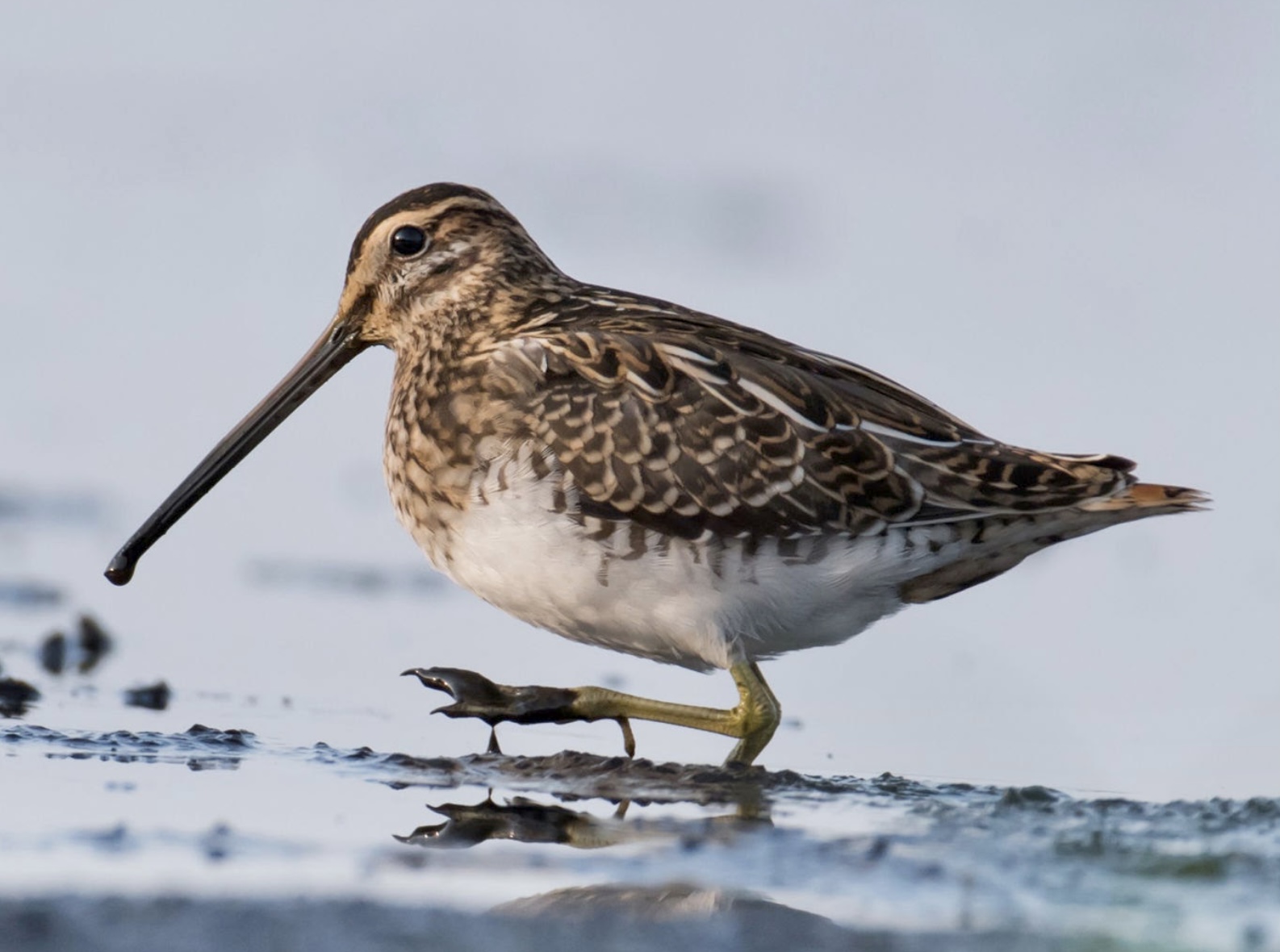
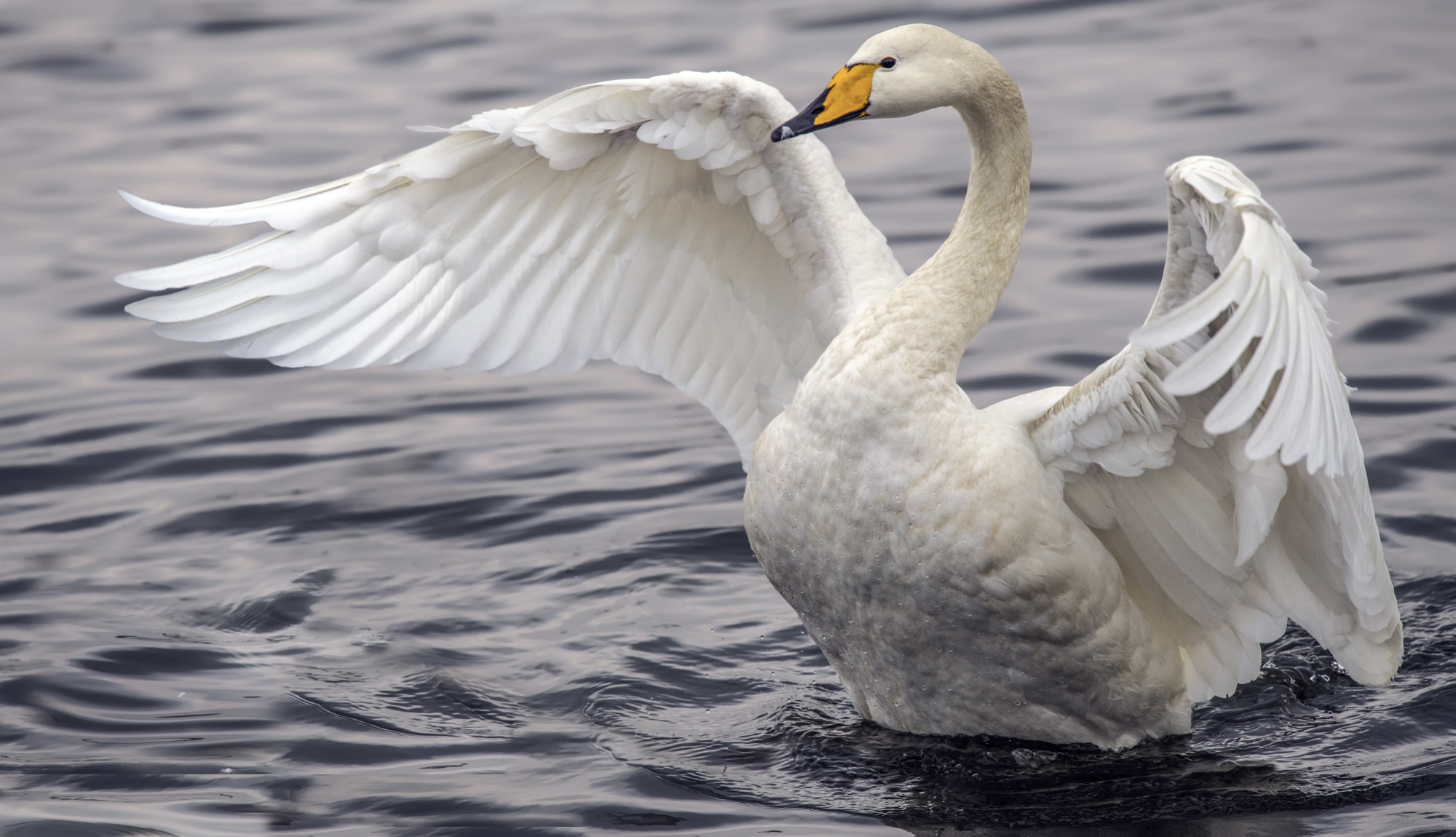
….not even counting the puffins. Some of our favorites include, clockwise from upper right – the arctic tern, common snipe, whooper swan, oystercatcher, gannet, eider duck and whimbrel. (Please note that these are also not our photos….. )
In spite of the growing crowds of tourists descending on this country, the birds are still happy here, with plenty of fresh air, pristine water and just the right kind of vegetation and sea life. Below, a whole colony of gannets off the east coast:
In search of other kinds of animal encounters? You will find that Iceland has almost ….
NO MAMMALIAN WILDLIFE
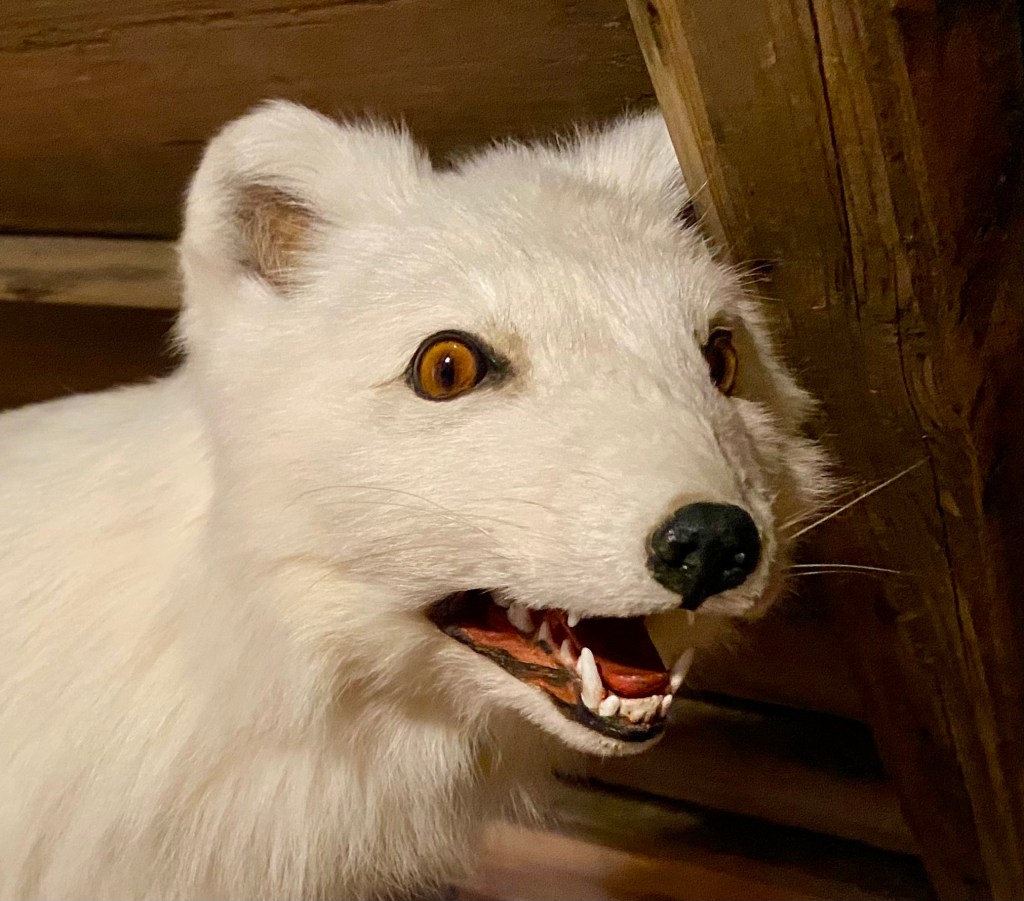
The only wild mammal we have heard much about is the arctic fox, which is apparently quite shy…..
(This one is stuffed….)
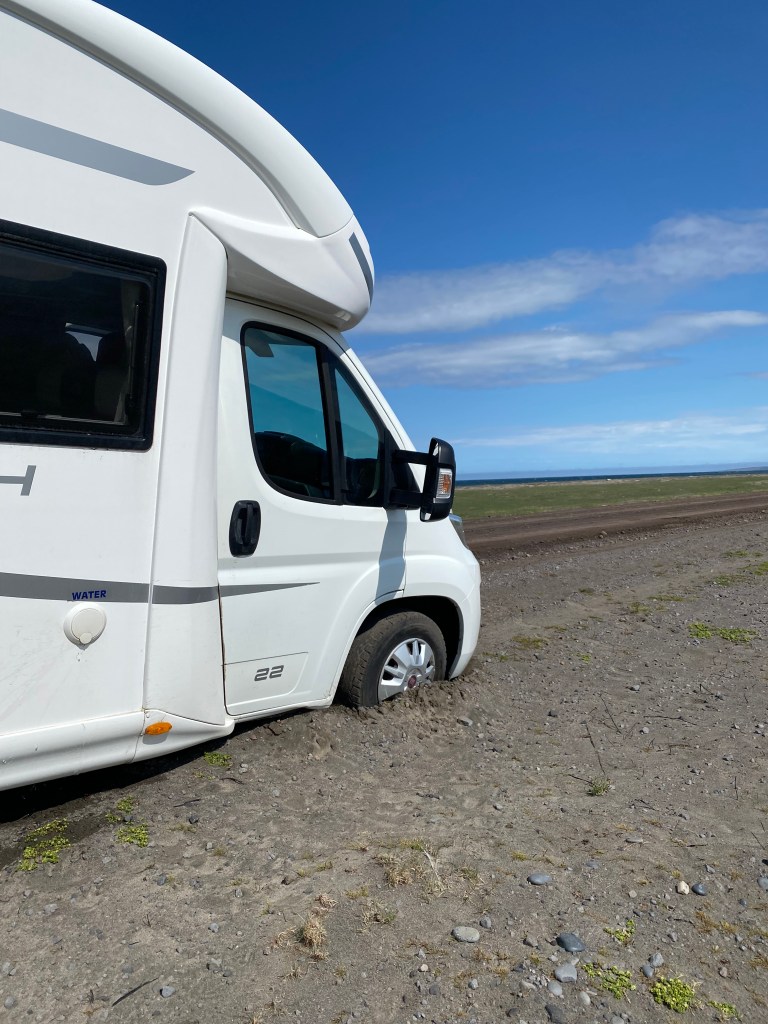
One Icelander we met, however, can attest to their existence. When Bessie Mae got stuck in some deep sand….
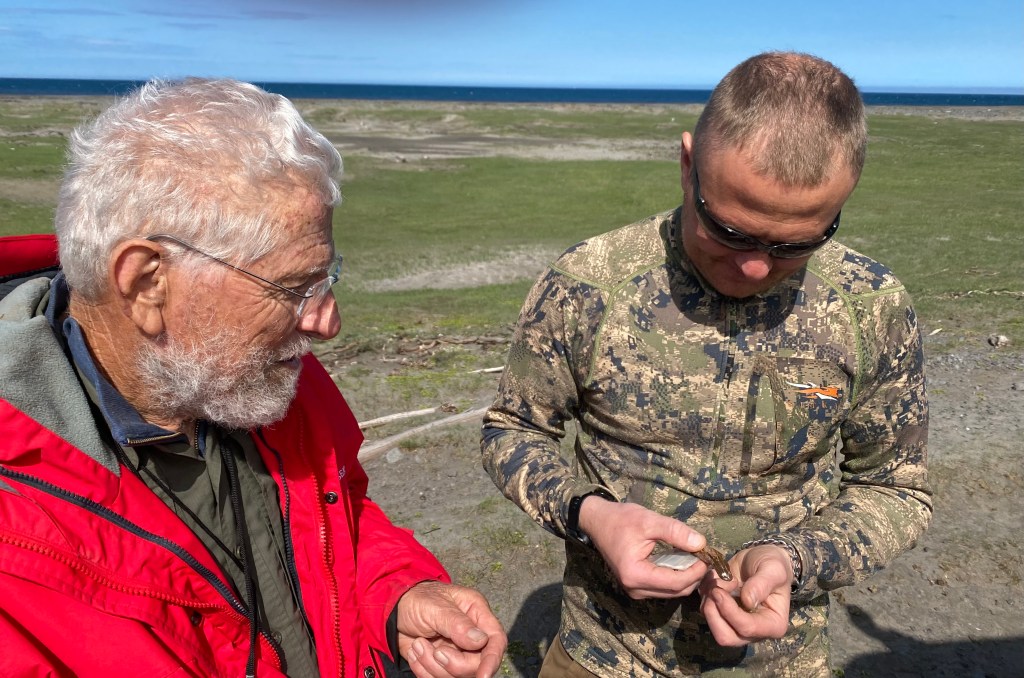
This outdoorsman was kind enough to rescue us with a winch and a rope!
It turns out that he is a part-time bounty hunter, who tracks and eliminates arctic foxes that threaten the baby sheep….. He confided that he had just taken out five of them for a reward from the authorities of 100,000 krona, just over $700 US.
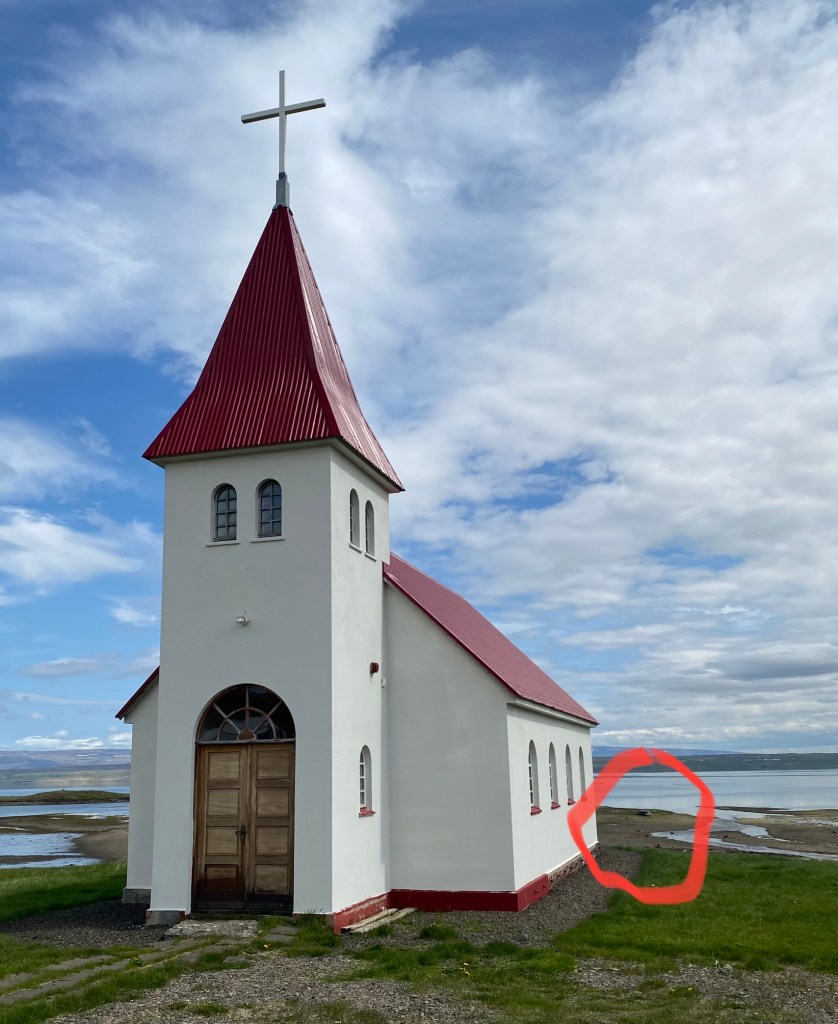
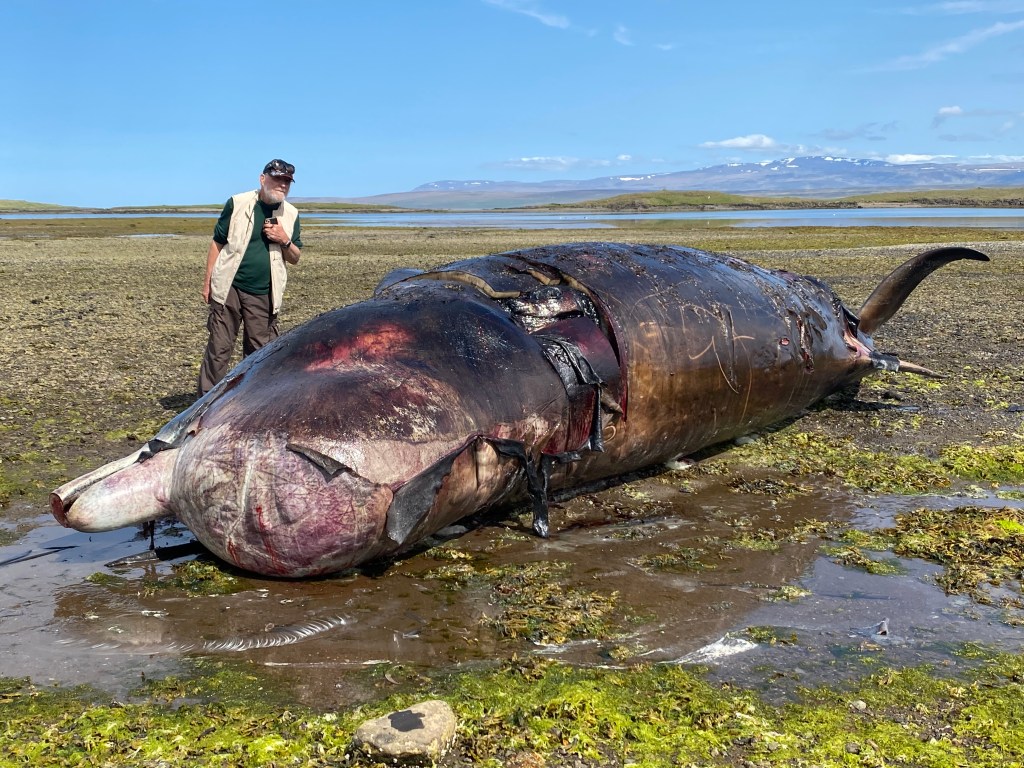
While we are telling sad stories (tender-hearted animal lovers may want to look away) – this church was a road-side attraction, but wait….. what is that in the distance?
Never thought we’d actually see a beached whale, but this unfortunate bottle-nose met its end in the fjord behind the church. The wildlife people had been by to check on its provenance and take some samples.
An activity near and dear to Henry is collecting geological specimens, but Iceland has….
NO ROCK HOUNDS OR ROCK SHOPS
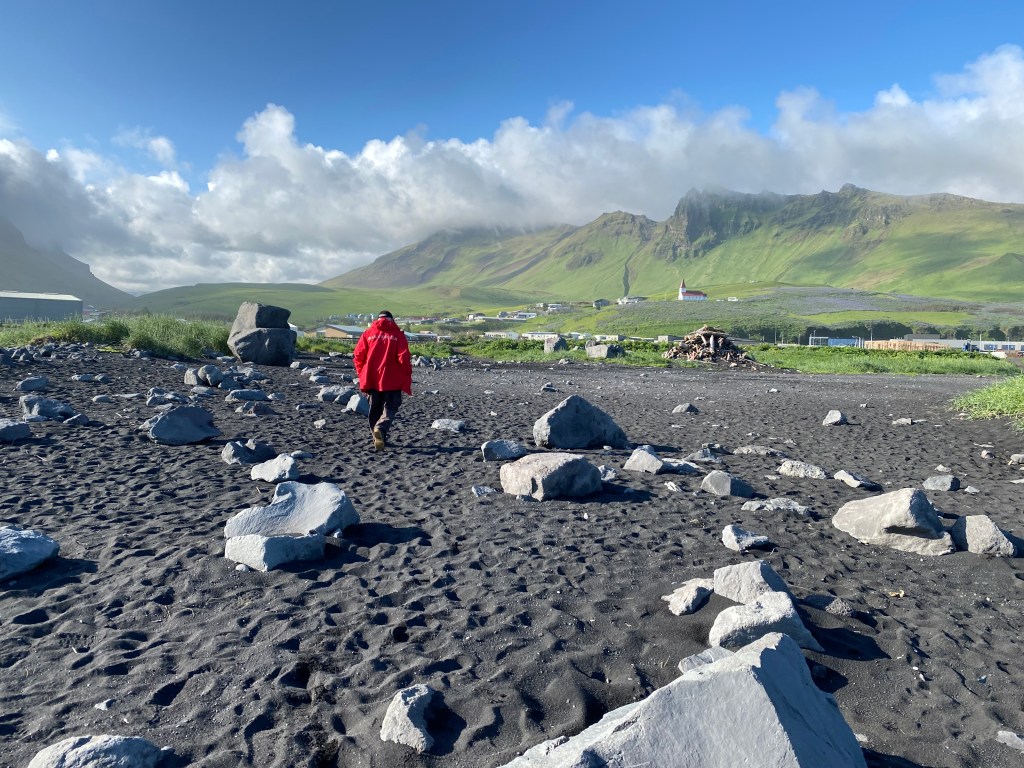
There are plenty of rocks…
But as we were informed by virtually every resident and guide we met, it is currently illegal in Iceland to pick up and take rocks and minerals.
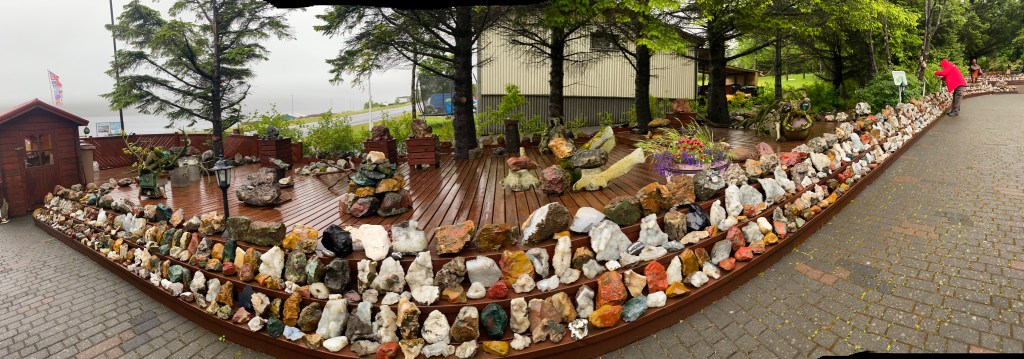
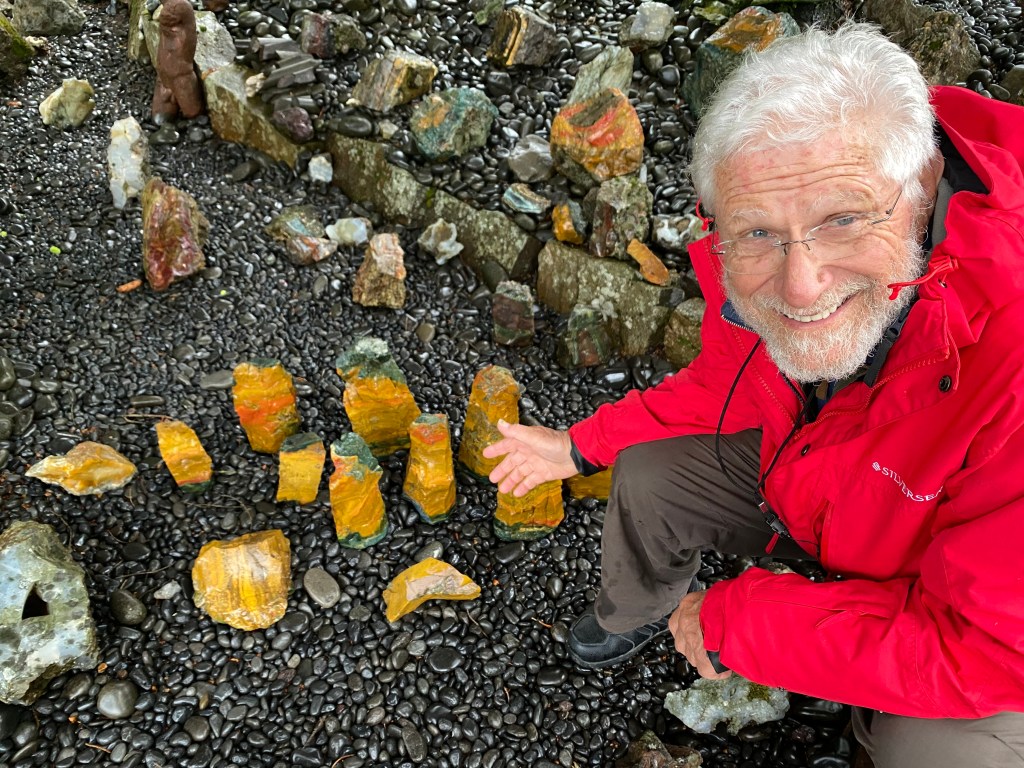
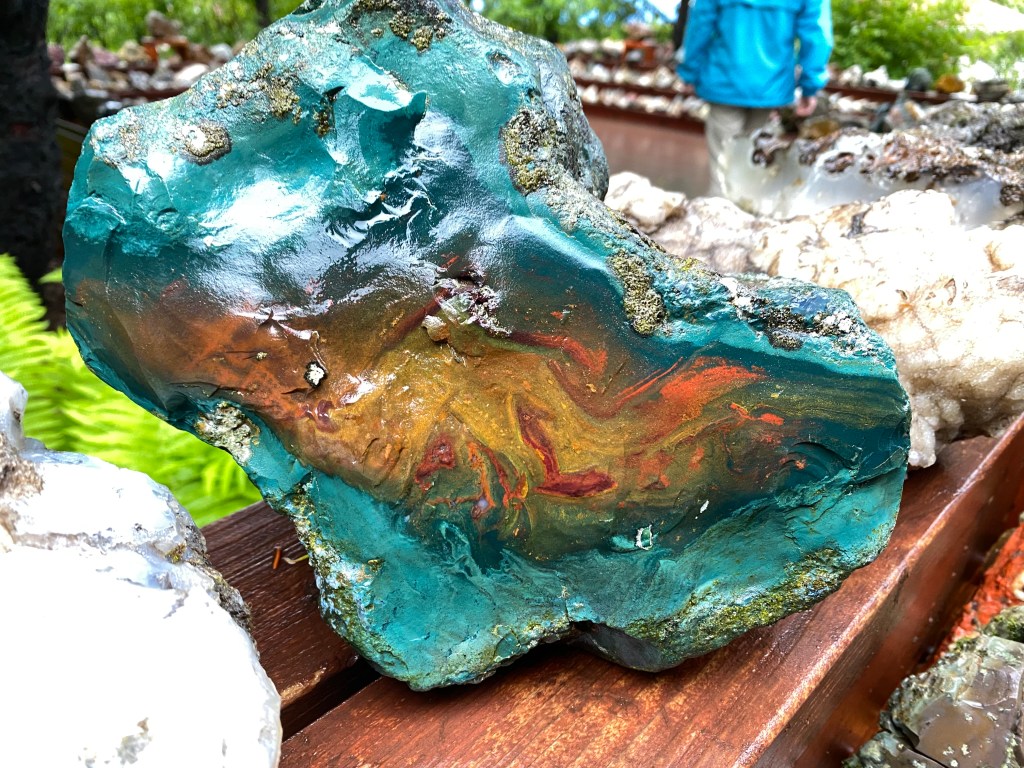
Henry would also suggest that there is just not that much in the way of interesting stones….. which sounded plausible until we came upon Petra’s collection.
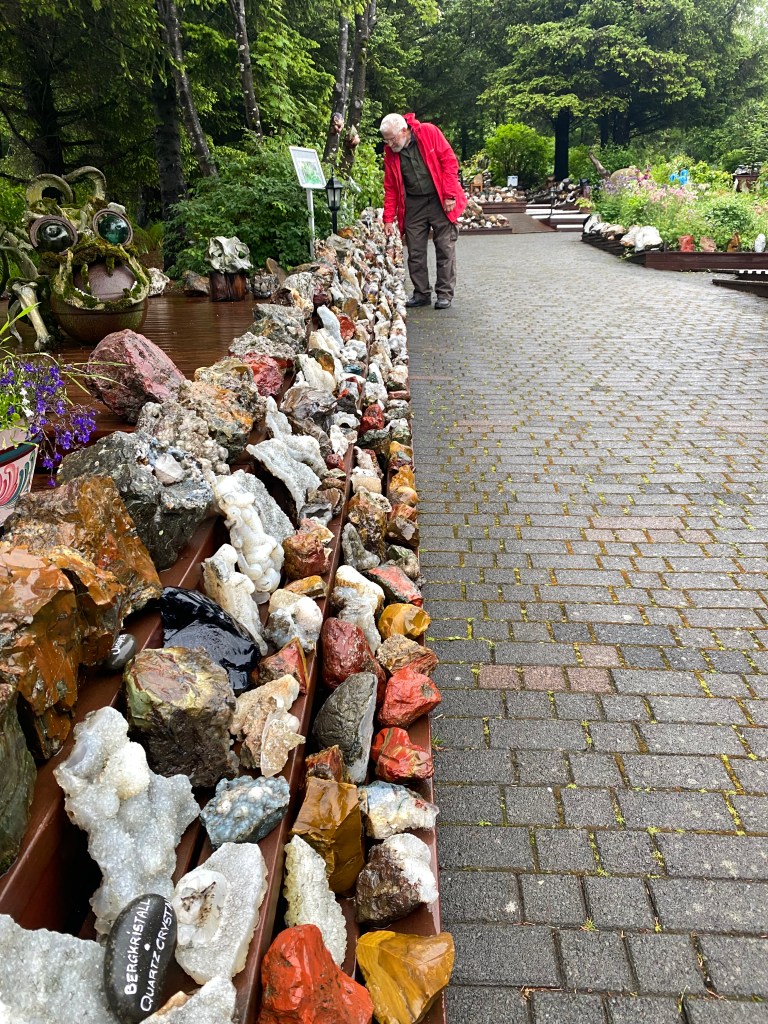
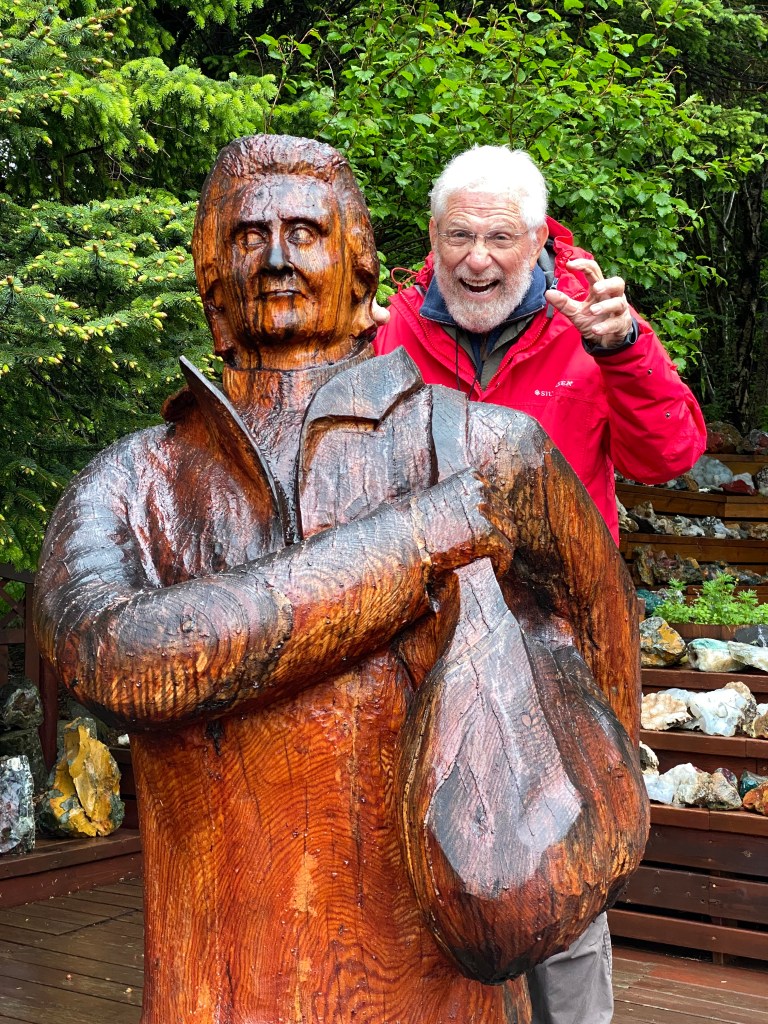
Petra worked in one of the fisheries by day, married and raised children, but also spent a good part of 60 years venturing into the nearby mountains, picking up rocks of interest. She amassed a stunning collection during her lifetime, which her family now manages as her legacy.
It’s an enormous display of a wide variety of incredible rocks and minerals.
We have concluded that rock collecting is not a pastime in Iceland because old Petra seems to have found all of them worth finding!
And although we have mentioned this previously, it doesn’t hurt to note one more time just how prevalent, beautiful and welcoming are the….
ICELANDIC HORSES
And now our time in Iceland comes to an end. From Reykjavik, our journey will continue on to Greenland and Arctic Canada on board an expedition cruise. More reports will come as opportunity permits!
Thanks to our friend Reiner who provided us with counsel and advice on our trip. He is a frequent visitor here (and everywhere!) and a fantastic photographer.
Hope those of you in Texas are surviving the oppressive heat dome without raising a sweat! Stay cool and stay tuned!
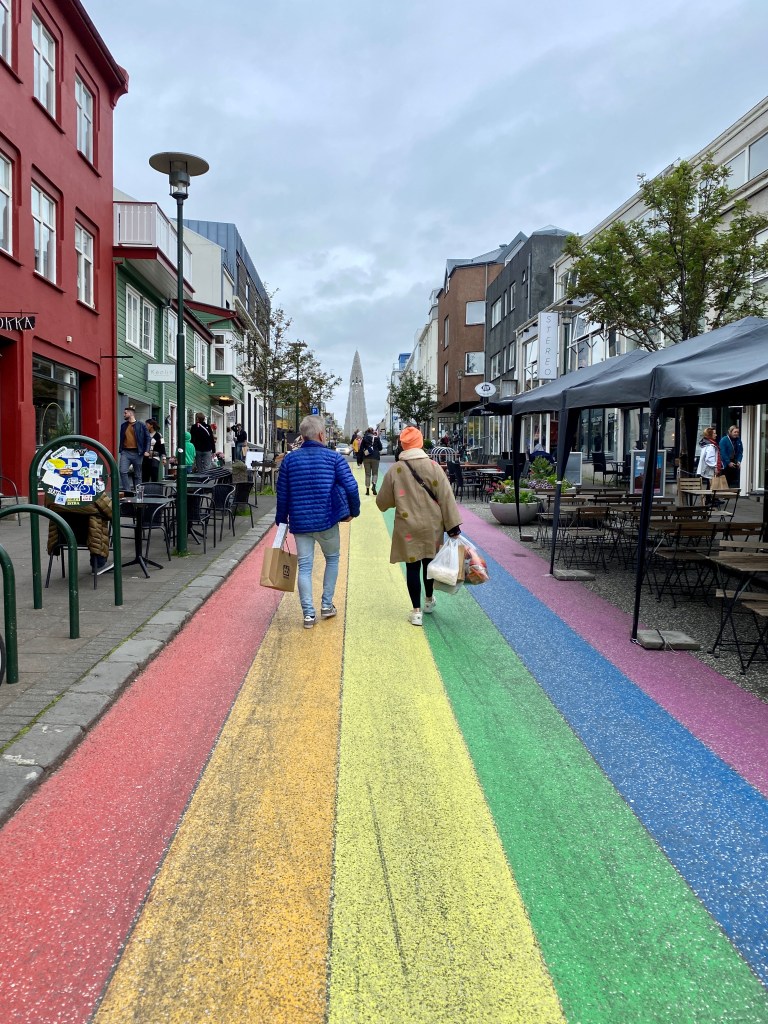
One last note about Iceland…. And an opportunity to share a favorite photo:
Downtown Reykjavik with the Harpa Cathedral in the distance…. The rainbow street is not just for Pride Month, but emblematic of Iceland as a year-round LGBTQ-friendly destination. Icelanders are independent and respectful of the rights of others to live as they see fit. Vive les differences!
Getting back to …… GREENLAND!
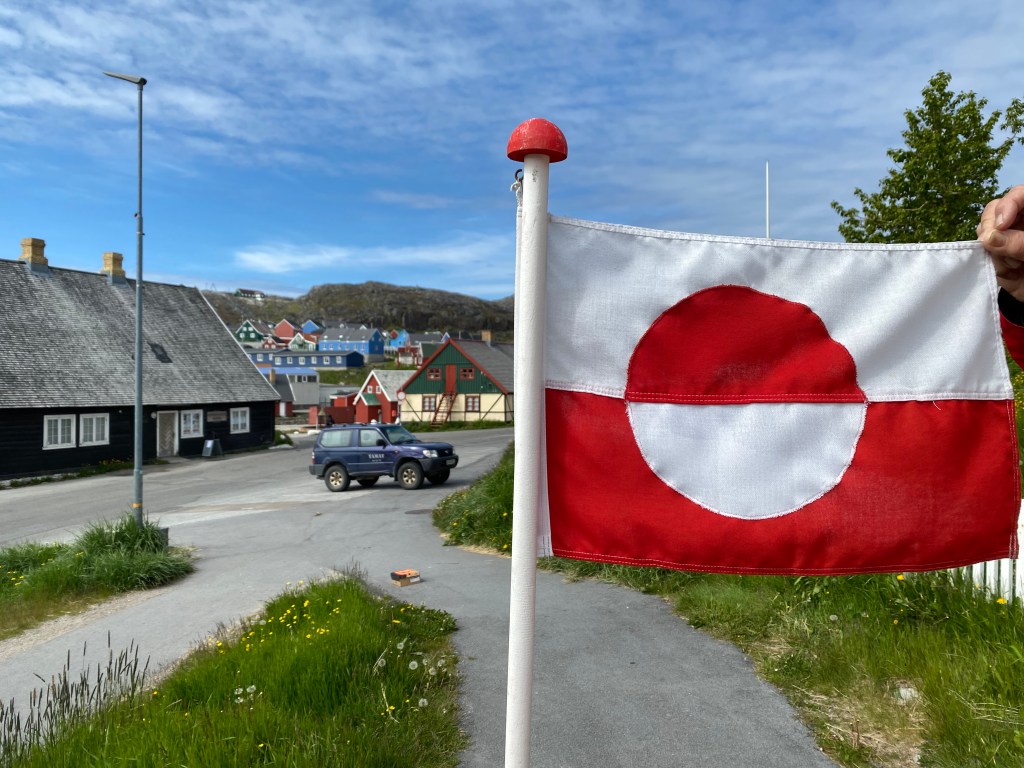
Their flag represents the midnight sun…. And the ice that covers more than 80 percent of its surface.
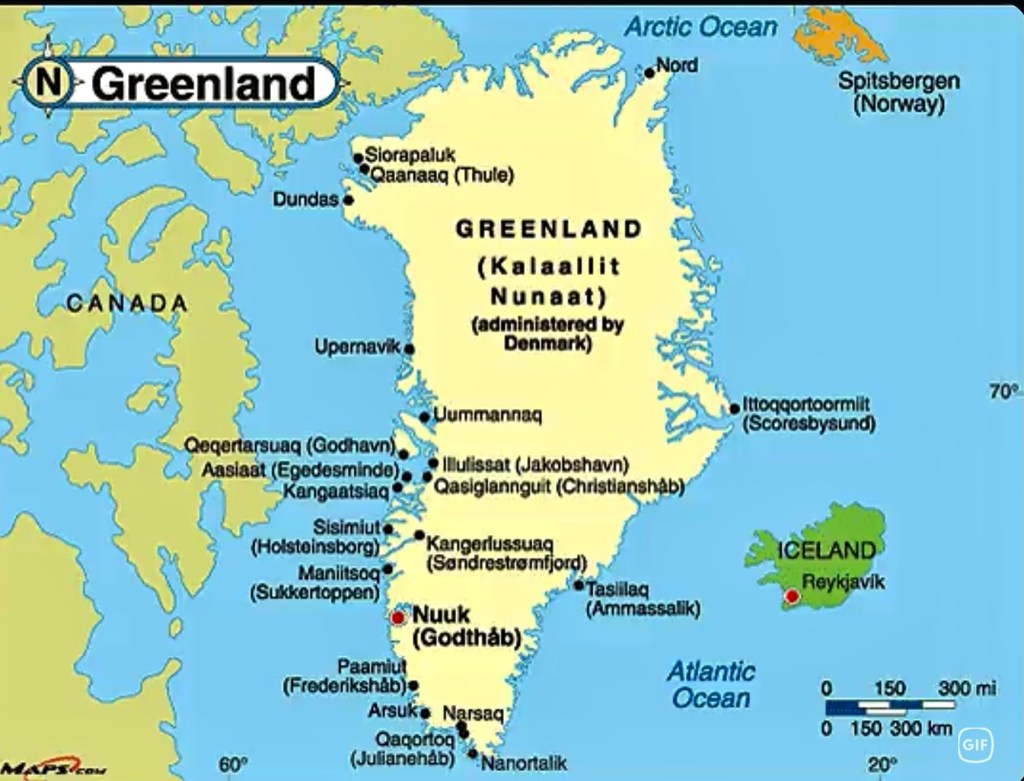
Greenland is the biggest island on the planet, a bit more than 3 times the area of Texas….. but the most sparsely-populated country, with fewer than 60,000 inhabitants. Since it is covered with ice and glaciers, people live along the coastline in small communities.
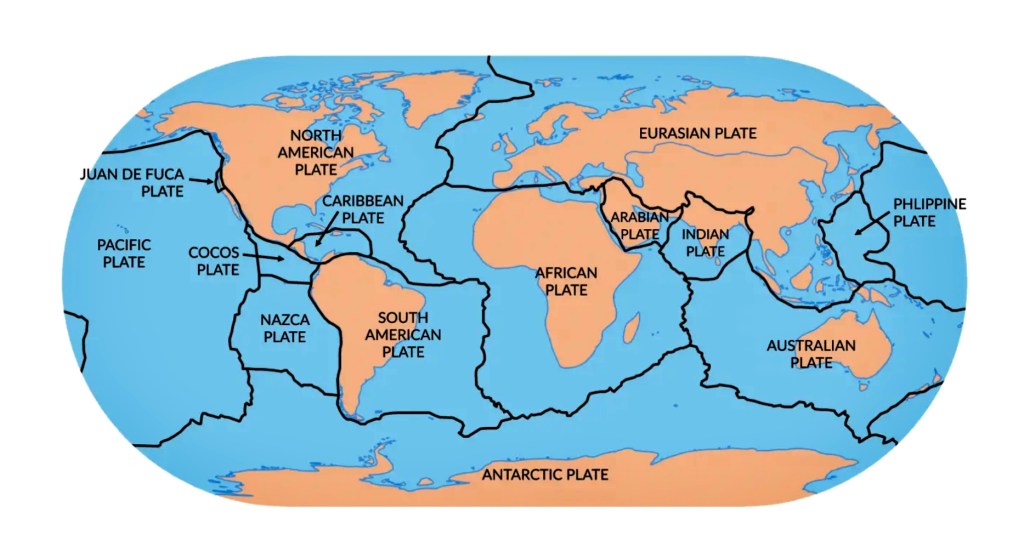
Although a member of the kingdom of Denmark, Greenland is geologically a part of North America, sharing space on the same tectonic plate…..
…. Which – much as we hate to admit – would provide some rationale to the idea of our former president that the US should buy the island as a logical extension of its sphere of influence (!)
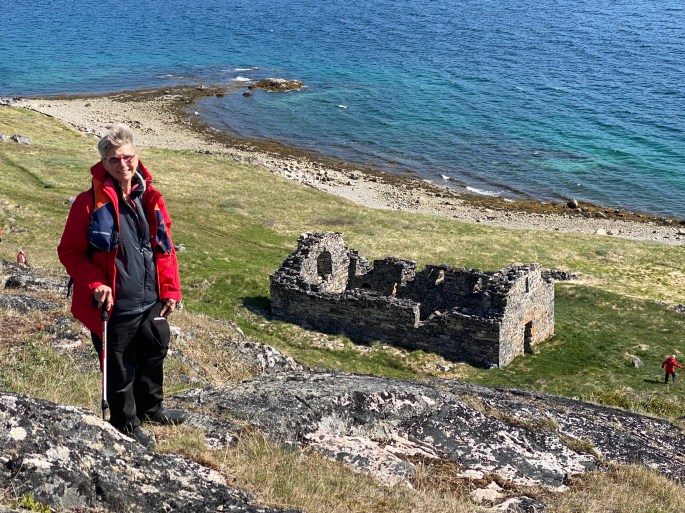
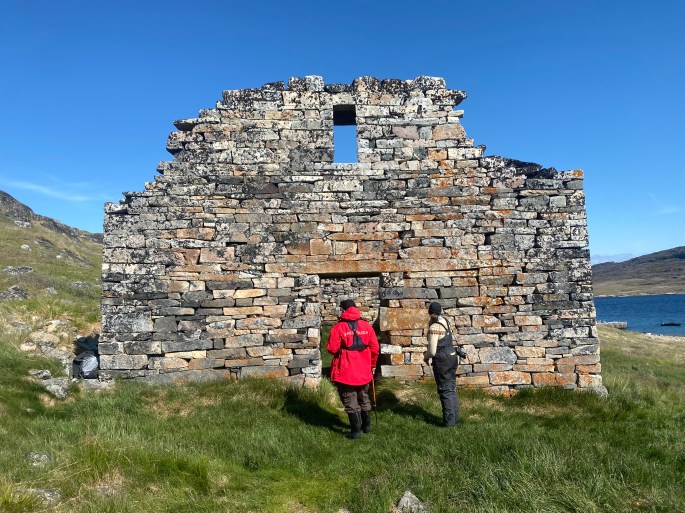
Scandinavian Vikings (mostly from Norway) first established small settlements along the southern coast beginning in the 9th or 10th century – at approximately the same time, give or take, as Inuit people emigrated to the north from what is now Canada. The Inuit livelihood was already adapted to Arctic conditions, with primary food sources from seals and other marine life. The Norse settlers on the other hand brought with them livestock and crops that ultimately proved unsuited to the harsh environment. The Norse communities shrank and were ultimately abandoned in the 15th century. The last record of their presence was a wedding in 1408 at this church on Hvalsey Fjord:
The Inuit people survived here through the ages, and represent more than 85 percent of the population today.
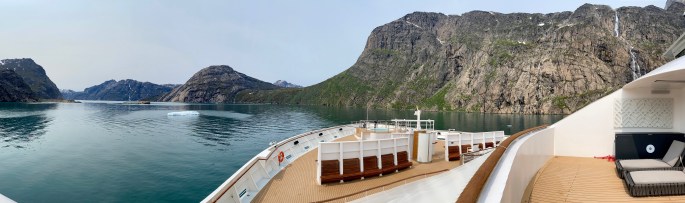
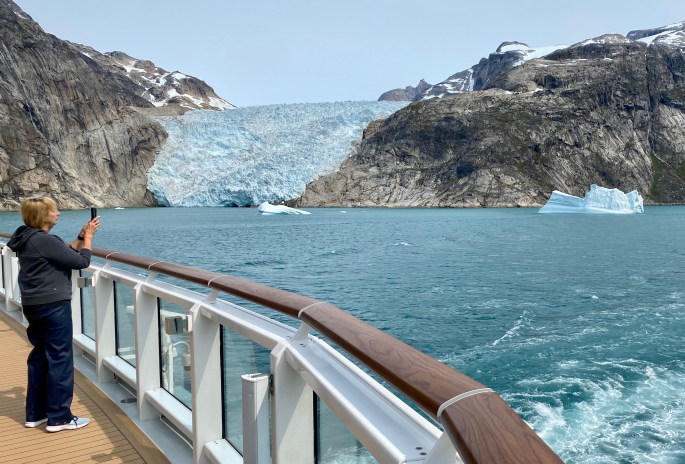
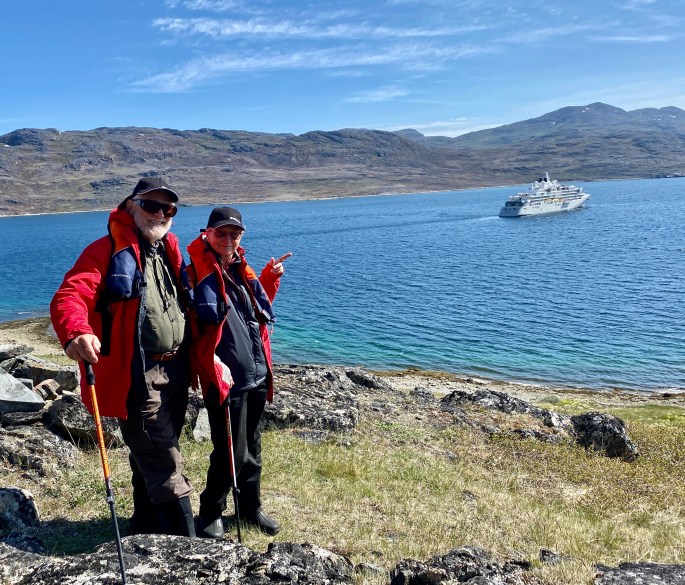
This is an “expedition” cruise…. a small ship going to remote parts of the world, with programs and adventures that emphasize nature – flora, fauna, geology and ecosystems – as well as the local culture of the places visited. In this part of the world, glaciers and icebergs are part of the scenery.
The weather changes frequently and dramatically.
(Please note this is a time-lapse sequence.)
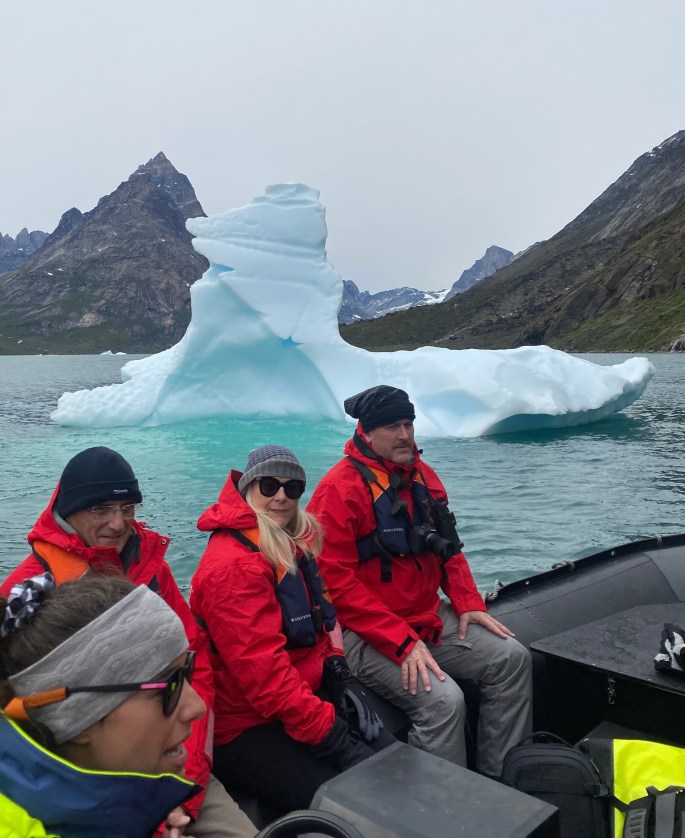
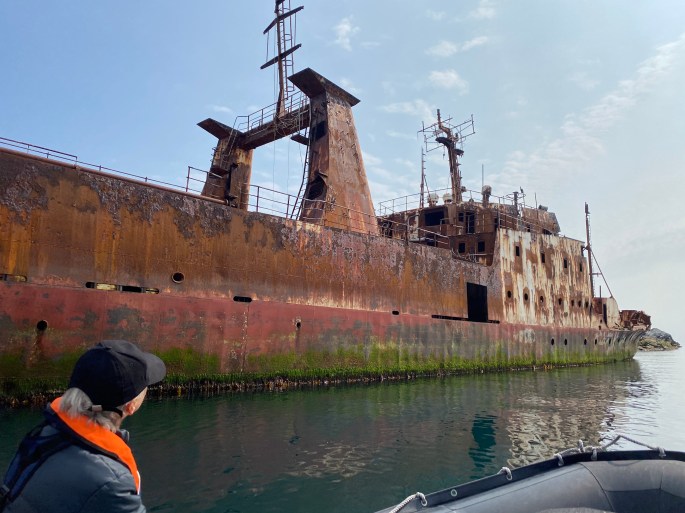
Trips in small Zodiac boats get us closer to the icebergs, glaciers, waterfalls, bird colonies… and an old wreck in one of the harbors.
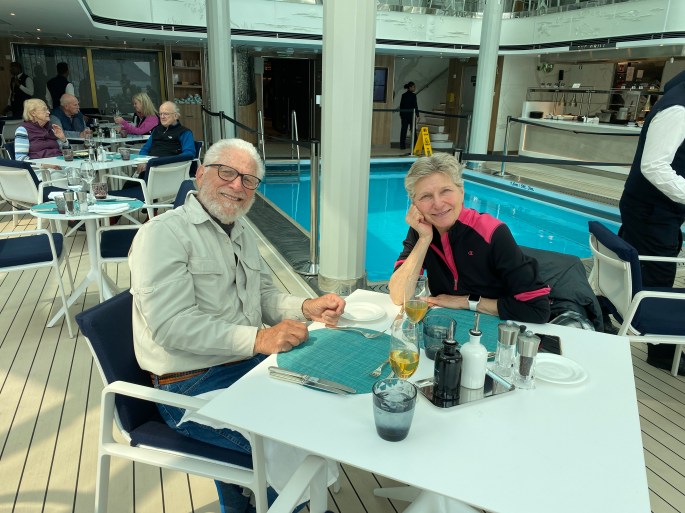
Of course, our ship is much nicer……
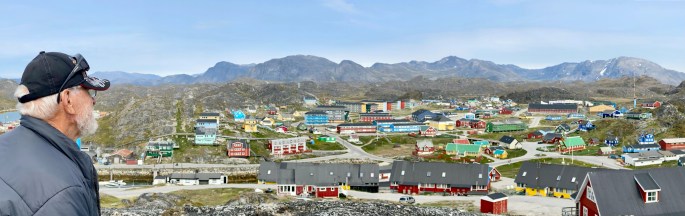
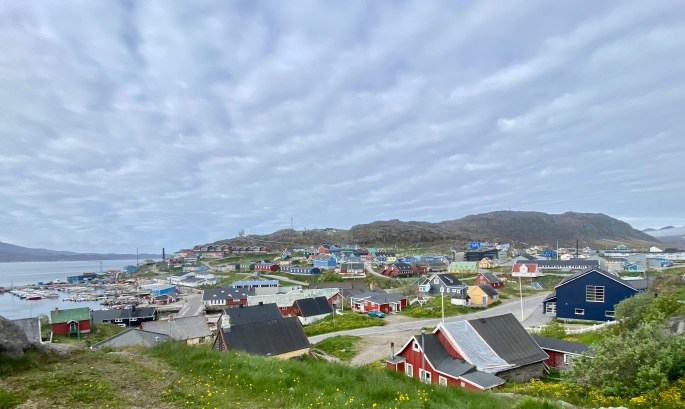
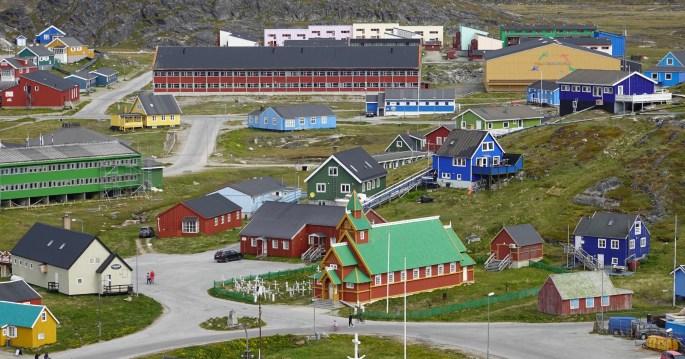
Our journey has taken us to the capitol city, Nuuk (population about 20,000), as well as to the much smaller communities of Qaqortoq and Paamiut.
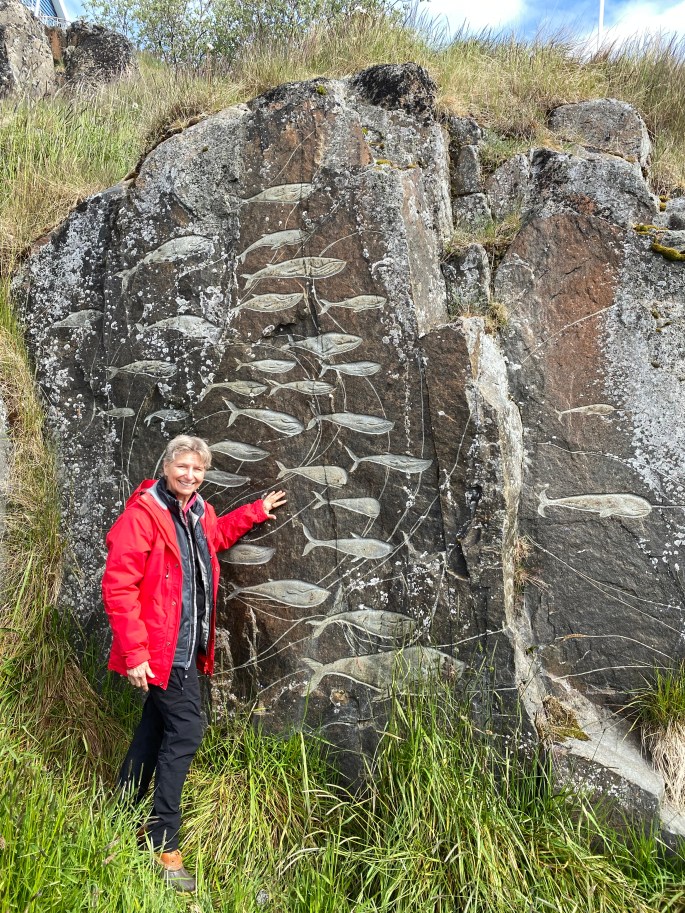
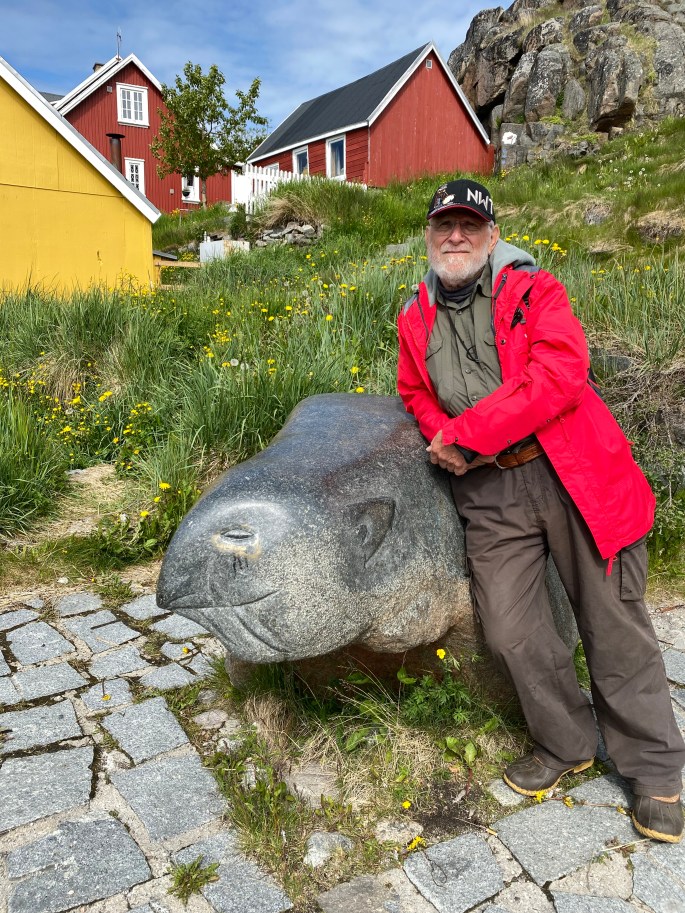
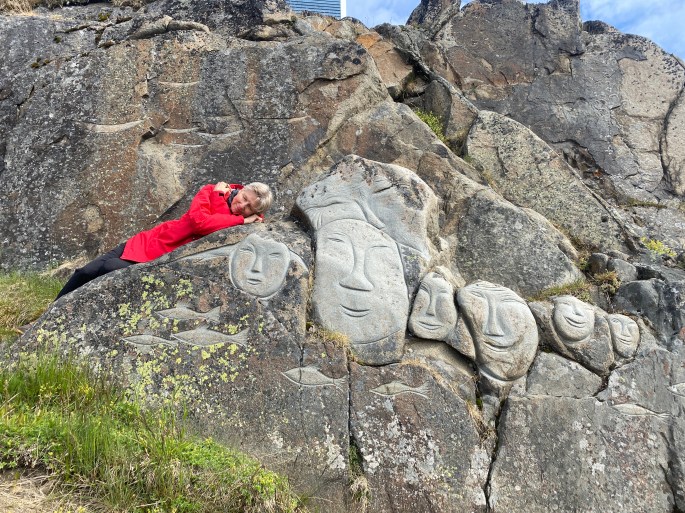
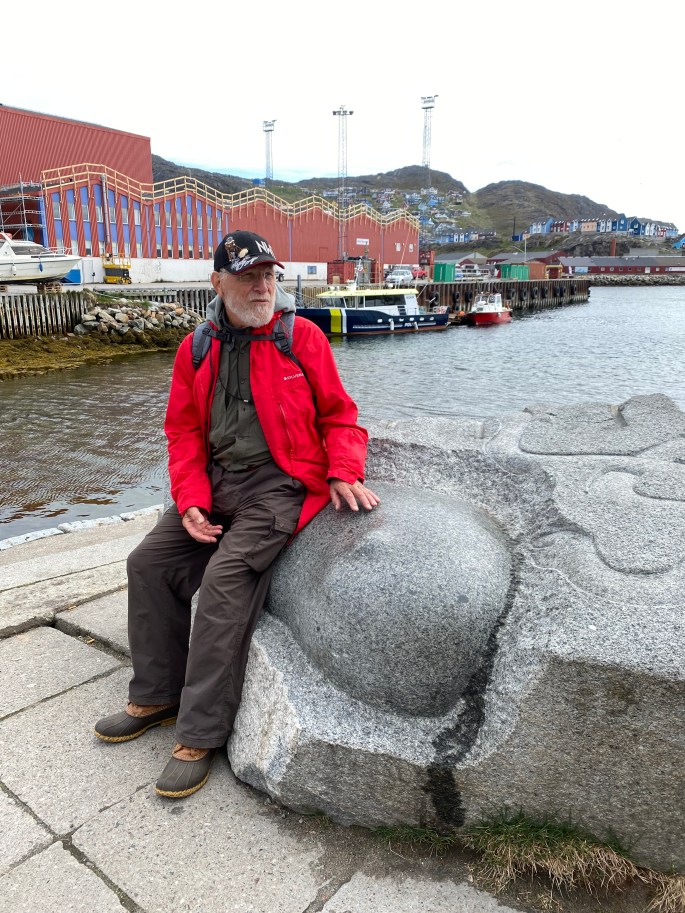
Interesting sculpture dotted the natural contours of Qaqortoq:
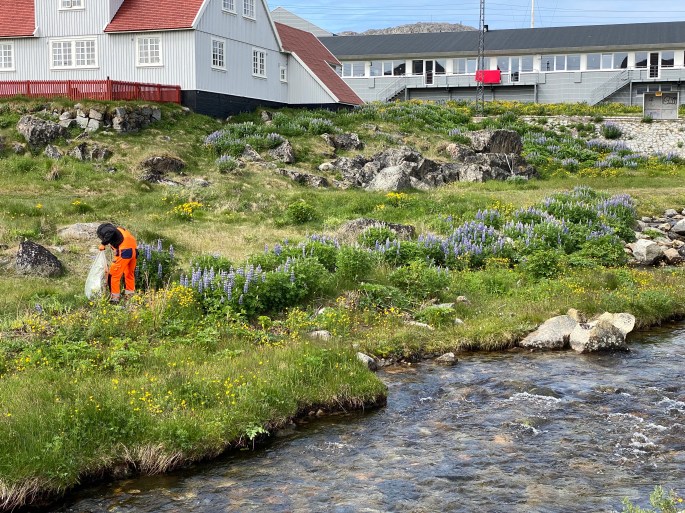
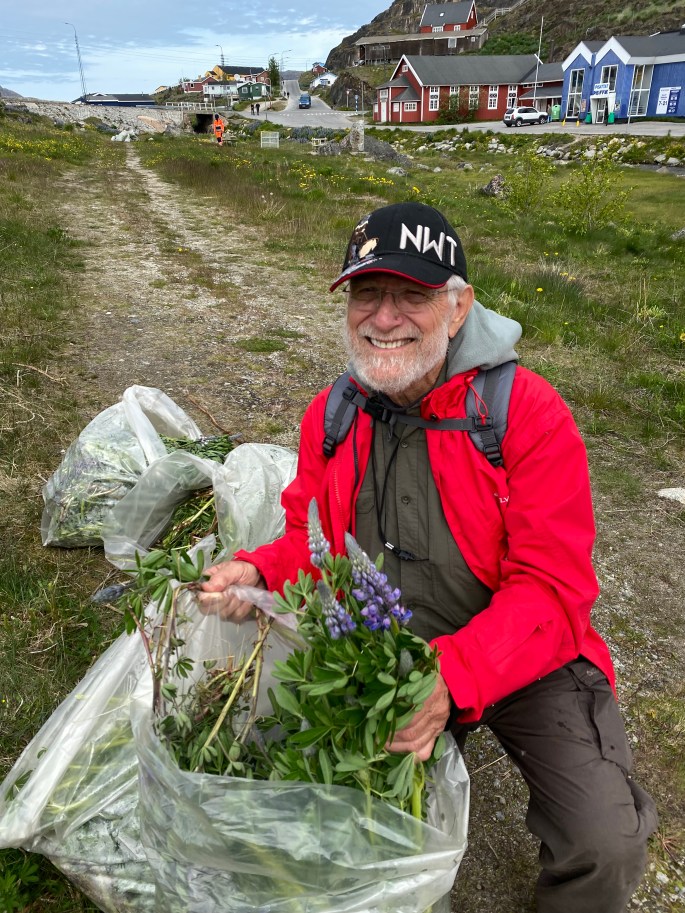
Apparently Greenlanders have problems with the invasion of the spiky flowering lupine as well…… this worker was diligently pulling up the plants, and Henry gave him a hand.
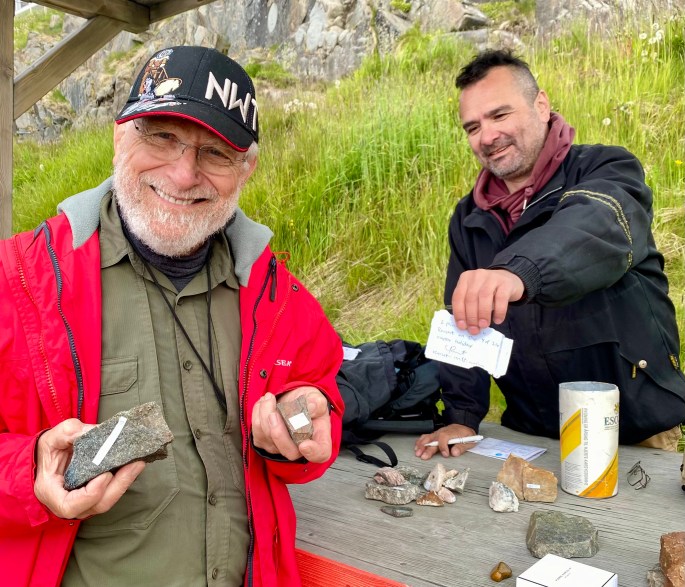
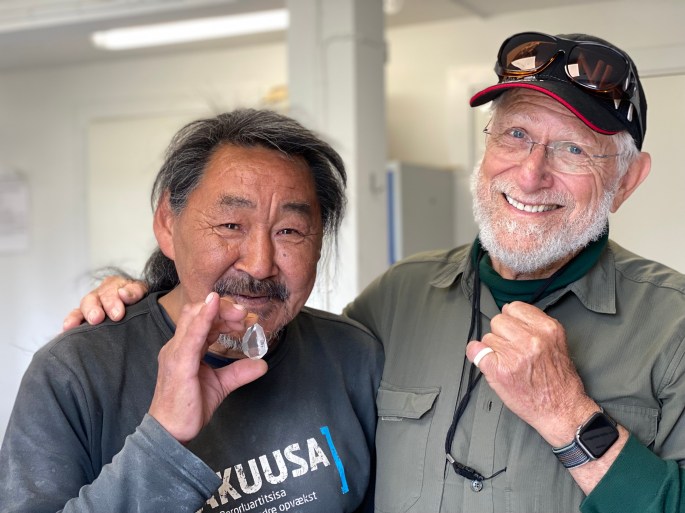
Henry did his bit to bolster the local economy with purchases from local rock hounds!
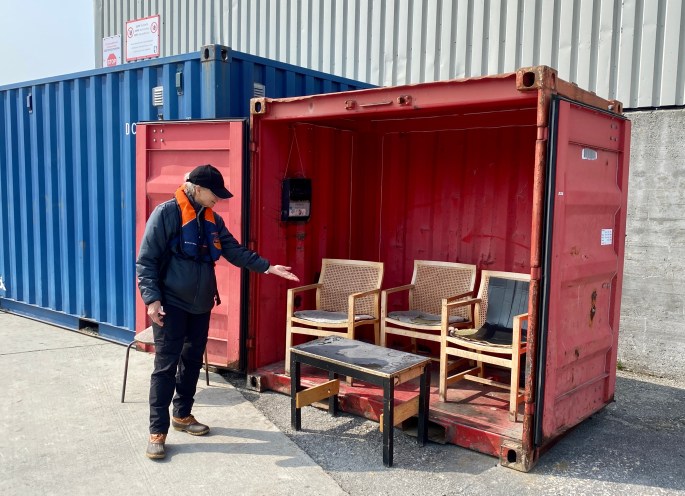
We’re always on the lookout for creative uses for shipping containers…..
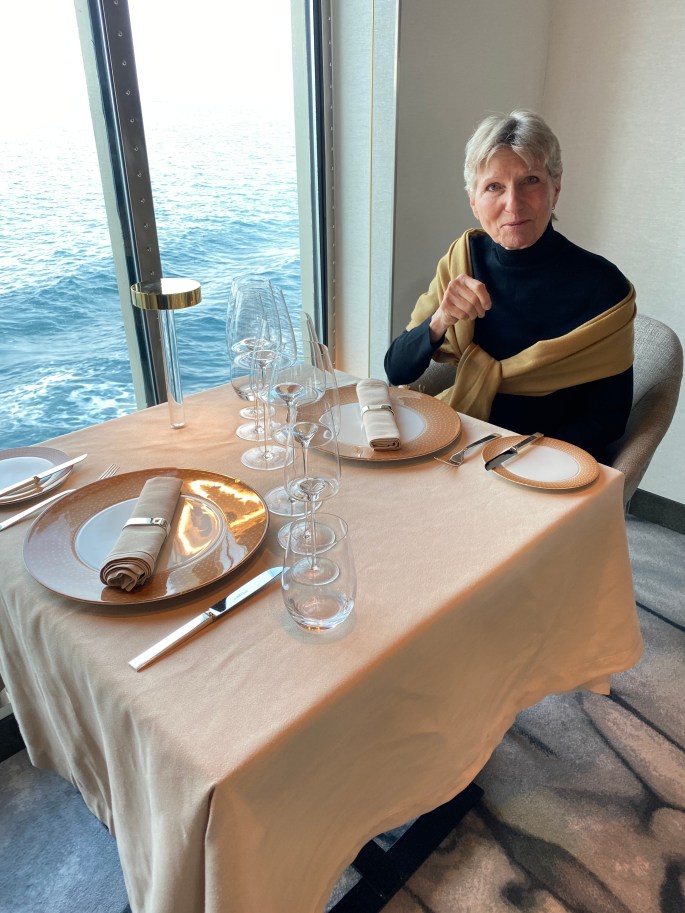
But happy to return to the relative civility of shipboard life…..
Adverse weather resulted in cancellation of another community visit, and the ship is moving on to Nunavut province in Canada’s far north……
The Inuit people have lived in the Arctic regions for thousands of years – not just in Canada, but also Alaska, Greenland and Russia – and obviously adapted well to the harsh weather conditions. They had occasional contact with Europeans through limited trading, primarily in furs.
INVASION NUMBER 1
The British crown, however, turned informal trade in Canadian territories into an organized business with the establishment of the Hudson’s Bay Company in the late 17th century.
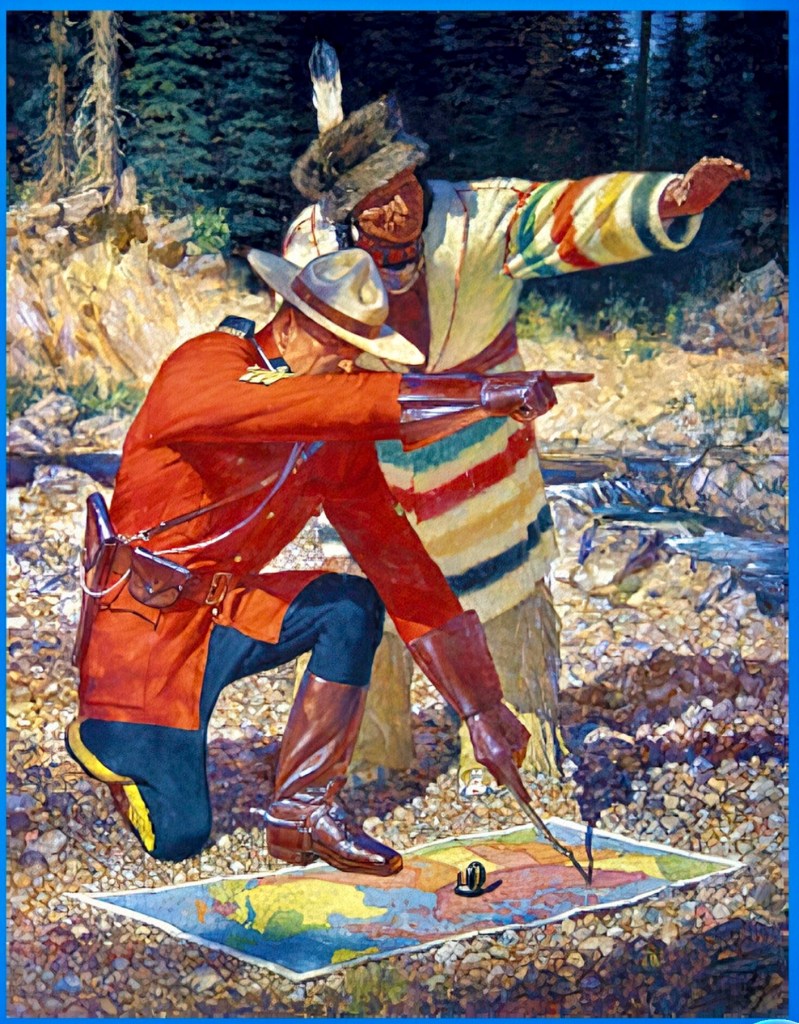
Beginning in the southern parts of Canada, this organization eventually extended its reach into large and small communities throughout the Canadian Arctic. The Inuit traded furs and marine animal products such as sealskin and ivory for metal and wooden goods, and woven cloth…. Most notably the famed Hudson’s Bay point blanket, seen here worn by an indigenous gentleman helping out a Mountie with some directions. (Points referred to markings on the finished piece that indicated its size.)
Over time, commerce and exposure to Europeans made the Inuit fairly reliant on this exchange of goods, but they worked hard to maintain their distinctive culture.
INVASION 2
Then came a different kind of invader…….
Big cruise ships started visiting these remote villages only a few years ago. The jury is still out on whether that’s a good thing or a bad thing. Stepped-up tourist business was expected to create jobs and a vigorous market for local handicrafts; however, the experience of some of the locals is that cruise ship visitors often spend no money, but stay an hour or so, then reboard the ship in time for their pre-dinner cocktails.
Fortunately, the folks that we met were warm and welcoming and happy to spend time with us. The villages are quite small, with 100 to 500 residents, and situated along dazzling and pristine waterways.
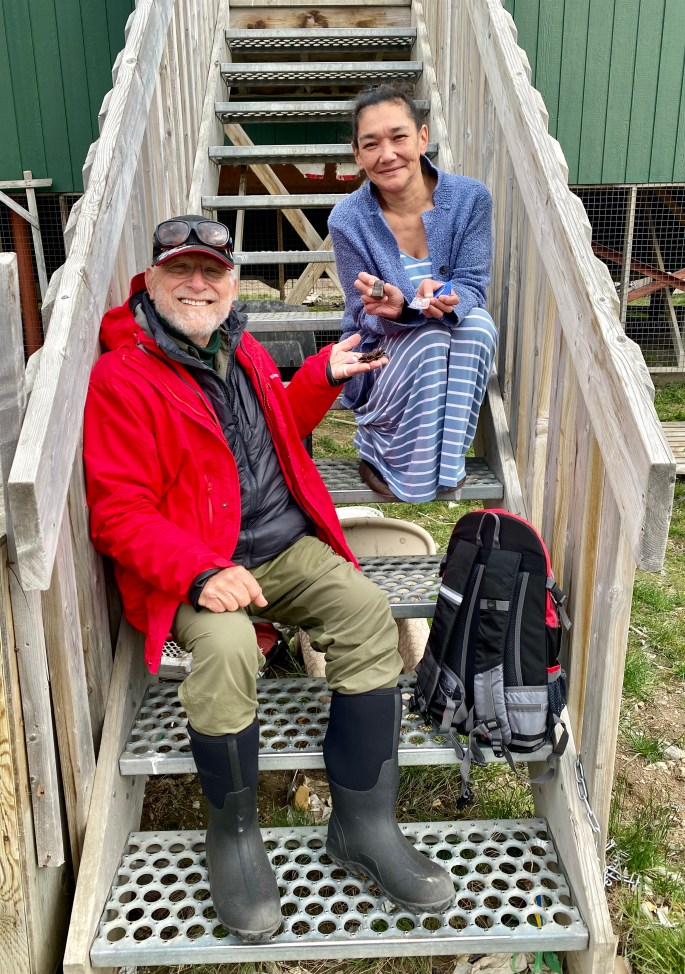
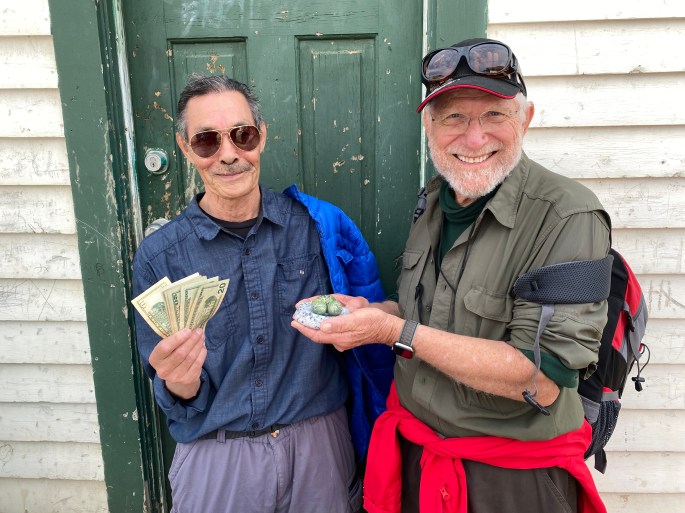
Sheila would not sell us anything, but enjoyed trading some small handicrafts for polished rocks from Texas!
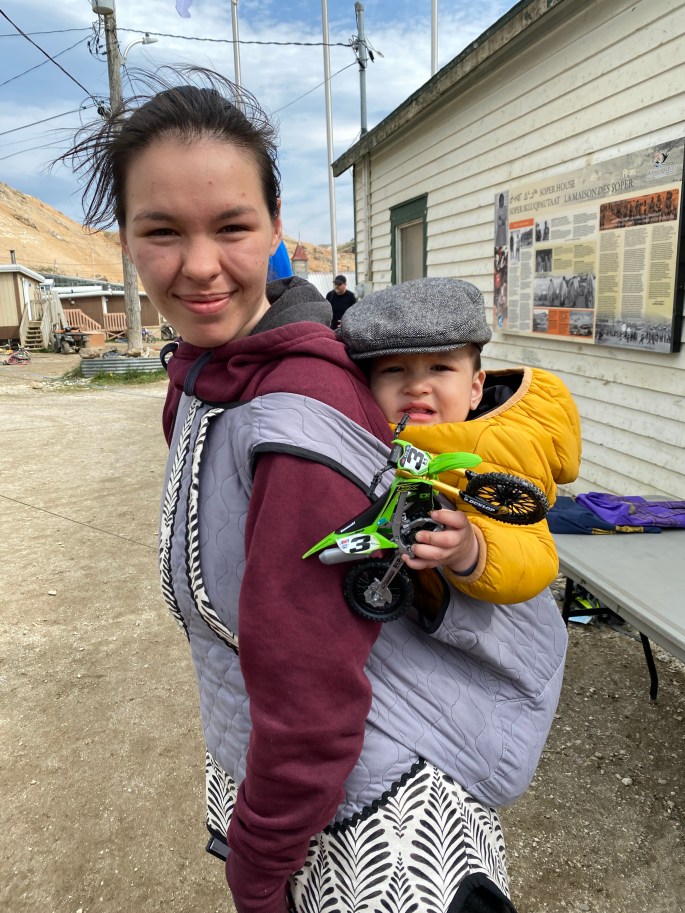
Sam showed off her son, Theo, whom she toted in a traditional quilted sling.
This fellow was astonished when Henry agreed to pay his first price for some soapstone carvings…..
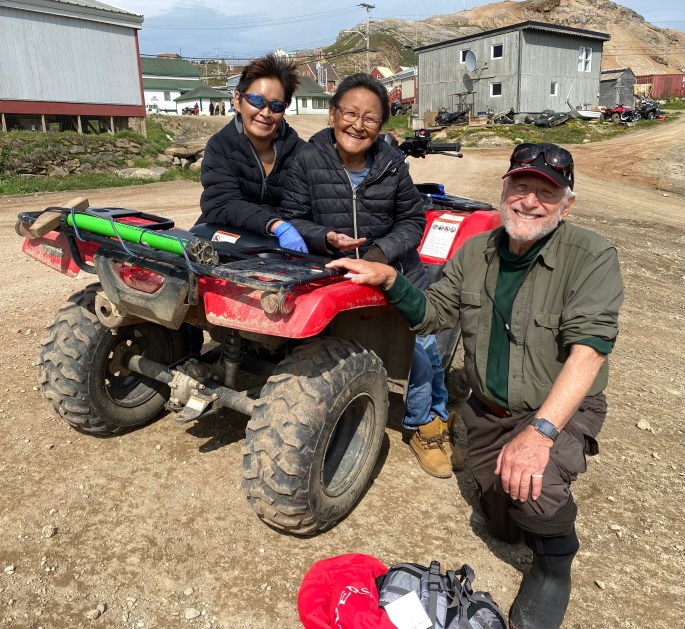
These ladies were pleased to get some fruit that Henry cadged from the ship. They told us a bit about their lives, families and the surrounding area, making us want to stay much longer to get to know them and to explore their turf.
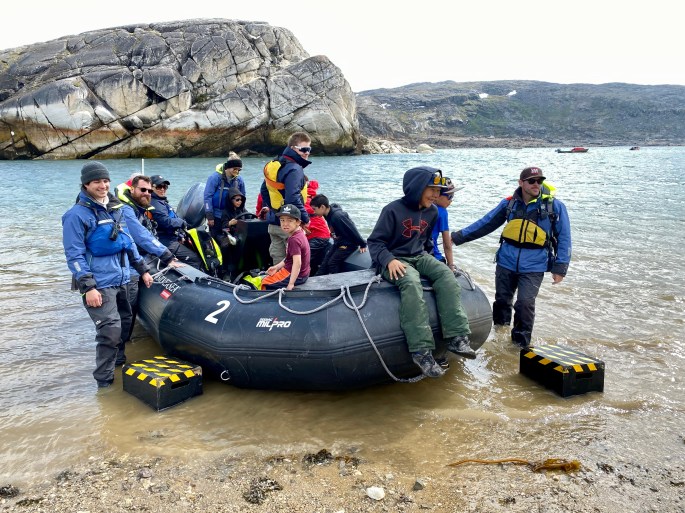
Kids get excited about the visitors, and never lose hope that they will be able to go for a ride on the Zodiac!
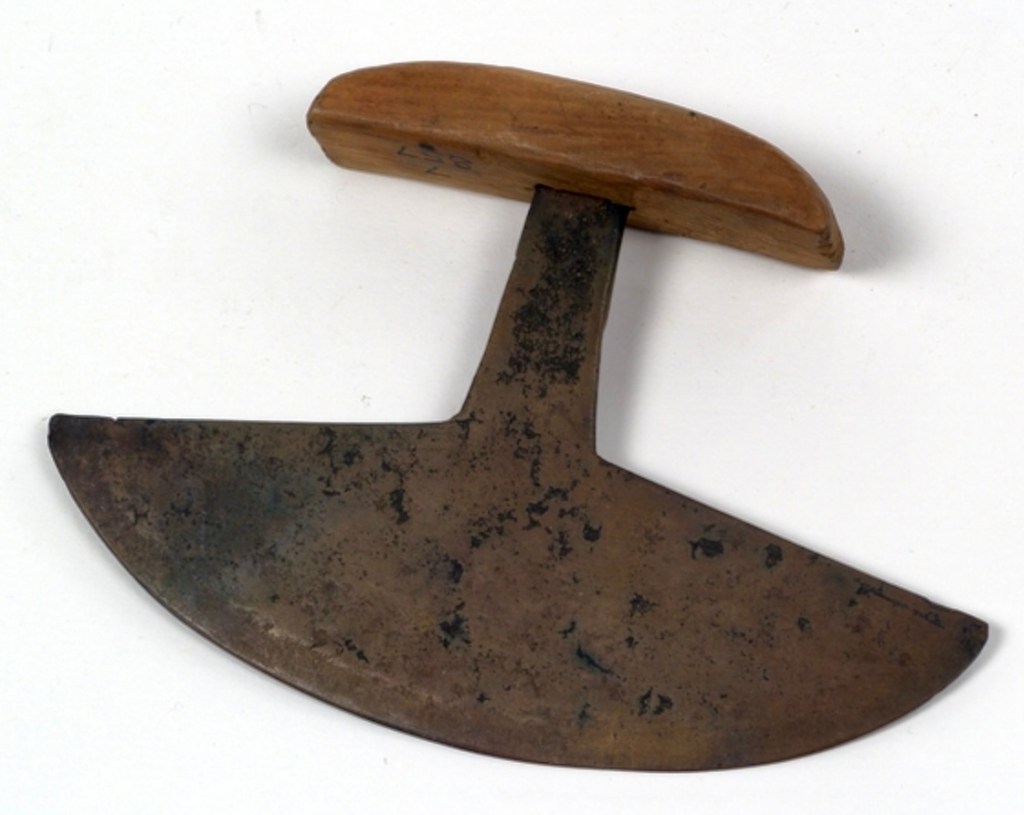
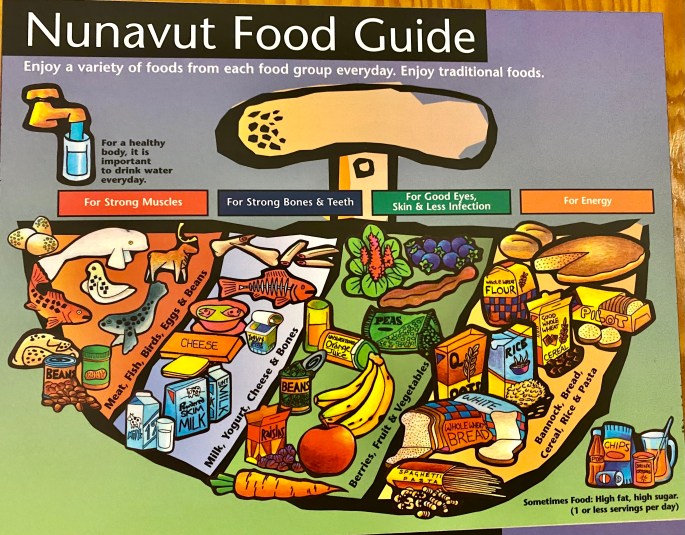
An interesting chart posted in a village center….. the equivalent of the “food pyramid” that defines the contours of a healthful diet. Instead of a pyramid, the graphic is displayed on an ulu, which is a knife traditionally used by Inuit women to skin animals, cut meat and scrape hides. It looks like this:
Here is the chart….. Look at it closely.
Note that for strong muscles, you must enjoy traditional foods such as caribou, seal and beluga whale meat! The other categories are revealing, too, of limitations on the amount of fresh fruit and vegetables that are available in such remote places. Most foods not hunted or gathered locally must be shipped or flown in – frozen, canned or packaged…… and consequently quite expensive.
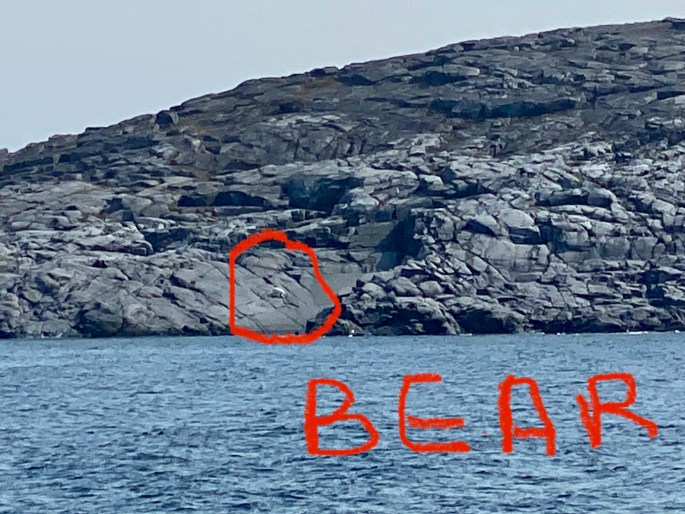
It would have been terrific to spend a few days in one or more of these communities, but alas, the ship was on a quest to see a polar bear or two. On the way, we bumped through an ice field, an otherworldly experience…
And finally, a small island with some walruses, and a …..
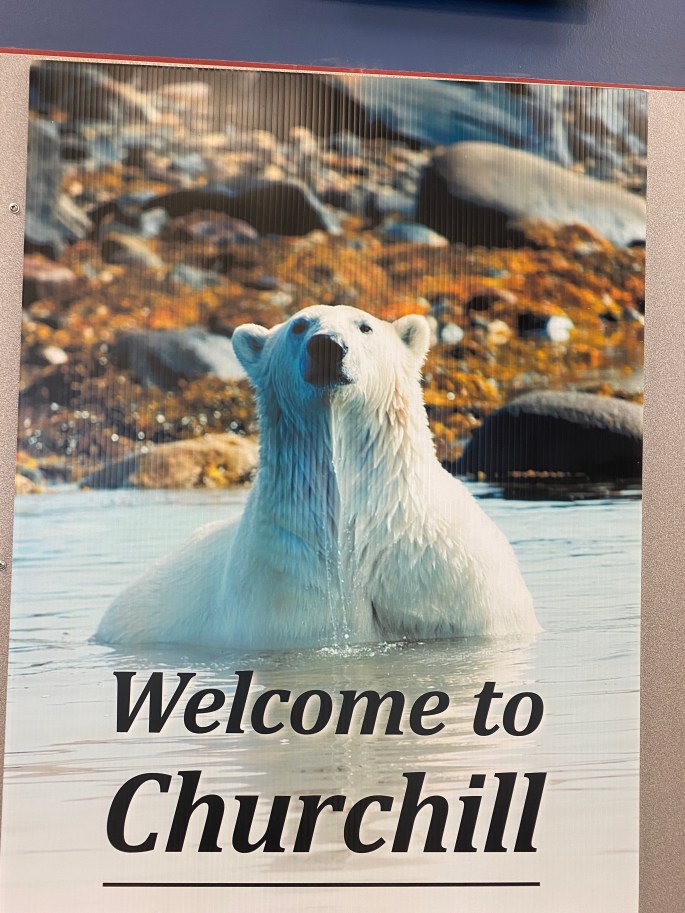
The expedition cruise ended in Churchill, the self-anointed Polar Bear Capitol of the World.
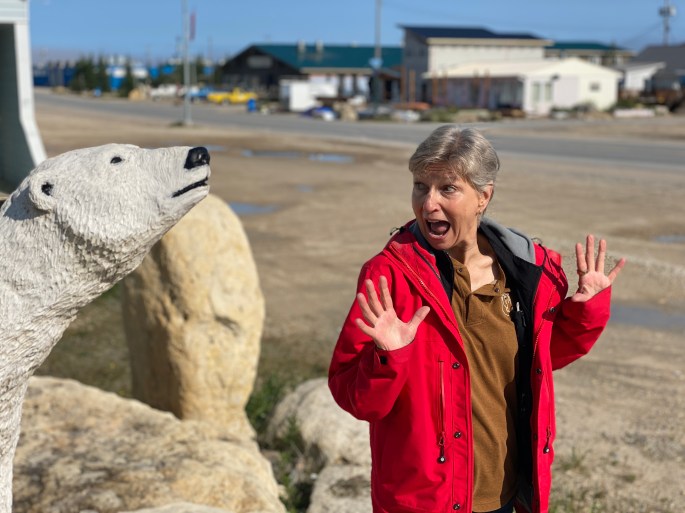
In this town on the shore of Hudson Bay, residents are required to leave the doors of their homes and vehicles unlocked, to provide a shelter to anyone who may be imperiled when a polar bear ambles down the street. (It happens, but not often.)
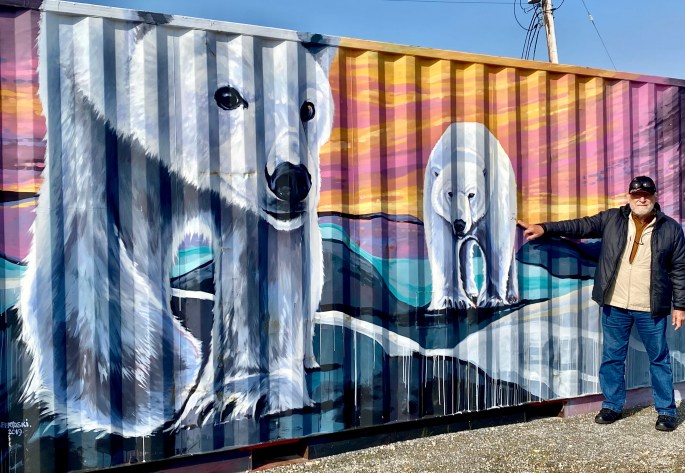
Colorful murals brighten the township.
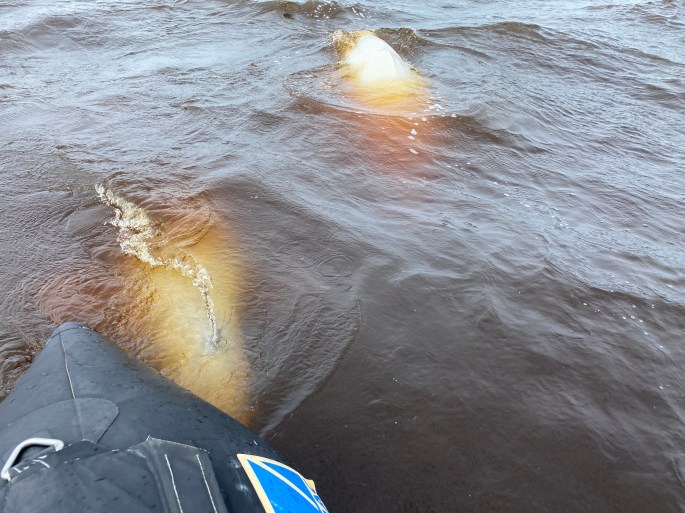
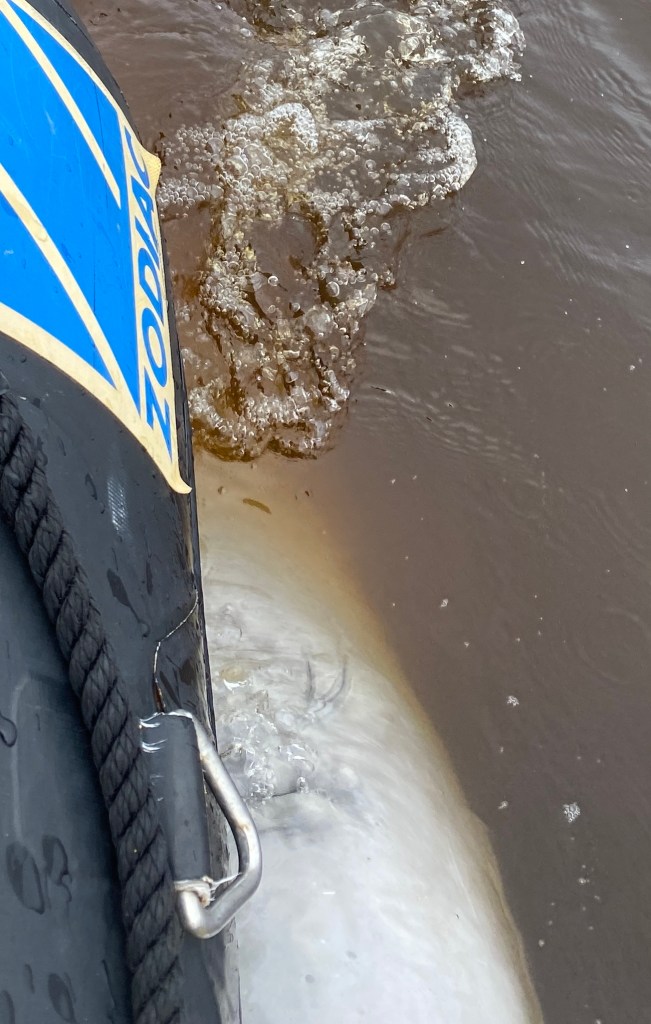
The highlight of a trip to Churchill is without doubt a boat ride or kayak through the beluga whale calving area in an estuary on the edge of town. The cheeky whales like to pop up right next to the vessel and blow bubbles…..
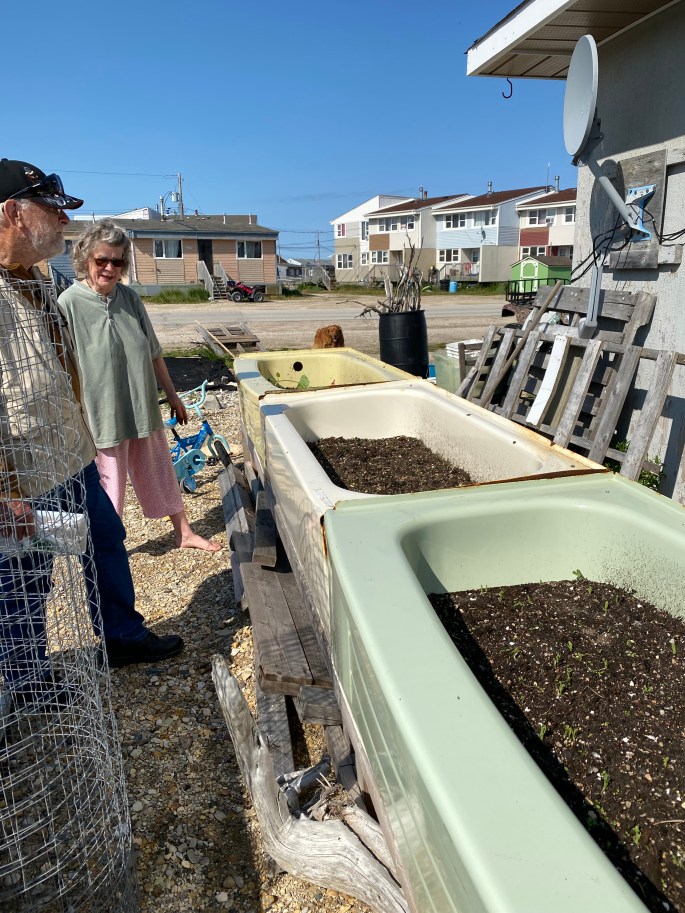
Although the growing season is short, hopeful gardeners are still compelled to try….. We found Helen working on her vegetable garden, some of which is planted in a line of elevated bathtubs running along the side of her house, providing drainage, heat retention and protection from the wind. Brilliant!
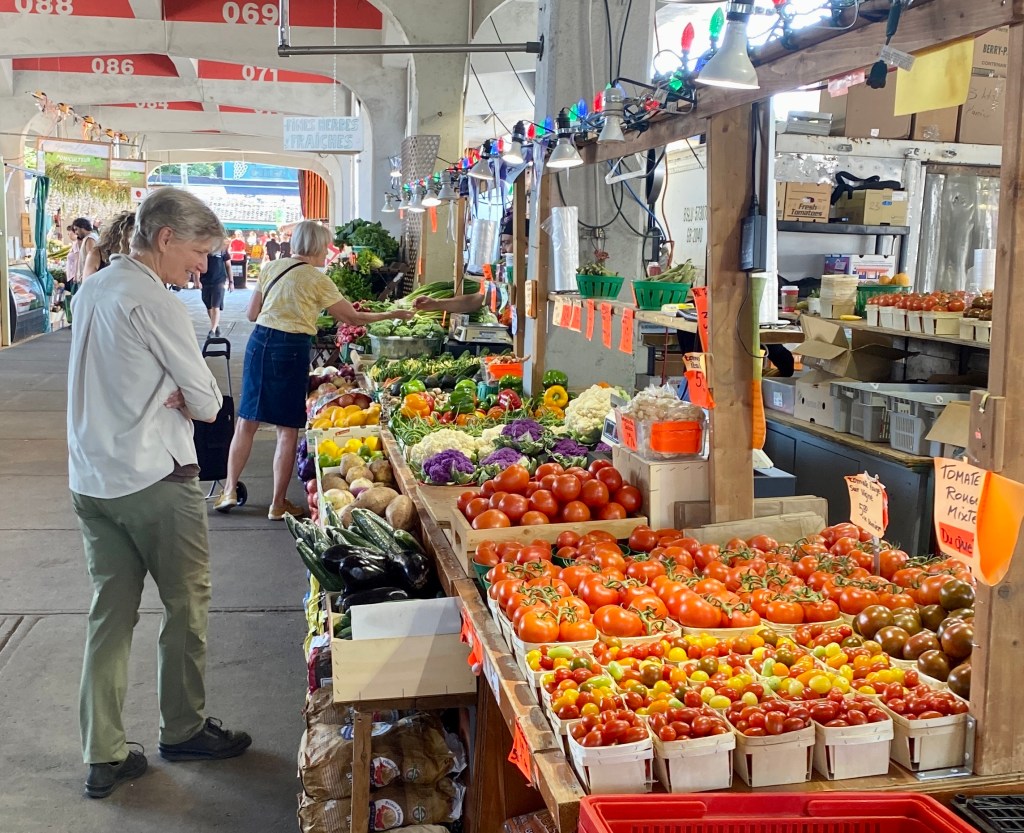
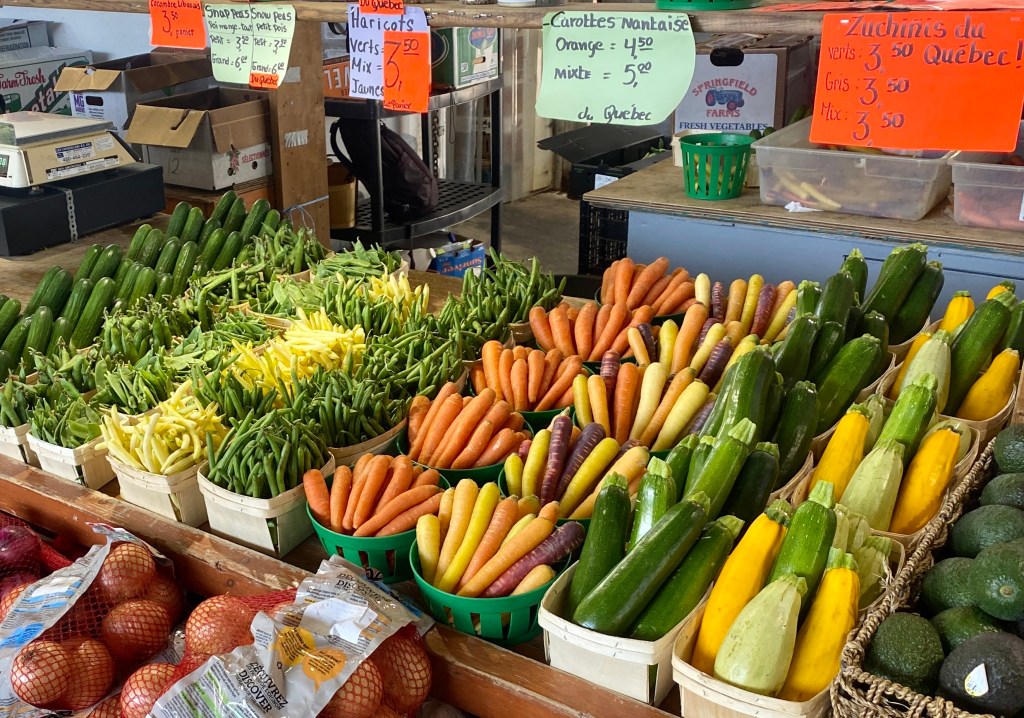
Montreal was a shocking return to warm weather and an urban environment. A visit to a local farmer’s market provided a nice transition …
What a lovingly-arranged display!
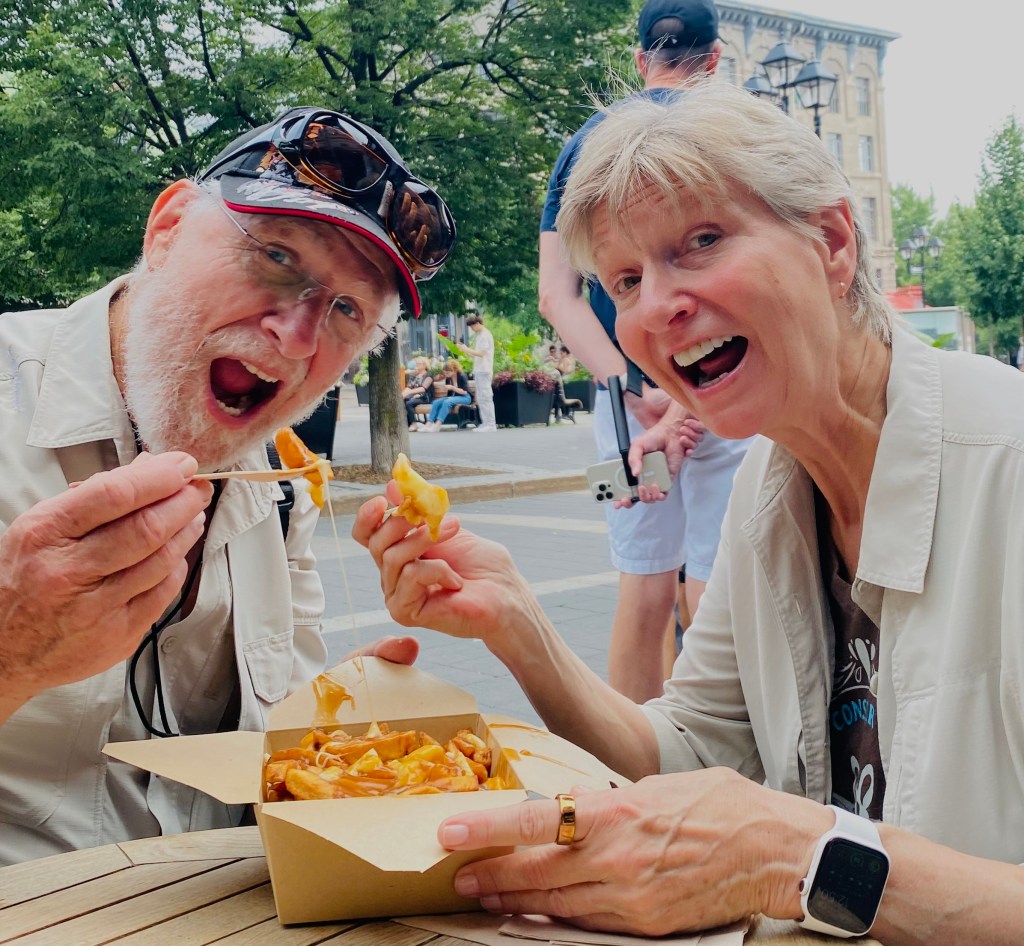
And we felt compelled to share a “medium” order of the national food of Canada, poutine….. French fries mixed with a mild cheese and topped with brown gravy.
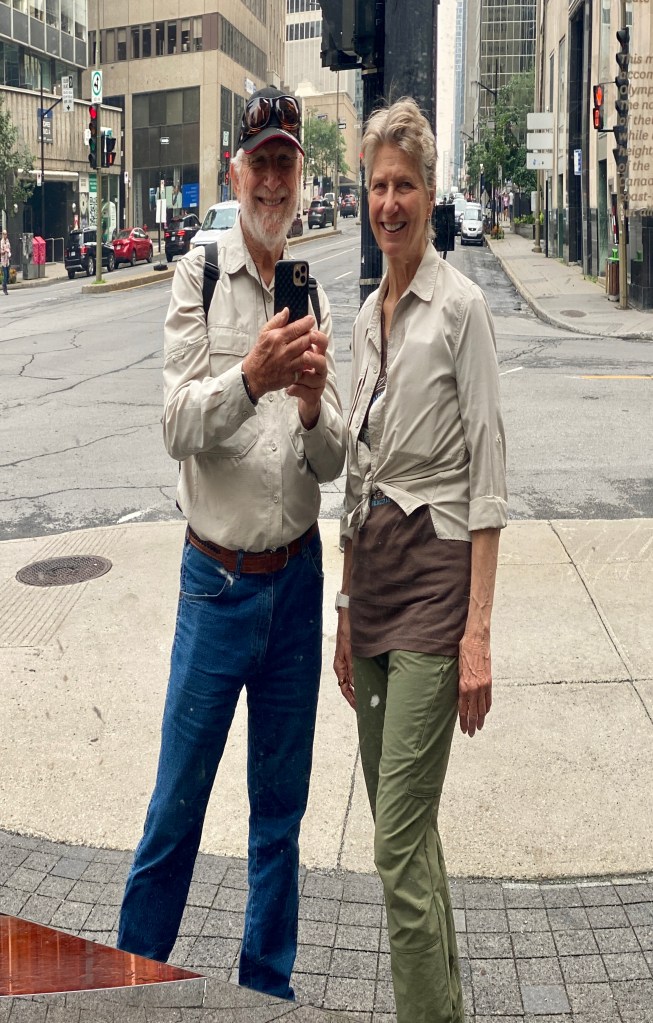
A gloppy mess and more than a little heavy, but what the heck – we have been eating mass quantities on the cruise over the last few weeks…. In for a penny, in for a pound (or 10!). We felt better later when we found a “slenderizing” mirror, all excesses forgiven….
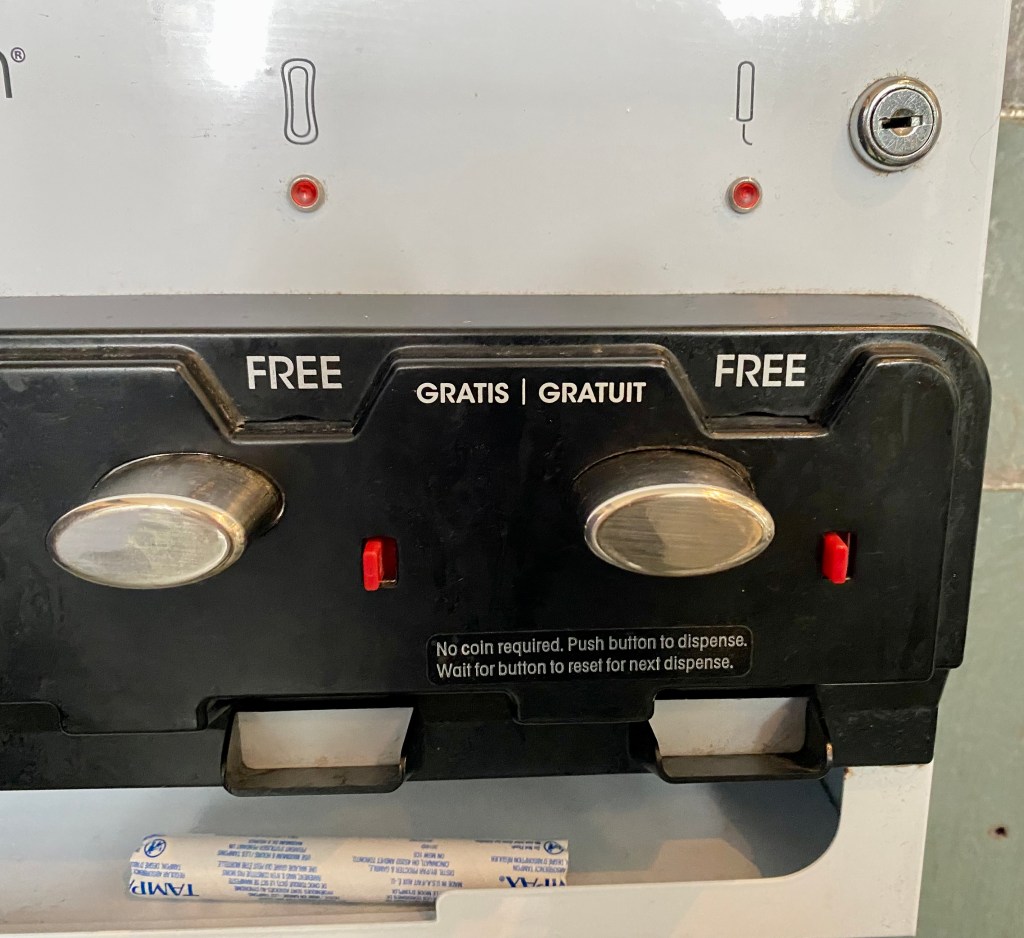
And still another point in favor of Canada and the Canadians….. free women’s sanitary supplies in public restrooms!
How civilized!
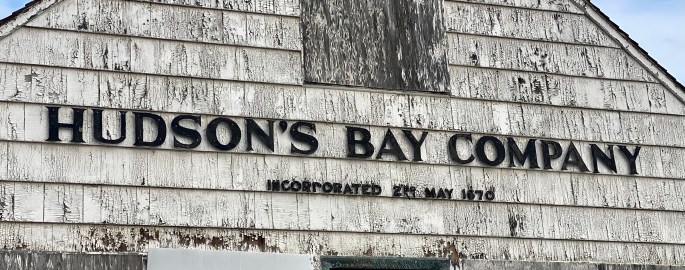
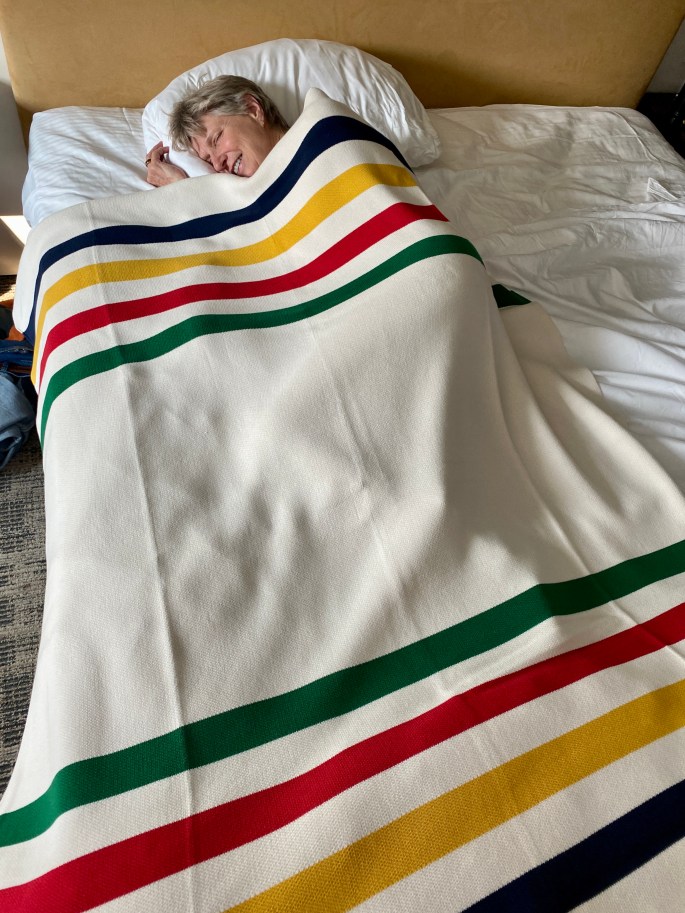
Hudson’s Bay Company is now a boring, sterile department store, much like Macy’s on the inside…… the last vestige of its illustrious heritage is an array of products with the point blanket design.
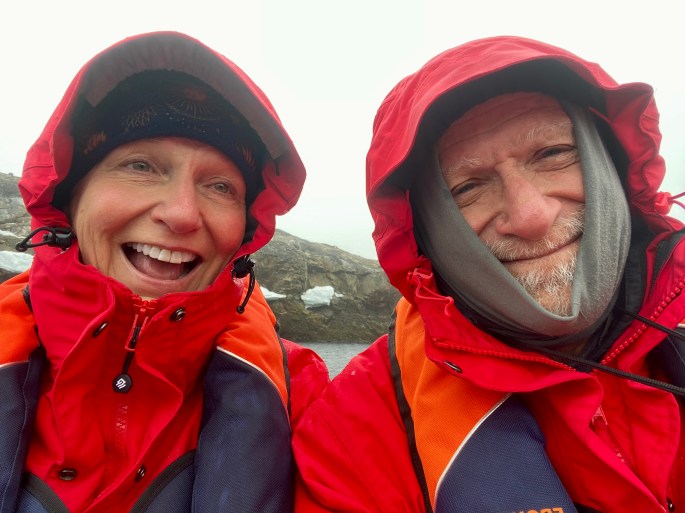
Farewell for now. It has been exhilarating spending time in the cold north and discovering new places and people.
We return to the “oppressive heat dome” of Texas for a short while, but will be heading out again in a couple of weeks on a completely different kind of expedition….
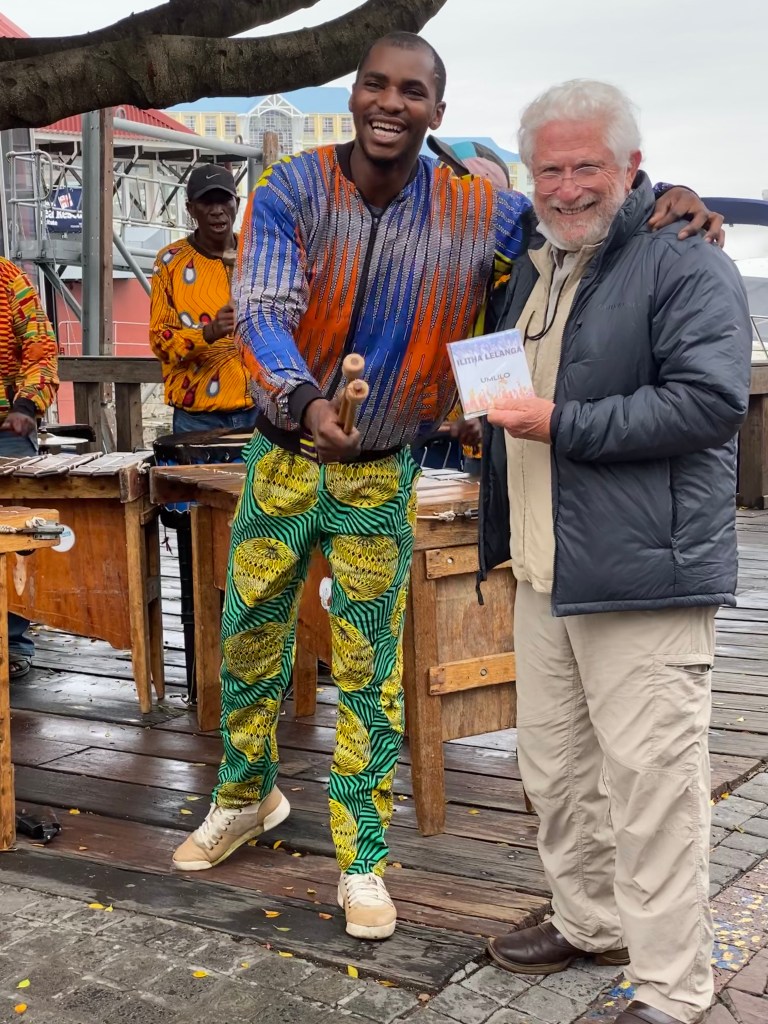
Henry as usual made friends in Cape Town before we left for the bush…… with this street band, from whom he bought a CD. Love this guy’s outfit!
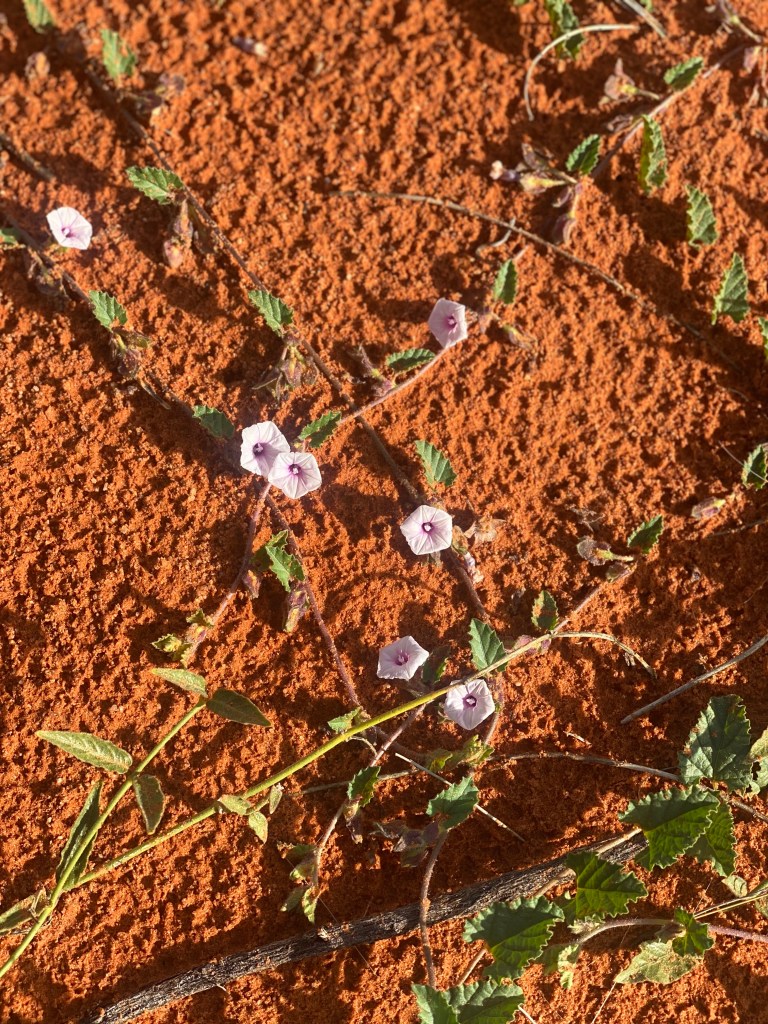
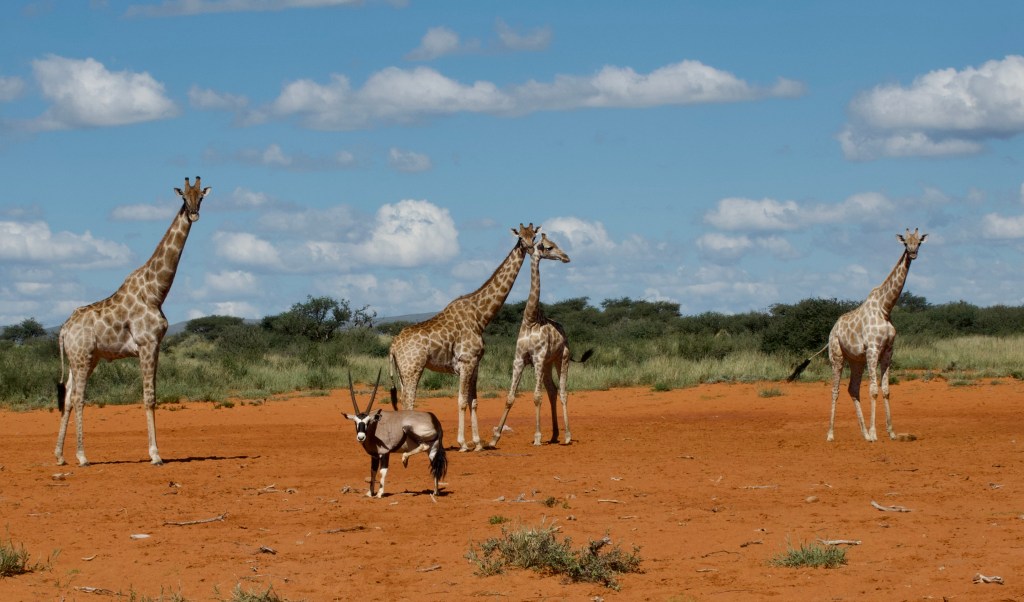
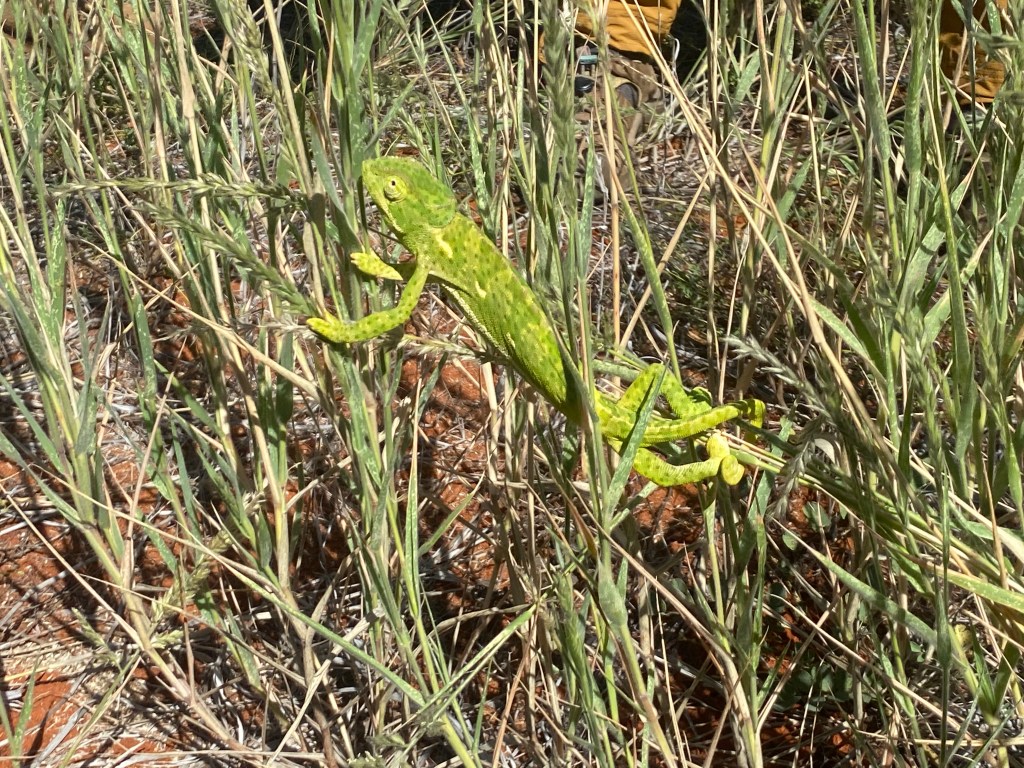
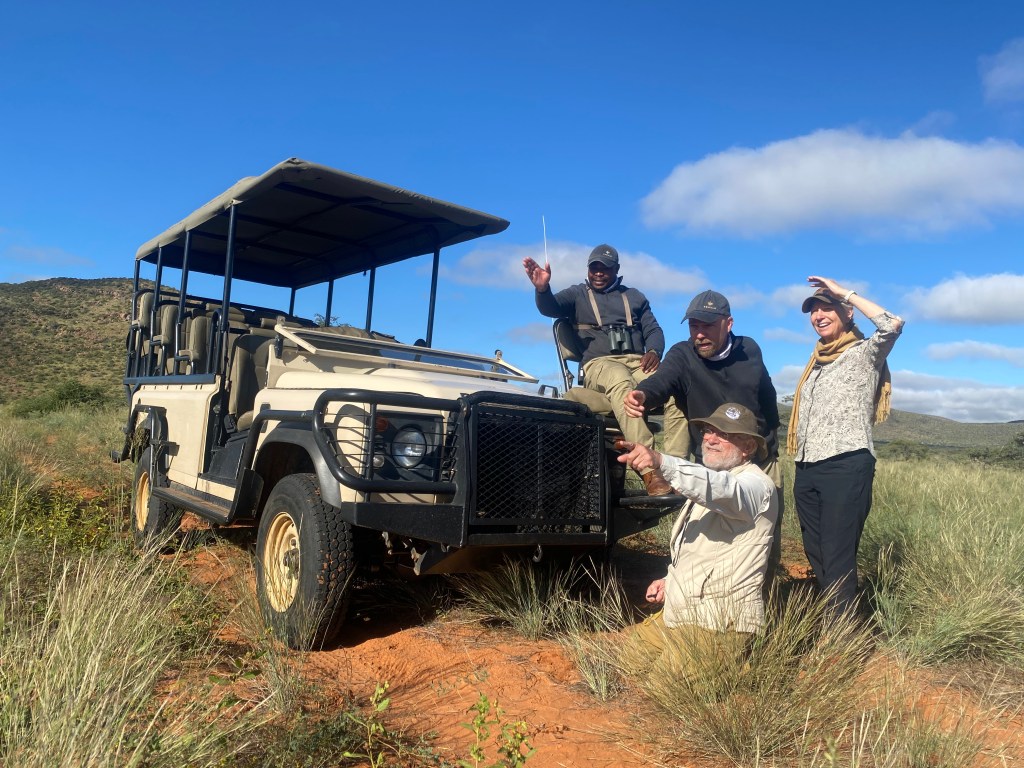
The Kalahari Desert is not really desert…. It is classified instead as semi-arid savannah. So not just sand and sun! We went to Tswalu, north of Cape Town and close to the border with Namibia. And these lucky travelers had rain… for three out of four days. This level of moisture is unheard of in these parts, but has amazing impact….. beautiful bright green grasses and scrub with red dirt, tiny flowers and blue skies.
Mother Nature – once again a “mad scientist”!
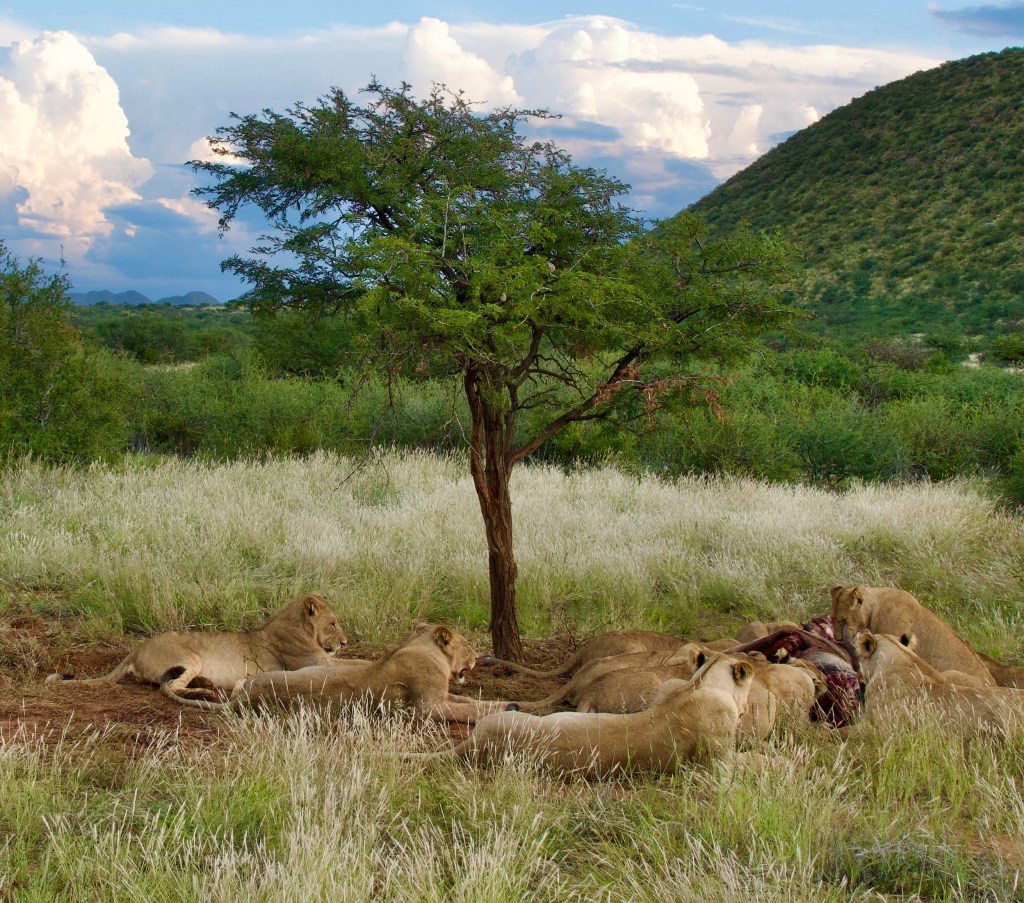
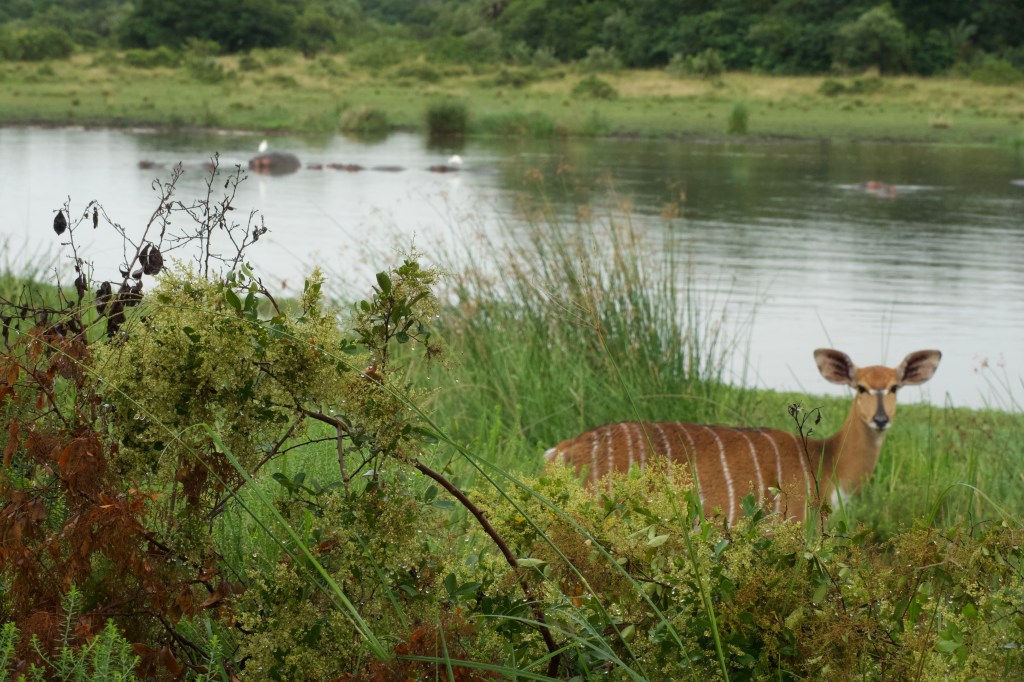
So excited to be back on safari….. great animal sightings right off….
Africa’s tiniest raptor – a pygmy falcon
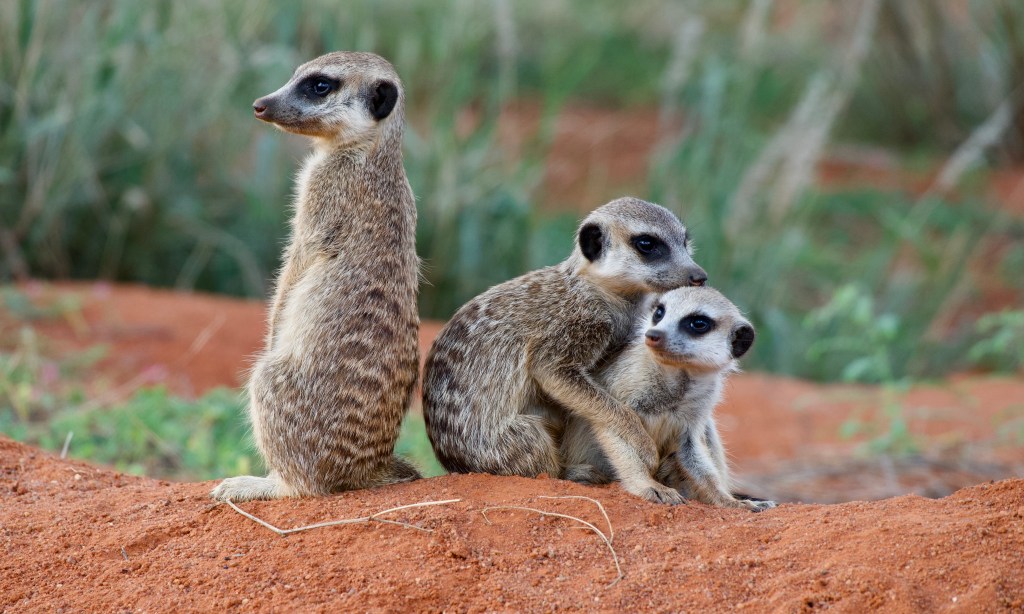
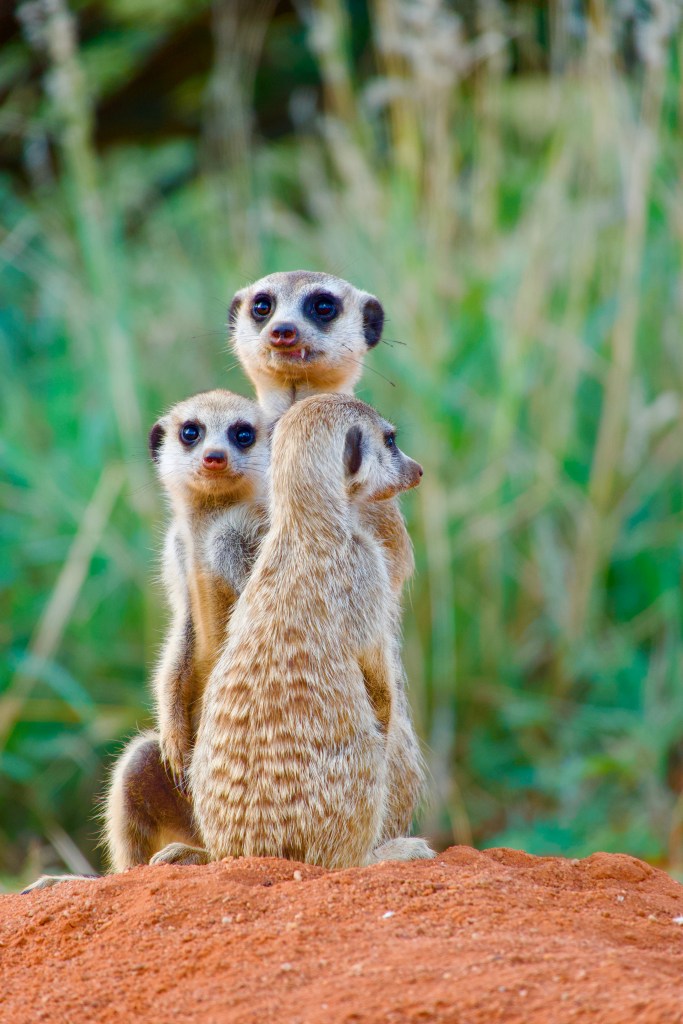
A “meerkat encounter” was on the list of things to do. I feared that it would be a cheesy activity with trained animals, but it was really time spent with wild critters (never fed by people) who simply tolerated our presence in their colony.
Curious but not frightened or aggressive. Could have spent hours watching their day-to-day doings. On this clip, watch for the little guy in the back maintaining one of the burrows…..
A beautiful and remote place, with great trackers and guides…… We had so much fun with them!
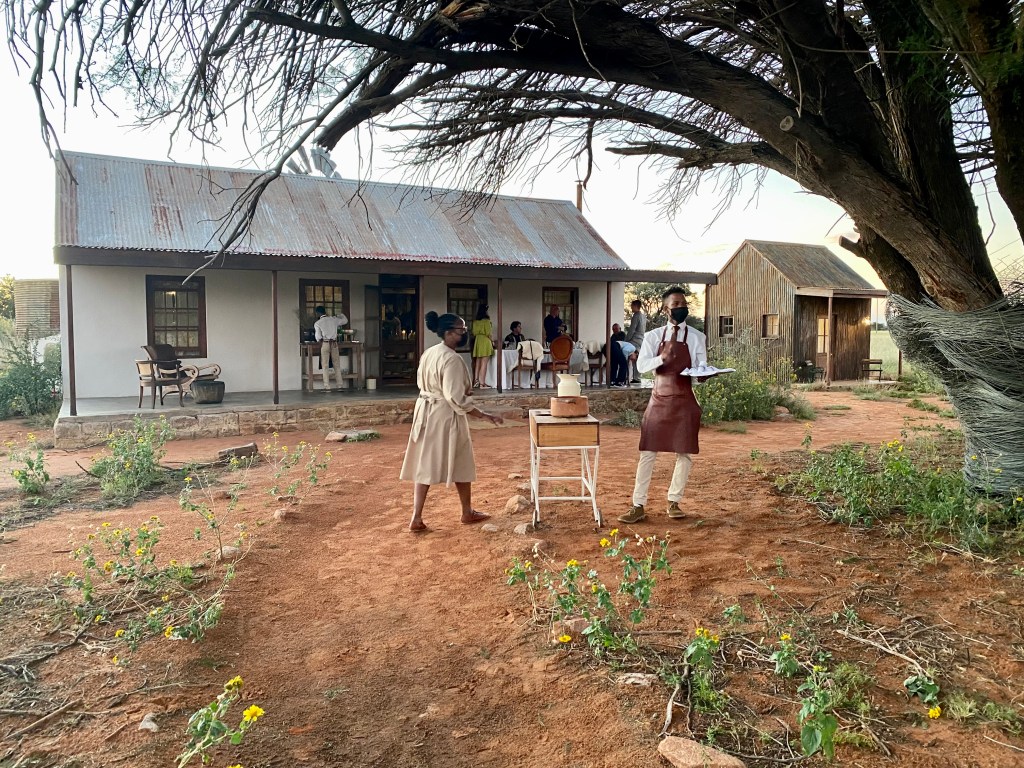
There is a fine restaurant associated with this reserve…… at a great distance from pretty much anywhere. The chef is one of only two South African chefs who have received a Michelin star (which is a pretty big deal in the culinary world). People fly to the Kalahari from Cape Town or Johannesburg just for this ingeniously-prepared meal. The restaurant is dedicated to the chef’s childhood experience there, utilizing native ingredients… including wine and locally-made cheeses – as much as possible. It’s called Klein Jan, and… well, it’s just an incredible experience, starting with its entrance at what appears to be a farmhouse out in the bush…..
We were amazed at the background music played during our cocktail…… recalling for Henry his childhood in San Antonio, Texas, of all places.
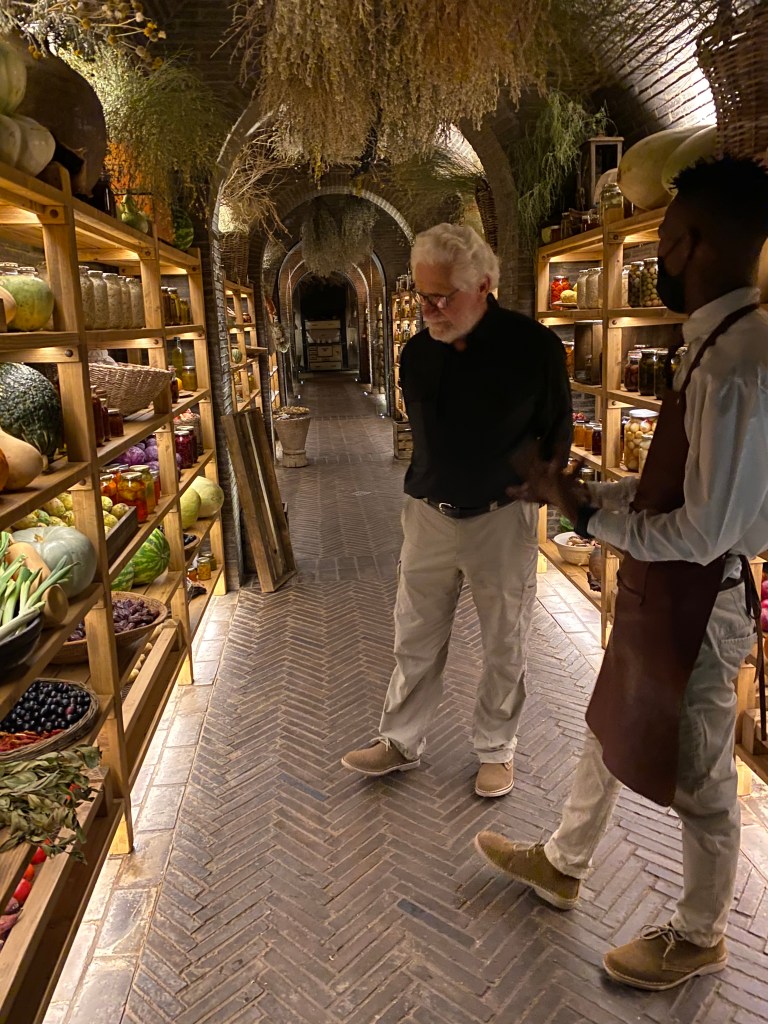
After cocktails, we moved into a subterranean pantry for starters……
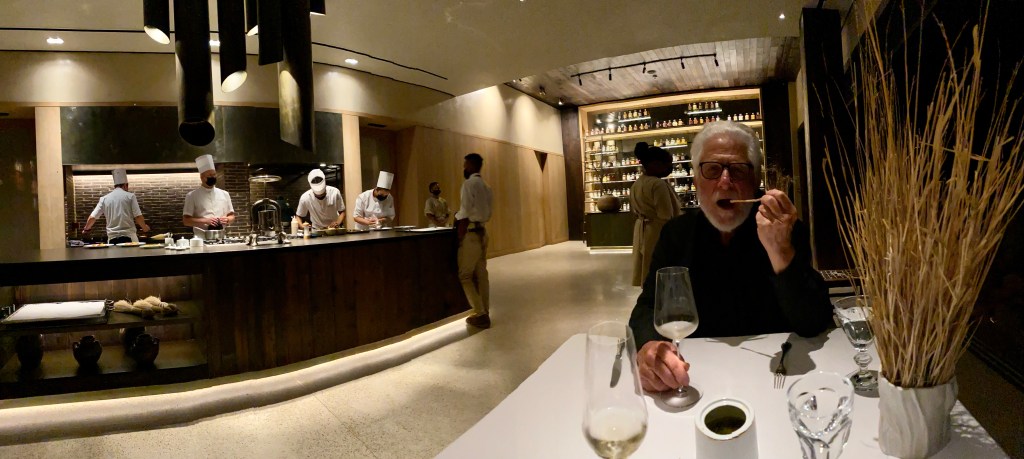
And from there to the main dining area, open to the bush to one side, with chefs assembling the beautifully presented food on the other.
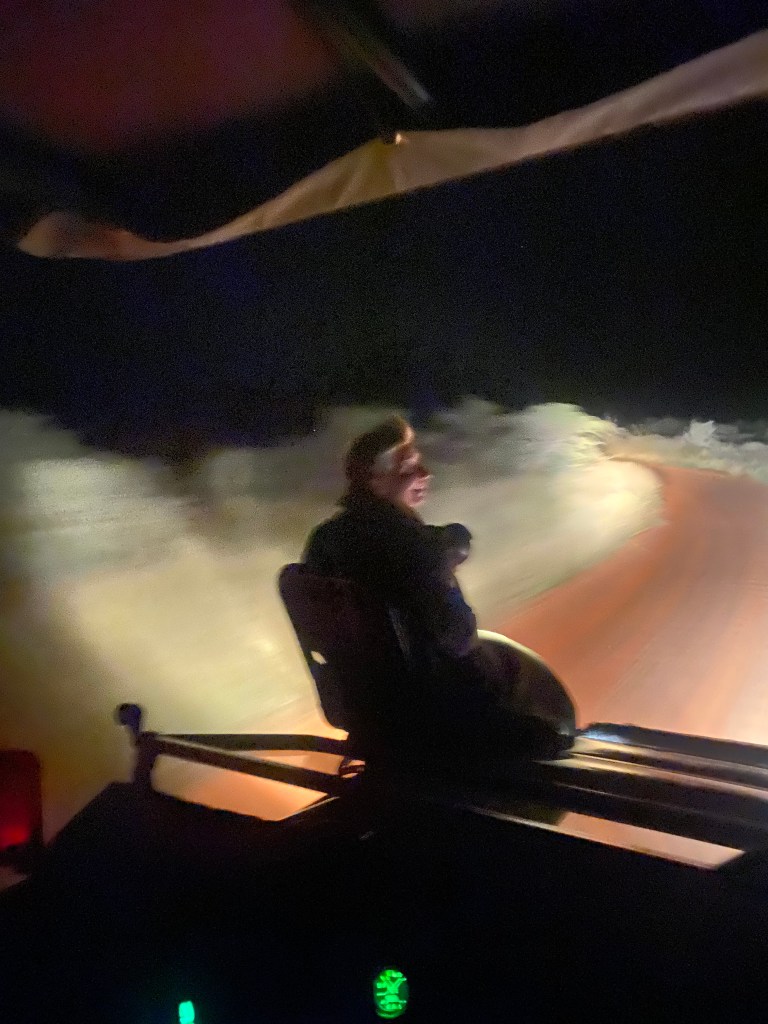
After this experience – including a cocktail and at least several glasses of wine – I was thrilled to be allowed to ride in the tracker’s seat at the front of the Land Rover for our trip back to the lodge. A clear, cool, beautiful night.
From here we fly to South Africa’s eastern region…. the Wild Coast!
(If you subscribe to the blog via e-mail, please make sure to click on the post title for the on-line version so you can see the videos!)
Kwa Zulu Natal (aka KZN) is a coastal province in South Africa on the Indian Ocean….. home of the famous Shaka, a Zulu king of the early 19th century who developed a very effective and brutal military. His army conquered and pushed neighboring tribes out into other parts of the country, creating a ripple effect of migration that permanently changed the ethnic and cultural make-up of the region.
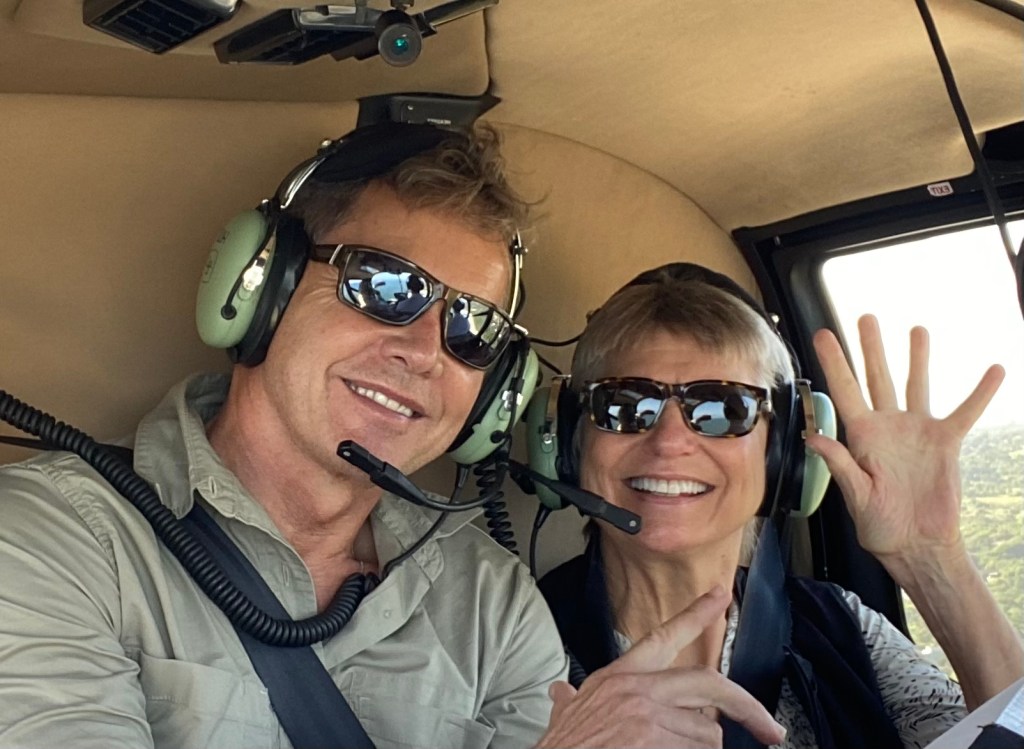
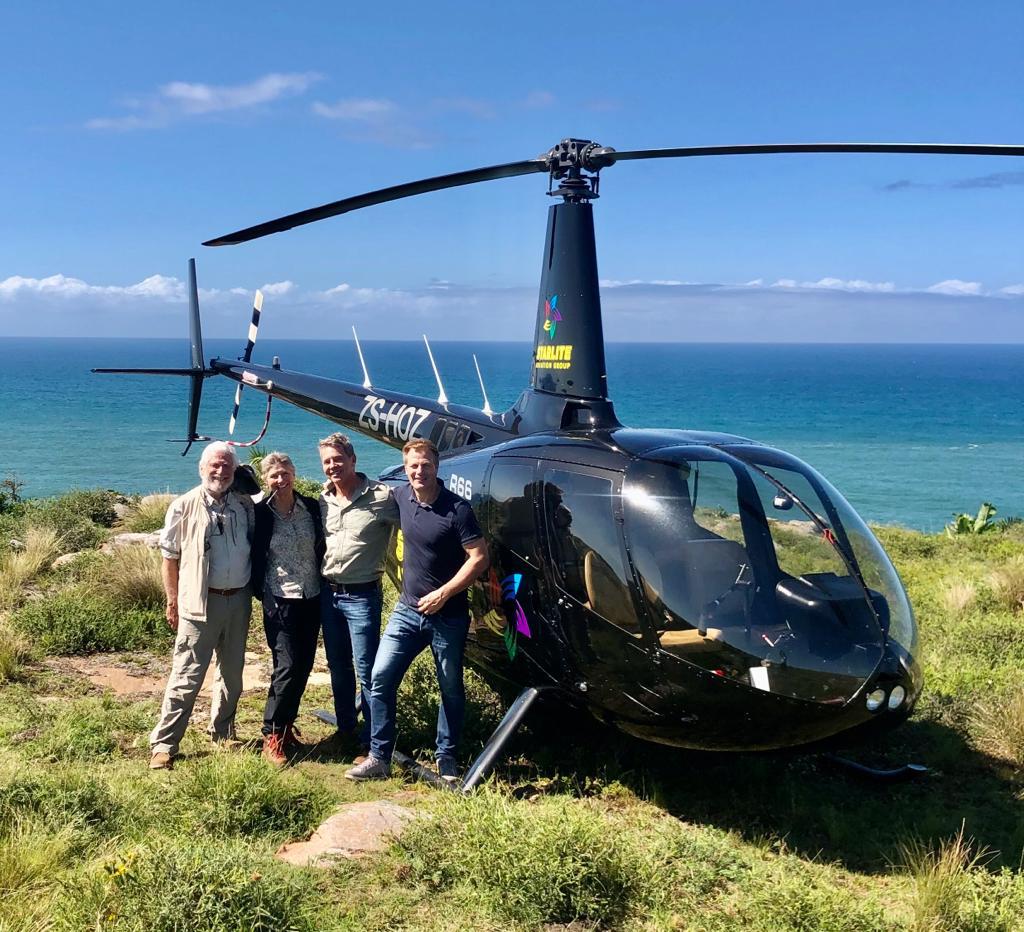
History lesson over……. KZN is possessed of incredible natural beauty, one aspect experienced vividly with a helicopter ride along the coast from the city of Durban down to the Mngazi River. Tertius came along for the ride (along with his friend and colleague Ty).
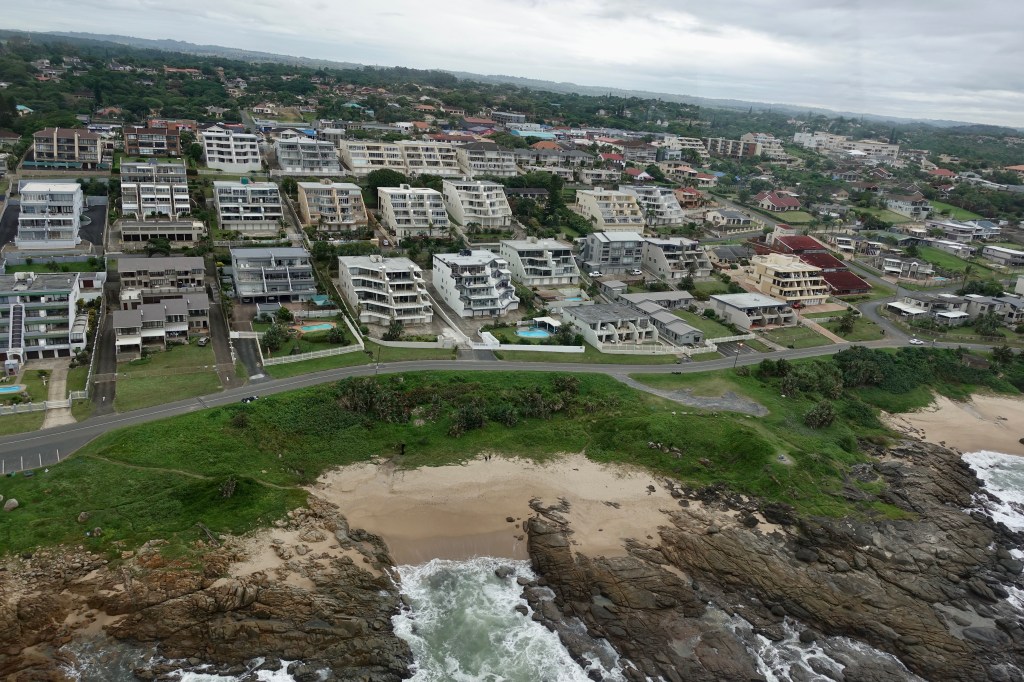
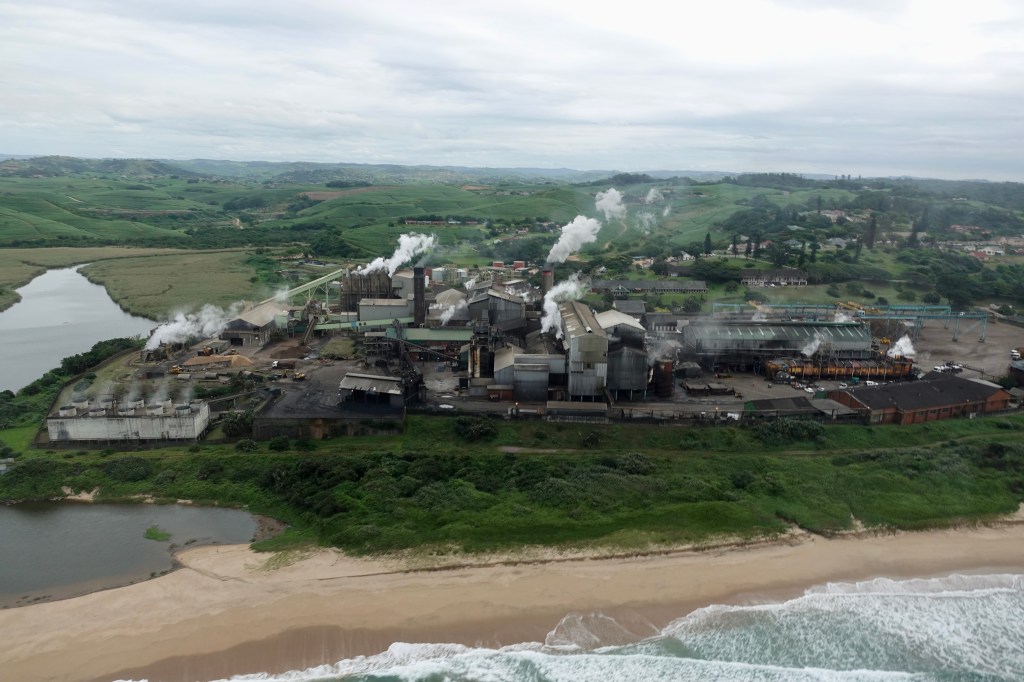
It is a striking and abrupt transition from the developed areas in and around Durban…….
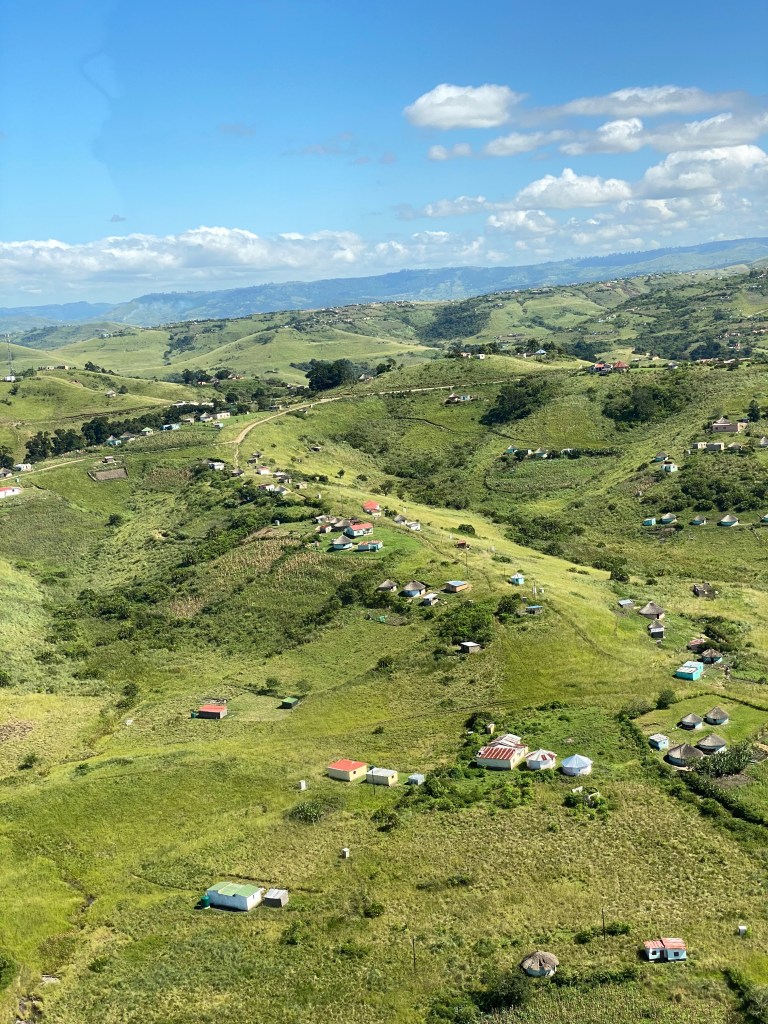
…… To the bucolic homesteads of the Zulu tribal land further south.
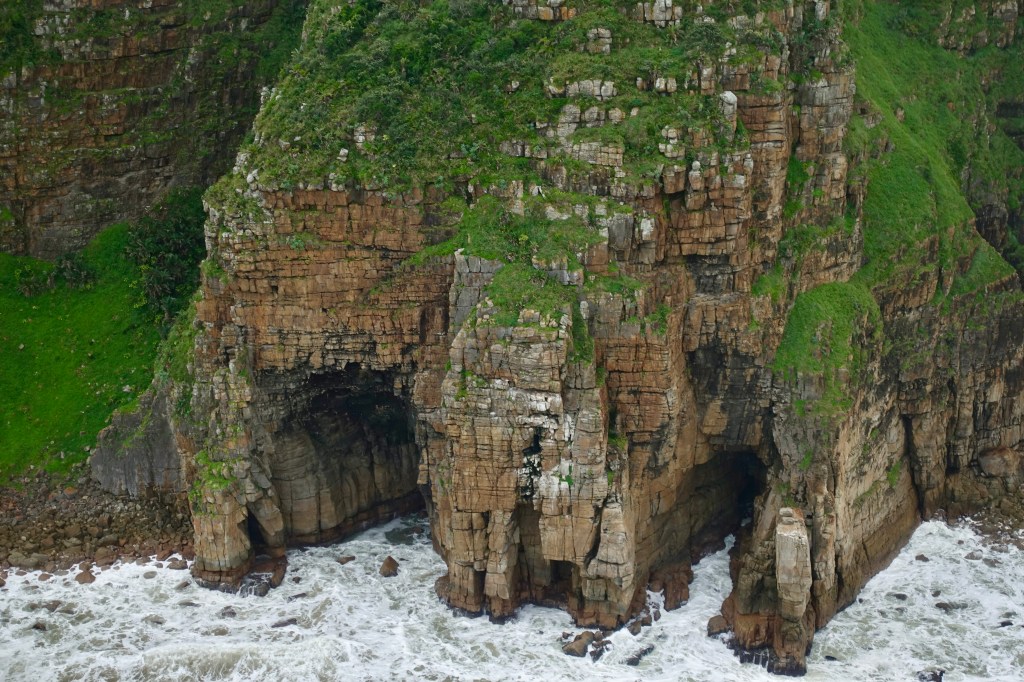
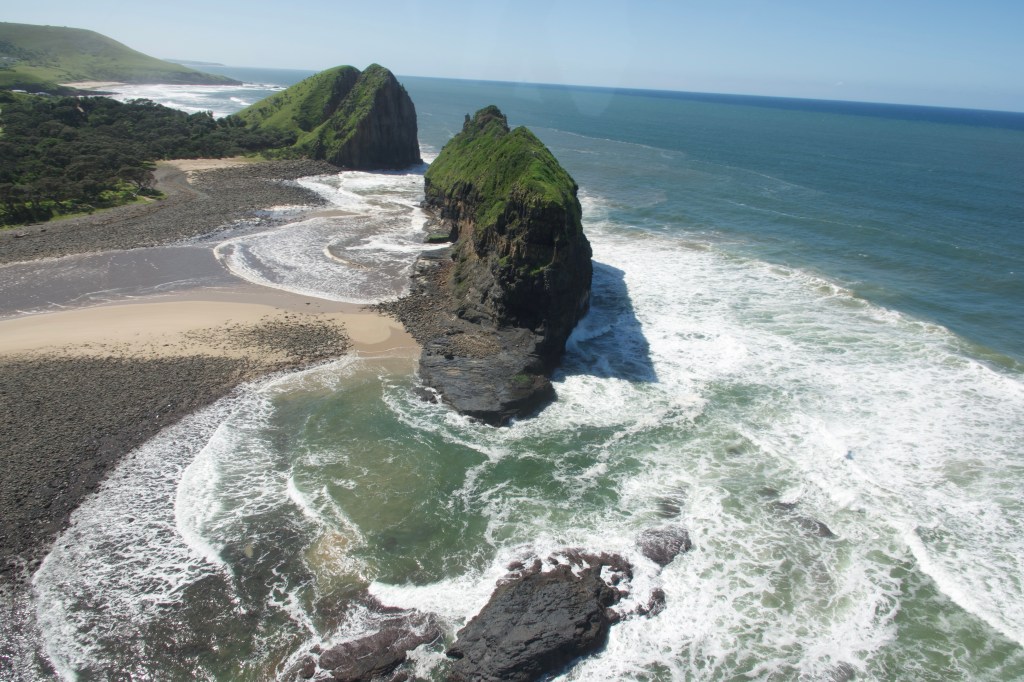
The lack of industrialization and residential development here means that this stunning coastline is almost untouched, with craggy cliffs, clear waterfalls and beaches.
Because of its remoteness, strong tides and rocky beaches, it’s called the Wild Coast, virtually unapproachable from the sea. It’s hard in retrospect to imagine how to truly appreciate this place’s beauty except from the perspective of a helicopter……. A lunch on top of a cliff gave us a chance to catch our breath …..
before moving on to a view of a well-known feature called The Hole in the Wall.
A few days spent at a retreat on the coast……
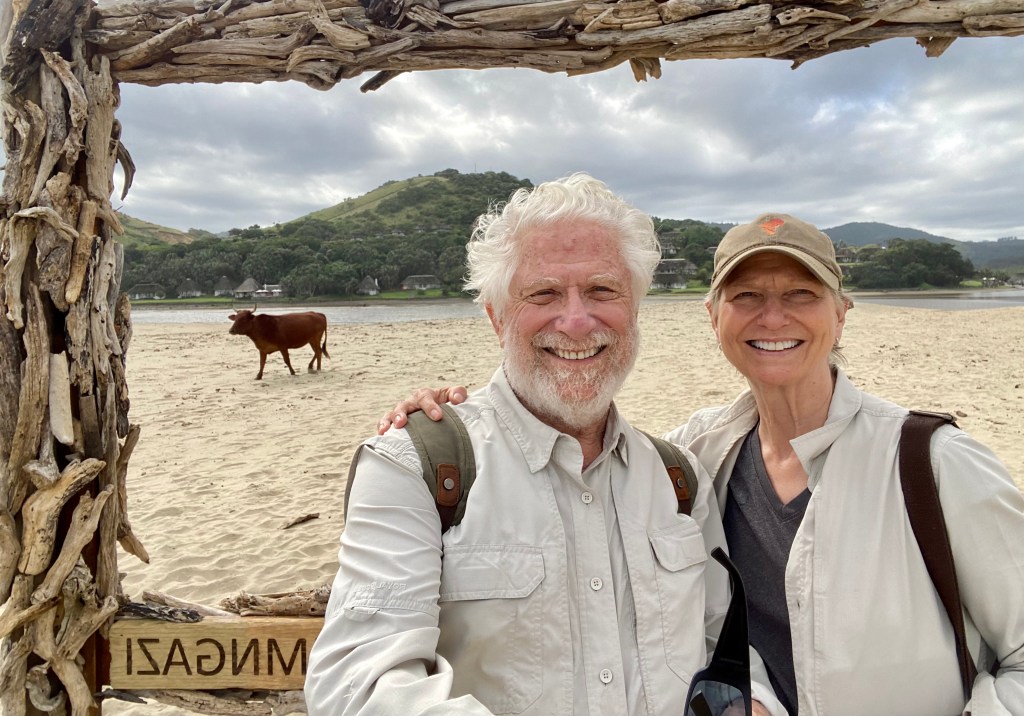
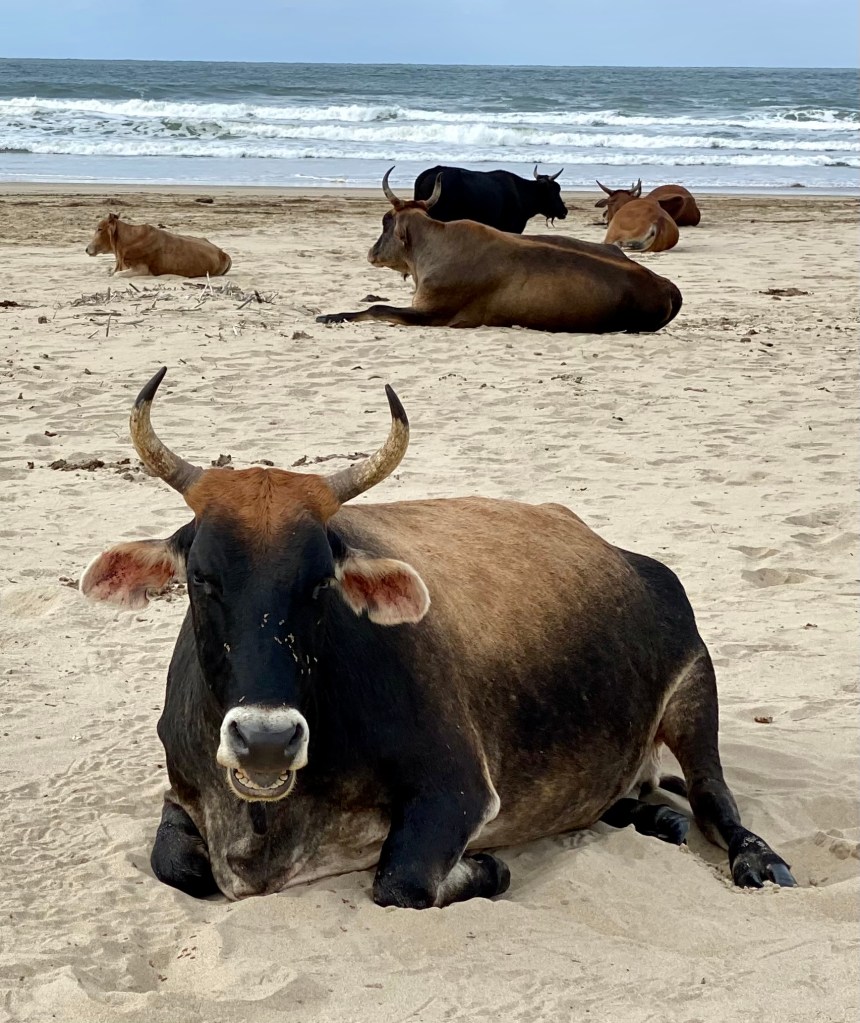
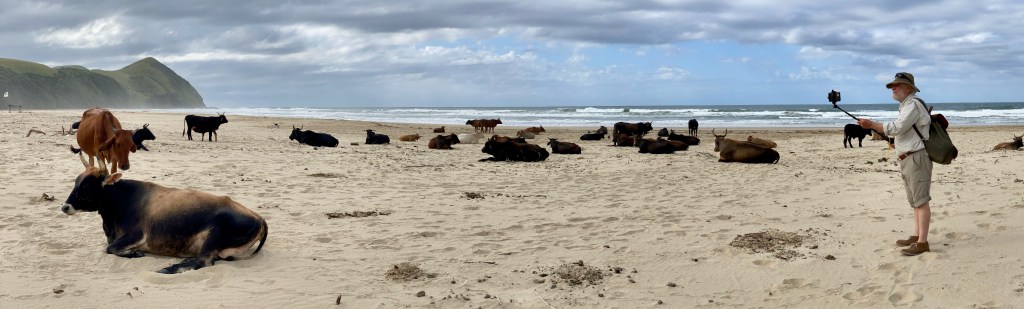
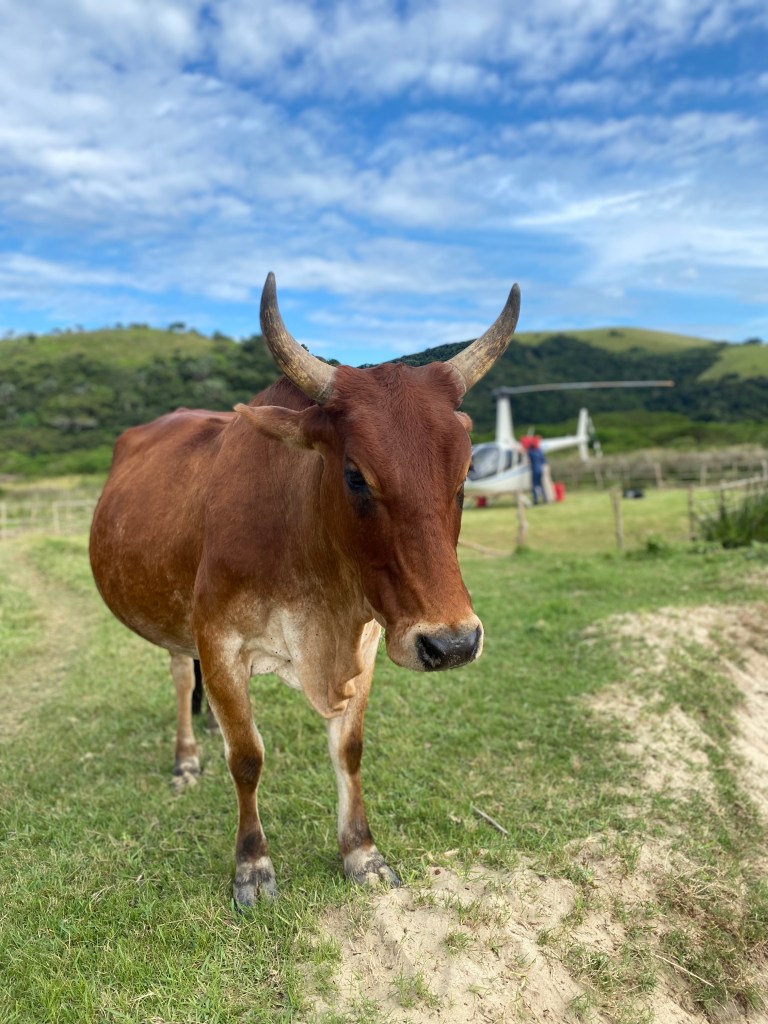
gave us a close-up experience with….. cows on the beach!
These bovines are apparently free to roam as they wish, up and down the lush hillsides….. But somehow they gravitate to the sandy shore, where they lounge quite comfortably. Why? There is no potable water or food for them there….. Henry imagines that the breeze off the sea minimizes the number of flying insects that could irritate them. I like to think that – like us – they enjoy gazing at the waves and contemplating their role in the universe…….
From the resort, there are wonderful walks in the neighboring hills overlooking the ocean…. (Please note the cows on the beach.)
Some relaxation
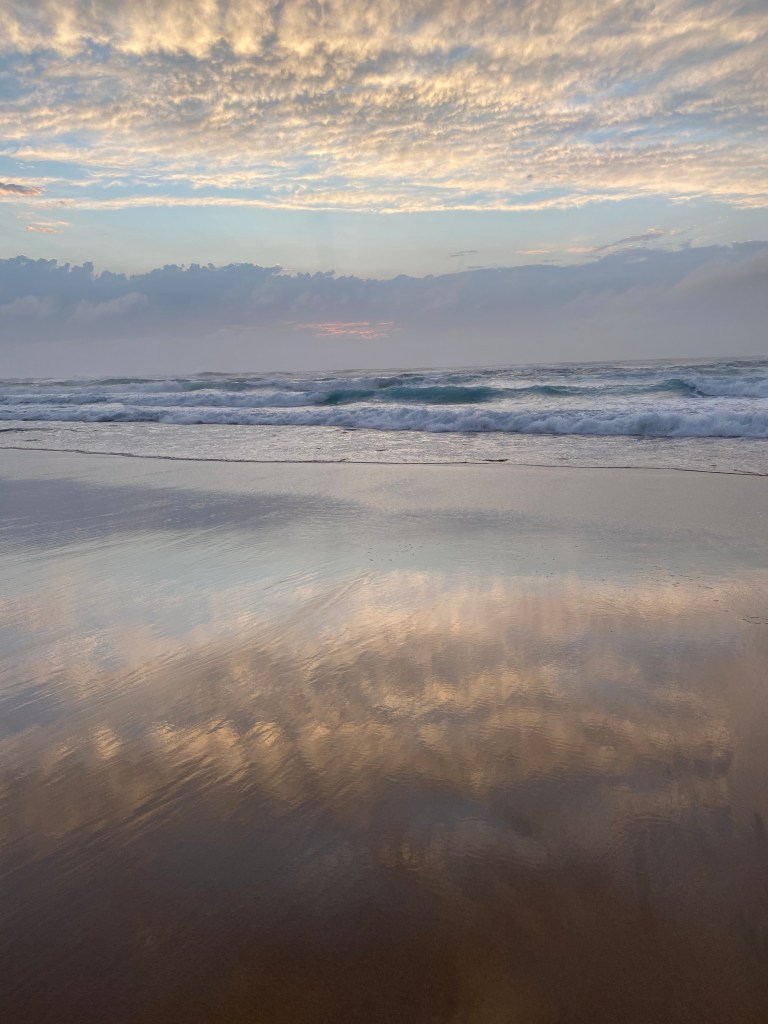
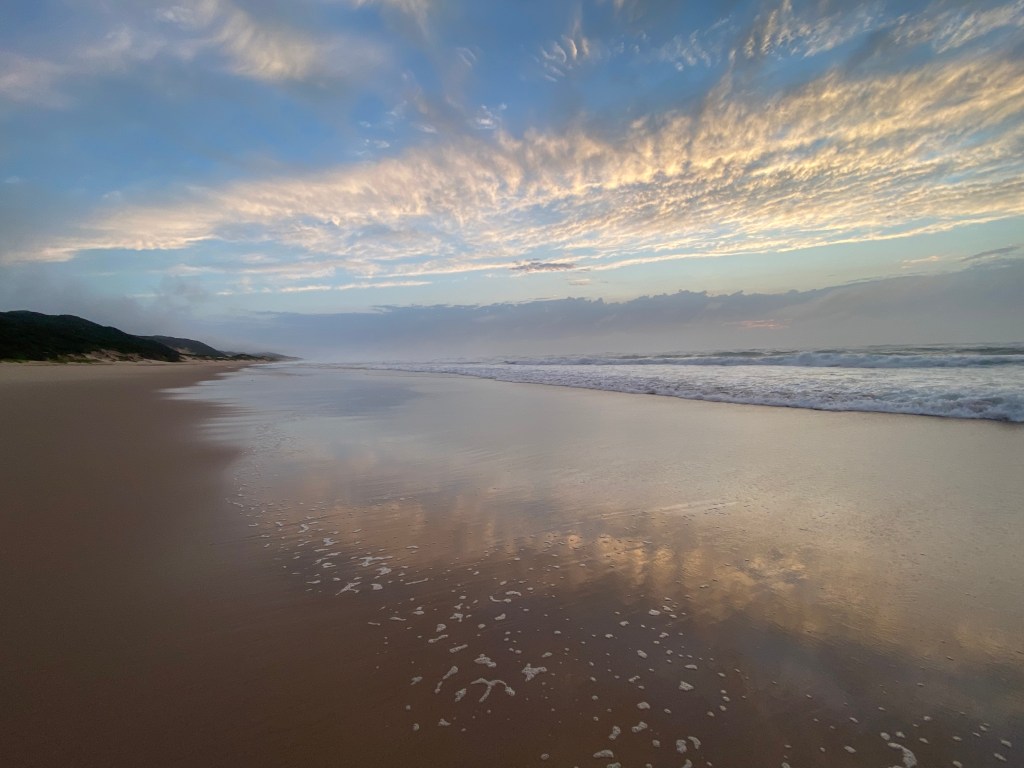
And some lovely sunrises…..
One cow was not dismayed or frightened of the noisy contraption that picked us up for our return to Durban. She bid us a moo-ving farewell from the Wild Coast……..






















 Travels with Henberta