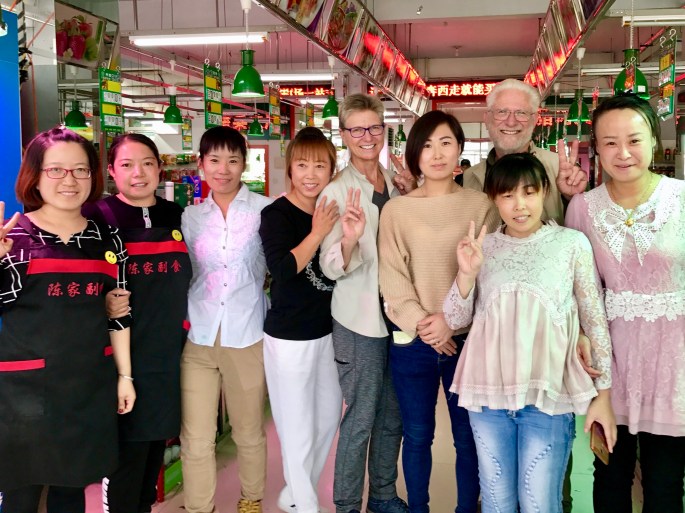
Tong grew up in a small Manchu village, a farming community of about 13 families near Xinmin, west of Shenyang. On our way there, we stopped at a grocery store to pick up some fruit, where all the workers wanted photos taken with the foreign visitors.
Tong’s aunt and uncle and a variety of other relatives welcomed us to their home, where they keep geese and pigs, cultivate a diverse vegetable garden and help manage the local corn crops.


Most people in rural areas have similar living arrangements – a house with a central hall containing the kitchen and dining room, and rooms on each side with “brick beds” for sleeping and living areas. (Many have converted to standard beds as tastes have changed.) They have electricity, television, internet, but no running water or sewage systems. Water comes from a shallow water well through a hand- or electric-powered pump. Drinking water is bottled; cooking water comes from the well and is boiled; water for washing is pumped into a wash basin. The toilet is outdoors, a concrete pit that is occasionally scraped out and combined with animal waste for fertilizer.


The brick bed on the left was heated by a small fire of corn stalks and twigs and was more comfortable than we expected. The face washing from the basin was not quite up to the standards to which I’m accustomed, but everyone else was spotless and well-groomed.
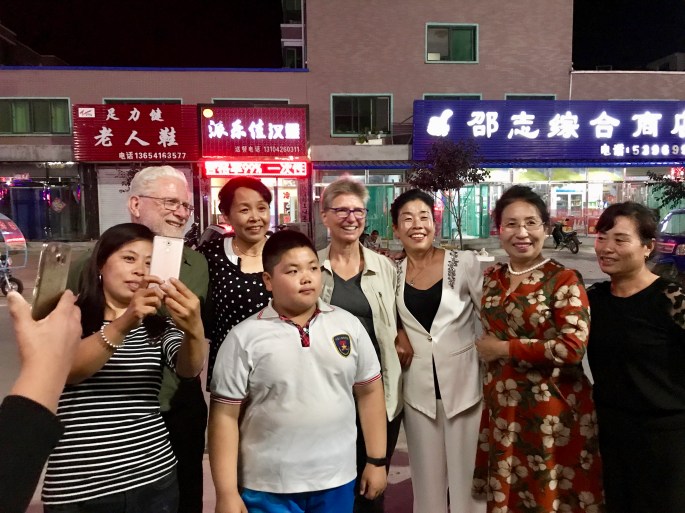
The near-by village had the evening ladies’ dance party that is so popular through-out China; we dropped by and caused a bit of a sensation by our presence. Lots of pushing, shoving, picture-taking and cell phone videos.
The next day, we went to what was once the largest pit coal mine in Asia, which has since been played out. It had several communist and Soviet-era memorials.


The best thing was the rock and mineral museum next door, a legacy from a Chinese benefactor with a collection that was just extraordinary. The museum was actually closed for the day, but they opened for the foreign visitors, and charged only half price. Henry was in heaven on many levels.


The scientific descriptions in English in the museum were quite good. They did have a little problem, however, getting the facts together on Western Christmas traditions:
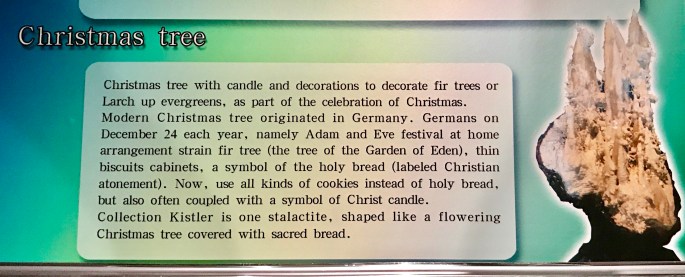
Hmmmmm… Adam and Eve festival with Christmas trees covered with sacred bread……
Behind the museum was a garden with a great selection of Chinese sculptures.


And lastly a couple of wall murals, the first showing the history of the mine area back to the dinosaur age; the second depicting the horror of the Japanese operation of the mine as a slave camp, and its subsequent liberation by the Red Army.
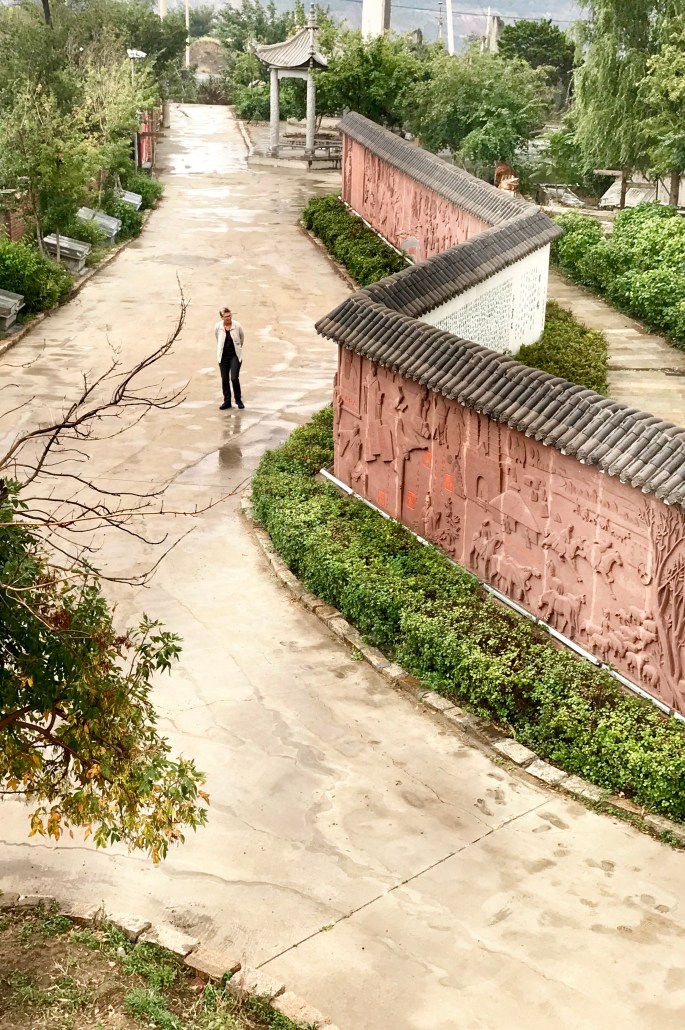
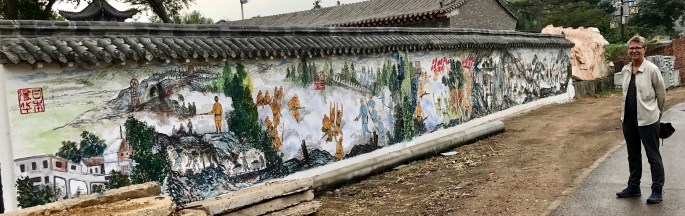
Amazing things to see and do at every turn and in the most unexpected places!
 Around the World Again
Wow, just wow! So much new things to process!
LikeLike