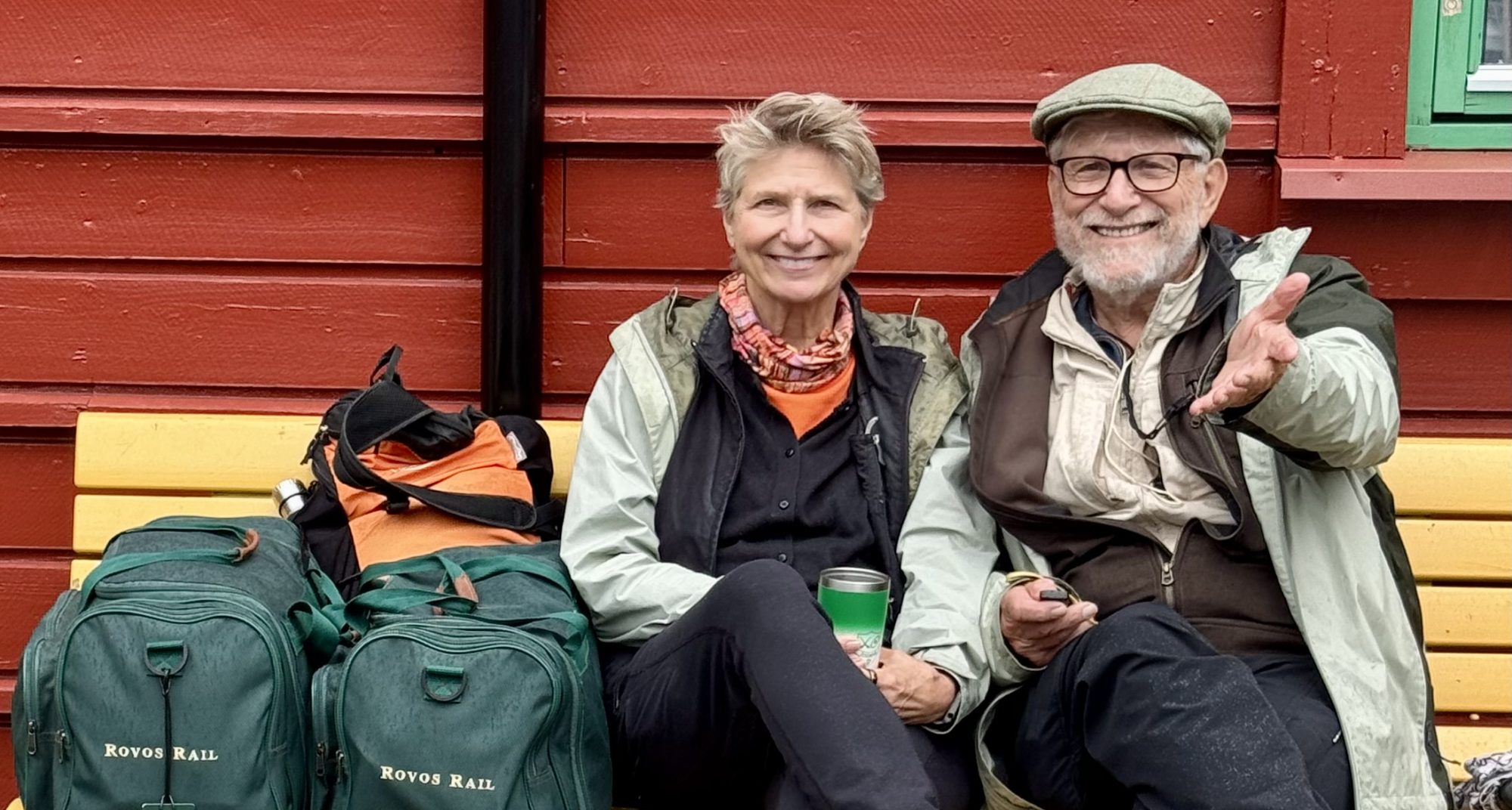
The Inuit people have lived in the Arctic regions for thousands of years – not just in Canada, but also Alaska, Greenland and Russia – and obviously adapted well to the harsh weather conditions. They had occasional contact with Europeans through limited trading, primarily in furs.
INVASION NUMBER 1
The British crown, however, turned informal trade in Canadian territories into an organized business with the establishment of the Hudson’s Bay Company in the late 17th century.
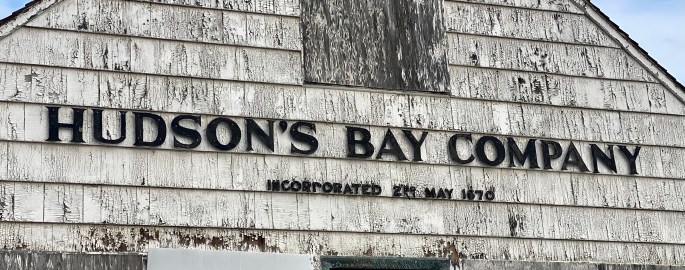
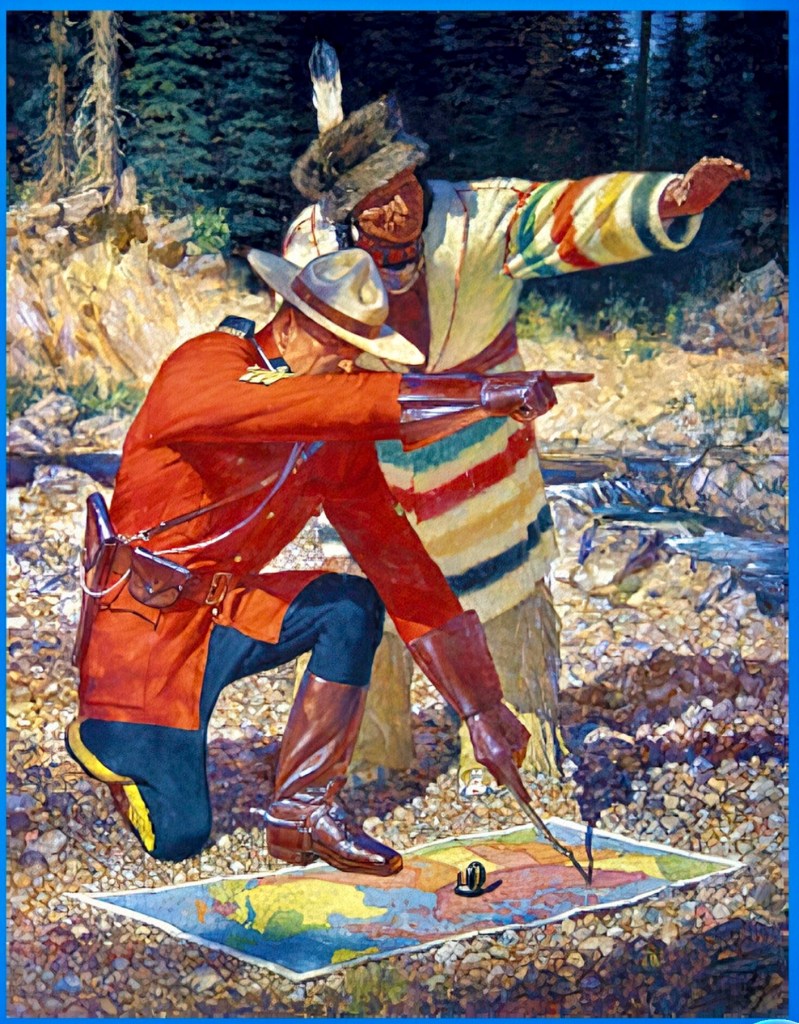
Beginning in the southern parts of Canada, this organization eventually extended its reach into large and small communities throughout the Canadian Arctic. The Inuit traded furs and marine animal products such as sealskin and ivory for metal and wooden goods, and woven cloth…. Most notably the famed Hudson’s Bay point blanket, seen here worn by an indigenous gentleman helping out a Mountie with some directions. (Points referred to markings on the finished piece that indicated its size.)
Over time, commerce and exposure to Europeans made the Inuit fairly reliant on this exchange of goods, but they worked hard to maintain their distinctive culture.
INVASION 2
Then came a different kind of invader…….
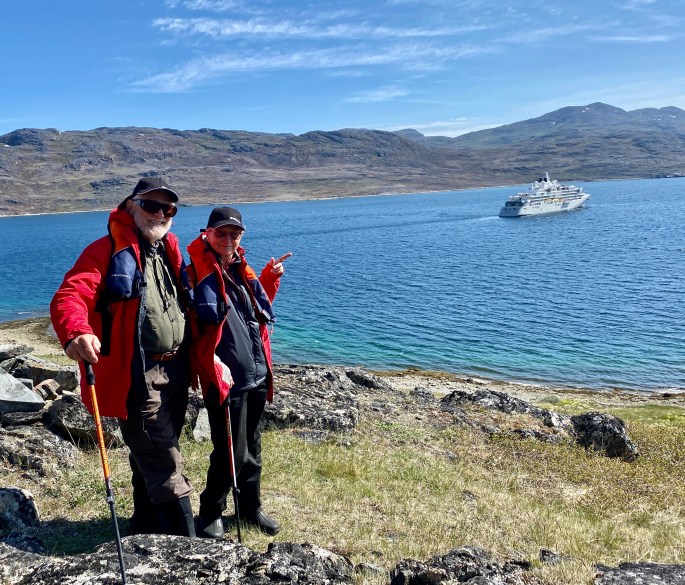
Big cruise ships started visiting these remote villages only a few years ago. The jury is still out on whether that’s a good thing or a bad thing. Stepped-up tourist business was expected to create jobs and a vigorous market for local handicrafts; however, the experience of some of the locals is that cruise ship visitors often spend no money, but stay an hour or so, then reboard the ship in time for their pre-dinner cocktails.
Fortunately, the folks that we met were warm and welcoming and happy to spend time with us. The villages are quite small, with 100 to 500 residents, and situated along dazzling and pristine waterways.

Sheila would not sell us anything, but enjoyed trading some small handicrafts for polished rocks from Texas!
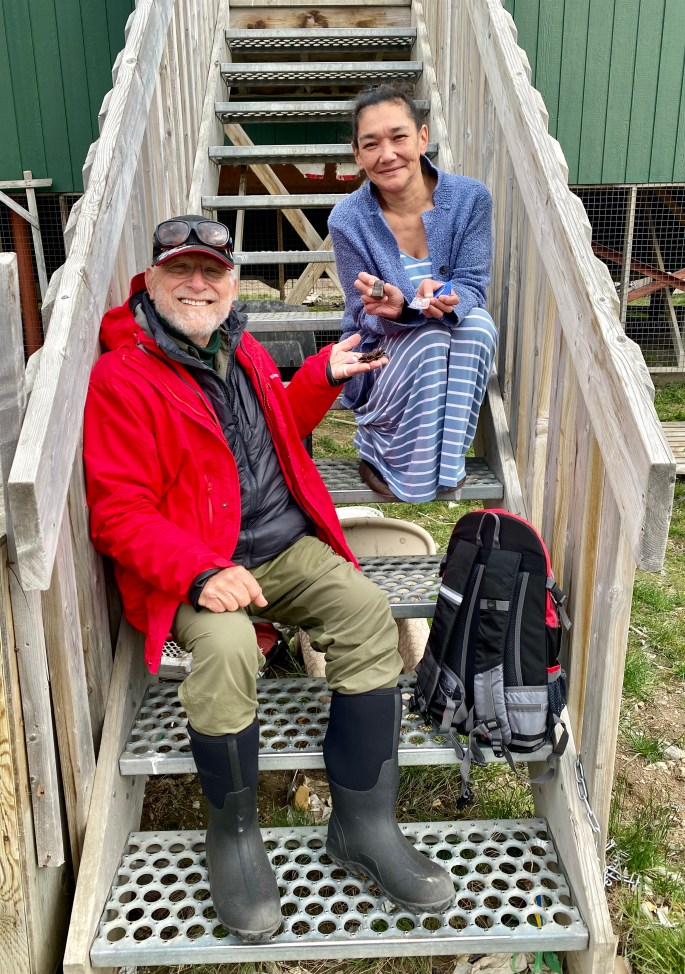
Sam showed off her son, Theo, whom she toted in a traditional quilted sling.

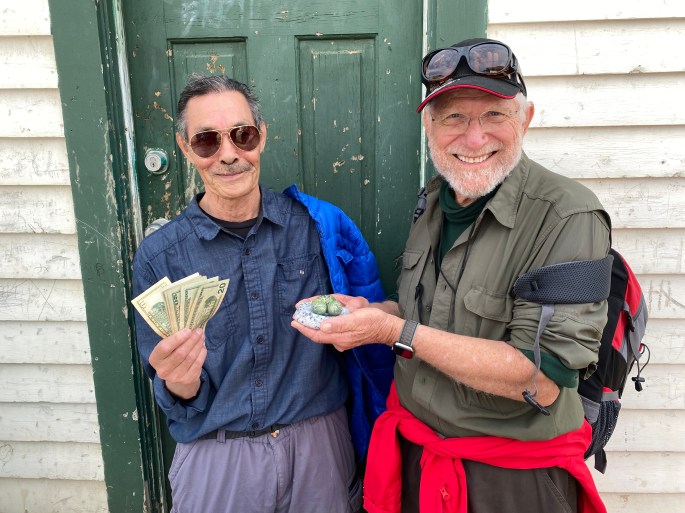
This fellow was astonished when Henry agreed to pay his first price for some soapstone carvings…..
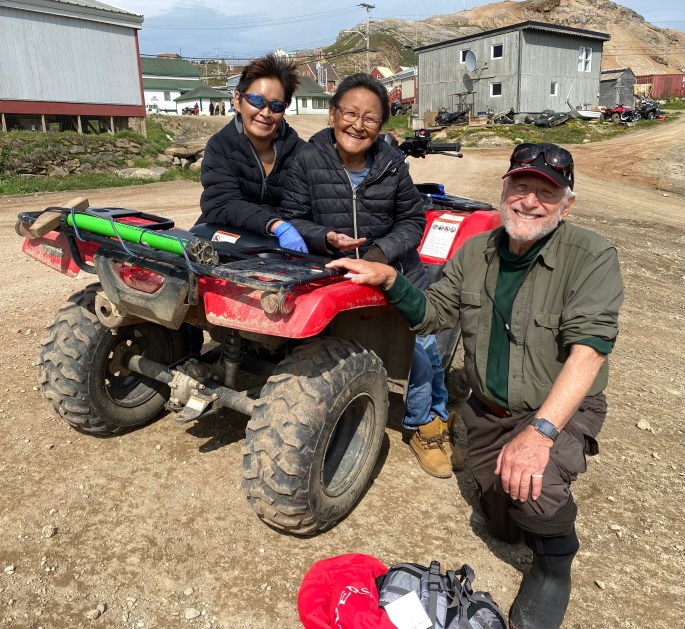
These ladies were pleased to get some fruit that Henry cadged from the ship. They told us a bit about their lives, families and the surrounding area, making us want to stay much longer to get to know them and to explore their turf.
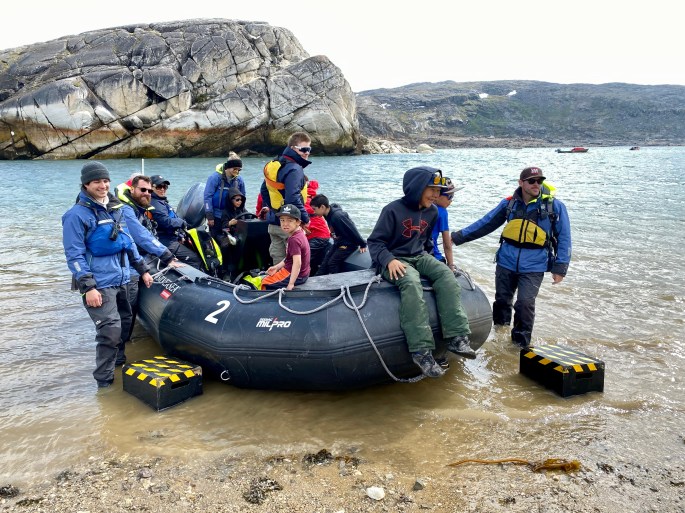
Kids get excited about the visitors, and never lose hope that they will be able to go for a ride on the Zodiac!
An interesting chart posted in a village center….. the equivalent of the “food pyramid” that defines the contours of a healthful diet. Instead of a pyramid, the graphic is displayed on an ulu, which is a knife traditionally used by Inuit women to skin animals, cut meat and scrape hides. It looks like this:
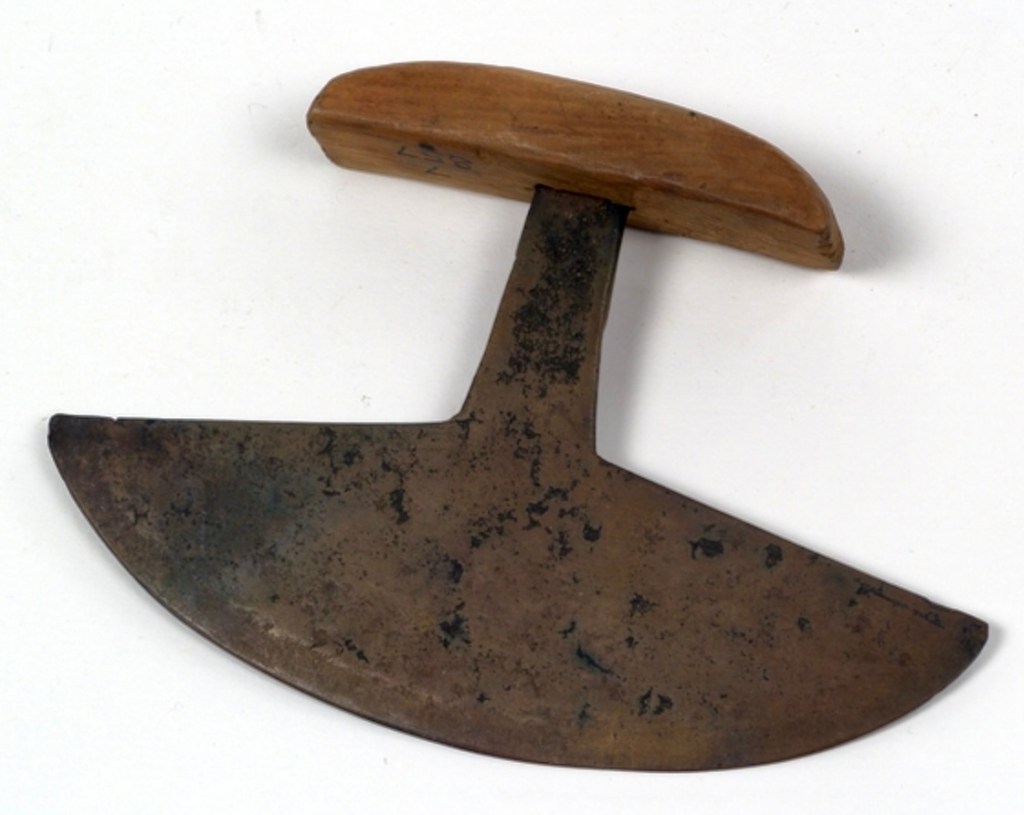
Here is the chart….. Look at it closely.
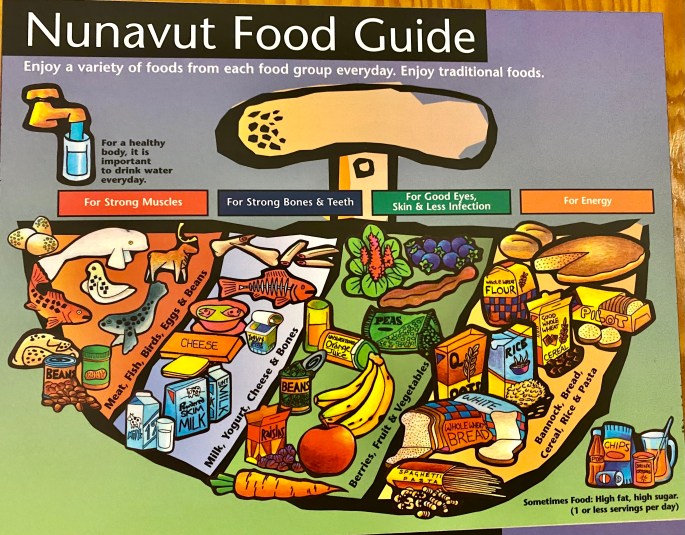
Note that for strong muscles, you must enjoy traditional foods such as caribou, seal and beluga whale meat! The other categories are revealing, too, of limitations on the amount of fresh fruit and vegetables that are available in such remote places. Most foods not hunted or gathered locally must be shipped or flown in – frozen, canned or packaged…… and consequently quite expensive.
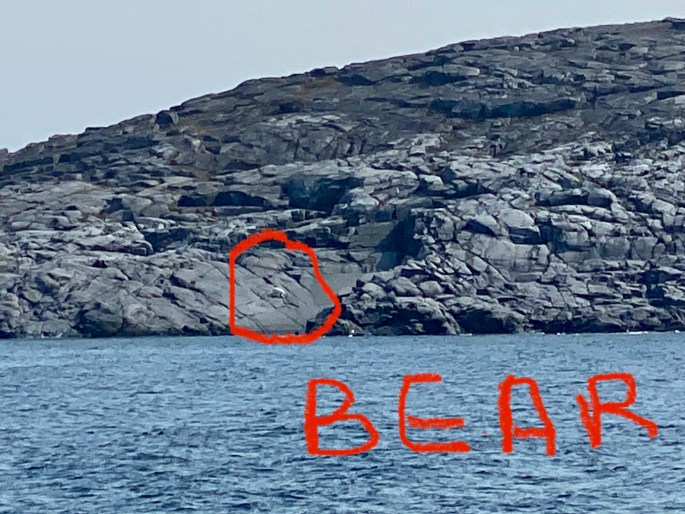
It would have been terrific to spend a few days in one or more of these communities, but alas, the ship was on a quest to see a polar bear or two. On the way, we bumped through an ice field, an otherworldly experience…
And finally, a small island with some walruses, and a …..
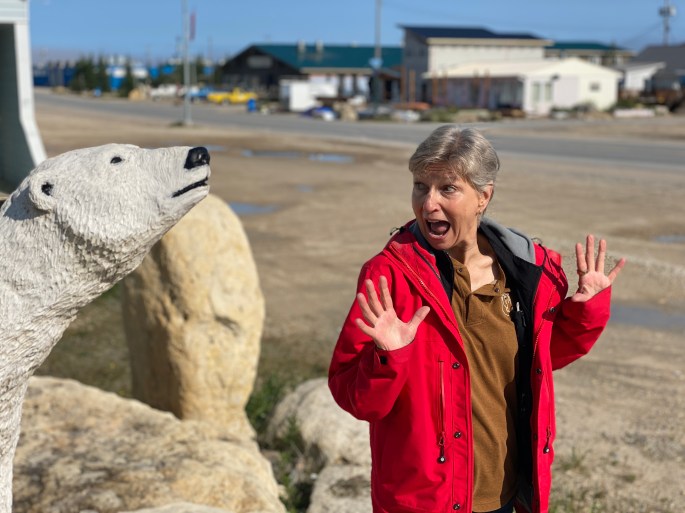
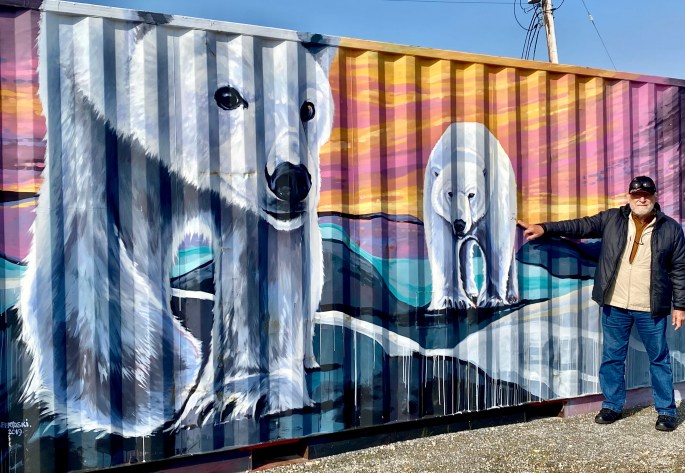
The expedition cruise ended in Churchill, the self-anointed Polar Bear Capitol of the World.
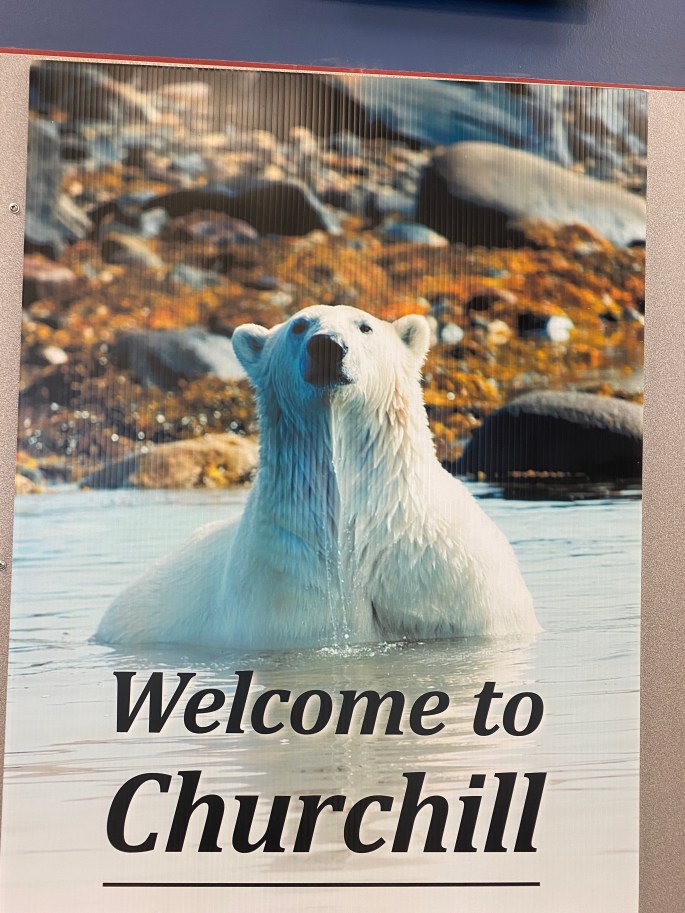
In this town on the shore of Hudson Bay, residents are required to leave the doors of their homes and vehicles unlocked, to provide a shelter to anyone who may be imperiled when a polar bear ambles down the street. (It happens, but not often.)
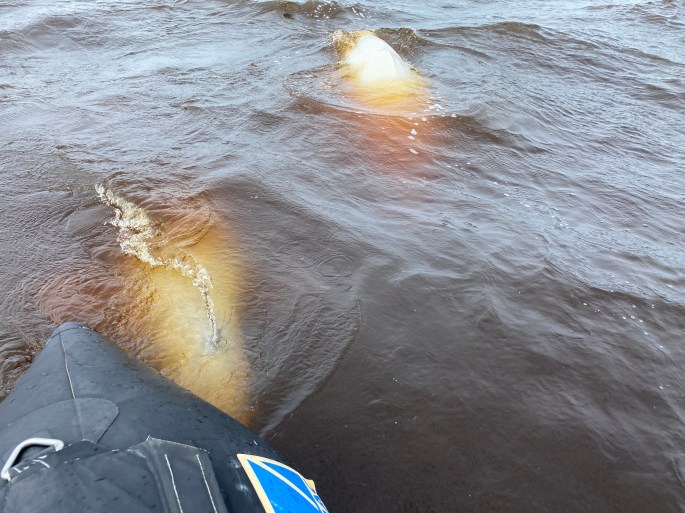
The highlight of a trip to Churchill is without doubt a boat ride or kayak through the beluga whale calving area in an estuary on the edge of town. The cheeky whales like to pop up right next to the vessel and blow bubbles…..

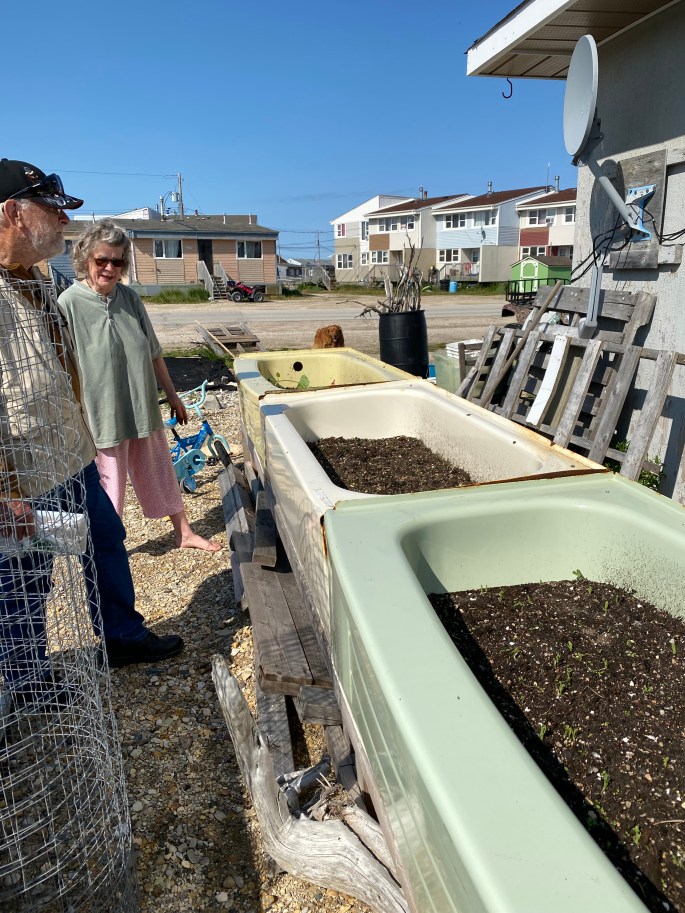
Although the growing season is short, hopeful gardeners are still compelled to try….. We found Helen working on her vegetable garden, some of which is planted in a line of elevated bathtubs running along the side of her house, providing drainage, heat retention and protection from the wind. Brilliant!
Montreal was a shocking return to warm weather and an urban environment. A visit to a local farmer’s market provided a nice transition …
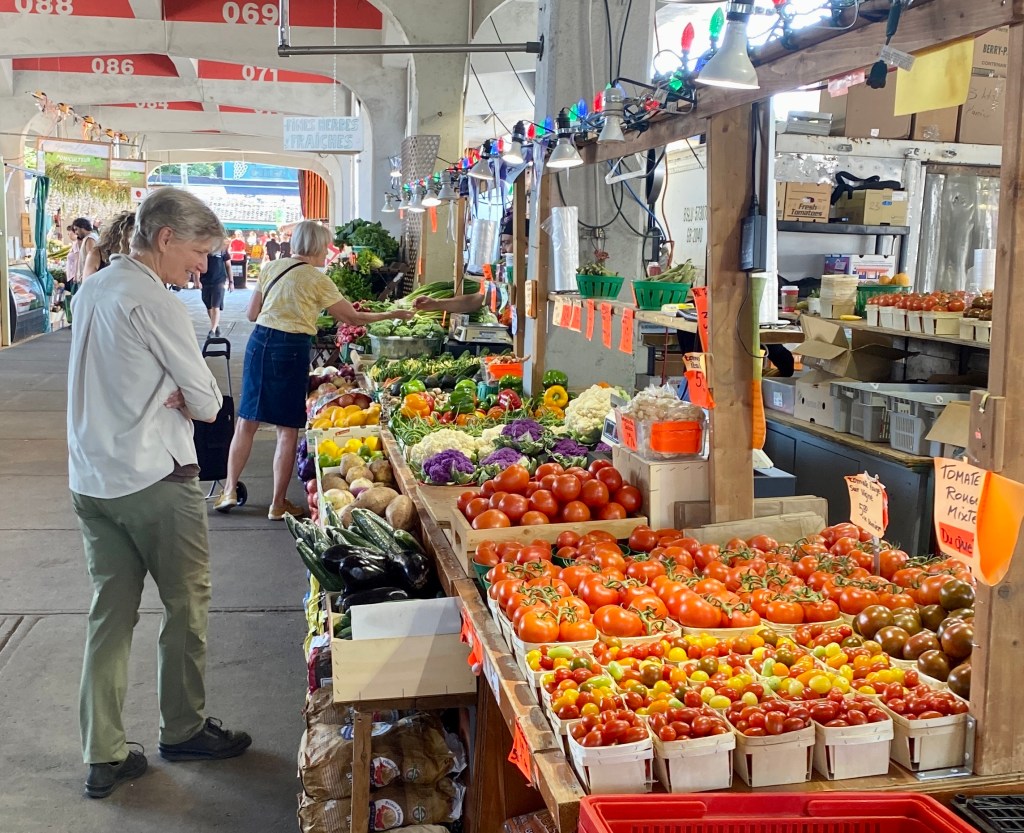
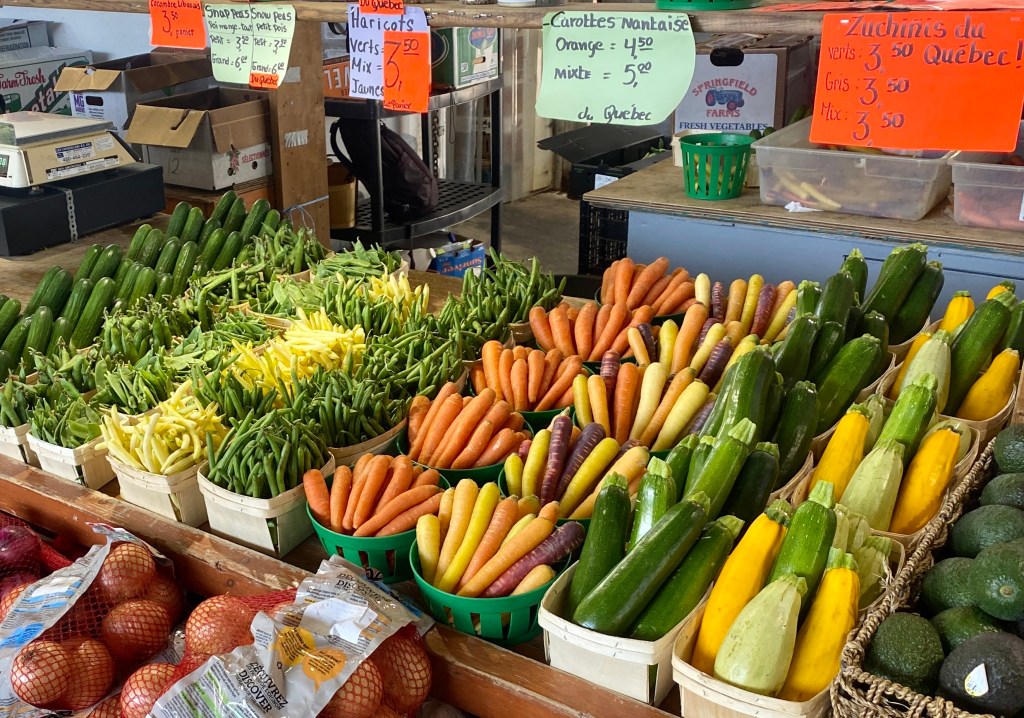
And we felt compelled to share a “medium” order of the national food of Canada, poutine….. French fries mixed with a mild cheese and topped with brown gravy.

A gloppy mess and more than a little heavy, but what the heck – we have been eating mass quantities on the cruise over the last few weeks…. In for a penny, in for a pound (or 10!). We felt better later when we found a “slenderizing” mirror, all excesses forgiven….

And still another point in favor of Canada and the Canadians….. free women’s sanitary supplies in public restrooms!

How civilized!
Hudson’s Bay Company is now a boring, sterile department store, much like Macy’s on the inside…… the last vestige of its illustrious heritage is an array of products with the point blanket design.
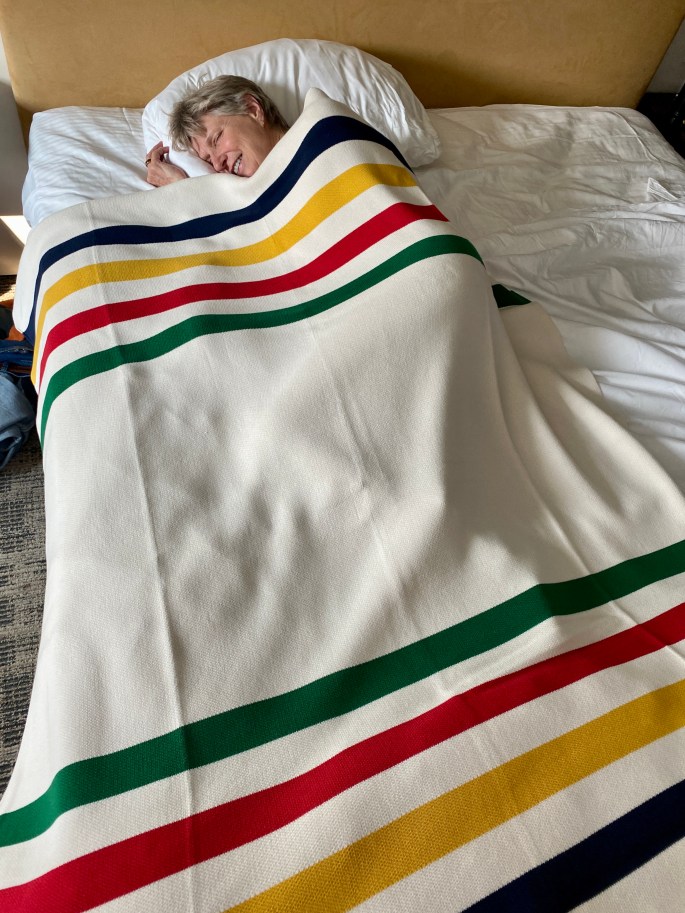
Farewell for now. It has been exhilarating spending time in the cold north and discovering new places and people.
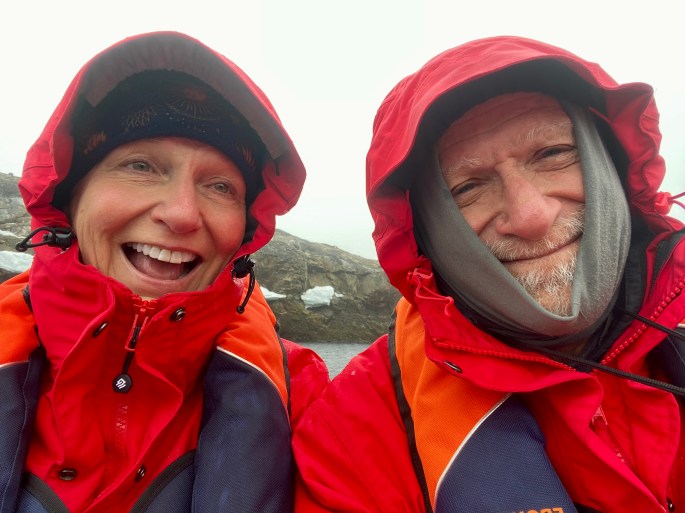
We return to the “oppressive heat dome” of Texas for a short while, but will be heading out again in a couple of weeks on a completely different kind of expedition….
Thanks for watching, and please stay tuned!
 Travels with Henberta
So loved your triplog . . . wonder why you decided to return to all this heat, drought and humidity!
LikeLike
No, not the end of another adventure! I enjoyed this one, especially as I was off on my heat- and humidity-filled one running across Tennessee. Welcome home!
LikeLike
Quite a contrast with most of the rest of the world! Hard to believe we were freezing just a week or two ago!
Sent from my iPad
<
div dir=”ltr”>
<
blockquote type=”cite”>
LikeLike