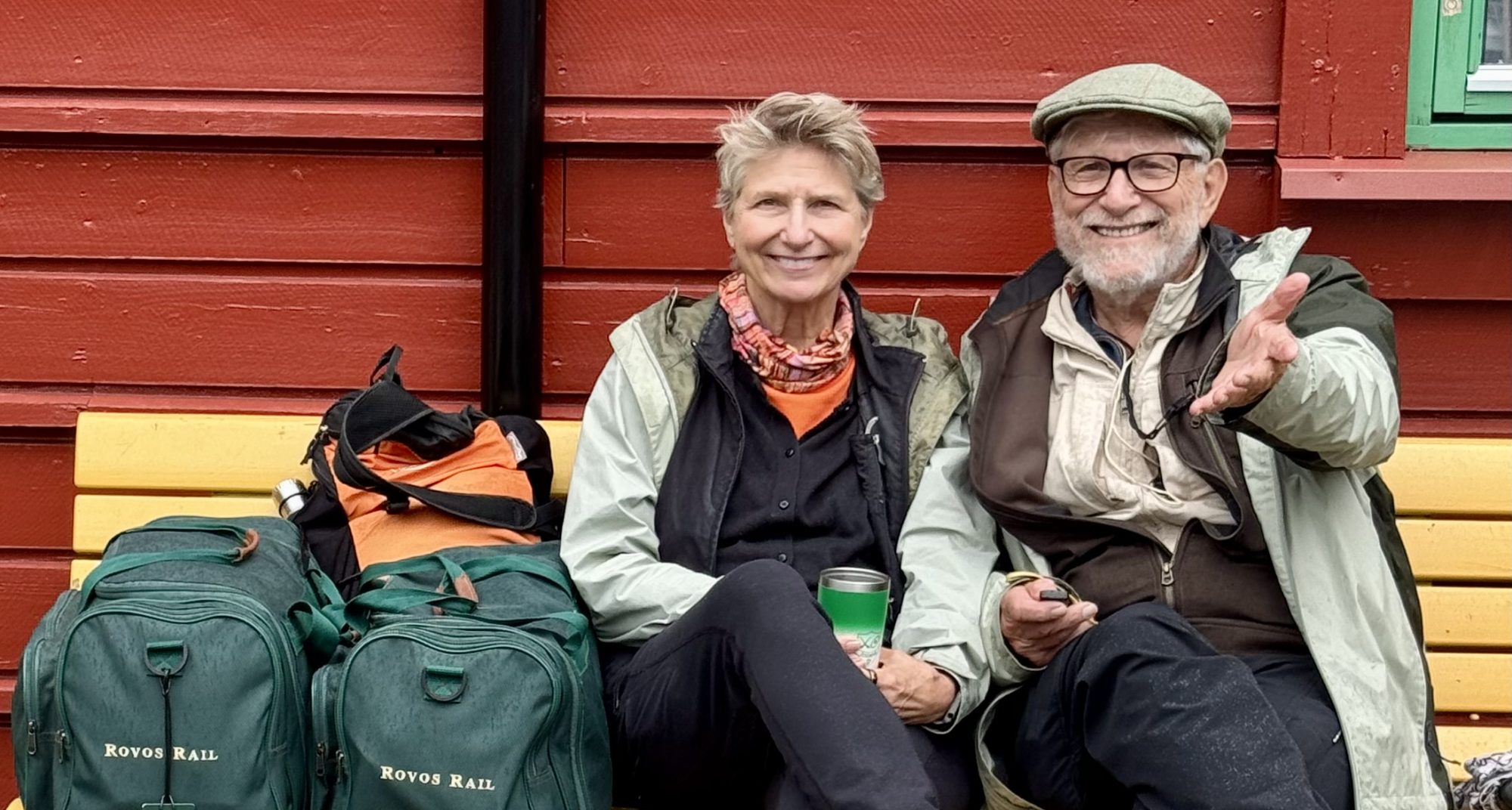
History is present at every turn.
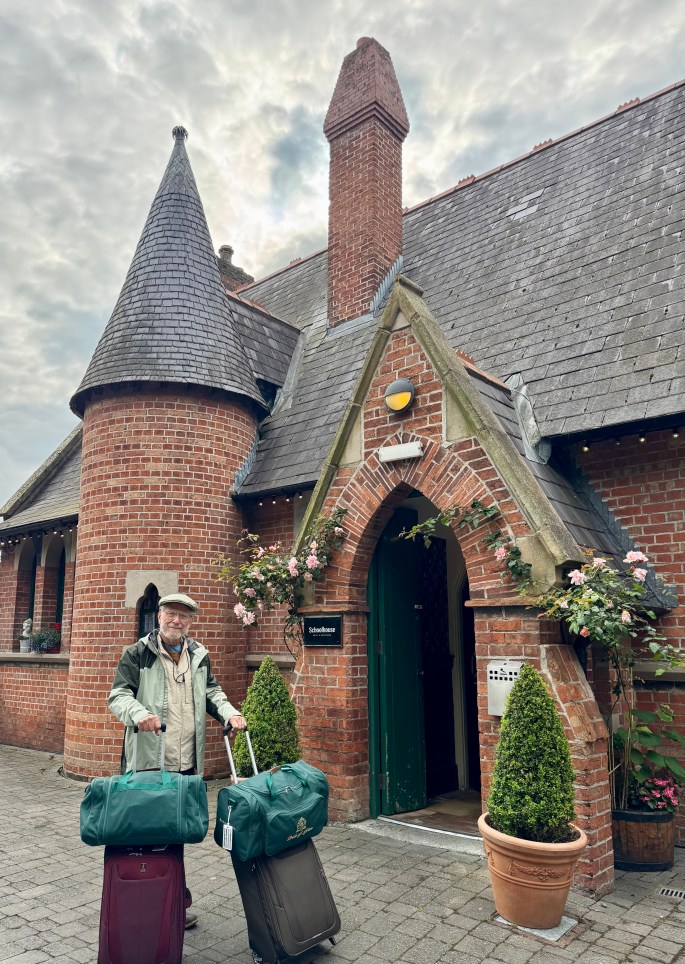
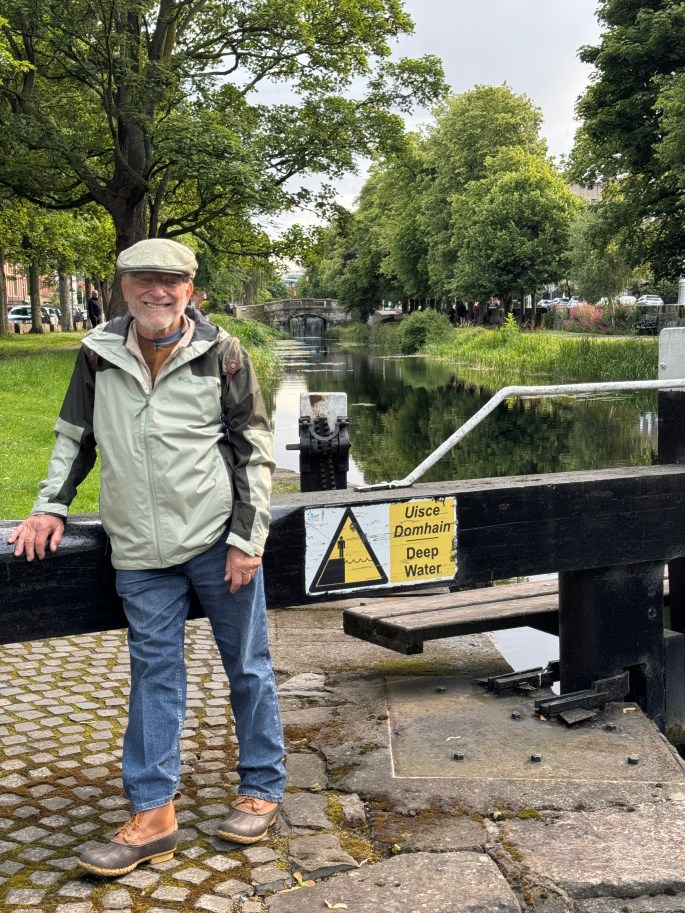
The Schoolhouse in Dublin originally served as a school in the middle 1800s; it was also the site of a key battle in the 1916 Easter Uprising of the Irish against the British. It’s now a pleasant hotel in a leafy section of Dublin along the Grand Canal….. whose construction began in 1756.
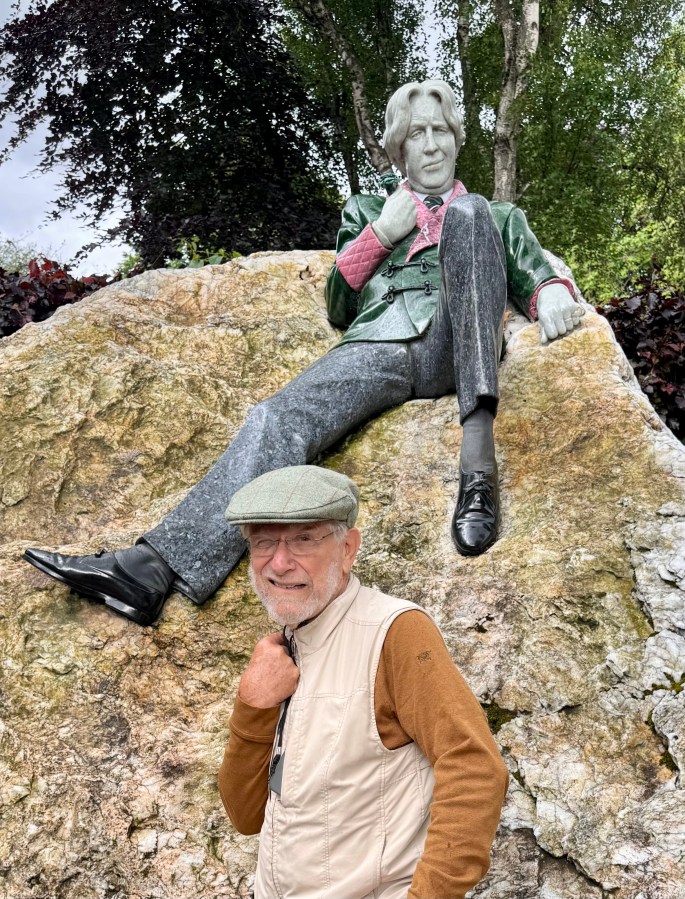
On a stroll toward the city center, one is confronted with literary Dublin….. the childhood home and a memorial to Oscar Wilde (1854-1900), the flamboyant Irish playwright, poet and author. His was a short and tragic life, but brilliant and witty. Among his bon mots…. “Be yourself; everyone else is already taken.” And…. “Always forgive your enemies; nothing annoys them so much.”
A short distance away is a site of significance to fans of “Ulysses”, the monumental stream-of-consciousness novel by James Joyce (1872-1941)…… a drugstore called “Sweny” where the protagonist picks up a prescription.
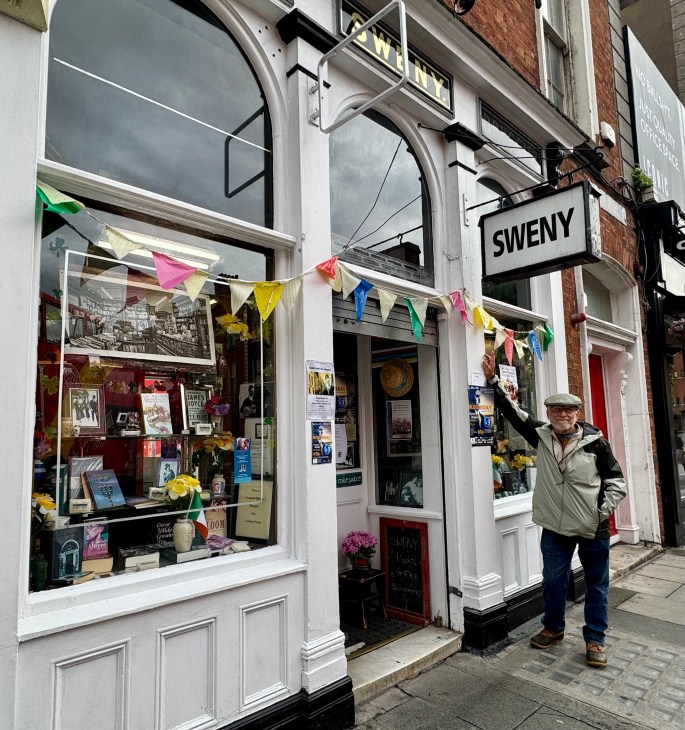
It is no longer a functioning pharmacy; instead you wear a funny hat and purchase some lemon soap (also a legendary icon in the novel)…
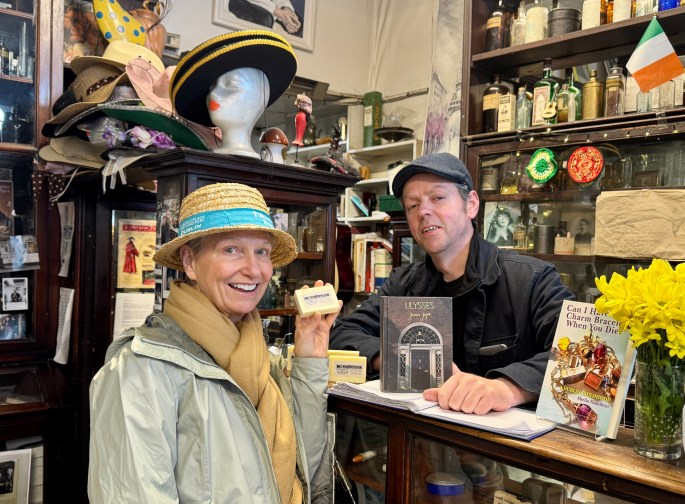
….. and hear a song sung in Gaelic by a native speaker and a guy originally from Barcelona.
I don’t think the last part about the guys singing was in the novel (which I never managed to get through) ….. just a little something for us tourists…..
…..who get thirsty about now and end up in still another historic place.
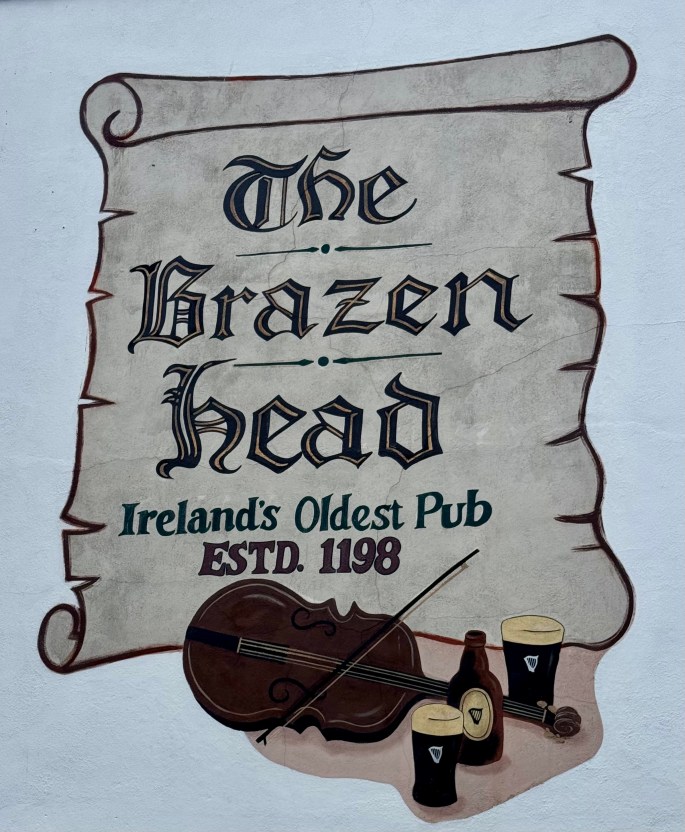
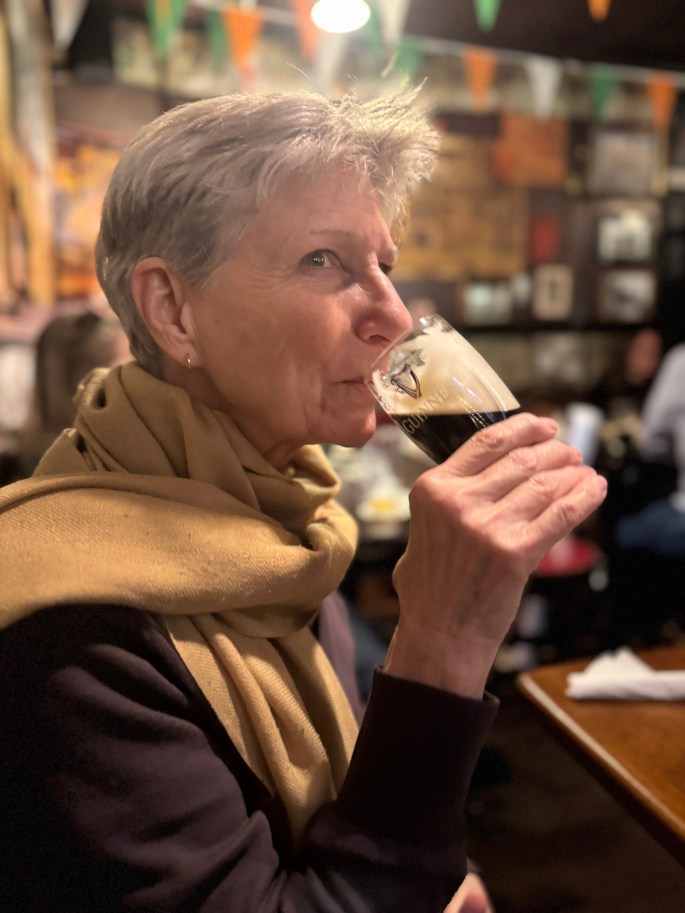
Wow – at least the beer and food were fresh. A Guinness for the purist…
And something a little lighter for the maverick….
Irish stew…. To check off a classic dish.

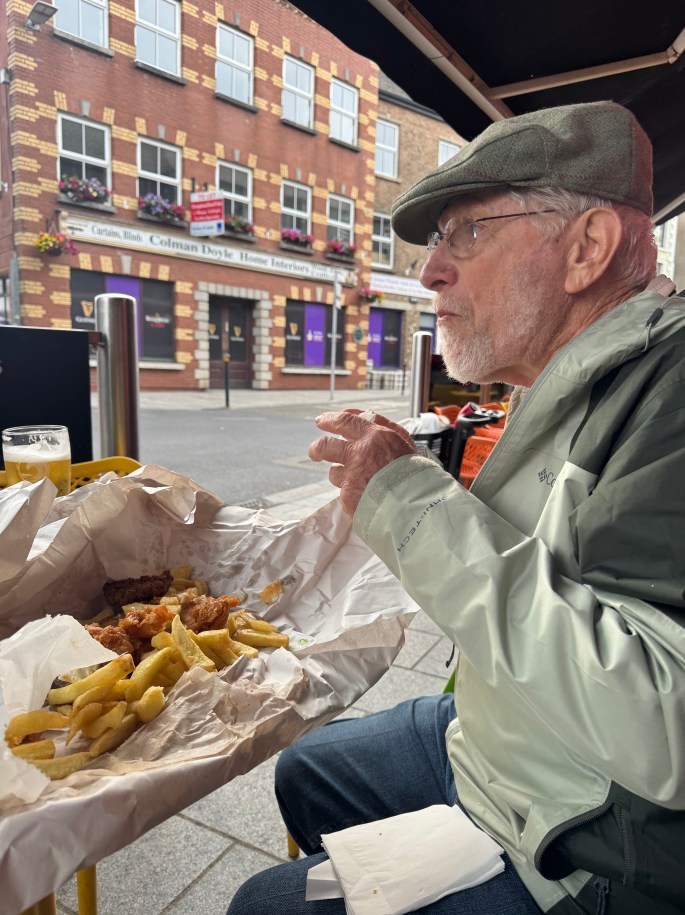
Later….. fish and chips….. and the discovery of a beverage previously unknown.

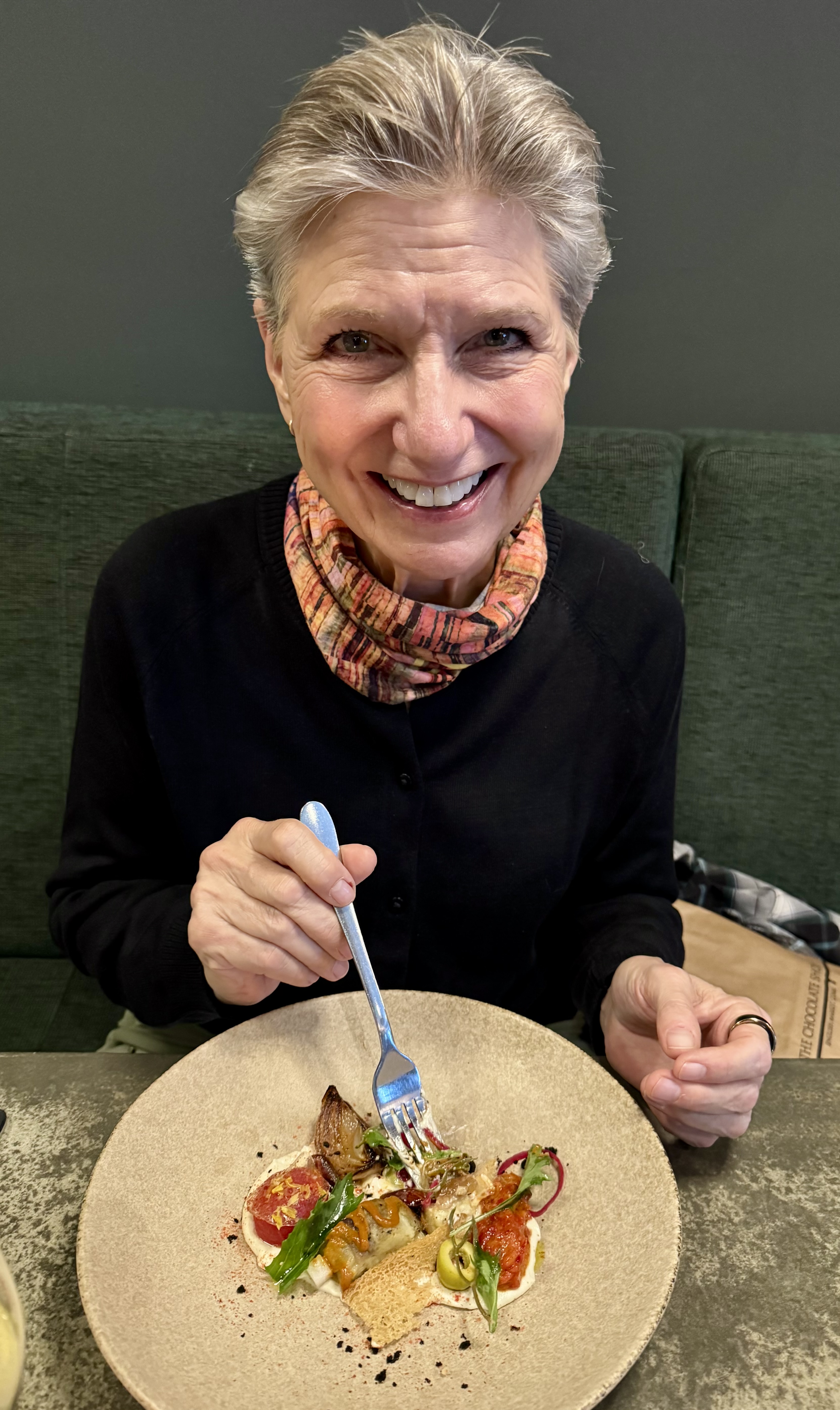
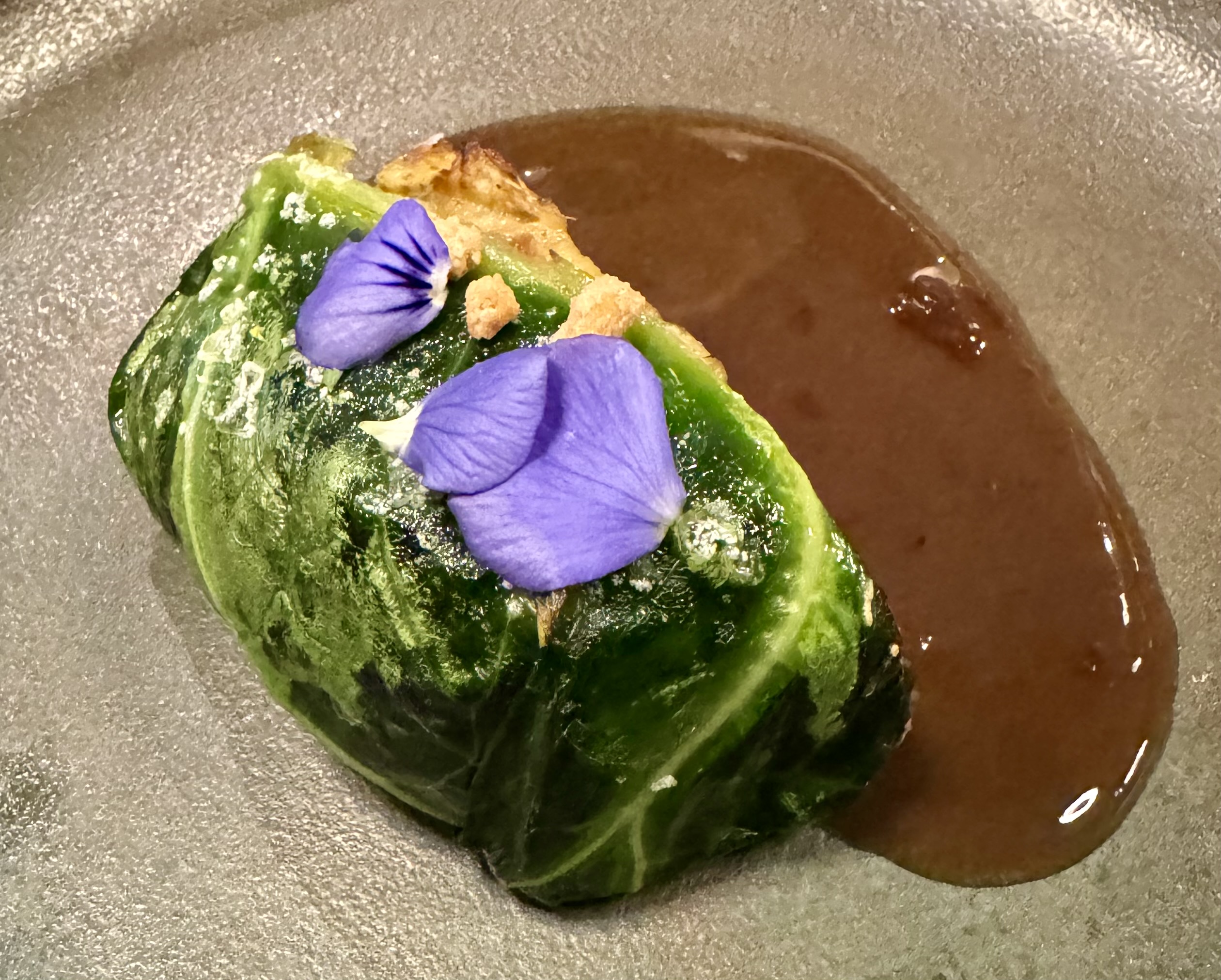
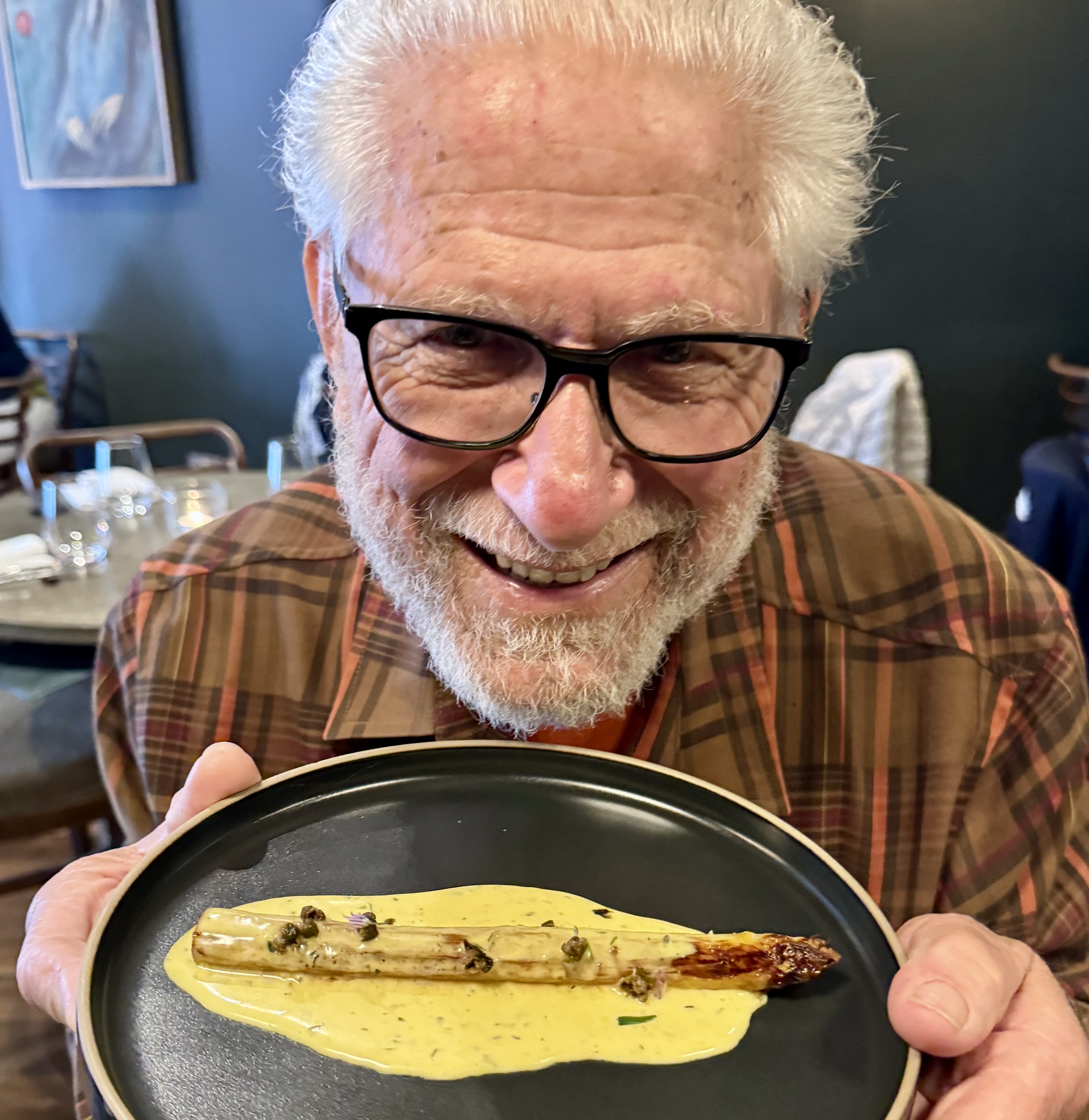
Taking a break from tradition, we decided to check out a well-reviewed restaurant with a vegetarian bill of fare….. it was flavorful and inventive!
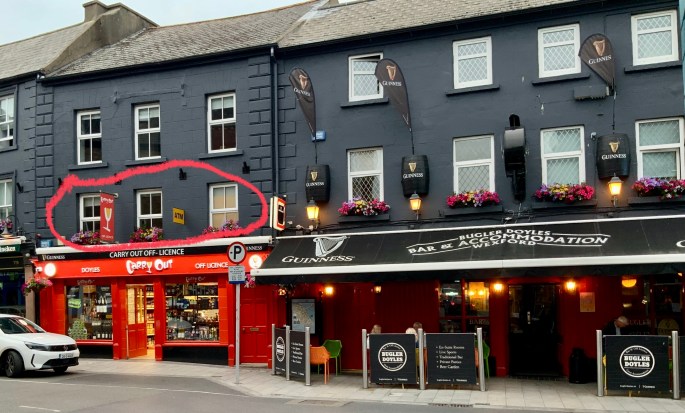
Driving south along the coast from Dublin, we came to Wexford, a town more or less started as a Viking settlement; not many relics of them now, but we did attain the goal of staying in a room over a pub.
Further along, Waterford has a rich history as a Viking outpost beginning in the 9th century CE.


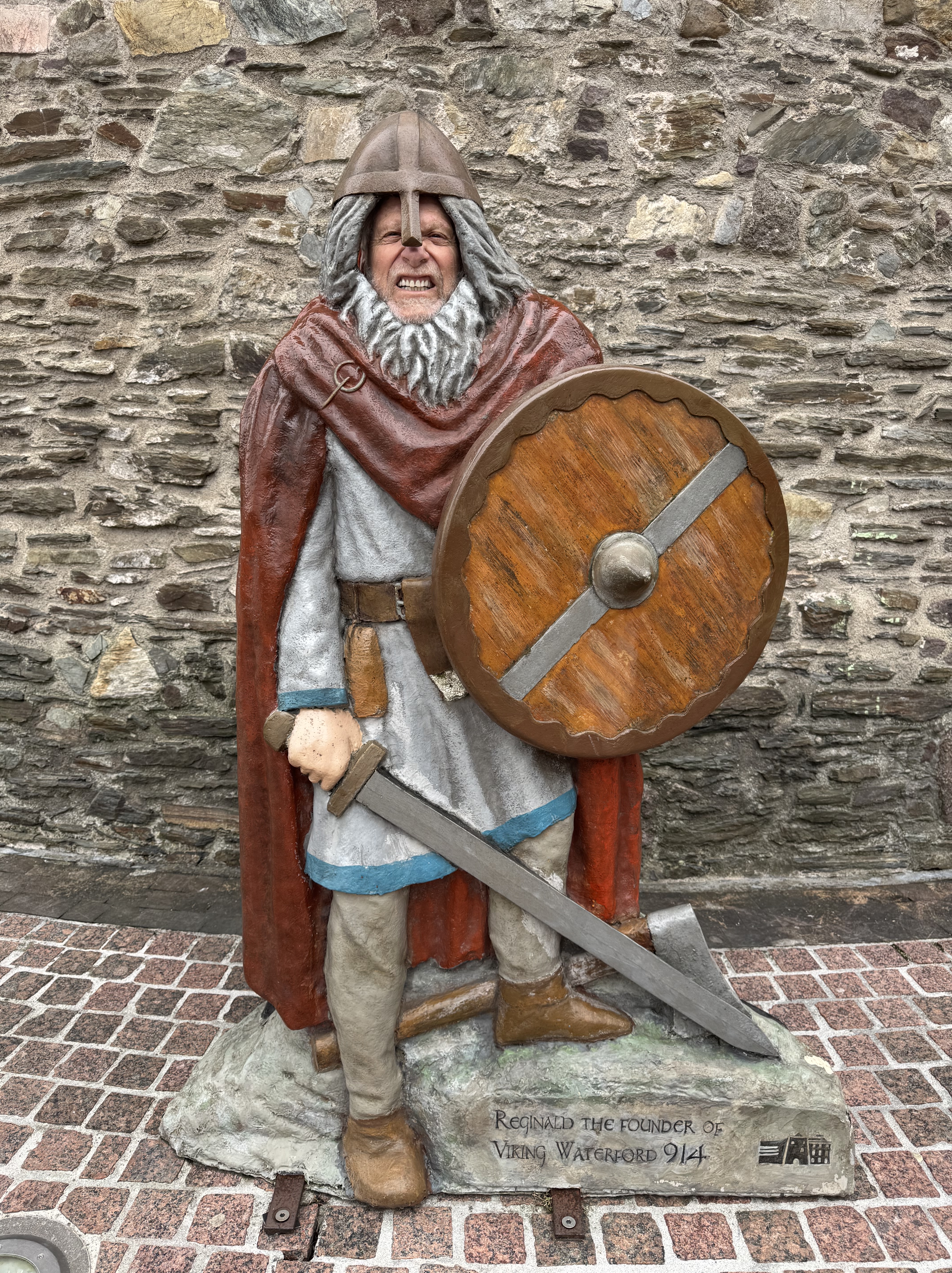
(Ever notice how old people tend to resemble each other the longer they are together?)
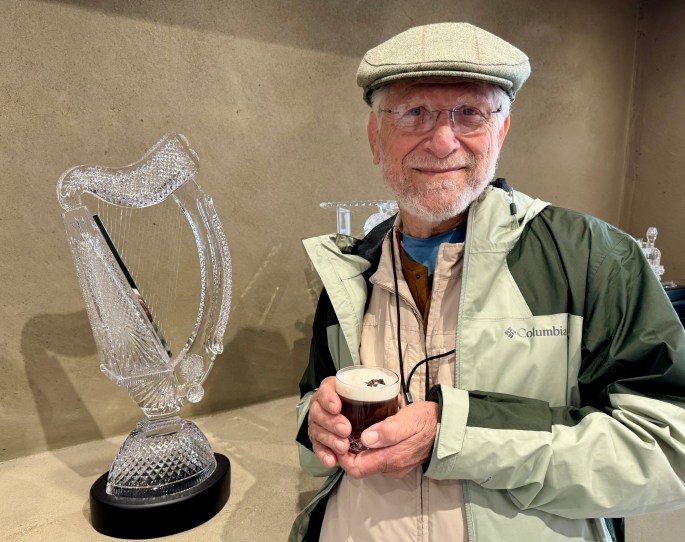
Waterford got its name from the old Norse word Vedrarfjordr, which is thought to have meant “windy fjord”, a reference to the safe harbor it represented to the sea-faring Vikings. Eventually it became known for its manufacture of fine crystal.
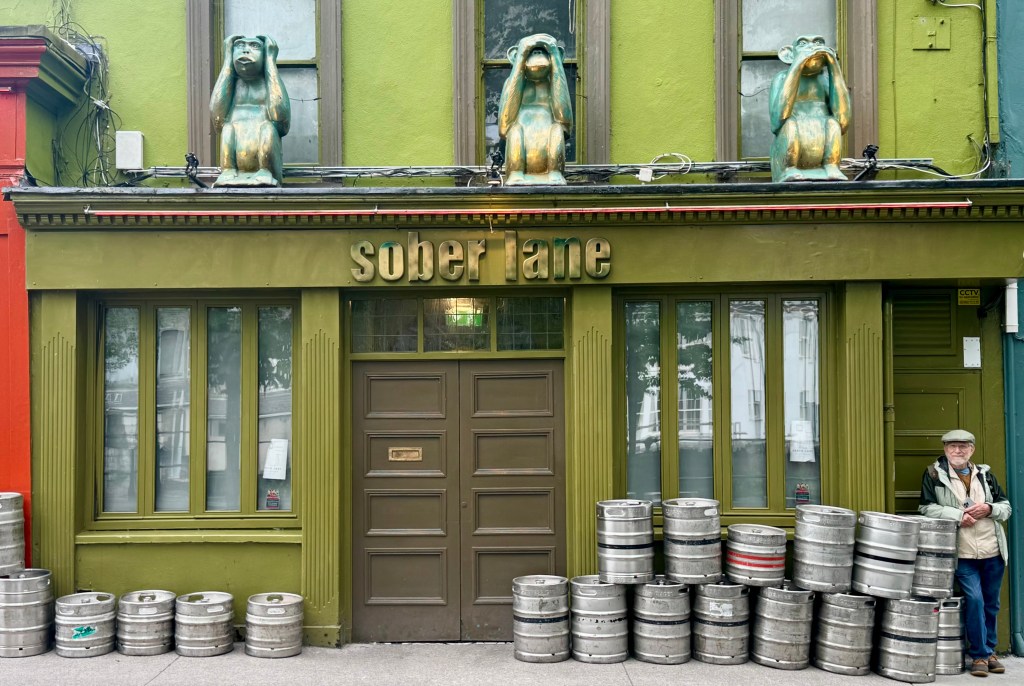
Cork is a great town for walking around – lots of interesting store fronts and murals.

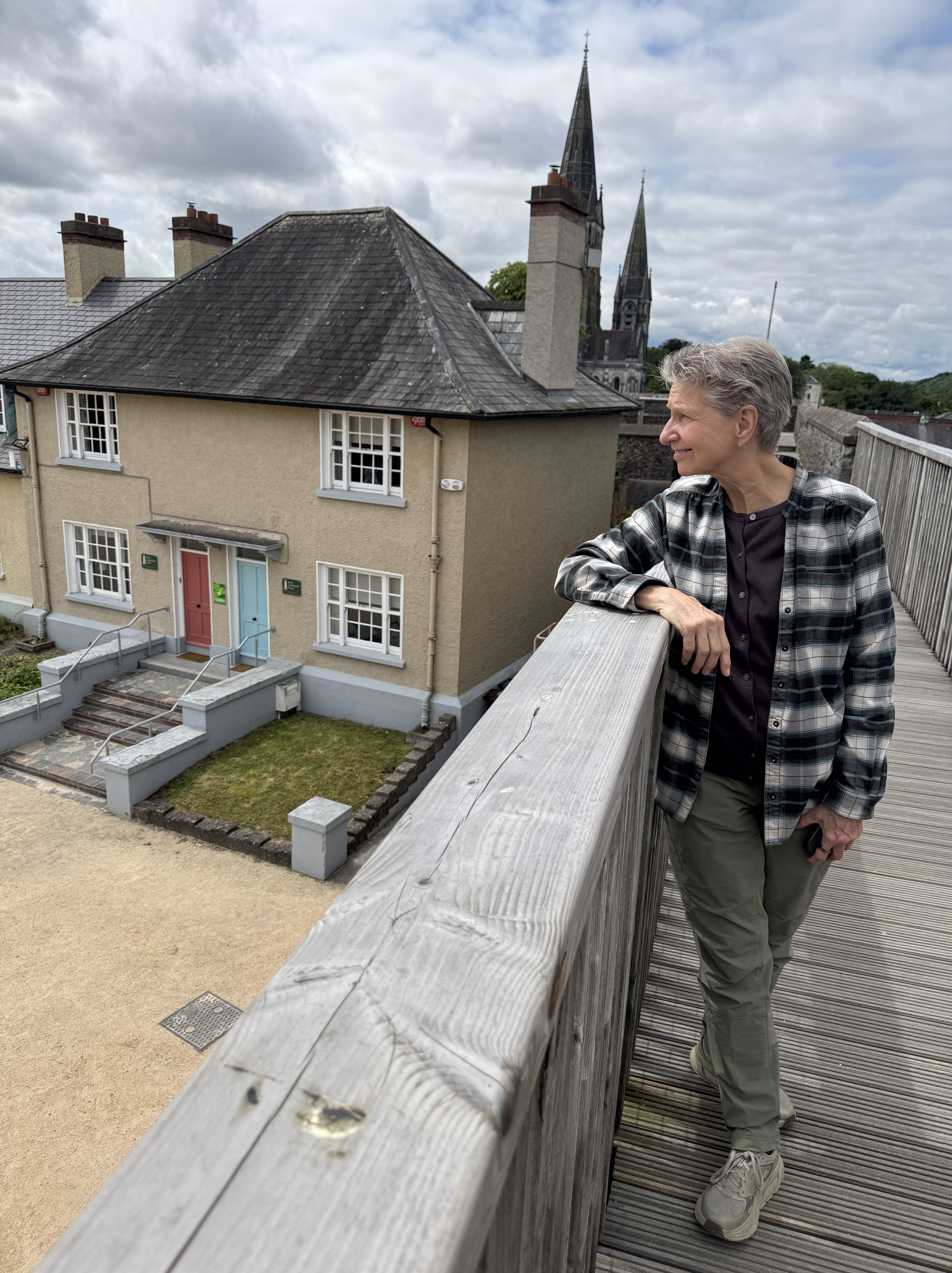
We stayed in an historic accommodation in the old Elizabeth Fort, first built around 1600 by the English as a way of keeping the local Irish under control. It went through many iterations, later as a prison for Irish women being exiled to Australia and most recently a police station.
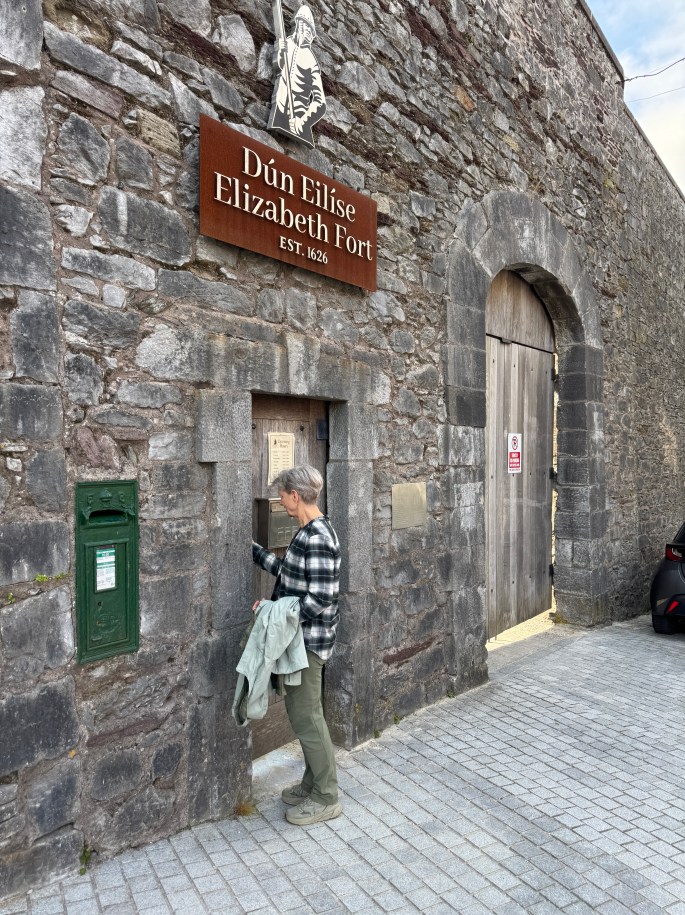

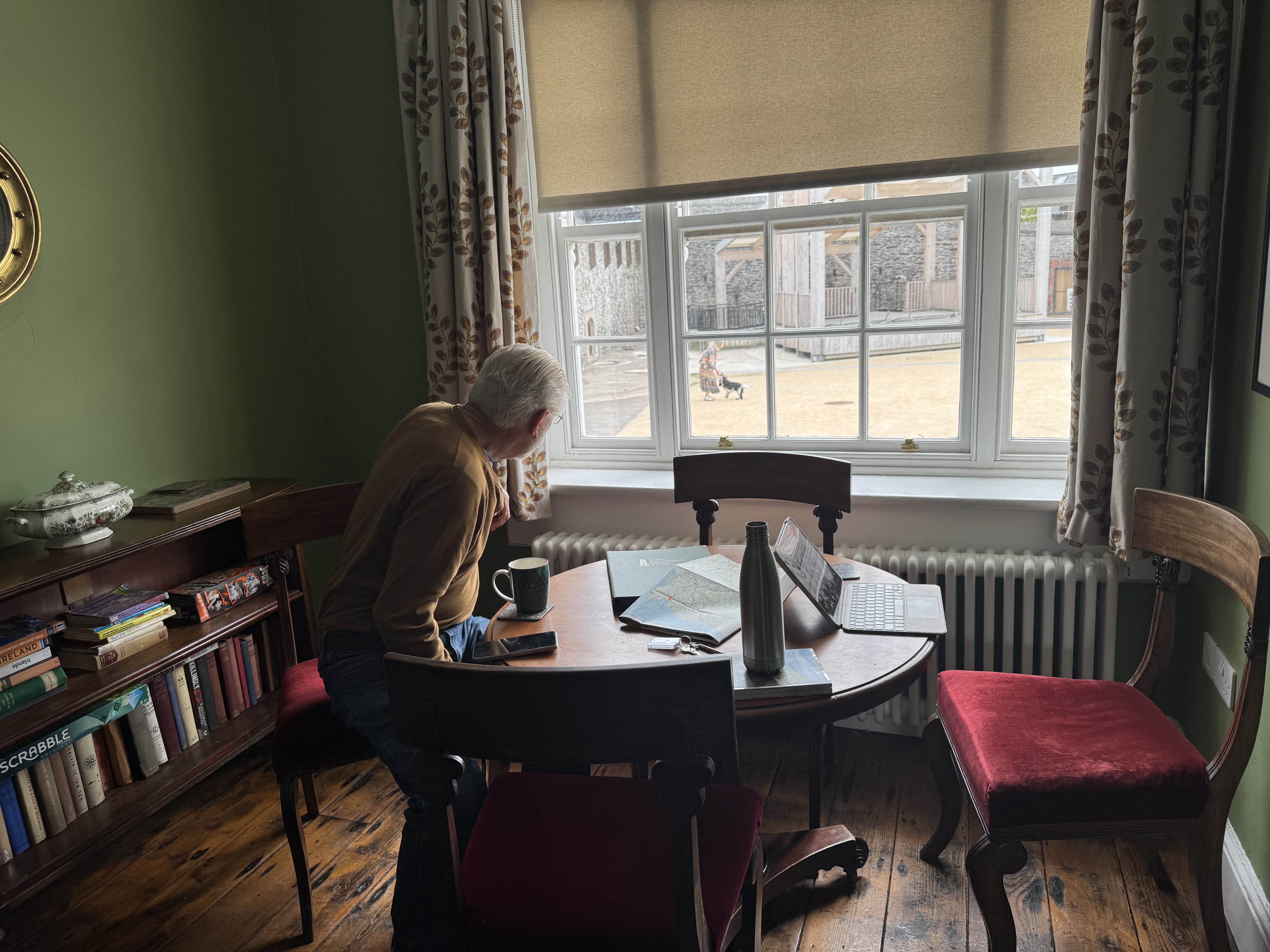
Our room inside the walls dates from the police-station era…
Interesting history – the tray in which these cannonballs are stacked was called a “monkey”. It is made of brass. The cannonballs themselves are made of iron.
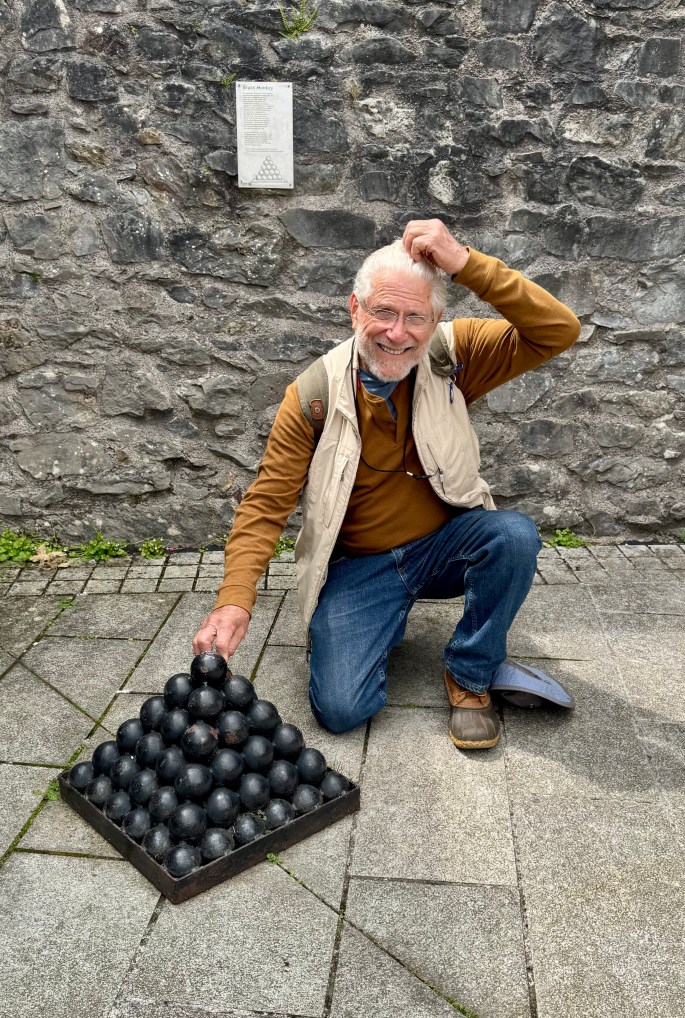
One of metal’s properties is that it contracts in very cold temperatures; some metals are more susceptible and thus contract faster than others. When freezing temperatures were achieved, the brass tray would contract more quickly than the iron cannonballs and the lowest level of ammo would pop out of the tray, collapsing the pyramid. This supposedly led to the saying, “cold enough to freeze the balls off a brass monkey”.
Fun fact or fabrication? Of course they couldn’t tell this story if it wasn’t true.
All for now as we continue on our semi-circumnavigation of the Emerald Isle.
 Travels with Henberta
Delightful post – love the expressions on your faces!!
LikeLike
Hi Jazz! Hope all is well with you….. thanks for checking in! Robbie
LikeLike
My mom got me using that phrase and everyone looks at me sideways when I do. You got the origin spot on! It’s just a little much to explain to Southerners….
LikeLike