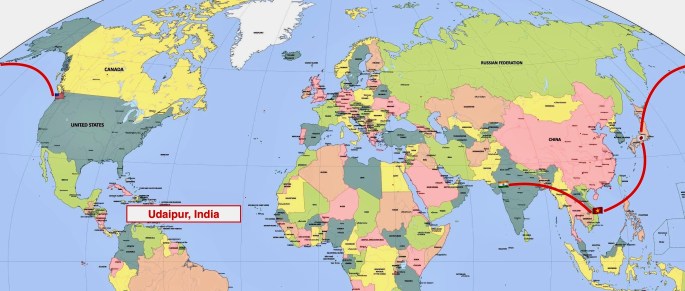
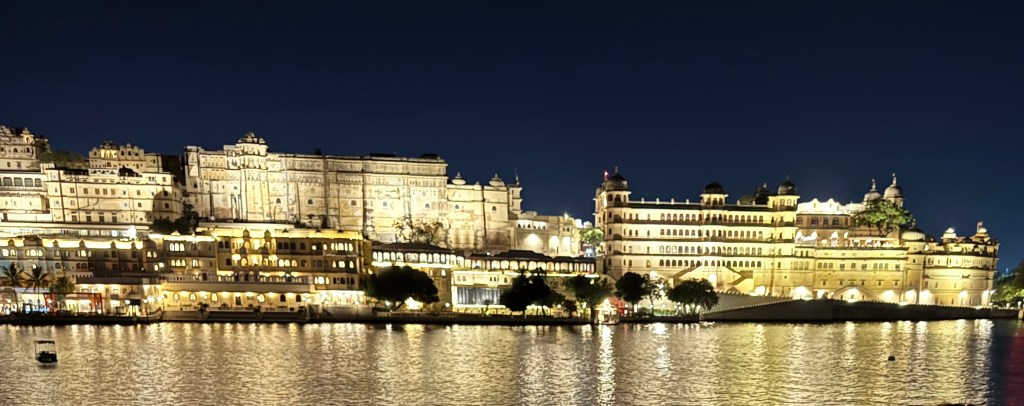
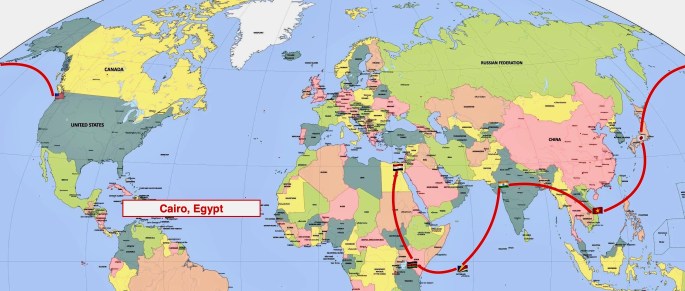
Udaipur is a bustling city in a lake region (some of the lakes man-made) where an 18th-century maharana established a palace complex and seat of power.
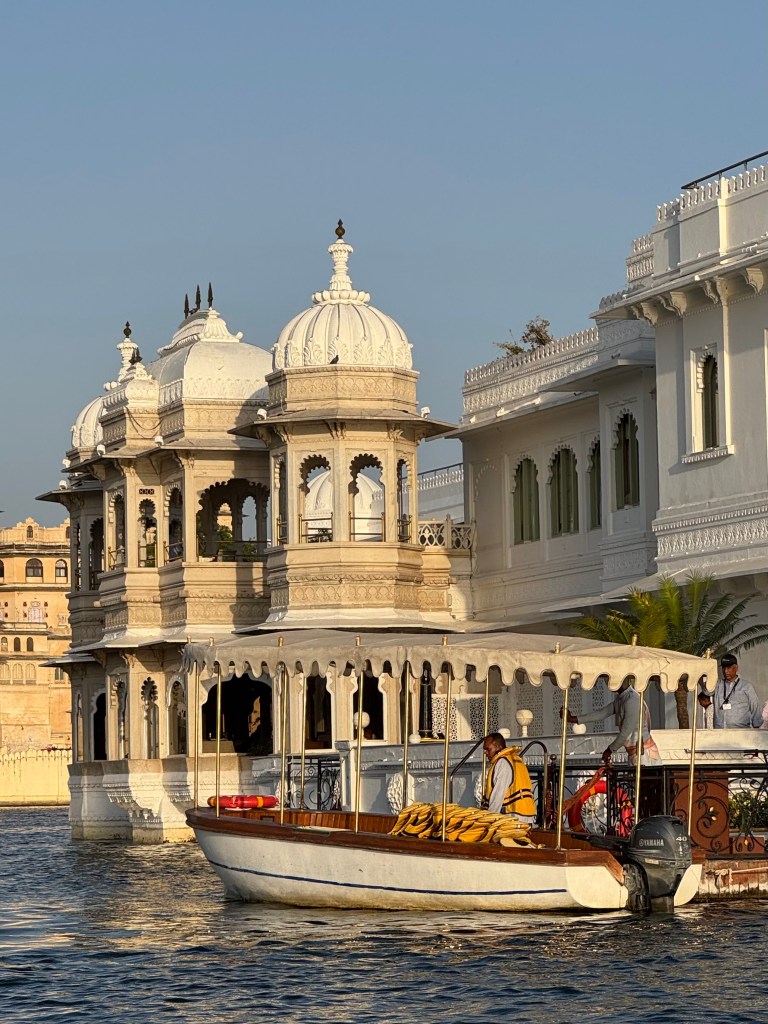
The palace complex is almost a kilometer long…. It seems to be floating, but is actually built on top of hills that rise above the water level.
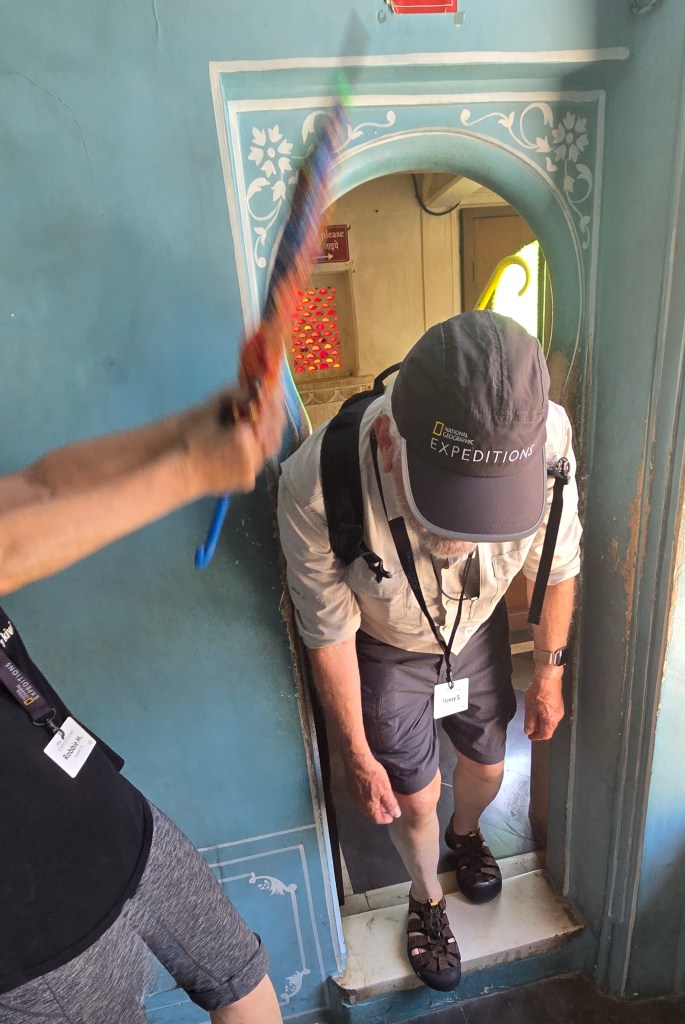
The doors in the palace buildings are very small…..especially those leading to the private apartments of the king and his harem. The guide explained that this is not because people were smaller then…. Instead it is a defensive strategy. Infidels who attempt to invade are forced to bend over as they charge through; the maharana’s soldiers wait on the other side of the door with a scimitar and a basket to lop off the interloper’s heads, one by one!
(In this part of India, the title Maharana means “Great King”; elsewhere in India the term Maharaja is common and means pretty much the same thing.)
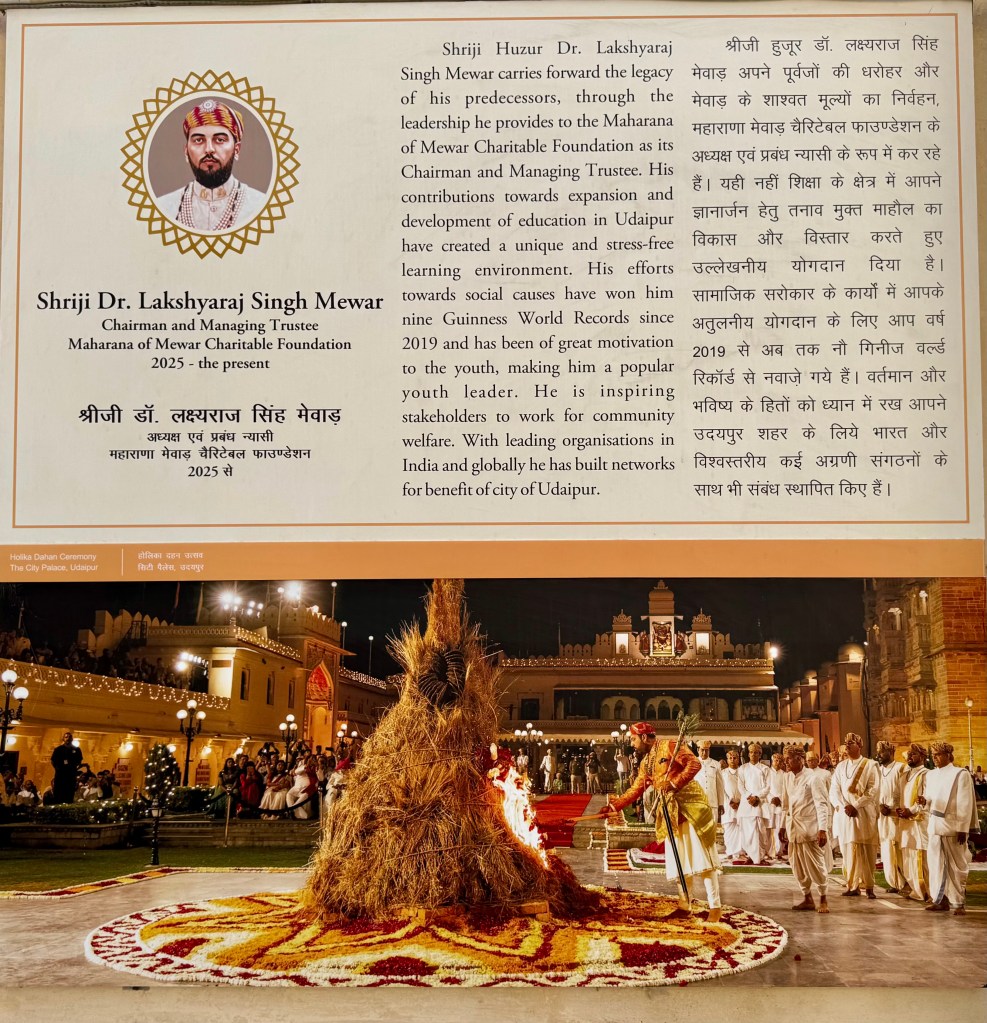
A shout-out to the current maharana, who has served in that capacity since his father’s death a year ago….. Although his title is largely symbolic, he leads a large foundation dedicated to community welfare. And has been so successful that he has received nine Guinness World Records for his charitable activities since 2019!
The shores of this lake are very popular with local visitors as well as foreigners….
The Taj Palace hotel was the “summer palace”, built on a rocky outcropping in the middle of the lake.
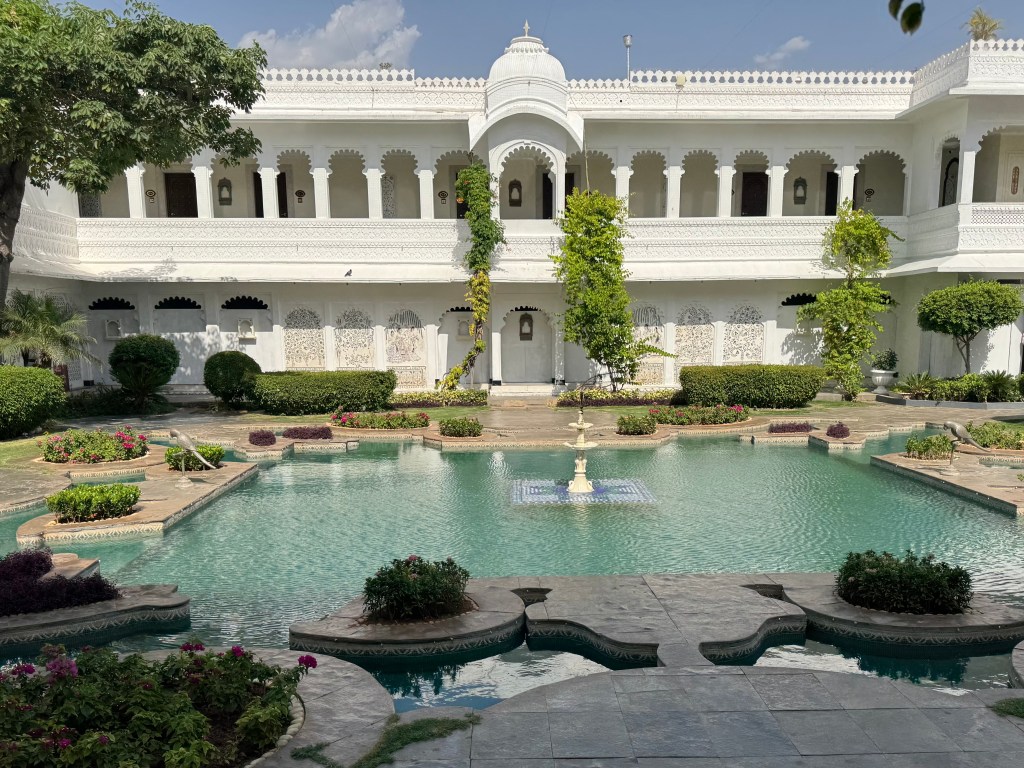
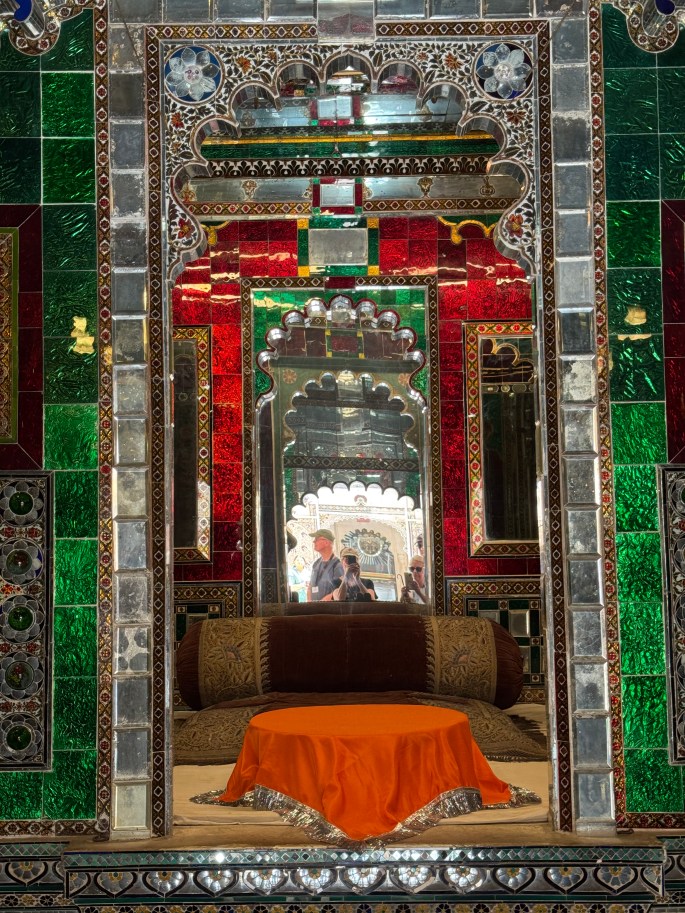
This interior courtyard served as the maharana’s throne room.
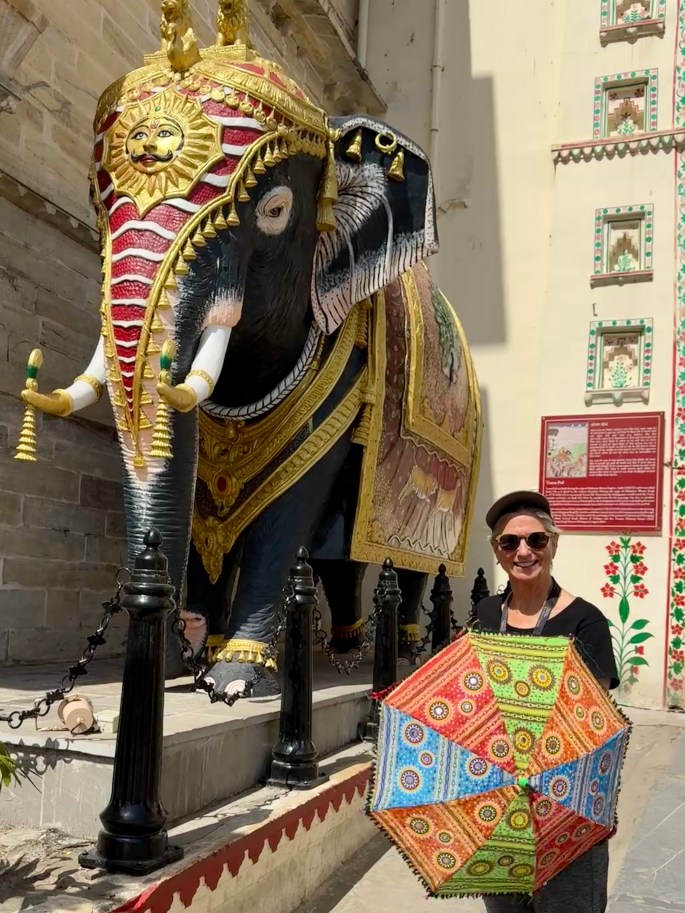
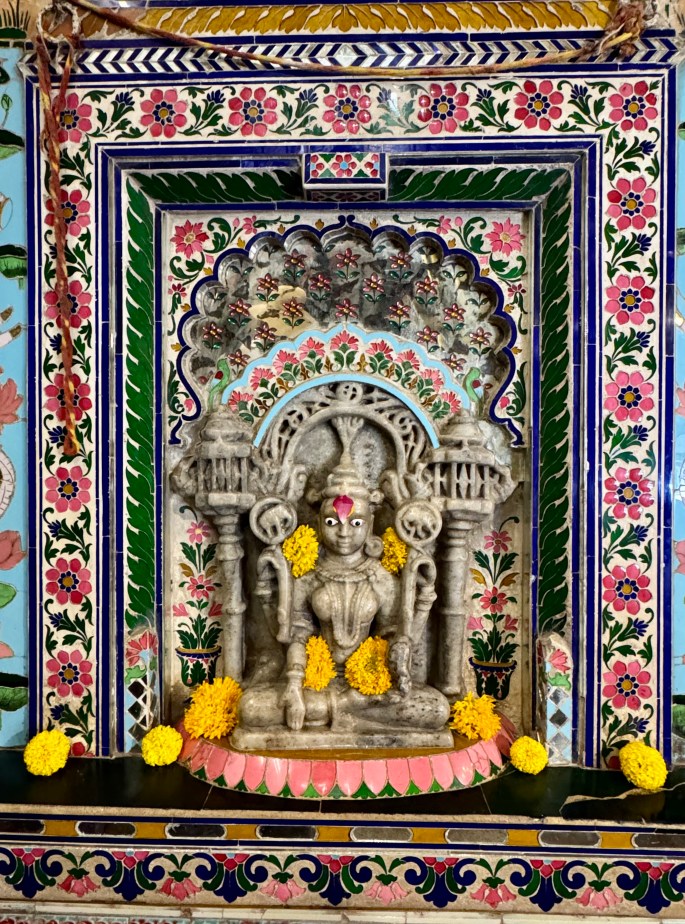
The most striking impression from our short sojourn in India is the obvious love of color and shiny things reflected in the decor throughout both royal accommodations and public places.
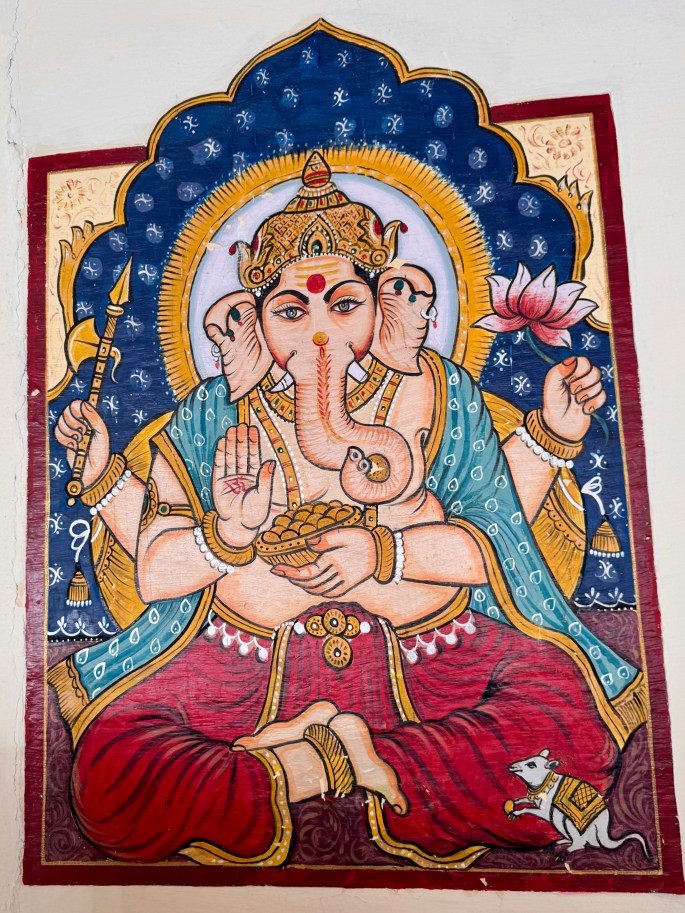
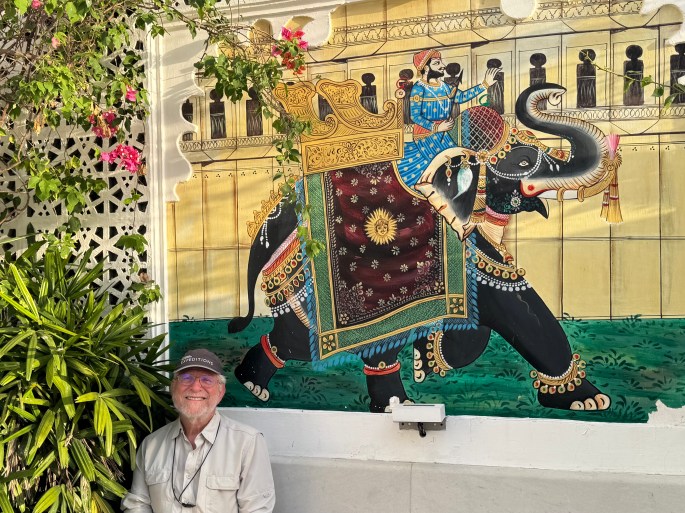
Ganesh, the elephant-headed god of new beginnings, wisdom and prosperity.. obviously a very popular guy!Actual elephants are also revered, symbolizing strength, divinity, high intelligence and good luck… what else could you need?
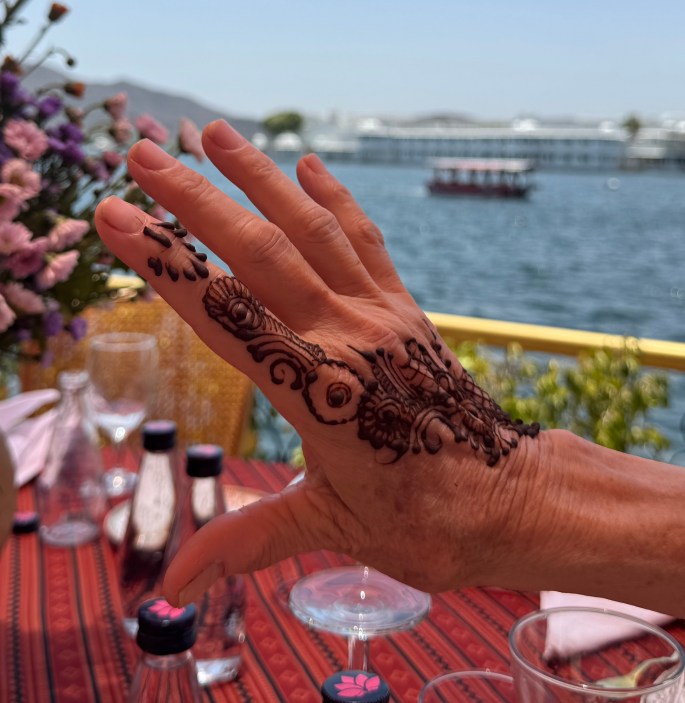
Henna is used for skin decoration…..
(I didn’t realize that henna was so thick – the chunks fell off after an hour or so, but the underlying stain will apparently last for quite some time.)
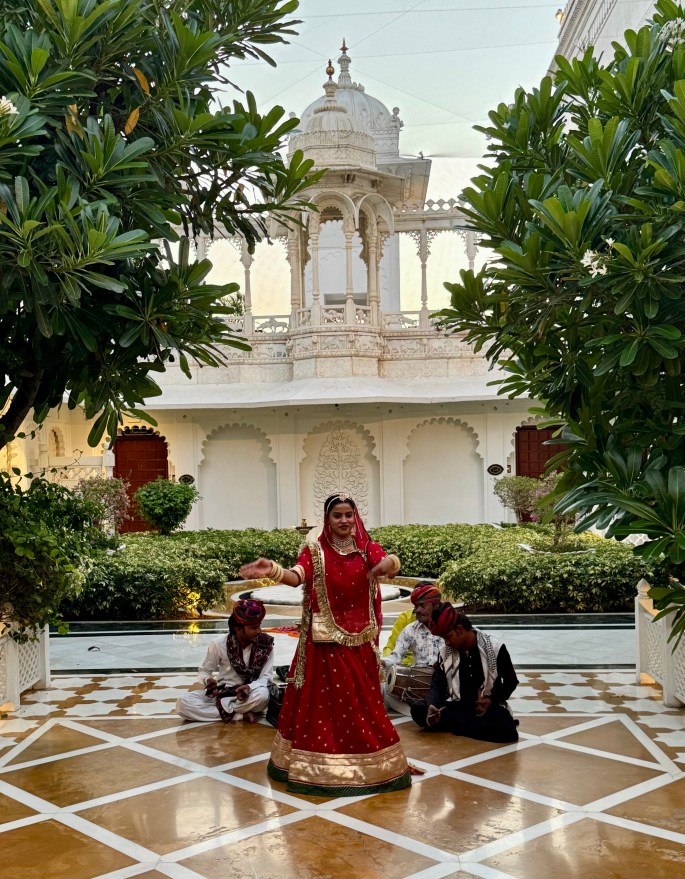
Dancers also wear bright colors, with music and movement adding to the spectacle.
This guy was very cool – balancing a spinning bicycle wheel on his head without skipping a beat!
A quick and unabashedly sanitized sampling of India – our drives to the airport through city streets showing another whole country filled with small marketplaces, storefronts, public parks, schools, businesses…. lots and lots of inhabitants – and yes, piles of trash, stray dogs and cows, street vendors and many reminders that India has the largest population of any other country in the world, at 1.4 billion people. A rich stew of humanity.
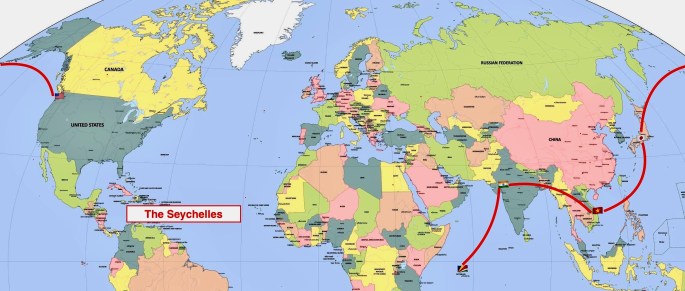
Onward we go to our next destination – the thinly-populated island nation of The Seychelles.
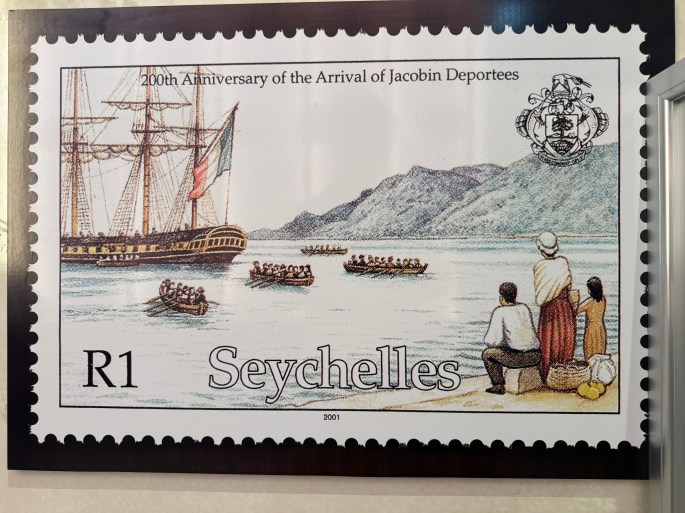
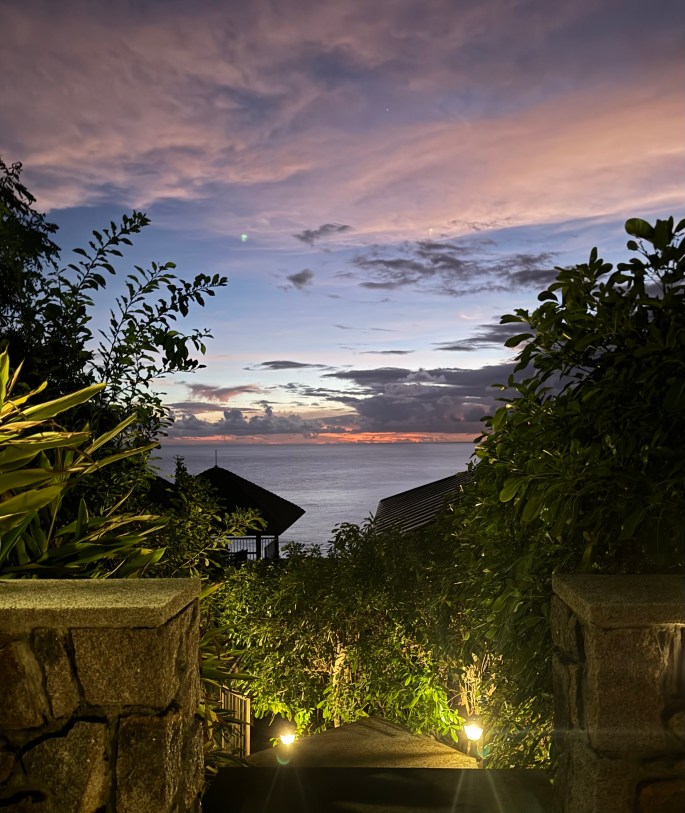
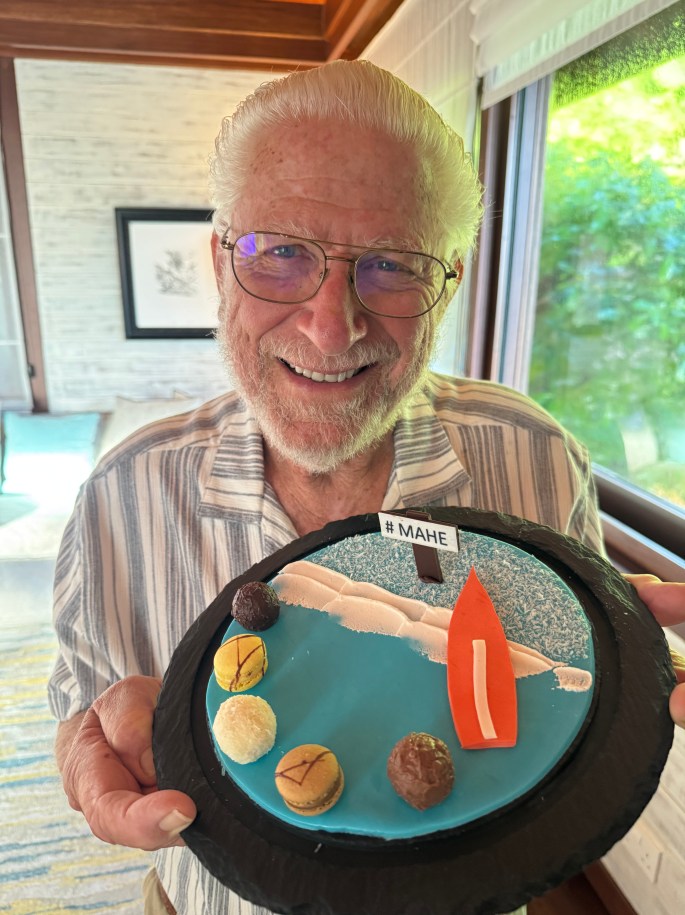
The Seychelles is a nation of 115 islands with only 110,000 people. It was unpopulated until the mid-1700s; then claimed first by the French, later by the English; and has now been enjoying independence for 50 years.
Just a few images from our short stay in this tropical paradise.
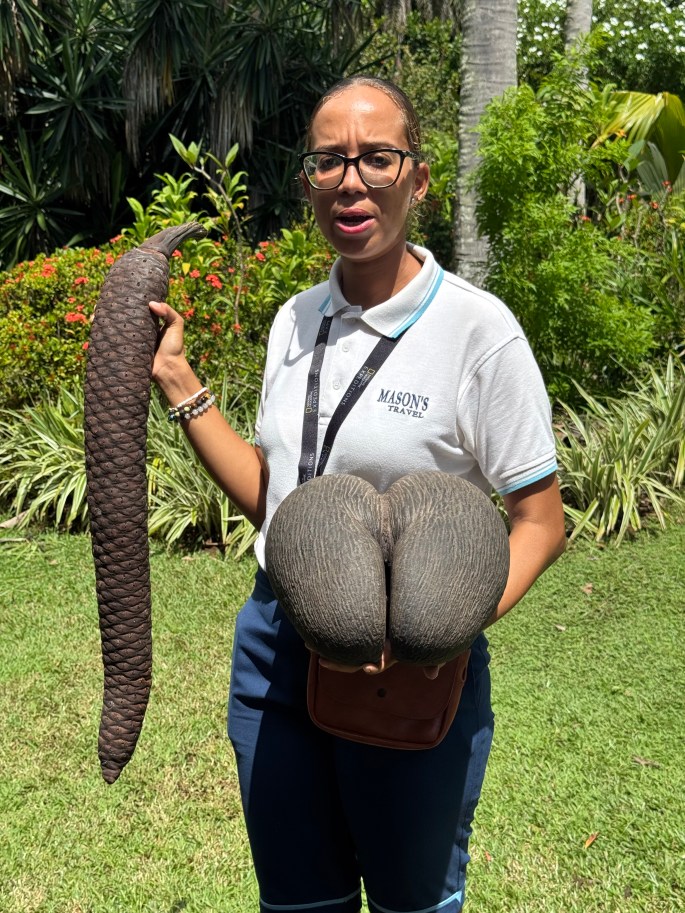
The Seychelles is presumably the only place where you will find the coco de mer variety of palm tree….Quite distinctive!
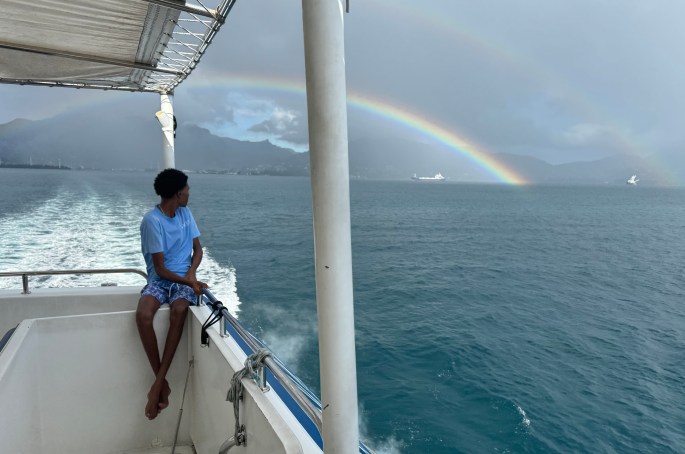
A catamaran cruise to a nearby island….
And they have turtles…. Similar to those on the Galapagos.
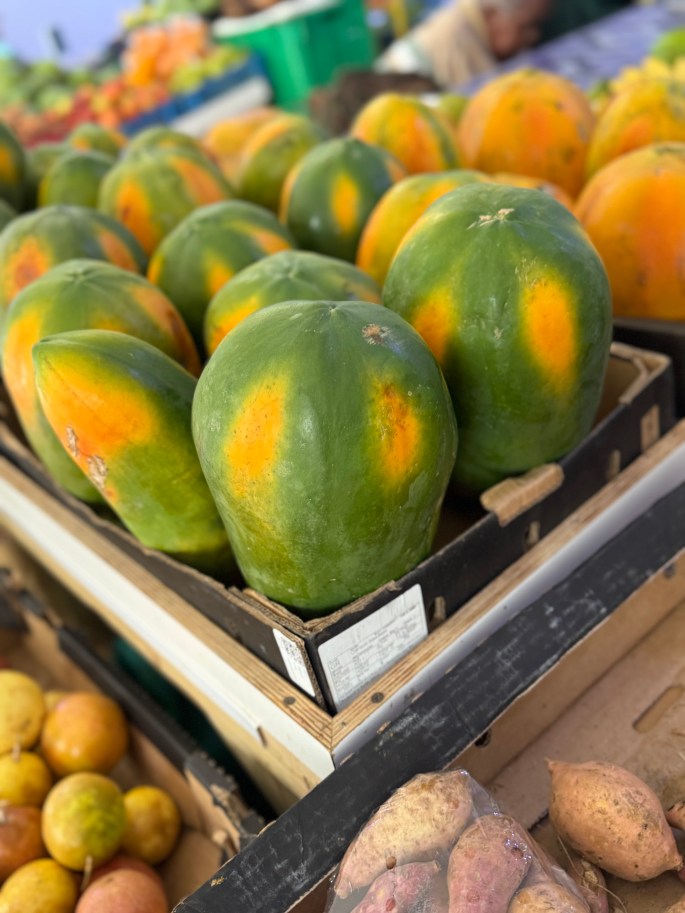
And of course sweet and colorful fruit.
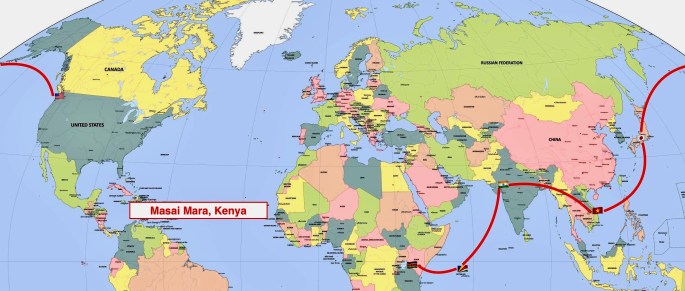
Friendly people and natural beauty…but we must leave very soon for a safari in Kenya!
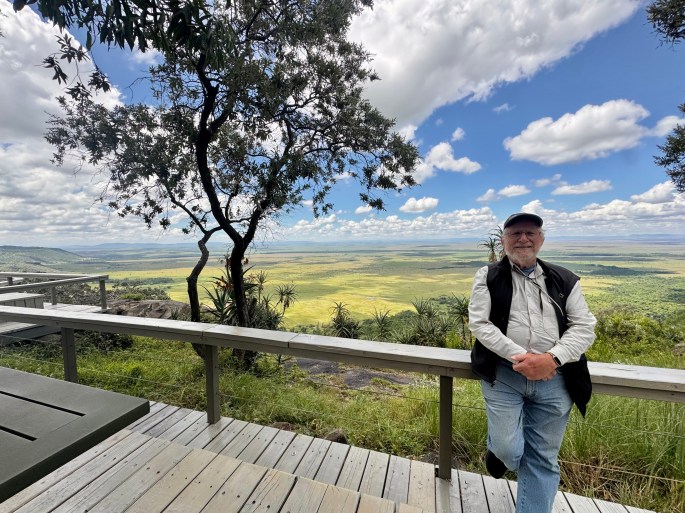
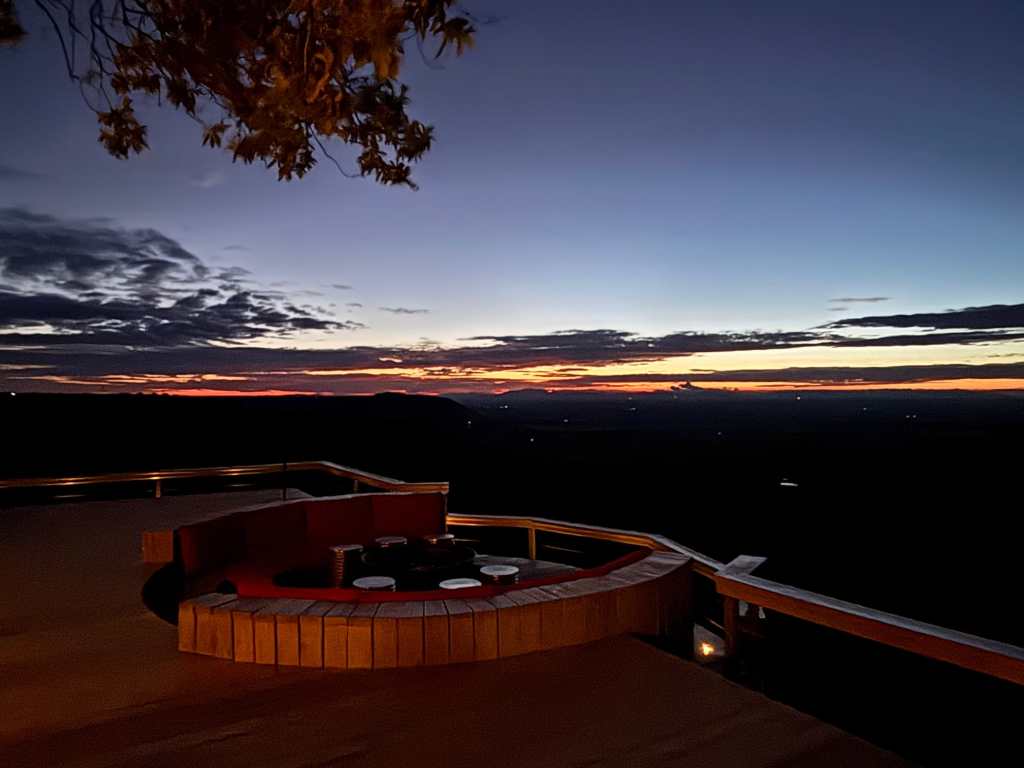
I count more than 26 elephants on the plain far below our cabin on an escarpment overlooking the great Rift Valley. They have abundant water, are well-fed and have lots of babies. Watching them lumber peacefully along in harmony with the universe soothes the soul.
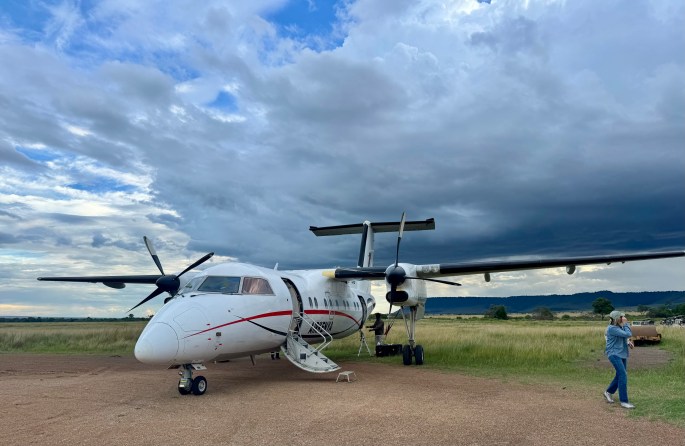
Bush planes service the Maasai Mara reserve from Kenya’s capital of Nairobi.
(That’s famed paleontologist and anthropologist Louise Leakey debarking the plane.)
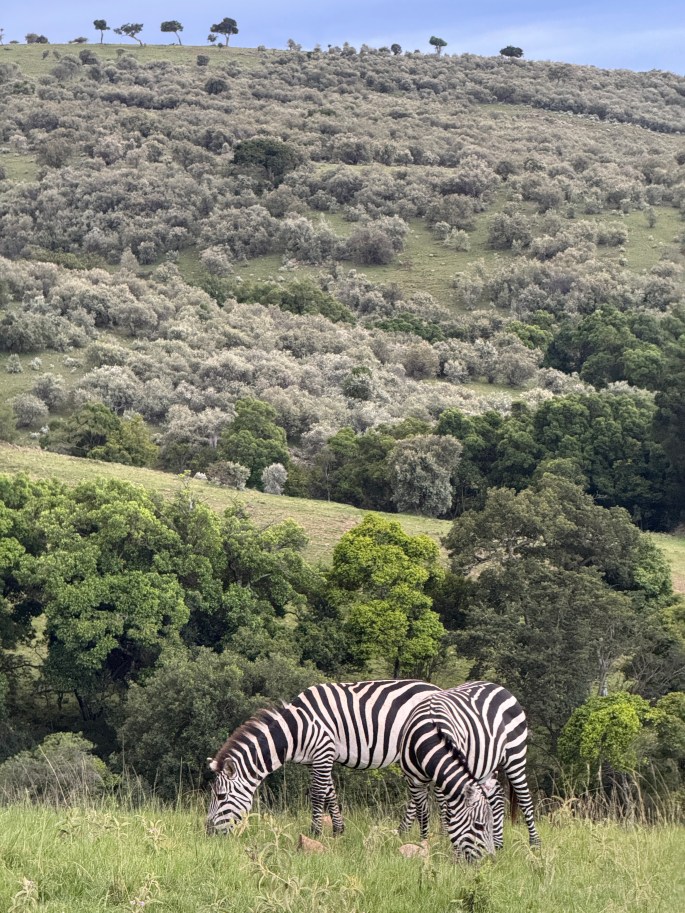
With plenty of rainfall, the Mara is fresh and green… a happy place for its residents.
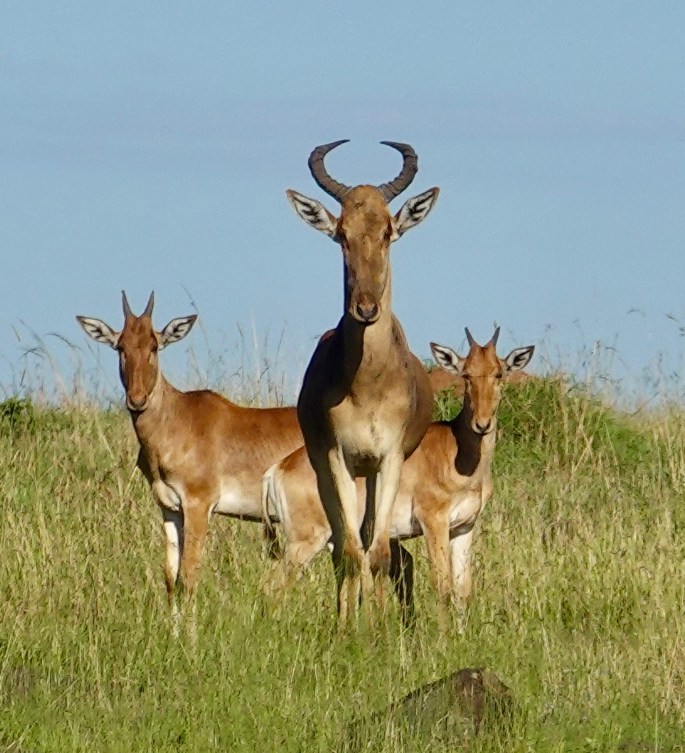
ZebraCurious hartebeest… husband and wives.
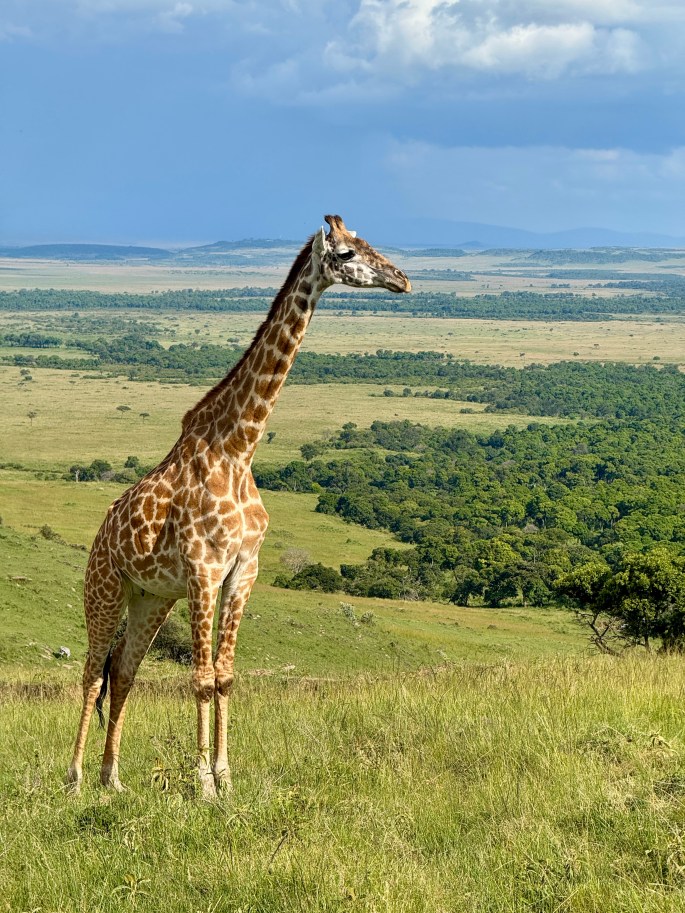
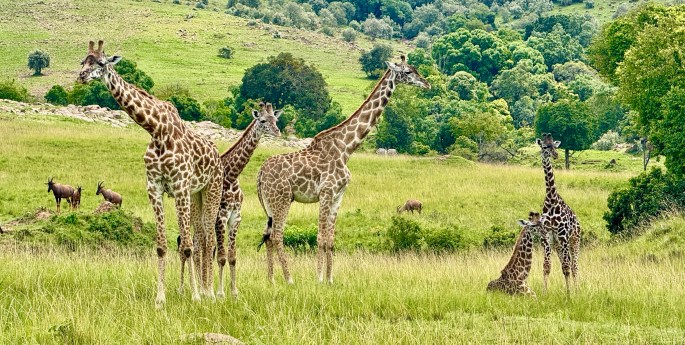
Impala males practicing dominance.Lots of giraffe
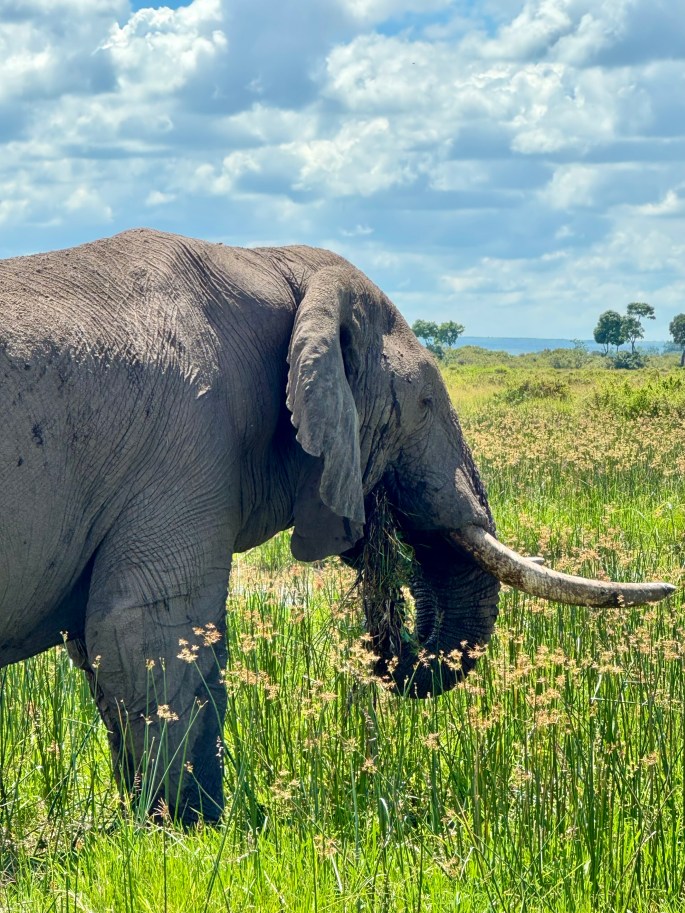
Oops – did I mention elephant?
This little fella had been rolling in mud…. Some of it dried between his toes so he has an itchy foot!
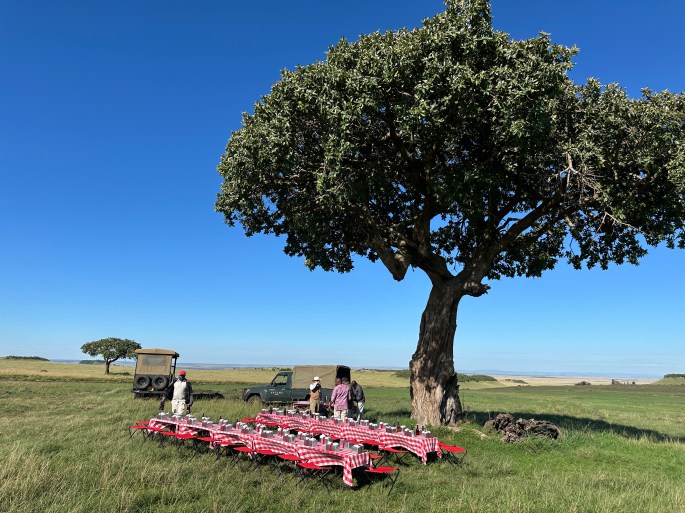
Time for lunch in the bush…..
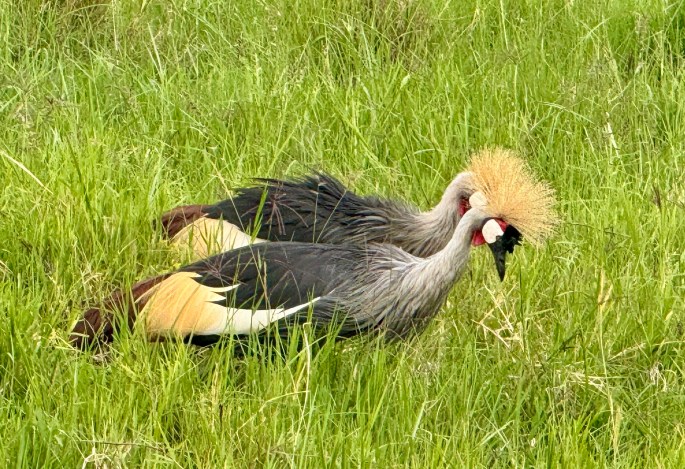
Incredible birds…
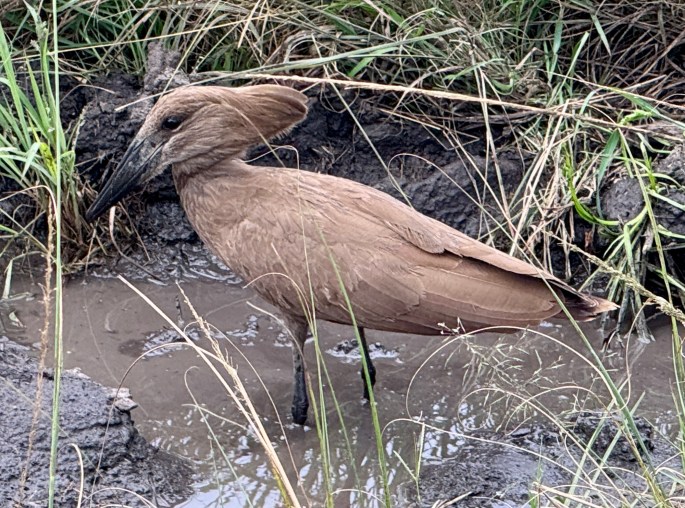
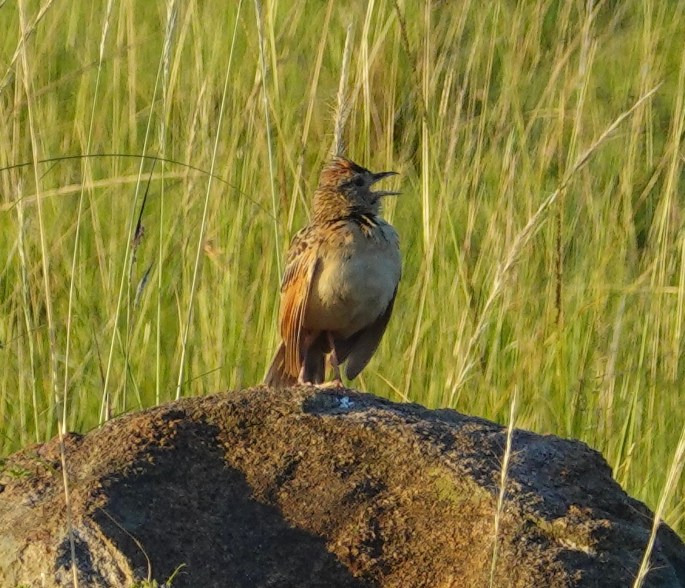
Impressive gray-crowned cranesHammerkop….. his head is not shaped that way….the crest in back is an arrangement of feathers.This guy is one of many birds who unfortunately get lumped into the category of LBJ….. Little Brown Jobs. He is nonetheless singing with gusto.
Big cats, of course….
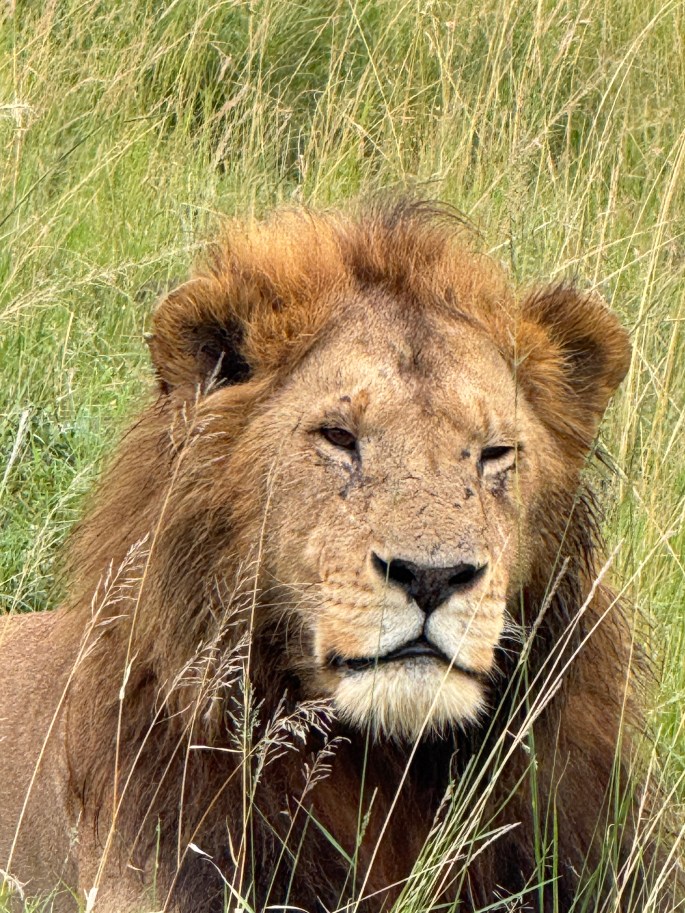
Sleepy lionLazy cheetah
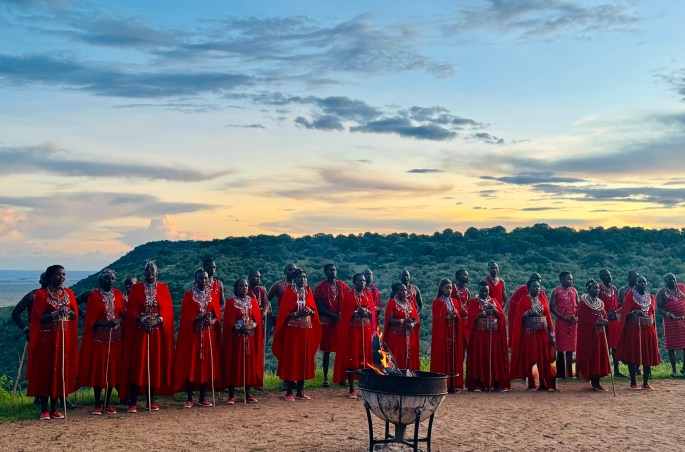
No visit to this part of Africa is complete without a Maasai performance…..
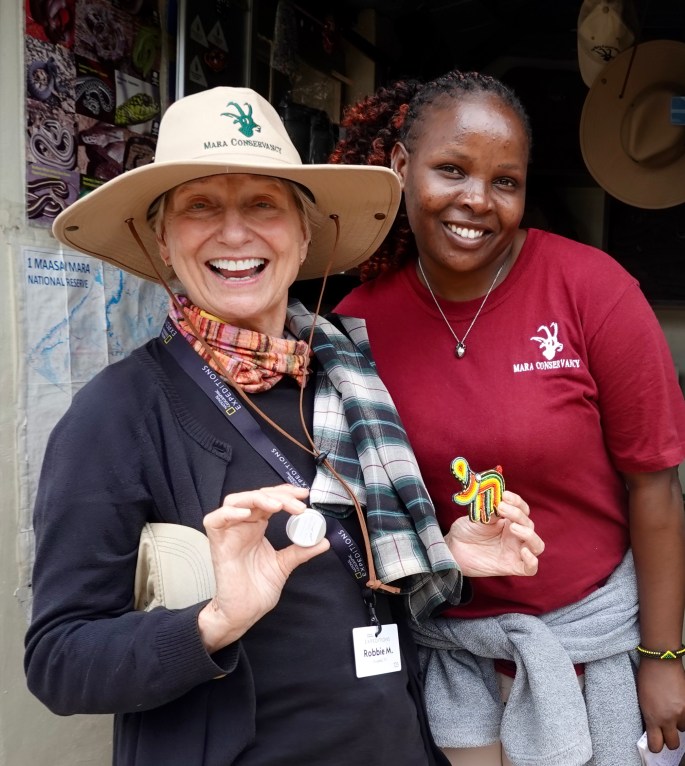
We showed our support for the conservation efforts here with a purchase or two….
A criminally short stay in this breath-taking place, filled with fascinating animals and kind people.
We will have to return to safari before all is said and done, but in the meantime, we head to a completely different part of Africa…… Cairo.
Cairo is crowded, dusty, colorful, fragrant and romantic. Singular in how it captures the imagination… think of minarets, camels, Cleopatra and Omar Sharif….
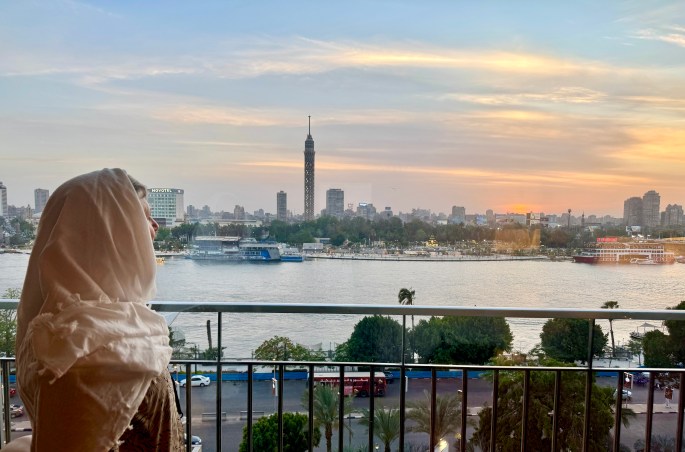
Egyptian civilization has centered around the Nile River through the ages, the source of its richness.
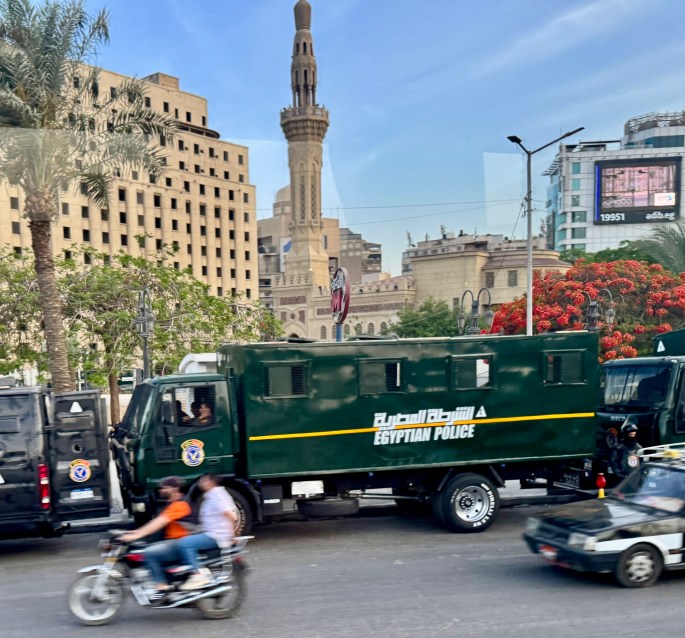
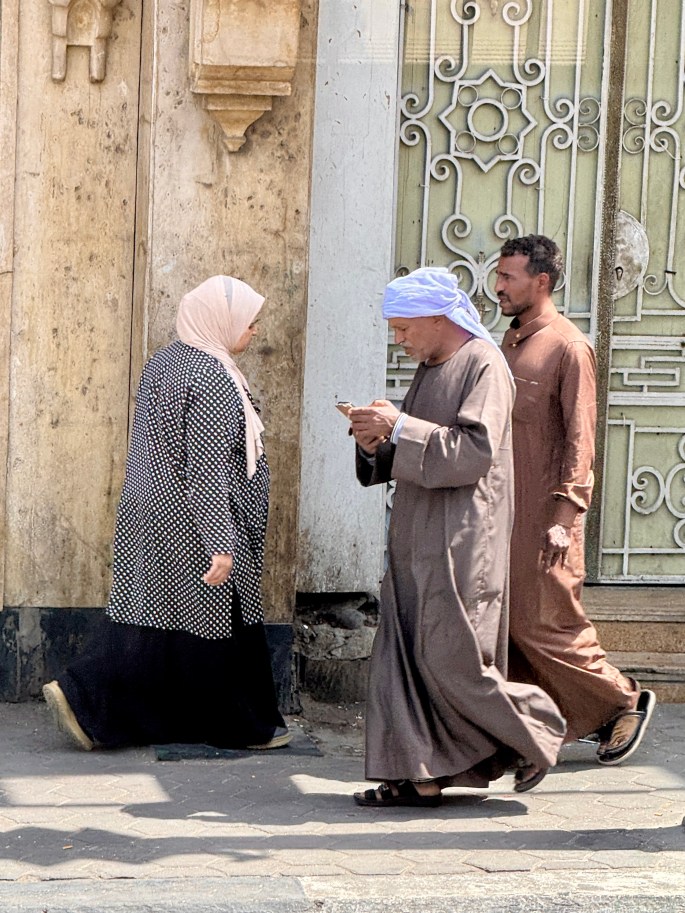
A few street scenes…
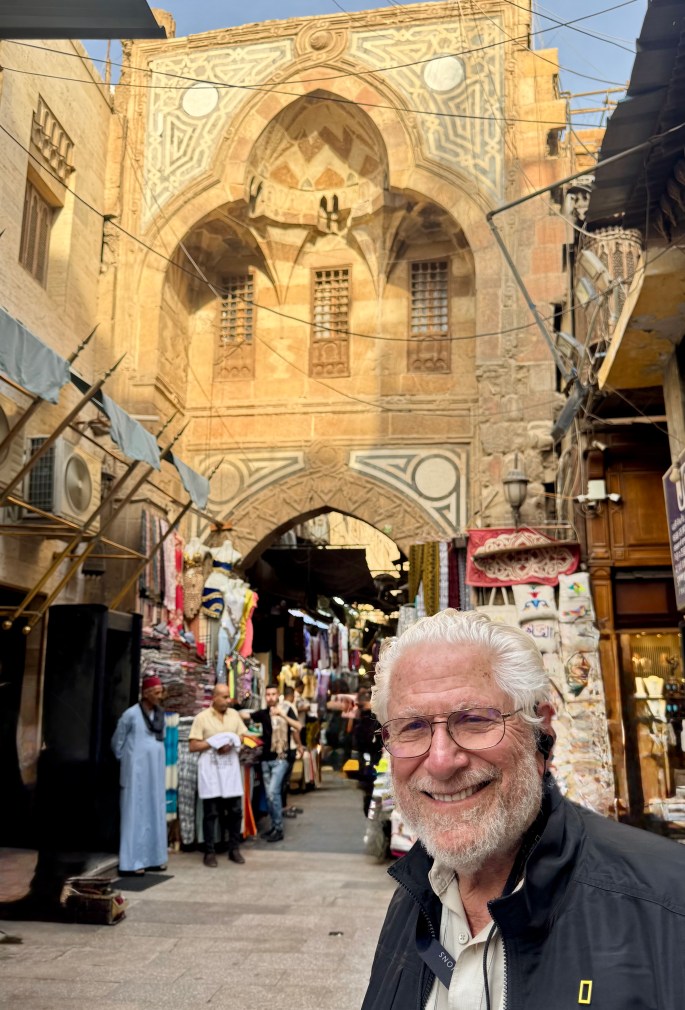
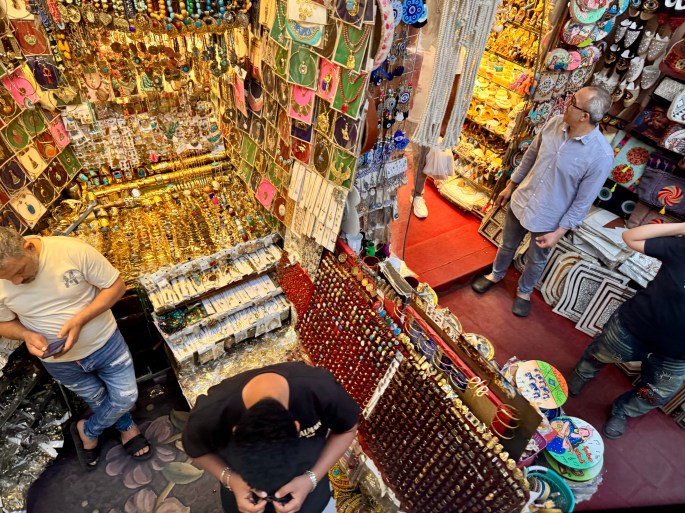
The Khan el-Khalili market was originally part of a palace complex but evolved into a massive bazaar by the 14th century. It is a living part of the city, encompassing religious sites, schools, charity centers… and of course a jillion stalls selling jewelry, textiles, clothing and trinkets.
Henry is the opposite of a shrewd shopper; he adopts a deliberately naive and open manner which is a magnet for the pushy salesmen (all are men and all are pushy), who are delighted to oversell and overcharge him.
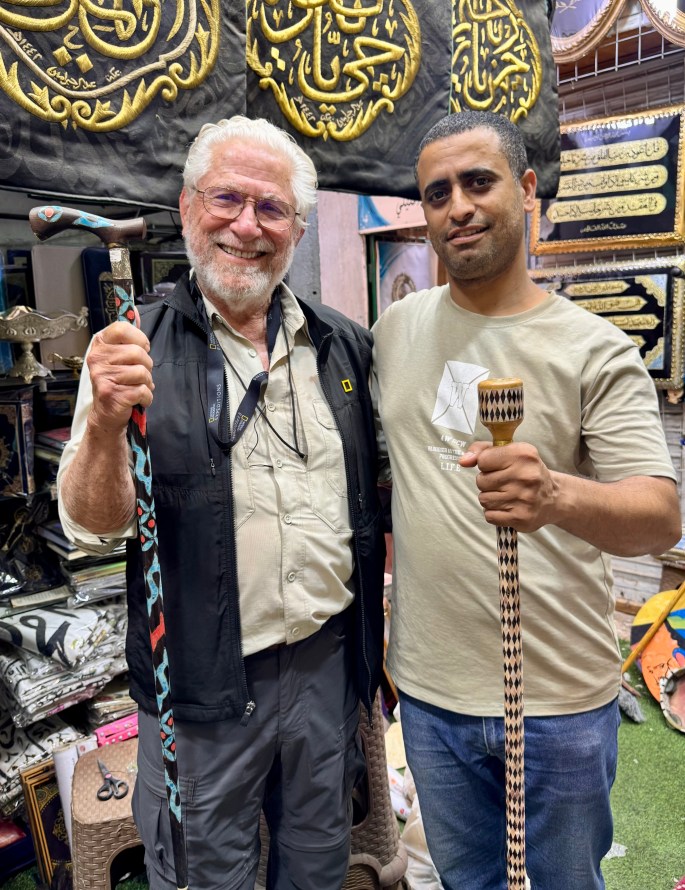
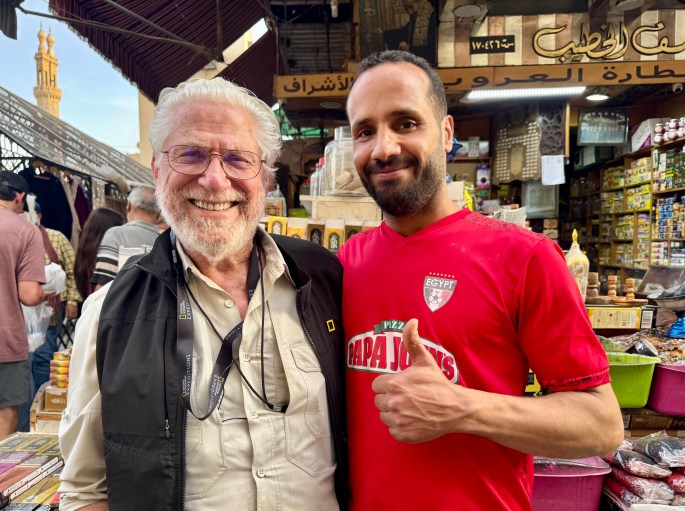
A new walking stick….”hand carved” by this enterprising fellow.Happy incense seller who squeezed us for more than we wanted.
At the end of the day, the amount Henry spends is minuscule compared to the joy all parties experience in the back-and-forth of the deal.
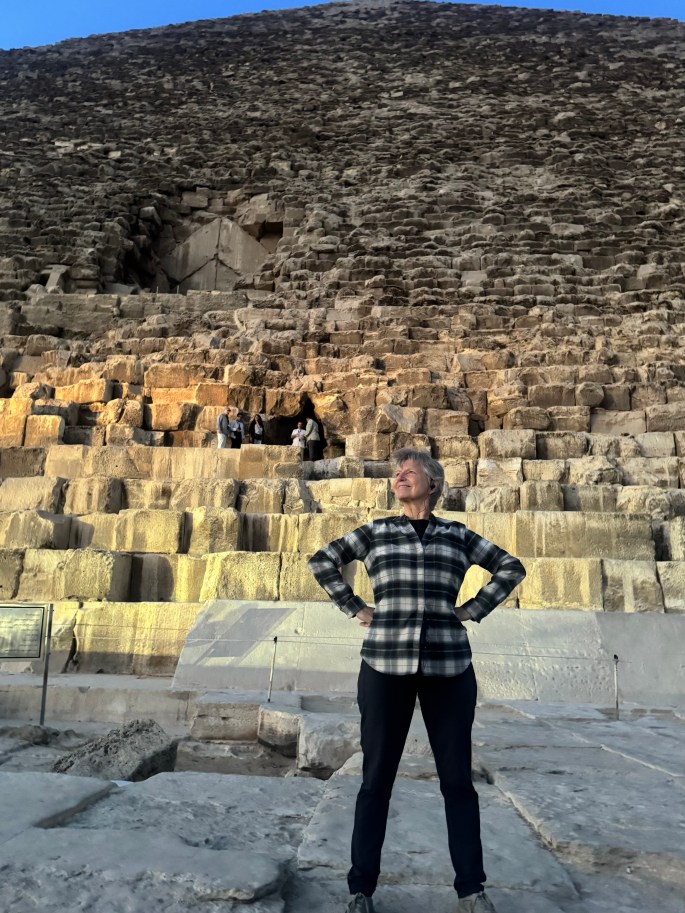
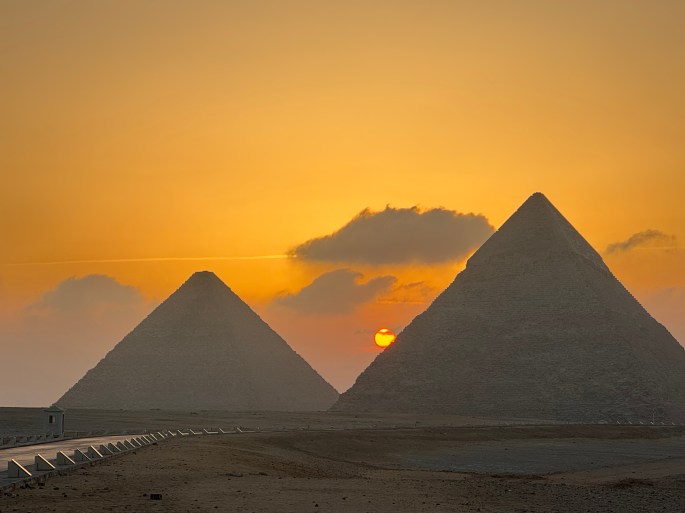
A sunrise trip to the Pyramids allowed us to bypass the visitors who normally mob the site….
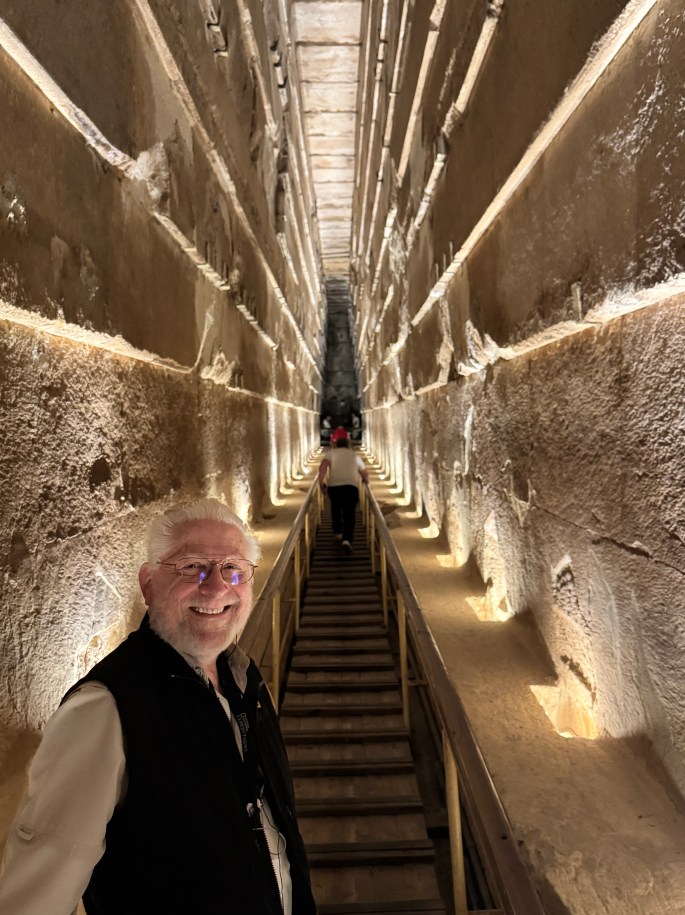
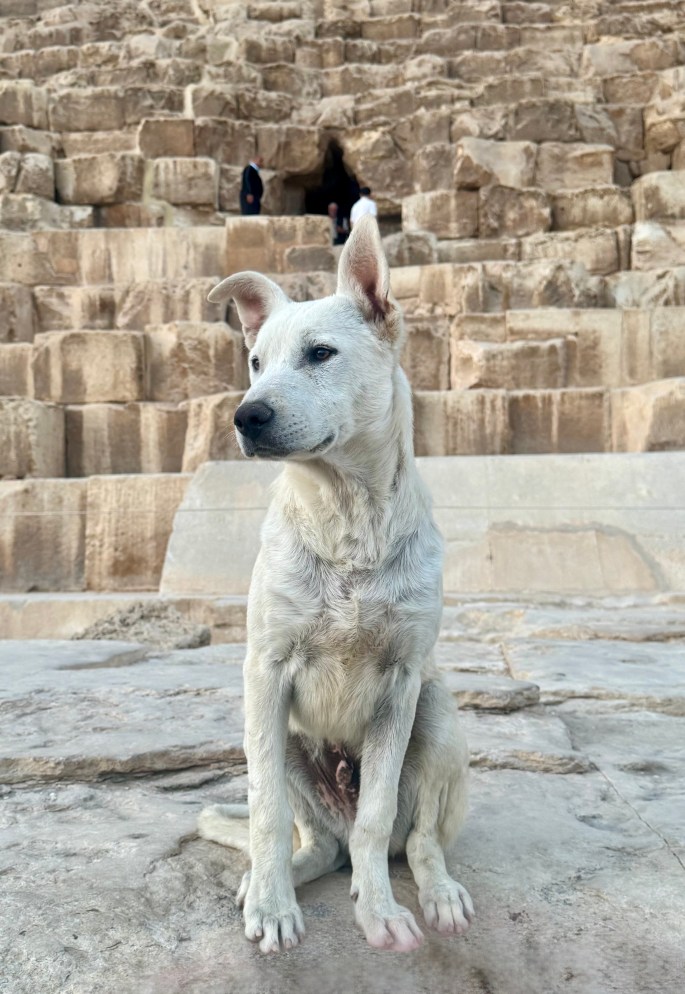
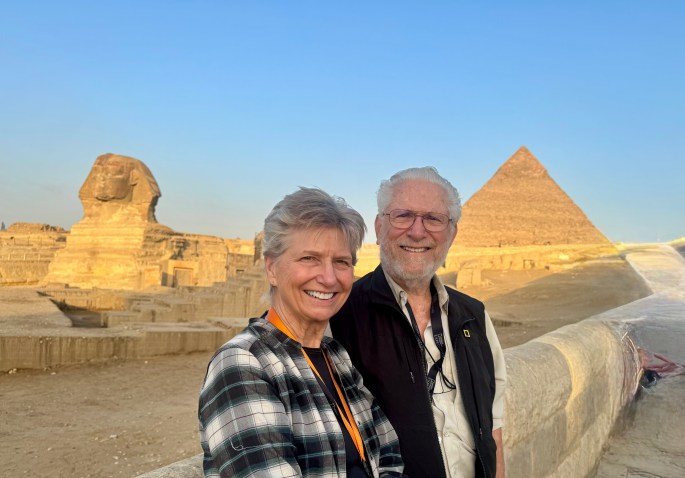
A climb inside the Great Pyramid to a spare burial chamber…..And a peek at the Sphinx.
Saladin, the first sultan of both Egypt and Syria, constructed the Citadel in the 12th century to defend Cairo against Christian Crusaders.
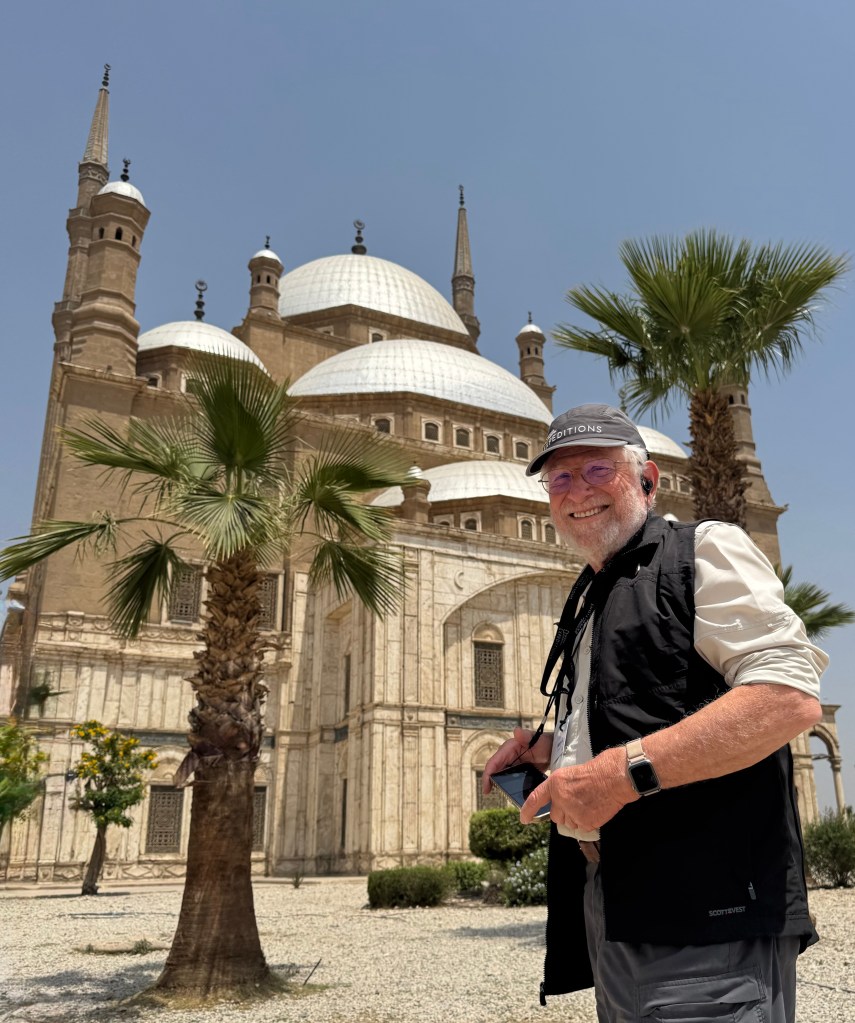
The complex incorporates the Mohamed Ali Mosque. Visitors to the mosque are required to remove their shoes, or else don protective booties.
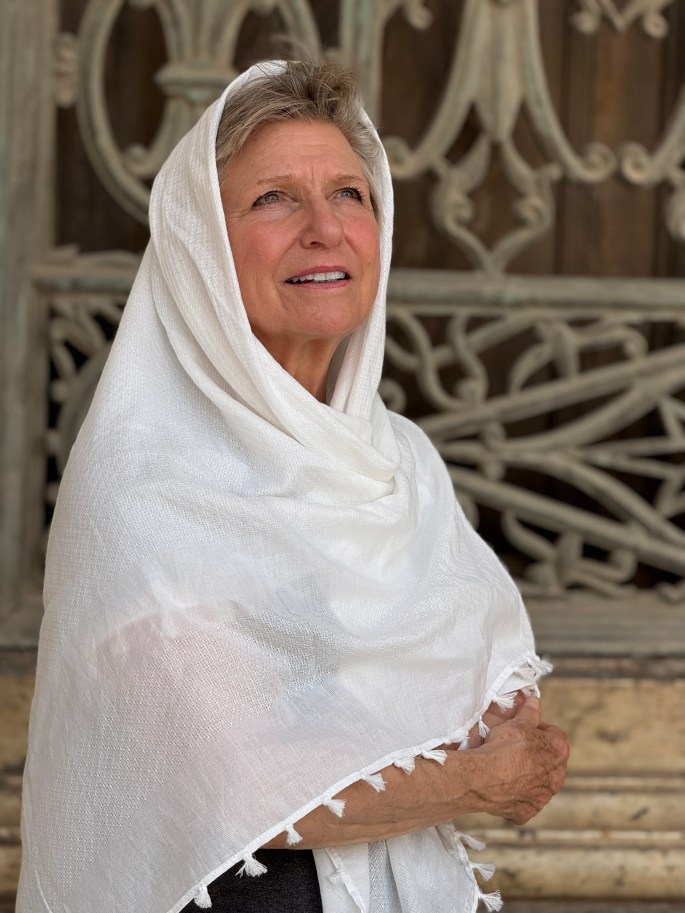
Women are not required to cover their heads, but it is preferred as a sign of respect…
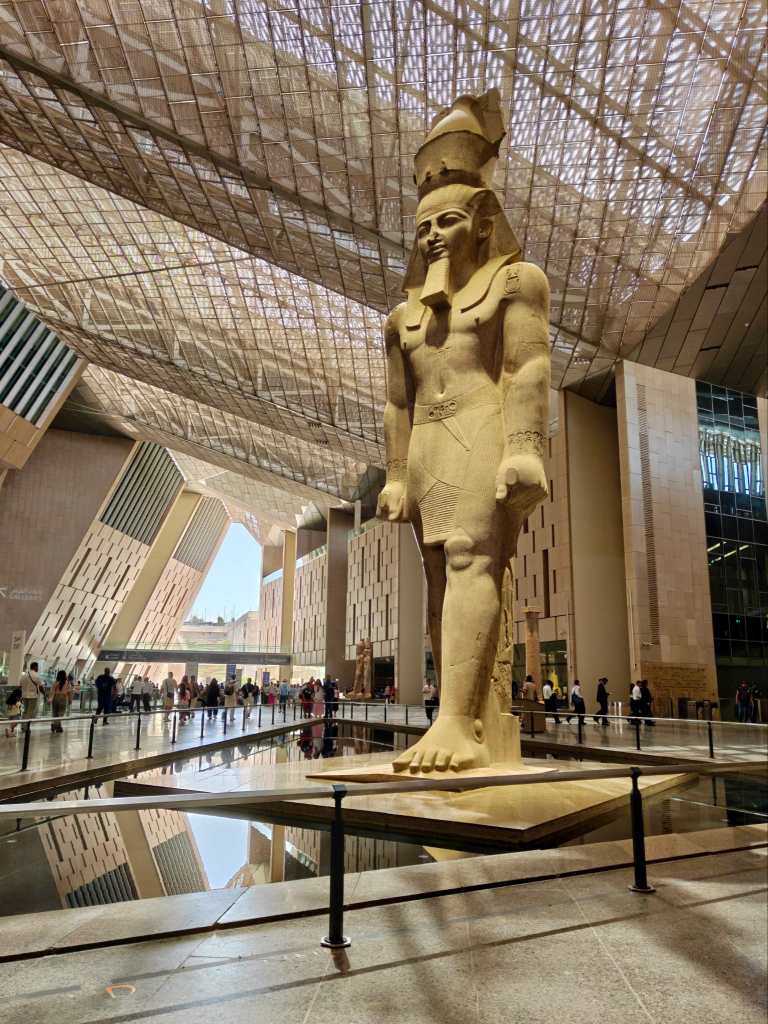
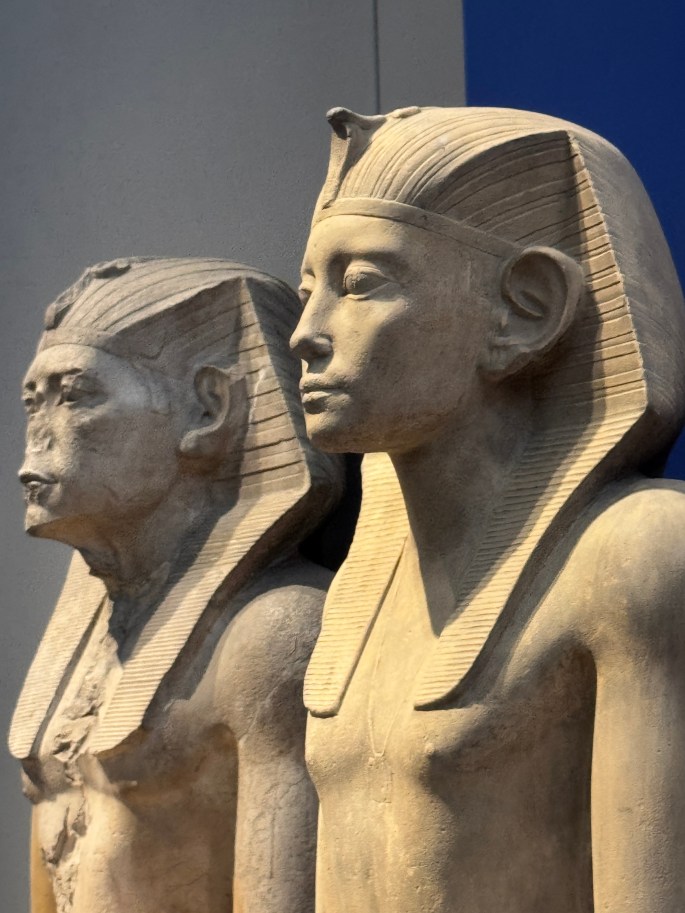
The Grand Egyptian Museum opened less than a year ago after decades of planning and construction. It contains relics of Egypt’s ancient civilization, including the treasures from the tomb of King Tut. It is absolutely dazzling.
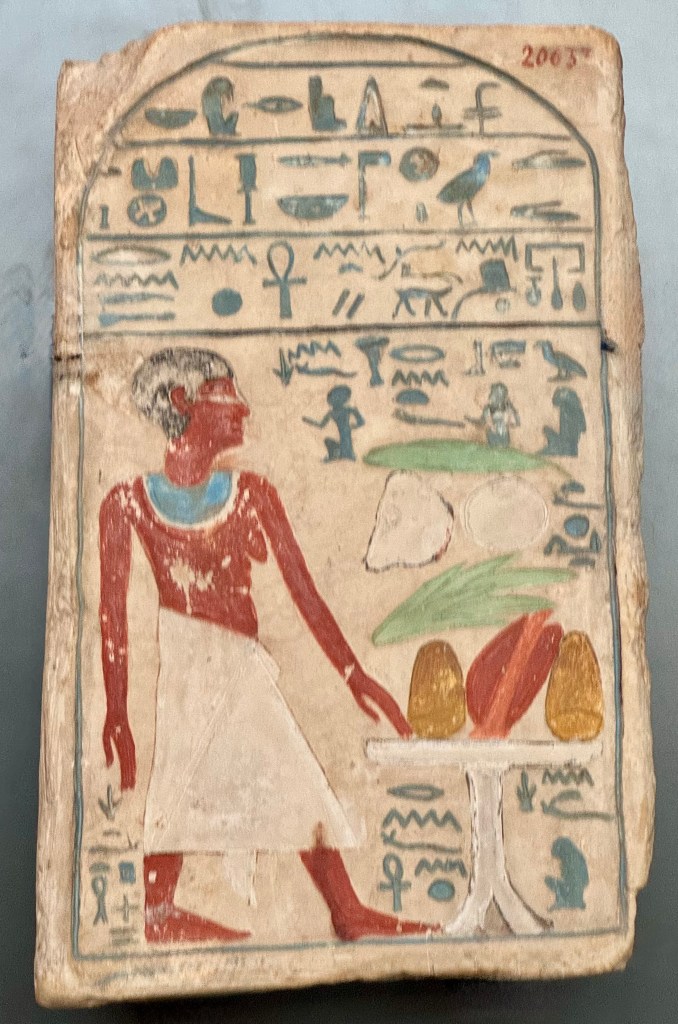
Some of the more humble artifacts are endearing…. Like this tablet with a purveyor of fruits and vegetables.
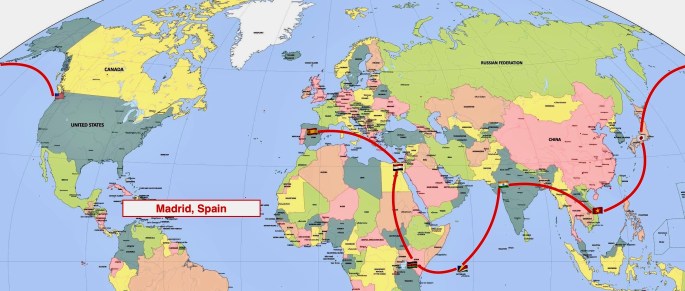
A quick taste of the modern and ancient Middle East….. next stop is the very European city of Madrid.
Madrid combines some of the best aspects of urban environments – colorful but tidy; historic yet with an edgy modernism; peaceful parks alongside vibrant neighborhoods; a fun food culture and a laid-back lifestyle (by many standards….)
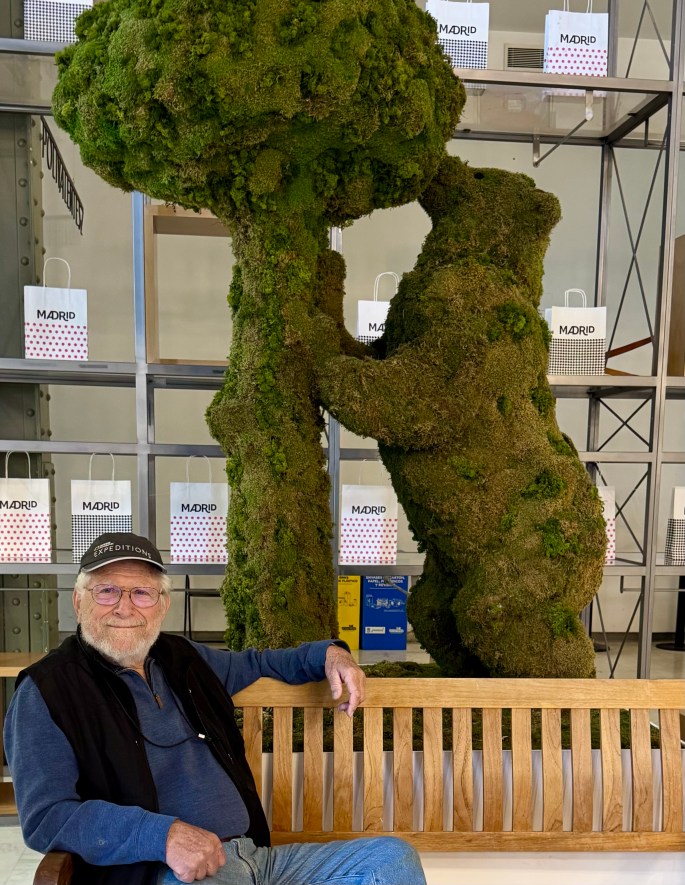
Its heraldic symbol includes a bear eating from a strawberry tree. This relates in a somewhat puzzling way to a thirteenth century agreement between the town council and the Catholic Church over ownership of land. (Apparently, in olden times strawberries grew on trees instead of bushes.)
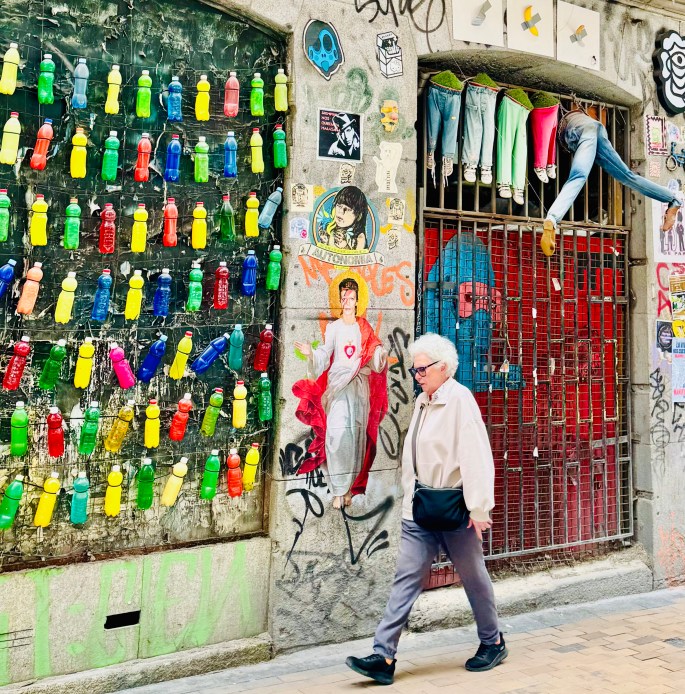
Street art, of course….
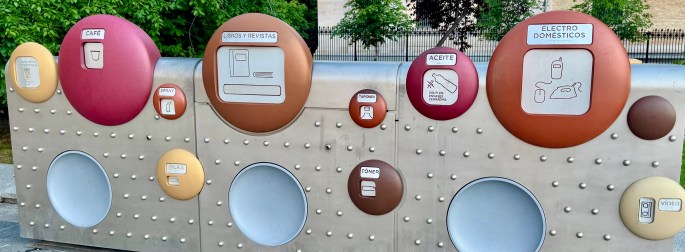
The most comprehensive neighborhood recycling center we’ve ever seen…..
This drop point includes provision for recycling coffee pods, aerosol spray cans, batteries, books and magazines, water bottle caps, oil (only in a closed container), domestic electronic appliances, video cassettes and toner cartridges!
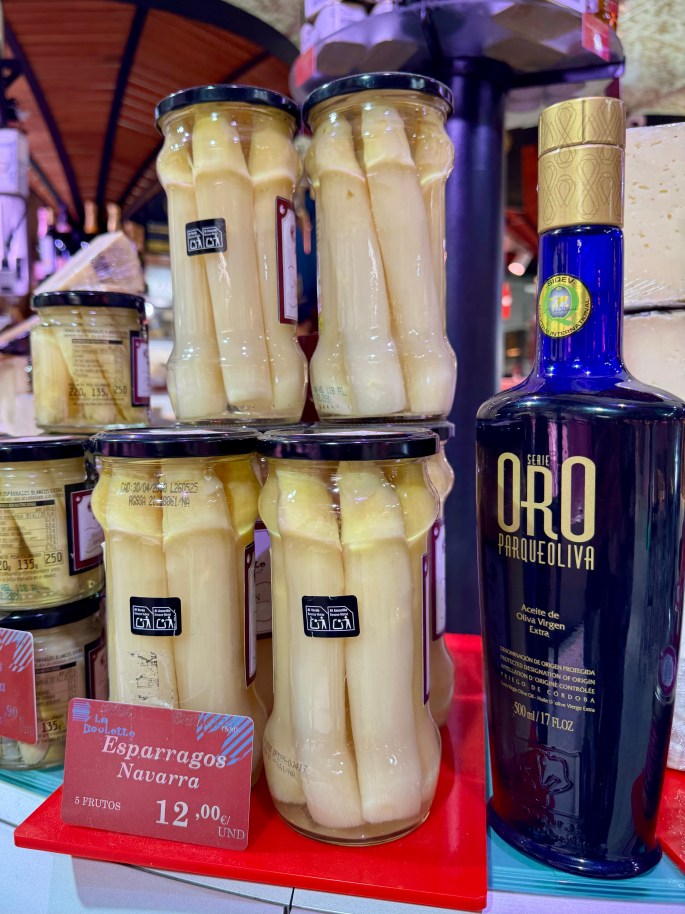
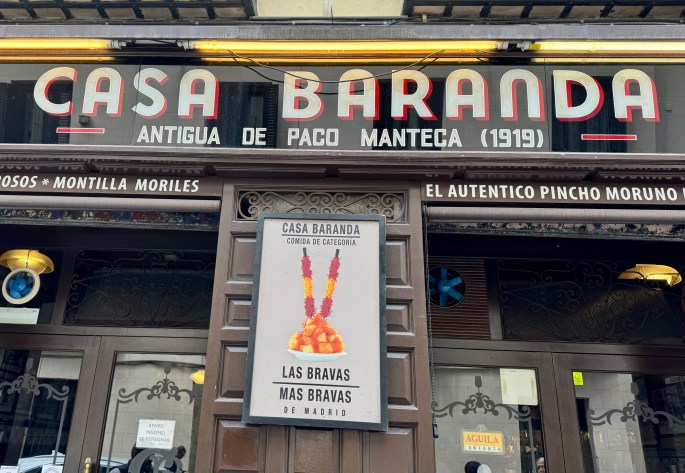
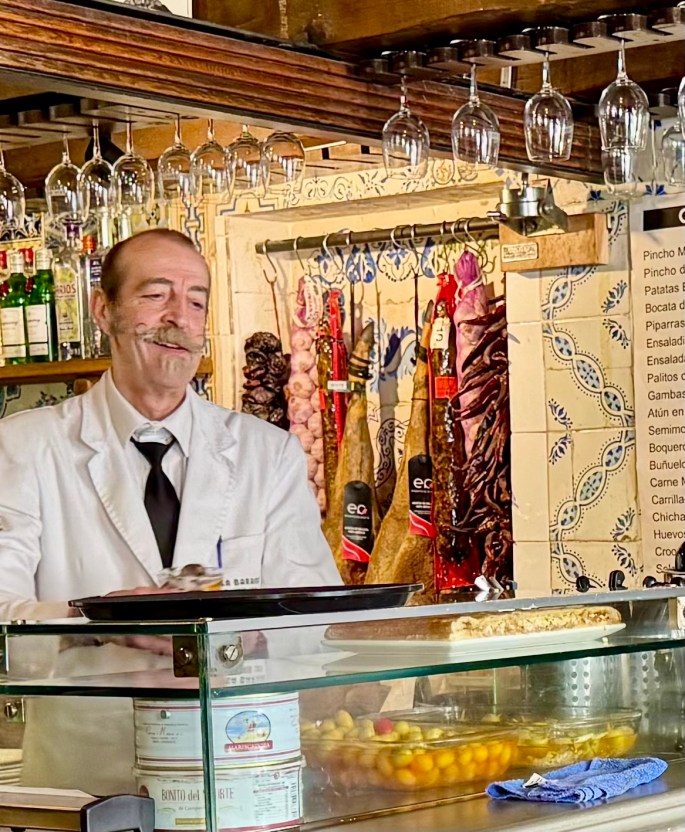
Most of our time, however, was spent sampling the culinary delights of which the Madrileños are justifiably proud… at local markets and tapas bars.
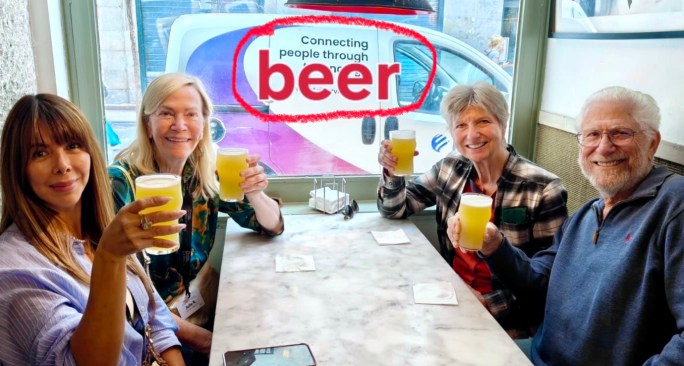
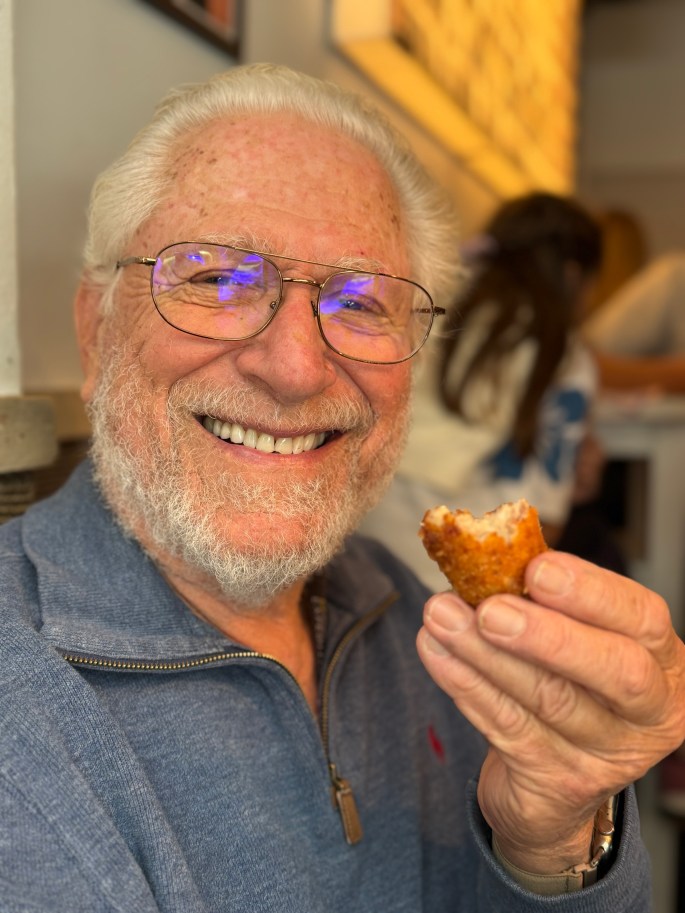
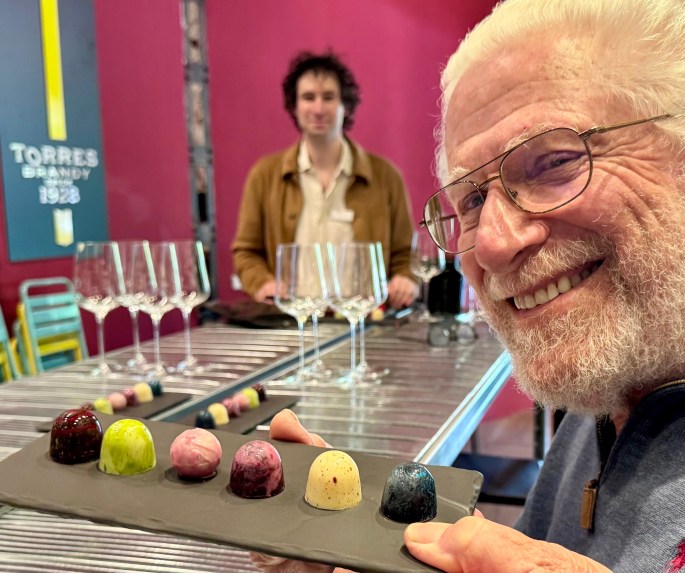
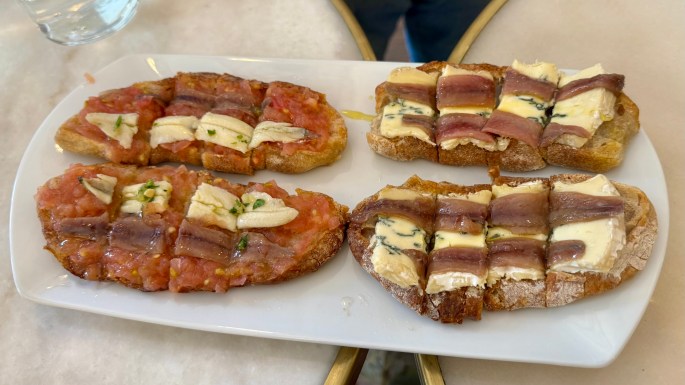
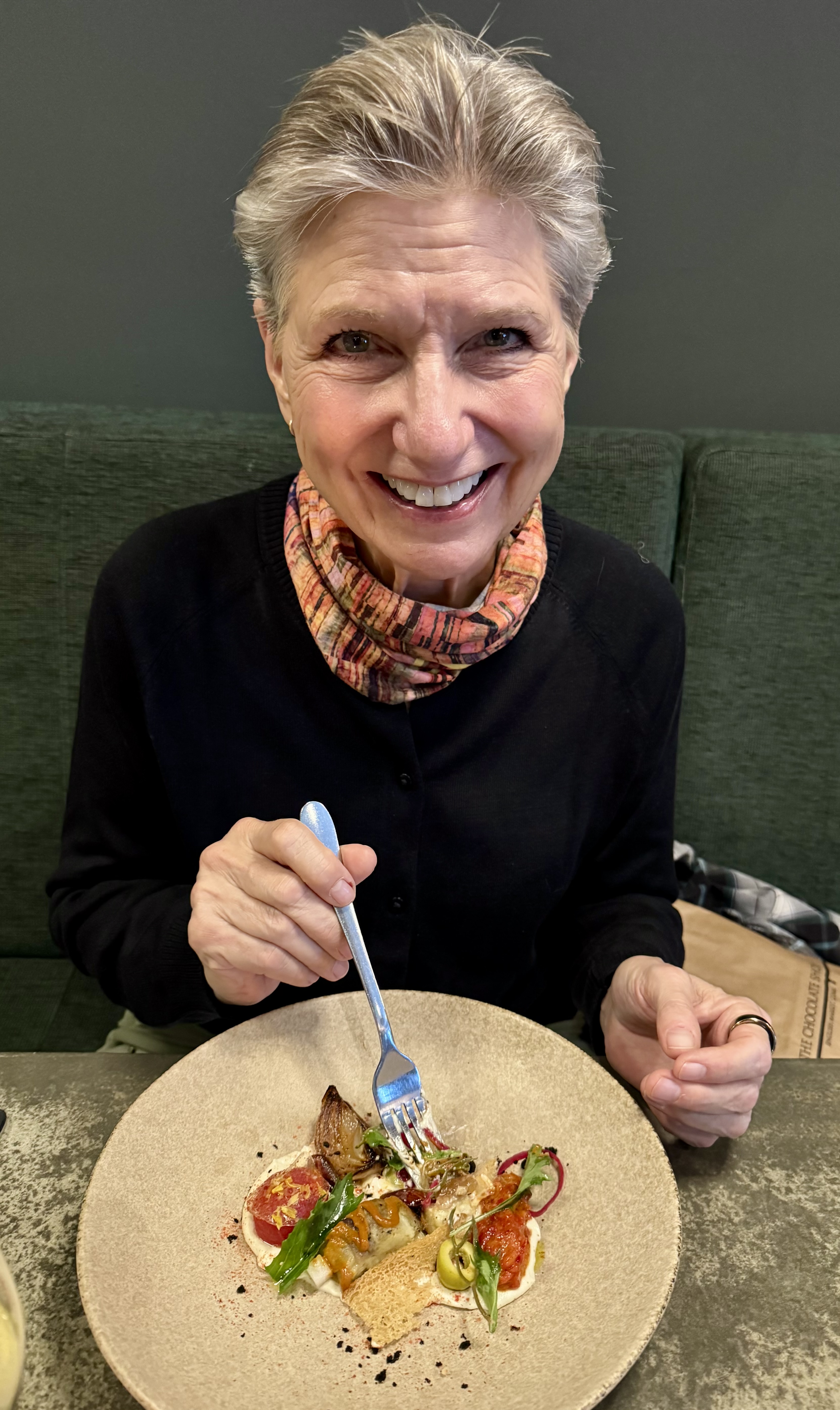
Note the unexpectedly apt legend as we raised a glass with a couple of fellow travelers!The croquettes are mind-blowing – a luscious mash-up on the inside of béchamel sauce (made with flour and milk) with meat, cheese, veggies, herbs or sometimes sweet stuff… that is rolled in breadcrumbs and fried. They are crispy on the outside and hot, gooey and yummy on the inside. My gosh, they are good!Tasting of Spanish wines with gourmet truffles!Okay – not normally an anchovy fan, but paired with a blue-ish cheese or a fresh tomato mash on toasted baguette – an epiphany!
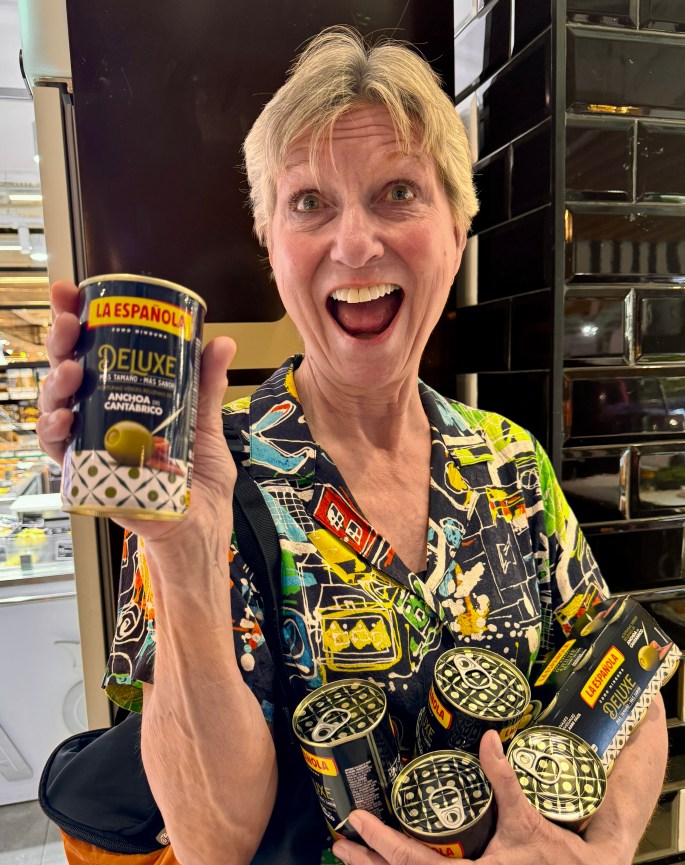
Our biggest investment on the whole trip was in Spanish olives stuffed with anchovies… tender and flavorful, and emphatically not fishy. Just right with an aperitif or simply popping them out of the can.
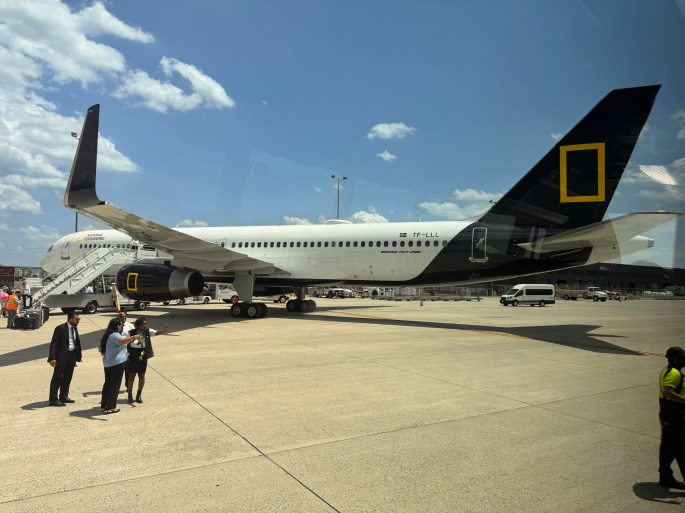
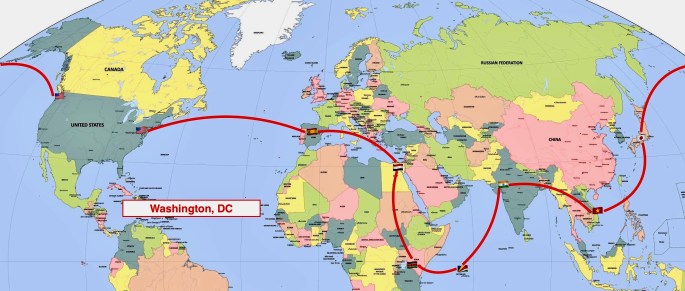
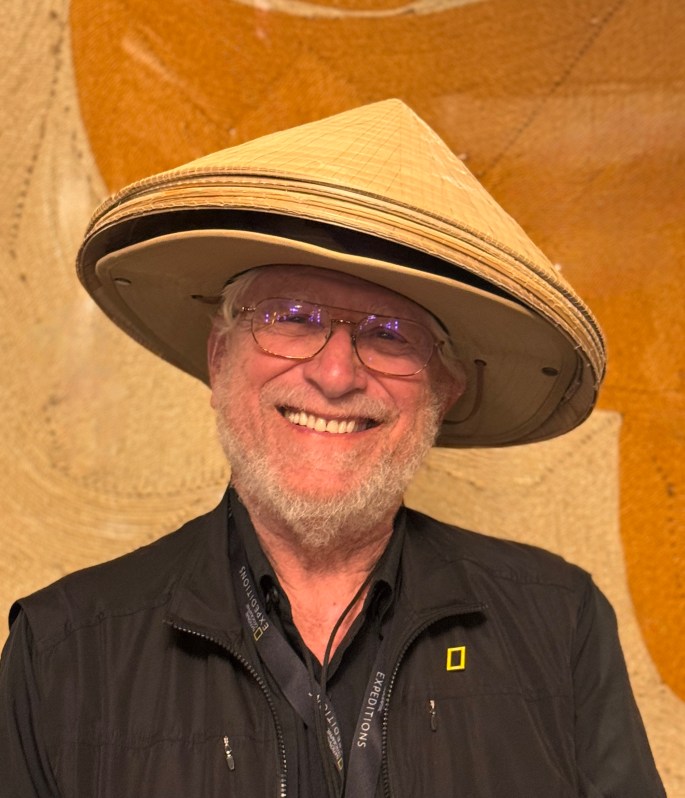
Good things come to an end…..the gastronomic tour of Madrid on top of all the other “food-forward” destinations had us waddling back across the Atlantic to Washington, DC and then home.
In addition to stuffed olives, a lot of cheap trinkets came home with us….
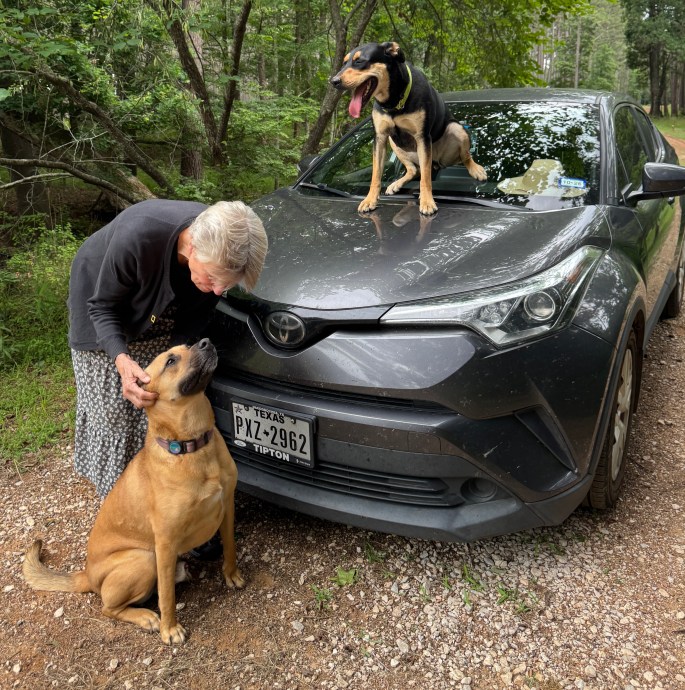
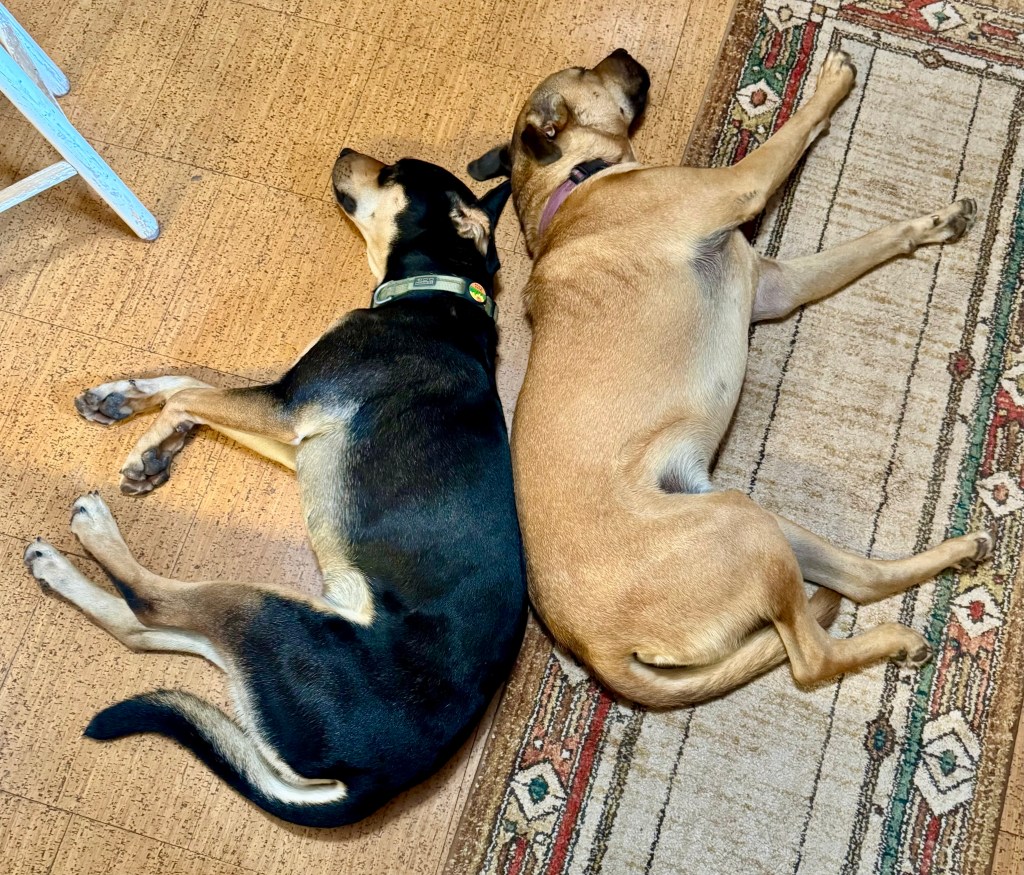
Faithful hounds were excited to see us upon our return to East Texas.
A Word or Two About Wonder and Gratitude
Most of us alive today are pretty blasé about flying and air trips….. but think for a moment about what amazing opportunities we have to travel long distances in short time periods…. to see, taste, hear and smell new environments and cultures.
Do you remember your first flight? What thrilling moments – strapping in to the seat, feeling the thrum of the engines – and glued to the window, you watch as the aircraft rises through and above the clouds, as the world as you’d known it slowly recedes until it’s just a point on a landscape.
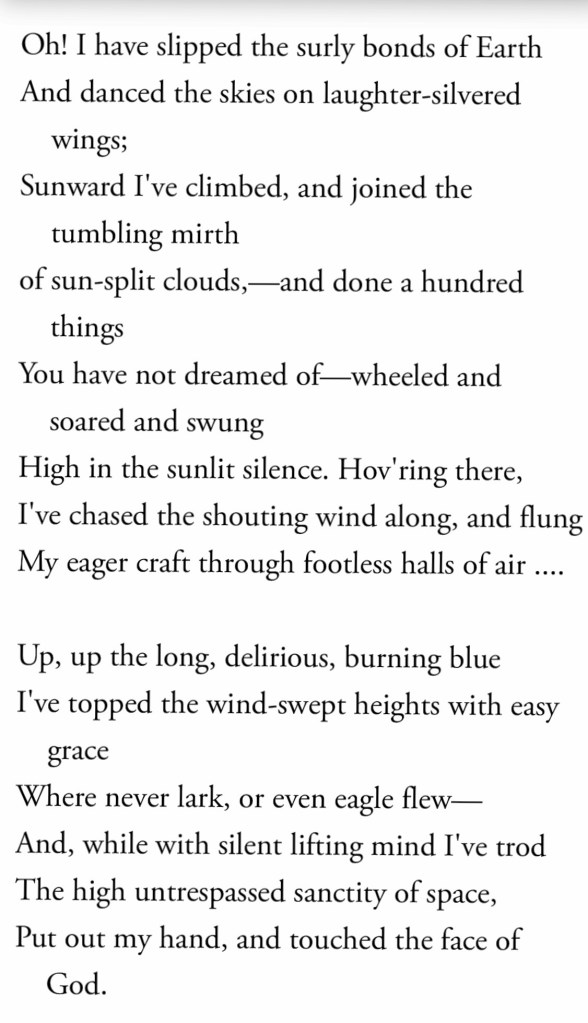
Here’s a young pilot and poet who captured the wonder of flying in verse…..
High Flight
The poet’s name was John Magee….. he penned this sonnet while serving with the Royal Canadian Air Force during World War II. In December, 1941 – just over three months after writing the poem – he was killed while flying in a training exercise. He was nineteen years old.
It’s Memorial Day in the US, a time when we honor those who died defending the principles of liberty, democracy and equal rights before the law that we hold dear. Let’s acknowledge and be grateful for the gifts we’ve been given and the freedoms we enjoy while remembering those who gave the last full measure of devotion.
There are very few people (and virtually no Americans) who can track their family history back 200 years or so without finding an ancestor (or multiple ancestors, or ALL their ancestors) who moved from one place to settle in another. We are almost all of us immigrants.
Why do we move? Scarcity of resources, lack of economic opportunity, political dissent and conflict, religious or cultural persecution, forced deportation and sometimes just plain ol’ wanderlust. As true today as it has ever been….even in prehistoric times.
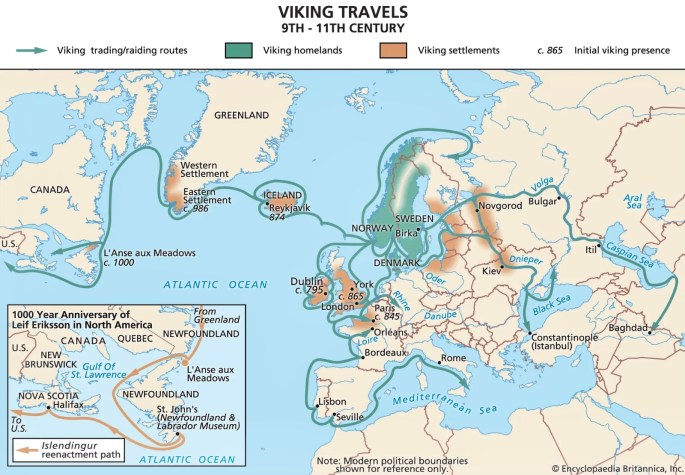
Ireland’s history exemplifies this flux of people over the ages. Some of the earliest and most influential invaders were the Vikings….. who went in many directions, but whose first large permanent settlement was Dublin on the eastern shore of Ireland in about 795 CE. The Vikings or Norsemen went on from there to establish communities in present-day France, England, Iceland, Greenland and Canada.
This summer we will follow some of their travels in reverse – starting from our US home, then a few weeks in Ireland; cruising from there to England, Wales, France and Copenhagen, then some weeks venturing through Denmark, Norway and Sweden (and maybe Finland).
Joining us for the cruise part of the journey will be Henry’s daughter Holly, her husband Matt and their grown children Caleb and Lily.
Along the way, we hope to learn a lot more of the history of these movements of people, culture and ideas. There will also no doubt be photos of us enjoying food and drink, purchasing cheap trinkets, making new friends and examining fresh landscapes.
We leave behind and will miss our faithful companions Sally O’Malley and Boudreaux, who will be capably cared for by some wonderful house sitters.
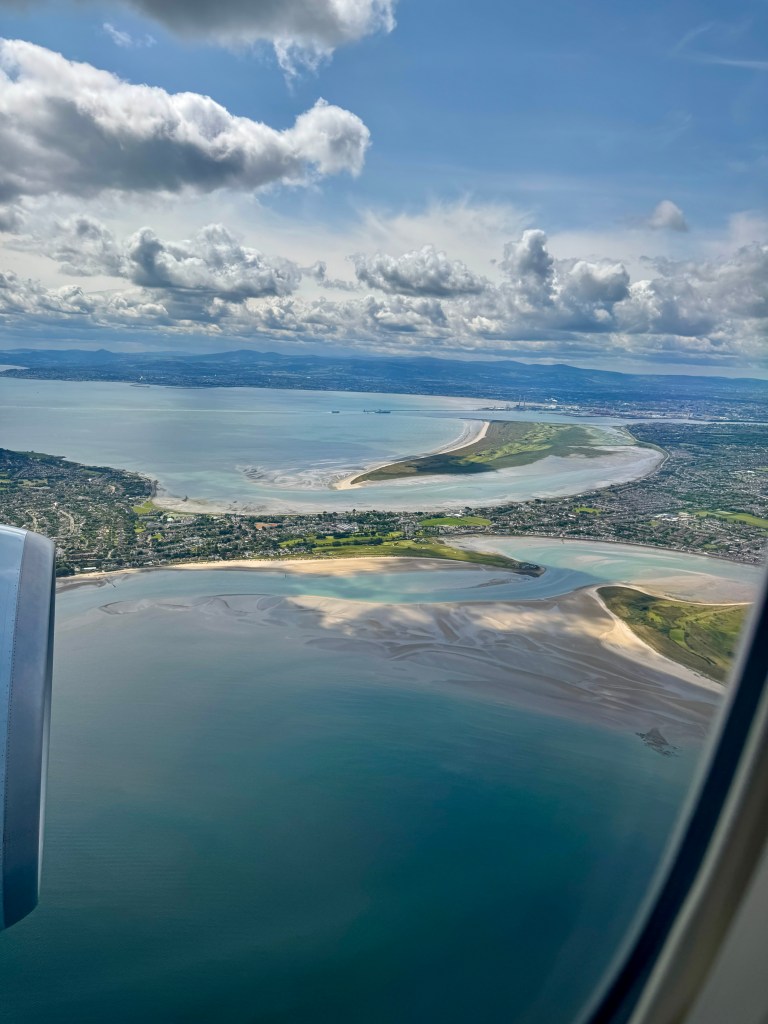
Here’s a quick photo as we approach Dublin from the air… another of Henry’s great airplane-window photos…..
Will be back soon with our first report from the Auld Sod…..
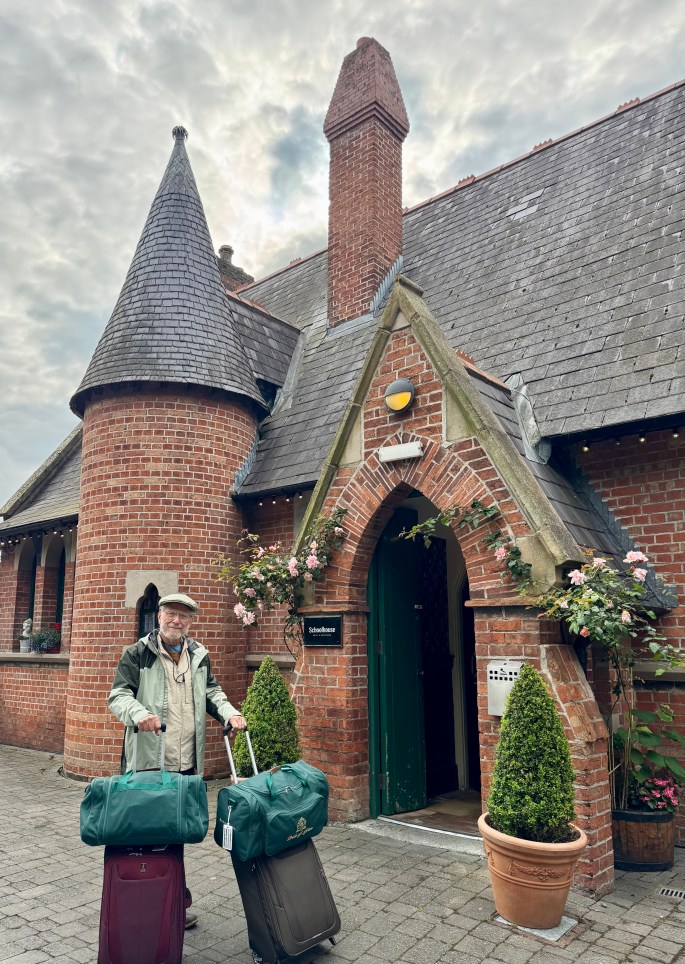
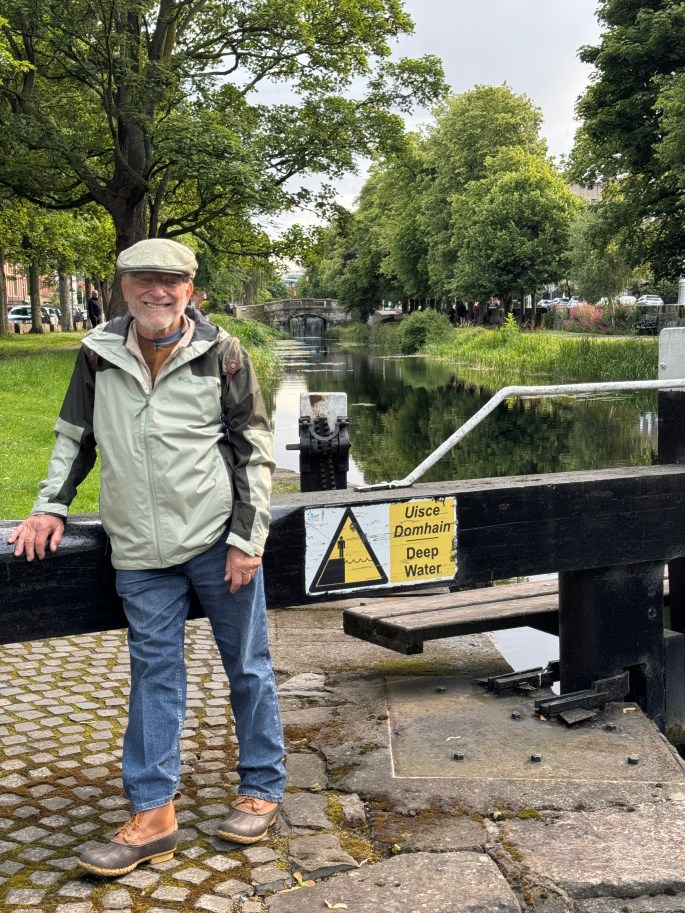
The Schoolhouse in Dublin originally served as a school in the middle 1800s; it was also the site of a key battle in the 1916 Easter Uprising of the Irish against the British. It’s now a pleasant hotel in a leafy section of Dublin along the Grand Canal….. whose construction began in 1756.
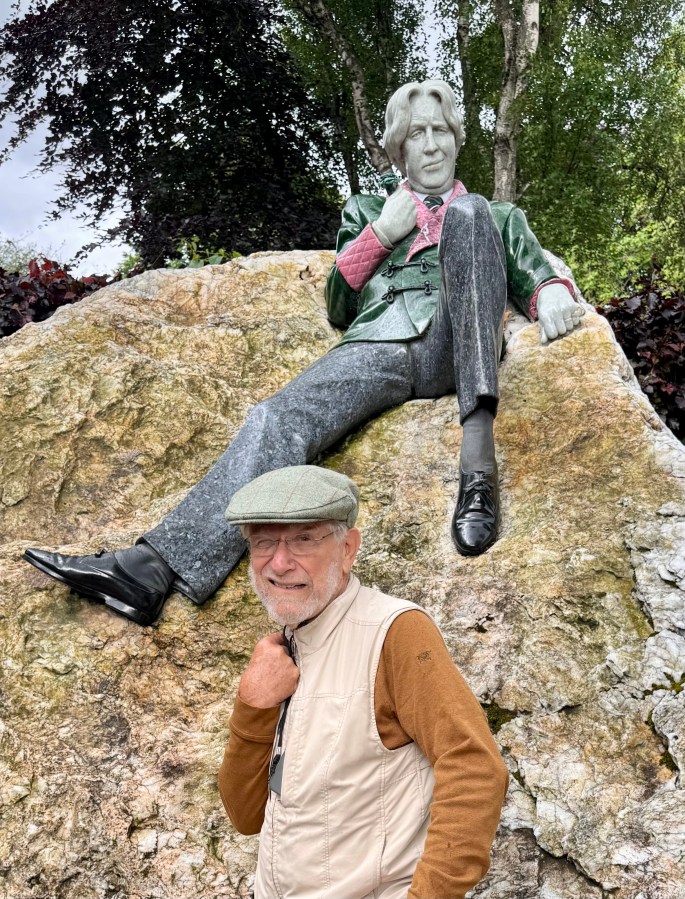
On a stroll toward the city center, one is confronted with literary Dublin….. the childhood home and a memorial to Oscar Wilde (1854-1900), the flamboyant Irish playwright, poet and author. His was a short and tragic life, but brilliant and witty. Among his bon mots…. “Be yourself; everyone else is already taken.” And…. “Always forgive your enemies; nothing annoys them so much.”
Such intriguing detail on the sculpture….. Henry attempts to reproduce his wry sneer with only middling success.
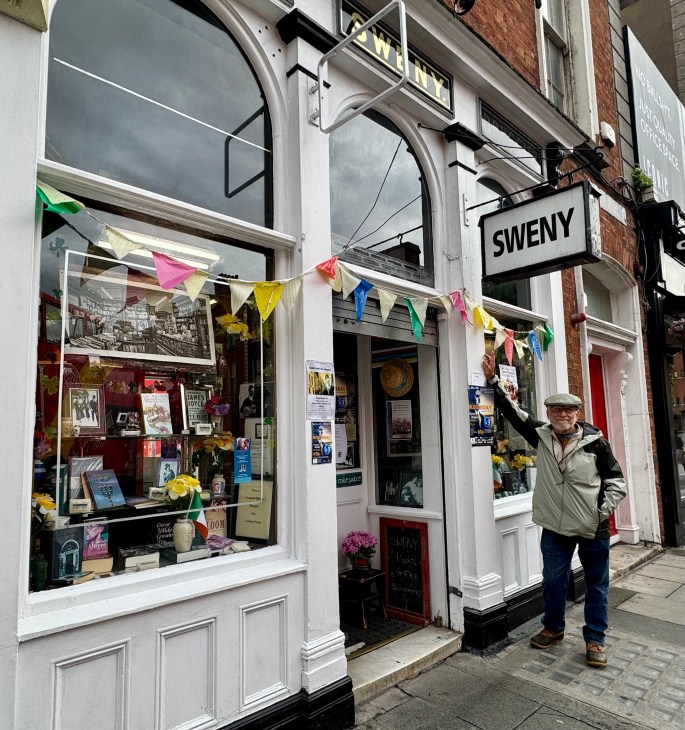
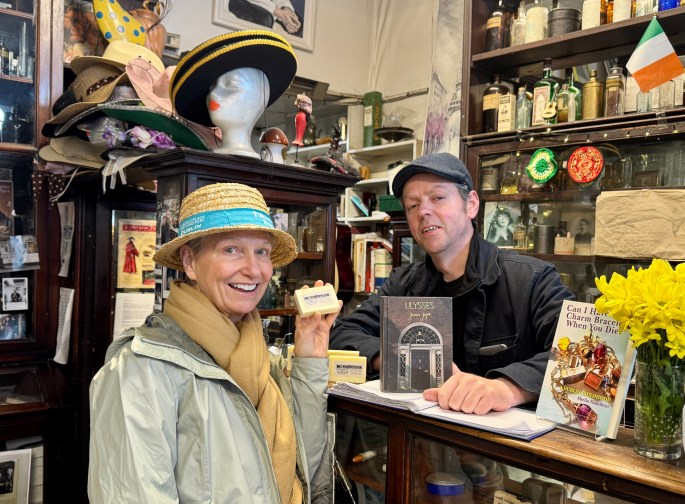
A short distance away is a site of significance to fans of “Ulysses”, the monumental stream-of-consciousness novel by James Joyce (1872-1941)…… a drugstore called “Sweny” where the protagonist picks up a prescription.
It is no longer a functioning pharmacy; instead you wear a funny hat and purchase some lemon soap (also a legendary icon in the novel)…
….. and hear a song sung in Gaelic by a native speaker and a guy originally from Barcelona.
I don’t think the last part about the guys singing was in the novel (which I never managed to get through) ….. just a little something for us tourists…..
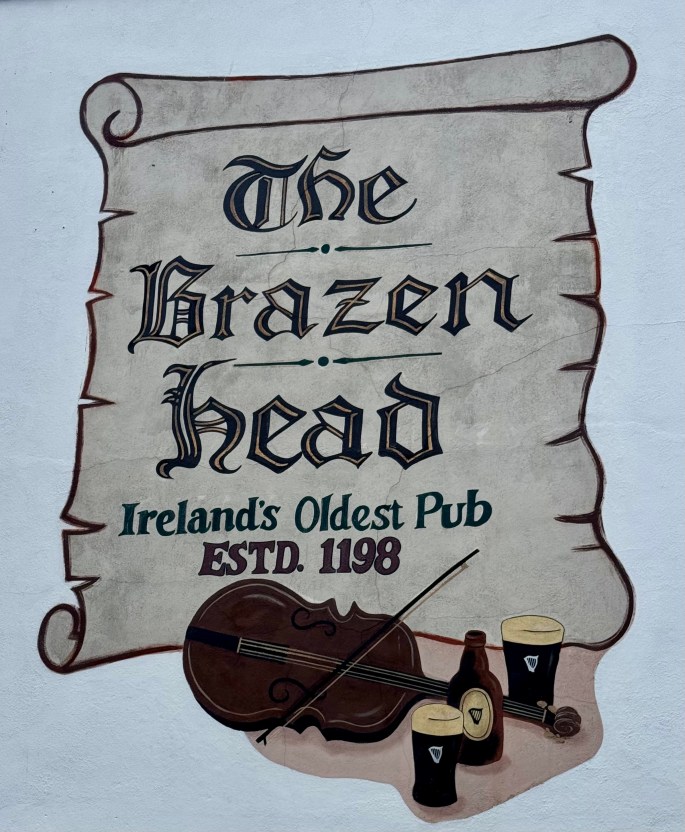
…..who get thirsty about now and end up in still another historic place.
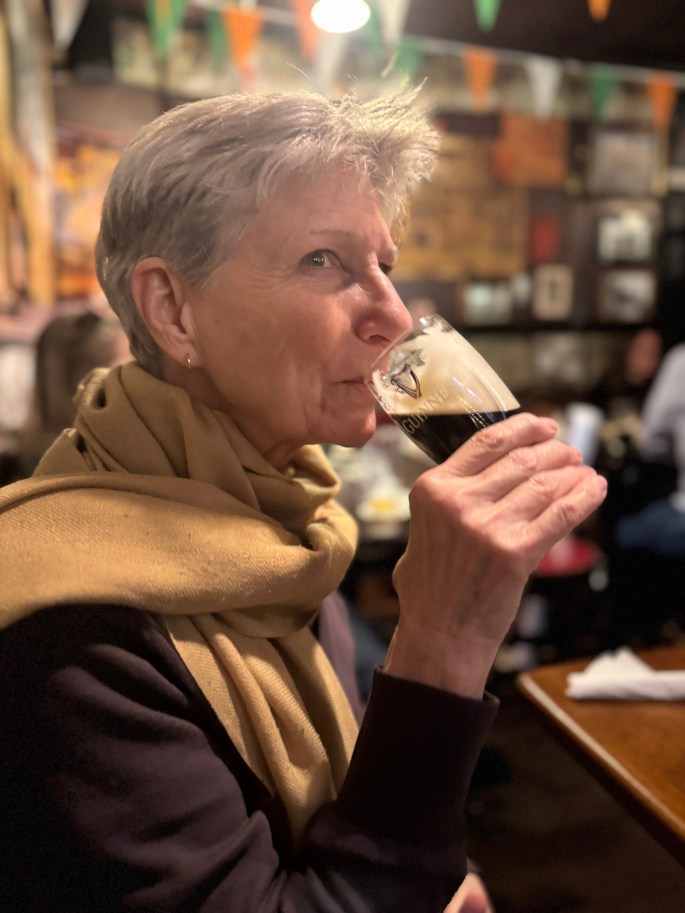
Wow – at least the beer and food were fresh. A Guinness for the purist…
And something a little lighter for the maverick….
Irish stew…. To check off a classic dish.
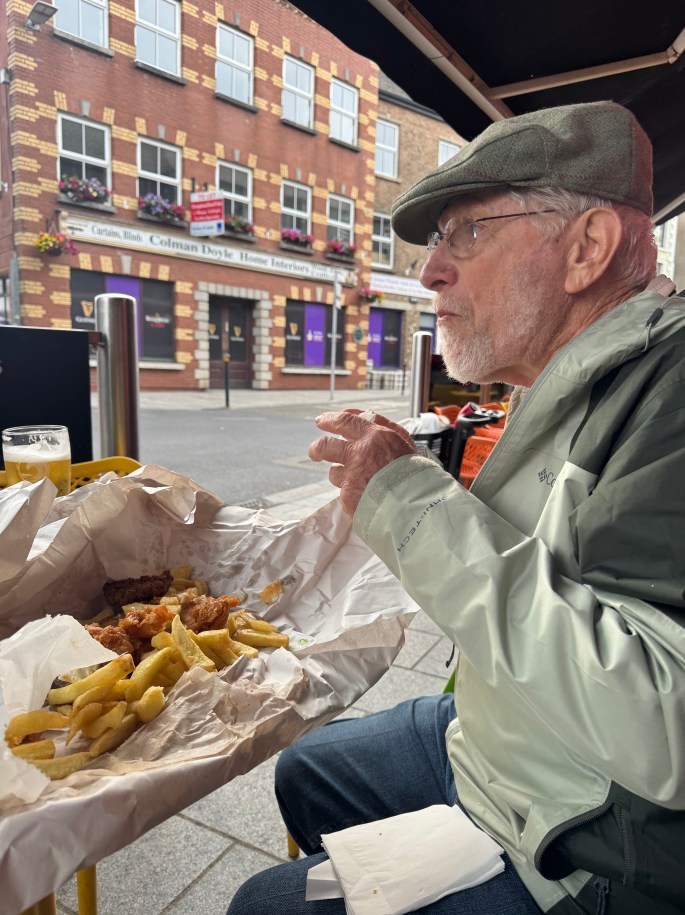
Later….. fish and chips….. and the discovery of a beverage previously unknown.
A sweetish concoction that is pretty good in coffee….. bought primarily for the label art and the name.
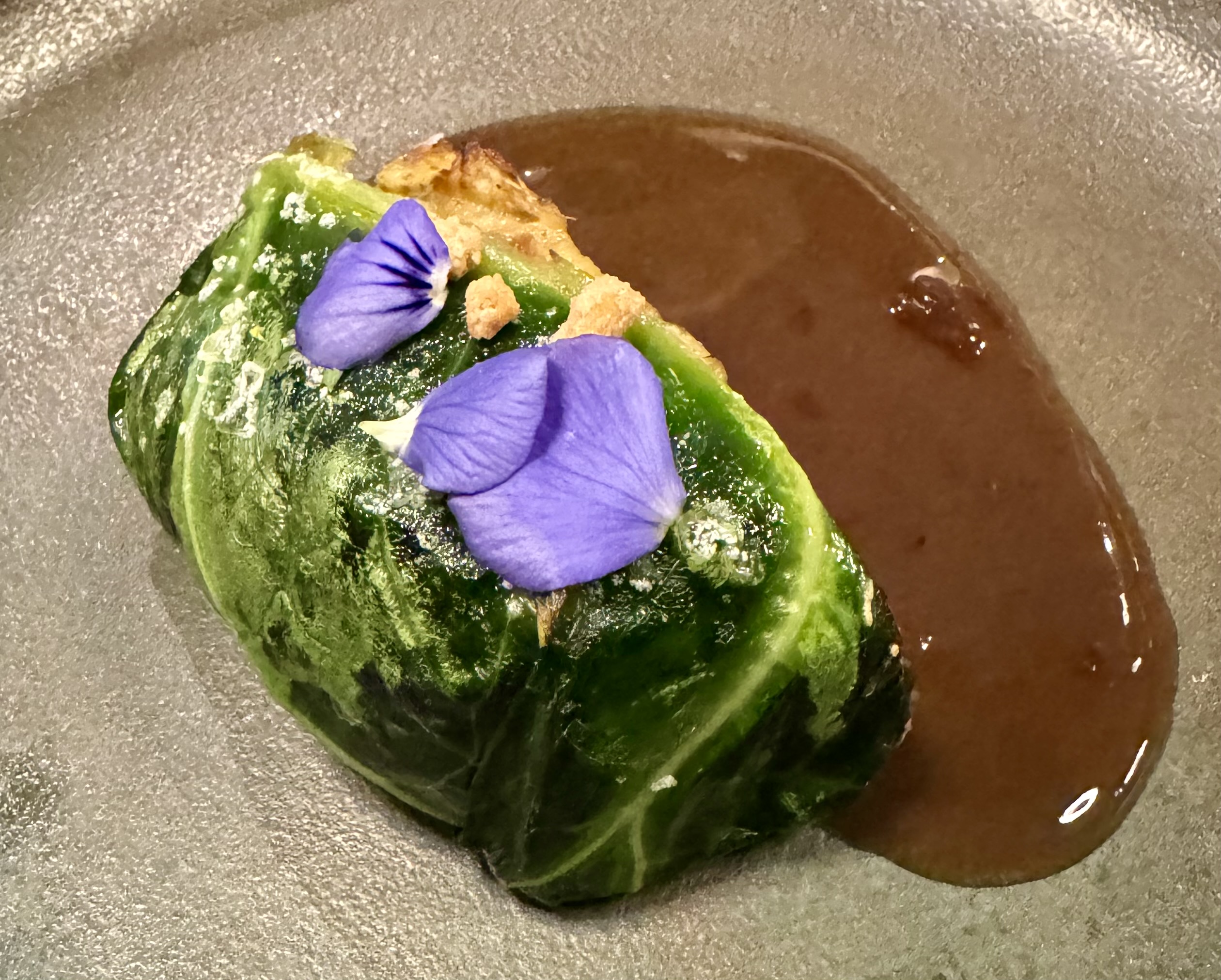
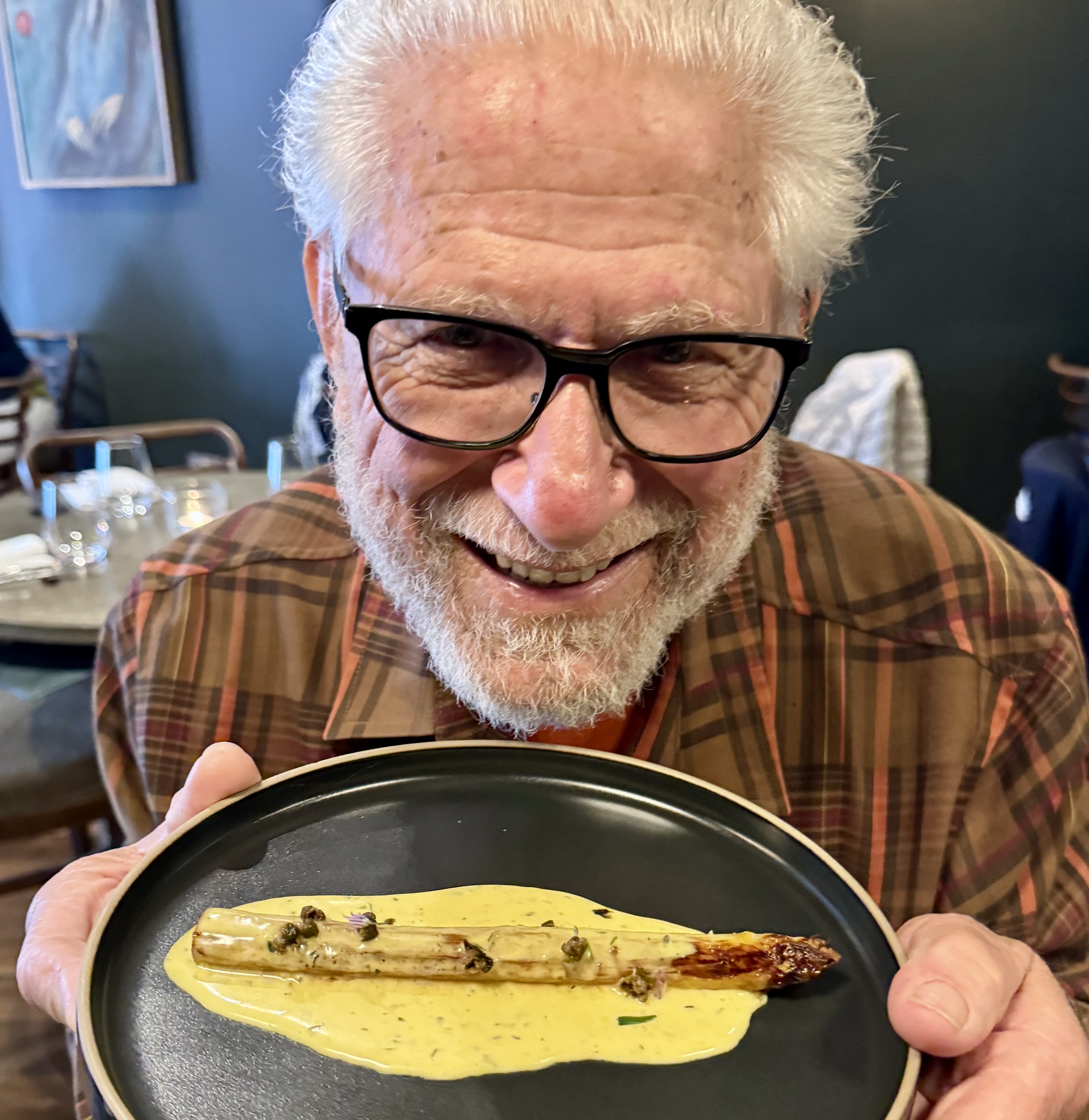
Taking a break from tradition, we decided to check out a well-reviewed restaurant with a vegetarian bill of fare….. it was flavorful and inventive!
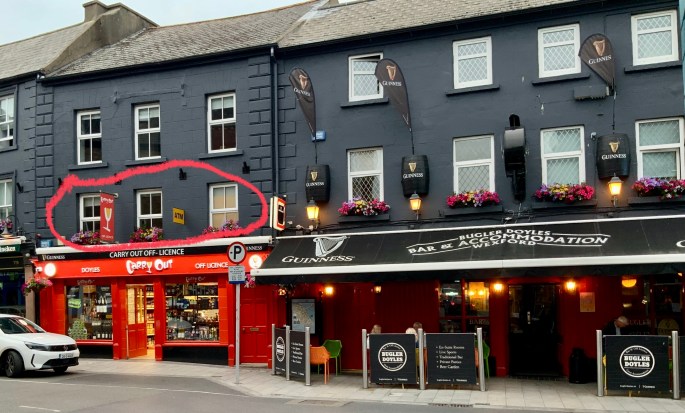
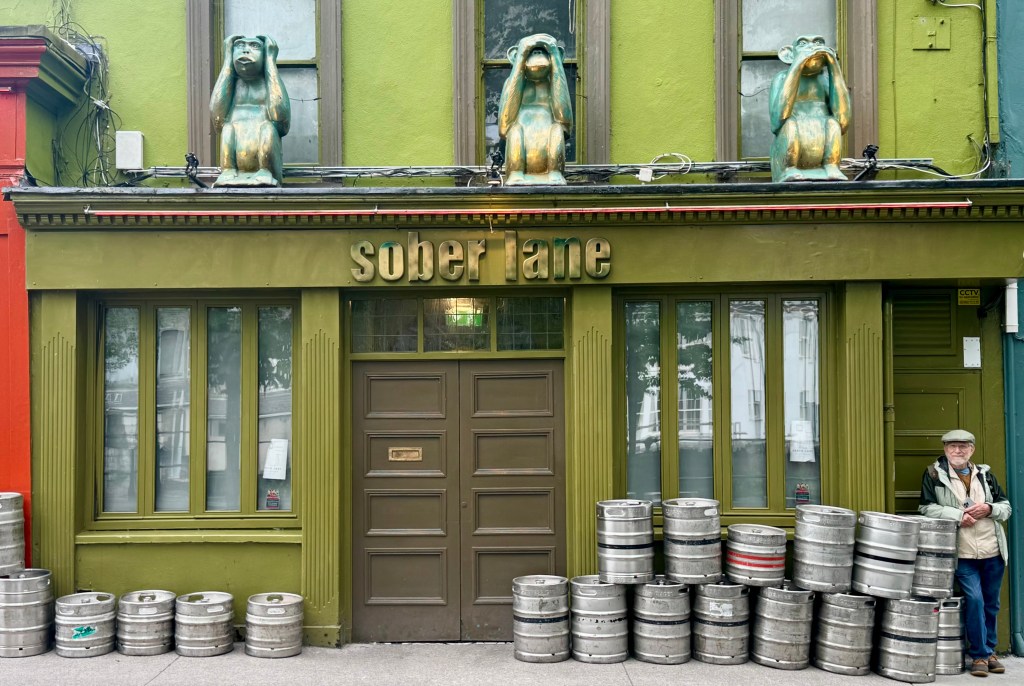
Driving south along the coast from Dublin, we came to Wexford, a town more or less started as a Viking settlement; not many relics of them now, but we did attain the goal of staying in a room over a pub.
(Technically over a liquor store next door to the pub – even better!)
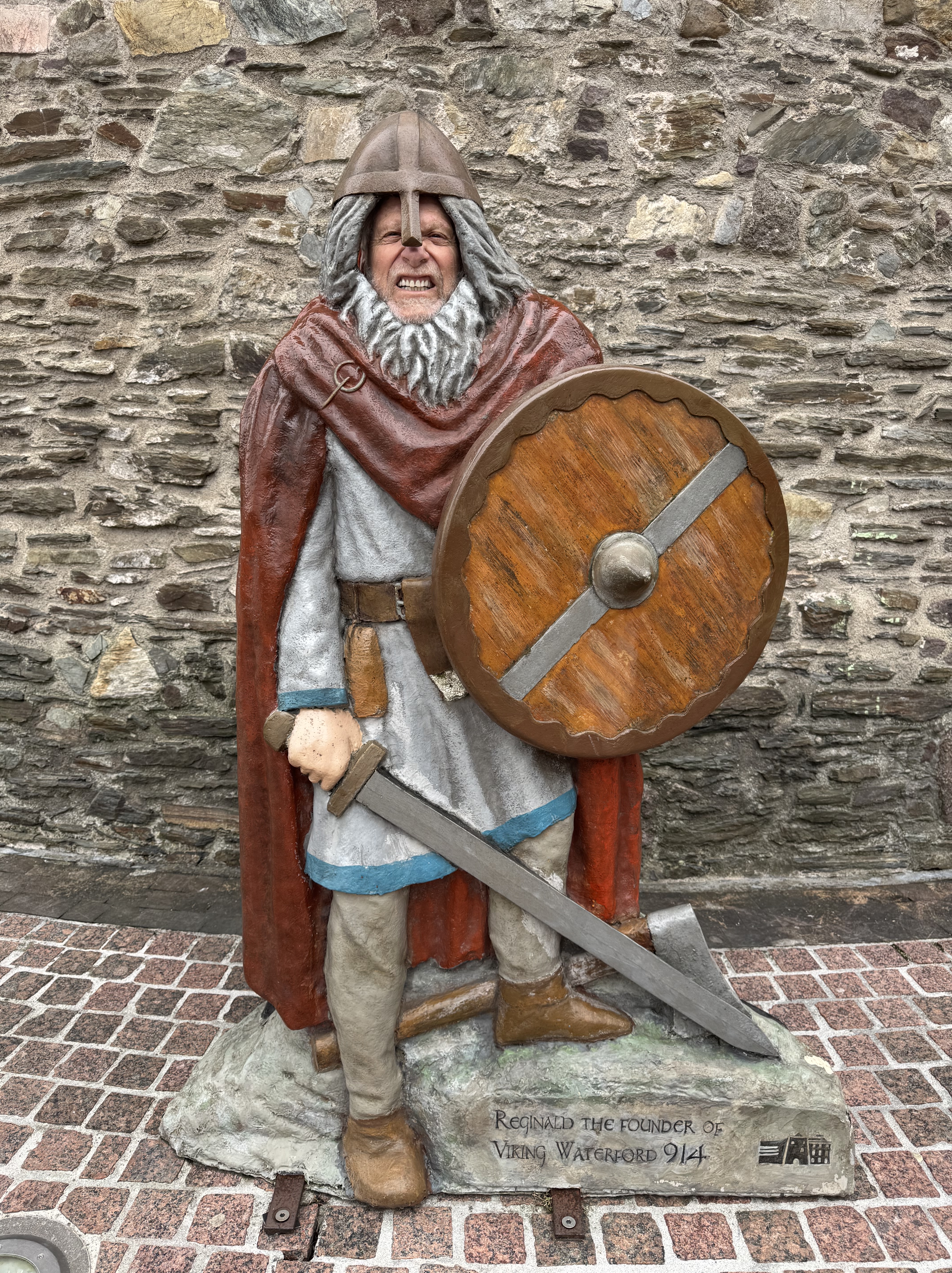
Further along, Waterford has a rich history as a Viking outpost beginning in the 9th century CE.
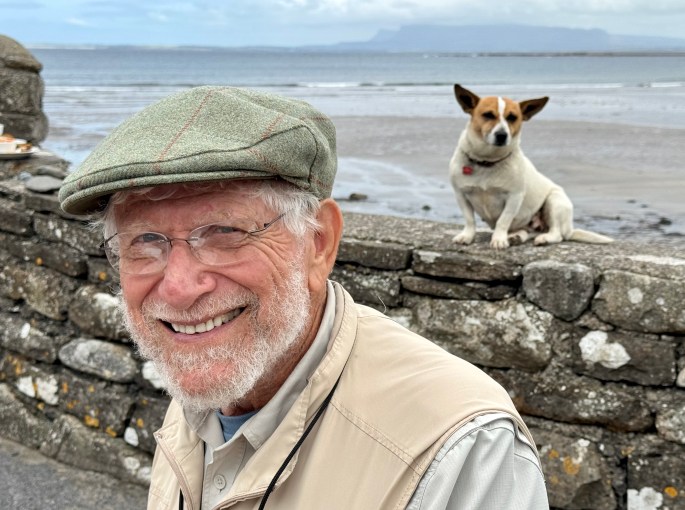
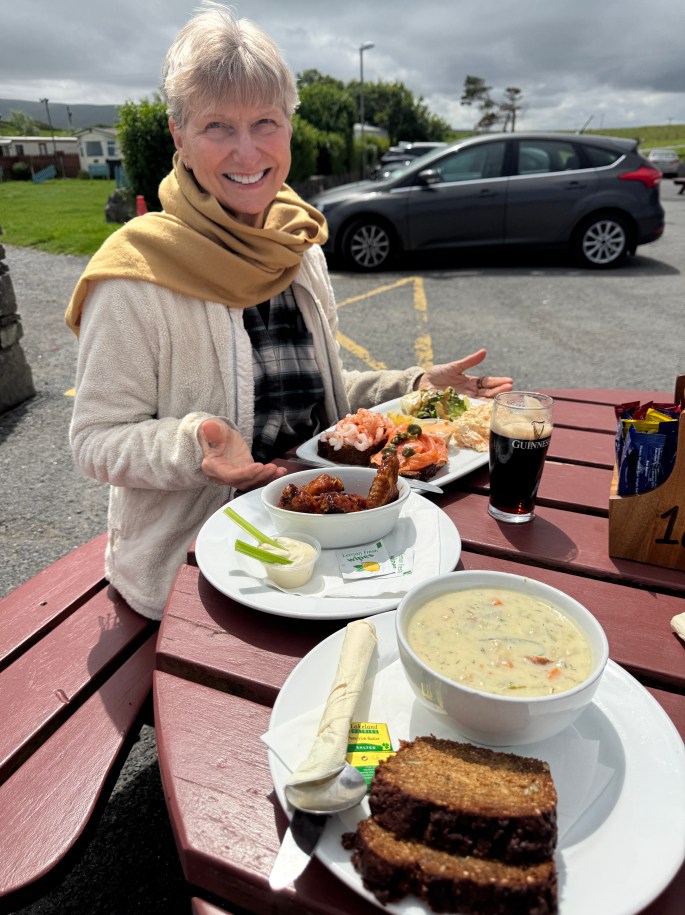
(Ever notice how old people tend to resemble each other the longer they are together?)
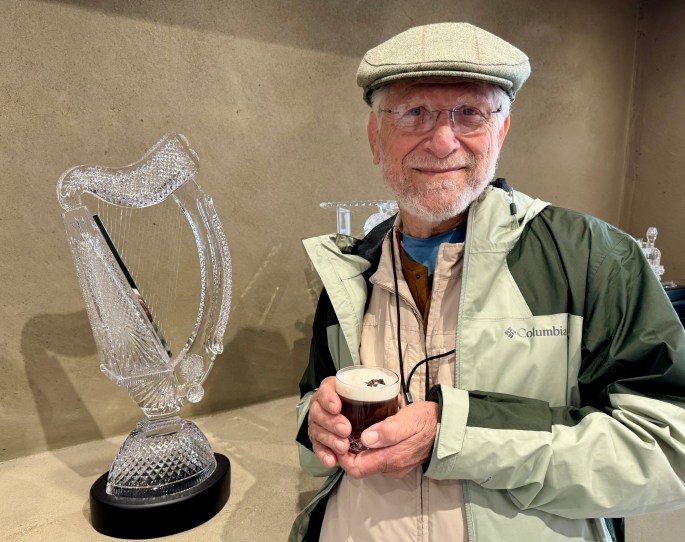
Waterford got its name from the old Norse word Vedrarfjordr, which is thought to have meant “windy fjord”, a reference to the safe harbor it represented to the sea-faring Vikings. Eventually it became known for its manufacture of fine crystal.
And you can get an Irish whisky there!
Cork is a great town for walking around – lots of interesting store fronts and murals.
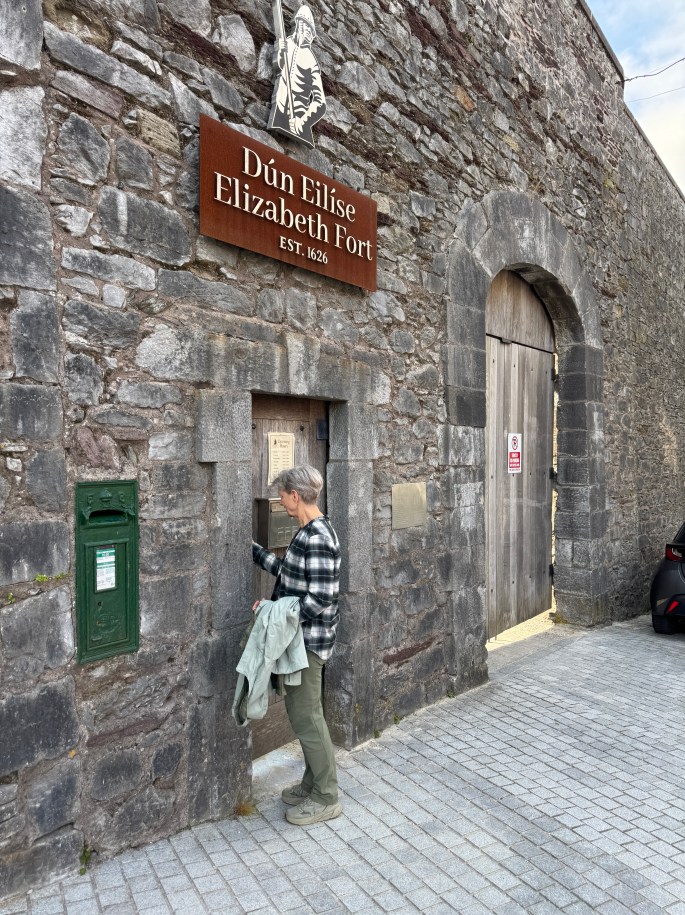
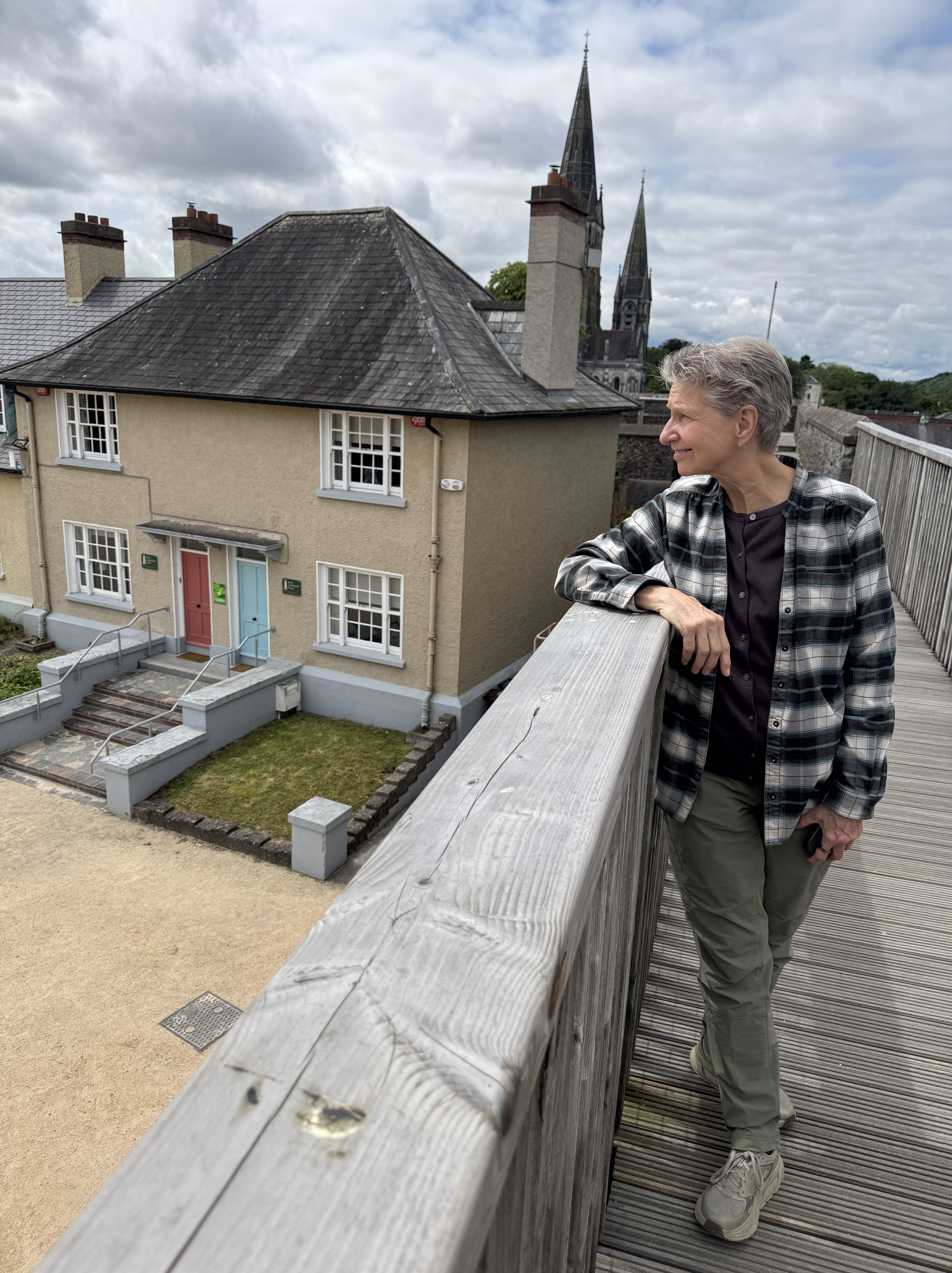
We stayed in an historic accommodation in the old Elizabeth Fort, first built around 1600 by the English as a way of keeping the local Irish under control. It went through many iterations, later as a prison for Irish women being exiled to Australia and most recently a police station.
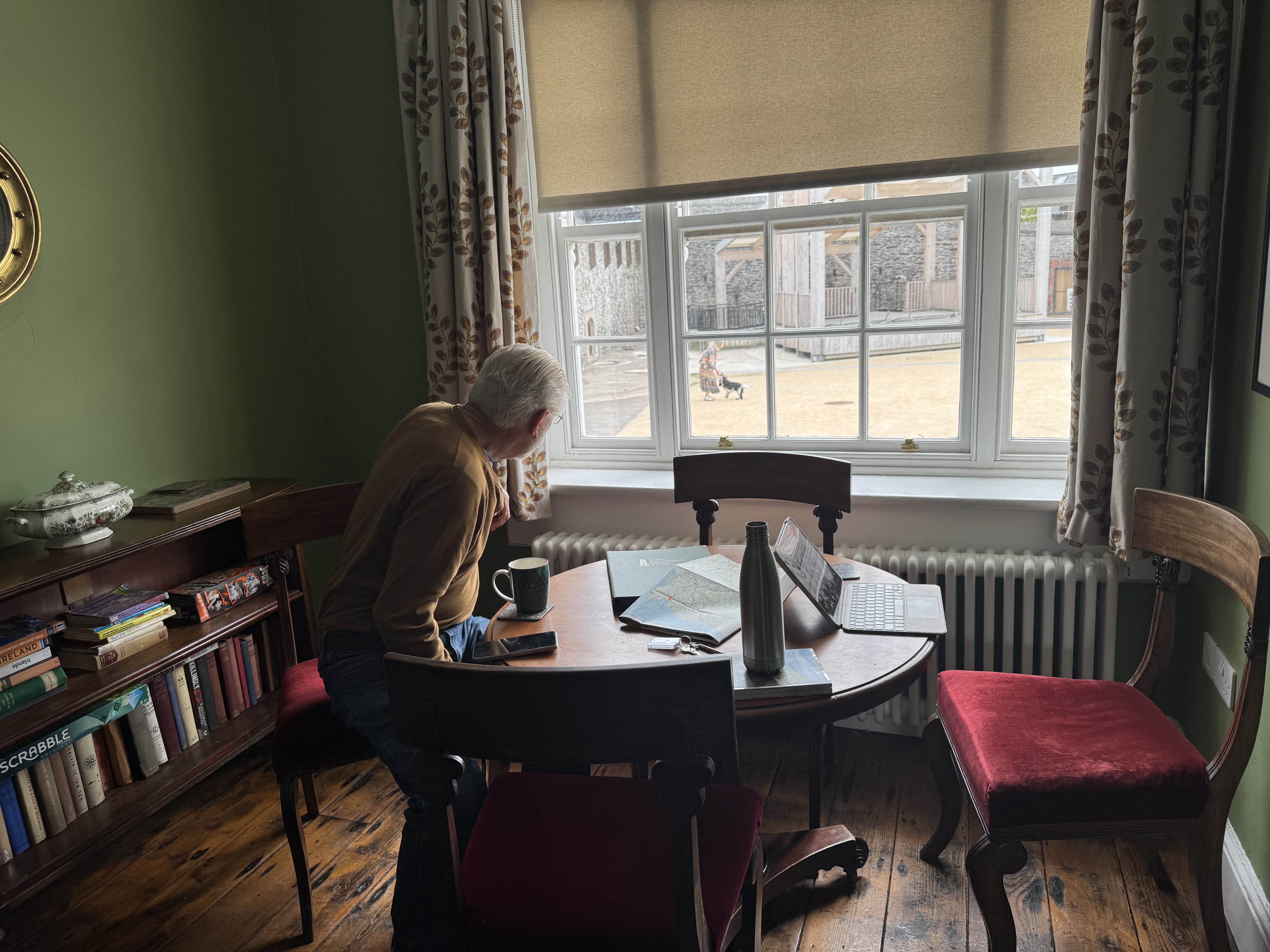
Our room inside the walls dates from the police-station era…
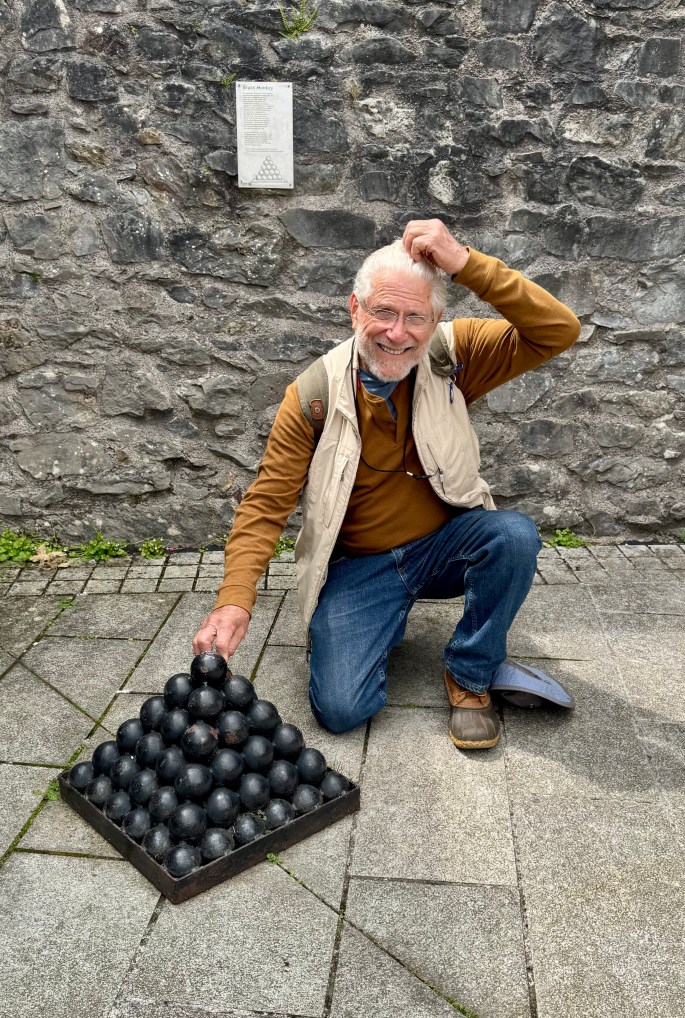
Interesting history – the tray in which these cannonballs are stacked was called a “monkey”. It is made of brass. The cannonballs themselves are made of iron.
One of metal’s properties is that it contracts in very cold temperatures; some metals are more susceptible and thus contract faster than others. When freezing temperatures were achieved, the brass tray would contract more quickly than the iron cannonballs and the lowest level of ammo would pop out of the tray, collapsing the pyramid. This supposedly led to the saying, “cold enough to freeze the balls off a brass monkey”.
Fun fact or fabrication? Of course they couldn’t tell this story if it wasn’t true.
All for now as we continue on our semi-circumnavigation of the Emerald Isle.
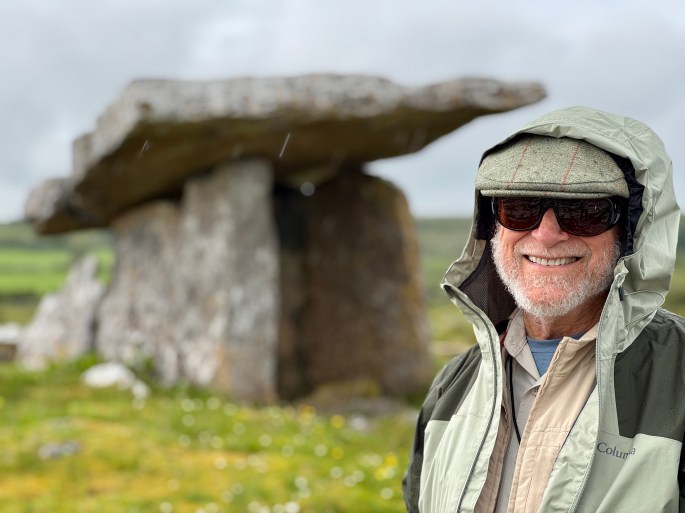
Little is known of the people who built this prehistoric dolmen (burial tomb) in about 3500 BCE (over 5500 years ago).
Dolmen on the left; relatively young man on the right
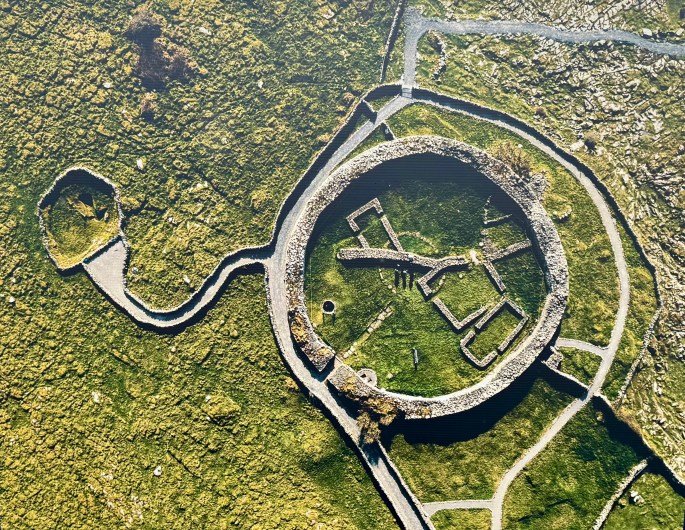
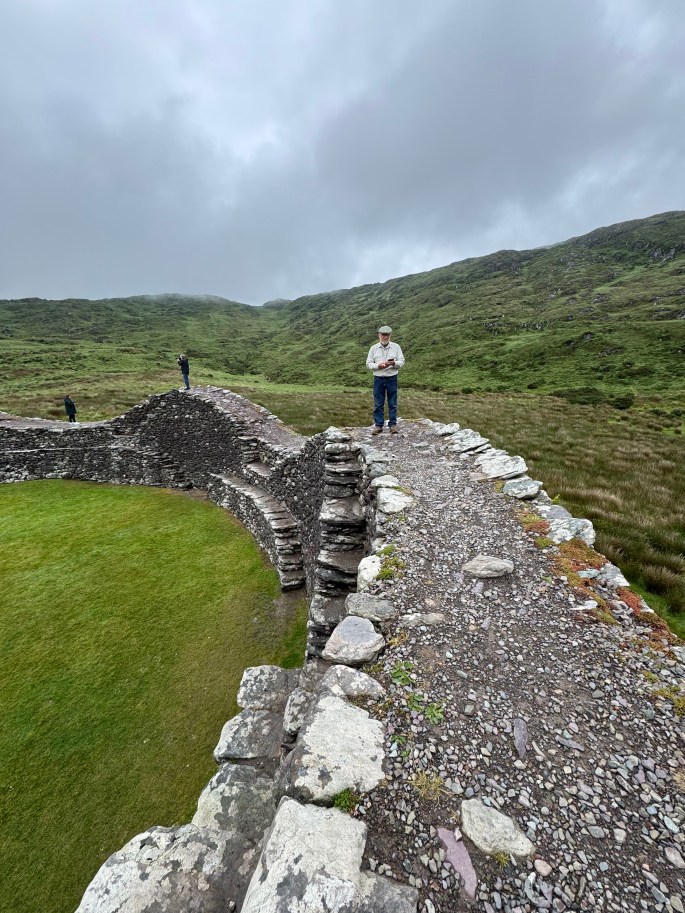
The vestiges of stone forts appear occasionally – fascinating constructs where clans of 50-100 souls lived collectively behind a defensive circular wall meant to deter invaders. They generally date back 1000 years or so…
It’s fun to climb up on the walls and imagine dwelling in such a place back when other clans, Vikings and eventually Englishmen were attacking and invading…. But life was otherwise pretty simple.
Also fun to scamper down!
A tower from the same era at Glendalough, a monastery that dates back to the very early Christian era.
You will note the door about 10 feet above the ground…. Access was by ladder, which could be pulled up when the holy brethren were under attack. Isn’t it interesting that so many of the remains are defensive barriers…. Walled communities and inaccessible towers and …. oops – guess we have the same things today!
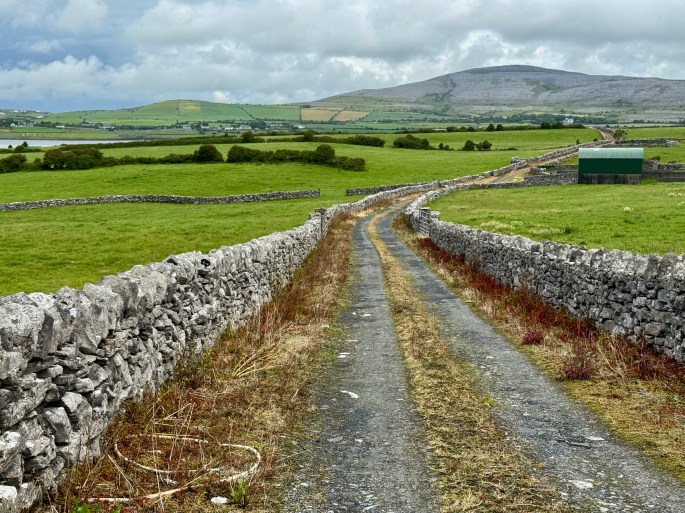
Driving in Ireland can be a challenge for Americans – not just because you drive on the left, but there can also be hedgerows and stone walls restricting your vision…. And sometimes animal interference.
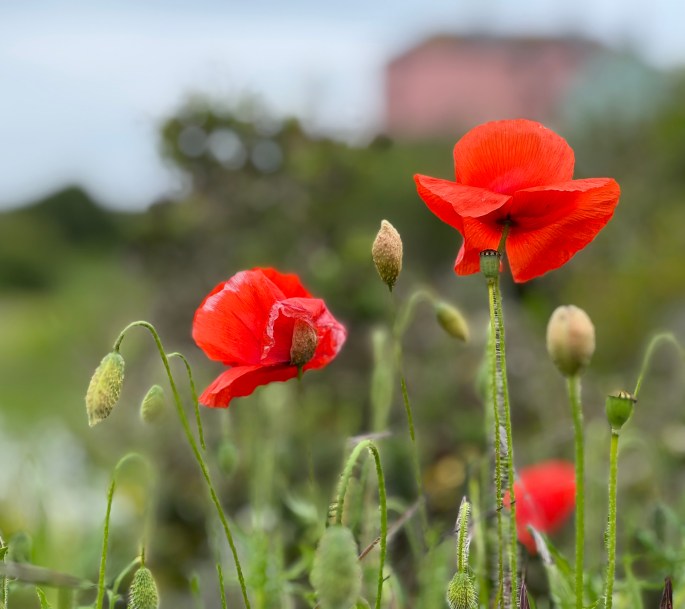
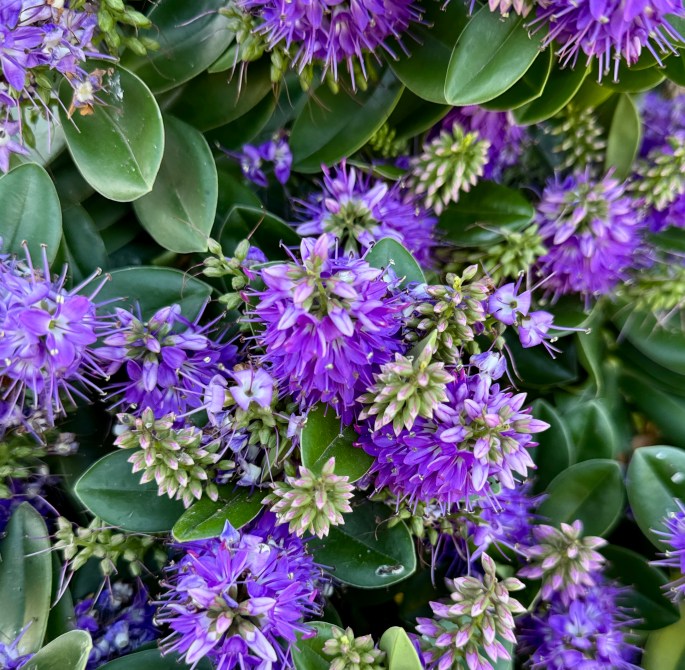
Some pretty pictures from along the way…
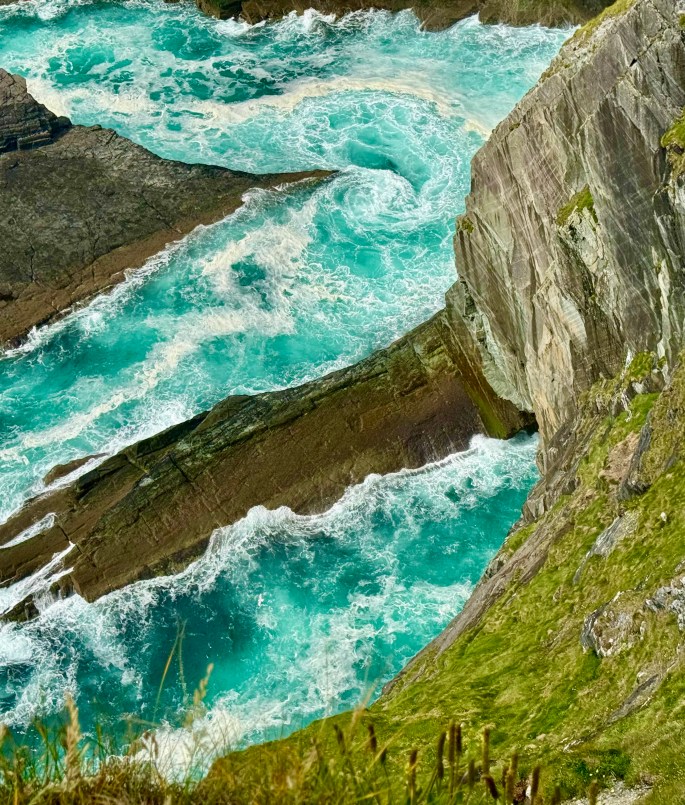
Whirlpool at the foot of the Kerry Cliffs…..
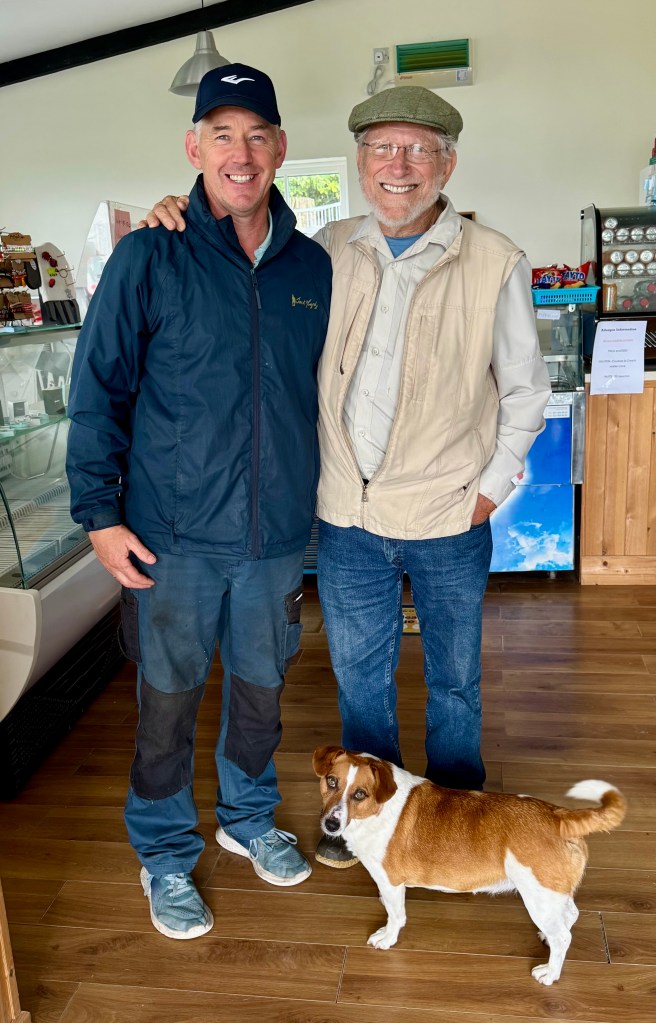
Henry meets people well…. Some of those with whom he found an affinity….
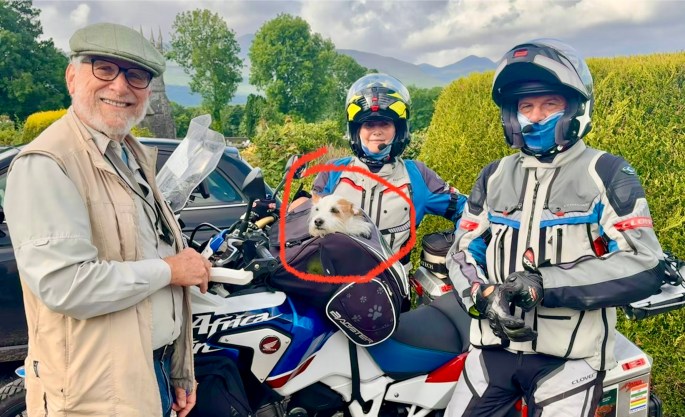
Ice cream guy (who also races horses and runs the dairy)…. And his little dog too!Folks from Italy who have been all around the world together on a single motorcycle (and their little dog too!)Nice guy who gave good advice on the purchase of a walking stick and recognized and admired our fine footwear (LL Bean Boots – great for walking in bogs and stepping in puddles).
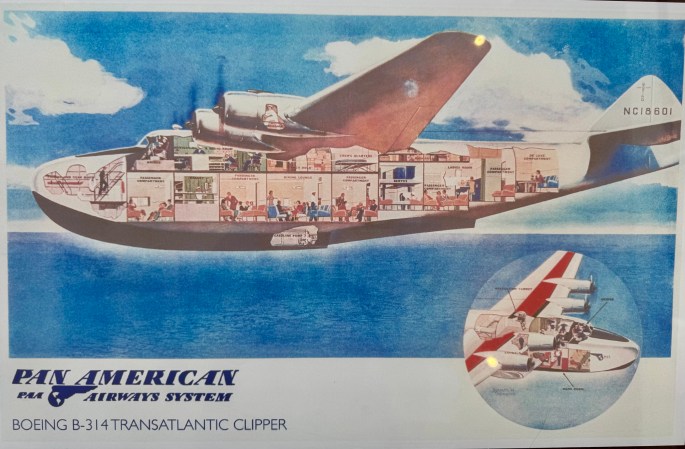
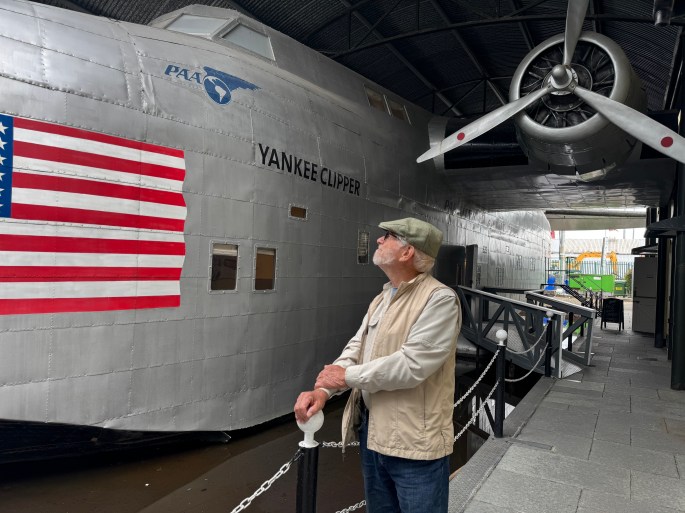
Foynes on the River Shannon was the site in the late 1930s of an airbase that was used for the short-lived flying boat, a transatlantic airship that took off and landed on water. Pan American Airways was the American partner….
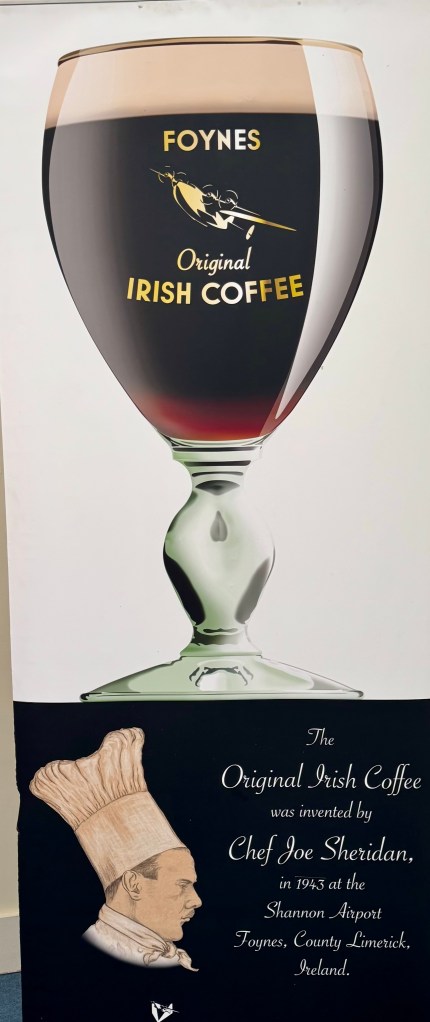
Some time after World War II broke out, the flying boat was deemed to be impractical… and air traffic in any event was soon directed to the newly-constructed Shannon Airport on the other side of the river. But not until after a clever chef in 1943 created a beverage designed to take the chill off the experience of a long flight into an often cold and drizzly destination… the Irish coffee!
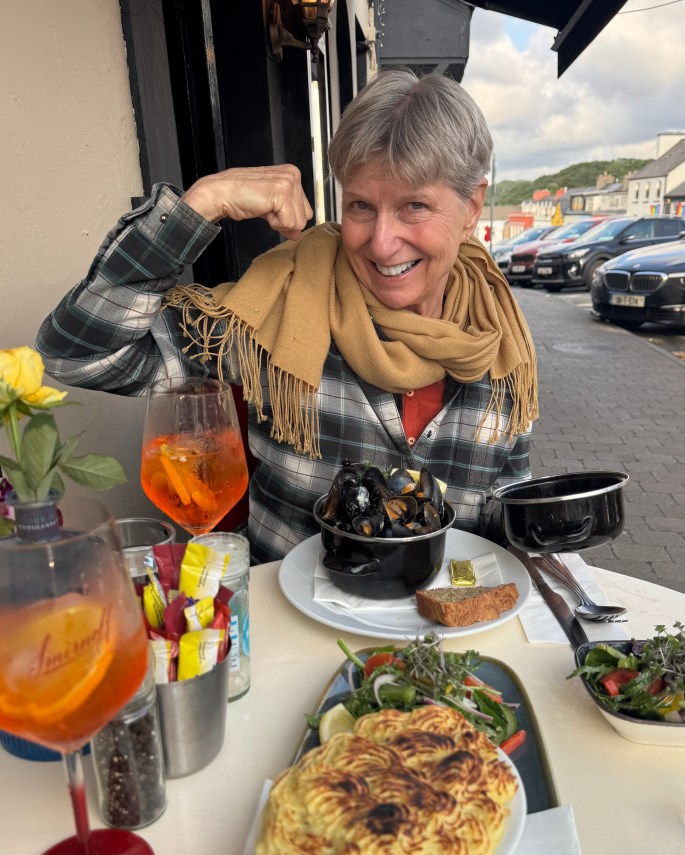
Food in Ireland is not just stew and potatoes and soda bread….. it’s an island, so excellent seafood is plentiful….. here, about to dig into a pot of fresh mussels.
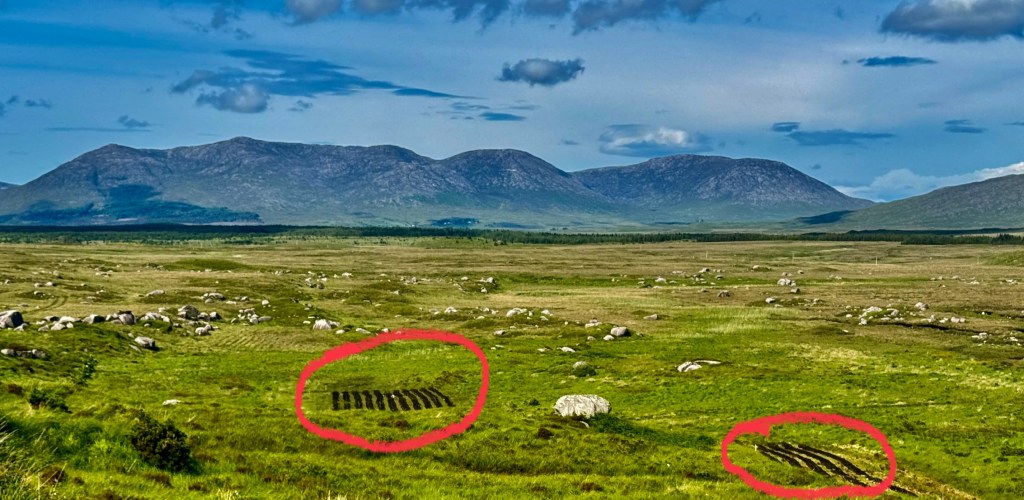
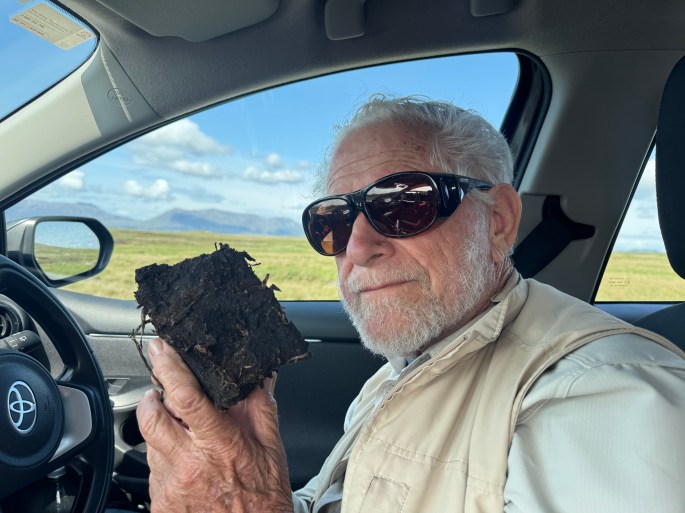
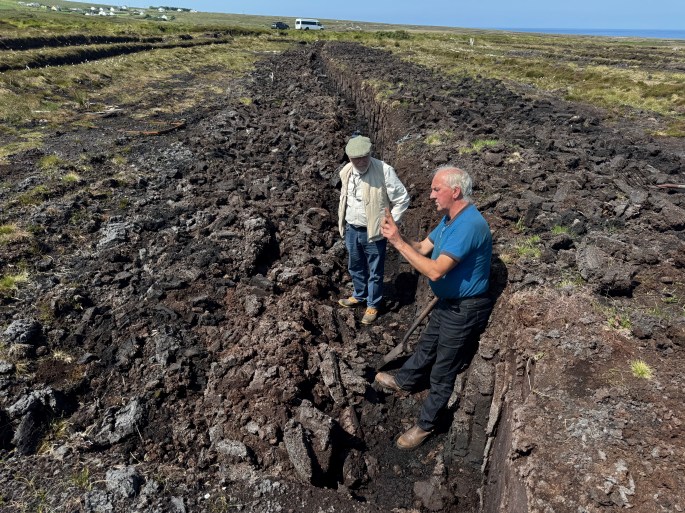
Something a little odd in this otherwise striking landscape turned out to be a peat-cutting operation…
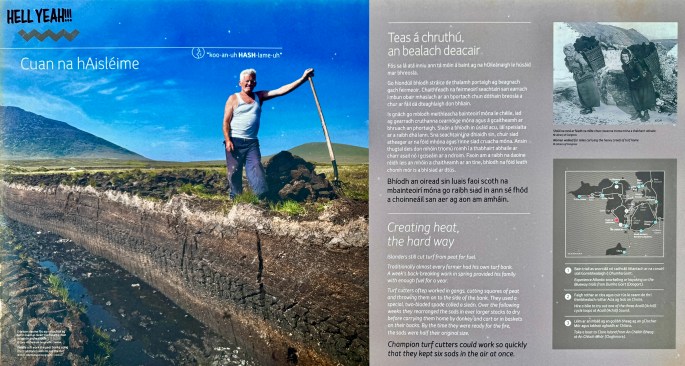
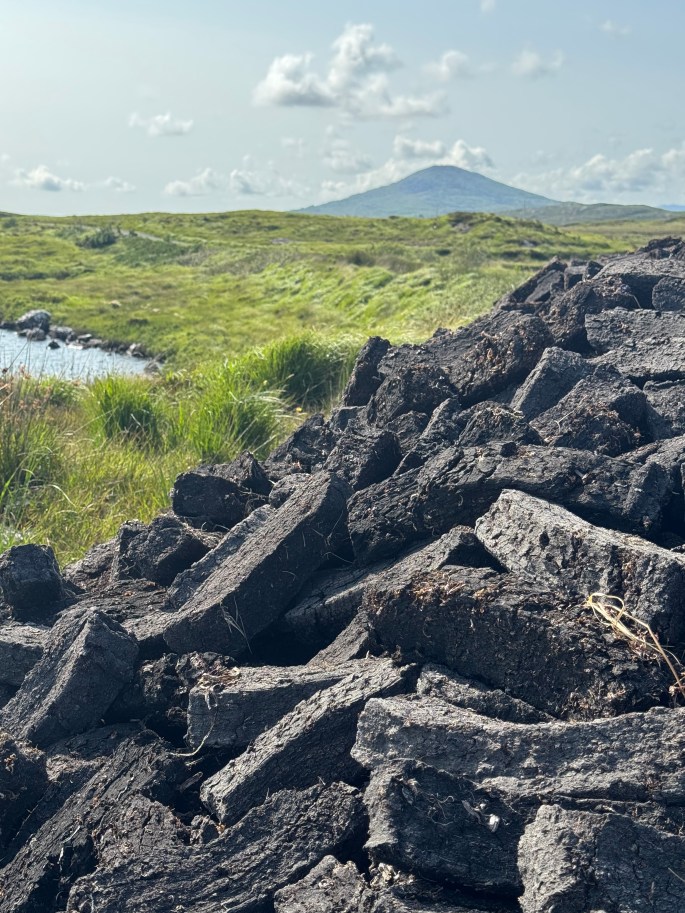
Peat is a spongy deposit of partially decayed organic matter found in wetlands. It has been harvested by hand and used as a fuel source for many years…. Here’s a traditional peat cutter, some cut peat stacked to dry, and an individual “brick”.
Much more (probably way more than you want to know) about peat later…..
Other topics will be covered too, so please don’t let the peat content deter you from checking future posts from the Emerald Isle!
(Please remember to click on the title of this post or the link above that says “Read on blog” so that the videos and full formatting will load for your enjoyment!)
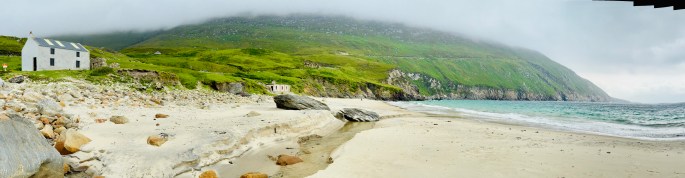
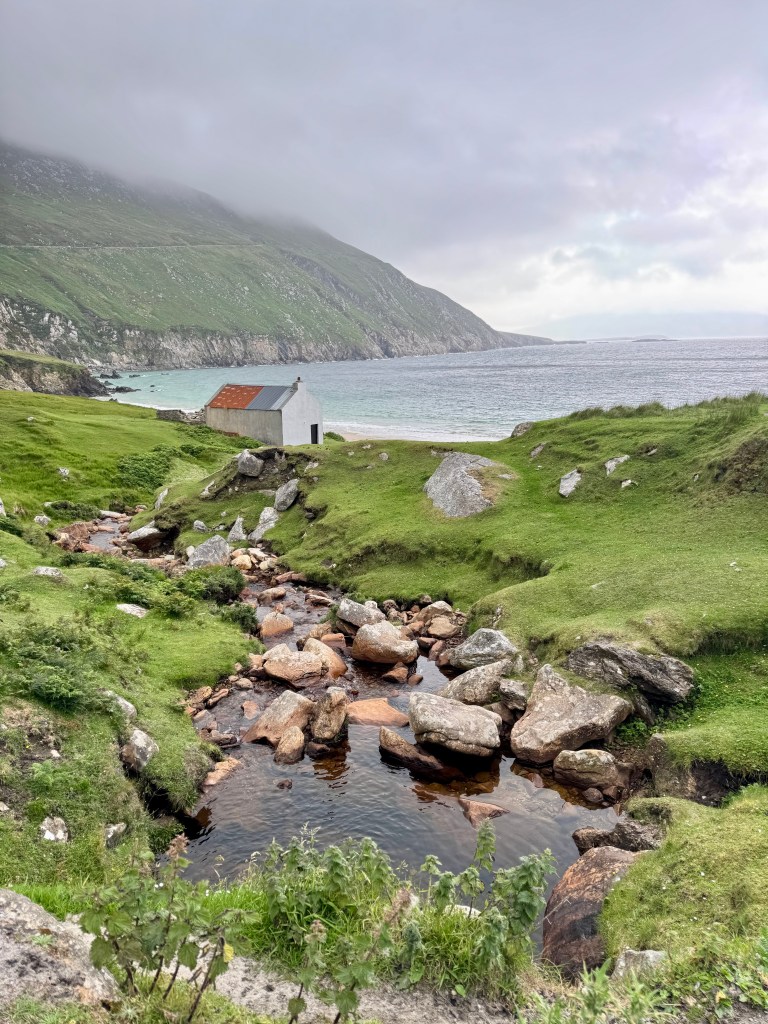
Achille Island in County Mayo was the primary filming site for “The Banshees of Inisherin”, a beautiful but ultimately very sad movie about the end of a friendship. One of the protagonists lived on this strip of beach.
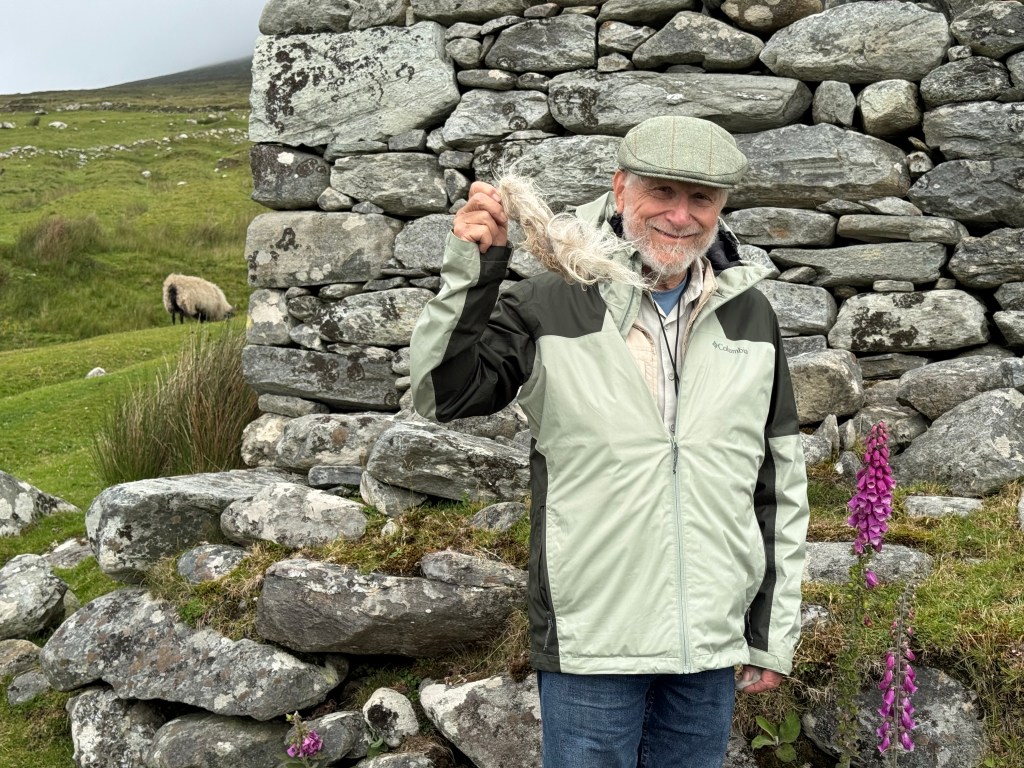
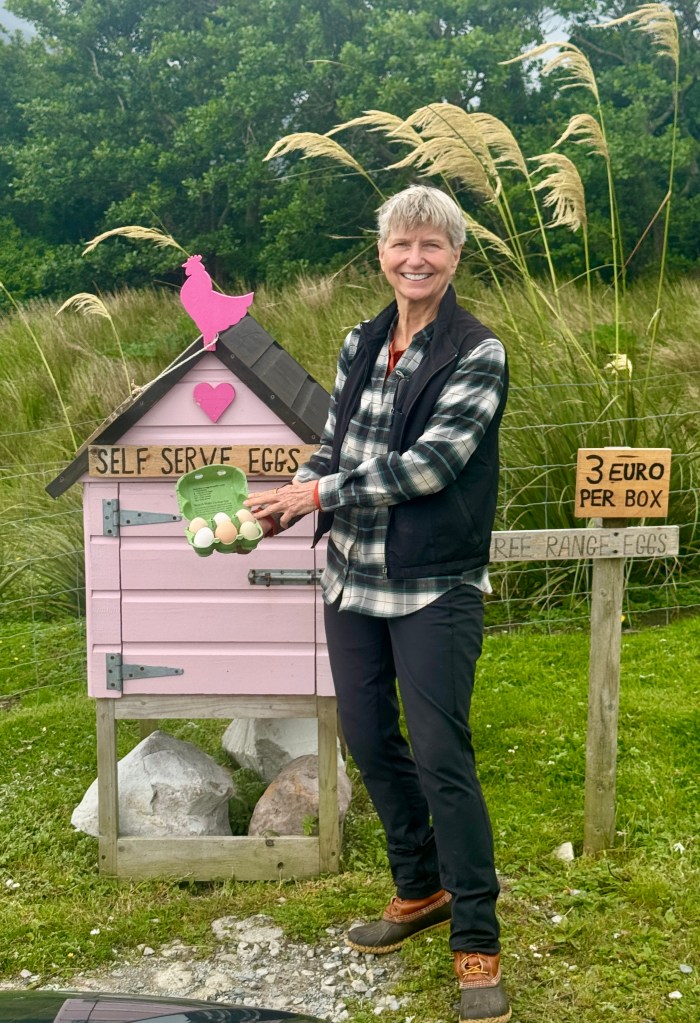
Evidence of wool and egg production were noted along the road…
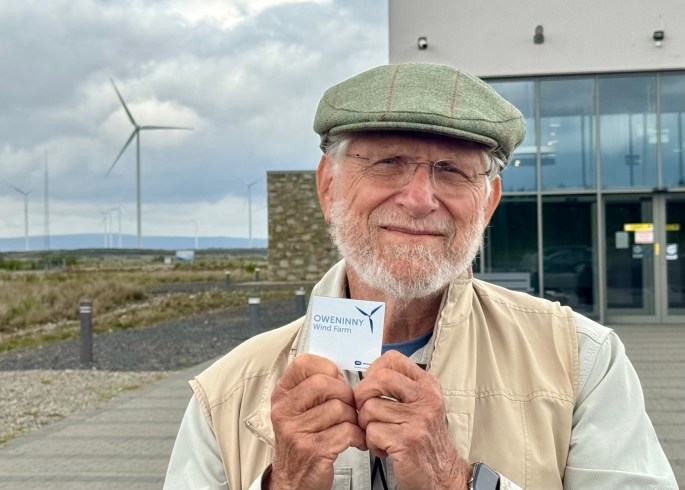
The Oweninny Wind Farm had not yet opened its visitor center to the public, but made an exception for a couple of curious seniors.
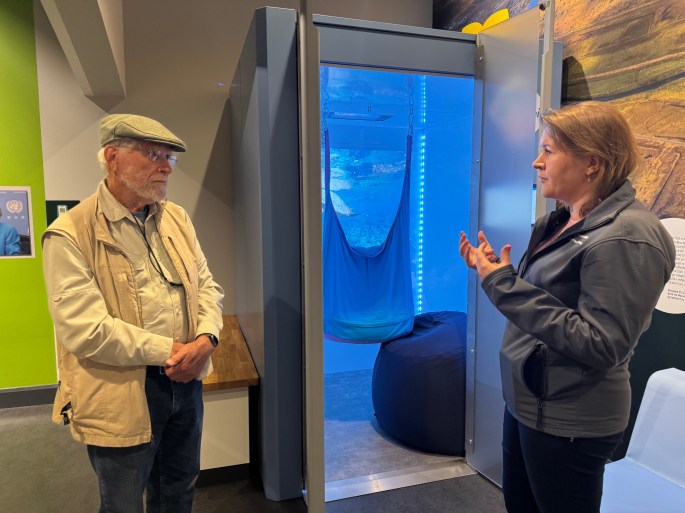
The manager explained how industrial burning of peat had provided electrical power in the area for many years…… (She and Henry are standing in front of the center’s sensory room, intended as a calming environment for neurodivergent visitors who might be overstimulated or confused by the displays.)
Here’s a look at the way peat was harvested by hand….
Peat harvesting and burning release significant quantities of harmful carbon dioxide into the atmosphere. Wind power has therefore become a preferred energy source, as it does not have this effect. Old attitudes die hard, however, so the Wind Farm has established this center to educate residents and visitors on the whys and hows of the transition.
(No birds were harmed in the making of this video.)
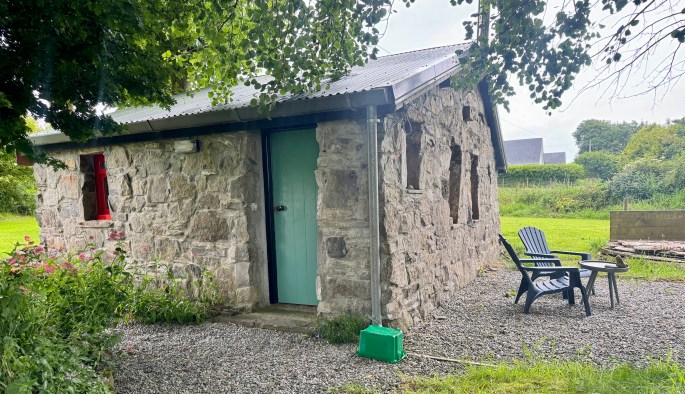
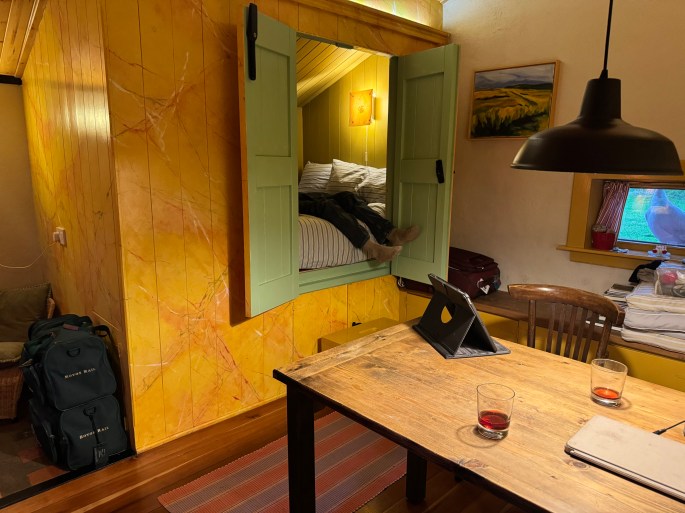
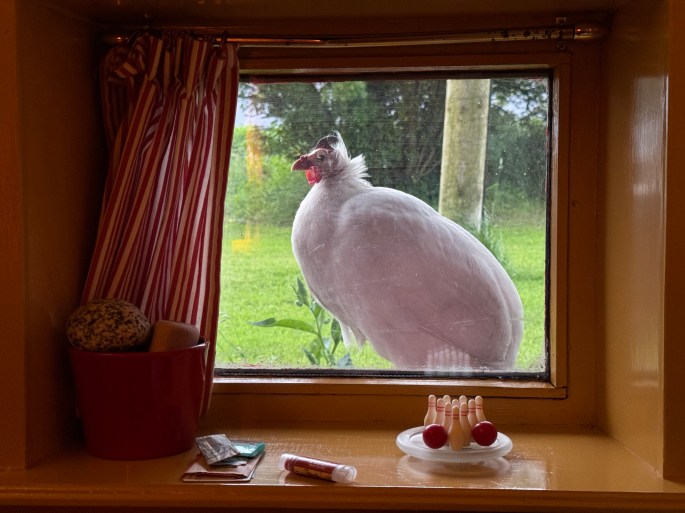
A precious tiny cottage was the base for exploration of County Sligo….. where a guinea fowl makes its home on the windowsill and donkeys greet the morning just outside the door.
Note the clever bed built into a cabinet (where Henry tries to get a bit of shuteye).
Iain – I know you’ll appreciate this…. Looks a lot like your place!
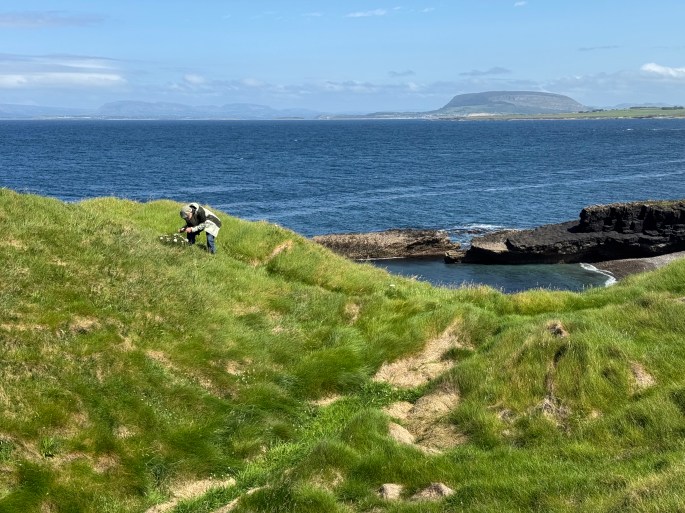
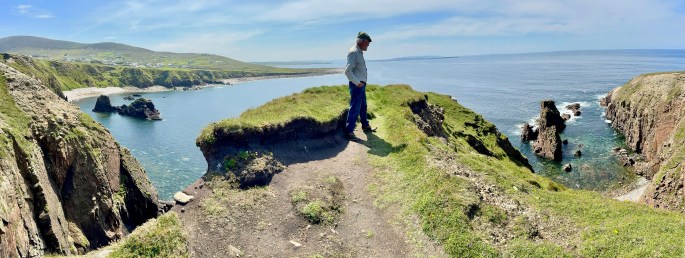
The area included stunning cliff-side paths along the ocean…..
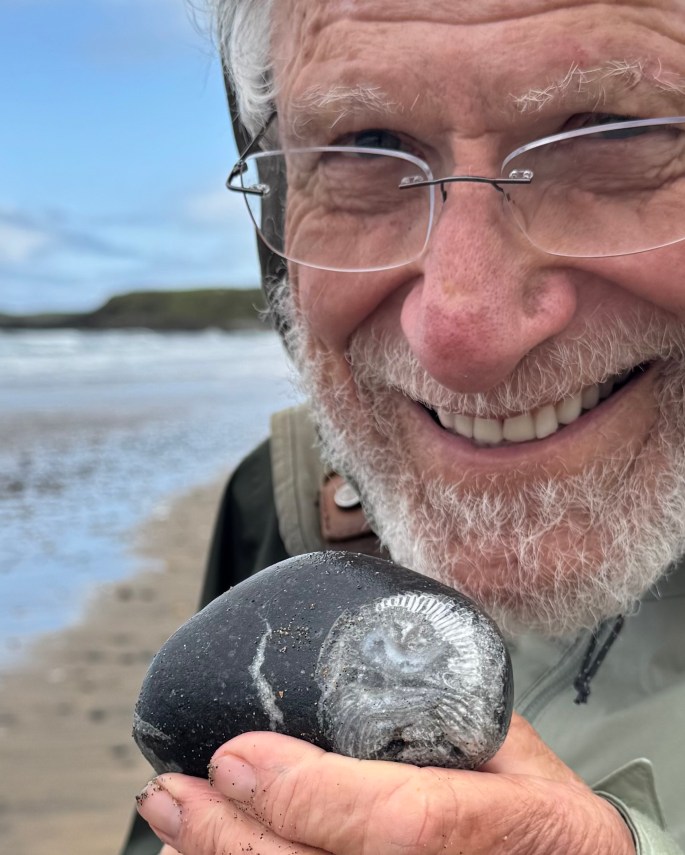
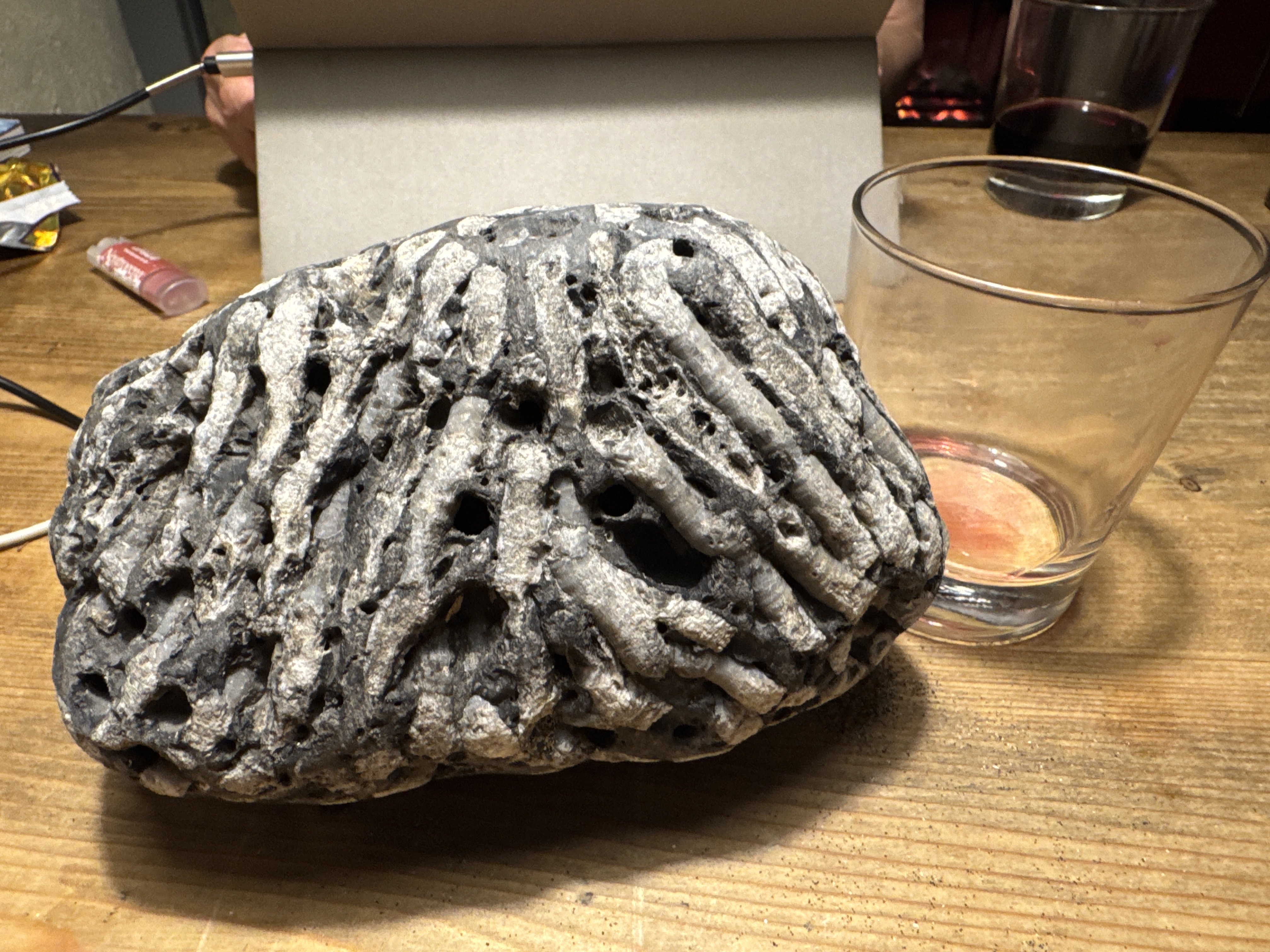
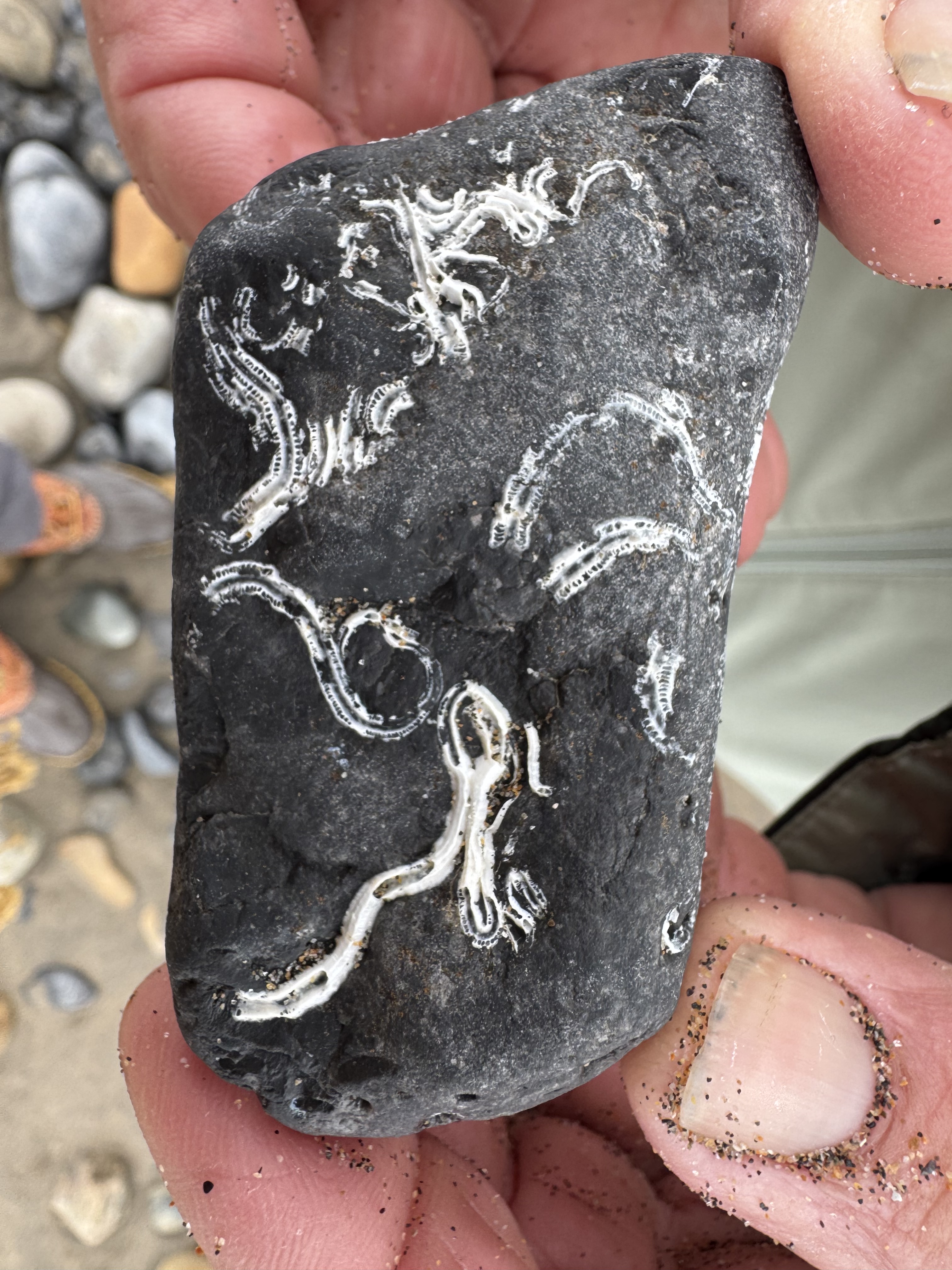
Plus a quiet beach that yielded several fossils that intrigued the happy rock hound.
A couple of canine encounters and lunch overlooking the beach…
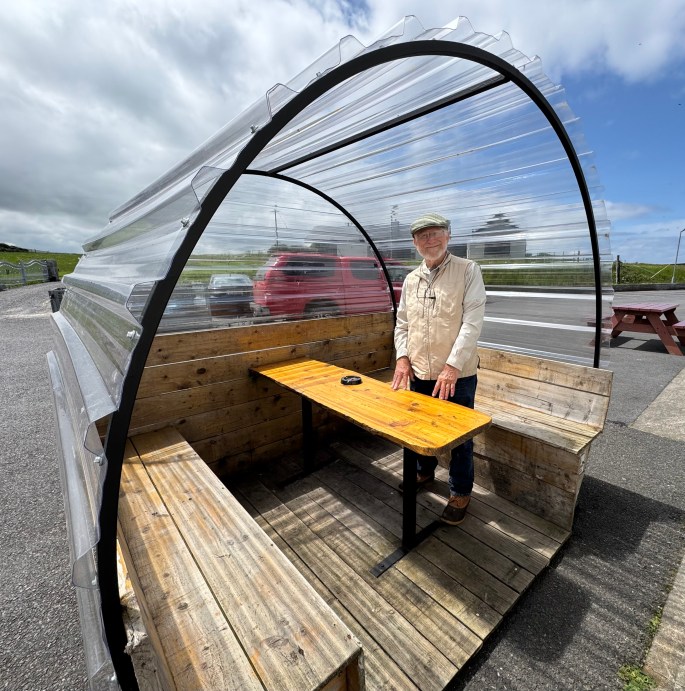
We fortunately didn’t need this enclosed picnic table, but how brilliant to have this in a place where drizzle is common!
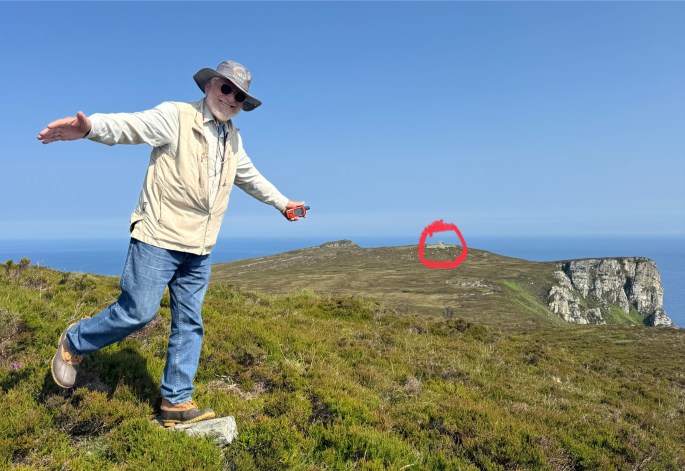
Continuing north to County Donegal, more cliff walks and spectacular ocean vistas…
That’s a lookout station in the distance that was put up during the Napoleonic wars to guard against invasion.
Not likely an Irish tune, but it fits the jaunty air of the traveler…..
Donegal Castle was not particularly fascinating….except for two things. First is its sad history as home base for an Irish noble, who in the face of English encroachment decided to leave Ireland to seek help from sources in Spain and France to secure his homeland. Instead, while he was gone, the English seized his land (and that of many of his fellow absent noblemen) and redistributed it. This episode, referred to as “The Flight of the Earls” led to large-scale allocation of property to English settlers, relegating many of the native Irish to serfdom.
The second factoid gleaned in Donegal is an incredible story linking this area to the Choctaw Nation in the US. Bear with me……. In 1831, the native American Choctaw people were forcibly relocated from their ancestral home in Mississippi to a reservation in Oklahoma territory along a route now called the Trail of Tears. About half of the tribe perished on the 500-mile march.
Less than 20 years later, they learned of the devastating Great Famine in Ireland, where the loss of potato crops led to starvation and death among the Irish populace. Despite their own tragic losses, the Choctaw raised $170 (tens of thousands of dollars today) to send to Ireland to aid relief.
In 1990, Choctaw leaders came to County Mayo to participate in a re-enactment of an Irish famine walk that occurred in 1847; in 1992, Irish leaders returned the honor by participating in a 500-mile trek in the US that followed the Trail of Tears.
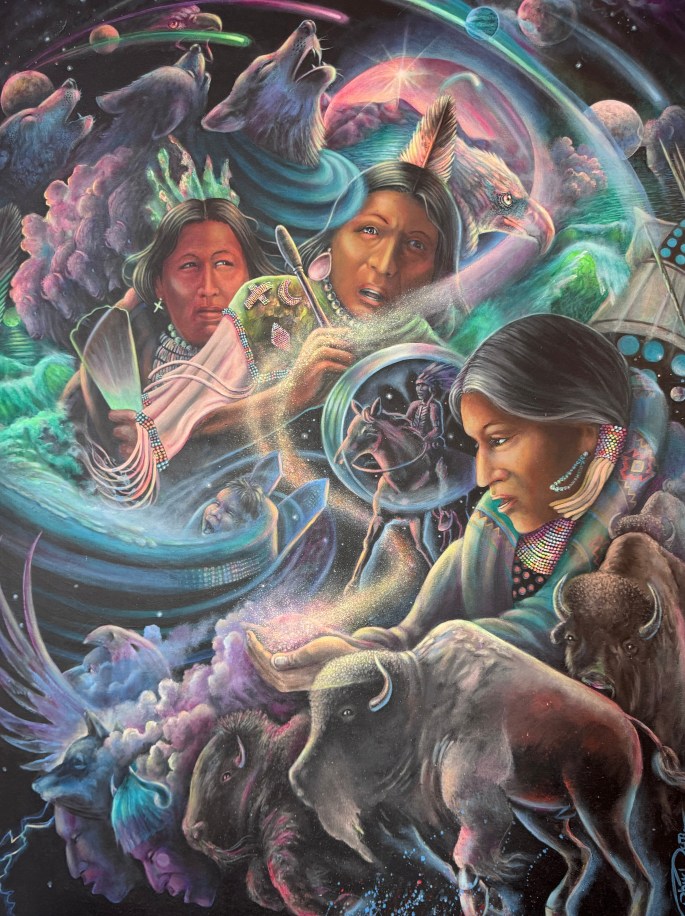
One of the Choctaw leaders who now resides in County Mayo, Ireland, painted this piece called “The Gift of Life”, that hangs in Donegal Castle.
A deeply moving story that again illustrates that we are all connected – one way or another – across cultures, national boundaries, religion and affiliation…..
Another exciting encounter in Donegal…….with a real-life peat farmer!
Morris fortunately does not rely on peat farming for his livelihood as the fields are becoming depleted….. and he looks forward to retirement anyway!
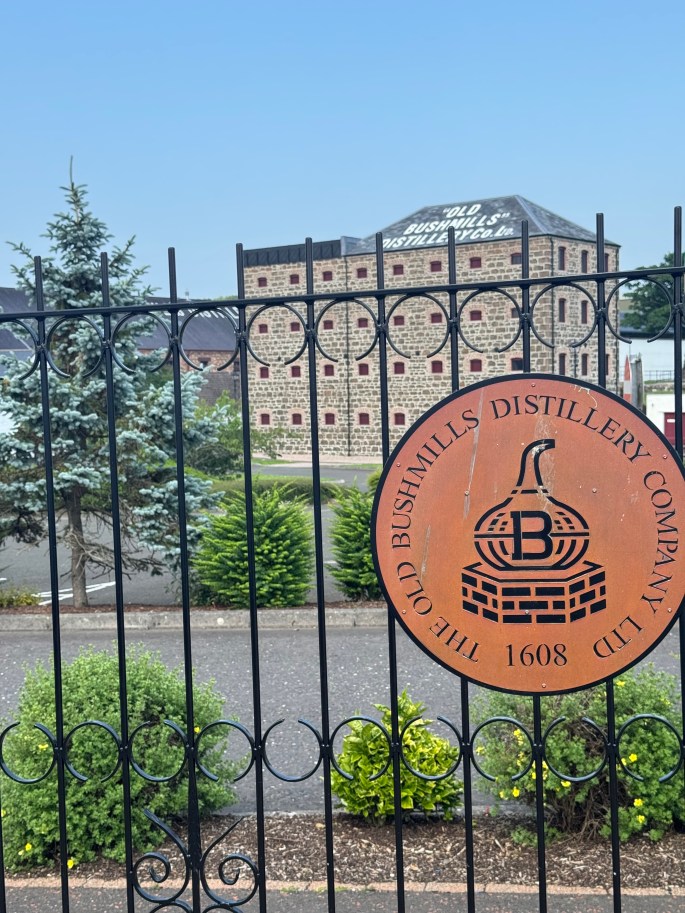
Bushmills is in Northern Ireland, and is perhaps most notably known as the home of the distillery by the same name.
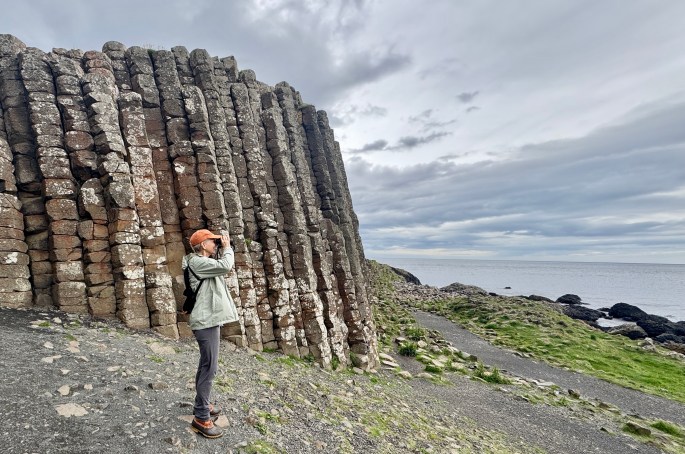
Bushmills is also the gateway to still another geological wonder on the North Atlantic coast…. The Giant’s Causeway.
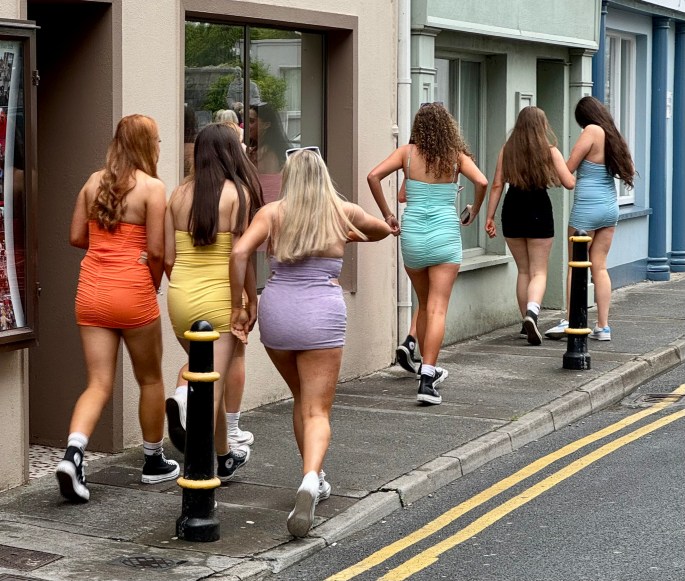
A couple of very parenthetical contemporary observations…… In one small town, secondary school students had just completed final examinations. Flocks of young women traversed the town center toward a party venue wearing identical tubes that varied only in hue…. Here are just a few of easily 60 to 70 girls on parade.
Strangely, we noticed no boys of similar age, but maybe they weren’t as flamboyantly attired! Or maybe just overwhelmed and in hiding.
And a brilliant safety net for anyone who might end up on an uncomfortable first date, colorful attire or no…..
How reassuring…. And quite civilized!
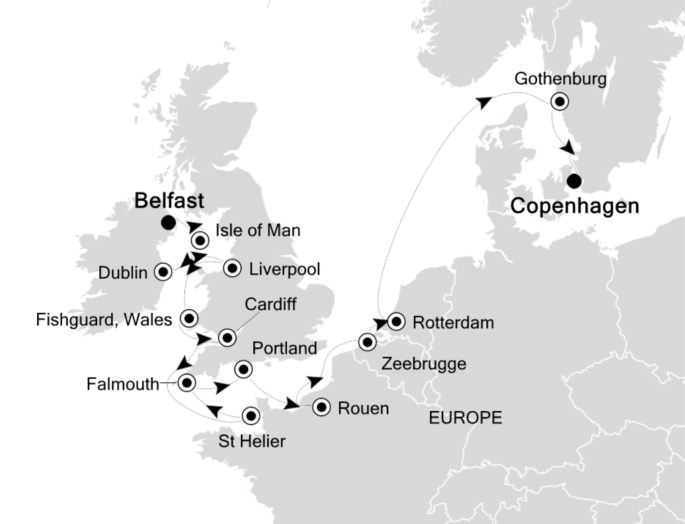
And that will conclude this lengthy post. The next phase of our journey takes us to Belfast, where we meet up with Henry’s daughter Holly, husband Matt and children Lily and Caleb for a cruise through the British isles and Northern Europe.
The Silver Shadow is a relatively small ship with fewer than 300 passengers on board; as such, it can berth in relatively small harbors along the way. It embarked on a 16-day cruise from Belfast….
Our group assembled a couple of days before departure…
Holly, Lily, Caleb, Henry, Robbie and Matt….. warming up for an adventure!
Belfast
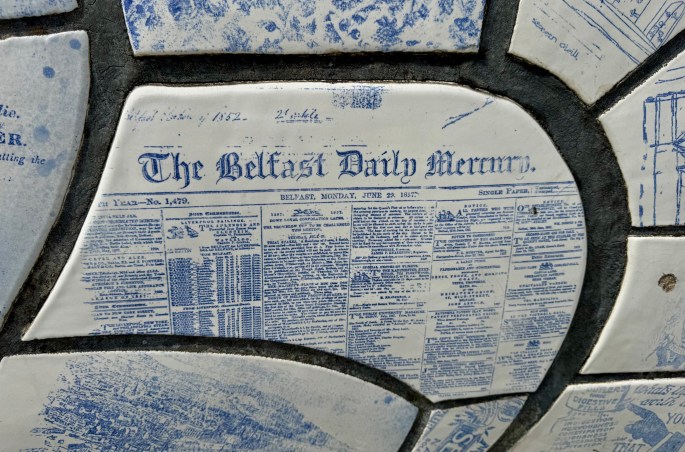
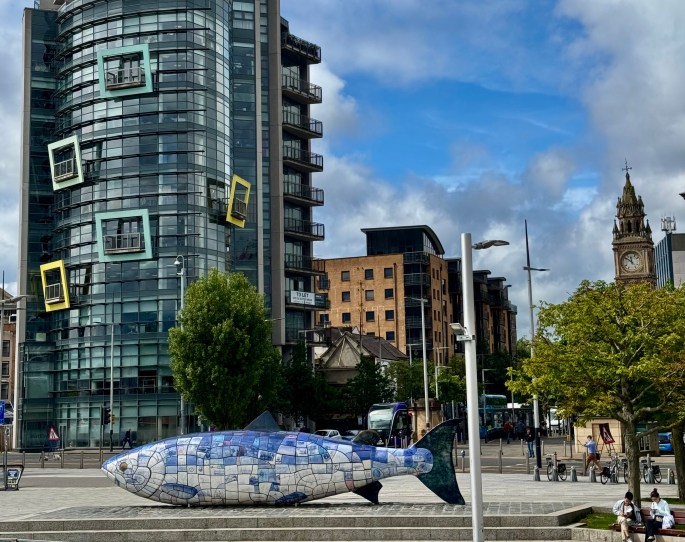
Belfast is part of Northern Ireland, with plenty of history, past and present…. Caught here between rain showers and drizzle.
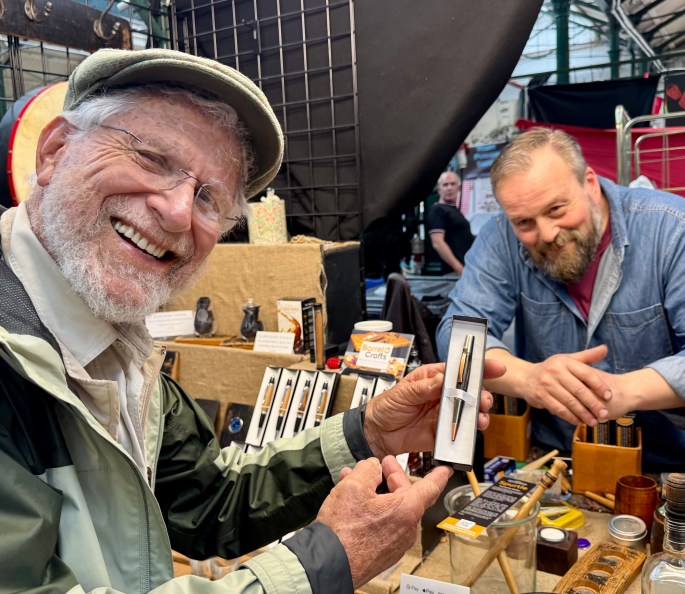
This wood craftsman at the central market creates beautiful items out of bog-wood, which is wood that has been preserved through centuries in (drum roll….) peat! Henry got a nice peat-wood pen in honor of Father’s Day! A fitting souvenir.
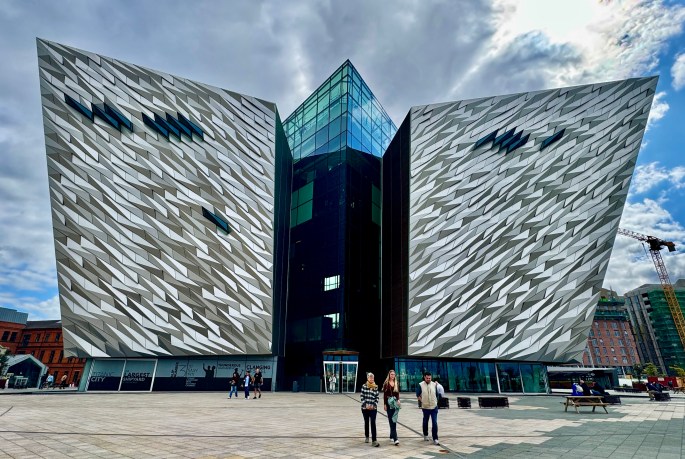
It may seem an odd thing to do just before boarding a cruise ship, but we felt compelled to visit Belfast’s Titanic Museum. The ill-fated ship was built by Irishmen in Belfast, but they are quick to point out that it was sunk by an English crew! In any event, it is a dazzling venue.
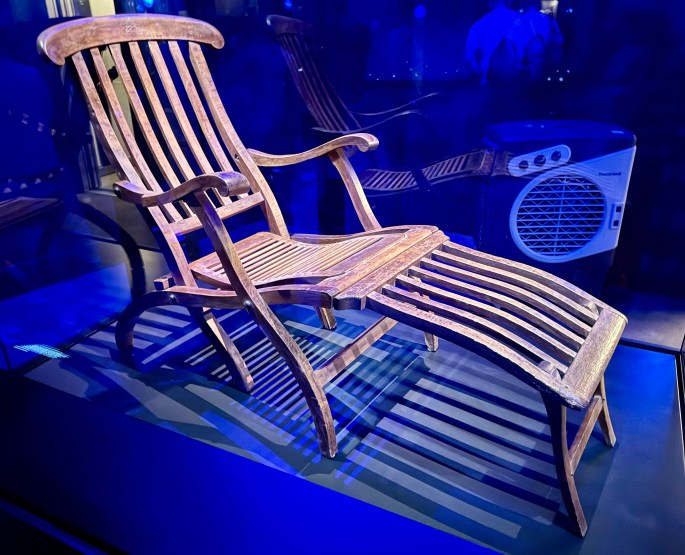
“Rearranging the chairs on the deck of the Titanic” is a phrase often heard about a futile effort or pointless plan of action…… it was touching to see the real thing on display.
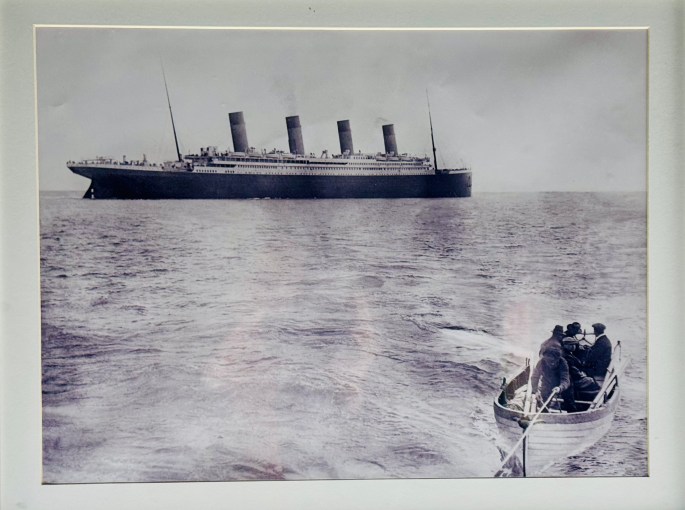
Here is the last photo taken of Titanic as she made her way toward the Atlantic for her date with destiny….
Undeterred by the memory of the doomed ship, Lily is excited and ready to go! (Be sure to click on the image for video and sound….)
Isle of Man
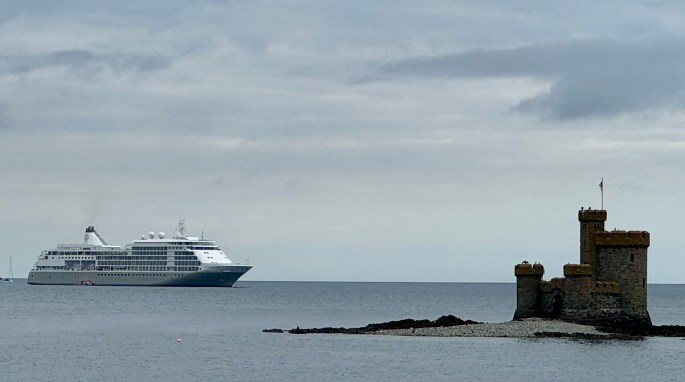
First port of call is Douglas on the Isle of Man
Our ship, the Silver Shadow (looking eerily like the earlier photo of Titanic……)
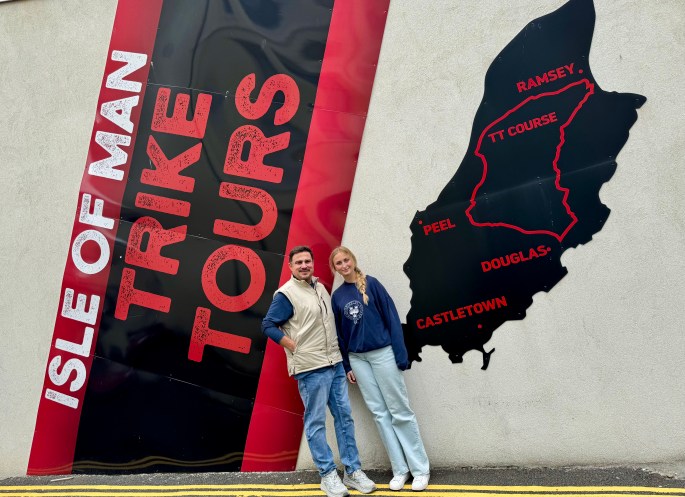
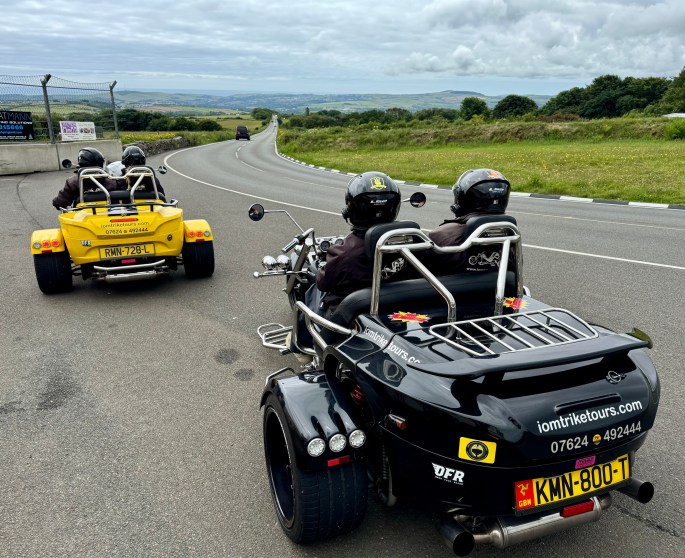
The Isle of Man is known for its annual motorcycle race called the Isle of Man Tourist Trophy, or TT. The race is distinguished as it is run on public roads (that are closed for the race) at average speeds of well over 120 mph. There have been more than 250 fatalities during its 100+ year history!
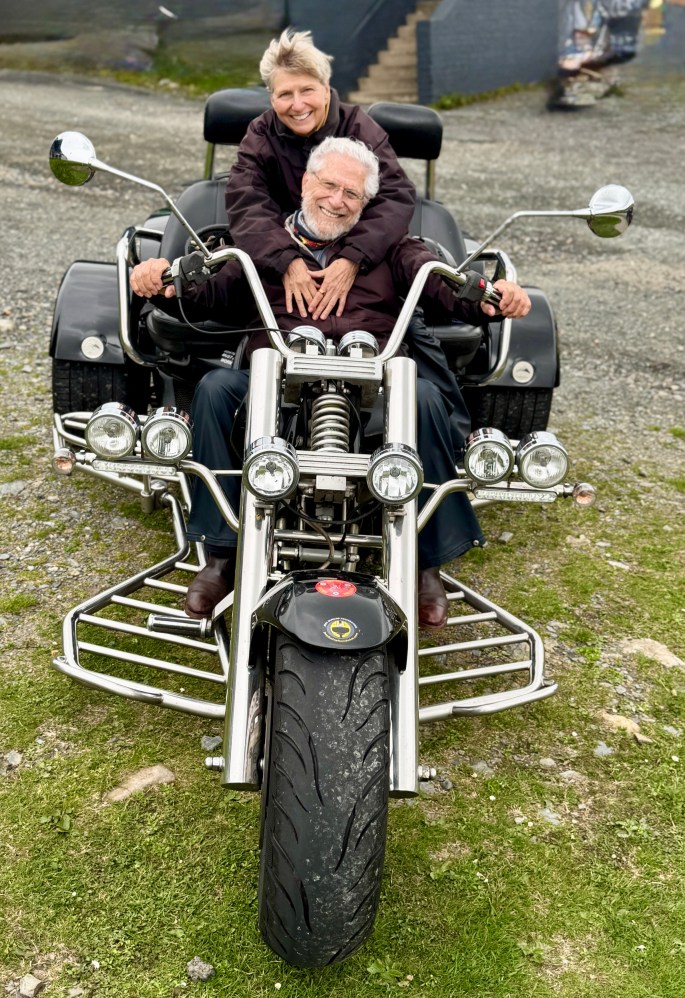
We all got to tour the course at a much slower speed on trikes – driven, fortunately, by experienced professionals…..
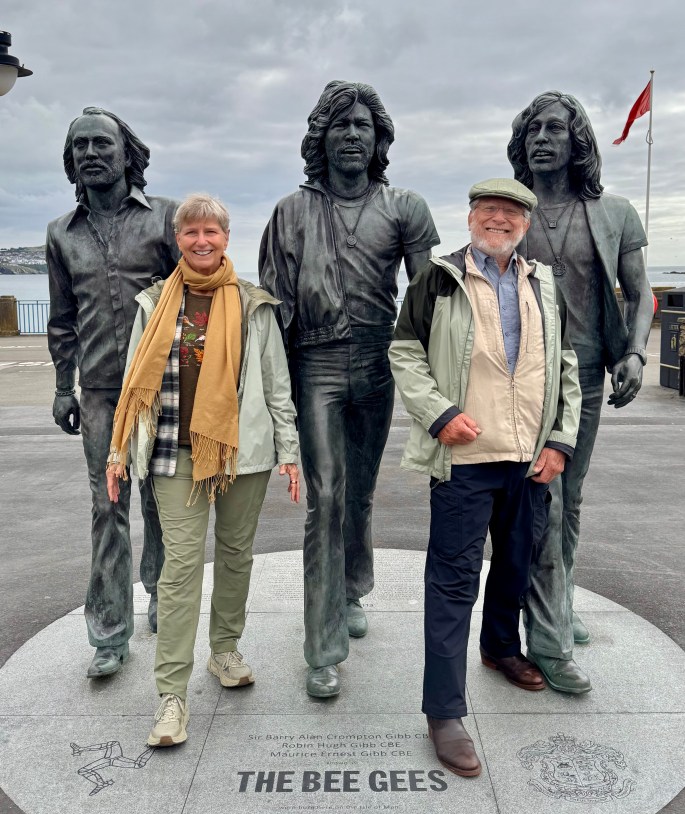
Native residents of the Isle of Man are called Manx…… who knew that The Bee Gees were Manx?????
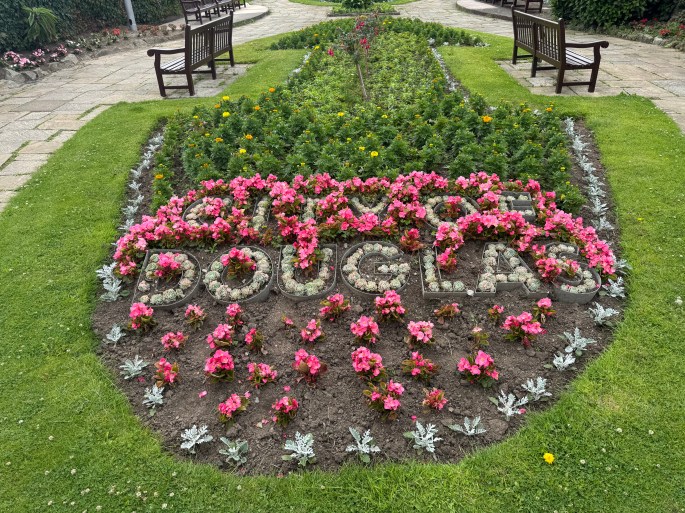
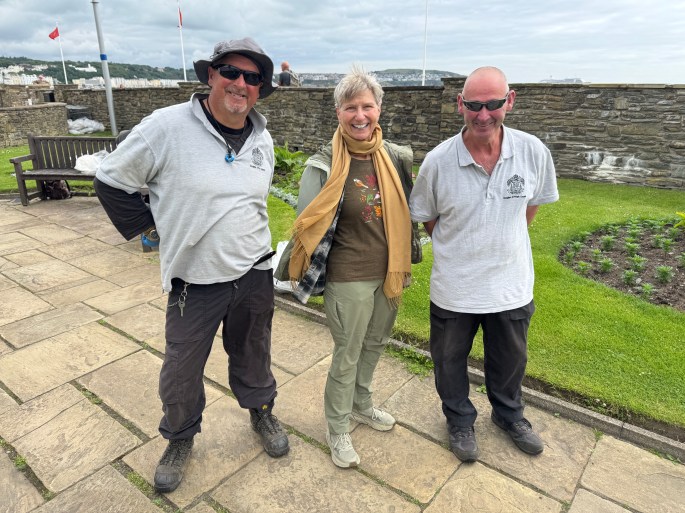
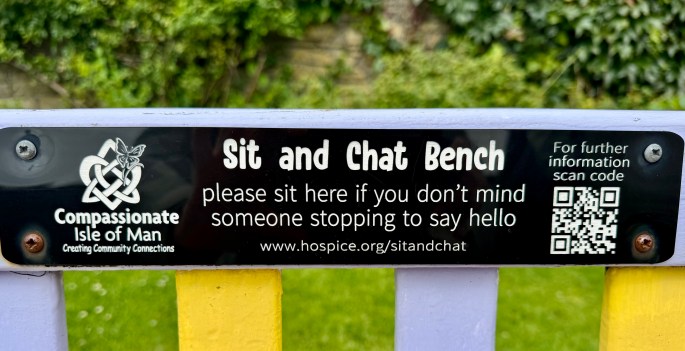
The other Manx we met were warm and welcoming…. Like these two who maintain an exquisitely-manicured garden along the sea wall.
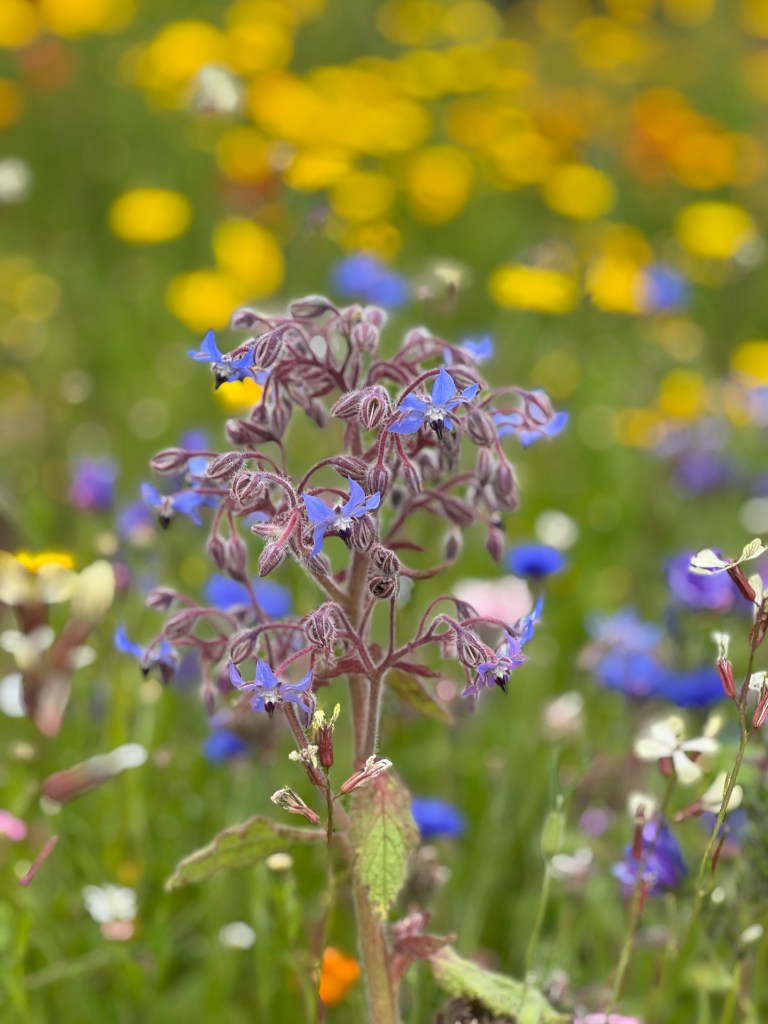
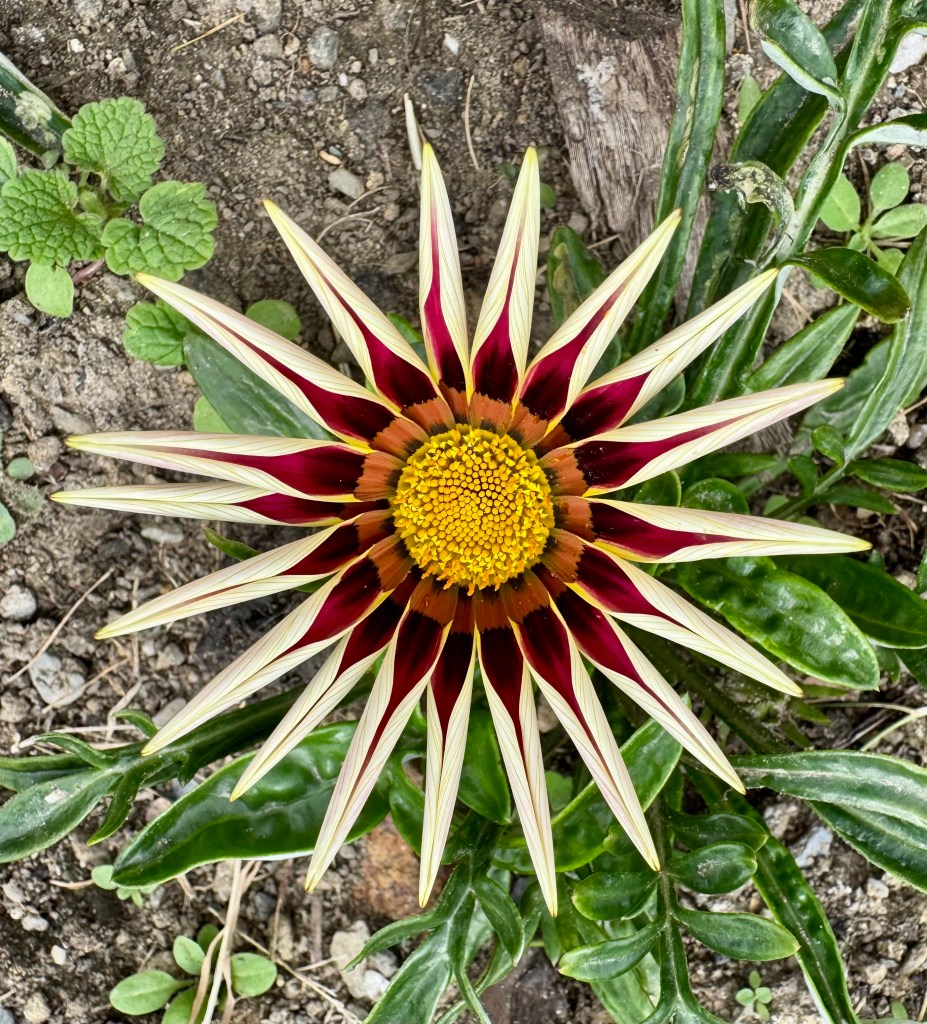
What a civilized addition to any public garden!
Dublin
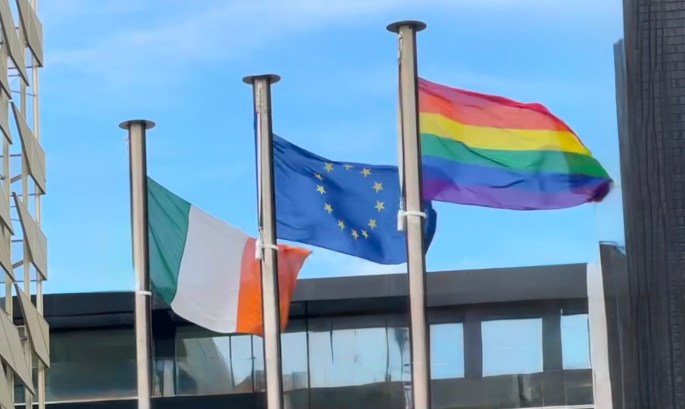
Next stop, Dublin in the Republic of Ireland, a part of the European Union that is in the middle of Pride Month…..
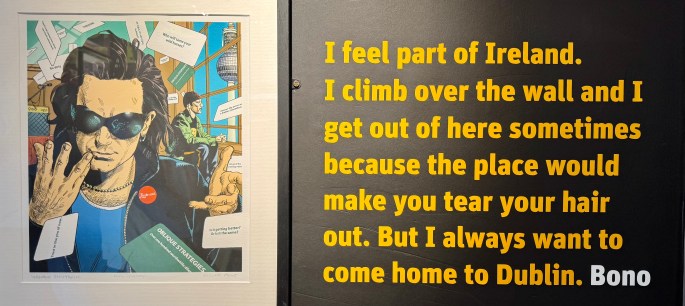
One of Dublin’s most famous sons from the world of Rock…..and an amazing philanthropist….
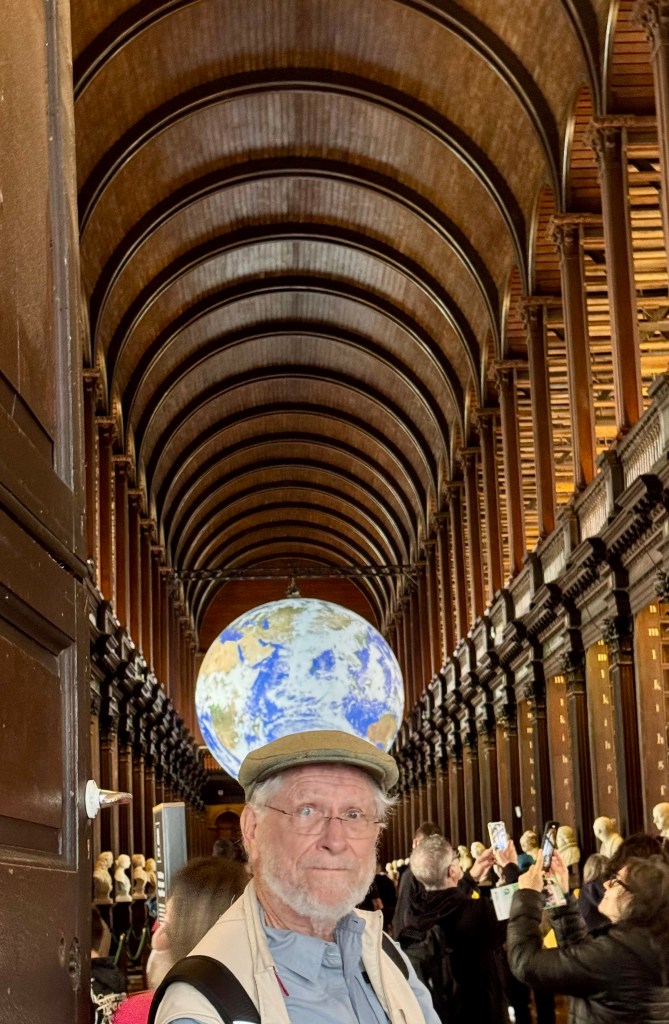
The Book of Kells is a gorgeous illustrated manuscript that dates back to the 9th century… it is lovingly maintained in the library at Ireland’s oldest university, Trinity College, Dublin.
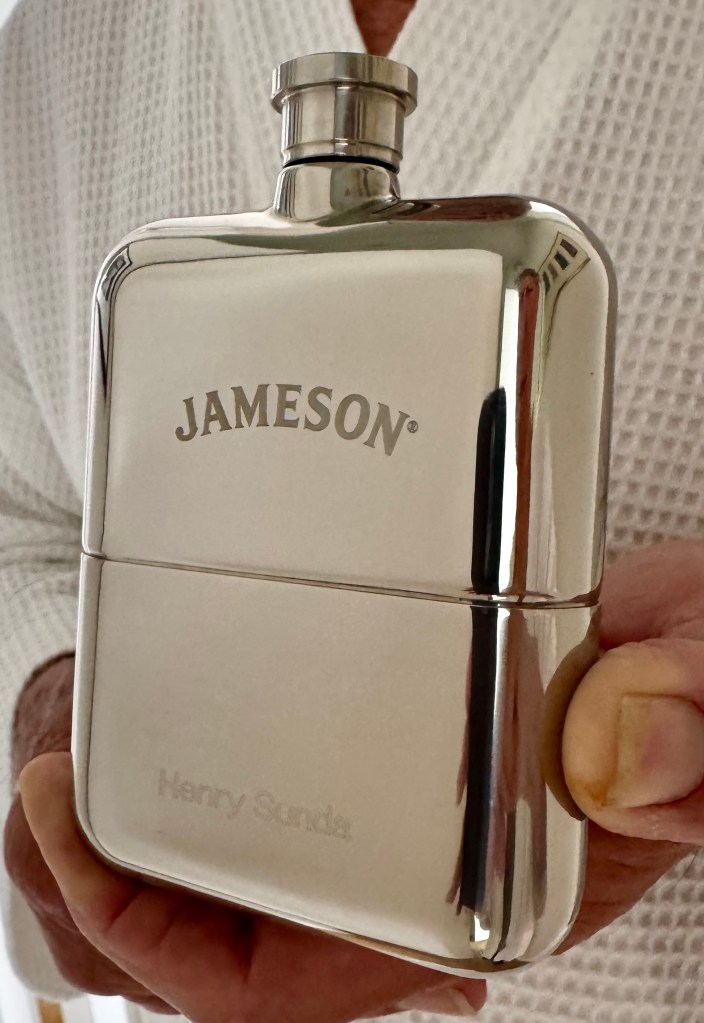
Some of us chose to taste Irish whiskey….. bringing back a lovely engraved flask for Henry’s favorite cream liqueur. (Thanks again, guys.)
A few other whimsical sightings in Dublin…..
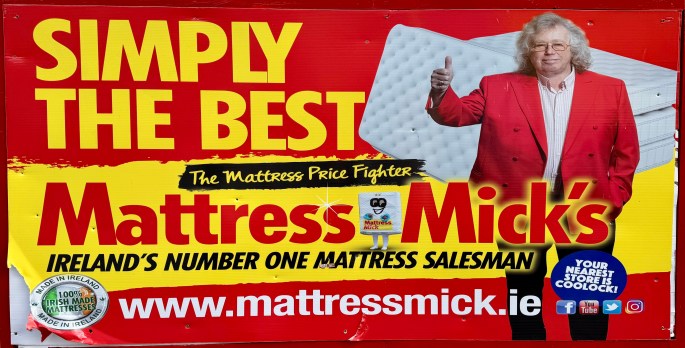
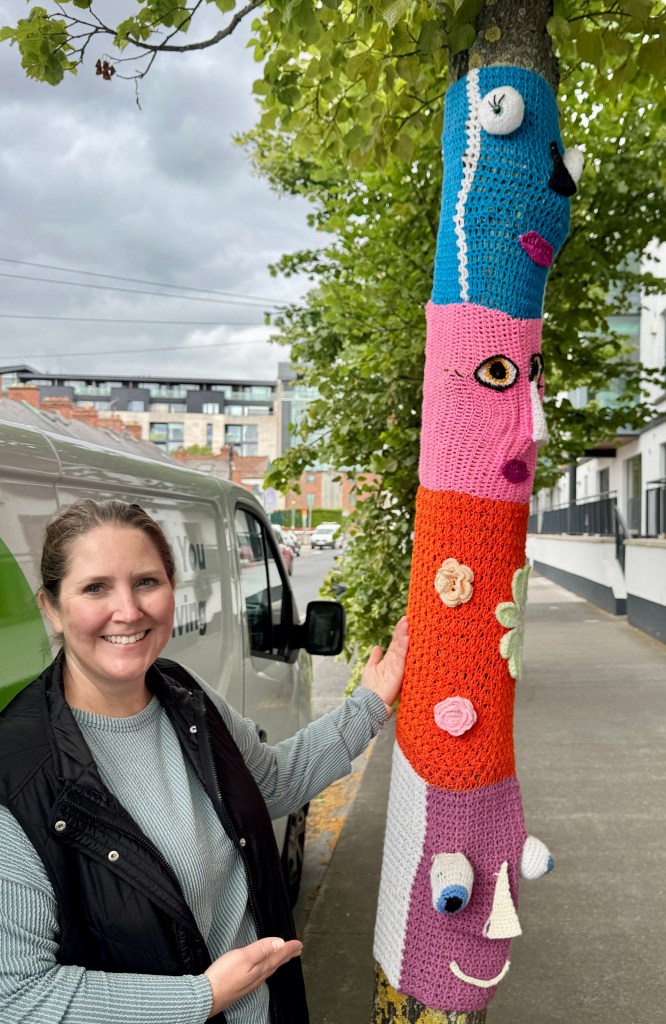
Just like Houston’s long-time Mattress Mack…. He’ll save you money!Yarn bombs!You never know what you’ll find when in the local “hardware” store!
Liverpool
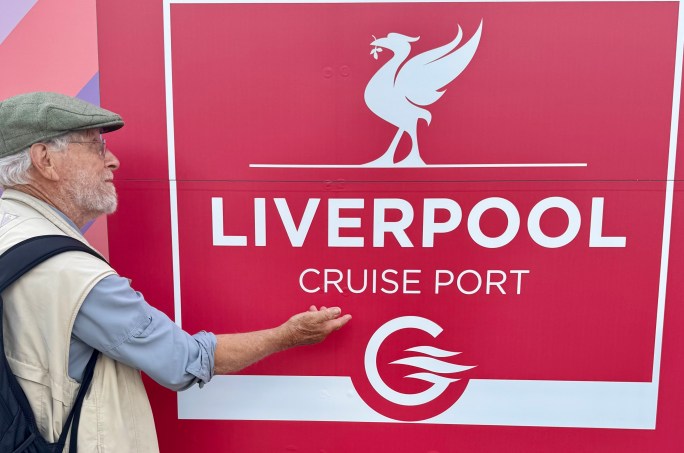
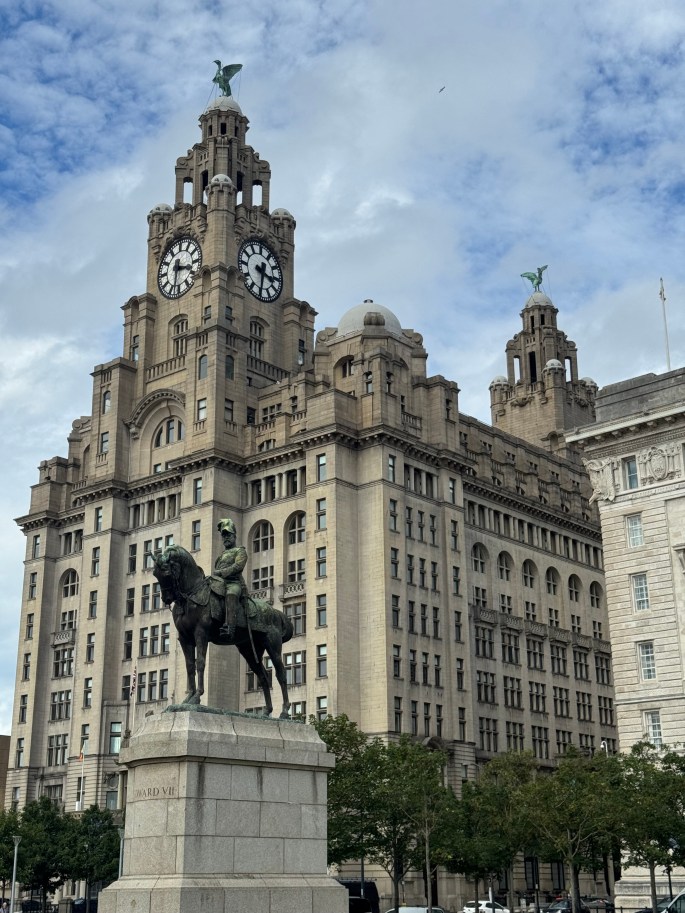
The symbol of Liverpool is a mythical bird called a liver….
It’s perched on the top of several public buildings…..
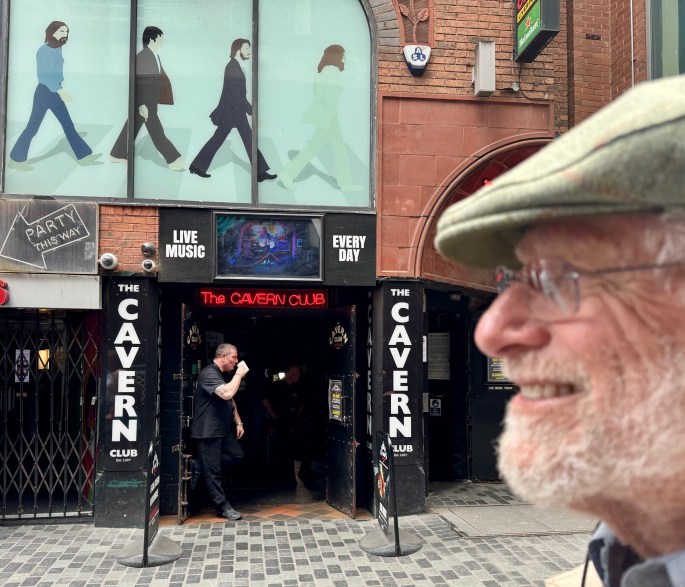
Other famous Liverpudlians include, of course, the Beatles, who first became popular performing here at The Cavern.
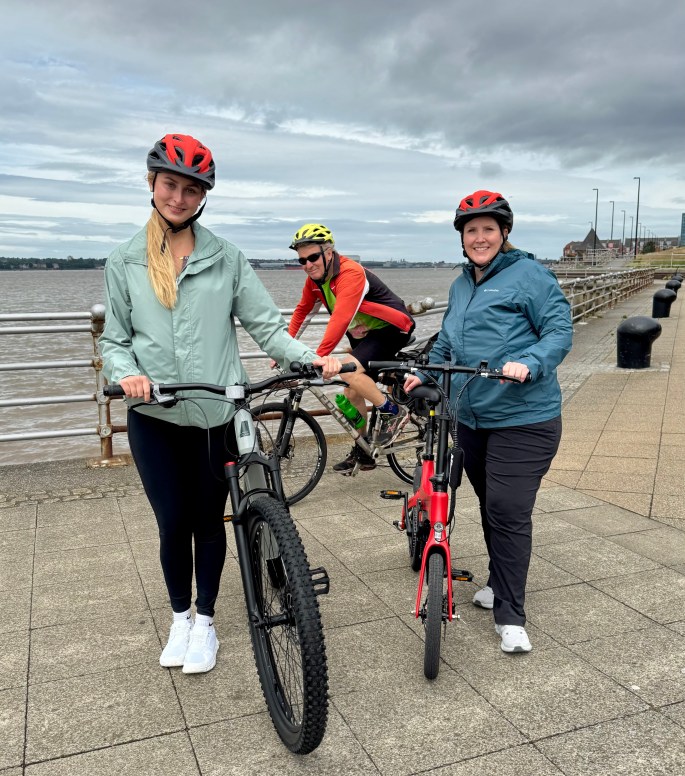
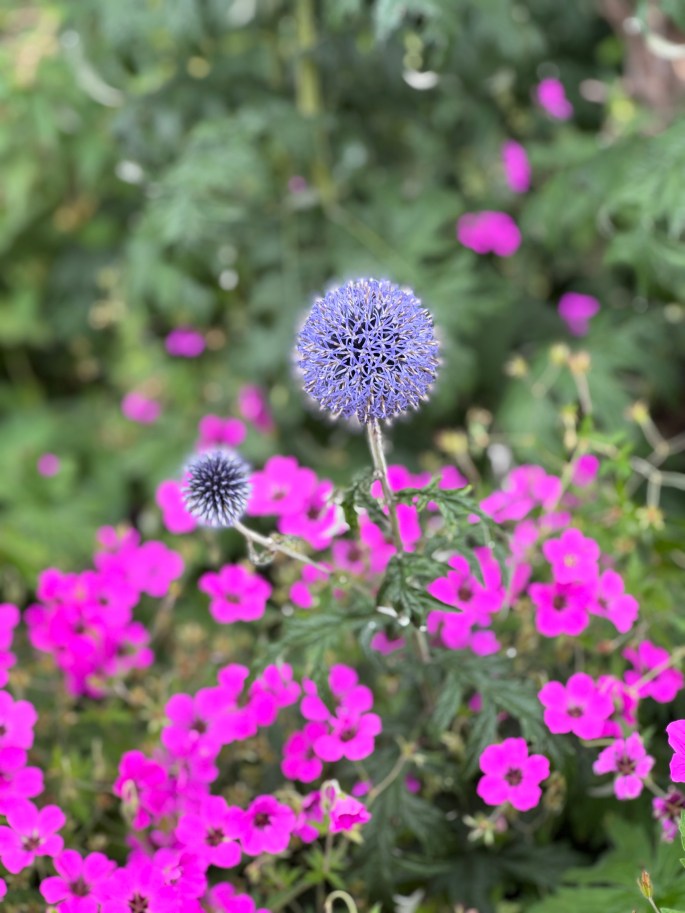
Some of us chose to explore Liverpool’s green places and gardens by bicycle….
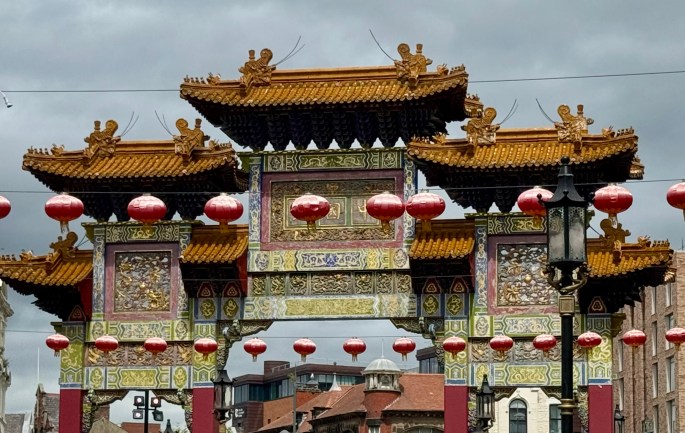
Liverpool boasts the largest Chinese arch outside of China, a gift from its twin city, Shanghai.
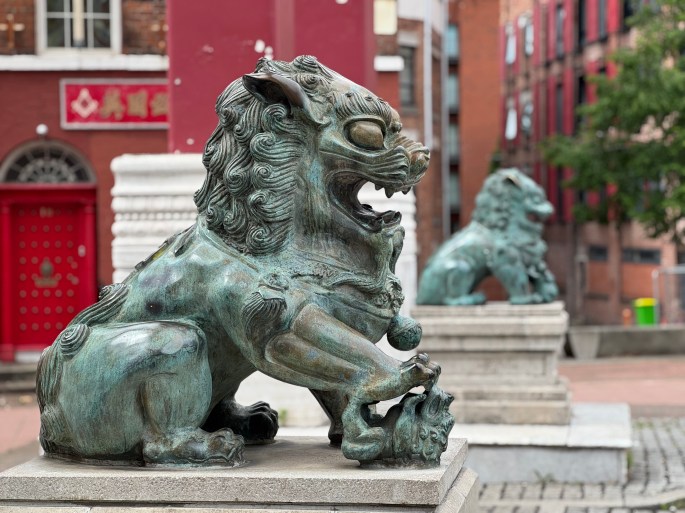
It’s flanked by a pair of Chinese lions….the lion in the background is a male, with his paw on top of a globe that symbolizes the material world. The one in the foreground is female, her paw resting on a cub, symbolizing nurturing and spirituality. They are usually seen in pairs like this, warding off harmful influences and attracting good fortune.
It’s always a treat to find evidence like this of linkage between cultures…. Maybe we will find more in our future travels!