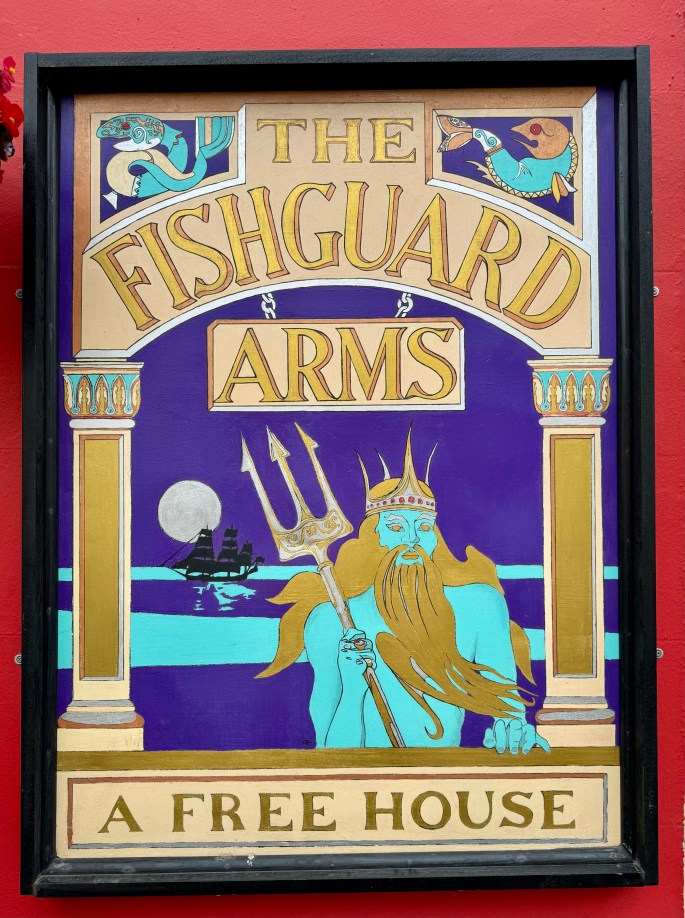
Finland

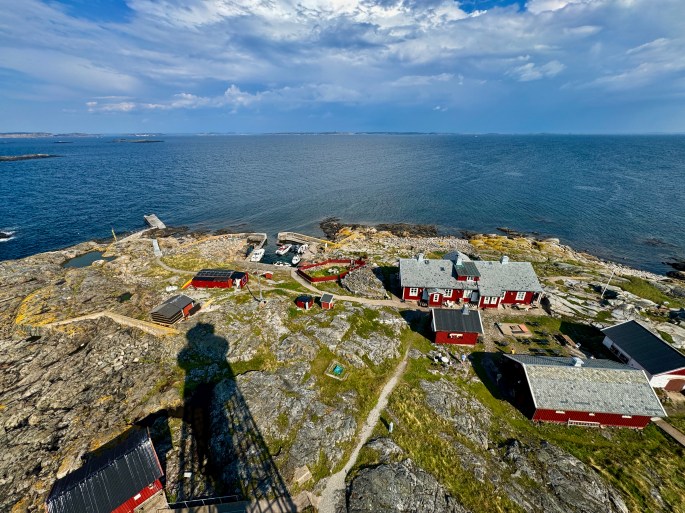
Åland Islands

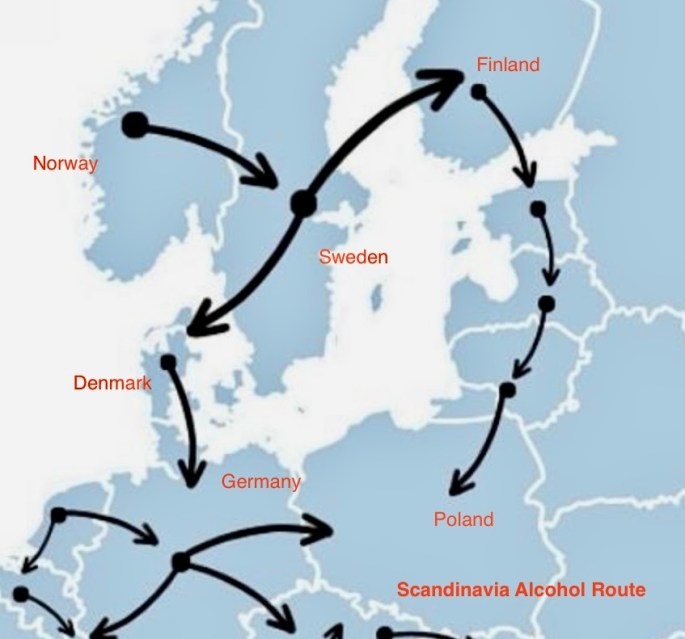
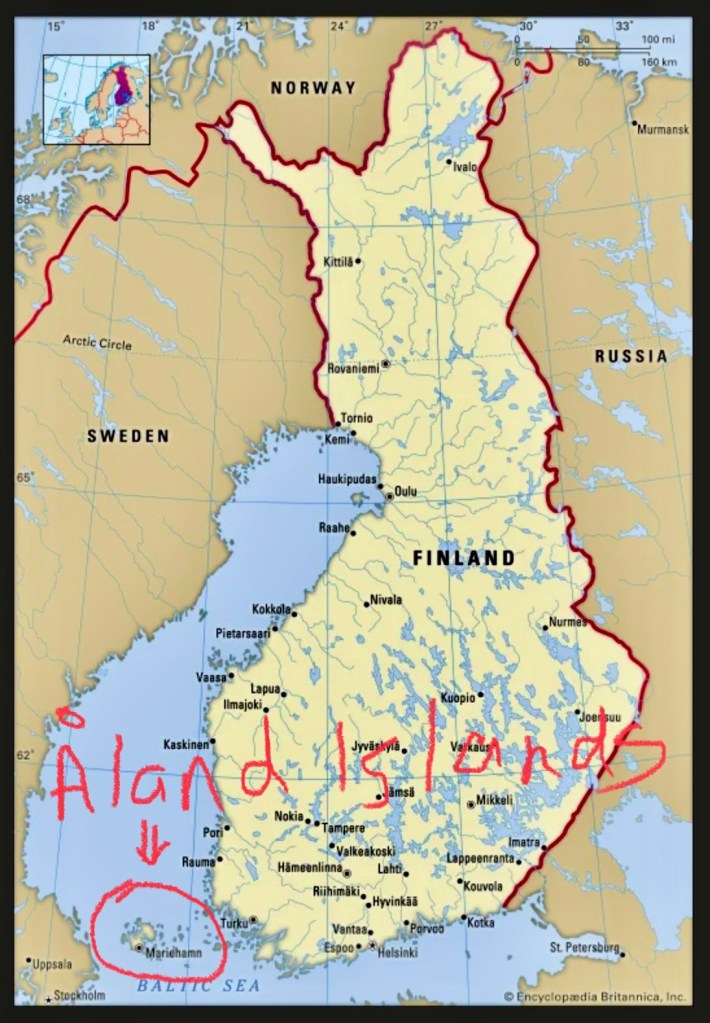
Between southern Sweden and Helsinki lies the unique geo-political archipelago called the Åland Islands, a fairly short ride on one of the many ferries that serve the Baltic. (Again, a helpful map for the geographically-challenged.)

The Åland Islands have a unique relationship with the world and the nation of Finland, of which they are formally a part.

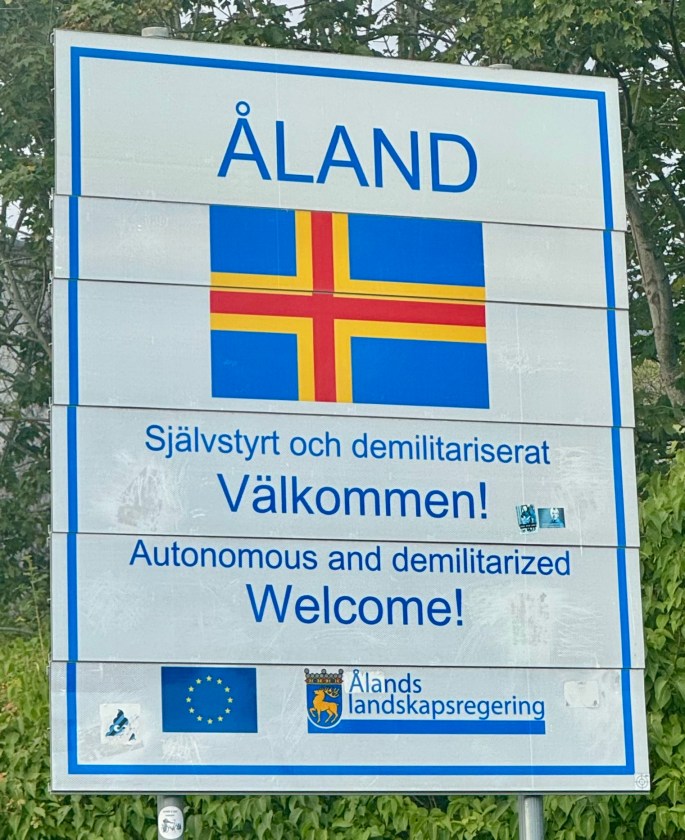
As noted proudly on the sign, the islands are self-governing for the most part and demilitarized. Through a complex history involving exchanges between Finland, Sweden and Russia over the last couple of centuries, this region, while part of Finland:

  • enacts its own domestic legislation (excluding foreign affairs, the court system and state taxation), and
  • is neutral in times of war, does not support any military activity and its citizens are exempt from Finnish military service.

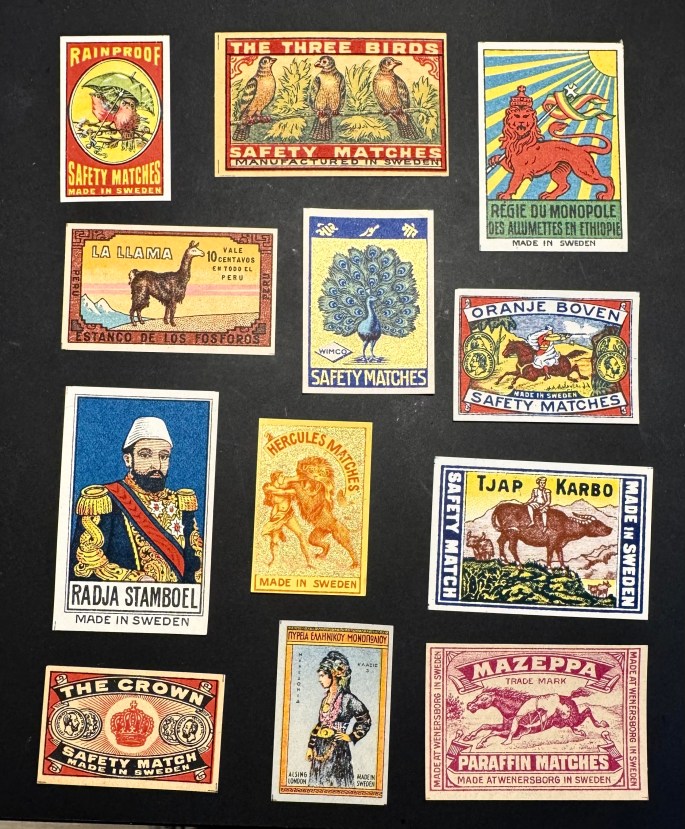
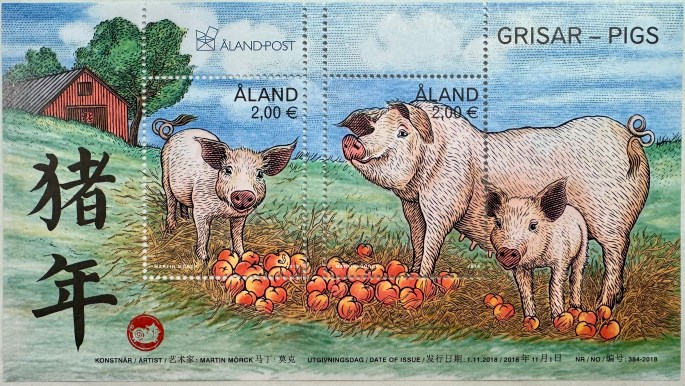
The sole official language is Swedish, not Finnish; its currency is the Euro (same as Finland)….. but it has its own postal service. Here is a beautiful Åland stamp.

Note the Chinese letters – this one celebrates the Chinese year of the pig. These pigs are depicted feasting on the islands’ major agricultural product – apples.

SIDE NOTE: If anyone enjoys stamp collecting or knows someone who does, please let me know, as we have a collection of interesting pieces from both Åland and other countries that we would love to share.

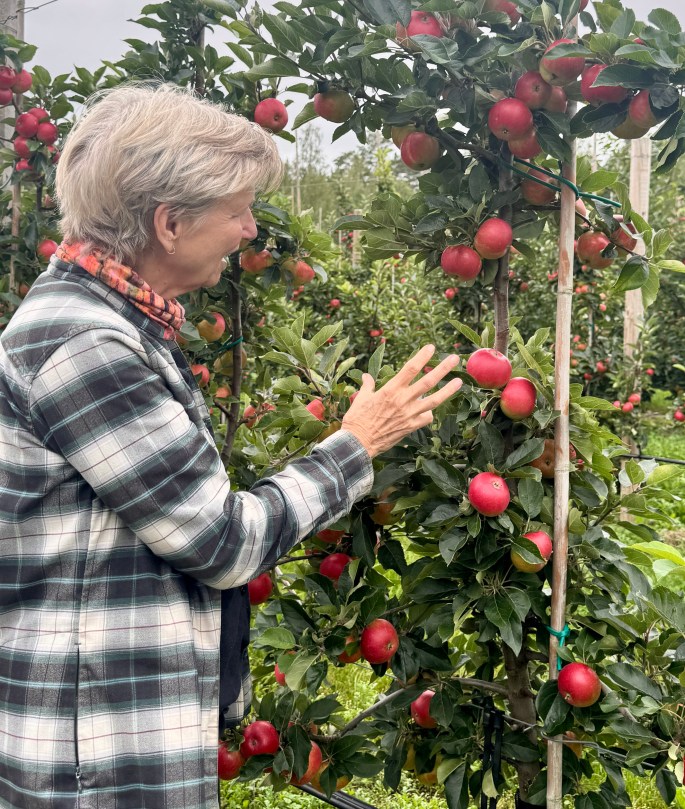
Apples and other local crops are primarily for domestic consumption.

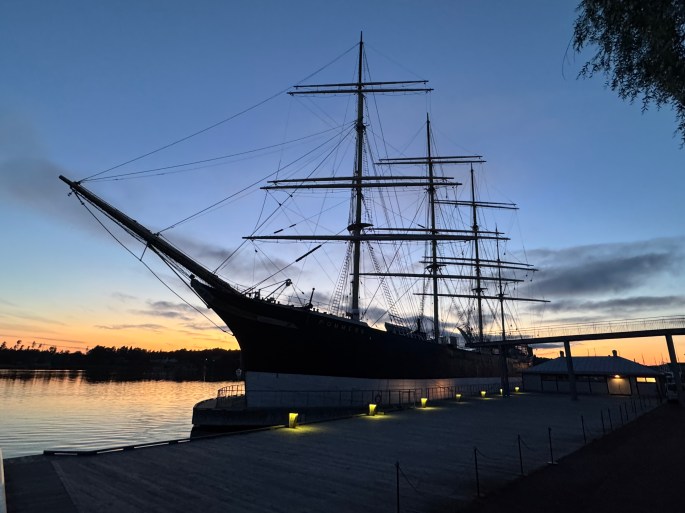
The biggest sector of the economy is shipping and trade…. Which makes sense considering its key location on the Baltic Sea.

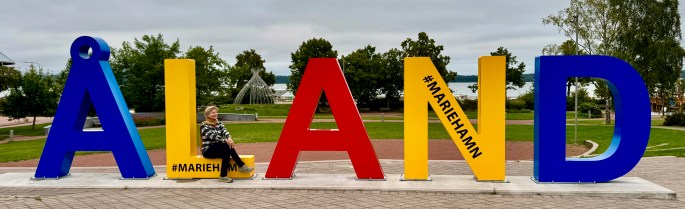
The total population of the islands is about 30,000 souls; Mariehamn is the largest town and capitol city with almost 12,000 people.

It’s a charming place with its own atmosphere of contentment, tolerance and pride….

An illuminated mailbox kiosk sports original paintings and carefully-cared-for potted plants.
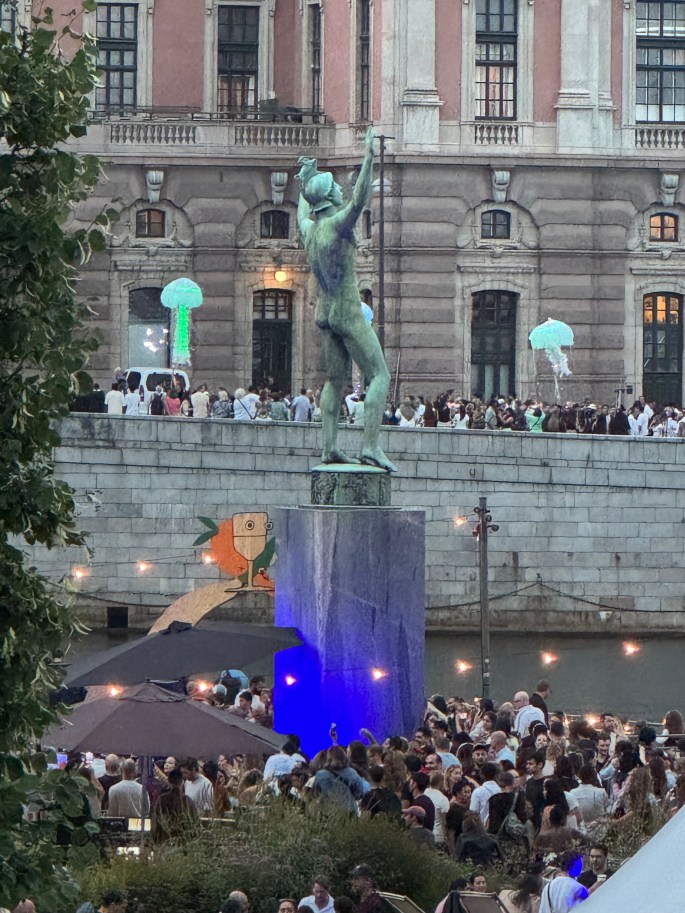
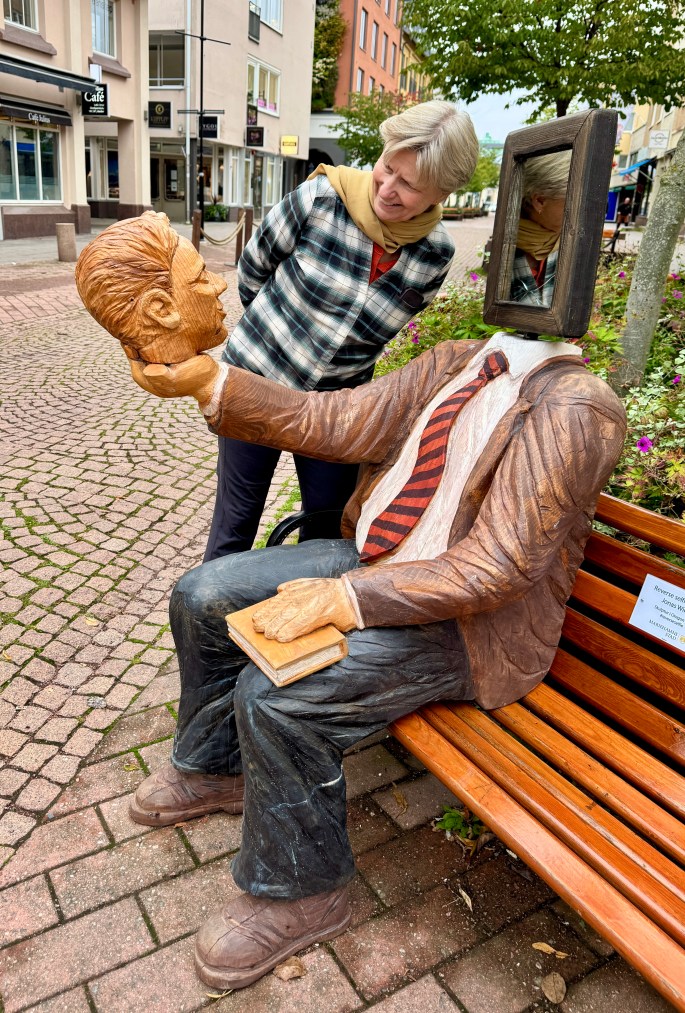
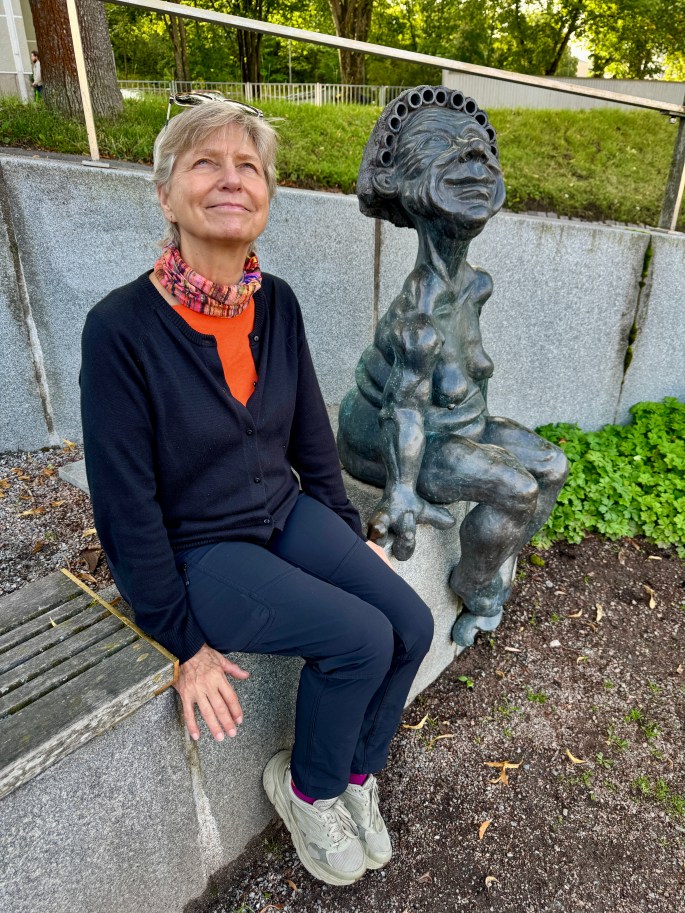
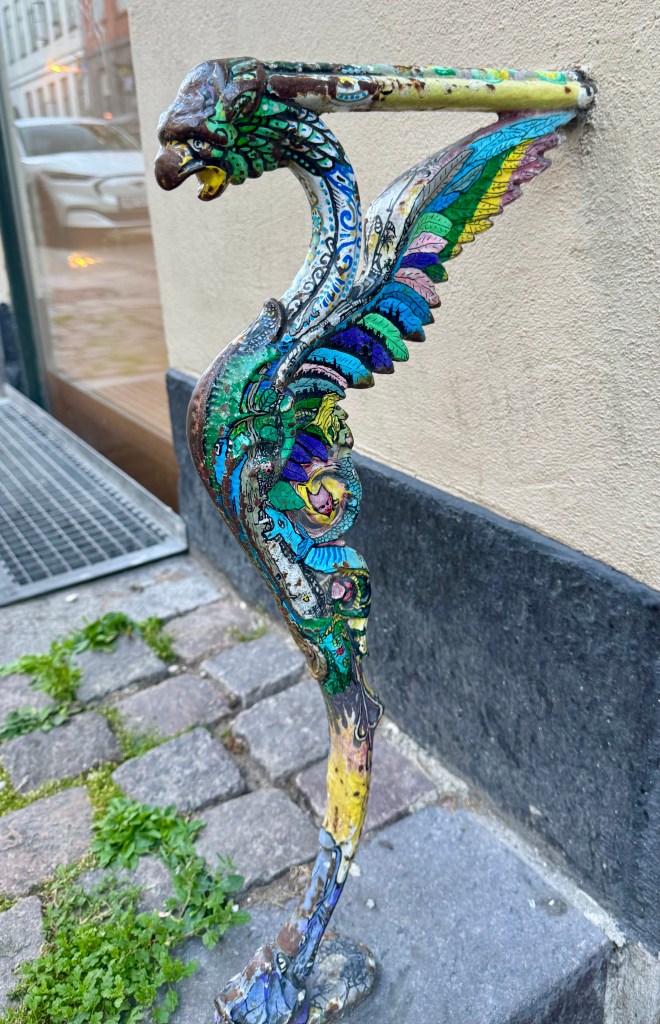
Whimsical street art
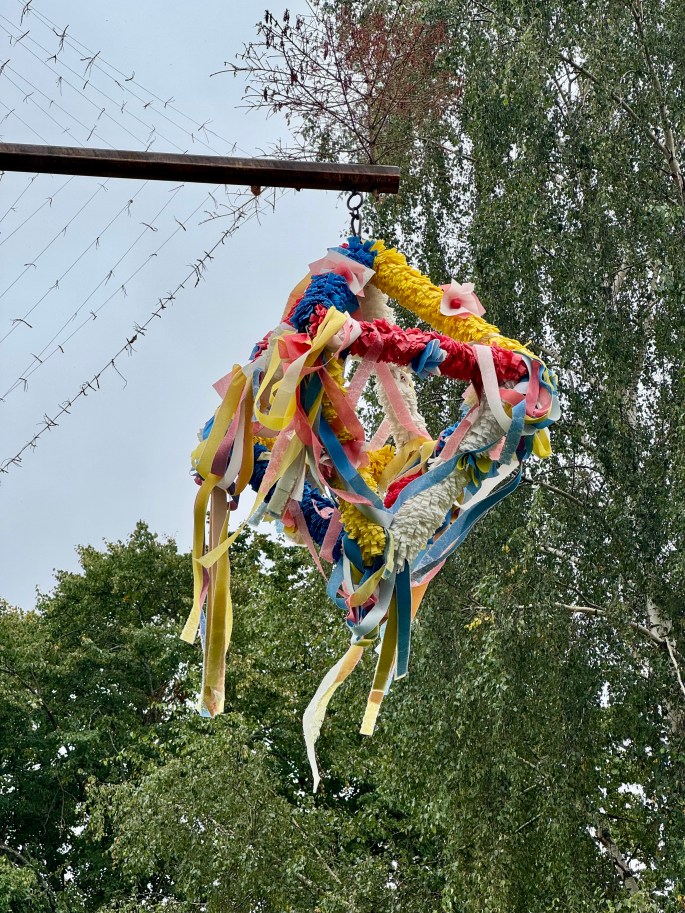
Midsummer maypoles bring prosperity and successful crops. They go up in July but stay in place year-round.
Pride Week was observed indoors and outdoors in virtually every business and public venue.
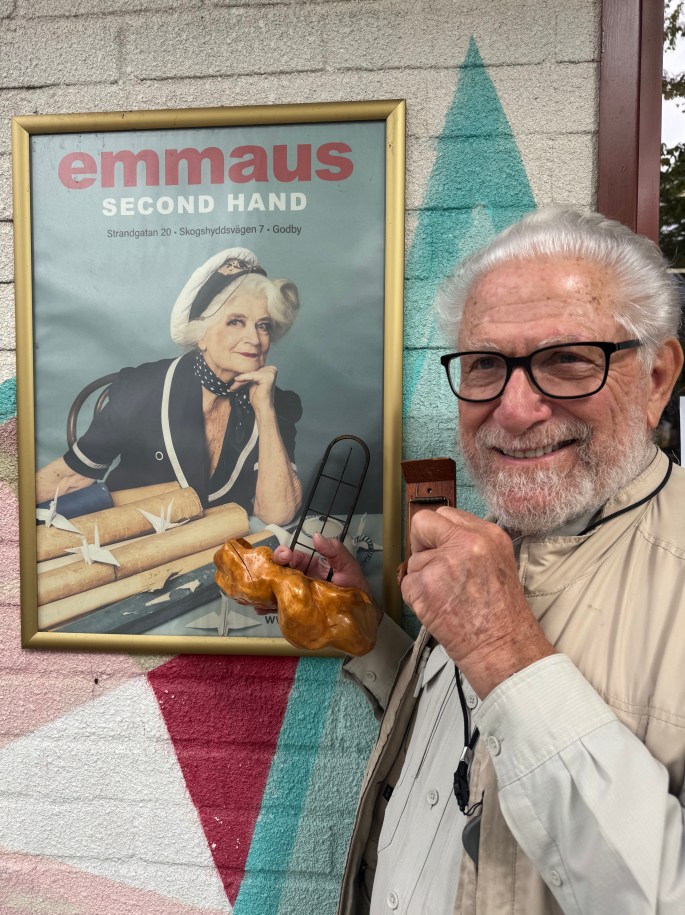
Second-hand stores – here and through-out the Scandinavian countries – are quite mainstream as part of a popular trend toward eliminating waste and using resources efficiently… something Henry whole-heartedly endorses!
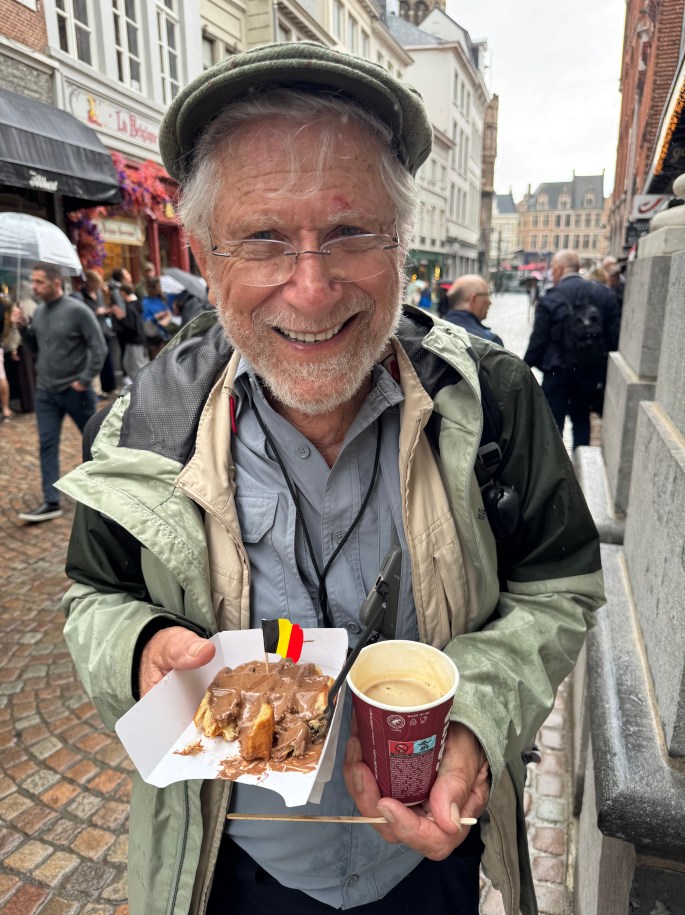
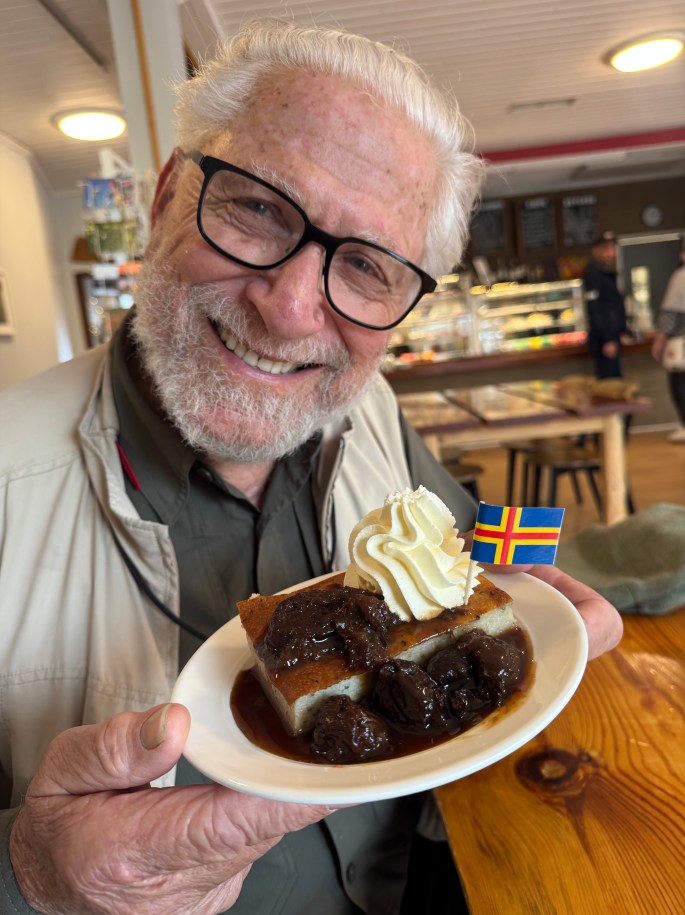
The traditional dish is the Åland pancake

Cake made with semolina or rice porridge flavored with cardamom and served with prune compote and whipped cream….. and a jaunty little flag if you’re lucky!
Turku

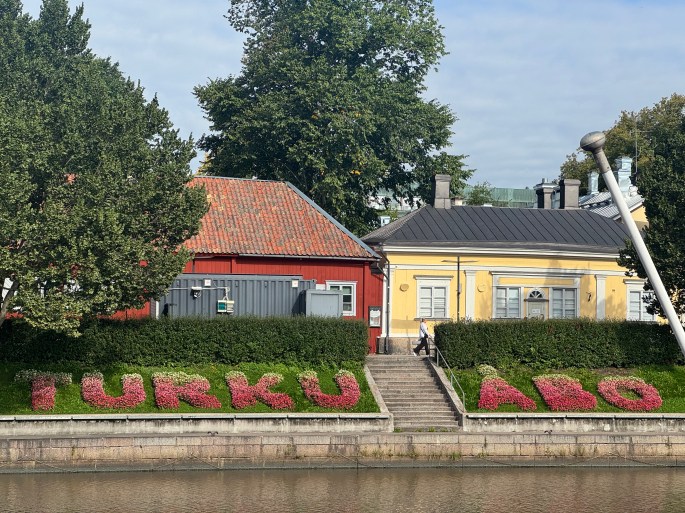
From Mariehamn, it’s a 5-hour ferry to the first major city on the Finnish mainland – Turku, or Åbo in Finnish.

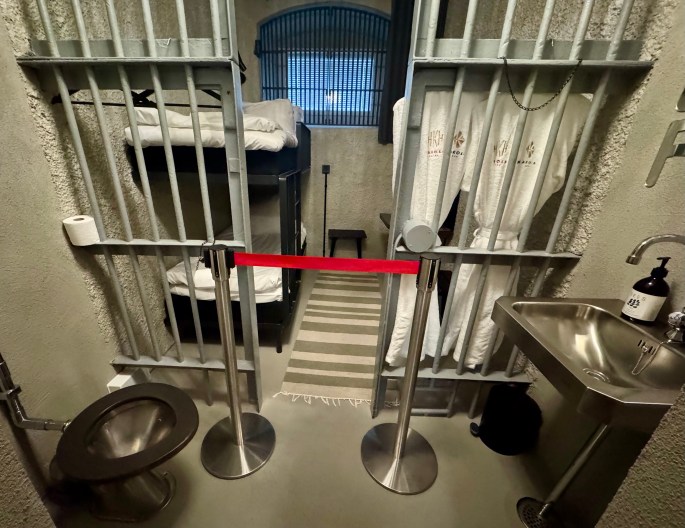
We stayed in a cool hotel that used to be a prison….

Some of the rooms have that prison vibe…. Except for the plush bathrobes hanging from the bars….

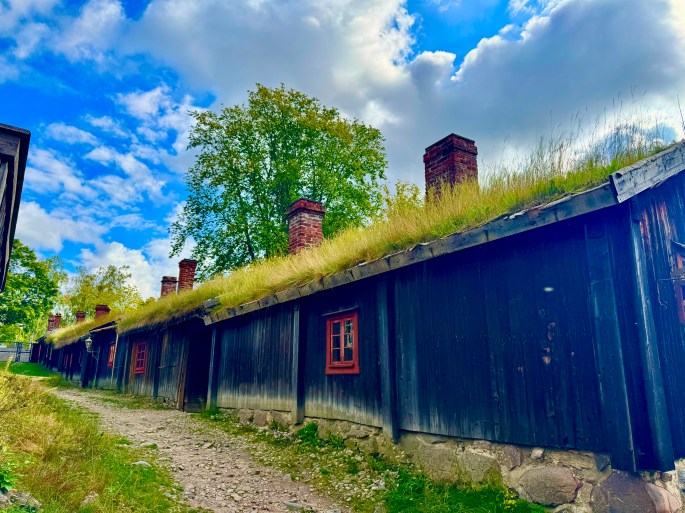
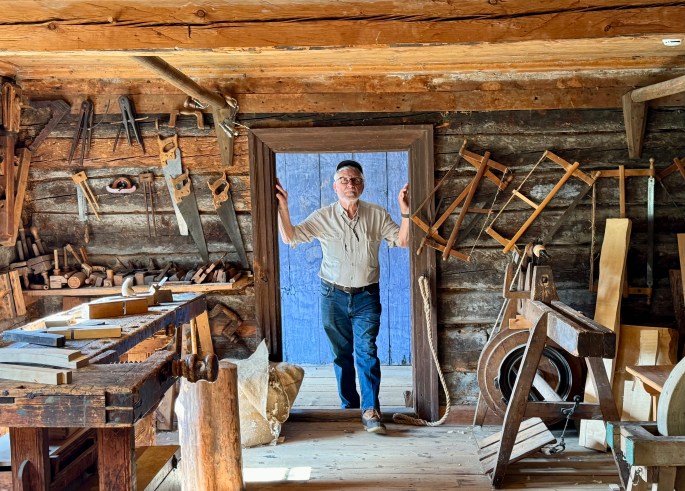
With only one full day in Turku, we visited one “sight” – the Luostarinmäki outdoor museum. It’s a 200-year-old district of wooden houses and craftsmen’s workshops… a realistic simulation of how people lived in the pre-industrial 1800s.

Cabinet-maker/carpenter’s workshop

The “play area” provided an opportunity to revisit an old skill….

So impressed with Henry’s feat that I failed to record the spectacular fall that followed. He is also quite good at landing.

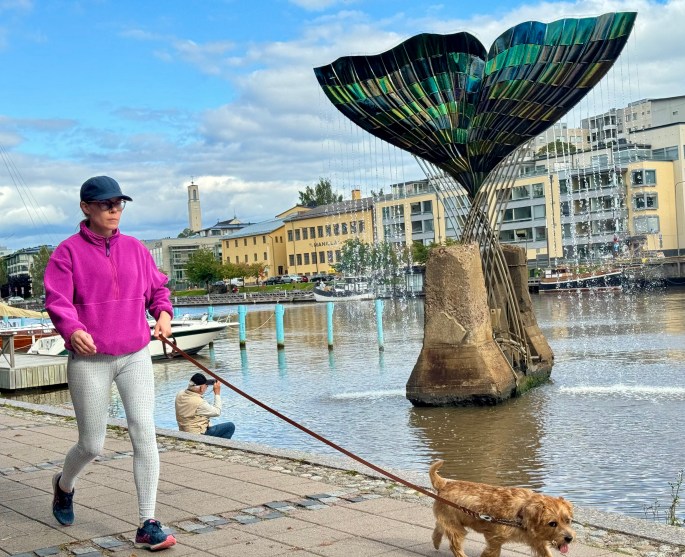
More fun street (and waterway) art…

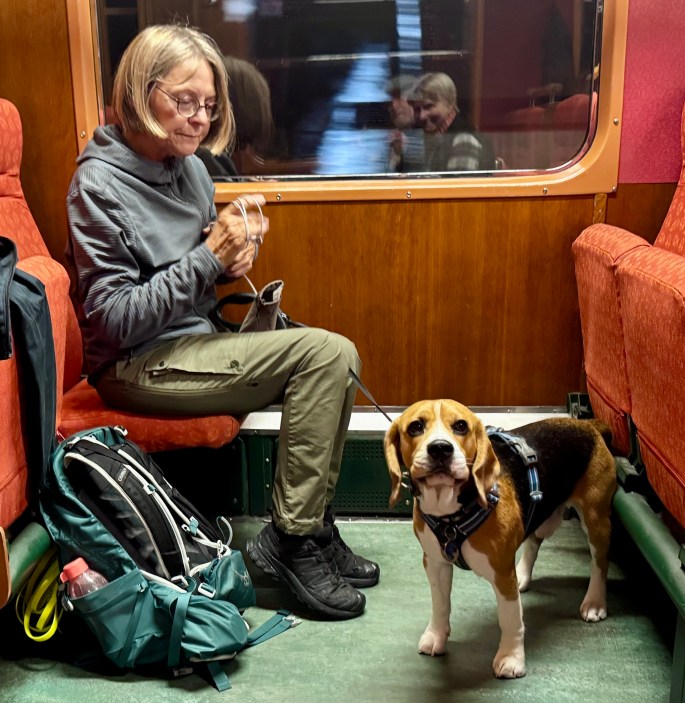
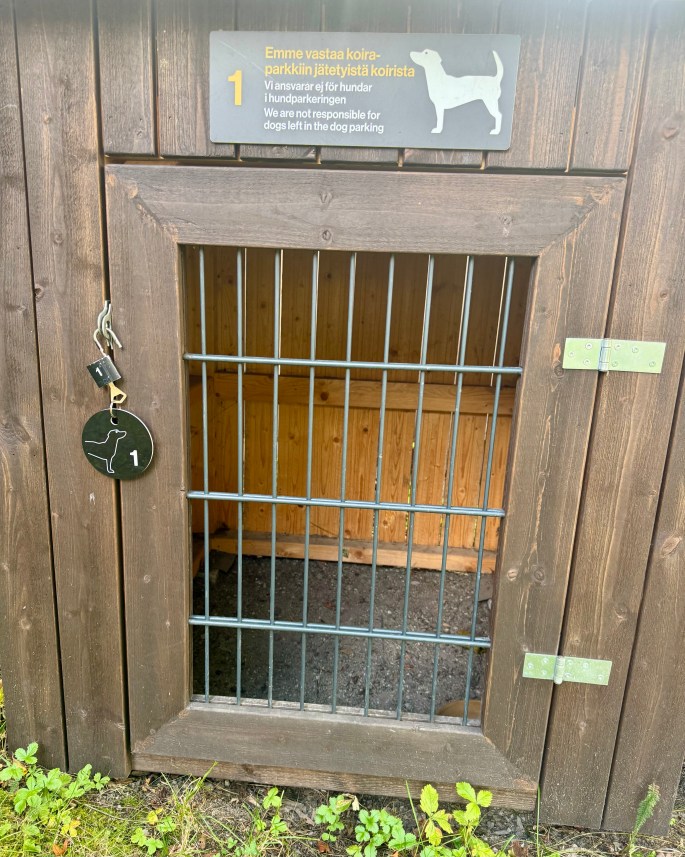
The Finns do like their canine companions – and often take them along on trips.

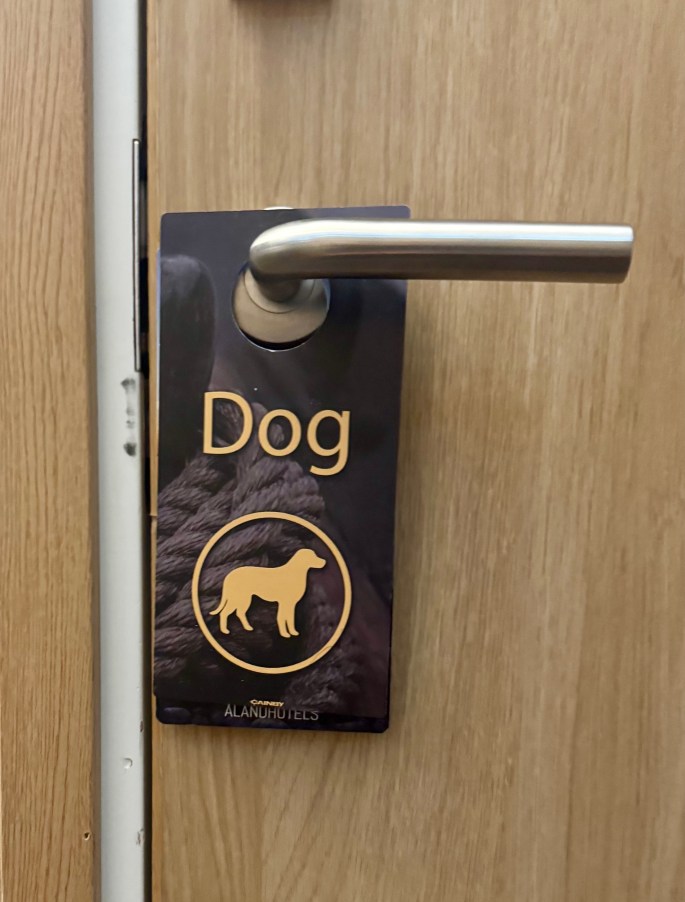
May as well admit that people leave their dogs alone in hotel rooms… with proper warning to housekeeping!
“Dog parking” for the companions of humans visiting the outdoor museum!

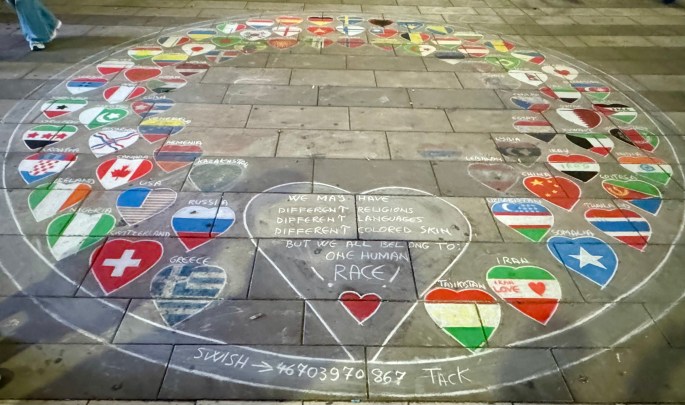
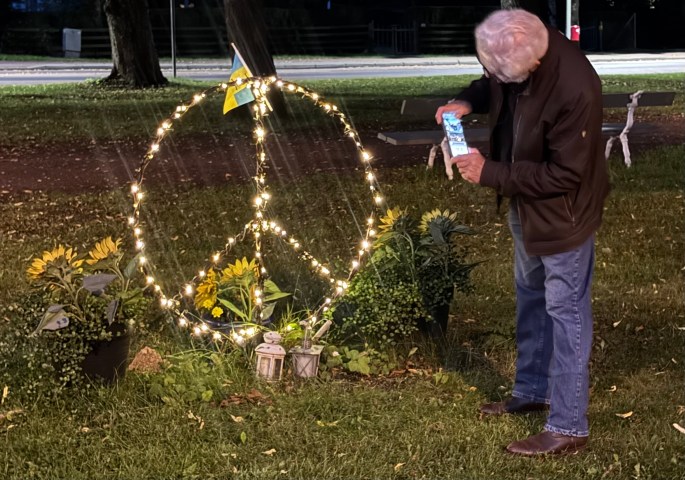
A common display in Finland relates to the war in Ukraine….. certainly an issue of concern in a country that shares a border (and a history as a victim of aggression) with Russia.

Yes, please – peace, mutual respect and civility.

Side Notes on Travel

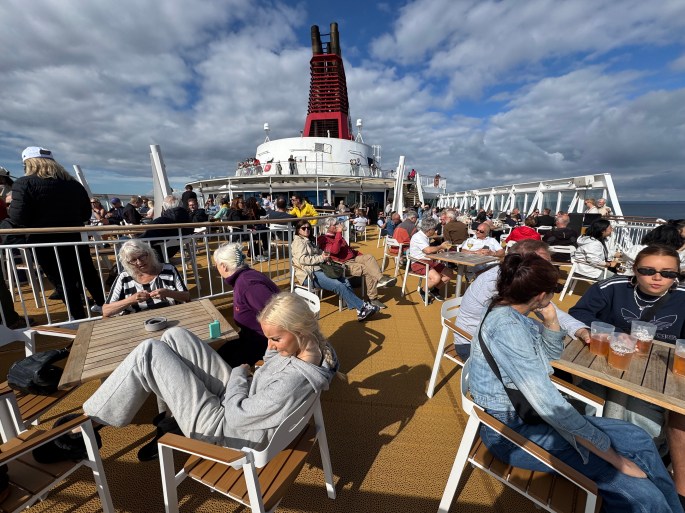
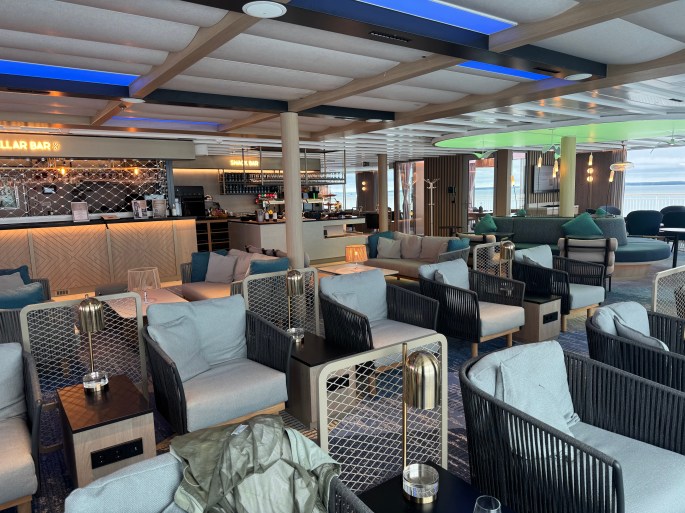
The ferries that service the cities and towns that circle the Baltic Sea are really impressive – whether you are bringing along a car or not.

Panoramic windows, lounges, clean and comfortable overnight cabins, children’s activities, dining alternatives, bingo and bars and live music!

It would be very cool to take an unstructured trip using the ferry system to go from one city to another, circling around or criss-crossing the Baltic from Copenhagen to Oslo to Stockholm to Helsinki to Tallinn to Hamburg (even to Turku and Åland!) You could spend as much or as little time in each location as whim and time constraints dictate. You would not need a car…. Most of the docks are in walking distance from the city centers. And getting there would be a big part of the fun, with a front-row seat to port activity and shoreline. Very cool.

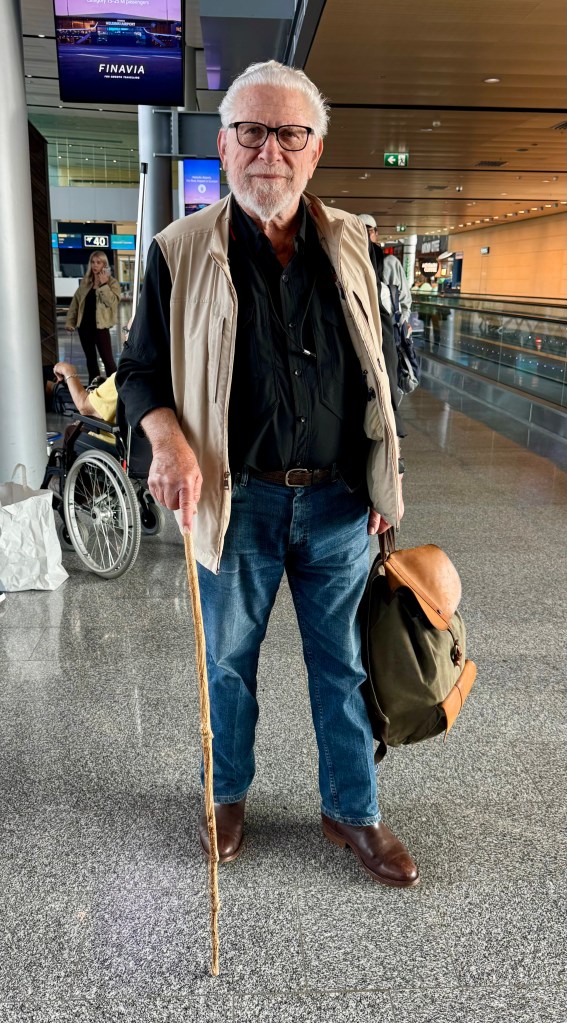
Speaking of cool, maybe you remember Henry’s acquisition of a walking stick way back in June in Ireland…. It has accompanied us all along the way, proving quite useful as we were often waved to the front of security and passport control lines.

(Important to fake a limp if you plan to take advantage of the shortcuts!)

Final Note from Finland

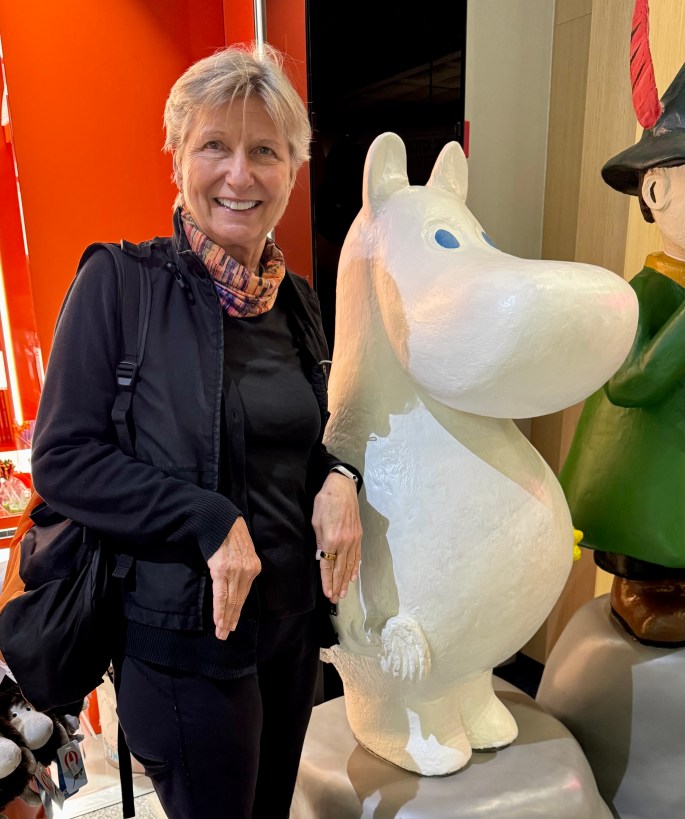
The Moomins are cartoon characters dreamed up by a Finnish author who first published their story in a children’s book in the mid-1940s. They are large soft trolls that resemble hippos who have adventures together with their friends. Extremely popular in Finland, as well as the rest of Scandinavia (and Japan!)…. In books, comic strips, theme parks, television and of course, merchandising.

Finnair, the national airline of Finland, incorporated Moomin art on a couple of its aircraft…..

We were not so lucky to fly on one of these planes upon our return from Helsinki to the US…. Surely that would have been icing on the cake! Sufficient that our Finnair flight was pleasant, the crew friendly and efficient, and our arrival early!

Back now in the US, we look forward to enjoying the fall and winter weather (which we hope will come soon). Until next time, we wish you peace, civility and kindness – please take some and pass it around.

Mexico City

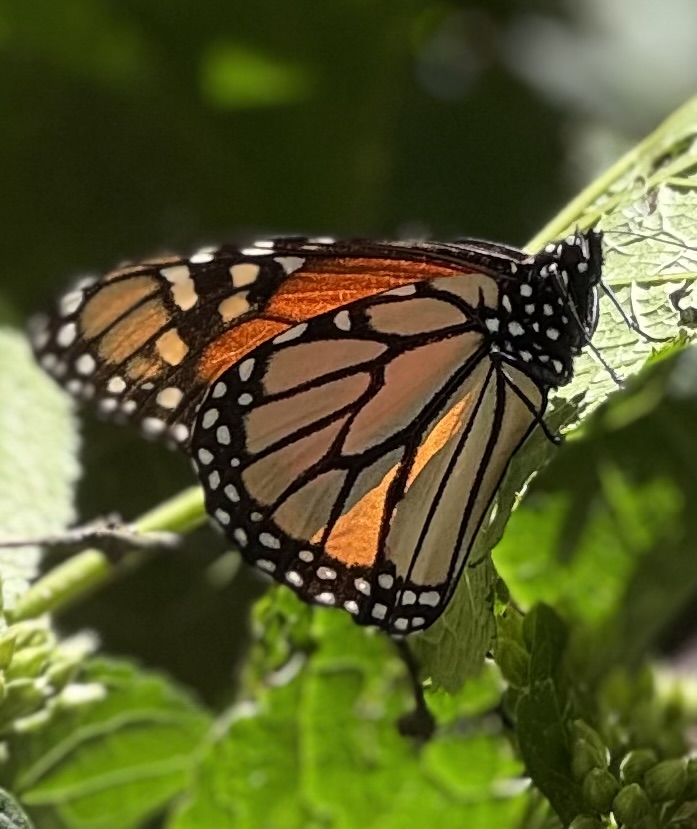
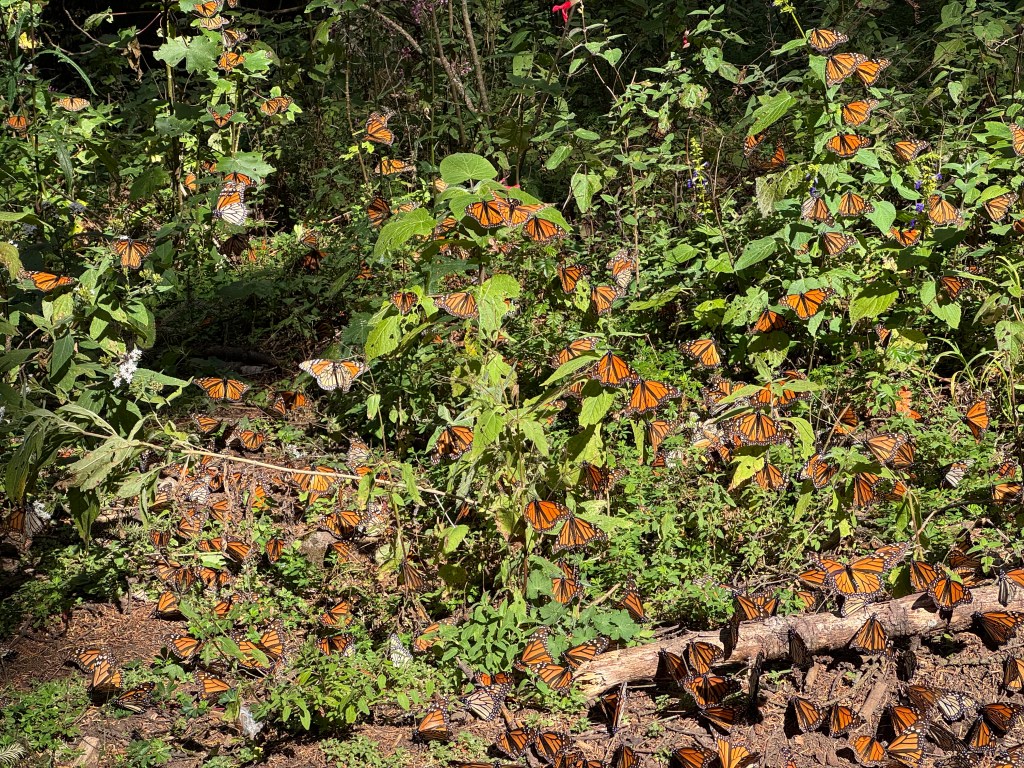
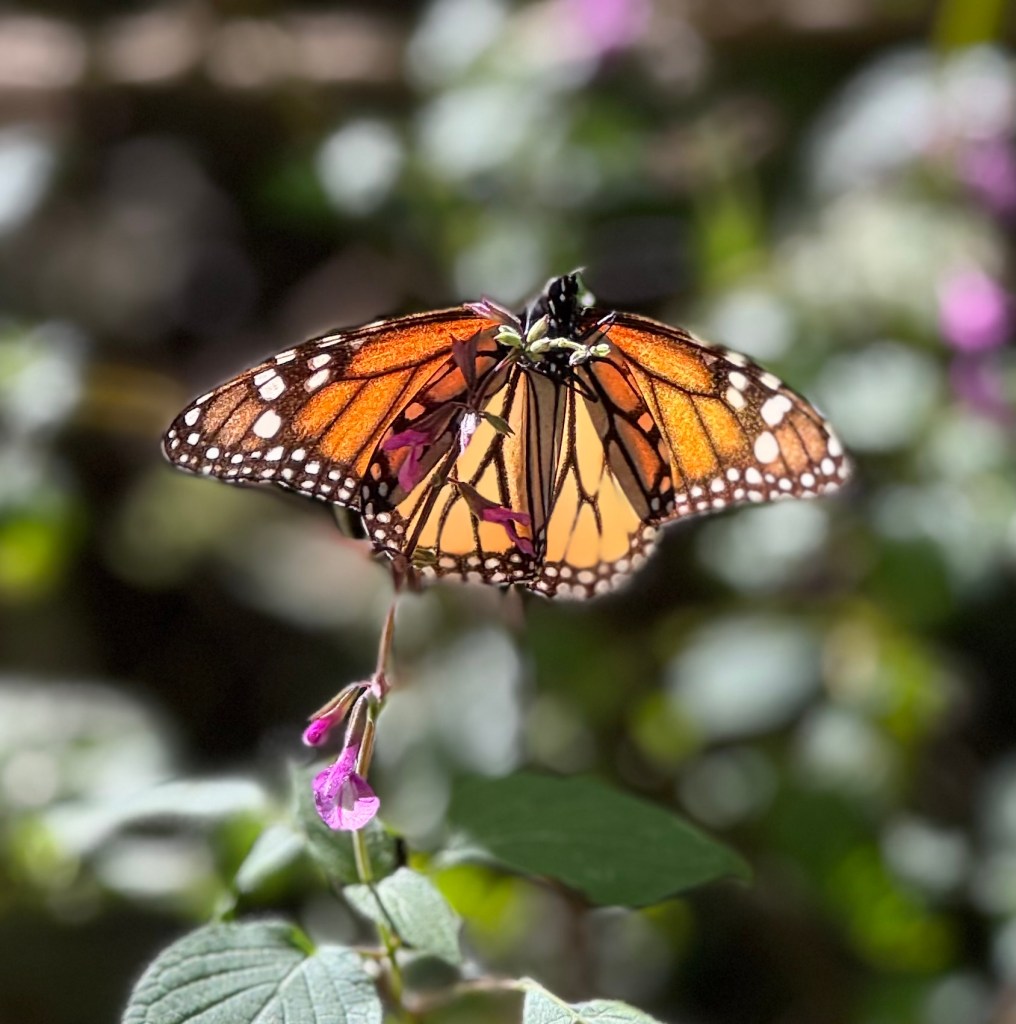
The chance to see the magnificent Monarch butterfly en masse and to learn about its migratory practices drew us to México.  These delicate but clearly hardy creatures move each year across practically the length of North America – from Canada to the mountains of central Mexico – to spend the winter.

But first – we must get there ourselves.   Our flight to Mexico City on a relatively small Aeromexico flight had the most traffic of physically-challenged people we have ever seen on a single plane.  Out of approximately 100 passengers, at least 15 of them gained priority boarding in wheelchairs.

Not quite sure what this means – but it made us happy to still be ambulatory, and conscious of the fact that we don’t have all the time in the world left…… perhaps like the Monarch butterflies, whose numbers are dwindling for reasons we will explore over the next week.

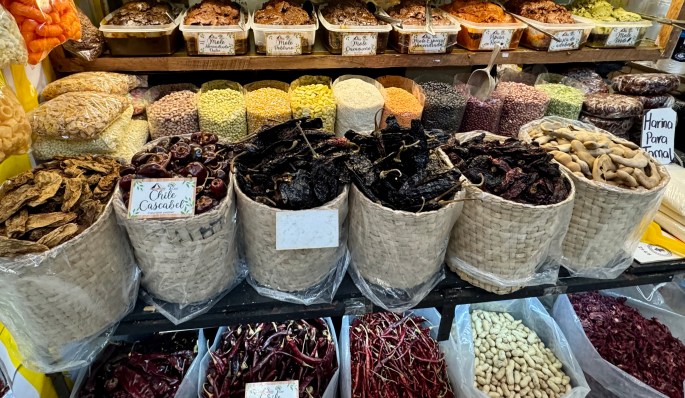
First stop in Mexico City – the Medellin market with earthy beans, lentils, peppers and spices….

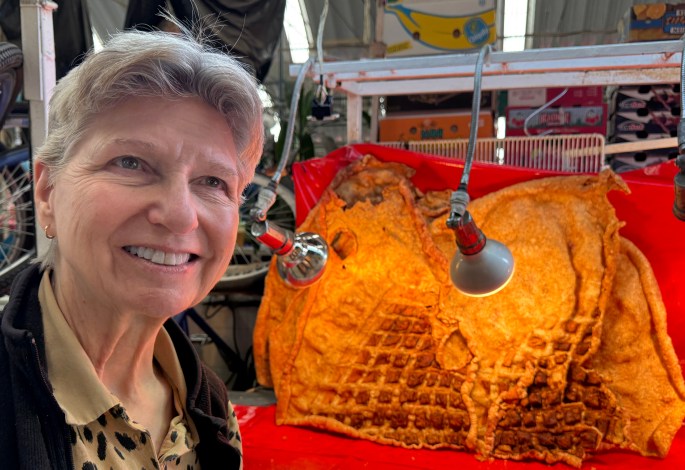
Also pork skin or chicharrons, of which I am clearly not a fan…

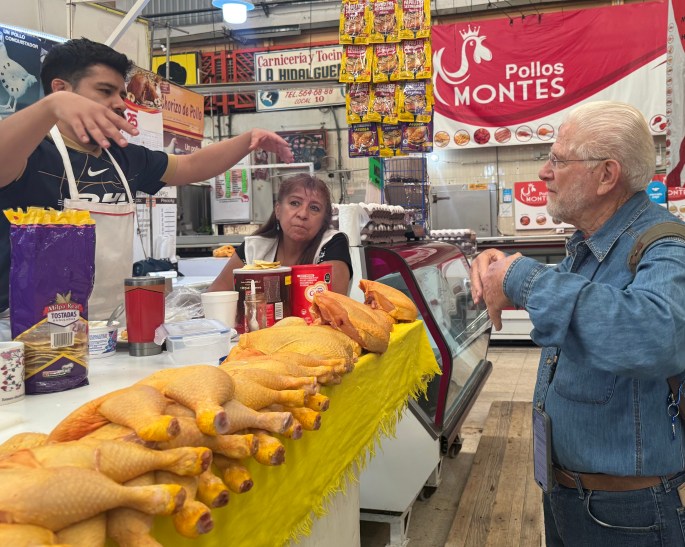
Henry interviews a local purveyor of chicken to find out once and for all why the chickens here are yellower than those available commercially in the US….

The answer has to do with the corn-based cuisine and free-range lifestyle these birds enjoy in Mexico, versus the cramped cages and grain-based feed they get in the US. The Mexican poultry supposedly tastes richer…..

Love of dogs is a characteristic that many share across cultural and language divides…..Wouldn’t it be great if we could all bond together with our dogs and forget about political and religious differences?

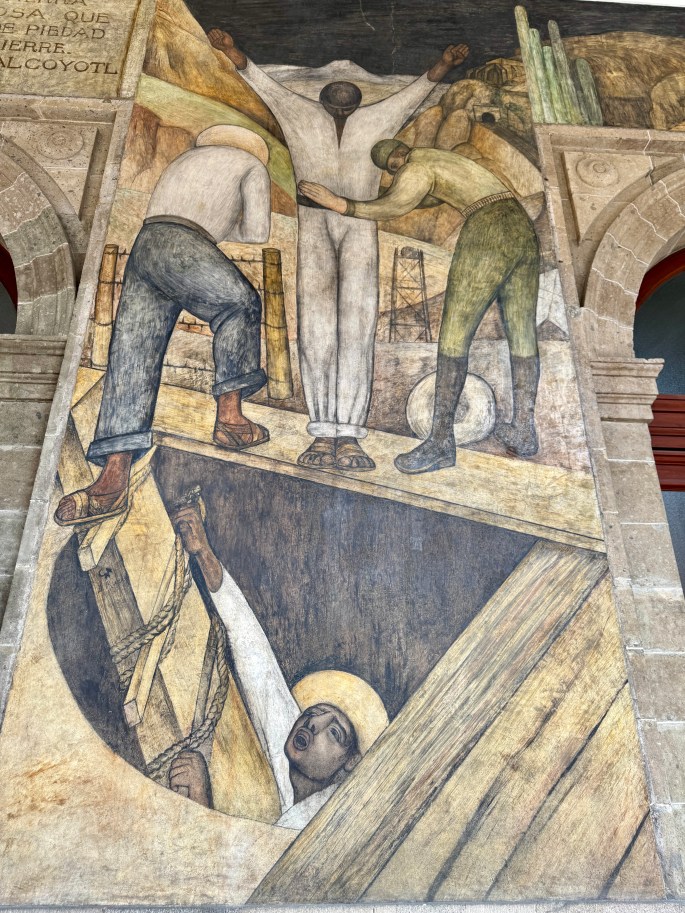
Murals became a premiere art form in Mexico in the early 20th century, most notably by Diego Rivera, whose works reflected his communist convictions….. through glorification of the working class…..

Mine workers

And scorn for the capitalist society…… here watching their wealth grow on ticker tape in 1928 (before the stock market collapse that gave rise to the Great Depression).

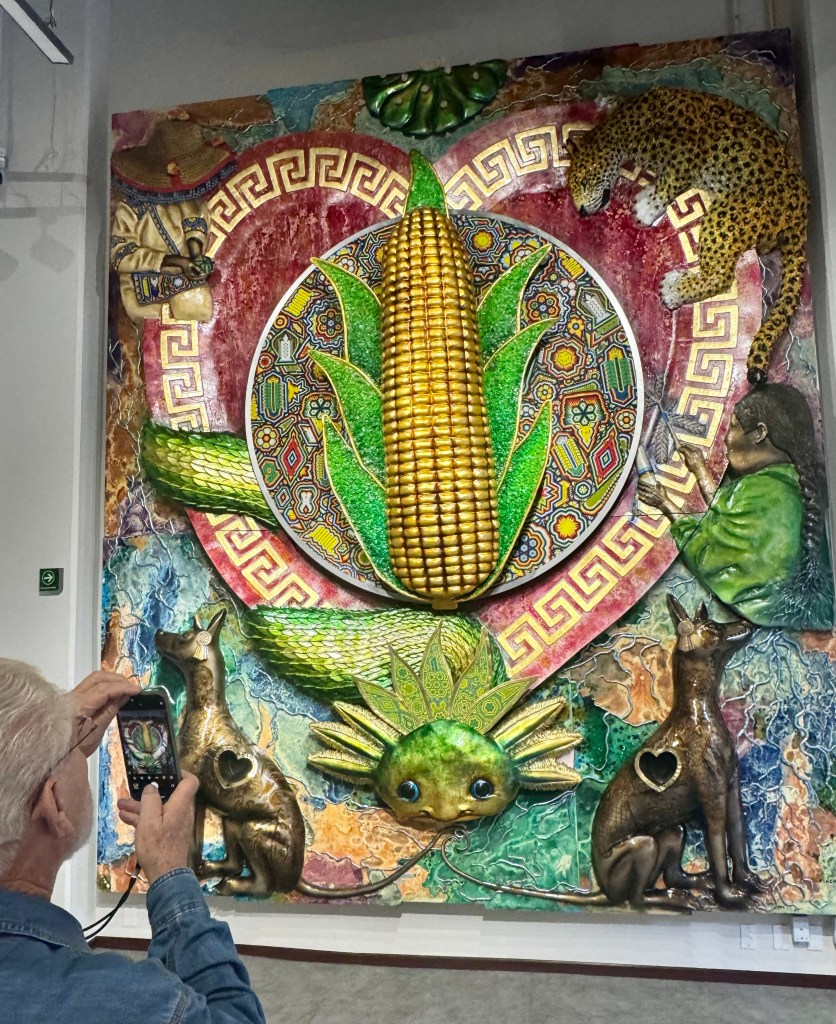
Other works at the mural museum celebrate aspects of the Mexican economy and culture….

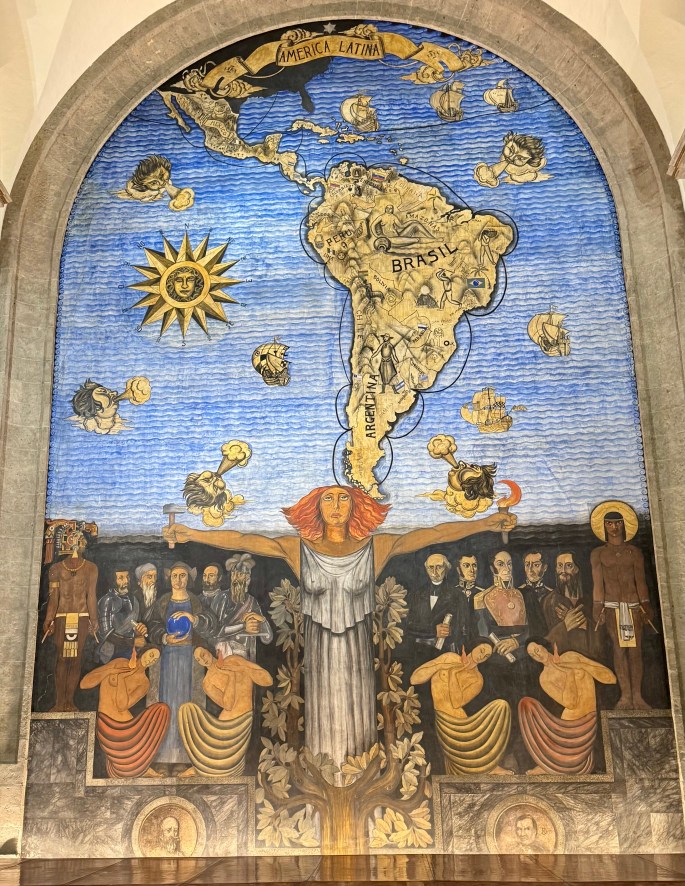
And the common history of Latin America as a whole….

From the mural museum, we hiked through the area surrounding the big cathedral in moderate rain…. Which did not dissuade this hurdy-gurdy player.

Henry hoped for divine intervention to bring out the sun…..

While a holy man of the Aztec community performed a cleansing ritual involving crushed herbs and smoke….

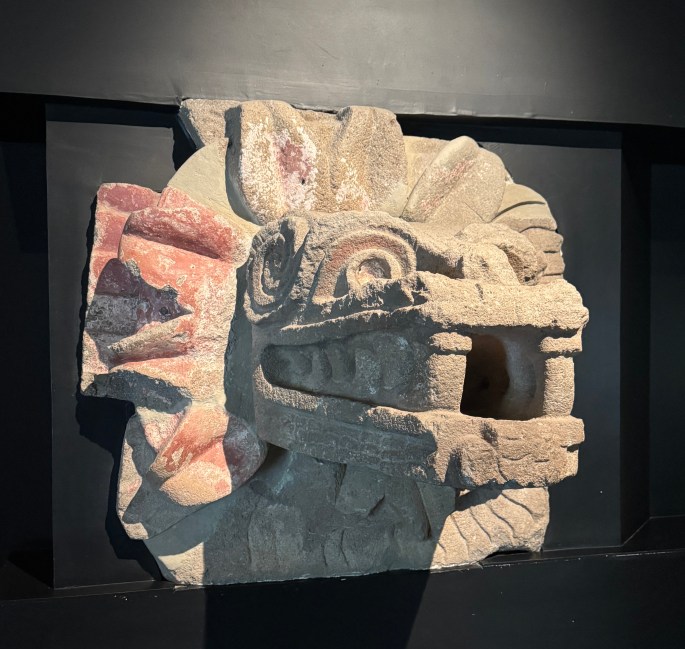
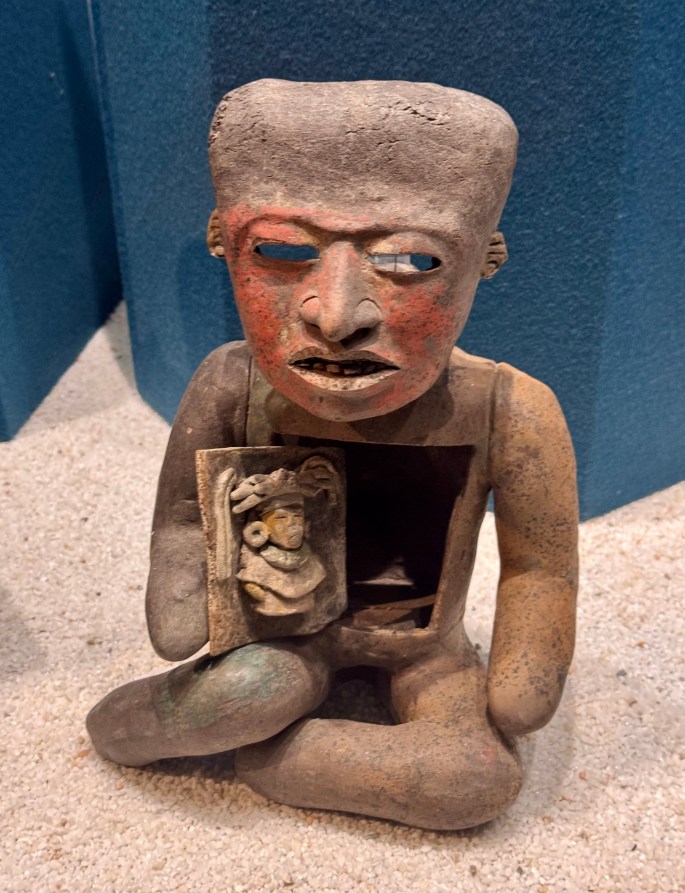
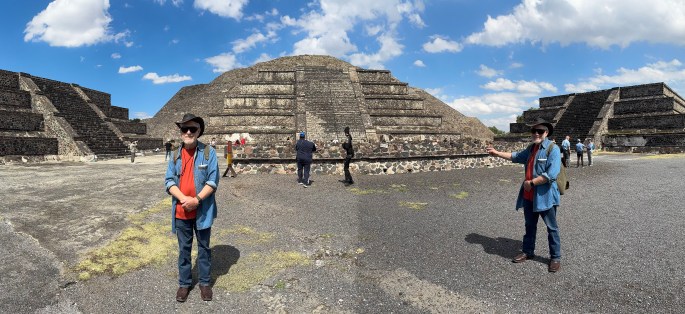
Speaking of Aztecs….. long before they emerged as a significant power in this part of the world, there was……. Teotihuacan. Near Mexico City is the site of an ancient metropolis that in its heyday (about 100 BC to 650 AD) had a population of as many as 100,000 people and a sophisticated economic and political structure. Aside from archeological remains, little is known of these people and why their culture crumbled in about 750 AD.

It’s now a major tourist site with lots of vendors, guides and other people hoping to make a bit of money off the many sightseers who come through. The enormous pyramids and broad sweeping thoroughfares are nonetheless breath-taking.

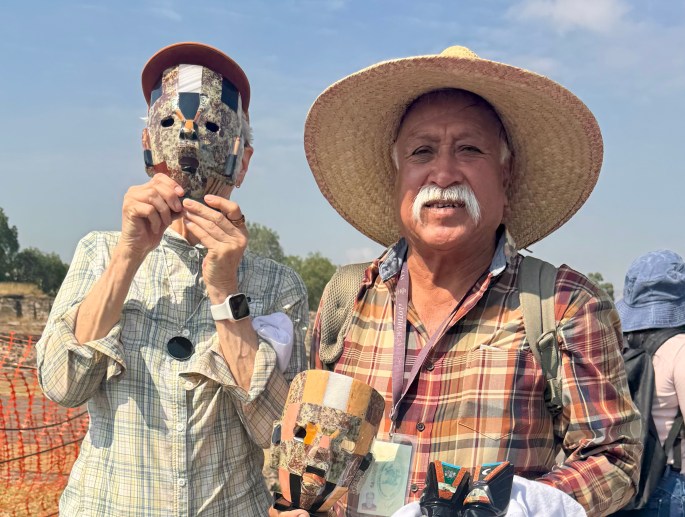
Fun with photos
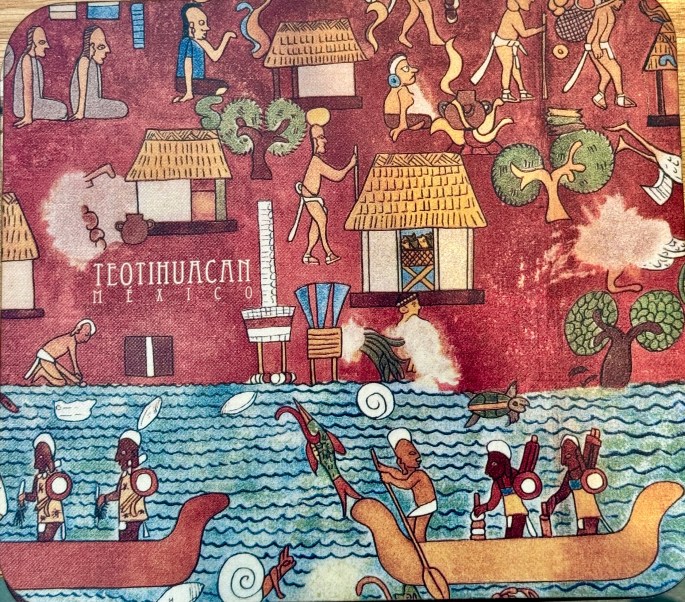
An artisan sold us a “one of a kind” memento….

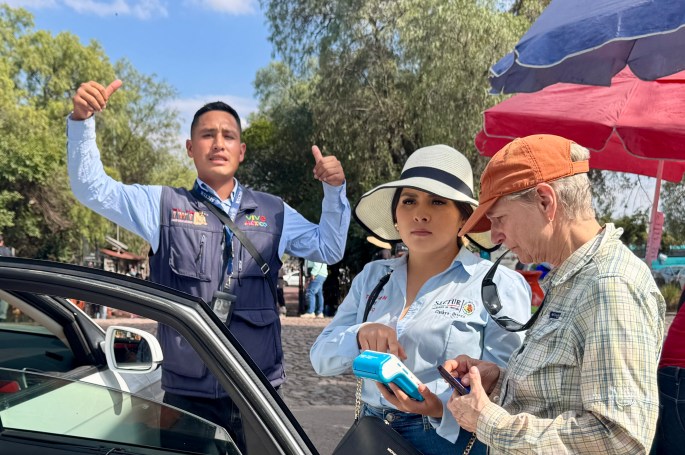
We easily traveled to the site with Uber, but unfortunately could not get a signal to summon a return to the city. A local “tour guide” offered to have a friend drive us back…. Who coincidentally had a credit card swiping machine

After several unsuccessful swipes, we became suspicious and opted to take the city bus back to town. All of which demonstrates that it’s all well and good to know where you’re going, but it’s also helpful to know how you’re going to get back again!

Next we will be joining our group to travel into the mountains west of Mexico City on our butterfly adventure.

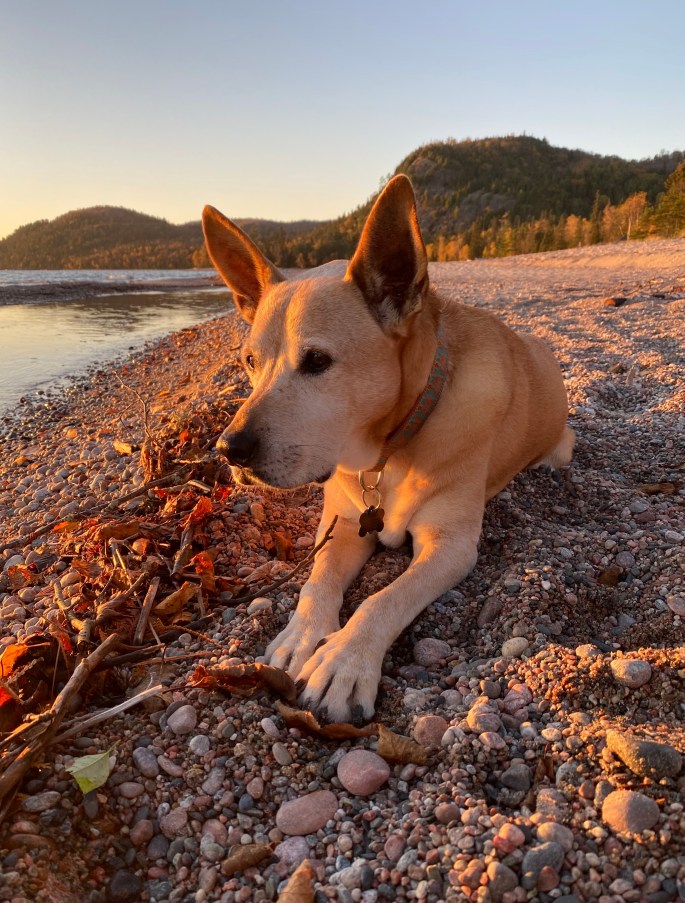
On a personal and sad note – we had to say farewell to our beloved canine friend Raider a few weeks ago. He had a great run – taking care of us during the pandemic and joining us for several road trips. We will miss him greatly.

Well done, good and faithful companion. You’ll be with us always.


Monarch Country

(There are many videos in this posting….. if you get email notification, please click on the words “Read on blog” or “Reader” in the upper right-hand corner so that you can see the dazzling moving pictures……)

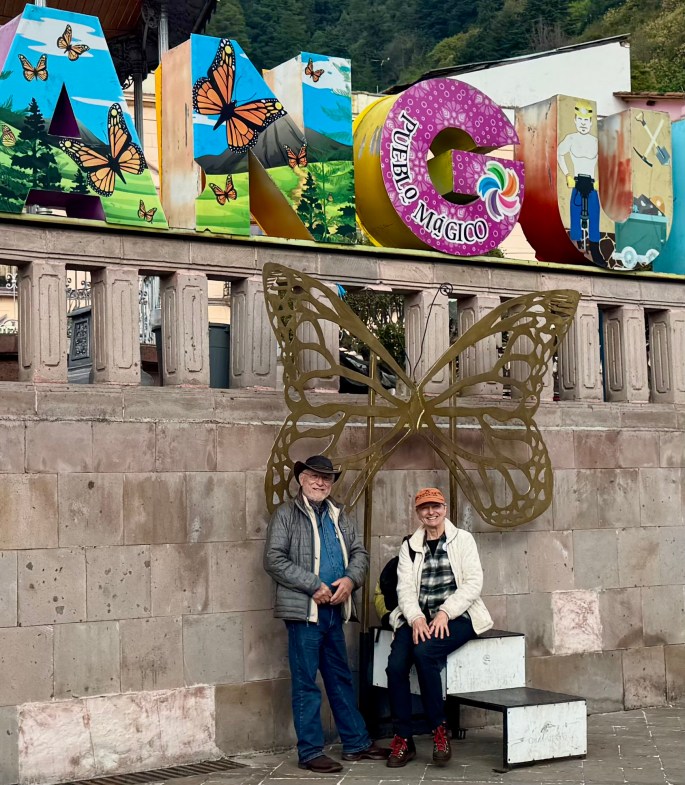
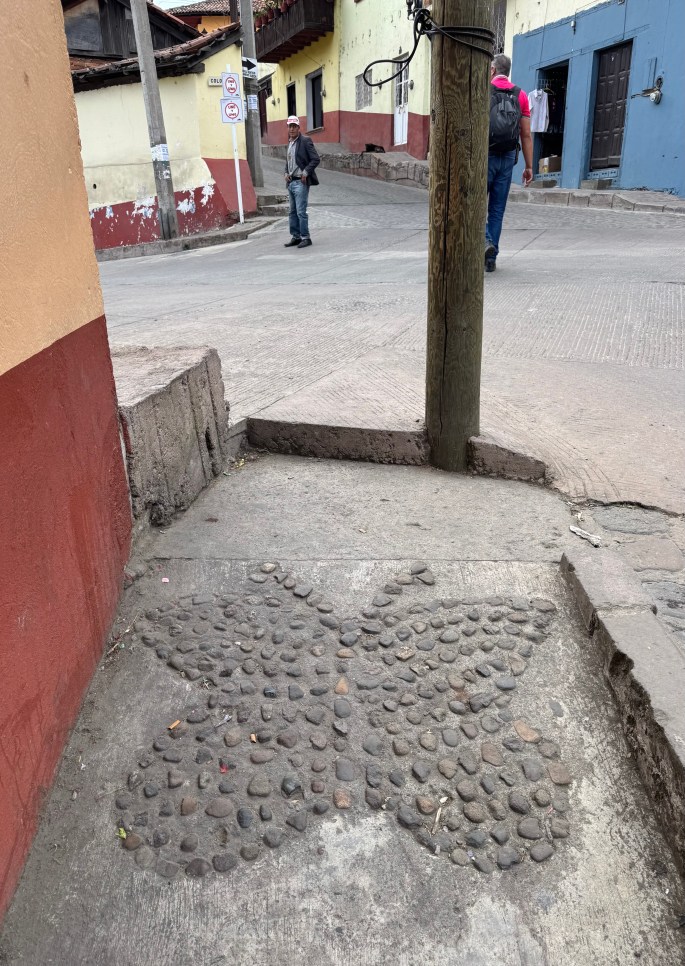
The butterfly sanctuaries are in the mountains about 100 miles west and a little north of Mexico City. The small former mining town of Angangueo is the prime jumping-off point for treks to see the pretty pollinators and reminders are all over town:

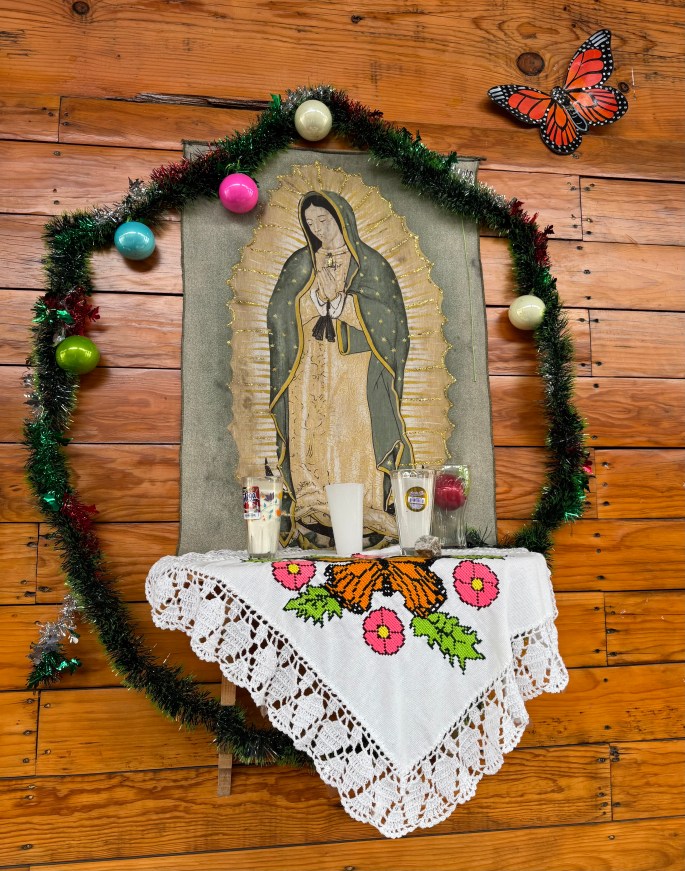
Adorning a catholic shrine….
Even on the sidewalks!

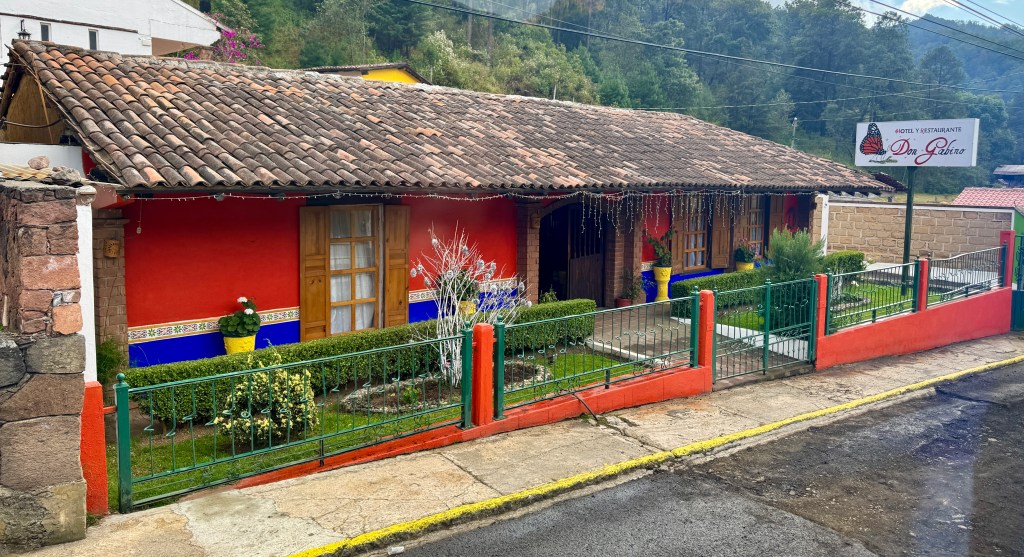
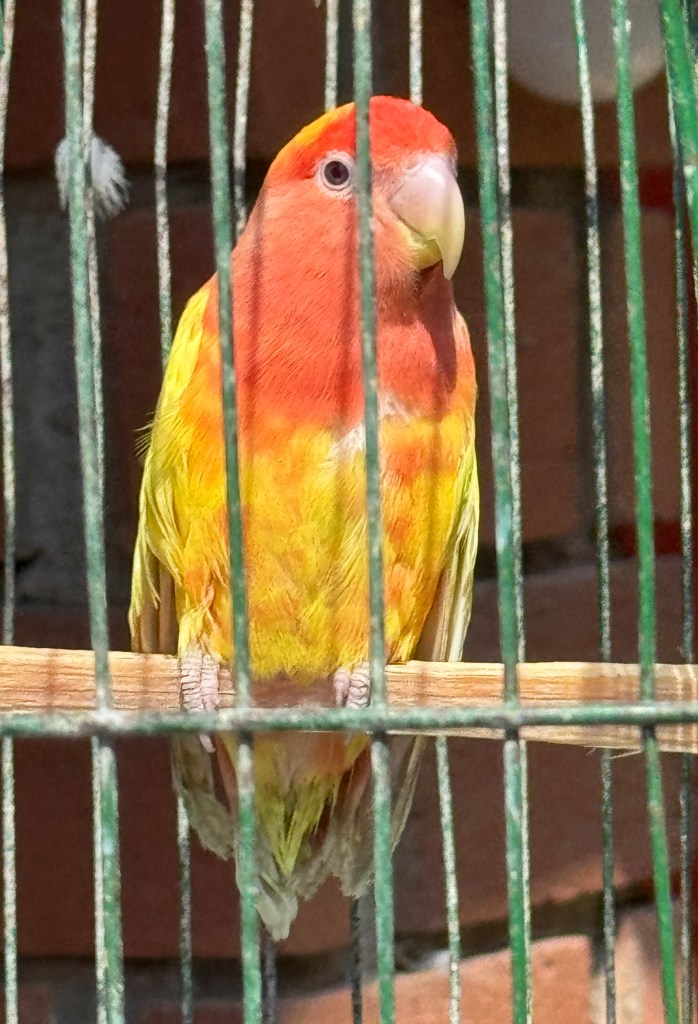
Our group of 15 completely took over this charming hotel, with its equally colorful resident parakeet…..

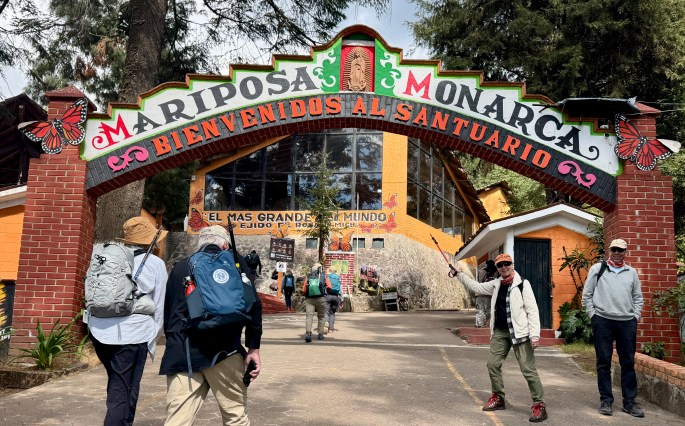
Getting to the monarch nesting sites is not a quick trip. First you take an open 4-wheel-drive truck from the town to the entrance to the sanctuary, at about 10,000 feet in elevation.

From there, you cover the next 1,000 feet of elevation, first on horseback…

And then on foot (which can be a little challenging for those of us who live at sea level!)

Conditions were less than spectacular on our first foray….. it was cold and cloudy, followed later by sleet!

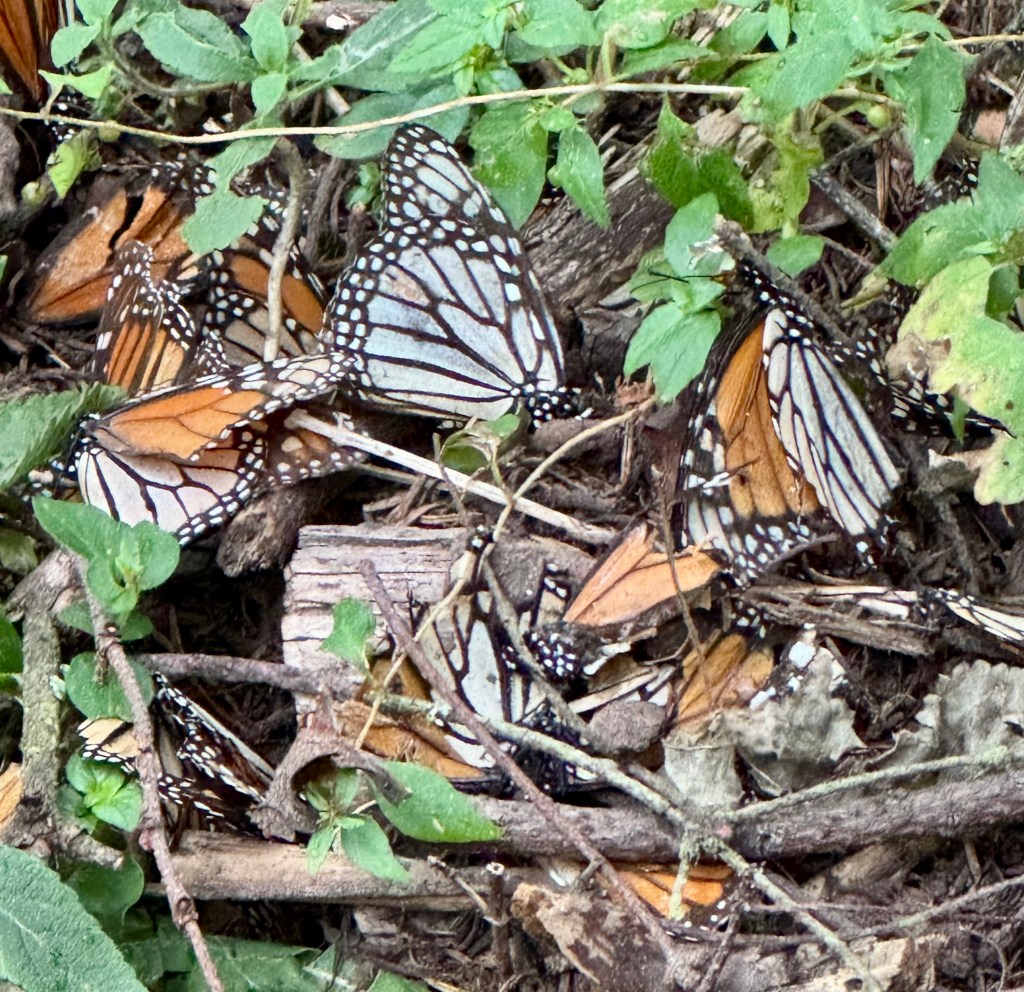
We were not quite prepared for our first sightings of butterflies to be of those who hadn’t survived…..

In these weather conditions, the Monarch roosts just look like clusters of leaves…..

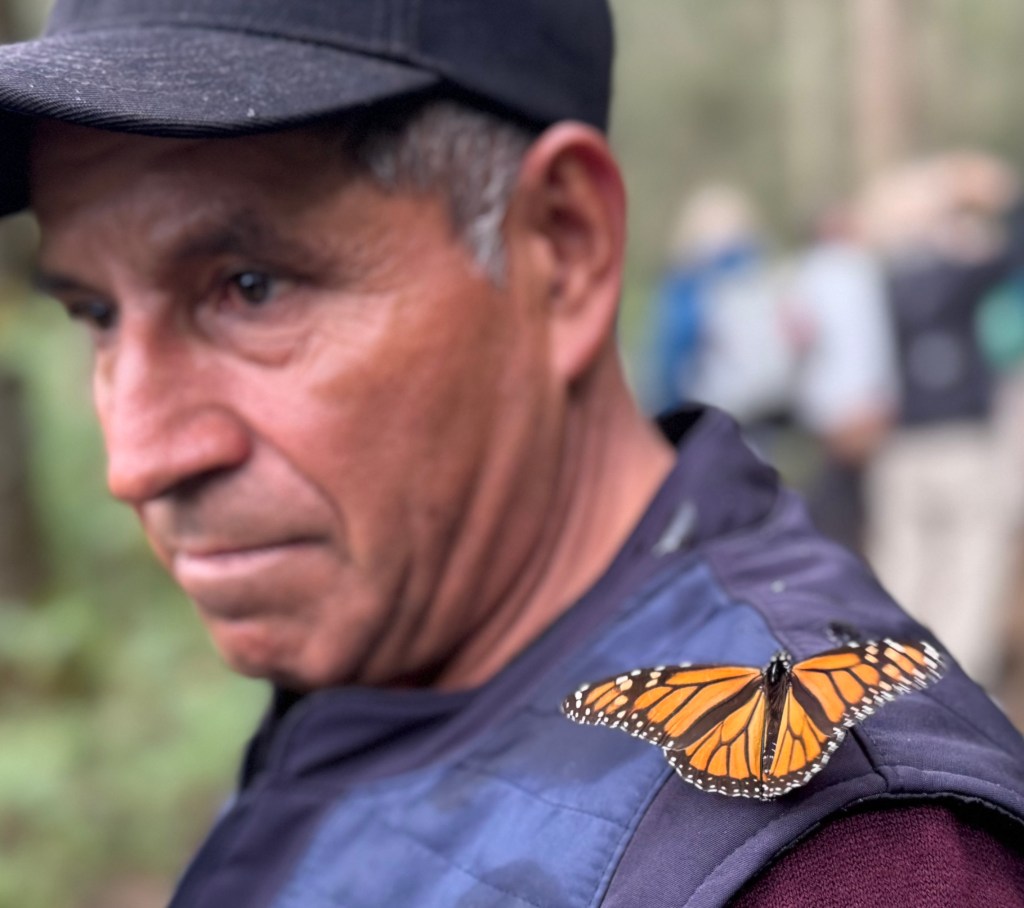
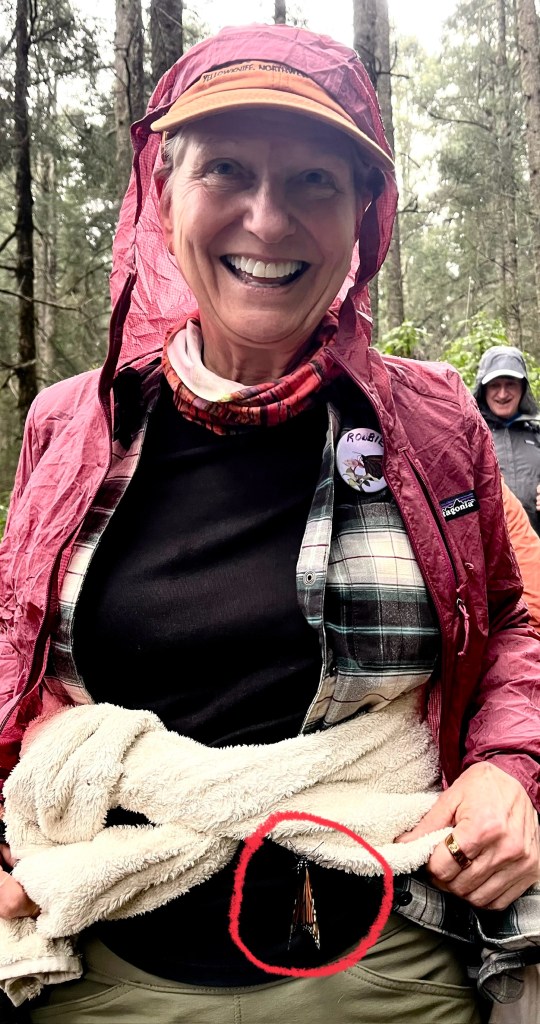
A few broke loose and came to rest on human passers-by.

Unfortunately, adverse conditions brought an early end to Days 1 and 2.

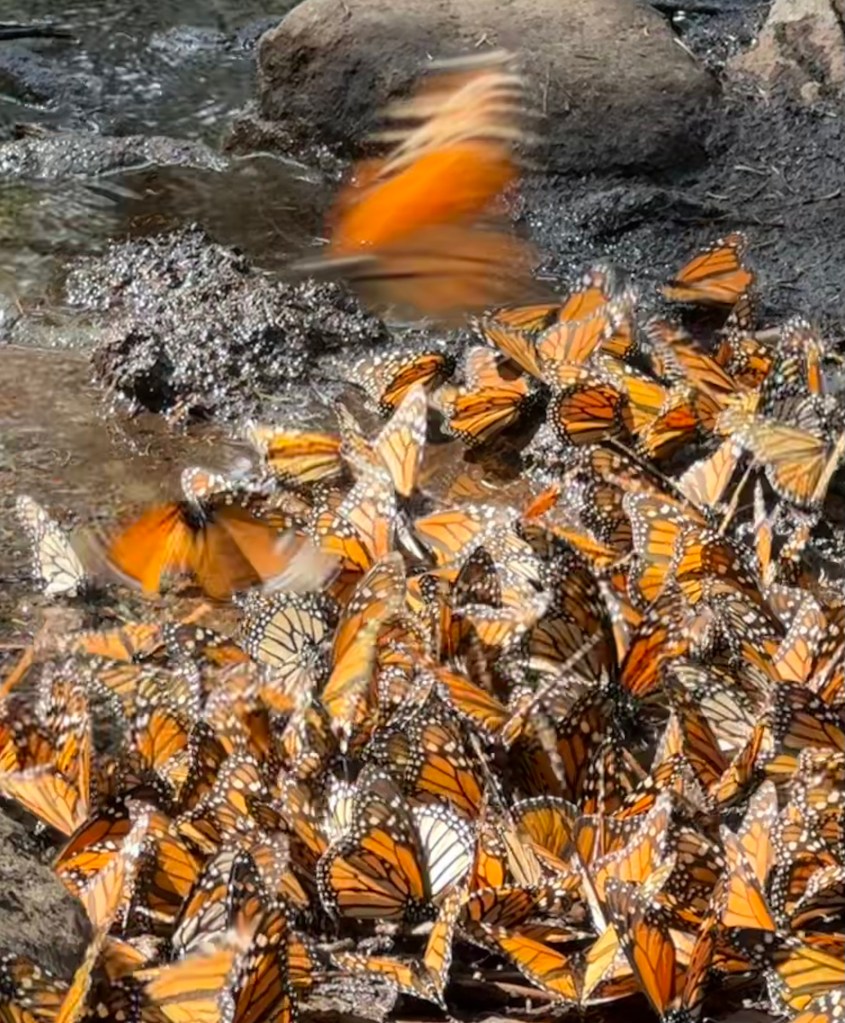
The morning of Day 3, however, was a revelation….sunny and dry and thrilling for all of us, watching as the Monarchs emerged to enjoy the warmth and to get a drink of water.

Friends, we have literally hours of this material if you need more……

Just a few fun facts about the Monarch butterflies…..

— Although mankind has been aware for years of the annual migration from Canada to the southern part of North America, it was only in 1975 that intrepid wildlife scientists found the Monarch winter nesting sites near Angangueo….since then, ecotourism has grown, and local communities are actively involved in caring for and sustaining the environment that is so critical to their continued existence.

— The life span of a Monarch butterfly is typically 2 to 6 weeks; however, the generation that is born in Canada in August each year will live for 7 to 9 months in order to make the migration south to Mexico and reproduce for the good of the species.

— Collective nouns for a group of butterflies can include “flutter” and “kaleidoscope”. How apt!

A couple of closing photos just for fun…. A beautiful view of the mountains, and an irresistibly-gorgeous young rooster with attitude.

After several days following the butterflies, we return to Mexico City for a few more days via the town of Toluca. Thanks to the World Wildlife Fund and its travel partner, Natural Habitat, for a spectacular experience. More later!

Mexico City, Part Two

Toluca, the capital of the State of Mexico, is the site of a botanical garden with a magnificent stained glass installation – the Cosmovitral, designed and built to express the relationship between humankind and the universe. And the flowers and plants were nice too..

These are the guides Hugo and Eric who took us to see the Monarch butterflies; we’re also glad they brought us to see another colorful phenomenon…. man-made this time….. the Cosmovitral.

Definitely worth a side-trip!

Some friends and acquaintances expressed concern about our trip to Mexico – the thugs, the cartels, the victimization of innocent tourists! Even the US State Department issues dire warnings about travel there. We honestly felt quite comfortable, even with our unescorted wanderings in Mexico City; that said, it is always wise to be aware of your surroundings, keep a low-key profile, and respect the integrity of the people and places you encounter. And Mexico has such beautiful places, sweet people and gorgeous scenery…. A shame to pass it up.

We stayed in three distinctive but centrally-located neighborhoods in the City….

  • In Roma Norte, a lovely quiet neighborhood… mostly residential but with diverse intimate eateries and shops – many catering to dog-lovers. The bed and breakfast was small, in a turn-of-the-century townhouse on a pedestrian alleyway – with a pretty breakfast table.
  • Near Chapultepec Park – which contains lots of attractions, including the anthropological and other museums, a huge castle, fountains and monuments – and dog walkers! Also the Voladores de Papantla, acrobats who perform an ancient Mesoamerican ceremony by climbing and then descending from a 100-foot pole while sacred music is played on flute and drum. (It is thought the ritual is meant to bring rain from the gods. Sometimes they comply.)
  • The Zona Rosa… a popular neighborhood with a vibrant street scene and some historical and cultural points of interest
The Hotel Geneve, dating to 1907, was a gathering place for political and entertainment figures and other VIPS – including Mexican president/dictator (are they the same?) Porfirio Diaz, aviator Charles Lindbergh, actress Sophia Loren, inventor Thomas Edison, and all-around good person and now official saint, Mother Teresa.
A wonderful bookstore from the golden age of bookstores…. Including coffee shop.
Zona Rosa is a center for the LBGTQ community….. but also welcoming for people from all walks of life…. Including seniors like us!
Flamboyant attire is readily available (ignore the woman on the right in the Hokas and travel vest!)
Prostitution is legal in many parts of Mexico….. interesting to watch this young woman and four of her colleagues crowd into a VW beetle driven by a buff young man in a t-shirt…..on their way apparently to a party….. at 9 am! “On a weekday!” she huffed, clutching her pearls.

A thrill of going to a big city for those of us from the sticks is the availability of different kinds of food. One cuisine that is abundantly available in East Texas is Mexican and Tex-Mex (in addition to hamburgers and BBQ). One thing we don’t often find at home is inventive vegetarian fare!

And so, spirits renewed and enlightened, we head home, where a couple of faithful canines wait for us…..

Missing Raider, of course, but holding down the fort…..

We are grateful to have found a fabulous home/dog sitting couple who kept everything together beautifully in our absence. Our next foray will be to Western Europe this summer…to be joined part of the time by Henry’s daughter Holly and her family.

Thanks for reading, and hasta luego!

Rabbit Holes and Earworms

(If you get email notification of the posting, please don’t forget to click on the title of the post so that you can hear and/or see video and audio clips.)

Once upon a time (five years ago), Australia and New Zealand were to have been our destination, but alas, Covid came and the world changed.

Now the world has more or less reverted and we are finally preparing to visit the land down under. I started humming and singing Australia’s unofficial national anthem, Waltzing Matilda, a few weeks back. It’s a folk tune that was written at the turn of the twentieth century about a hobo who gets caught poaching a sheep. The term “waltzing Matilda” is not about dancing, but refers to traveling on foot (waltzing) with a bag of your belongings (Matilda) slung over your shoulder. You know how this sprightly tune goes (as demonstrated by Australian performer Rolf Harris… more about him later).

The tale turns dark at the end, as the hobo chooses to drown himself in a lake rather than be arrested for his crime…. perhaps more of a tribute to the independent spirit of the Aussies than just a light-hearted ditty.

Rolf’s story also becomes clouded…..an Australian who emigrated to the UK, he had a musical career, several shows on British television and recorded “Tie Me Kangaroo Down, Sport”, which was a big hit in the US and other anglophone countries in 1963. Not only was he a successful entertainer, he was also quite a gifted painter. In 2006, the BBC commissioned him to do a portrait of Queen Elizabeth II for her 80th birthday……

Sadly for poor old Rolf, he was snared in the “Me Too” movement – convicted in 2014 of multiple counts of sexual misconduct by British courts. He spent three years in prison and died last year at age 93. Following his conviction, he was stripped of many honors accrued in his lifetime, including Commander of the British Empire, Officer of the Order of Australia and as an “Australian National Living Treasure”, among other awards. No one seems to know where the queen’s painting is any more either.

Sad for Rolf, sad for the victims of unwanted attention….. which brings us to this also-sad song written by Tom Waits (as recorded in 1992 by Rod Stewart) that takes the Waltzing Matilda refrain in a whole different direction. From the viewpoint of an alcoholic stranded in a foreign country….. in pain, isolated and hopeless.

I’ve included a clip of this recording; but I encourage you to seek out the full version. It’s a haunting piece that is embedded in my brain. Never can I hear the zippy “Waltzing Matilda” again without hearing Rod’s voice croaking out a refrain of misery.

Uplifting, yeah? It’s amazing where you can go when following simple threads of inquiry….. like the origins of a perky folk song. I had to share this particular journey.

Speaking of journeys…..

We depart in a couple of days for the north island of New Zealand and then Australia. Once again, it will be trains, planes, automobiles and boats as we explore some distant reaches of that part of the world. A bonus – it’s winter there, so we will escape the treacherous heat and humidity of our East Texas home. And another bonus – we will be absent for most of the hoo-rah that will no doubt surround the build-up to the US general election in November! Yay.

It is particularly exciting that two trusted traveling companions from South Africa – Tertius and Ty – will be joining us for a few weeks flying over Australia’s middle, from Melbourne to Darwin. Here we are in 2022 celebrating our climb up the Sani Pass from South Africa to Lesotho.

Ty on the left; Tertius on the right

More hilarity will doubtless ensue on this trip!

Little of great moment has happened to us since the circumnavigation with National Geographic last year…. If you don’t count the addition of a couple of new souls to our household.

Boudreaux and Sally O’Malley showed up on our porch in the middle of an electrical storm a month or two ago, and quickly established that they were never going to leave. They are truly lovely dogs…. But will not supplant in our affections Raider, shown here dreaming under multiple images of a solar eclipse.

Raider will spend this summer with his “first” family in Tyler, while Boudreaux and Sally O will stay with a lovely woman who boards pets in her home.

With the critters taken care of, we’re off to the other side of the world. First posting from the road will probably come out at the end of June.

Stay cool and stay safe….. but not too safe!

Aotearoa

Aotearoa is the Māori name for the country of New Zealand. According to legend, it means “land of the long white cloud”. Presumably this is what its first human discoverers saw as they navigated their way from eastern Polynesia west across the Pacific Ocean seven or eight hundred years ago, around 1250. Europeans didn’t show up until 400 years later in 1642, when a Dutchman named Abel Tasman made his way from what is now Indonesia to southern Australia, and then to these lush islands…..

A first and enduring national symbol for Aotearoa/New Zealand is the silver fern, a plant that I originally mistook for a palm tree, growing in profusion seemingly everywhere.

The silver fern is the emblem of New Zealand’s national rugby team, the All Blacks, and is also featured on souvenir items……

People from New Zealand call themselves kiwis, after a nocturnal flightless bird endemic to the country.

Very cute…. And unfortunately endangered – falling victim to predators introduced by humans over the years, such as stoats (a kind of small weasel), dogs and cats. Wildlife conservation efforts are under way and working in some areas.

Another kind of kiwi – the fruit!

First introduced to New Zealand from China shortly after 1900, they were called Chinese gooseberries. Once commercial cultivation became successful, however, the name was officially changed in 1959 to kiwifruit.

Kiwis – people, birds and fruit…….. we look forward to getting to know more about them all!

An historic note – New Zealand became a colony of the British Empire in 1840 pursuant to a treaty with the Māori leadership. In 1907 it became a self-governing dominion of the United Kingdom and now remains a part of the Commonwealth. The flag includes the Union Jack and a depiction of the Southern Cross constellation, a brilliant feature of the night sky in this hemisphere.

Introduction over….. will post again shortly with reports from Auckland and the Northland region.

Auckland

Auckland was a logical place to spend a couple of days getting over jet lag….

Our base was a Victorian-era B&B and on-going labor of love for our host John. It was quite comfortable with a nice shabby/genteel vibe….. and a fabulous location.

Our room. Toilet is in the corner behind the screen – how cool is that?

John was an extraordinarily generous host who bestowed parting gifts, as well as a lift to the car rental office.

But most importantly, we shared a glass of wine and some energetic conversation with John and his friend Rosemary (and his dog Little Tina) about the state of the universe.

Earlier in the day, this tree on the University of Auckland campus caught our attention.

And while admiring its spread and will to survive, we ended up in deep discussion with arborists Lance and Vinny….. also about the state of the universe (and, of course but only briefly, the state of the tree).

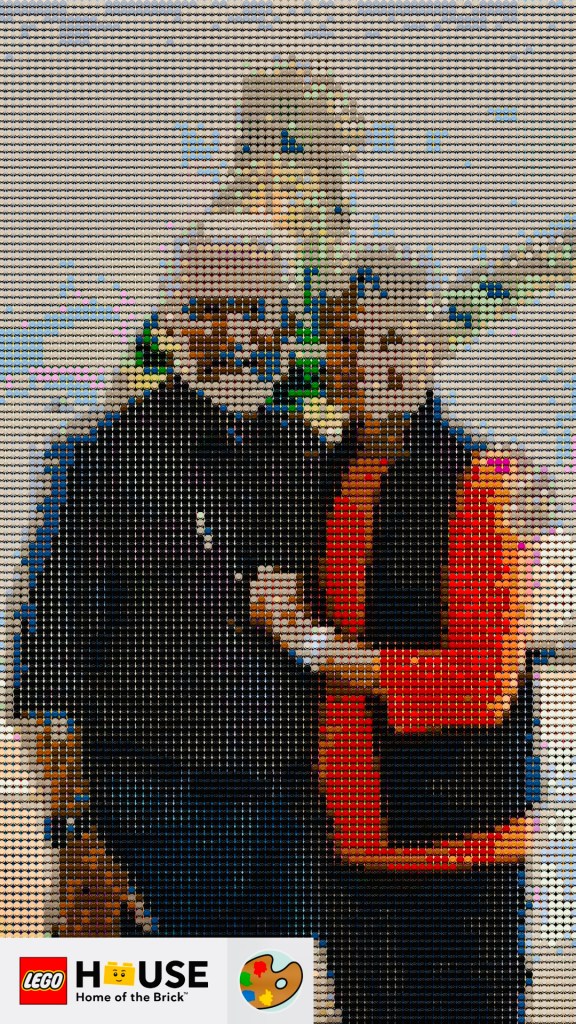
The War Memorial Museum in Auckland had a special exhibit….. a series of Lego panoramas set in a post-apocalyptic world where humans have died out and Lego mini figures have taken over the remaining relics of our civilization…..

Australian “Lego Masters” created about 12 major Lego displays in the exhibition with mini figures inhabiting bookshelves, a refrigerator, a jukebox, a piano. Here, a newsroom and a cryogenic chamber, both tiny parts of larger dioramas

Clever, but more than a little sobering and eerie as the visitor contemplates a world without real humans, destroyed by our own greed and negligence.

Speaking of whimsy, color and environmental conscience, Hundtervasser was an Austrian architect and artist who moved to New Zealand in the 1970s. He was a passionate defender of the natural world – promoting trees, whales and clean water among other things – and designing incredible buildings all over the world. Here is a model of the museum bearing his name in Whangarei, NZ.

He hated straight lines, evident from this staircase…

He also painted…..

If you will pardon a slight digression, he had strong feelings about poop, and how our modern obsession with flushing it into clean water sources is a really bad idea. If you have time, read his diatribe (from half a century ago).

It makes perfect sense. The composting toilet Henry brings on our camping trips works this way.

In the same vein, Hundtervasser’s creation of most renown in New Zealand are the public toilets he designed for the town of Kawakawa.

To be fair, this is another mock-up; we did not see the original version…..

And a big shout-out to the New Zealanders… not sure if it’s because of Hundterwasser’s example or if it is just an acknowledgement of the need we all share, but public toilets in New Zealand are plentiful, easy to find and spotless…. And often quite beautiful, such as these we stopped at on our way north from Auckland.

Next report – visiting Northland and the Bay of Islands!

Bay of Islands

(If you get the email version of these posts, please remember to click on the title of the post above so you can view the online version and see the videos!)

Kiwis are very proud of their boating prowess, being the current holders of the America’s Cup… so we couldn’t visit (even in winter!) without taking a sailing trip.

Side note about the sailing contest, America’s Cup – it is the oldest international sporting competition in the world, the first having been conducted in 1851. (The first international Olympics competition didn’t occur until 1932.). The New York Yacht Club (obviously American) won the competition continuously from its start until 1983, the world’s longest sports winning streak at 132 years! New Zealand was awarded the cup in 2021 and will be facing a challenge in October of this year.

Back to our little adventure under sail – we joined Russell and Karen (and their dog Woody) on their yacht, the SunKiss, for two days exploring the Bay of Islands along the coast north of Auckland. It IS winter here – not freezing but nights getting down into the 40s (Fahrenheit – 10s Celsius) and days nice and cool. And a bit of rain. But we were lucky in many respects….

A break in the weather allowed Russell to put up the sails and Henry to take the helm.

Felt like I was with the Gorton’s fisherman!

Another very lucky happenstance (for us!) is that Russell is an accomplished professional chef… the meals he prepared (with such incredible ease) were simple and delicious. Great food and great company, as the state of the universe was once again carefully examined.

Breakfast on the bow…..

And Woody the dog had a job, too – helping return undersized fish to their watery home…..

And still another bonus – sleeping onboard a ship in peaceful waters is about as good as sleeping gets. What a beautiful part of the world! Thank you to Karen and Russell for sharing a little piece of this paradise with us.

The nearby town, Kororareka (called Russell in English), has a rich history as the first permanent European settlement in New Zealand…. But I like best the story of how it was named. A Māori chief was wounded nearby, and given a broth made from the carcass of a blue penguin. Upon tasting the brew, he commented, “Blue penguin….. sweet!” Presumably he was also healed. Here is the town coat of arms (with the penguin in orange for unknown reasons).

Beautiful succulent wall.

Also sweet!

Northland to Rotorua

For those of us Americans who remember wearing leather shoes that our mothers required us to clean and shine – our first exposure to the kiwi (bird) would have been this:

Kiwi shoe polish was invented by an Australian in Melbourne in 1906. The name was a tribute to his New Zealander wife. The British and US armies adopted it in World War I, and its popularity thus spread across the planet. Sadly, it was taken off the market in the UK in 2022 and is expected to be discontinued in the US this year. And so it goes.

The kiwi bird, however, is alive and well after facing severe endangerment.

This is a stuffed kiwi. They are extremely difficult to spot in nature as they are nocturnal and very shy. Visitors to a hatchery, however, can see them in an enclosed dark habitat.

Kiwi eggs are collected in the wild, generally sniffed out by specially-trained muzzled dogs.

Interesting, since domestic dogs are one of the main predators that contributed to the decline in the kiwi population. Hence the muzzles. Heartwarming, as our canine companions once again prove their worth and adaptability!

The eggs are brought to hatcheries where they are carefully tended through the hatching process. The chicks are nurtured until they attain a weight of 1 kilo (about 2.2 pounds). At that stage, they are deemed capable of successfully fighting off a stoat by themselves! They cannot fly away, as their wings are not functional, and do not use their beaks, which are fragile and primarily used for sensing food sources. Instead, they kick them with their powerful legs! Mother Nature is amazing.

The Bay of Plenty – the area around Rotorua and TePuke – calls itself the kiwifruit capital of the world. (If you refer to the fruit as “kiwi”, locals will be confused, wondering if you’re talking about birds or fellow countrymen – so call it kiwifruit.)

We were lucky enough to meet and share a meal with kiwifruit growers and marketers Tania and Roland at a farmer’s market. A fascinating discussion of the challenges of kiwifruit cultivation ensued (along with the usual state of the universe topic).

They generously gave us a box full of kiwifruit, which we devoured in only a couple of days. So much Vitamin C, antioxidants and fiber!

Not too far from Rotorua are the Waitomo glow worm caves, a “must-see” tourist attraction.

Schlocky green-screen photo, but it gives you an idea…..

Truth be told, the glow worms are actually maggots – larval phases of flies. Bioluminescence attracts insects to their sticky string-like webs.

The deep limestone caves are worth seeing on their own…. A pretty shot of the winding descent into one of them.

Fun stuff – near the caves was a unique motel that promised to be schlocky as well, with rooms built into a turf-topped cave that resemble hobbit holes….

The place was actually quite nice and peaceful, nestled into wooded hills outside the town. New Zealand was the primary filming site for many of the Hobbit/Lord-of-the-Rings movies, and fans flock to the attendant tourist attractions. We did not.

Speaking of other-worldly…… giant foxtail agave plants are common on the north island, making a big statement in the garden!

With night fast approaching, we stopped at a bed and breakfast (with a no-vacancy sign) in the tiny hamlet of Paparoa – where they fortunately had a last-minute cancellation for one of the three rooms. Our hosts Tony and Maggie have an antique-filled place, complete with a welcoming fire……

AND an excellent sit-down home-cooked dinner, where we were joined by our hosts and the other two guests.

Tony is justifiably proud of the breakfast offering as well – so artfully presented!

Back to Rotorua, a center of Māori culture – rather than attend a song-and-dance tourist show, we opted to go to a tiny cinema to see the recently-released film “Ka Whawhai Tonu”, or “Struggle Without End”.

Set in 1864, it tells a story of the land war between the Māori people and British colonial forces. It is notable as one of the first major films to be almost entirely in the Māori language….. hopeful local buzz is that it might earn an Oscar nod for international film. We found it a great cultural and history lesson and excellent experience of the cadence and sounds of the Māori tongue.

More from Aotearoa soon!

Out and About in Kiwi Country

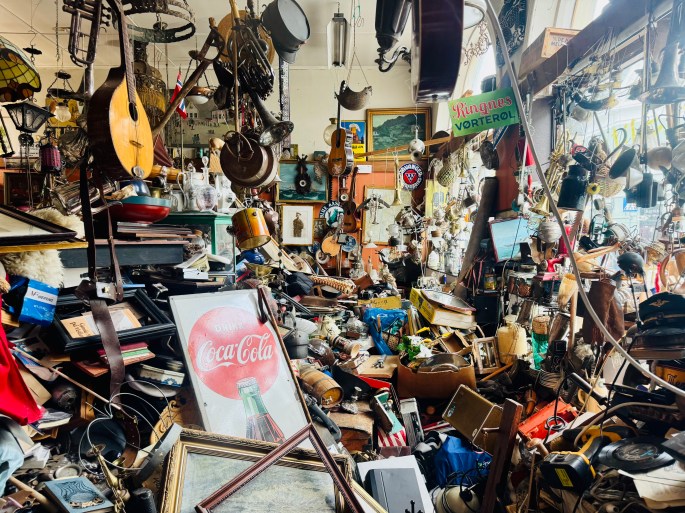
Thrift shops are mainstream in New Zealand, where they are called Op Shops. The “op” stands for “opportunity”, a term that was coined by a woman in Australia who wanted a more dignified term than “second-hand”. Villages in New Zealand have at least one Op Shop; larger towns may have four or five of them. Thrifty and environmentally-conscious Kiwis know that these enterprises not only benefit the associated charities, but also provide a chance to recycle materials that would otherwise end up in a landfill.

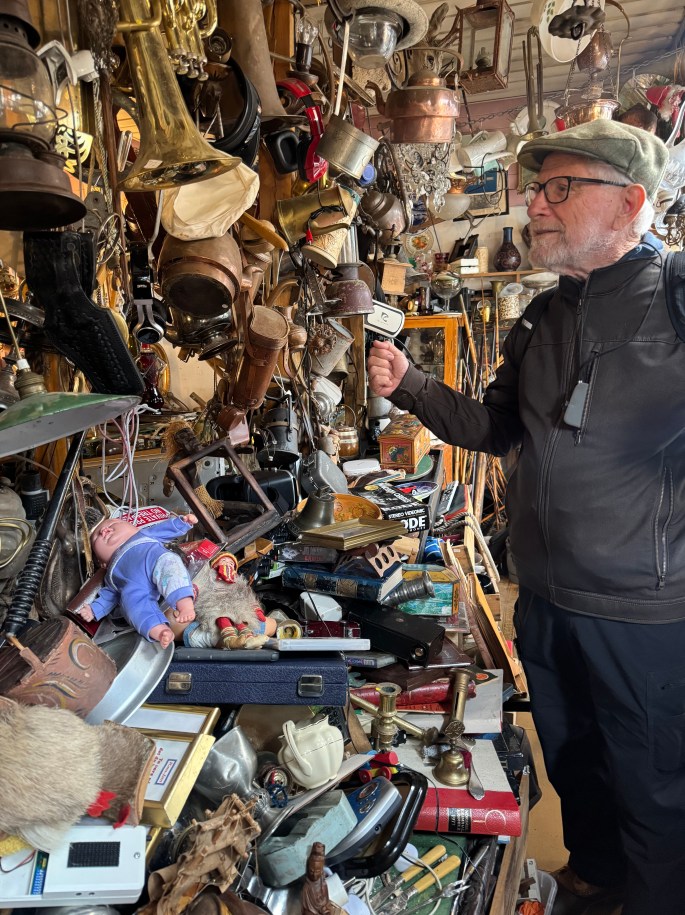
Some mature American travelers have a hard time passing up the chance to paw through the discards of the cultures through which they pass…..

Henry has now acquired quite a selection of music CDs – including a pristine collection of Patsy Cline oldies. (Will have to wait to listen to them, as CD players are few and far between – here, there and everywhere… but not at home!)

One of the most brilliant Op Shop strategies is to take the donated goods, then upgrade or embellish them to enhance their appeal…..

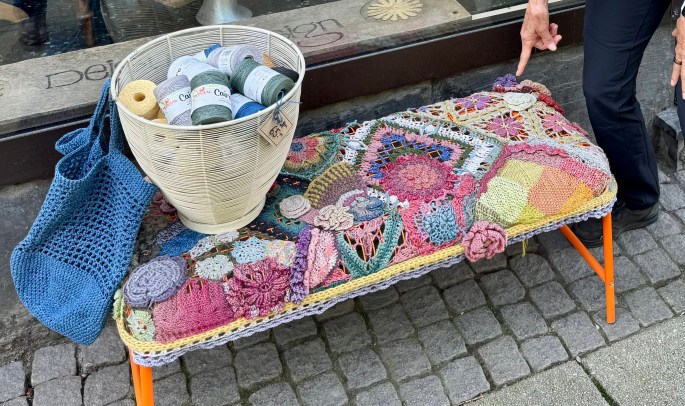
Thus one person’s trash becomes someone else’s one-of-a-kind treasure! What a great activity for a sewing/craft group!

Another way to capitalize on unused resources – the free library (“Take a book; leave a book”), also common in small communities. This one is lodged in a beautifully-painted old refrigerator on the front porch of a local post office/realtor/convenience store.

Lance was taking a break from a long hike down the road, modeling what looks like the latest in Op Shop couture; Henry appears an over-eager fashion dandy next to him.

Lance is a retired farmer who has traveled quite extensively himself; grounded now, he said, by the limits of old age and a fairly recent minor stroke. Sigh. State of the universe was a compelling topic for him, and one we turned over carefully.

New Zealand has a universal public health care system that provides free or subsidized care to all its citizens. A promotion for early cancer screening included a giant inflatable colon, complete with polyps at various stages…

What a nice way to educate people about a potentially deadly disease! And hopefully inspire them to be screened…..

Henry badly needed a haircut. Immediate seating was available at a barbershop in Rotorua that had this image on the door:

We honestly believed the stylist would simply give Henry a trim; he instead opted for this very popular style – shaved on the sides and long on top – looks like a cross between a mohawk and a mullet.

Unfortunately, the style does not translate well for people with thinning silver hair….. We will have to get this fixed in Melbourne!

As idyllic as life in New Zealand appears to us, young people often get itchy and discontent….. in part due to the limited career/work options that exist and perhaps due to the limits of living on a small isolated island. Most Kiwis spend a year or two abroad in their early adulthood; many never return. It is a drain on talent, but one that people ultimately accept if not embrace.

Kiwi grown-ups DO worry about the advent of the “Boy Racers” phenomenon, and it receives a lot of national media attention. These are young people – mostly of the male persuasion – who race each other at high speed in supercharged cars, spinning them around and desecrating paved roads and countryside alike.

Racing usually occurs at night and at high volume. Laws against this activity incorporate penalties such as vehicle impoundment, fines and jail time, but they have been unevenly effective. Some jurisdictions are adapting abandoned go-kart tracks to divert noisy racing from commercial and residential areas. Angry old people shake their fists and say, “These kids need something better to do!” We – not surprisingly – agree with the other seniors….

The Coromandel Peninsula is a close getaway for Auckland residents – with rolling hills, beaches, laid-back villages, agriculture and great hiking. It was our last stop in New Zealand and our favorite Airbnb stay so far – 15 minutes from the closest town in a barn set in the middle of sheep paddocks.

It had a cozy and well-designed interior….

A wood stove…..

And some of Henry’s favorite people next door – chickens!

This red-headed beauty came to call in the morning and had to pay the price….a cuddling session!

Our last day before heading to Australia – how happy we were to be scraping the ice off our rental car instead of sweltering at home!

So now to Melbourne – where we will sample city life for a while, meet up with South African friends Tertius and Ty, and prepare for a flying adventure through the red heart of Australia.