Northland to Rotorua

For those of us Americans who remember wearing leather shoes that our mothers required us to clean and shine – our first exposure to the kiwi (bird) would have been this:
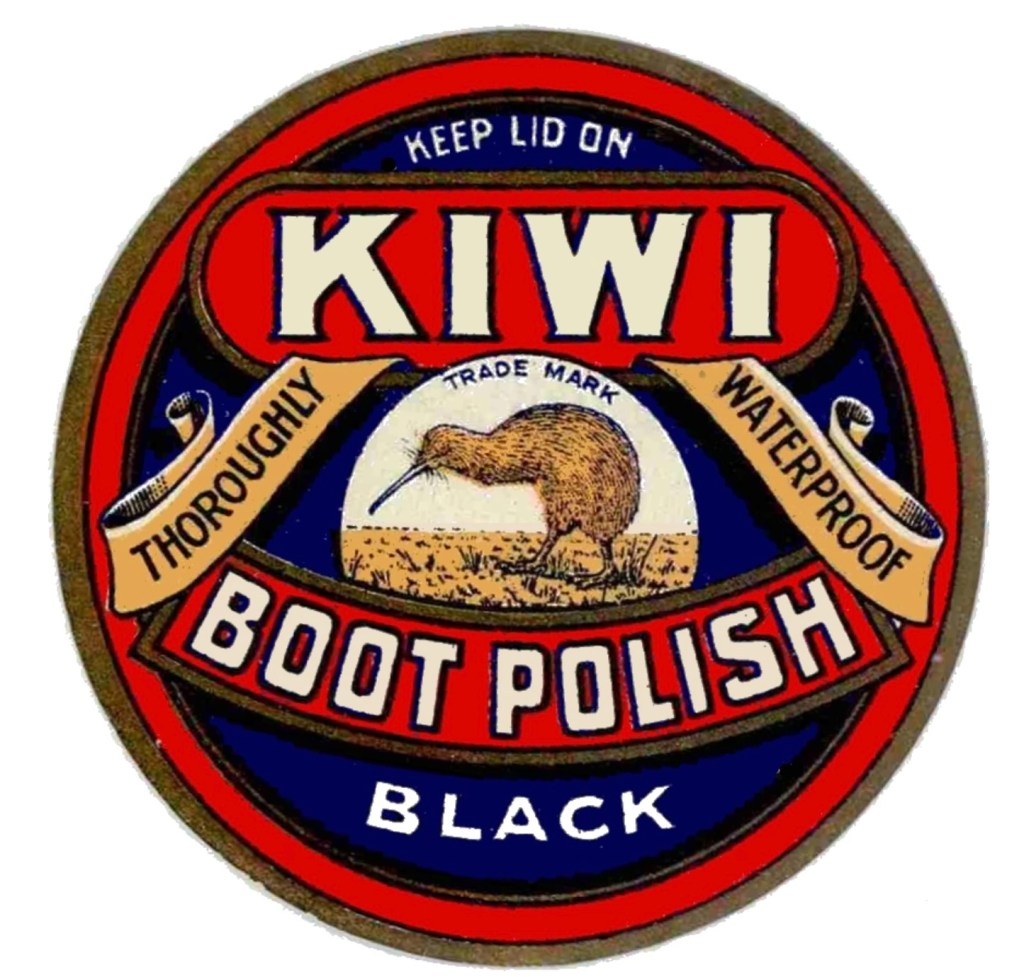
Kiwi shoe polish was invented by an Australian in Melbourne in 1906. The name was a tribute to his New Zealander wife. The British and US armies adopted it in World War I, and its popularity thus spread across the planet. Sadly, it was taken off the market in the UK in 2022 and is expected to be discontinued in the US this year. And so it goes.

The kiwi bird, however, is alive and well after facing severe endangerment.
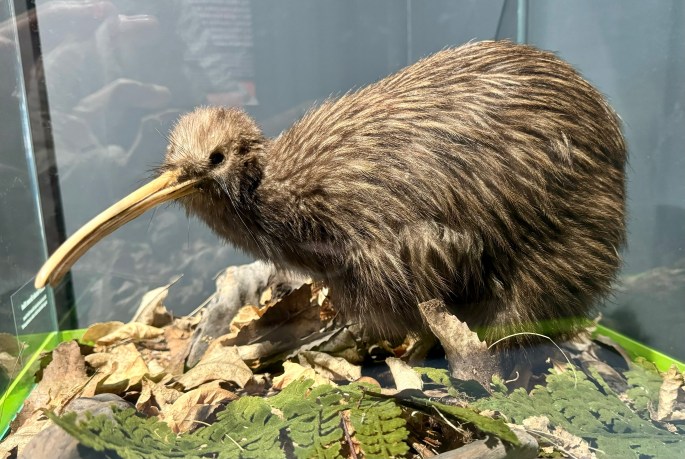
This is a stuffed kiwi. They are extremely difficult to spot in nature as they are nocturnal and very shy. Visitors to a hatchery, however, can see them in an enclosed dark habitat.

Kiwi eggs are collected in the wild, generally sniffed out by specially-trained muzzled dogs.

Interesting, since domestic dogs are one of the main predators that contributed to the decline in the kiwi population. Hence the muzzles. Heartwarming, as our canine companions once again prove their worth and adaptability!

The eggs are brought to hatcheries where they are carefully tended through the hatching process. The chicks are nurtured until they attain a weight of 1 kilo (about 2.2 pounds). At that stage, they are deemed capable of successfully fighting off a stoat by themselves! They cannot fly away, as their wings are not functional, and do not use their beaks, which are fragile and primarily used for sensing food sources. Instead, they kick them with their powerful legs! Mother Nature is amazing.

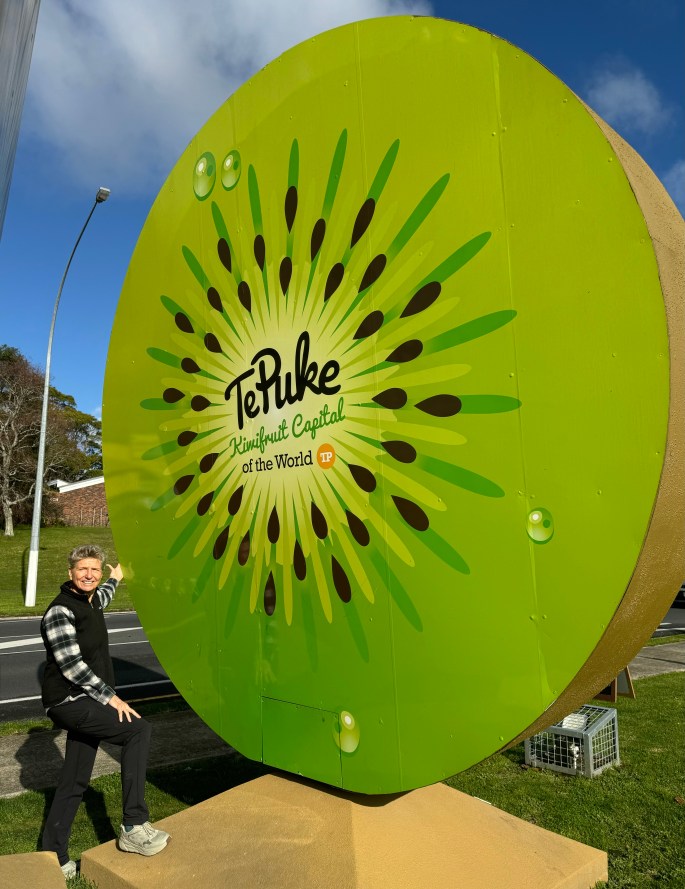
The Bay of Plenty – the area around Rotorua and TePuke – calls itself the kiwifruit capital of the world. (If you refer to the fruit as “kiwi”, locals will be confused, wondering if you’re talking about birds or fellow countrymen – so call it kiwifruit.)
We were lucky enough to meet and share a meal with kiwifruit growers and marketers Tania and Roland at a farmer’s market. A fascinating discussion of the challenges of kiwifruit cultivation ensued (along with the usual state of the universe topic).
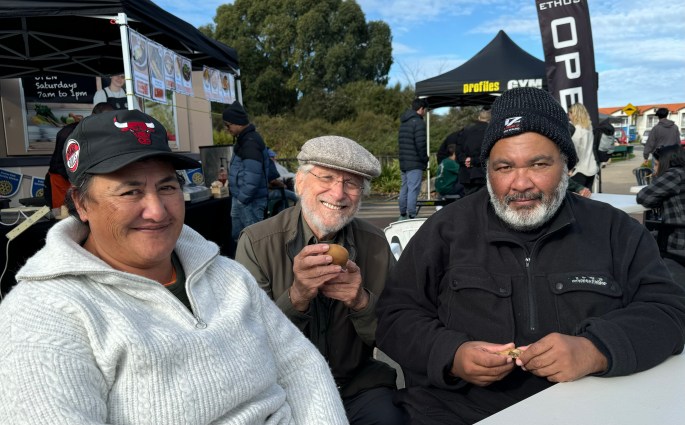
They generously gave us a box full of kiwifruit, which we devoured in only a couple of days. So much Vitamin C, antioxidants and fiber!

Not too far from Rotorua are the Waitomo glow worm caves, a “must-see” tourist attraction.
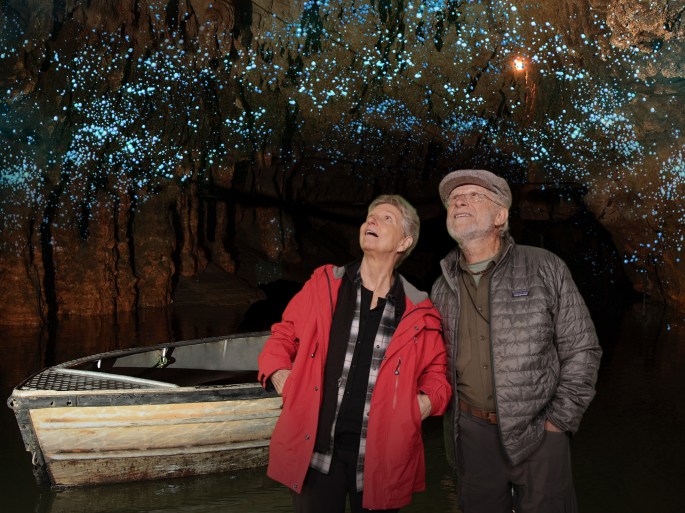
Schlocky green-screen photo, but it gives you an idea…..

Truth be told, the glow worms are actually maggots – larval phases of flies. Bioluminescence attracts insects to their sticky string-like webs.
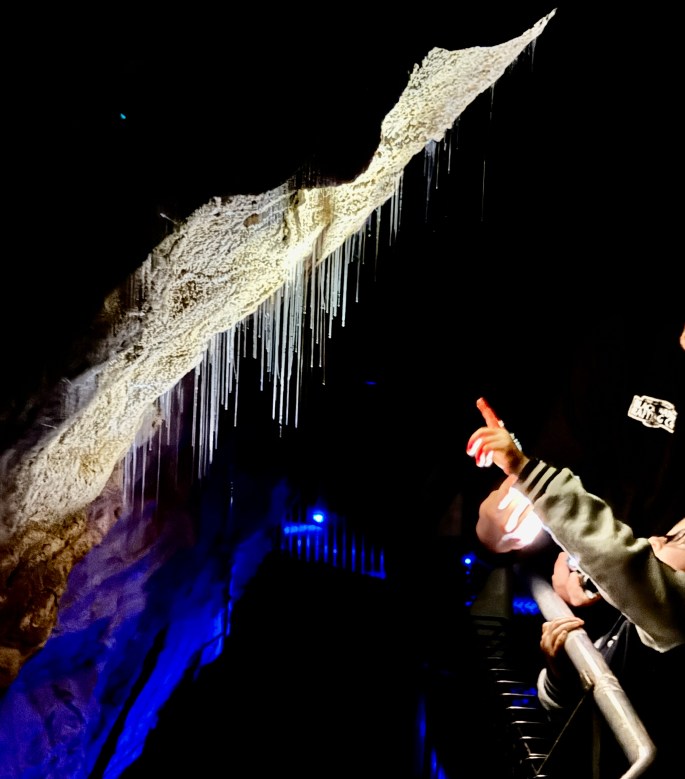
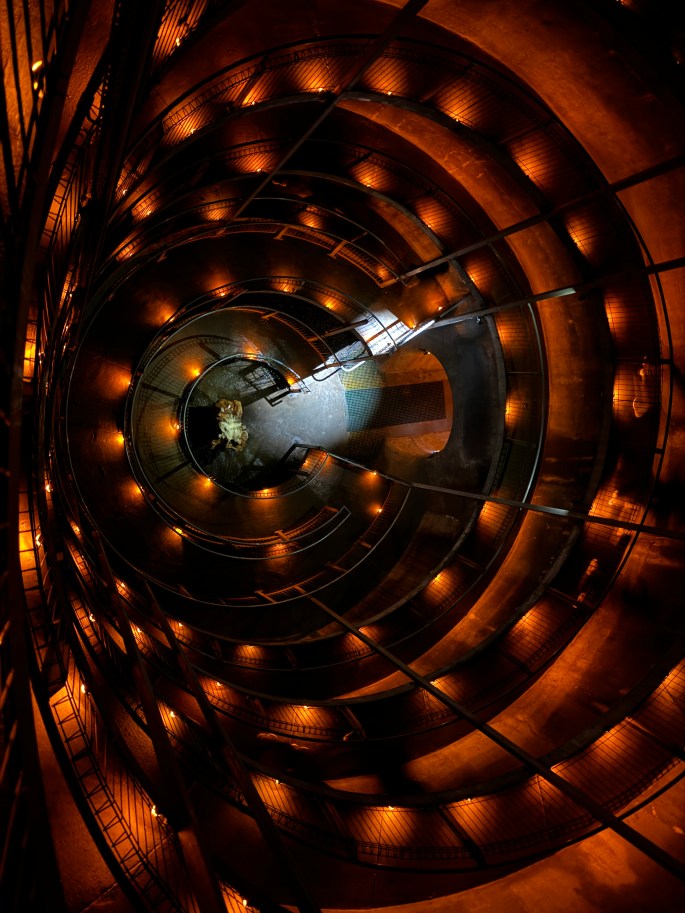
The deep limestone caves are worth seeing on their own…. A pretty shot of the winding descent into one of them.
Fun stuff – near the caves was a unique motel that promised to be schlocky as well, with rooms built into a turf-topped cave that resemble hobbit holes….
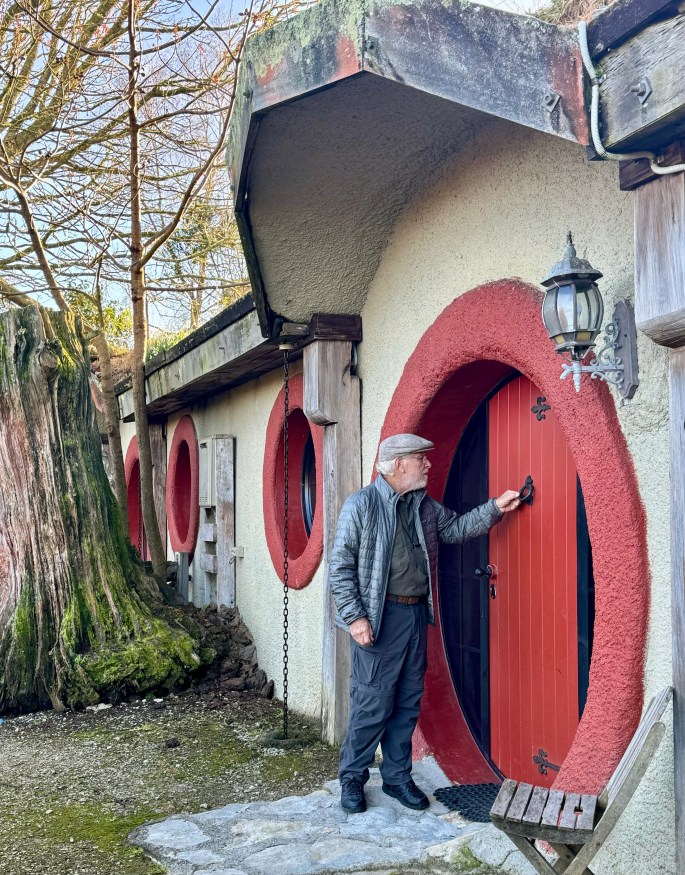
The place was actually quite nice and peaceful, nestled into wooded hills outside the town. New Zealand was the primary filming site for many of the Hobbit/Lord-of-the-Rings movies, and fans flock to the attendant tourist attractions. We did not.

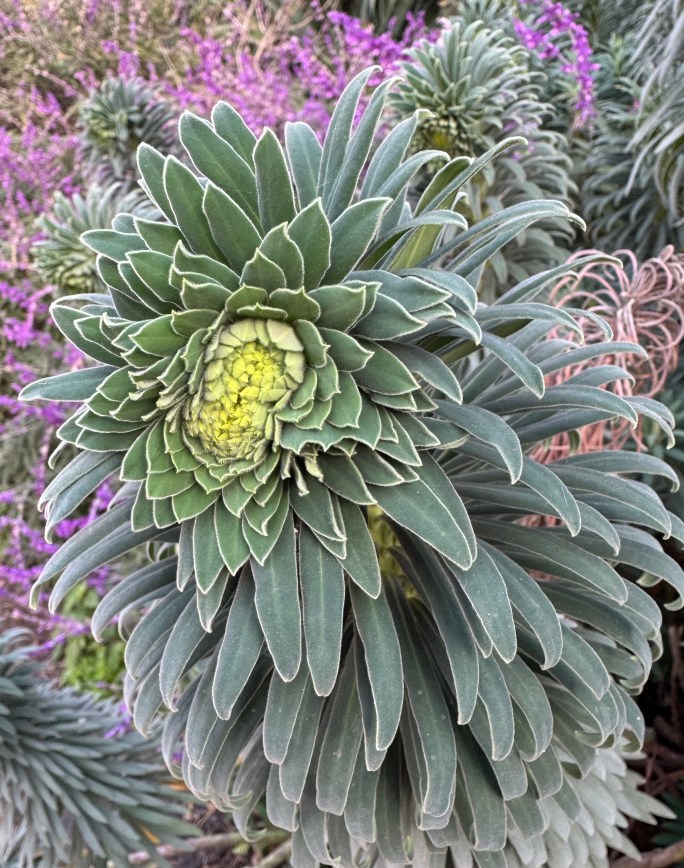
Speaking of other-worldly…… giant foxtail agave plants are common on the north island, making a big statement in the garden!

With night fast approaching, we stopped at a bed and breakfast (with a no-vacancy sign) in the tiny hamlet of Paparoa – where they fortunately had a last-minute cancellation for one of the three rooms. Our hosts Tony and Maggie have an antique-filled place, complete with a welcoming fire……
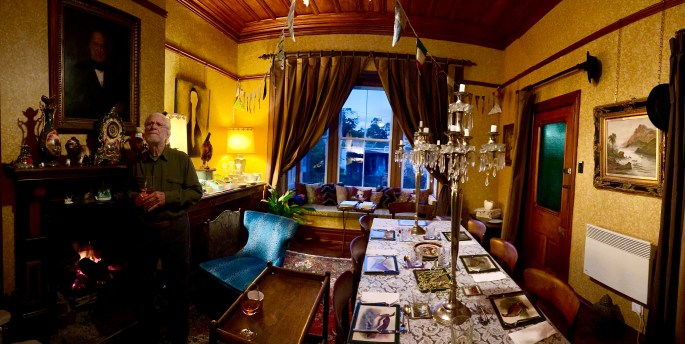
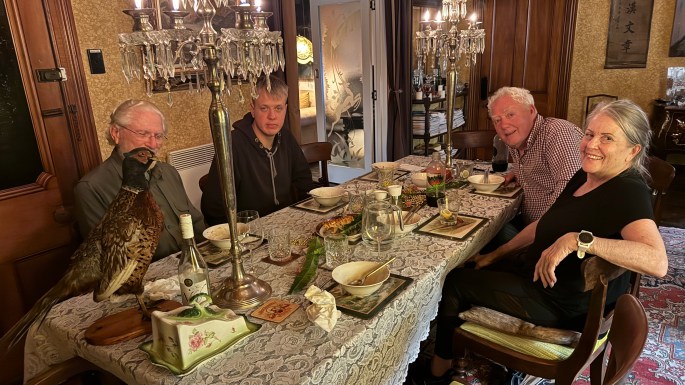
AND an excellent sit-down home-cooked dinner, where we were joined by our hosts and the other two guests.
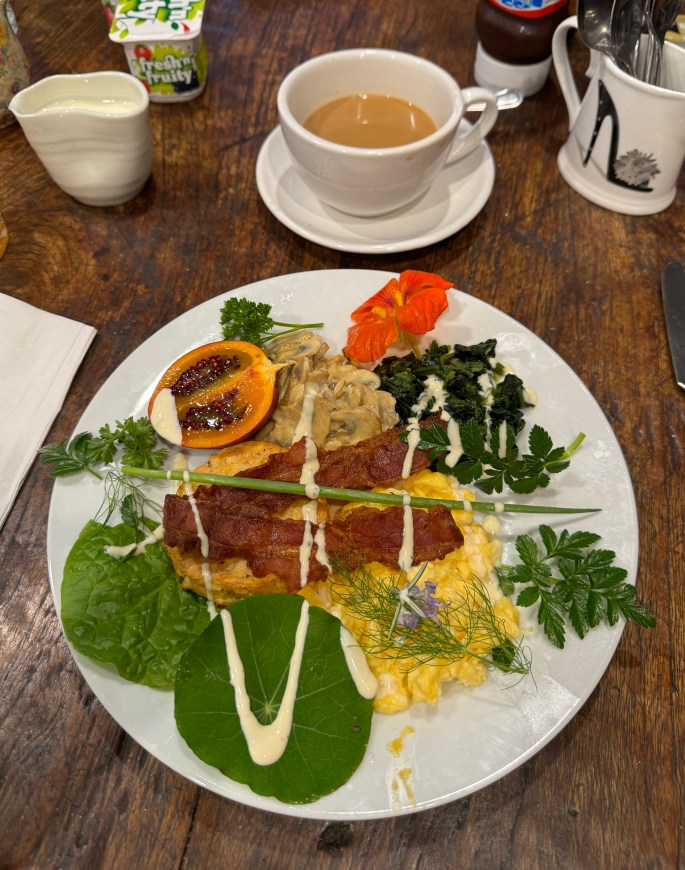
Tony is justifiably proud of the breakfast offering as well – so artfully presented!
Back to Rotorua, a center of Māori culture – rather than attend a song-and-dance tourist show, we opted to go to a tiny cinema to see the recently-released film “Ka Whawhai Tonu”, or “Struggle Without End”.
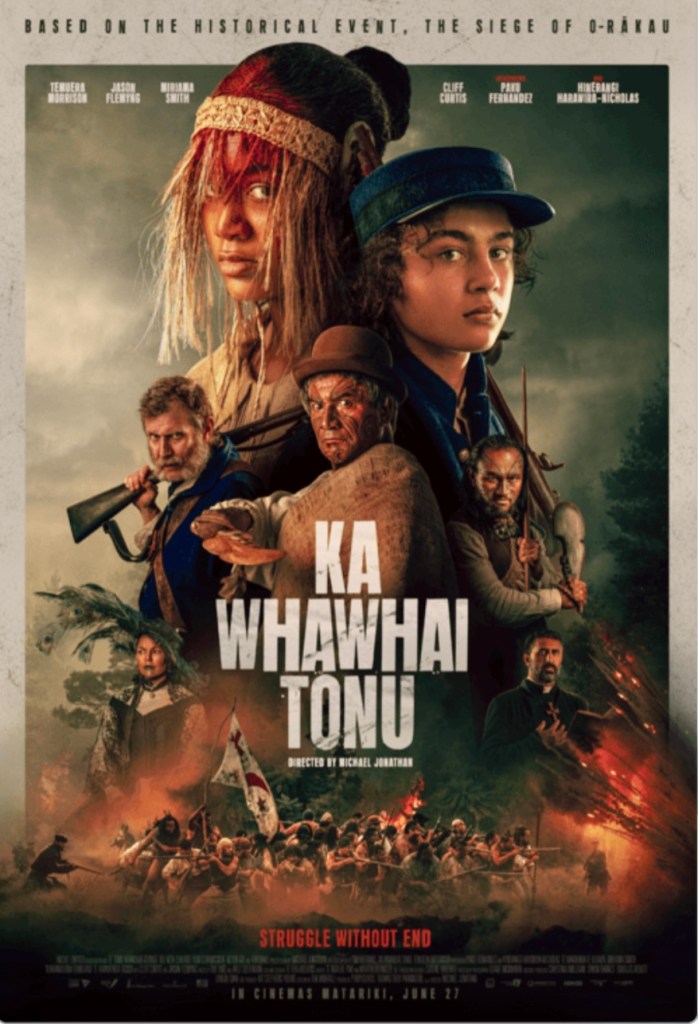
Set in 1864, it tells a story of the land war between the Māori people and British colonial forces. It is notable as one of the first major films to be almost entirely in the Māori language….. hopeful local buzz is that it might earn an Oscar nod for international film. We found it a great cultural and history lesson and excellent experience of the cadence and sounds of the Māori tongue.

More from Aotearoa soon!
Out and About in Kiwi Country

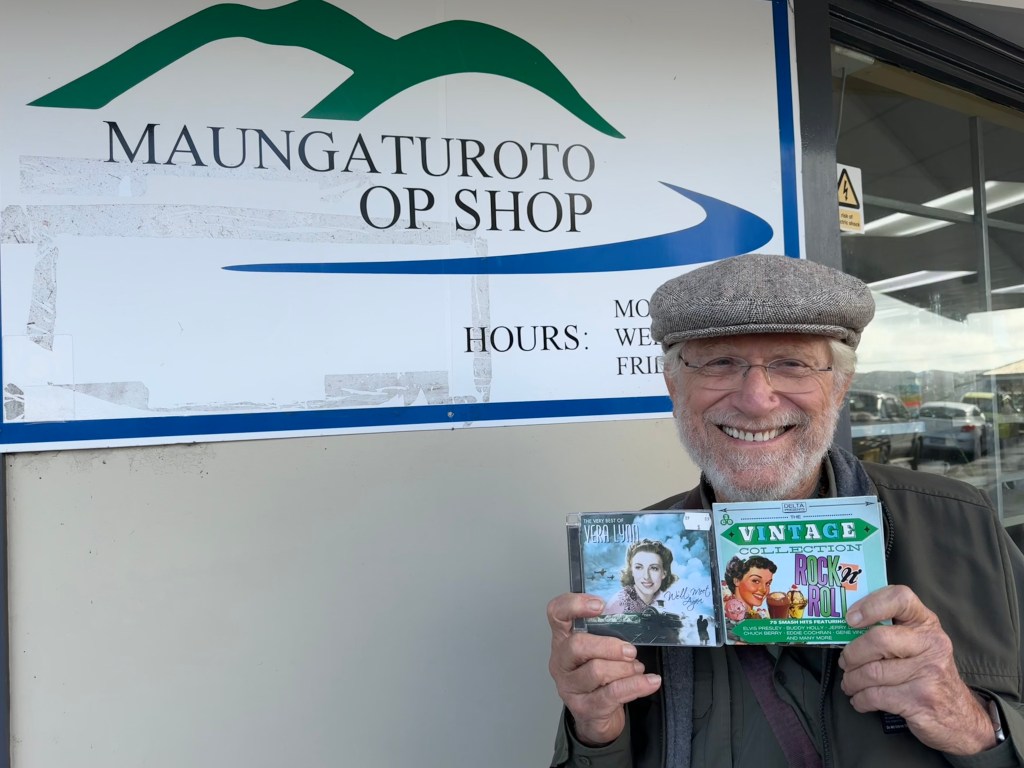
Thrift shops are mainstream in New Zealand, where they are called Op Shops. The “op” stands for “opportunity”, a term that was coined by a woman in Australia who wanted a more dignified term than “second-hand”. Villages in New Zealand have at least one Op Shop; larger towns may have four or five of them. Thrifty and environmentally-conscious Kiwis know that these enterprises not only benefit the associated charities, but also provide a chance to recycle materials that would otherwise end up in a landfill.

Some mature American travelers have a hard time passing up the chance to paw through the discards of the cultures through which they pass…..

Henry has now acquired quite a selection of music CDs – including a pristine collection of Patsy Cline oldies. (Will have to wait to listen to them, as CD players are few and far between – here, there and everywhere… but not at home!)

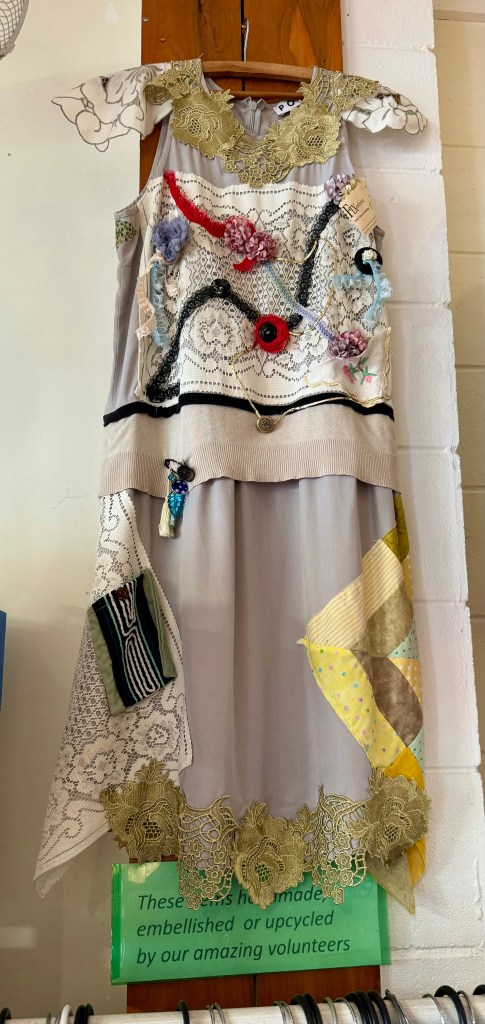
One of the most brilliant Op Shop strategies is to take the donated goods, then upgrade or embellish them to enhance their appeal…..

Thus one person’s trash becomes someone else’s one-of-a-kind treasure! What a great activity for a sewing/craft group!

Another way to capitalize on unused resources – the free library (“Take a book; leave a book”), also common in small communities. This one is lodged in a beautifully-painted old refrigerator on the front porch of a local post office/realtor/convenience store.

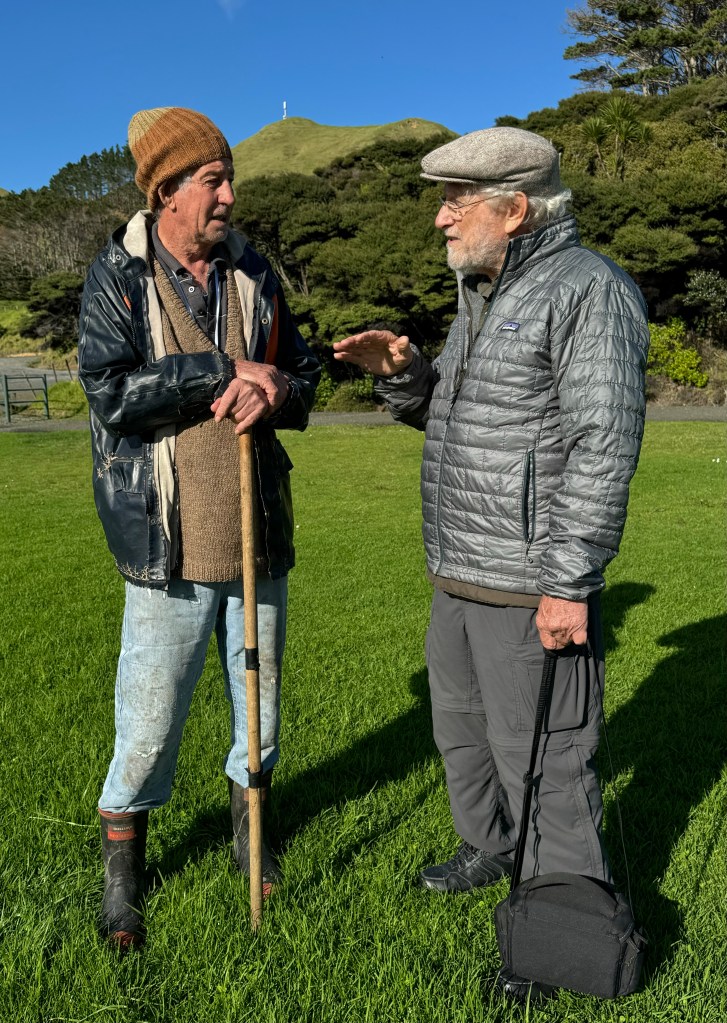
Lance was taking a break from a long hike down the road, modeling what looks like the latest in Op Shop couture; Henry appears an over-eager fashion dandy next to him.

Lance is a retired farmer who has traveled quite extensively himself; grounded now, he said, by the limits of old age and a fairly recent minor stroke. Sigh. State of the universe was a compelling topic for him, and one we turned over carefully.

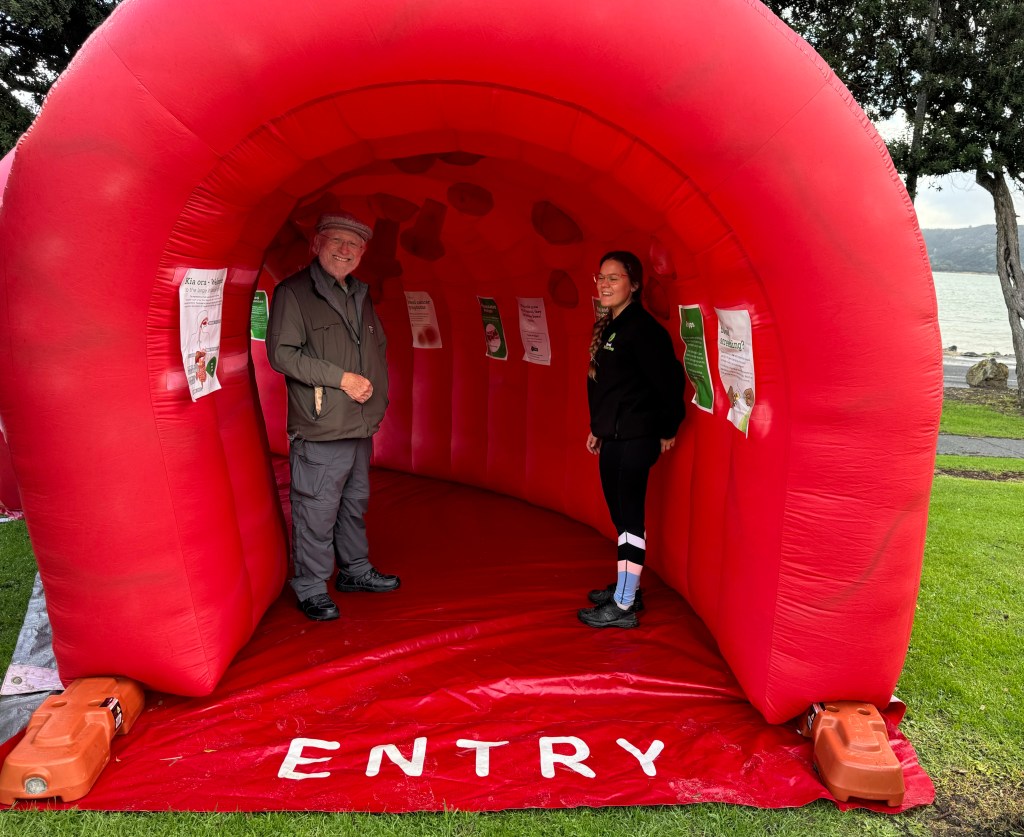
New Zealand has a universal public health care system that provides free or subsidized care to all its citizens. A promotion for early cancer screening included a giant inflatable colon, complete with polyps at various stages…

What a nice way to educate people about a potentially deadly disease! And hopefully inspire them to be screened…..

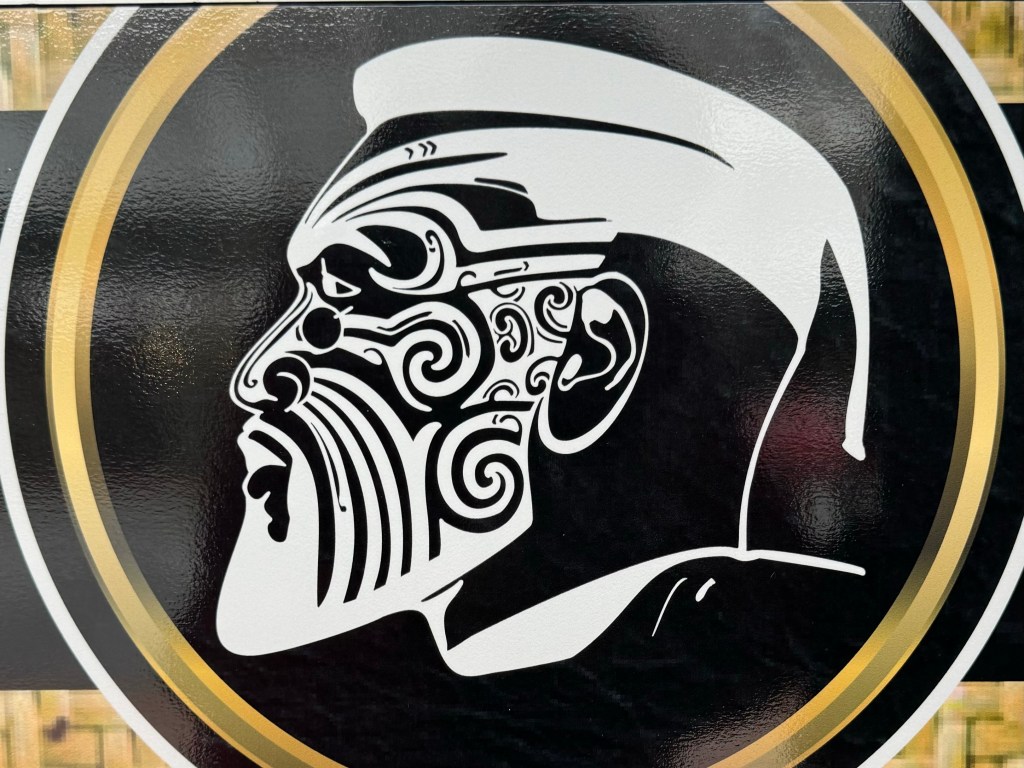
Henry badly needed a haircut. Immediate seating was available at a barbershop in Rotorua that had this image on the door:

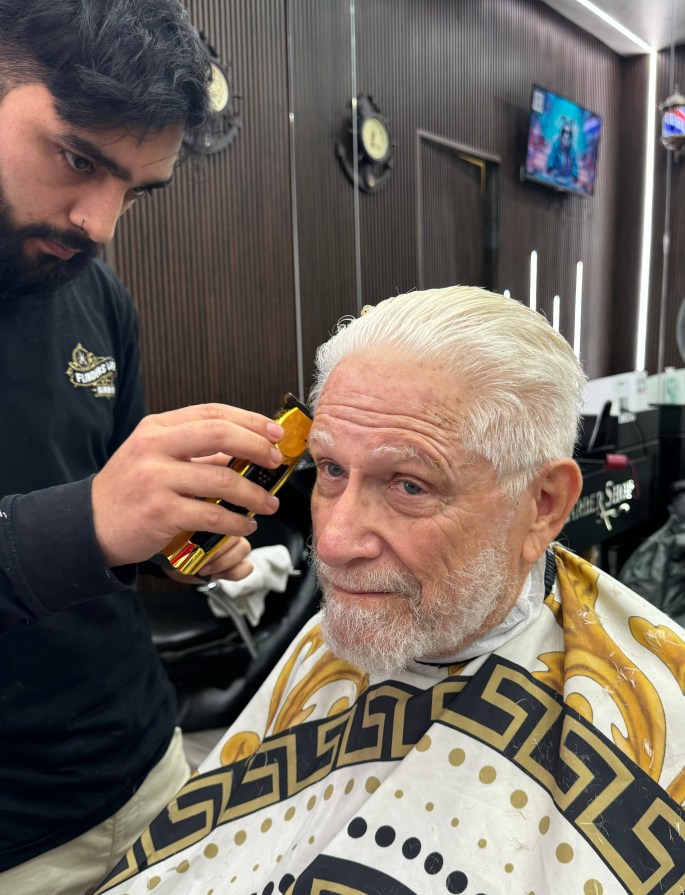
We honestly believed the stylist would simply give Henry a trim; he instead opted for this very popular style – shaved on the sides and long on top – looks like a cross between a mohawk and a mullet.

Unfortunately, the style does not translate well for people with thinning silver hair….. We will have to get this fixed in Melbourne!

As idyllic as life in New Zealand appears to us, young people often get itchy and discontent….. in part due to the limited career/work options that exist and perhaps due to the limits of living on a small isolated island. Most Kiwis spend a year or two abroad in their early adulthood; many never return. It is a drain on talent, but one that people ultimately accept if not embrace.

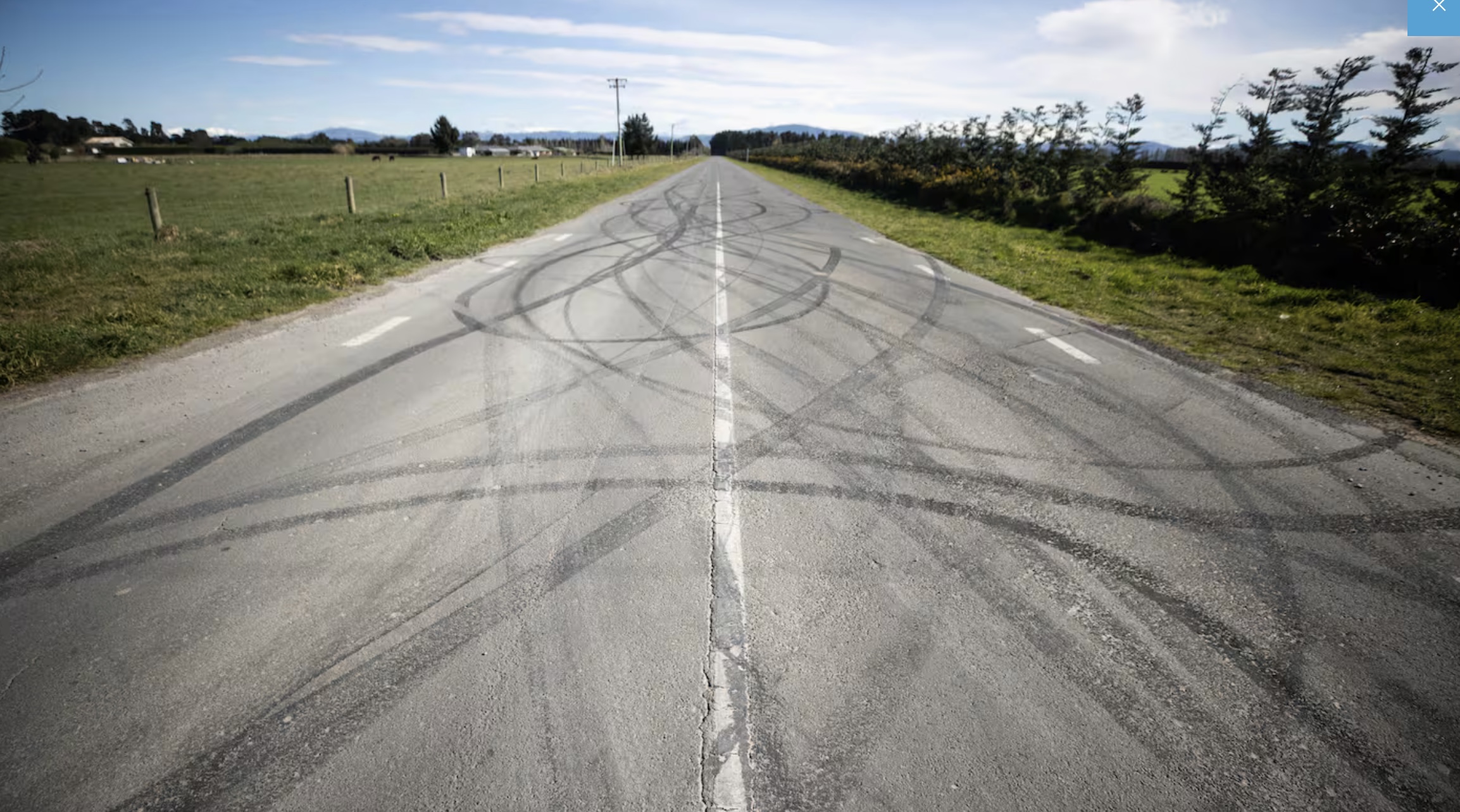
Kiwi grown-ups DO worry about the advent of the “Boy Racers” phenomenon, and it receives a lot of national media attention. These are young people – mostly of the male persuasion – who race each other at high speed in supercharged cars, spinning them around and desecrating paved roads and countryside alike.

Racing usually occurs at night and at high volume. Laws against this activity incorporate penalties such as vehicle impoundment, fines and jail time, but they have been unevenly effective. Some jurisdictions are adapting abandoned go-kart tracks to divert noisy racing from commercial and residential areas. Angry old people shake their fists and say, “These kids need something better to do!” We – not surprisingly – agree with the other seniors….

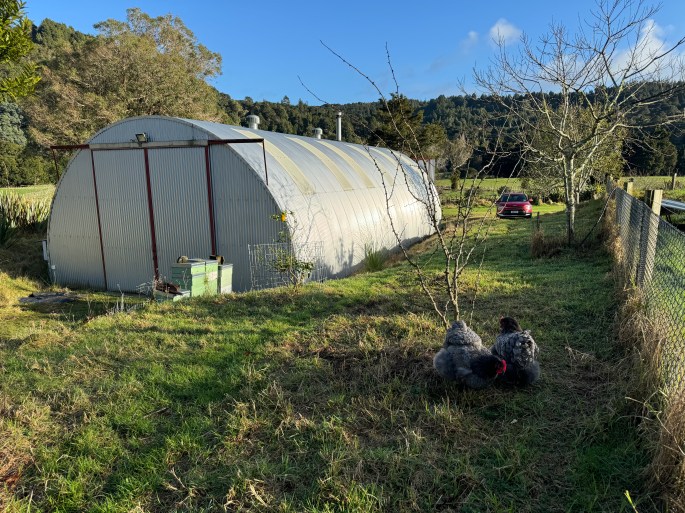
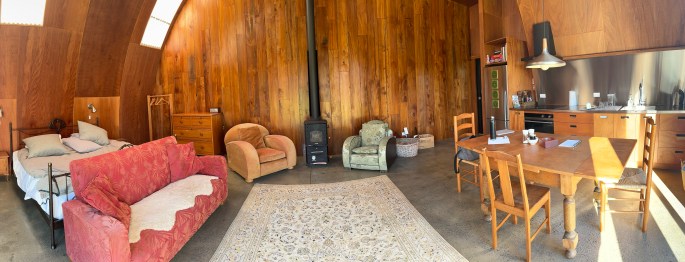
The Coromandel Peninsula is a close getaway for Auckland residents – with rolling hills, beaches, laid-back villages, agriculture and great hiking. It was our last stop in New Zealand and our favorite Airbnb stay so far – 15 minutes from the closest town in a barn set in the middle of sheep paddocks.

It had a cozy and well-designed interior….

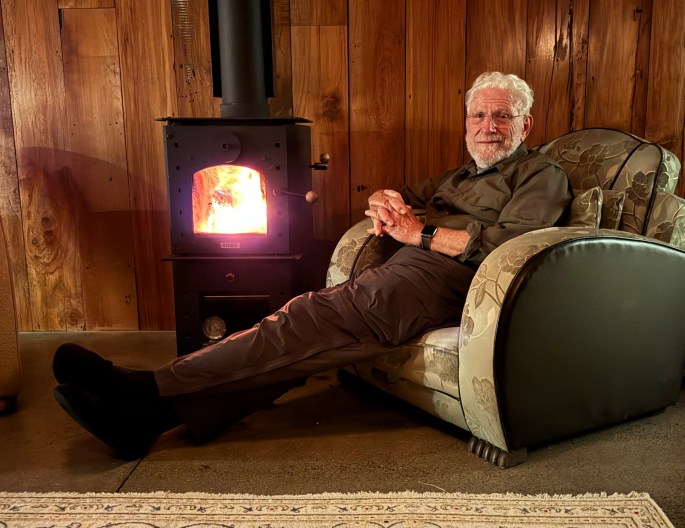
A wood stove…..

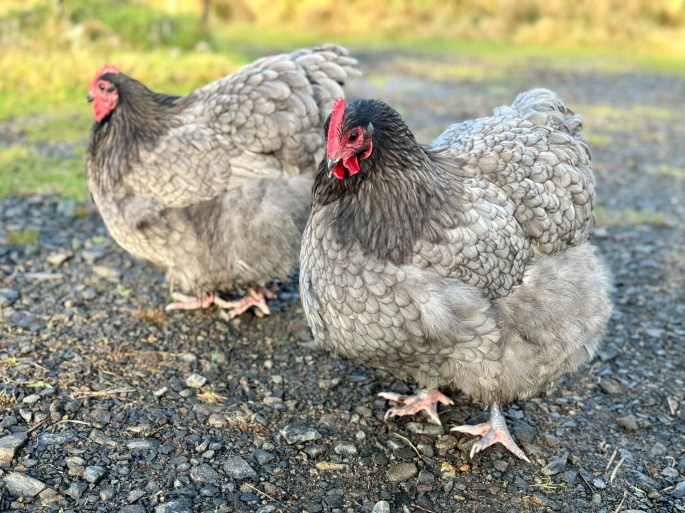
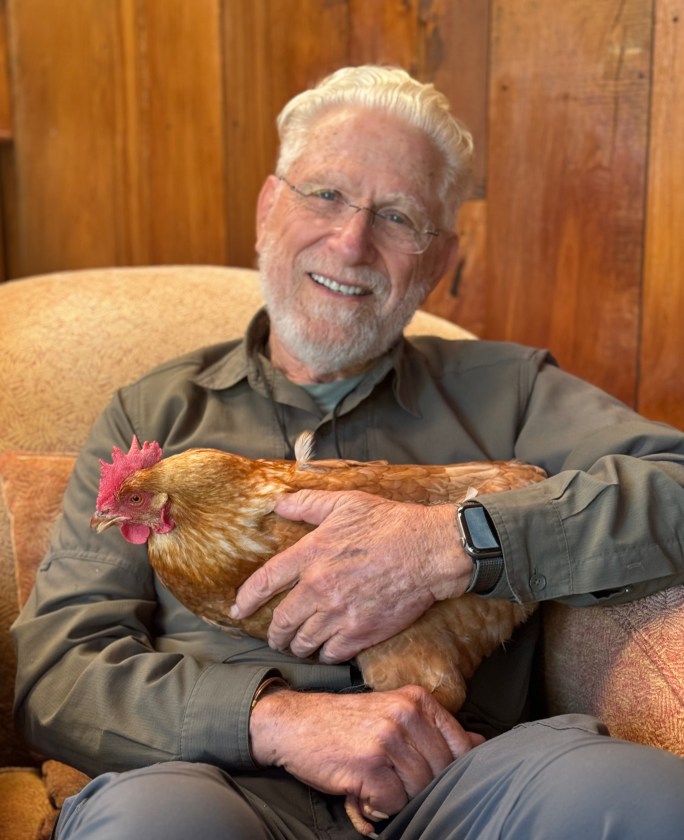
And some of Henry’s favorite people next door – chickens!

This red-headed beauty came to call in the morning and had to pay the price….a cuddling session!
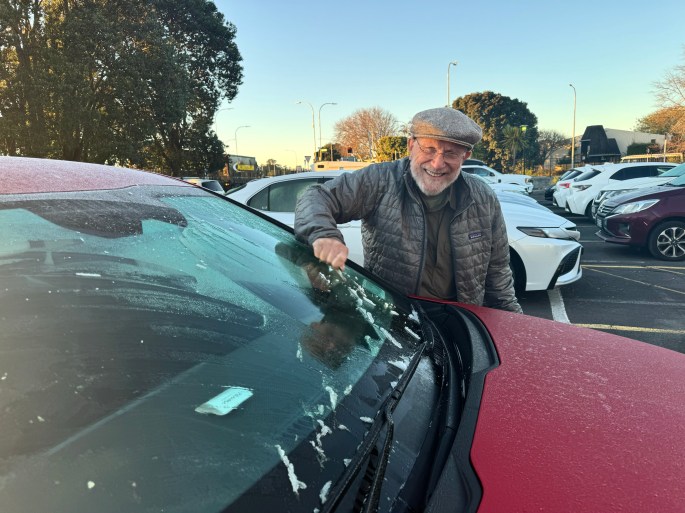
Our last day before heading to Australia – how happy we were to be scraping the ice off our rental car instead of sweltering at home!

So now to Melbourne – where we will sample city life for a while, meet up with South African friends Tertius and Ty, and prepare for a flying adventure through the red heart of Australia.

Australia – Melbourne

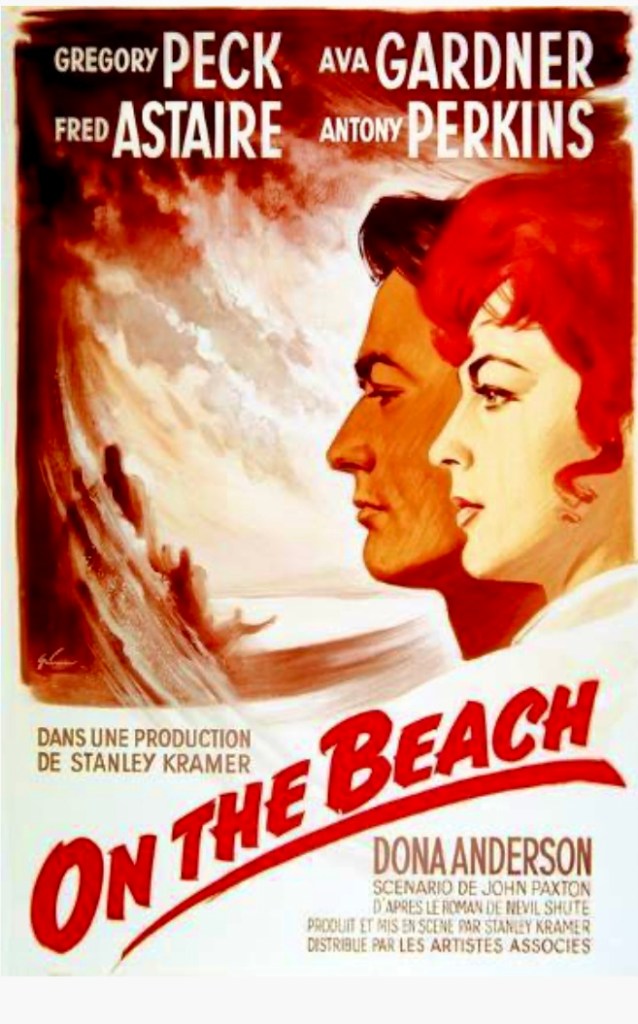
Melbourne is the second biggest city in Australia after Sydney, with over 5 million inhabitants. It was the setting for Nevil Shute’s 1957 novel, “On the Beach”, a story about nuclear apocalypse. It’s told from the viewpoint of the last members of the human race (at the southern end of the planet in Melbourne), as they wait for death from nuclear fallout. It was made into a movie starring Gregory Peck and Ava Gardner in 1959.

It was a ground-breaking and thought-provoking film produced at a time when mankind was still processing the potential of nuclear destruction after the bombing of Japan that effectively ended World War II. Maybe not great cinema, but worth a watch (or read the book)!

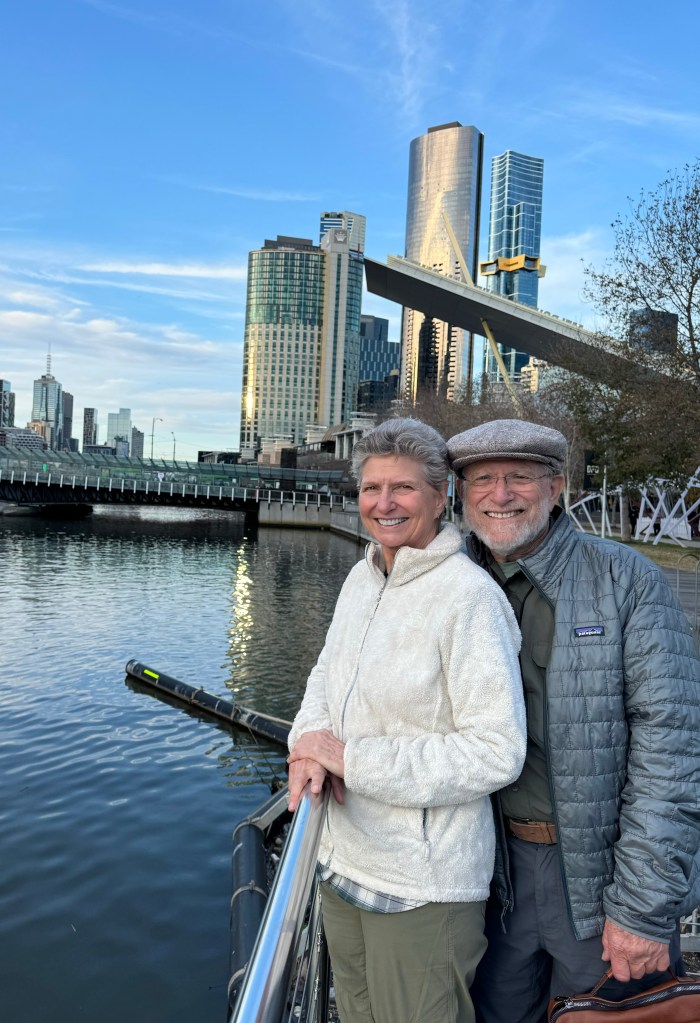
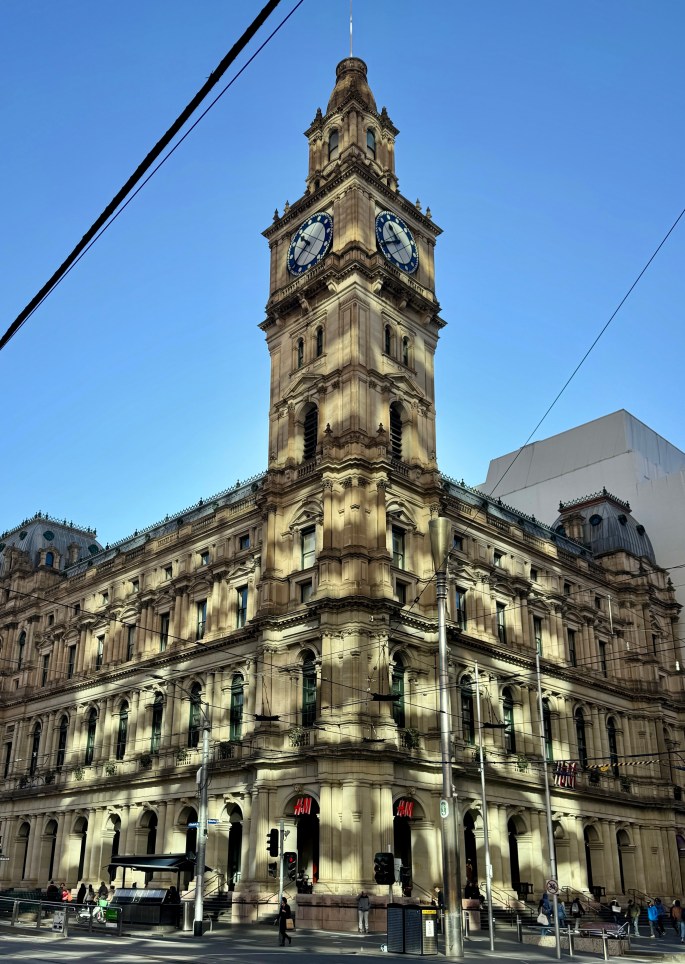
In any event, Melbourne is a thriving city and we enjoyed the colonial architecture and the royal botanic garden.

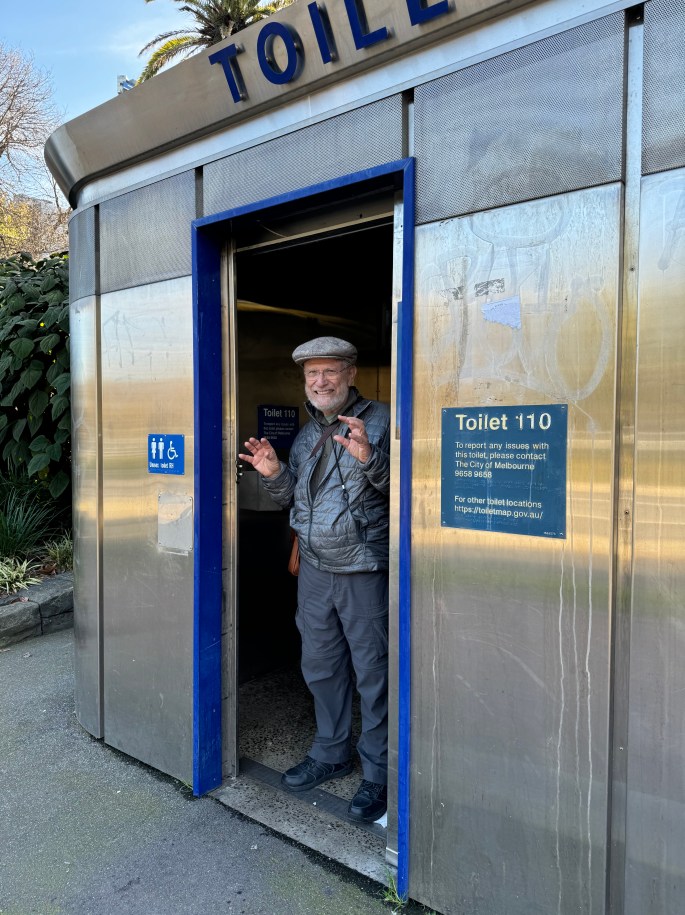
The Aussies get a B for public conveniences…… they are available, but not quite as prevalent as in New Zealand and not quite as pristine…..

Still vastly better than the US and most European countries.

A pro-Palestinian demonstration shows that concern over the conflict is on-going and pervasive…..

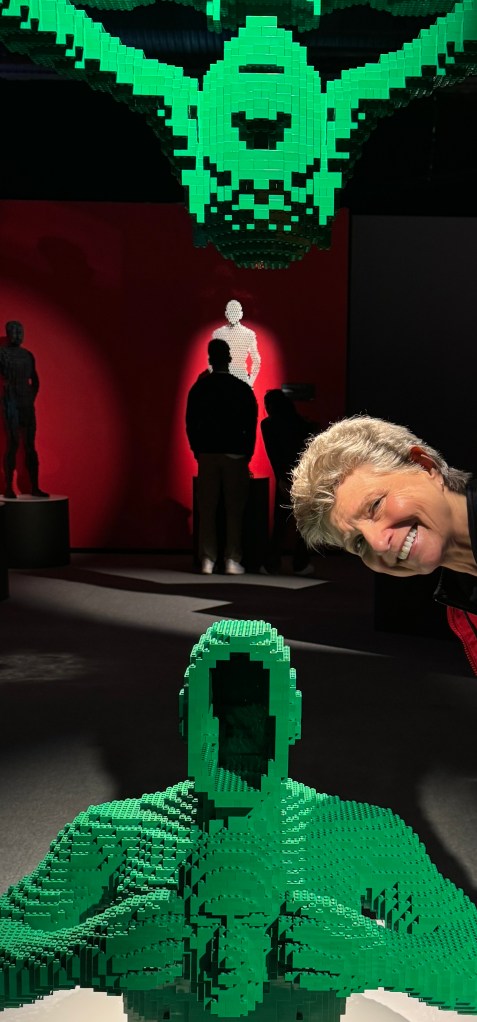
Believe it or not, we found another Lego exhibition – this one not so much whimsical as artsy …..

Quite frankly, we prefer the whimsical, but it’s still stunning what people can do with these little chunks of plastic.

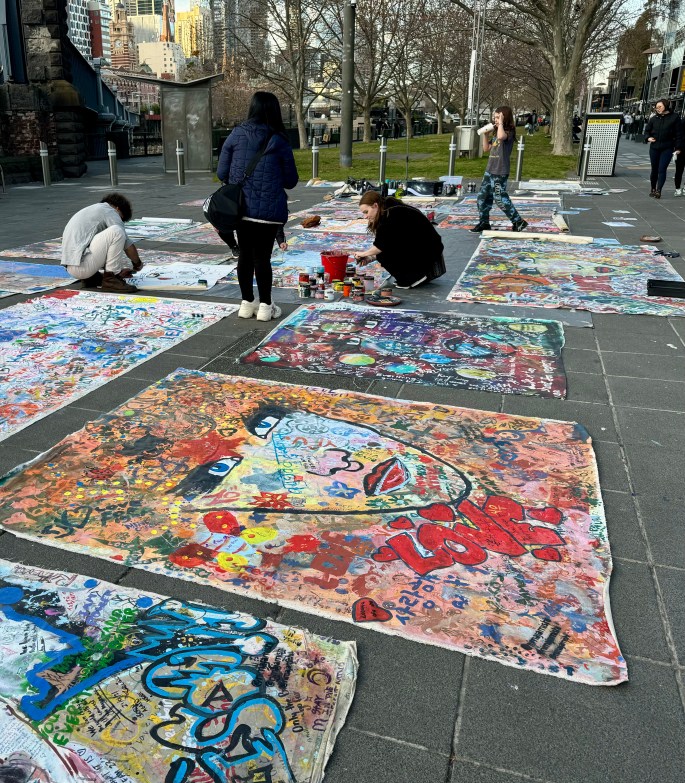
Participative street art was on offer along the banks of the Yarra River….

I just had to purchase a piece of fiber art (a sweater) that was particularly appealing….

Henry got his bad mohawk/mullet haircut corrected, with acceptable results.

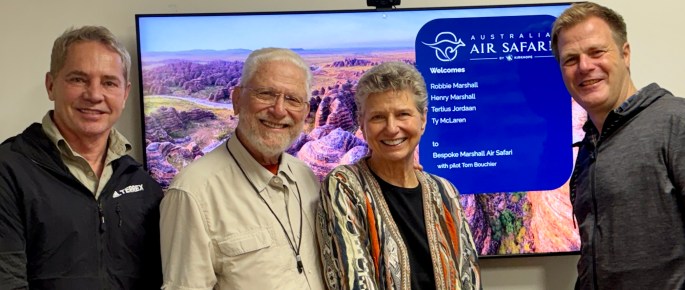
After enjoying the highlights of the big city, we met up with Tertius and Ty to embark on our three-week flying safari.

First stop on our itinerary – Kangaroo Island.

Air Safari

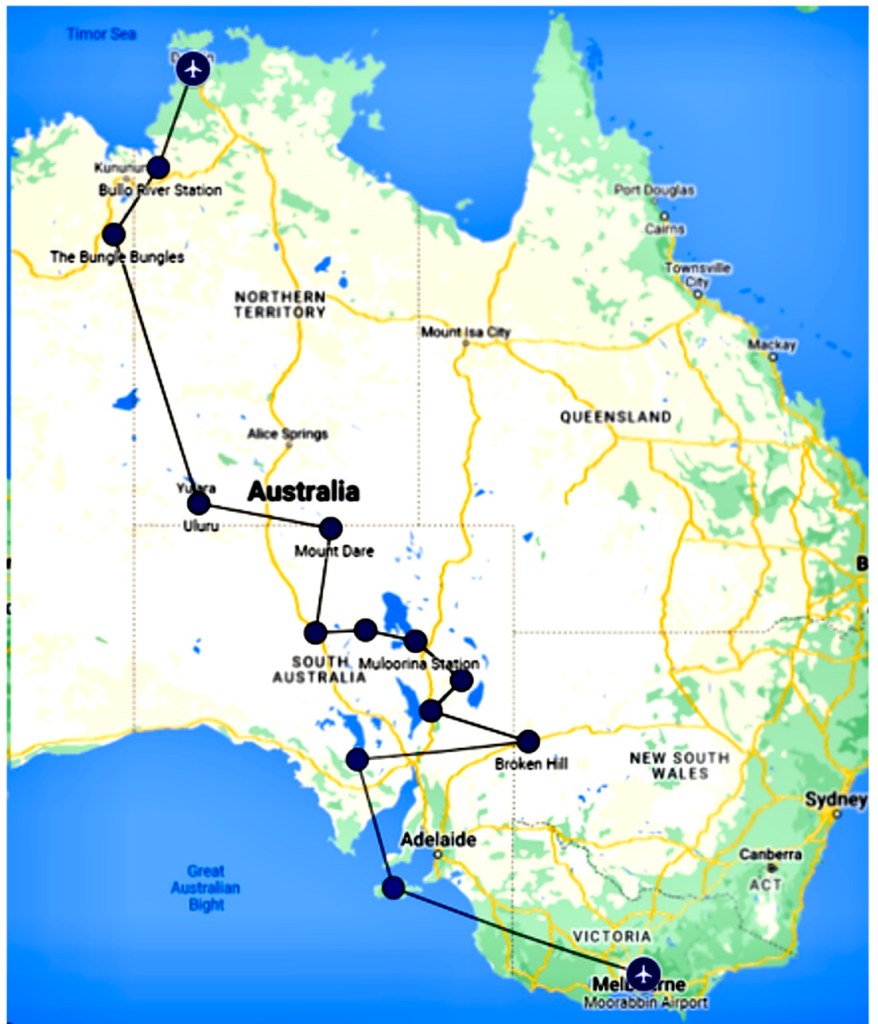
The next three weeks we will be on an air safari across the red middle of Australia, starting in Melbourne and ending in Darwin, spending a day or two in a number of locations of interest along the way.

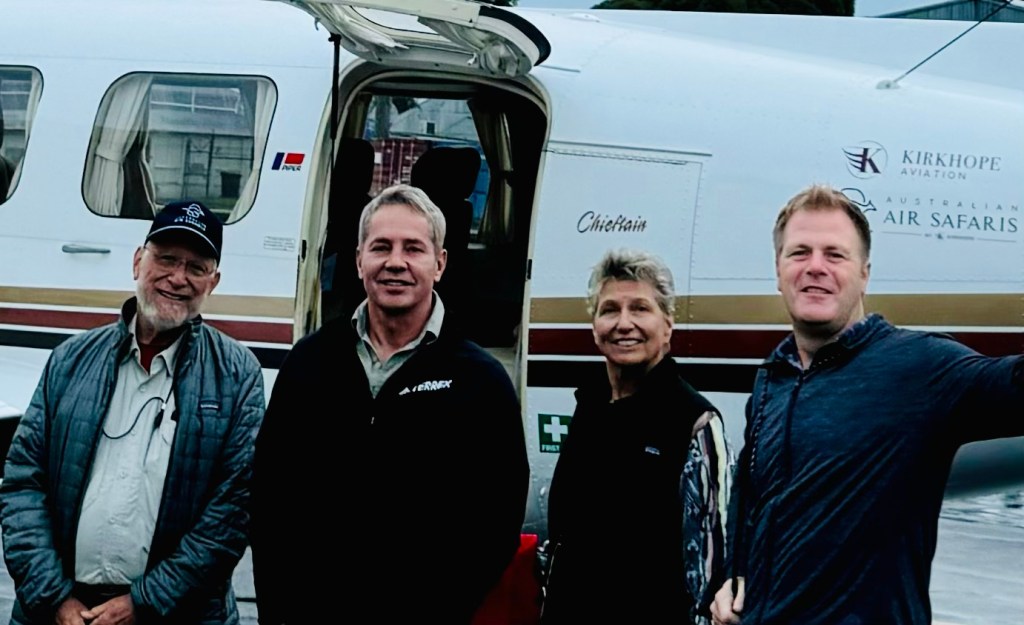
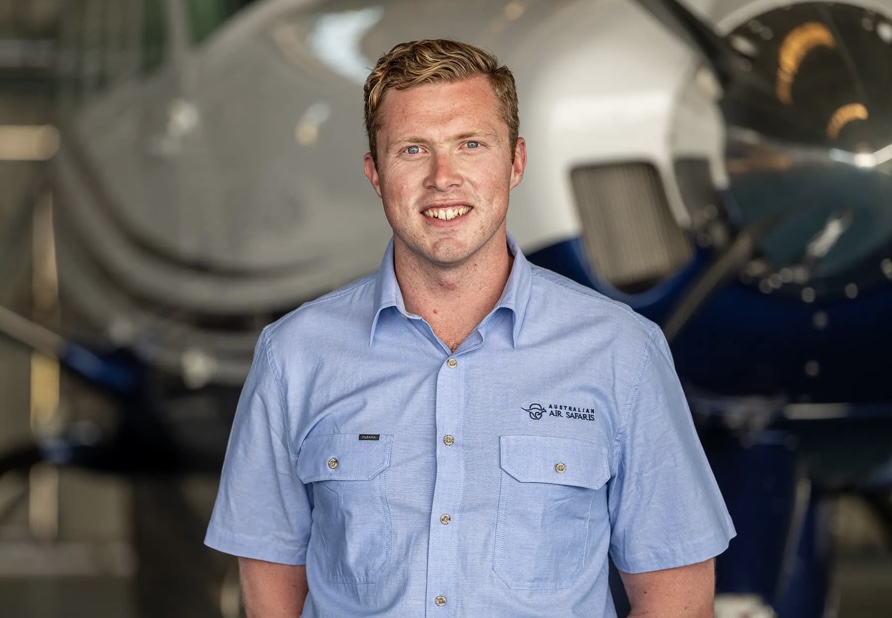
As noted previously, Tertius and Ty from South Africa are joining us for this adventure, along with pilot Tom.

Will post reports from destinations along the way!

Kangaroo Island

Kangaroo Island lies off the mainland of South Australia. With beautiful rugged coastlines and inland tracts, it is mostly made up of protected nature reserves and sheep or cattle ranches.

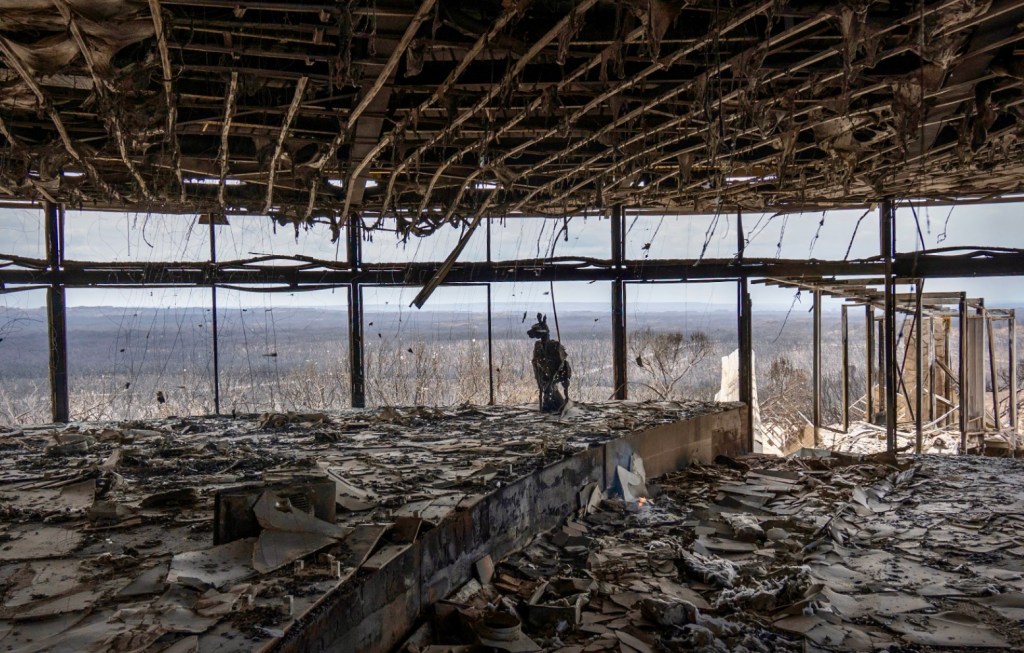
Tragically, in 2020, large-scale bushfires burned almost half the island, devastating habitats and huge numbers of wildlife and domestic livestock. Local communities, emergency aid organizations…… and of course, Mother Nature ….. have worked tirelessly to restore both flora and fauna. Today it is a dazzling destination.

Southern Ocean Lodge was completely destroyed in the fire, the only survivor being Sunshine, the kangaroo sculpture that was left standing after the inferno passed…

And here he is today…..

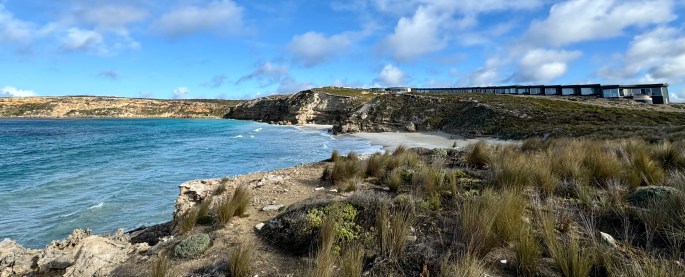
The lodge has been completely rebuilt, and now sits overlooking the southern coast of the island…..

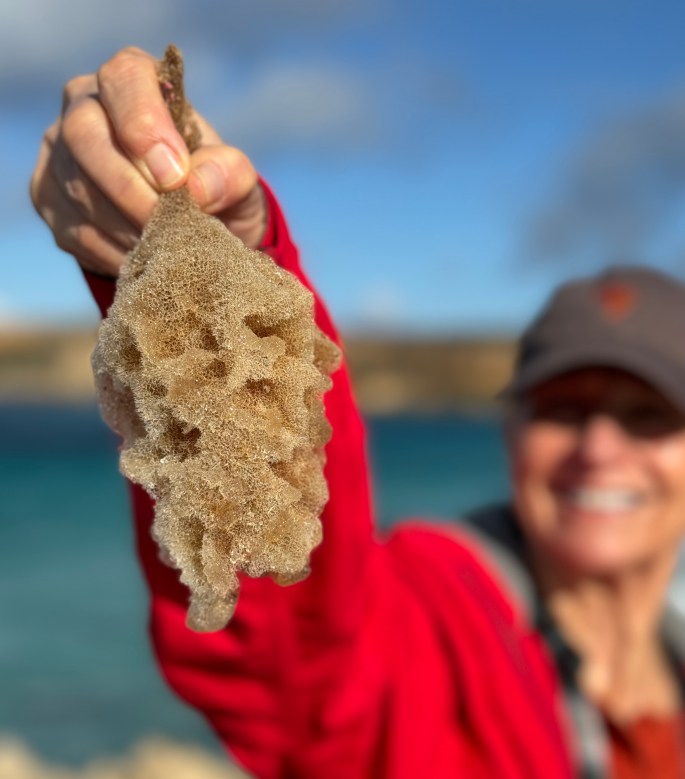
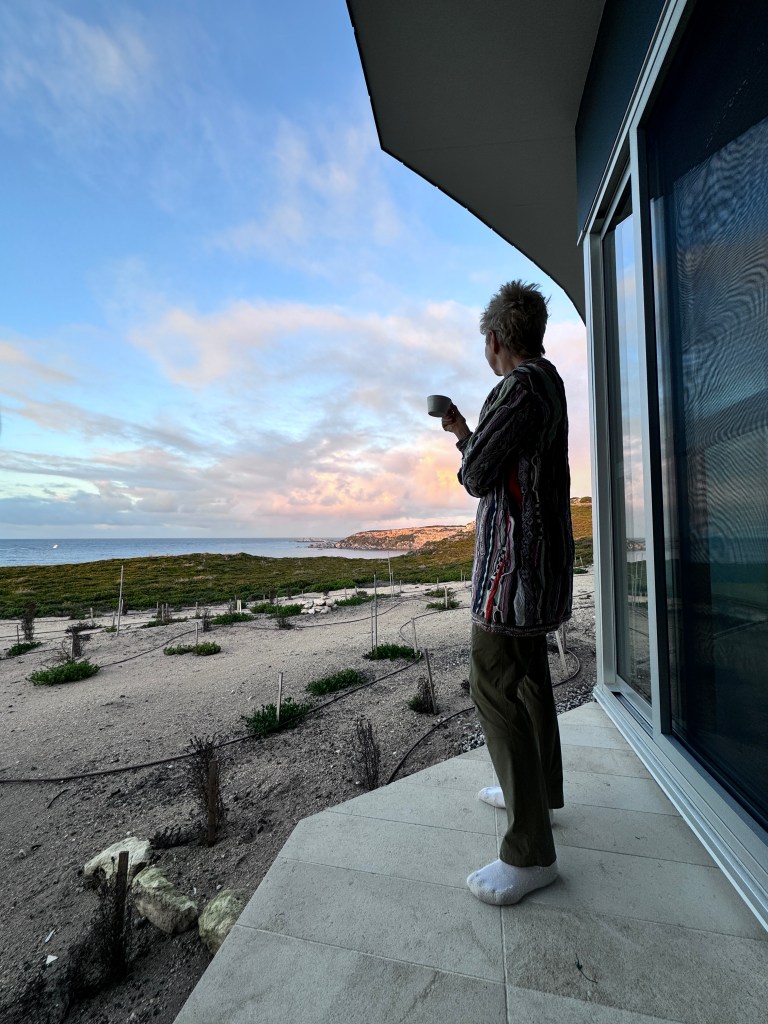
Beachcombing and sunrise/sunset watching:

It did not take too long to find the creatures for whom the island is named…..

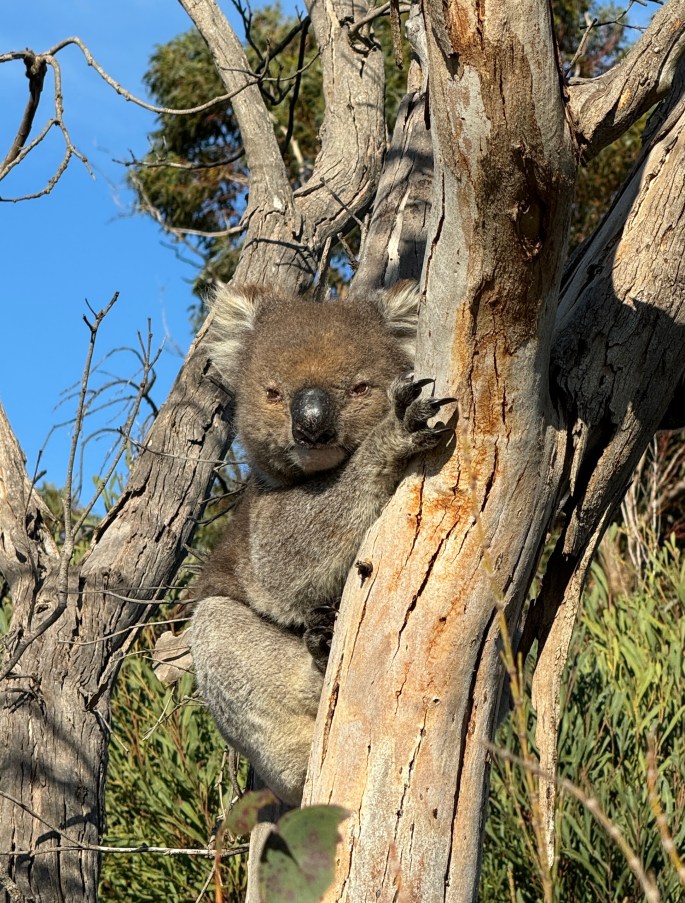
Ty was quick to spot this wild koala in a tree on our drive to the lodge.

A local sanctuary has a large number of animals that were displaced, orphaned or injured by the wildfires, providing an opportunity to get up close to these fascinating creatures….

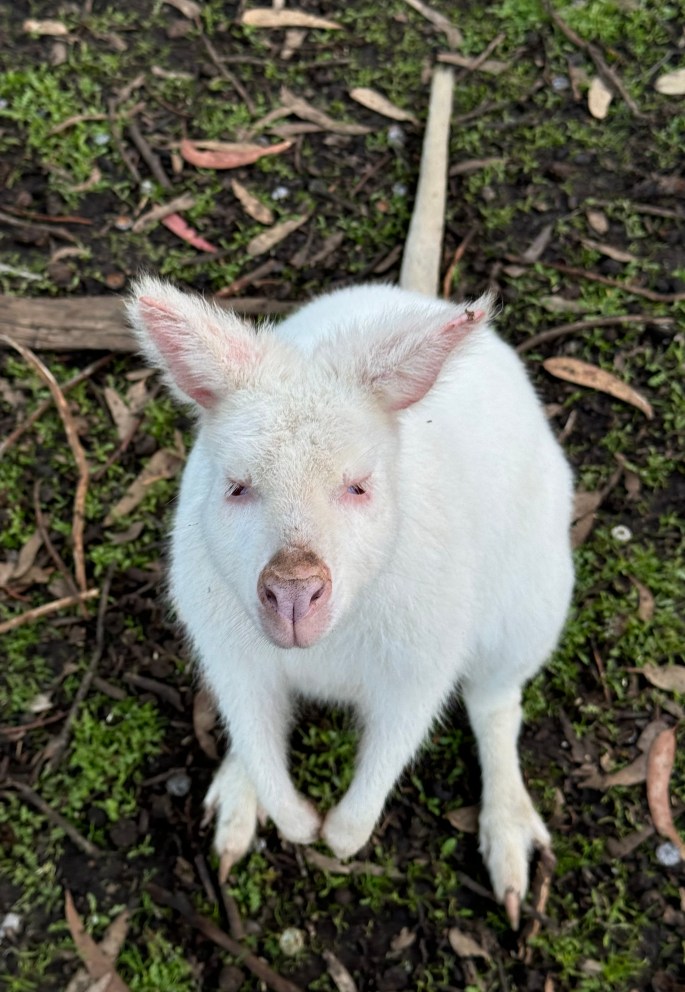
Albino wallaby (a small kangaroo)
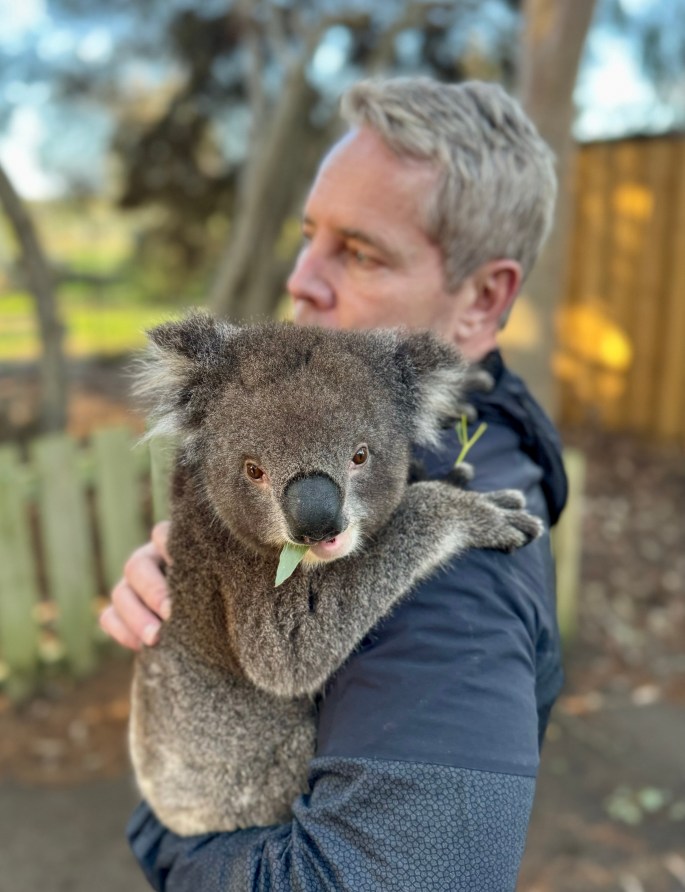
Cuddle a koala!

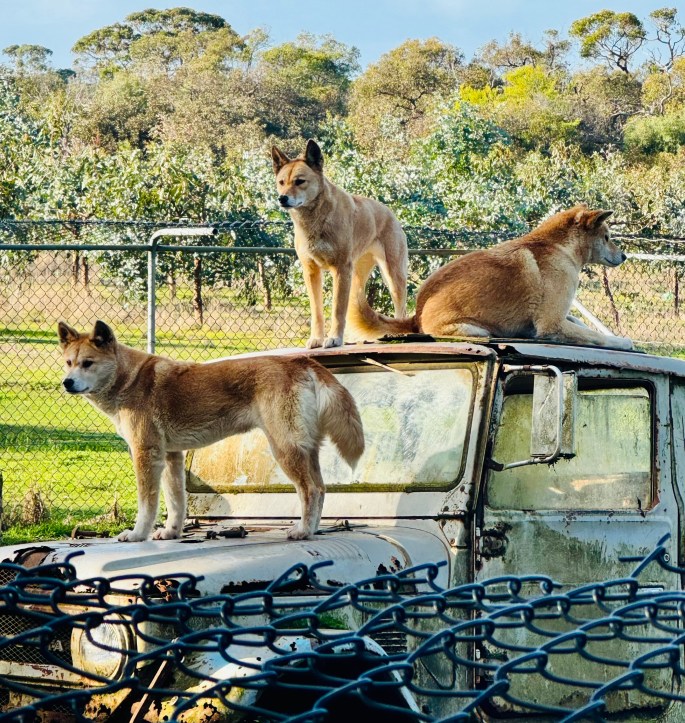
And a small group of dingoes, wild dogs that are not amenable to domesticity.

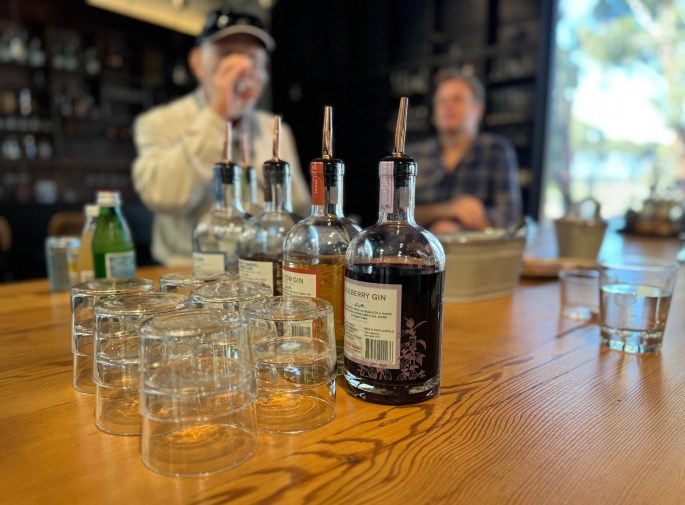
Kangaroo Island has also become a foodie destination, with vineyards, local wild honey…… and a gin distillery that offers a tasting of five different varieties!

Fortunately, we were on our way to boarding the plane for the next destination, so were able to move on to a very-slightly-inebriated nap!

Next destination – Mount Ive Station in the Grawler Ranges.

Mt Ive Station

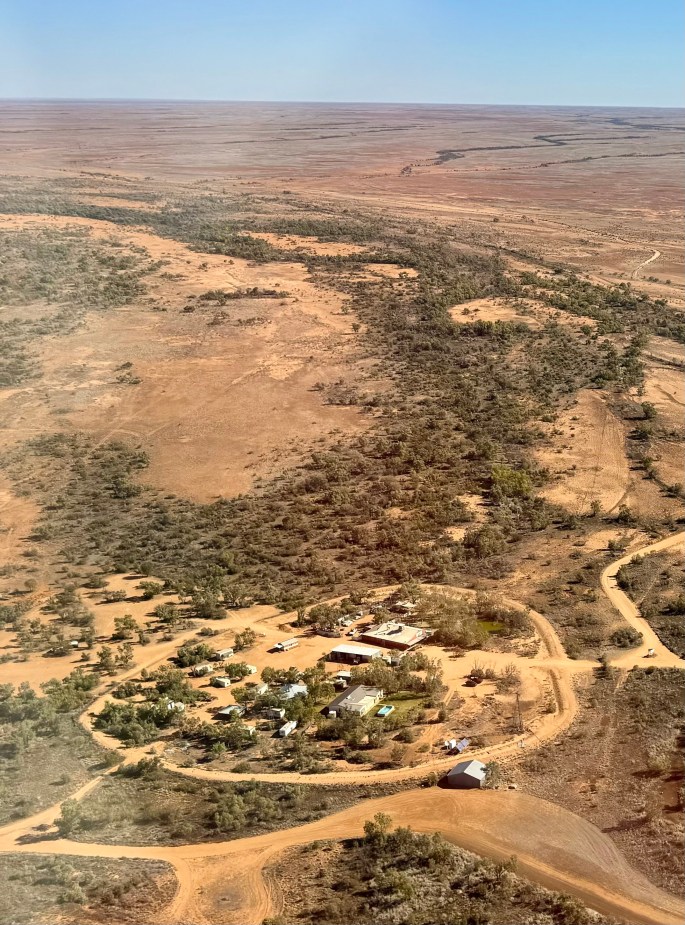
Mount Ive Station is a sheep ranch in the Gawler Ranges in South Australia – far from civilization, and a stopover for people traveling overland in recreational vehicles. A station in Australia is what we call a ranch in the US…… often very large, since vegetation is sparse and it takes many acres to feed a single sheep or cow.

Our plane is circled above on the left, parked within walking distance from the living quarters.

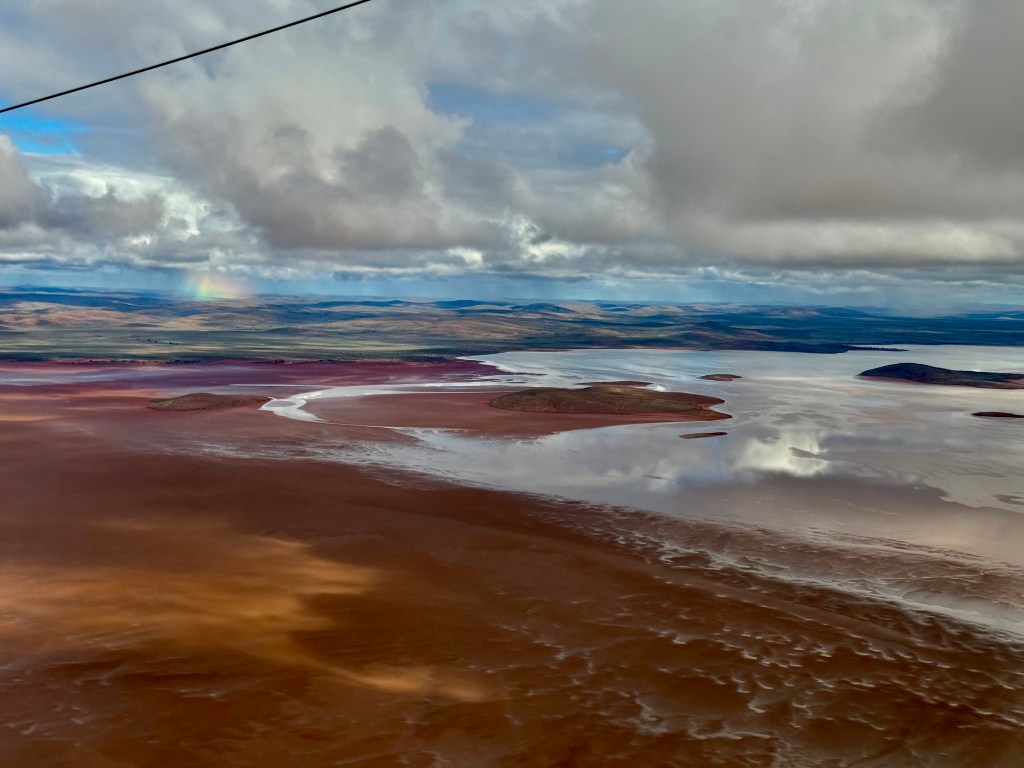
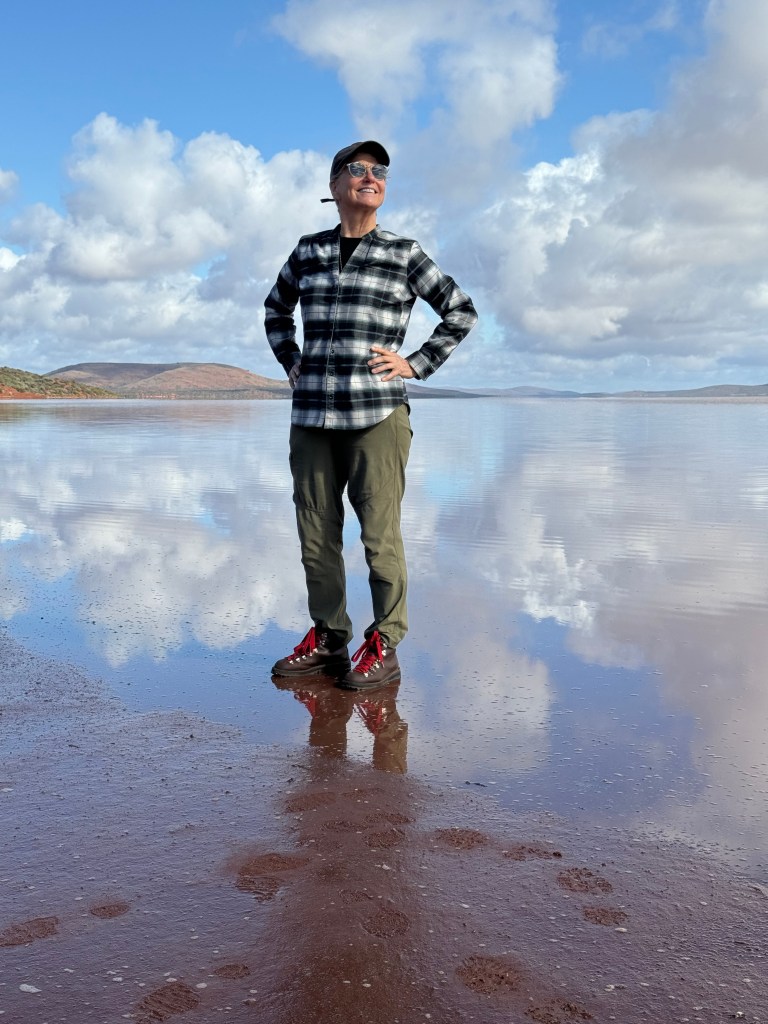
Mt Ive is located close to Lake Gairdner, a huge salt lake that was partly covered by water from recent rains.

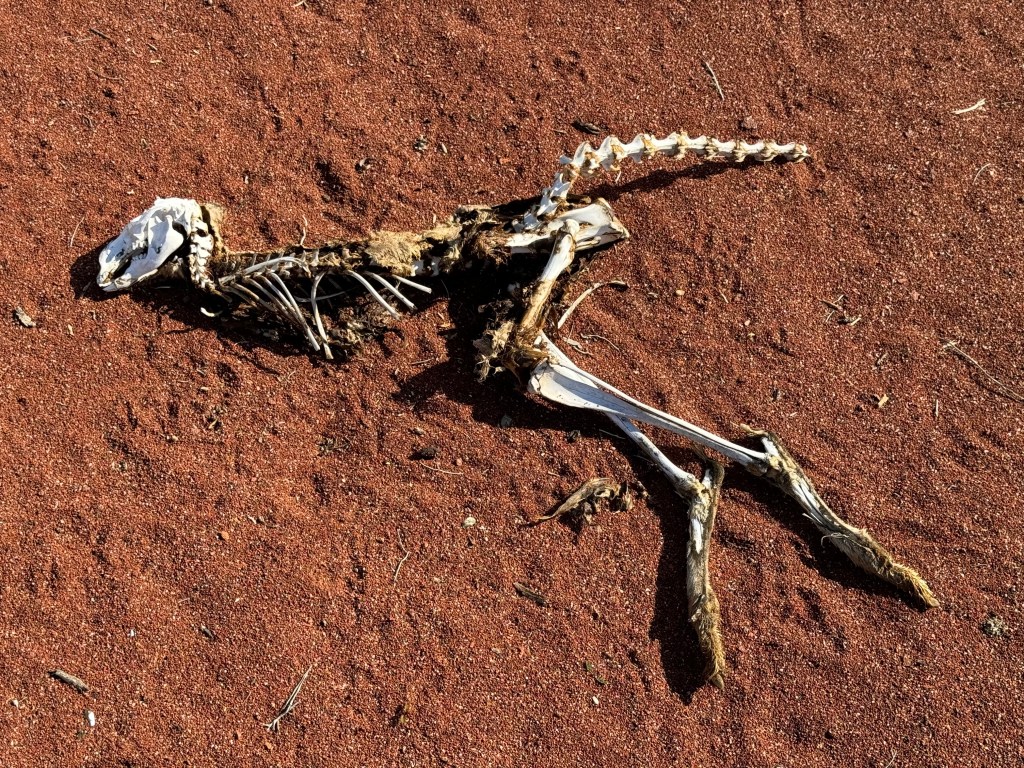
This wallaby didn’t quite make it. The skeleton is a little gruesome, but interesting to see the underlying structure of these distinctive relatives of the kangaroo.

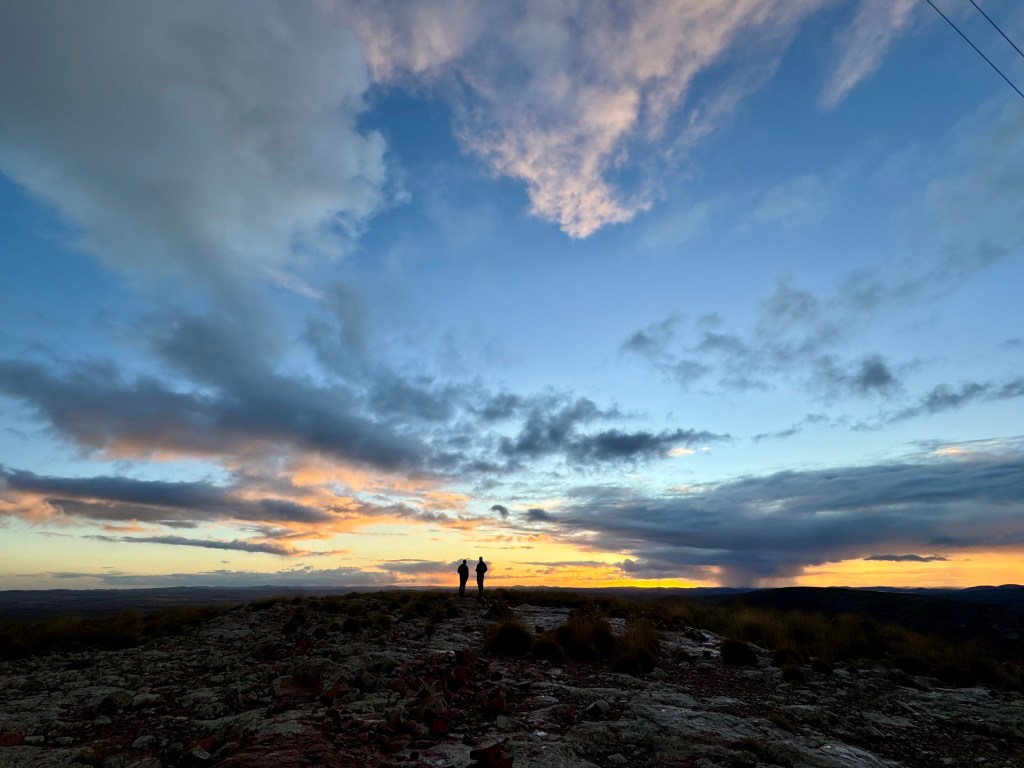
Dazzling sunset from the summit of Mount Ive….

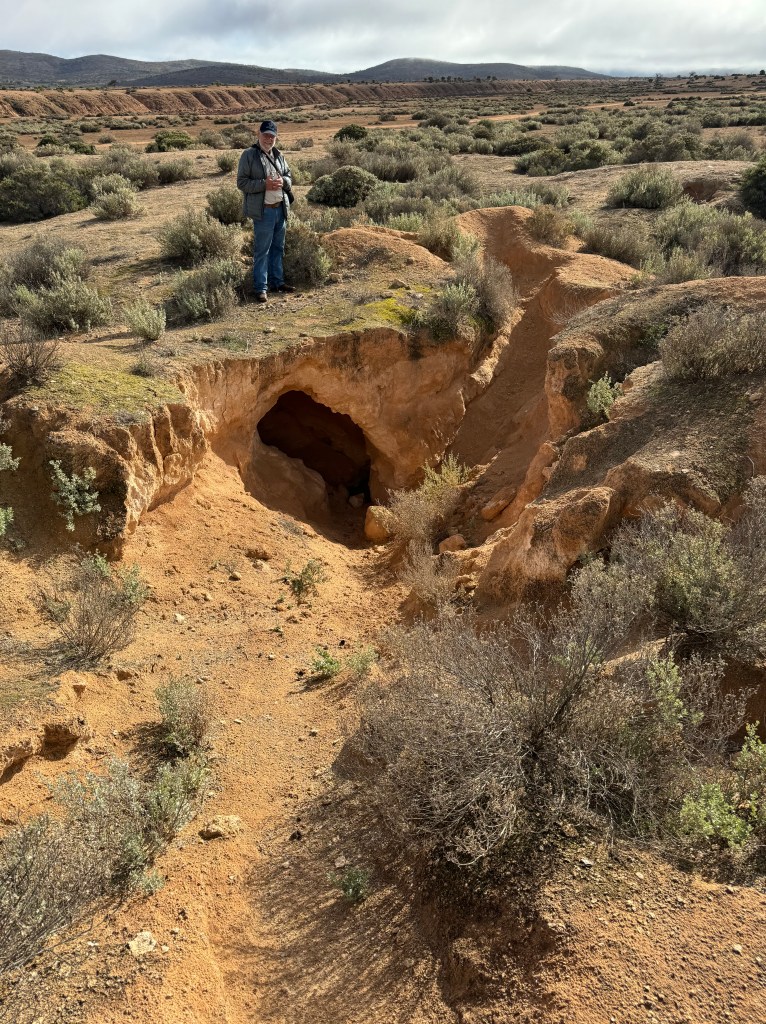
Wombat caves….

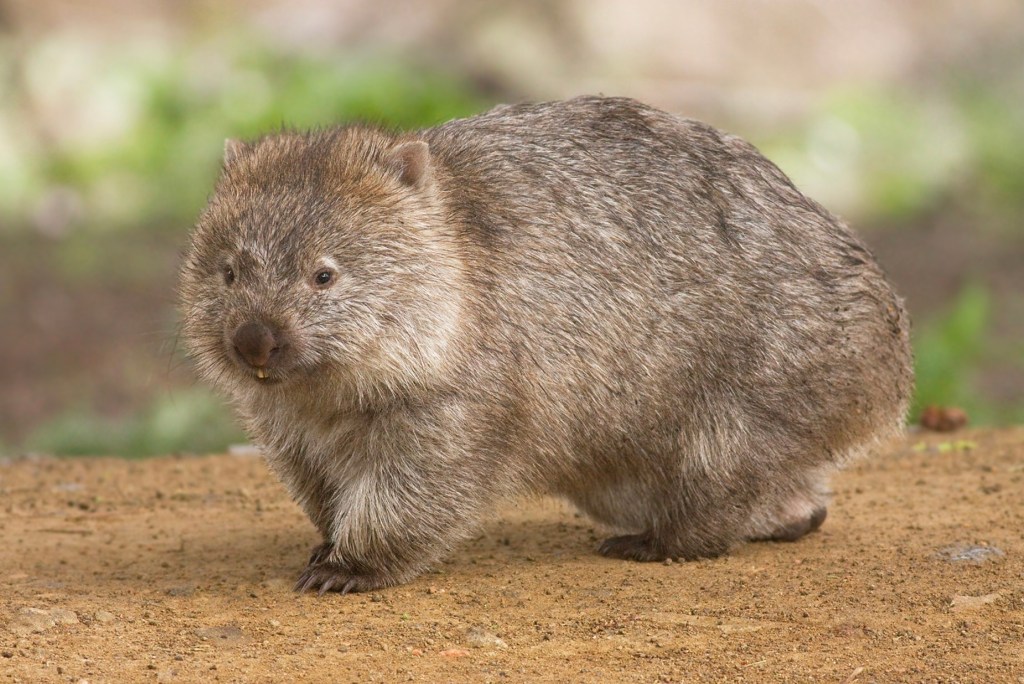
Here’s a wombat, another marsupial native to Australia. (We did not take this photo…. It’s for illustration purposes.)

They weigh 45 to 75 pounds and are obviously capable of digging extensive underground caves. Hard to see in person as they are shy and mostly nocturnal.

A word about marsupials – mammals whose young are born fairly undeveloped, but then are nurtured by their mothers in pouches. These include kangaroos, wallabies (small kangaroos), wombats and koalas, among others. The only marsupial common in North America would be the opossum…..

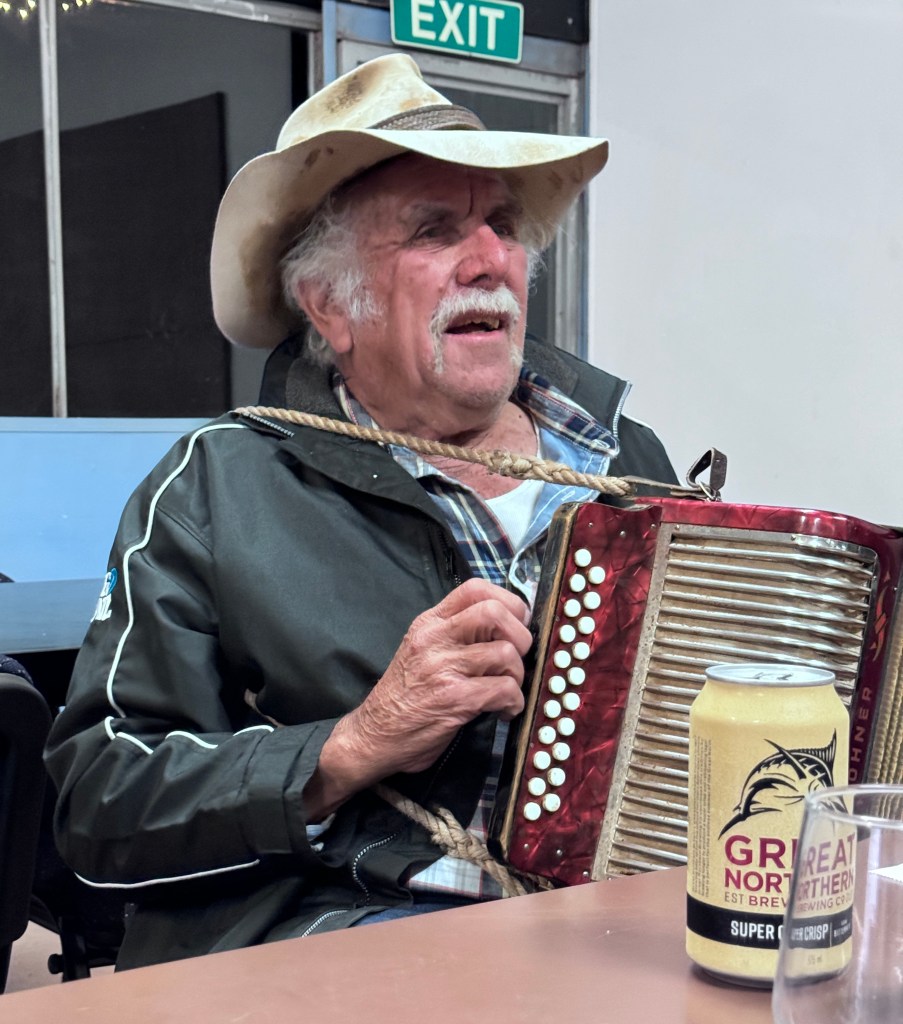
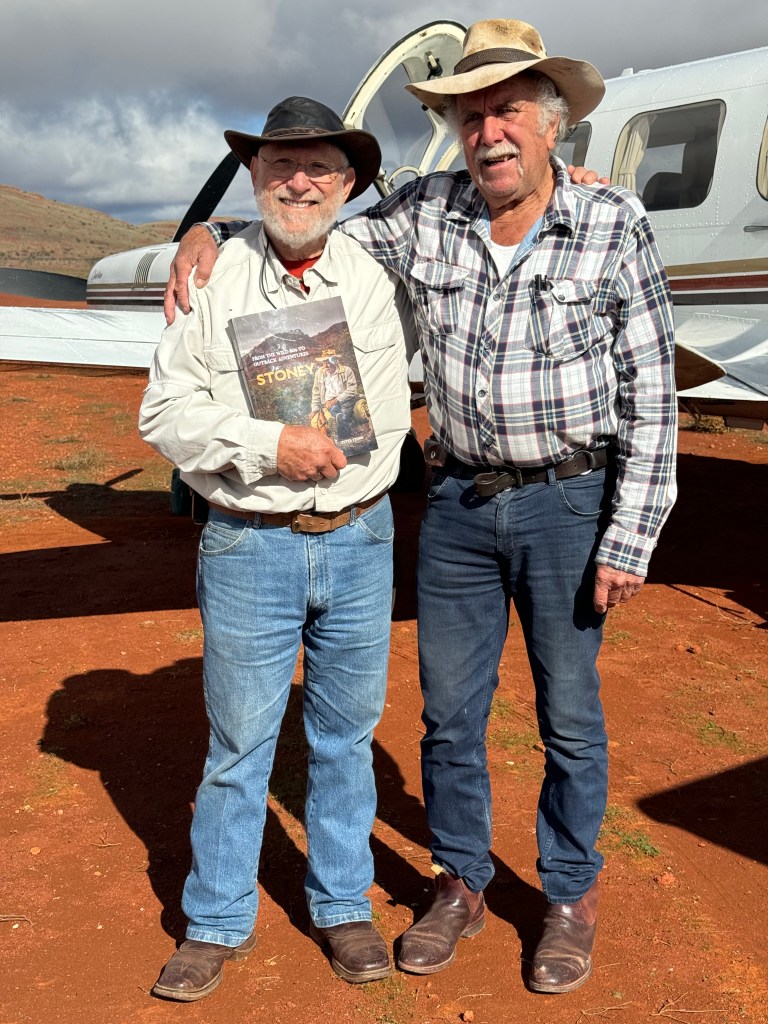
Stoney is an outback character who helped guide our small group, providing a story or two, poetry and music…..

He is a published author… his book is a heavy tome that relates his 81 years of experiences and wisdom. We had to buy a copy.

Henry was also drawn to the station pets, which include a couple of emus and a few goats.

Next destination is the town of Broken Hill.

Broken Hill

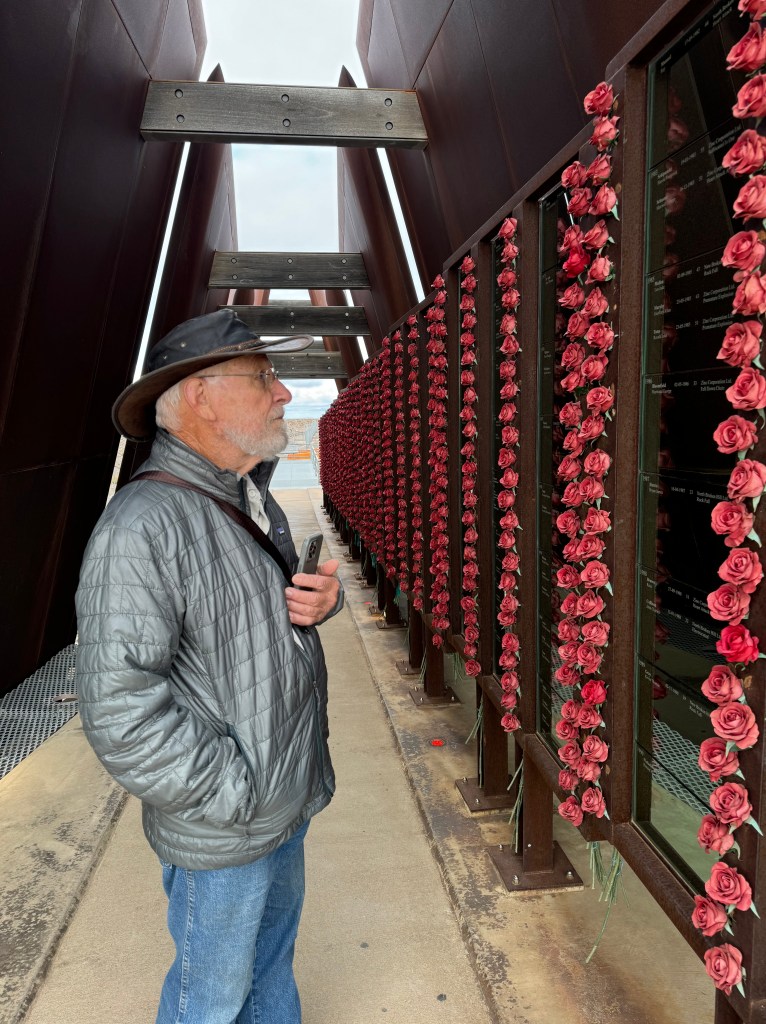
Broken Hill, in the far west of New South Wales, is a burb of almost 18,000 people – the oldest mining town in the country, with a history dating back to the 1880s. The area was a rich source of silver, lead and zinc and was continuously successfully mined well into the 1990s. The Line of Lode Miner’s Memorial overlooks the town, honoring the more than 800 workers who lost their lives in the effort.

Sounds grim, and it looks a bit that way… but creativity flourishes wherever humans congregate.

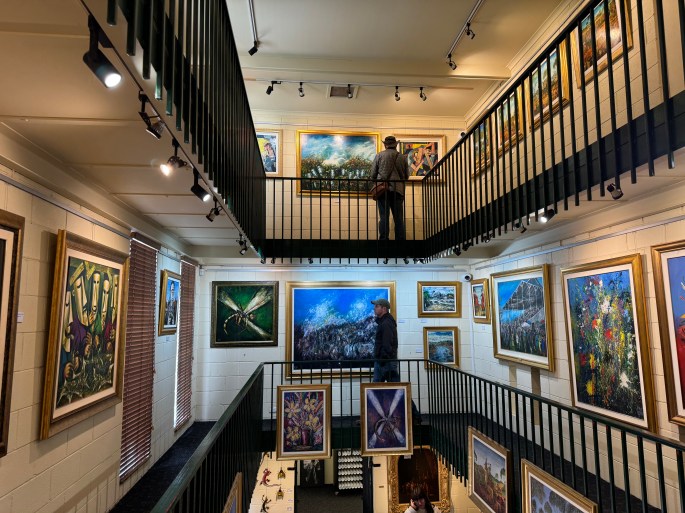
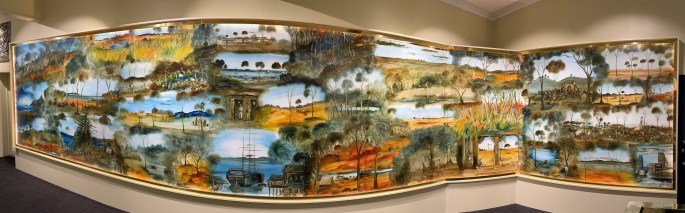
Pro Hart was a miner here who became one of Australia’s most prominent and beloved painters. His gallery is full of vibrant paintings and sculpture…..

The town is home to several other galleries for artists known and aspiring.

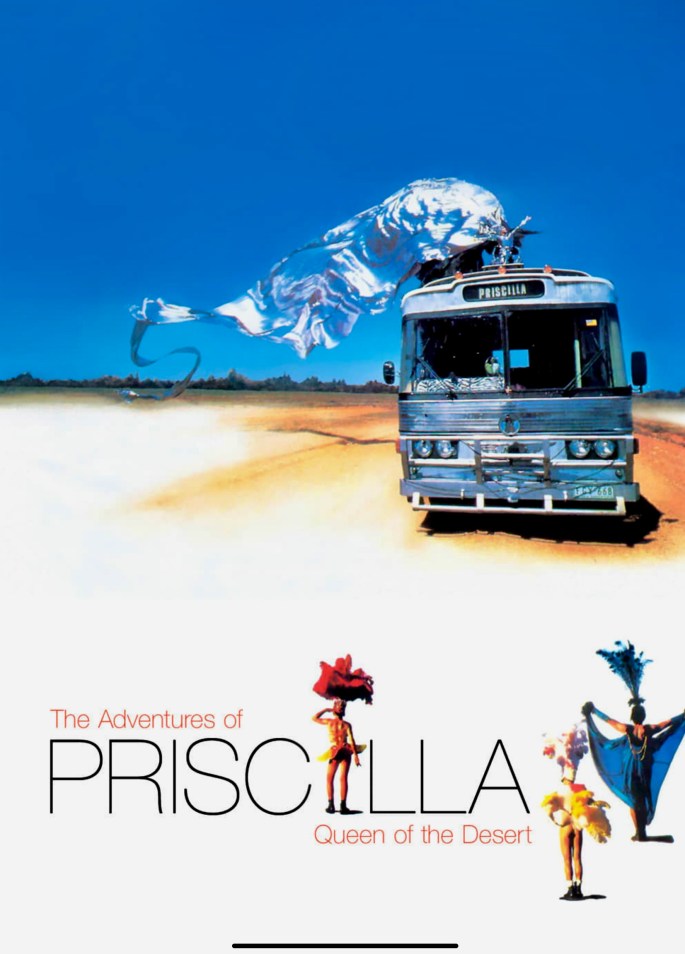
But Broken Hill’s most fabulous claim to fame is that it was the filming location for iconic scenes from the classic 1994 movie, “The Adventures of Priscilla, Queen of the Desert.”

If you have not seen this film, please do so. You’ll laugh; you’ll cry and you’ll be touched by its humanity.

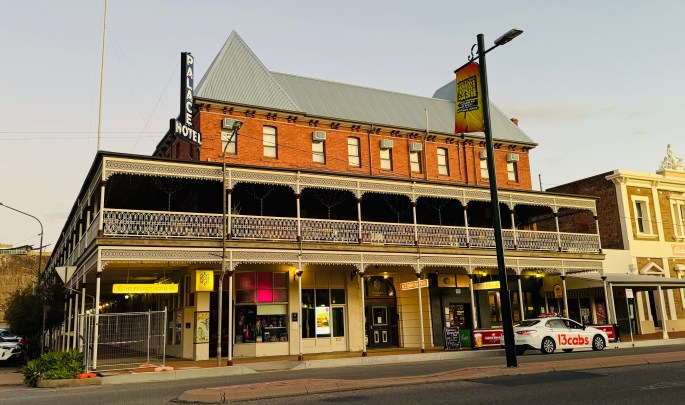
We stayed at the Palace Hotel, built in the late 1880s and prominently featured in the film….

An indigenous artist painted murals throughout the hotel and its famous bar…..

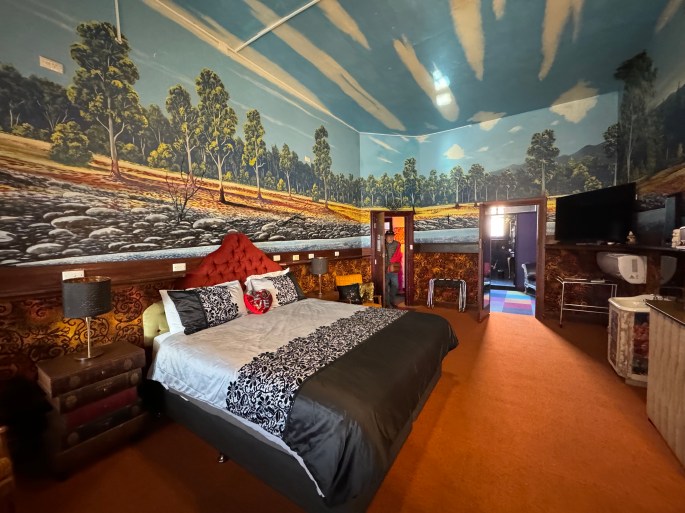
The Priscilla Room is where the protagonists stayed….. and we did too!

Memorable and kitschy… the only regret being that we missed the drag show!

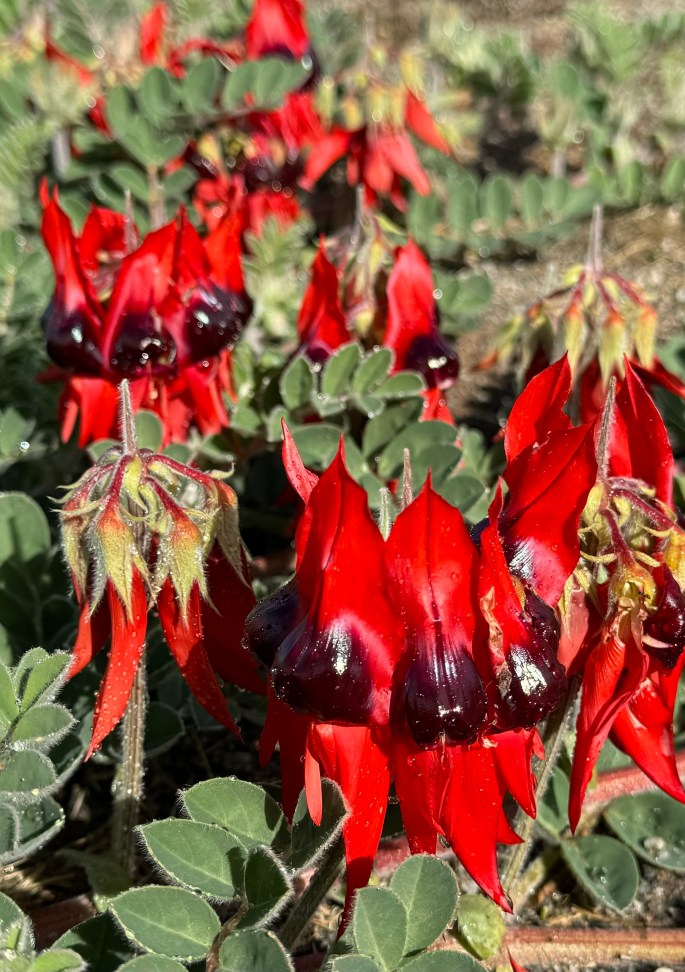
The Sturt’s desert pea is an extraordinary flower common in the outback, but the only ones we have seen were in a colorful patch in town…

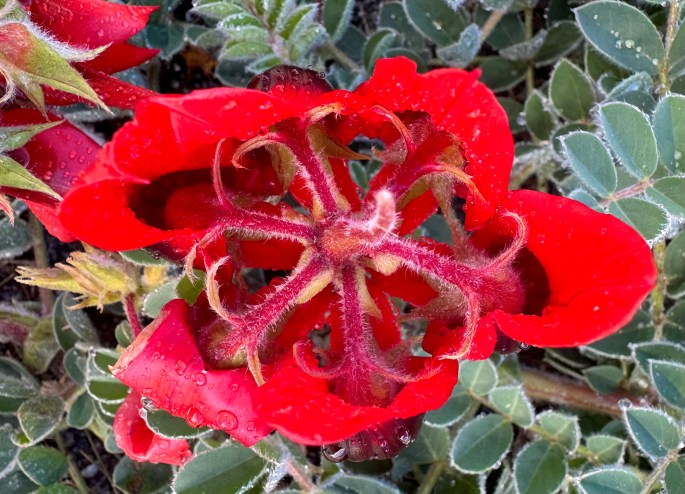
View from above, showing the fascinating internal structure…..

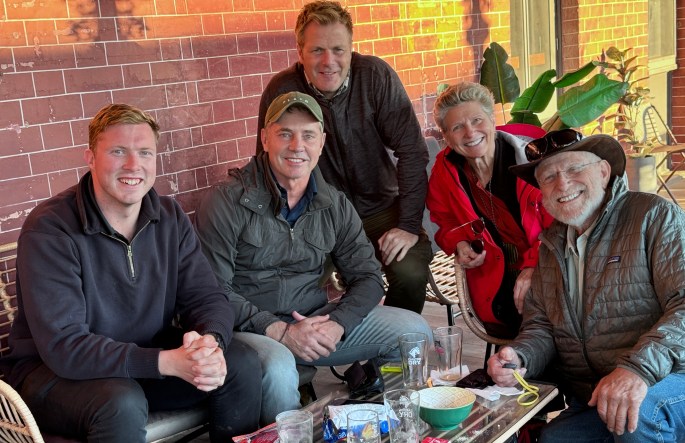
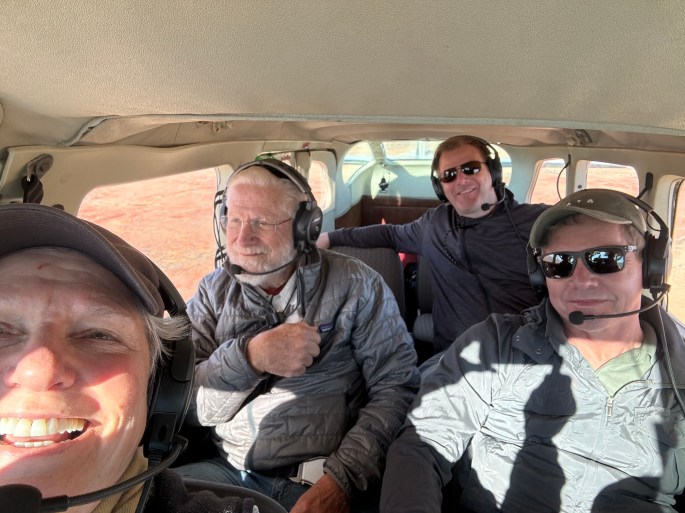
Will close this post with an occasionally-obligatory group photo……

On to Parachilna and another special setting.

Parachilna

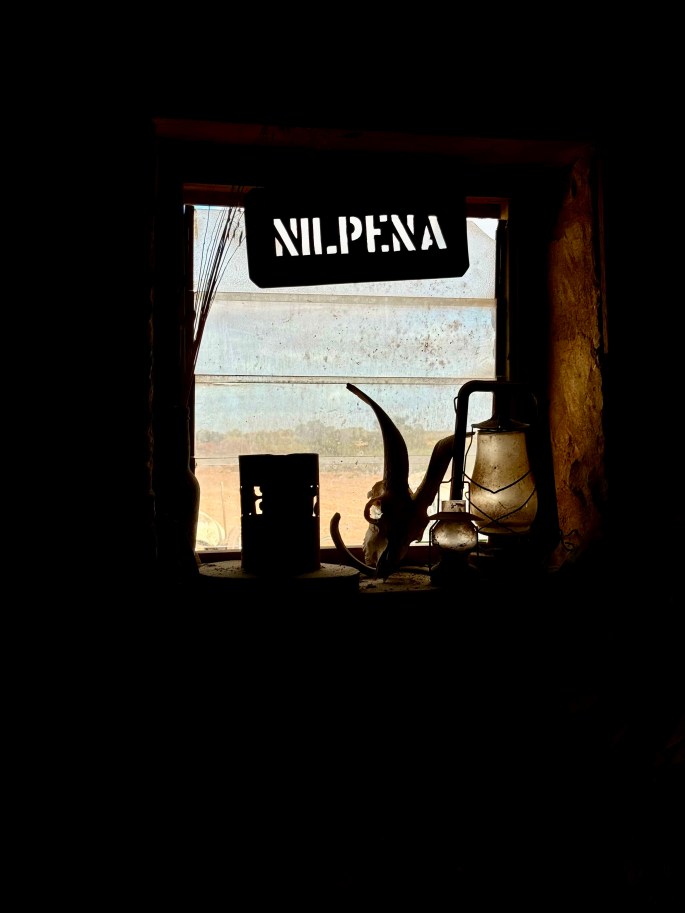
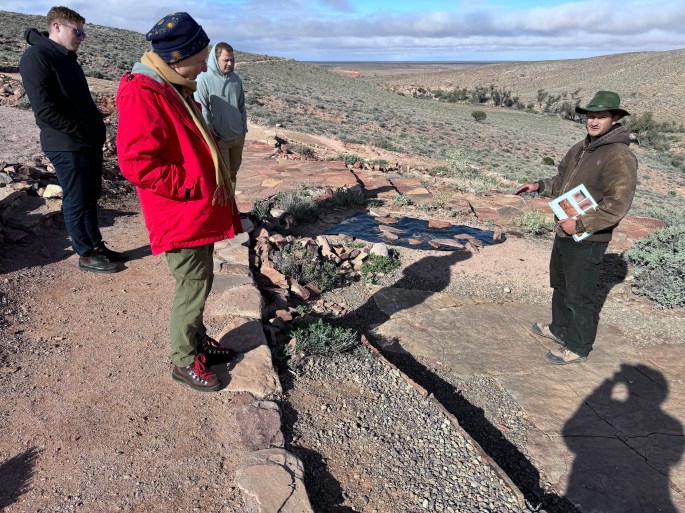
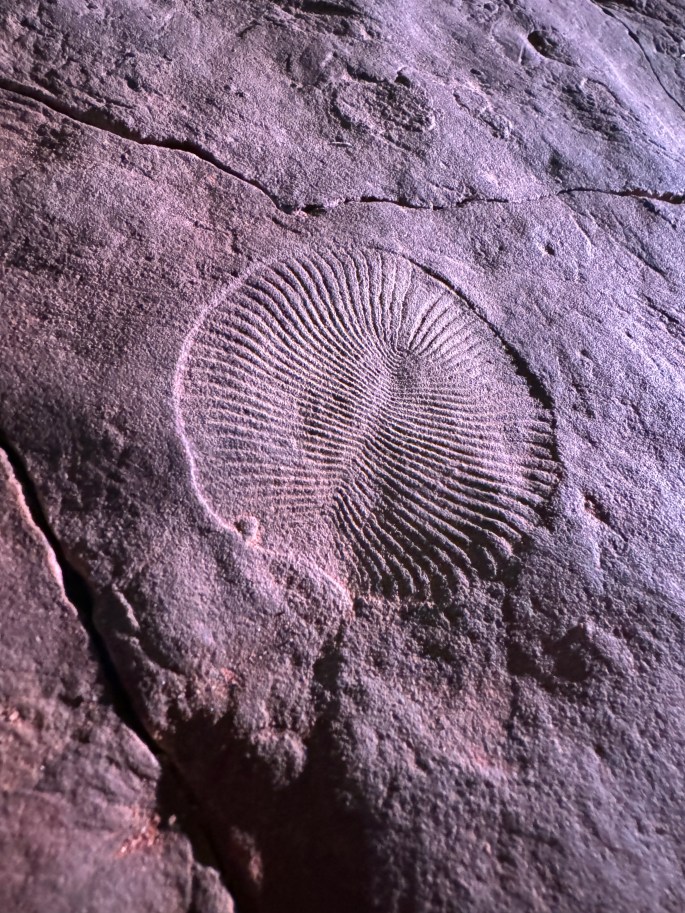
Parachilna, in the Flinders Ranges of South Australia, is near fossil beds that are quite exciting for researchers and scientists investigating the beginnings of life on this planet. Jane and Ross were instrumental in locating these incredible fossils, and the land on which the Nilpena Ediacara national park is located was formerly part of their sheep station….

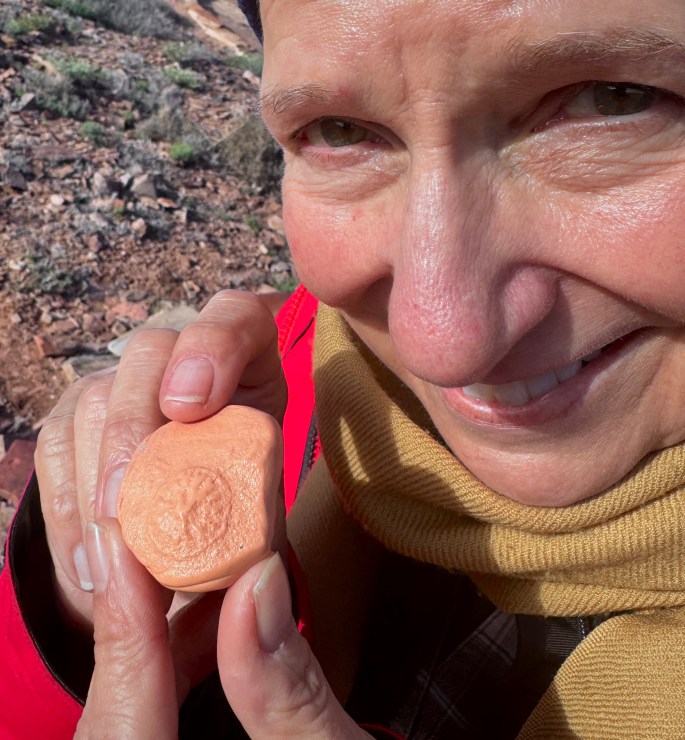
Researchers spend several months here each year investigating the vestiges of soft-bodied creatures that date back over 500 million years. Phil is a PhD candidate who showed us around; his enthusiasm is infectious…..

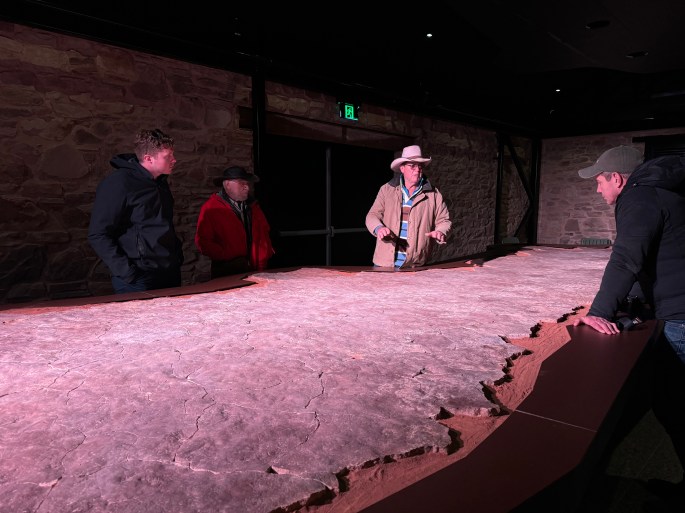
Ross took us on a drive through the area, then showed us a stunning audio/visual presentation that vividly imagined what early forms of life may have looked like…

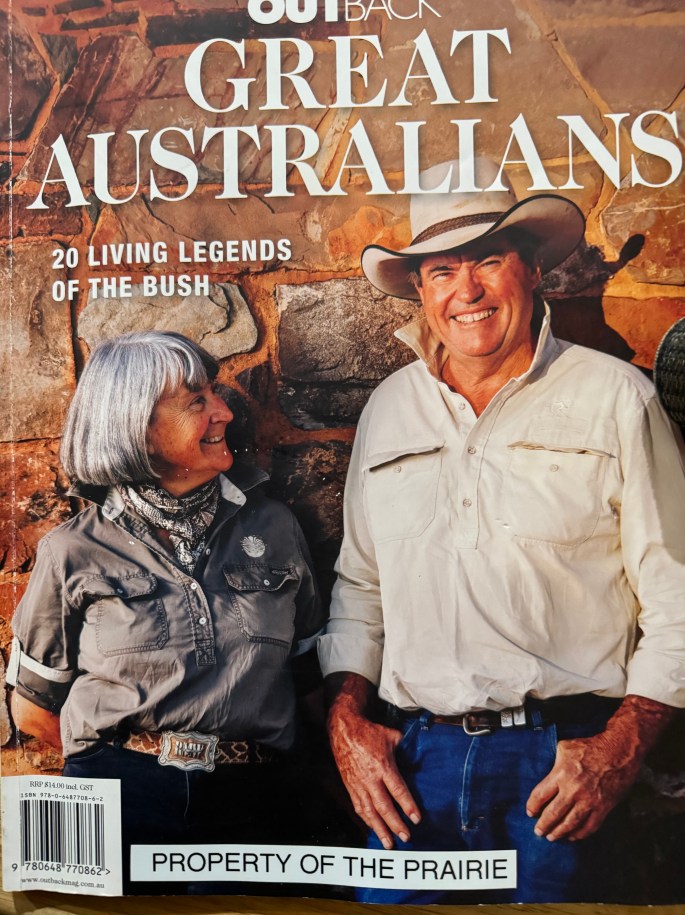
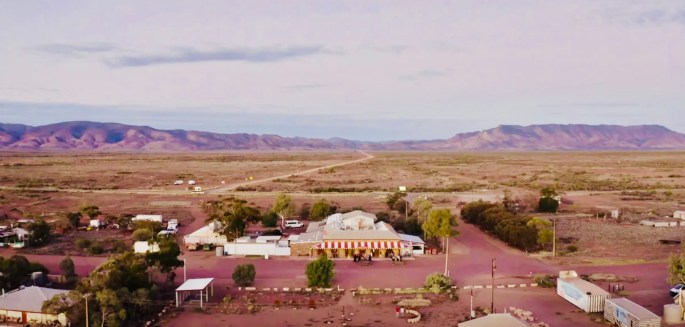
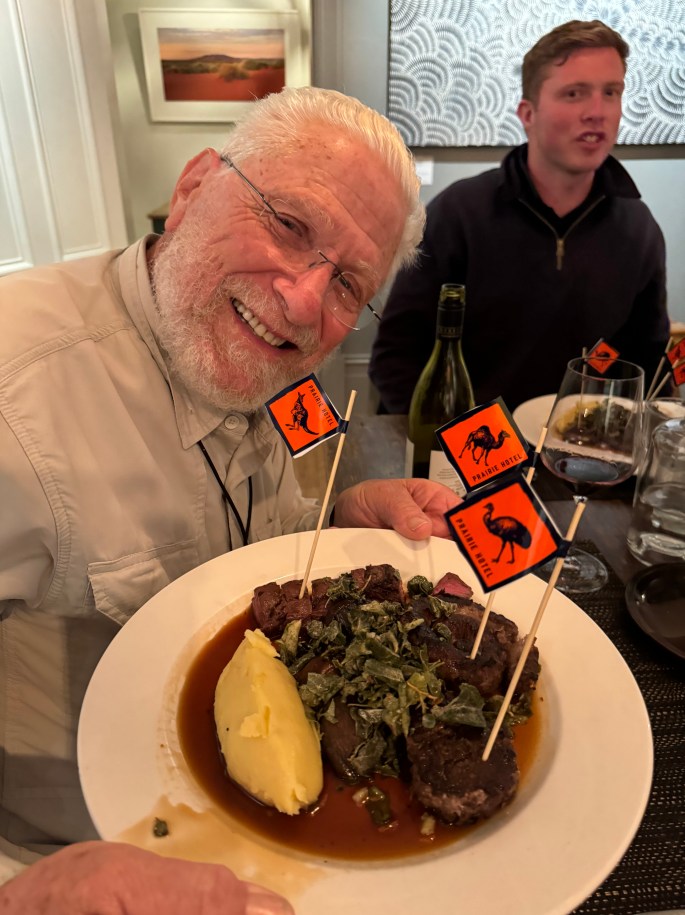
Almost as cool, Jane and Ross run an upscale and comfortable accommodation in this remote location called the Prairie Hotel….

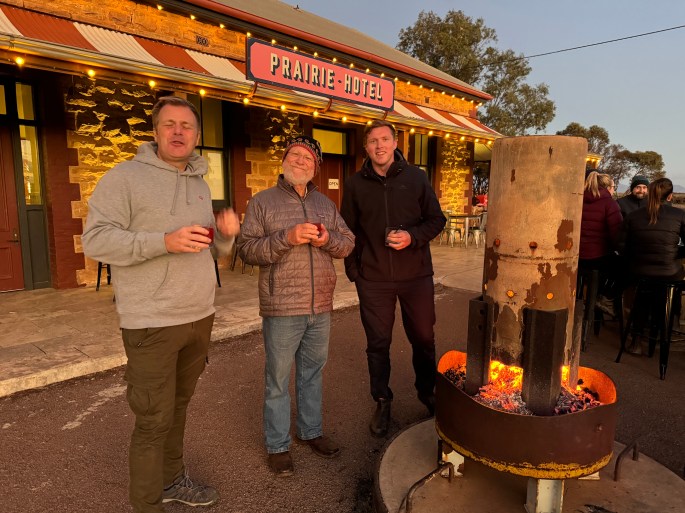
It’s a great location for a sundowner…..

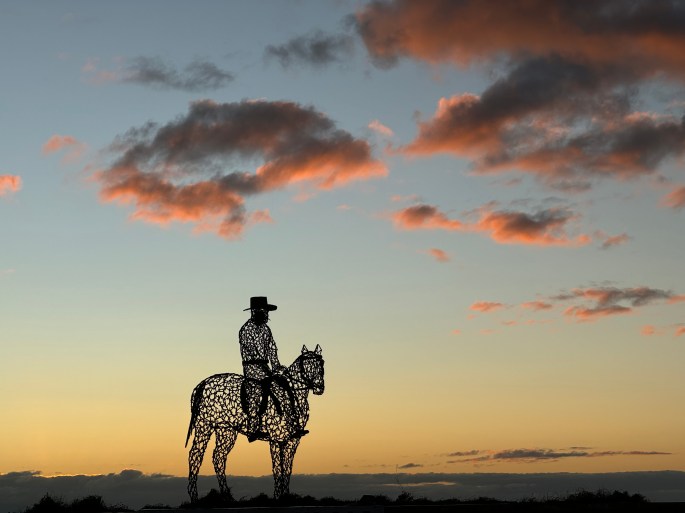
With a little rustic art on the horizon….

And a kitchen that prides itself on presenting platters of Australian feral game…here including kangaroo, camel and emu. Sorry, vegetarians!

Next stop – Arkaroola Wilderness Sanctuary.

Hopping Up the Red Centre

So many unique destinations – each memorable for a vista, an experience or a human encounter, or a combination thereof –

Arkaroola

A nature reserve and lodge in the Flinders Ranges, and a notable Dark Sky destination. Each day toward sunset, guests are invited to grab a beverage and watch the feeding of the yellow-footed rock wallabies that live nearby…. So cute.

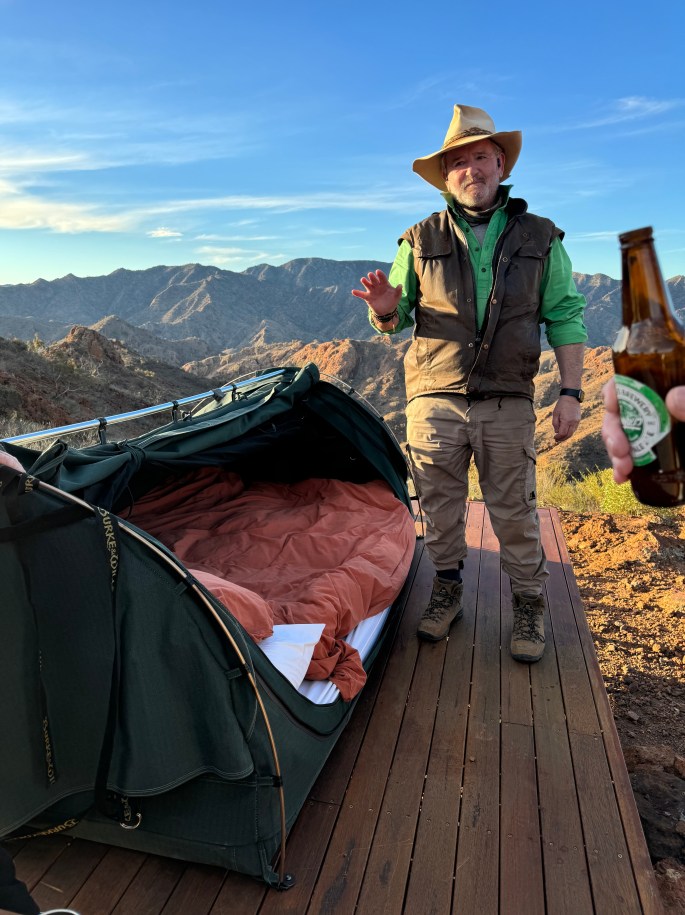
The moderately mountainous terrain provides a great setting for a sleepout under the stars. While Tertius and Ty held back, the hardy elders amongst us ventured off with several others along the ridgeline to a well-placed campsite.

Our guide explains how to tuck ourselves in for the night.
Each couple had a private sleeping deck….

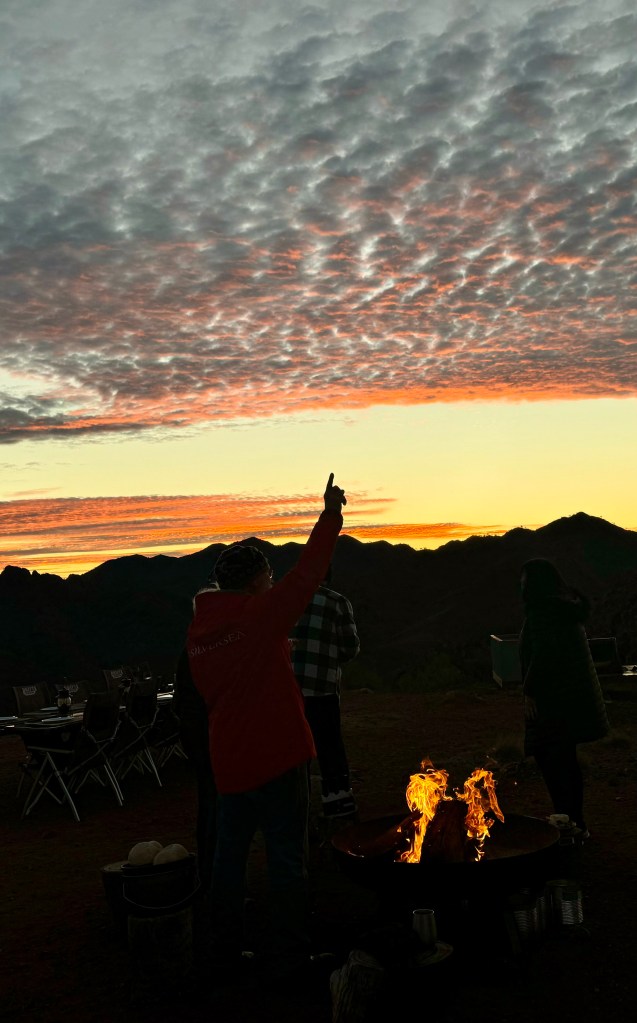
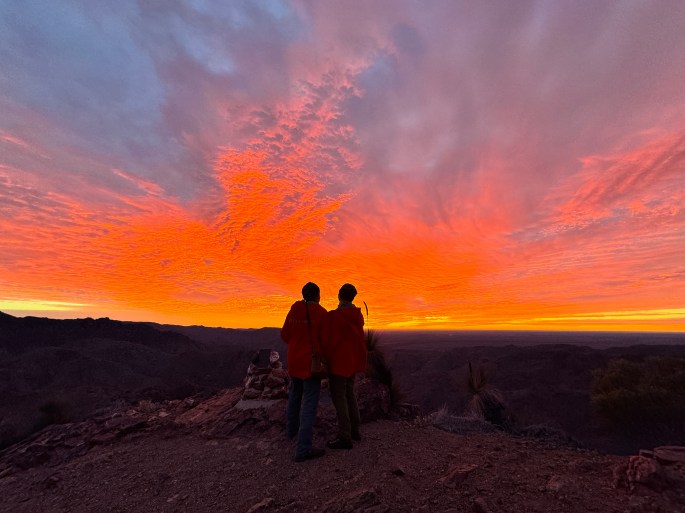
Although clouds and high winds prevented a spectacular star-viewing, conditions were perfect for the coming and going of the sun….

Henry makes a point around the fire…
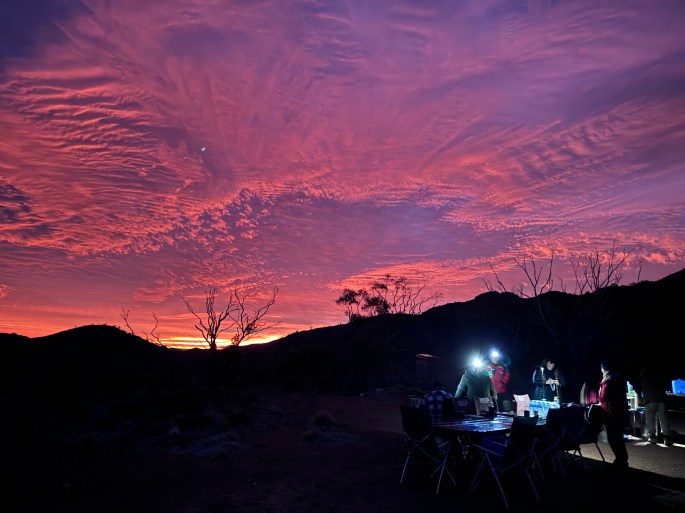
The sunlight just starts to color the sky while the intrepid campers gulp some coffee…
Vivid sunrise….
And a lingering afterglow.

What a gorgeous color palette! Ain’t nature grand?

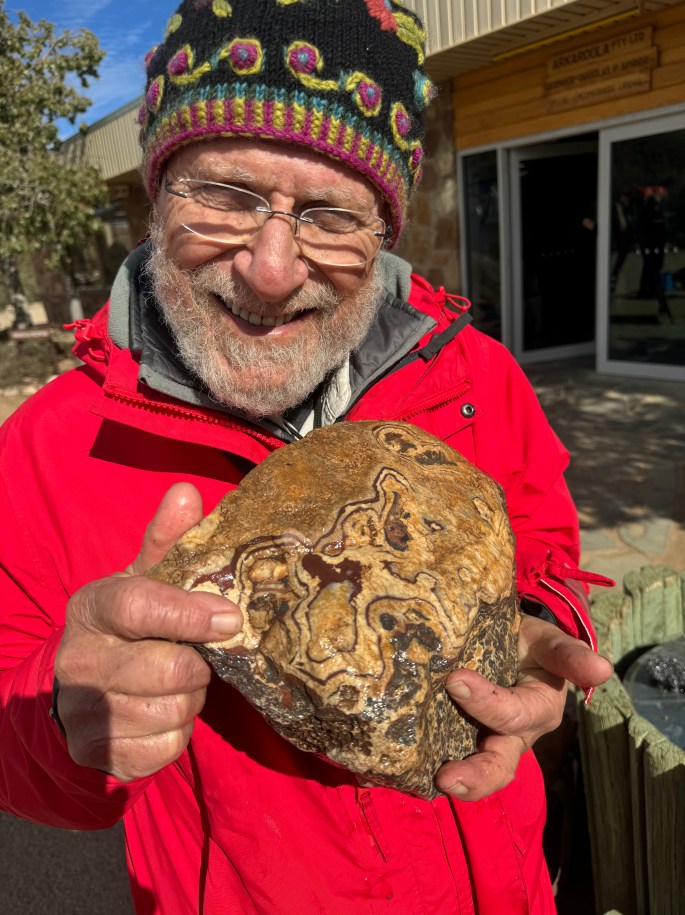
The guide spotted a pretty amazing rock on our way back down to the lodge…. Unfortunately a bit too big for Henry to stow in his luggage……

The one that got away……

Andamooka

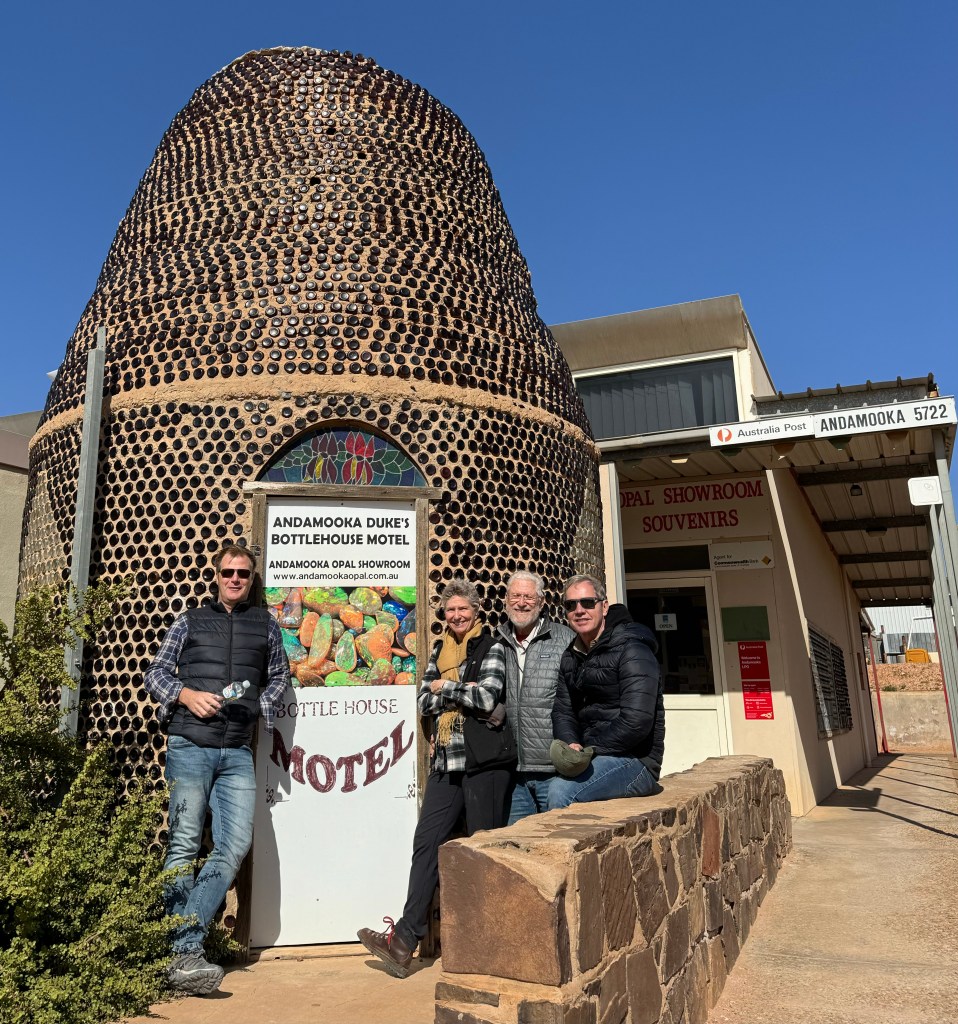
Andamooka was our first foray into opal mining territory. It’s a town of several hundred sturdy characters and really nice folks. We stayed at Duke’s Bottlehouse Motel, and Peter Duke showed us around.

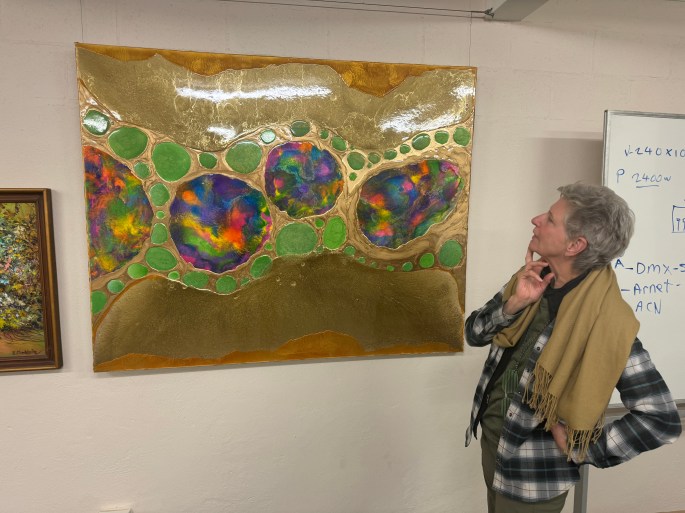
The opal museum, and beautiful artwork by local artist Leila…

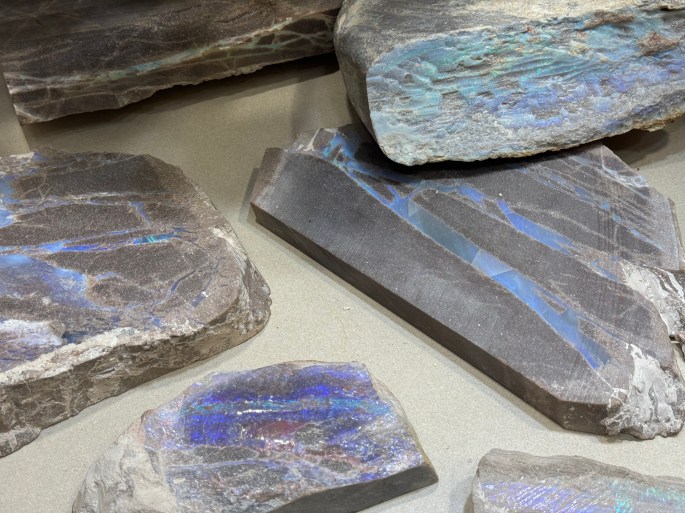
Something like 95% of the world’s precious opal is produced in Australia. Because of how opal naturally occurs, it does not lend itself to large-scale commercial mining, so opal is found and extracted by individual miners working small tracts. The area in and around Andamooka is pocked with holes and piles of sand and rocks where miners have pursued their dreams. Here we examine some of the basic cottages that the early miners inhabited in the 1930s:

Peter was kind enough to take us to his claim and clear out a space for us to do some looking on our own….. even using his excavator (doesn’t everybody have one?) to uncover some new material.

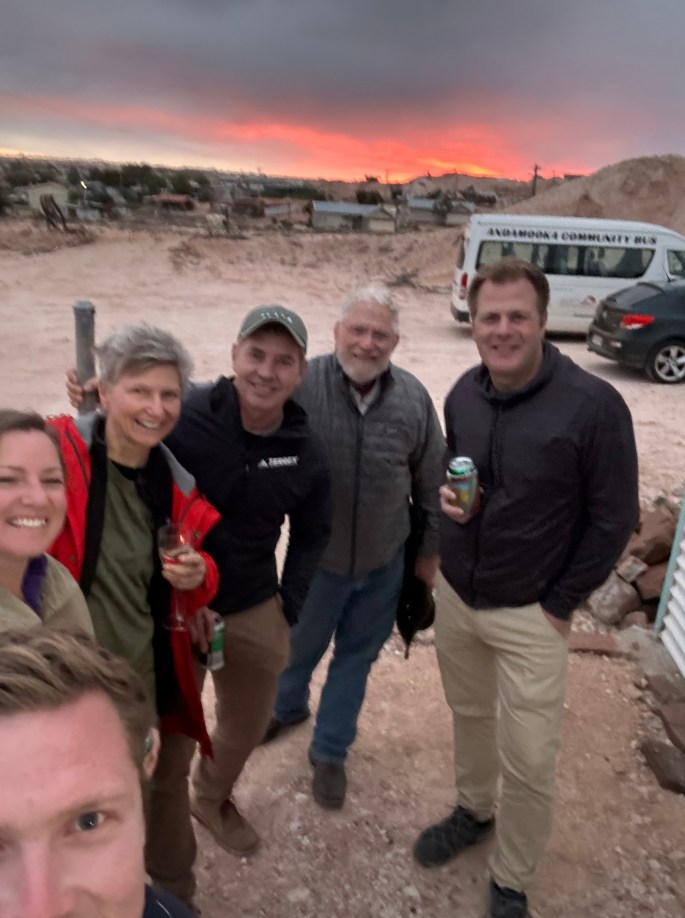
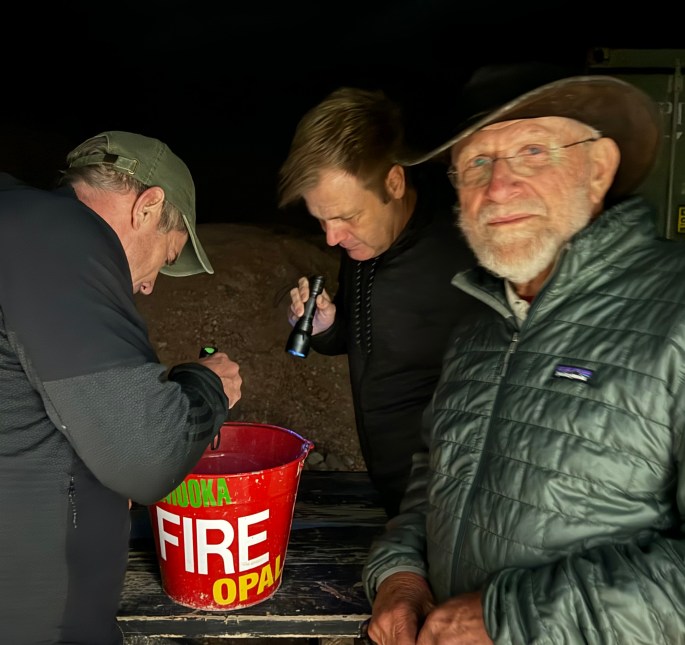
Opal mining is called noodling, and works best with an ultraviolet light to evaluate the quality of the findings. …. And we did some more of it in town after having a beer and watching a sunset with our new local friends.

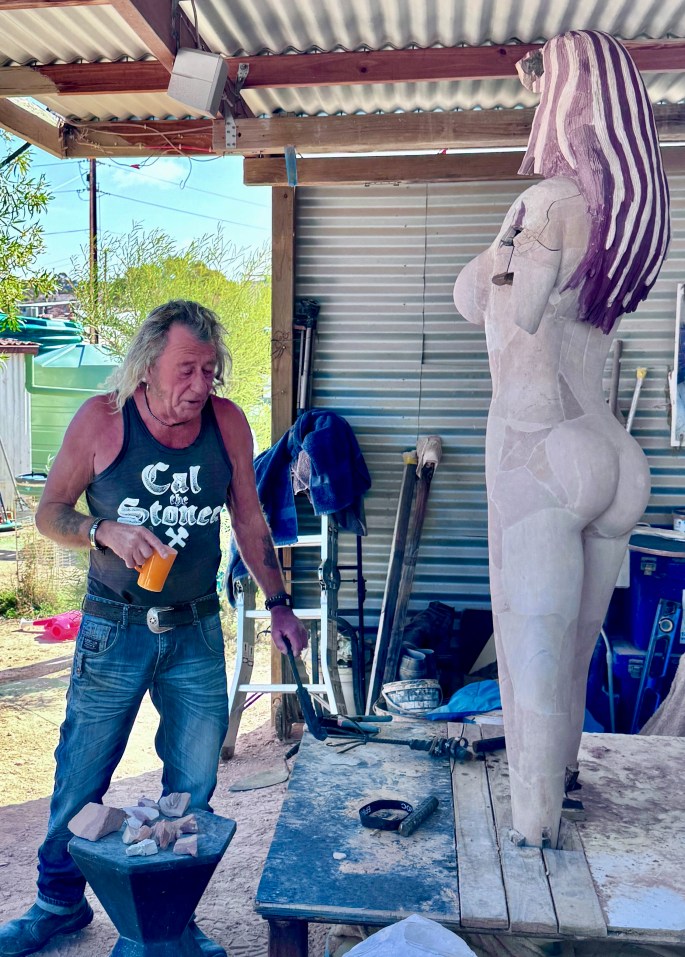
Speaking of characters – Cal the Stoner is an incredible artist and artisan, who carefully selects and works pieces of stone into amazing pieces of art. In progress is “The Goddess”…

His Andamooka tiger is extraordinary…. Each chunk of sandstone is precisely worked, taking into account not only its shape but its color – and fitted into the greater sculpture.

The Tiger took over three years to create…. His fangs, claws, eyes and nose are all fashioned from opal material.

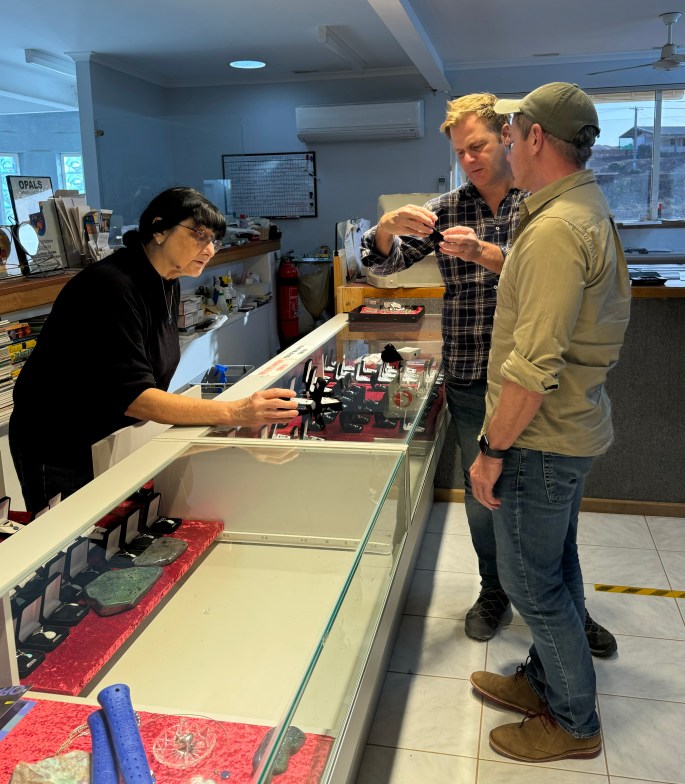
Before moving on, Ty and Tertius did a little shopping with the help of Peter’s wife, Margot.

Unfortunately, our noodling efforts were not successful, so we had to buy our souvenirs!

Muloorina

Muloorina is a large cattle station located near the shore of Kati-Thanda-Lake Eyre. If full of water, Lake Eyre would be the largest lake in Australia; however, it is shallow and salty and dries out quickly in the heat of the Red Centre. Just a quick stopover, Muloorina was notable mainly for our celebration of Ty’s birthday……

The station owner was kind enough to make Ty a cake…

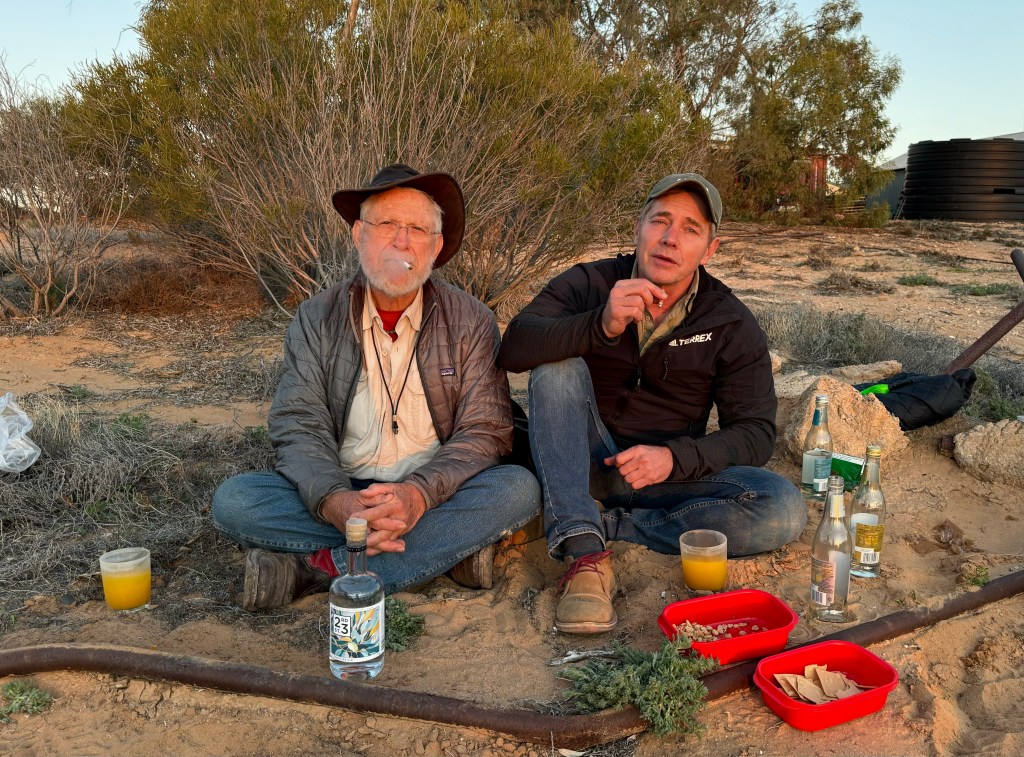
Tertius and Henry celebrated by taking their once-a-week smoke break.

Do not try this at home!

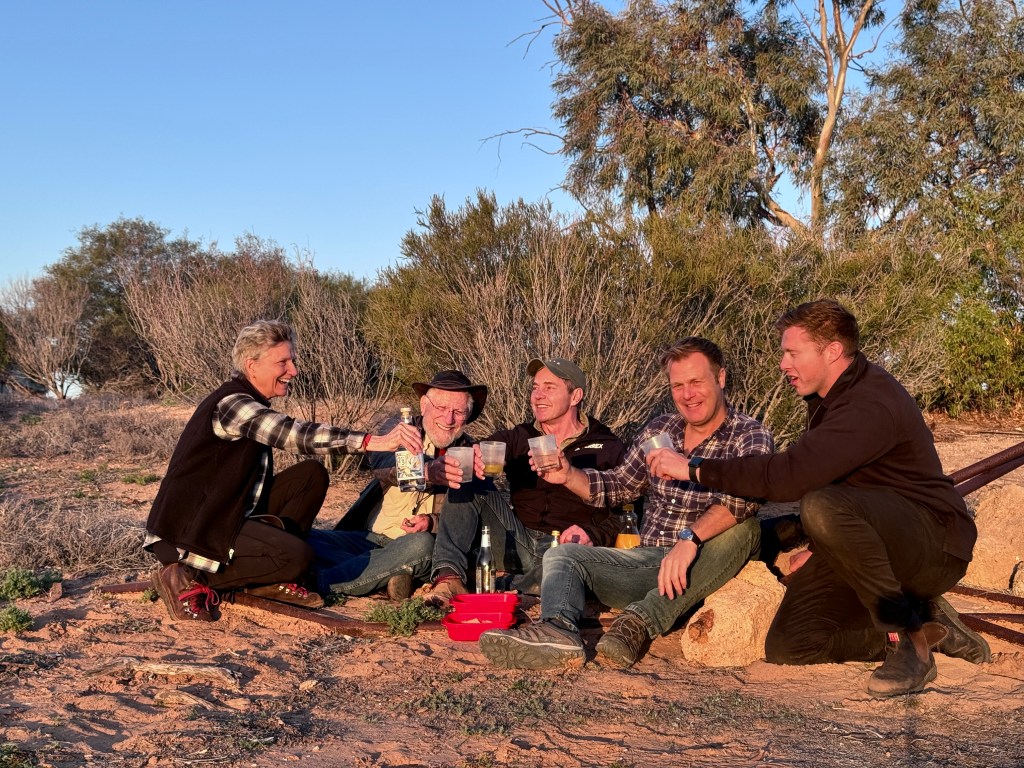
We brought some gin and tonic to have a group toast.

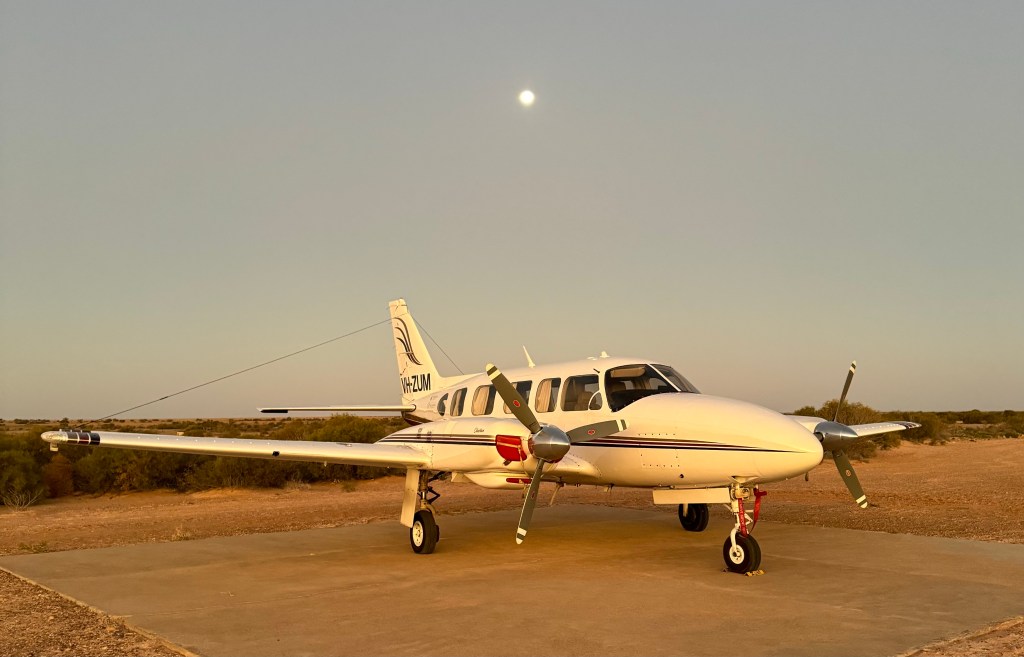
And Tertius caught a nice photo of our trusty plane as the moon rose over Muloorina….

Hopping Up the Red Centre, Part 2

William Creek

William Creek is an iconic hotel, pub and way station in the middle of the dusty, barren and remote Outback. People drop in for a cold one and/or a night’s rest while traveling by land or air.

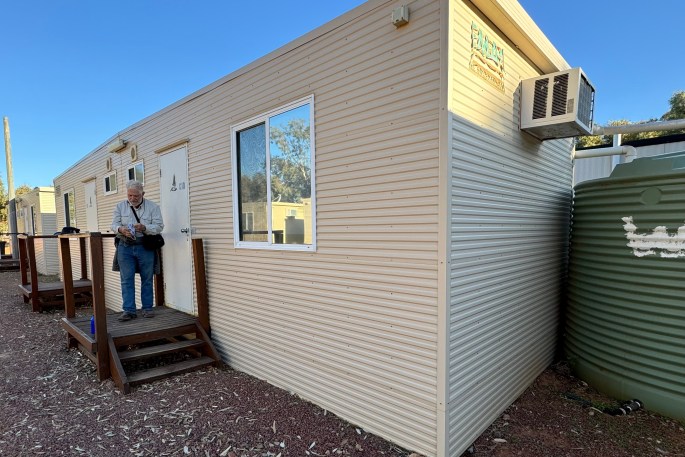
Not a glamour destination – our accommodation was a metal “donga”, a transportable building often used in isolated locations as quarters for seasonal workers in mining or construction operations…..

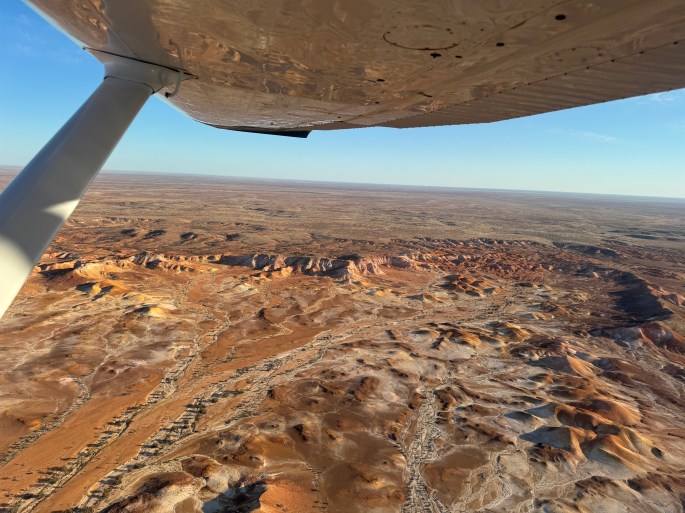
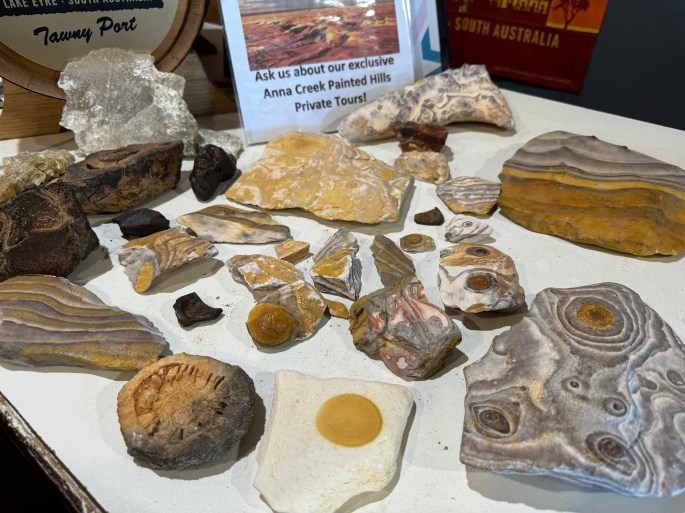
But it was air conditioned and the food in the pub was good! Also of interest are the nearby Anna Creek Painted Hills, colorful outcroppings which stand out against the flatness of the surrounding desert. They are only accessible by light plane…

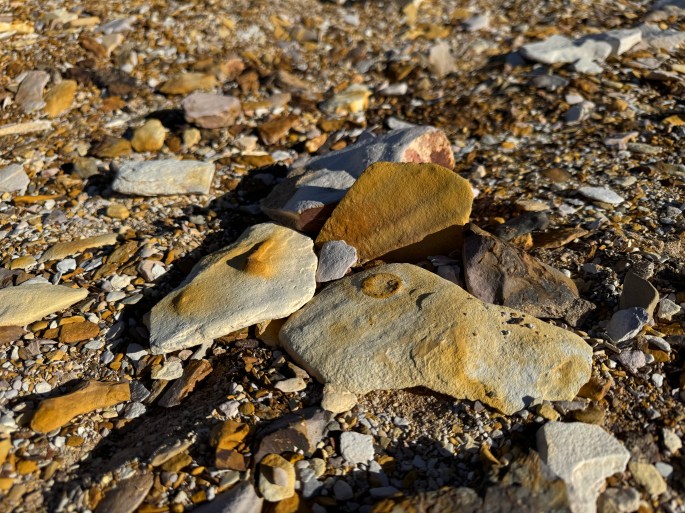
An ancient sea laid down striking layers of sandstone…..

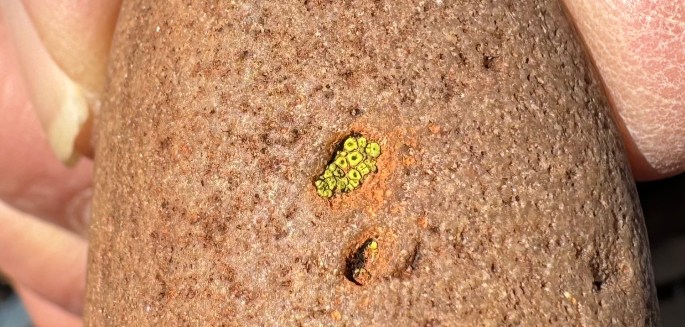
Even in the bleakest landscapes, life asserts itself.

A tiny bit of lichen blooms in a hospitable niche.

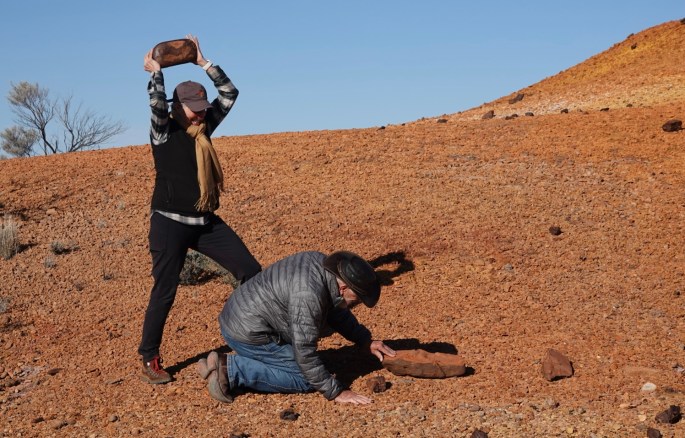
Sometimes the stark landscape encourages dark impulses……

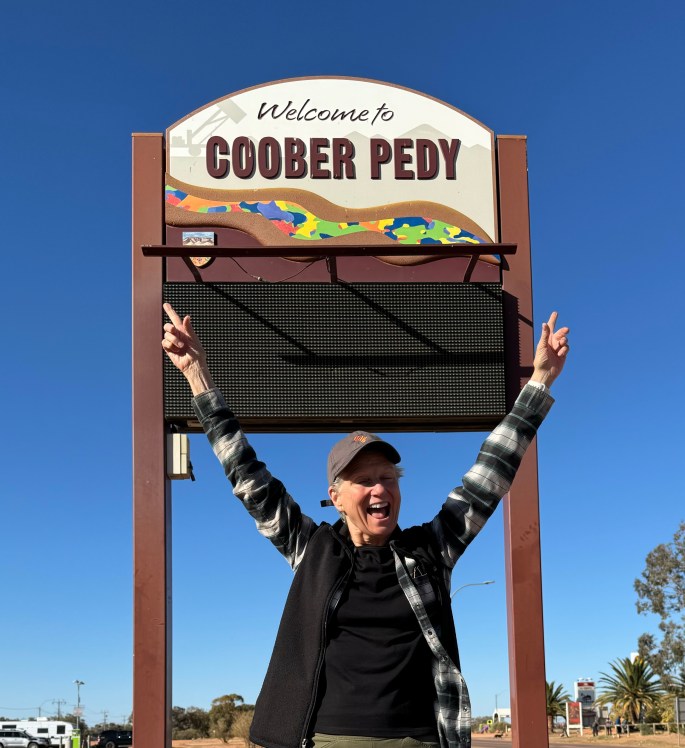
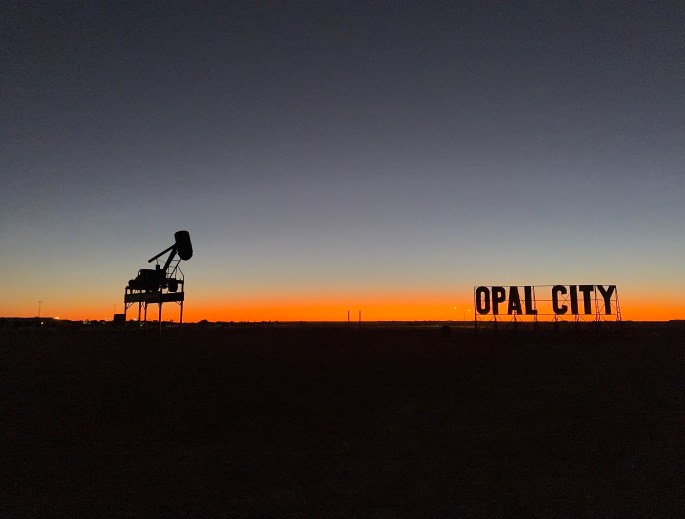
Coober Pedy

Another major center of the opal mining business…..

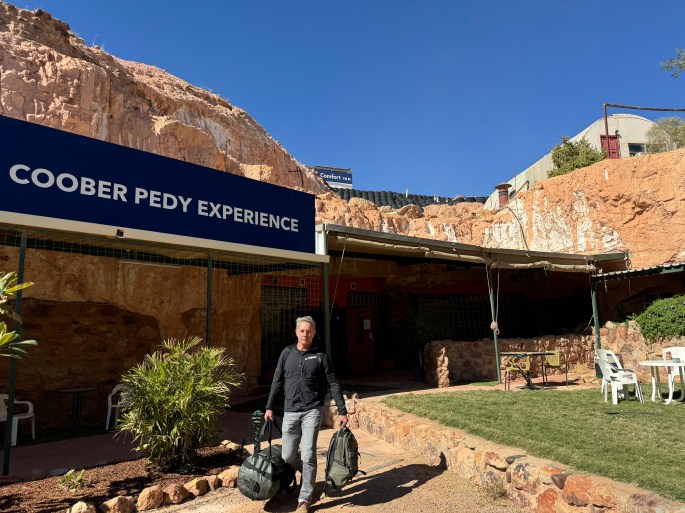
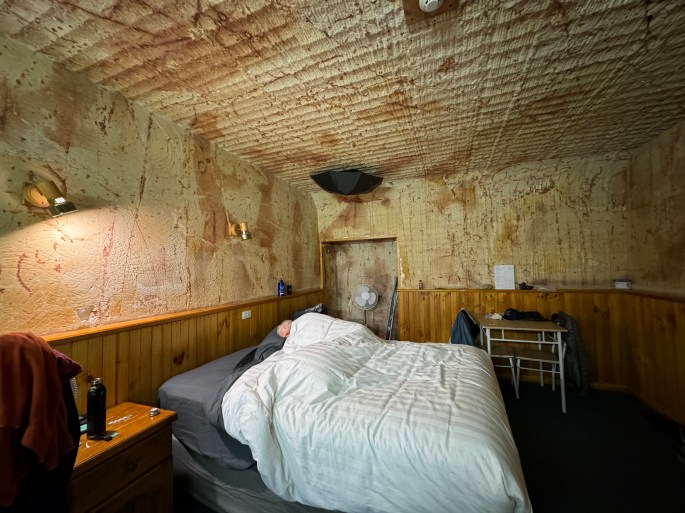
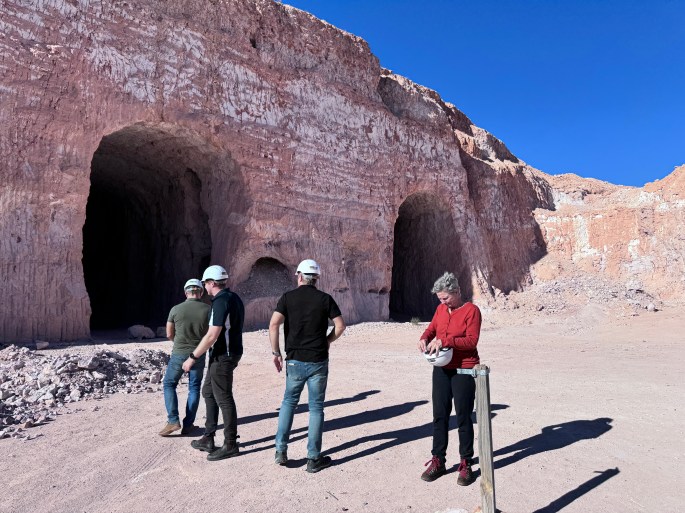
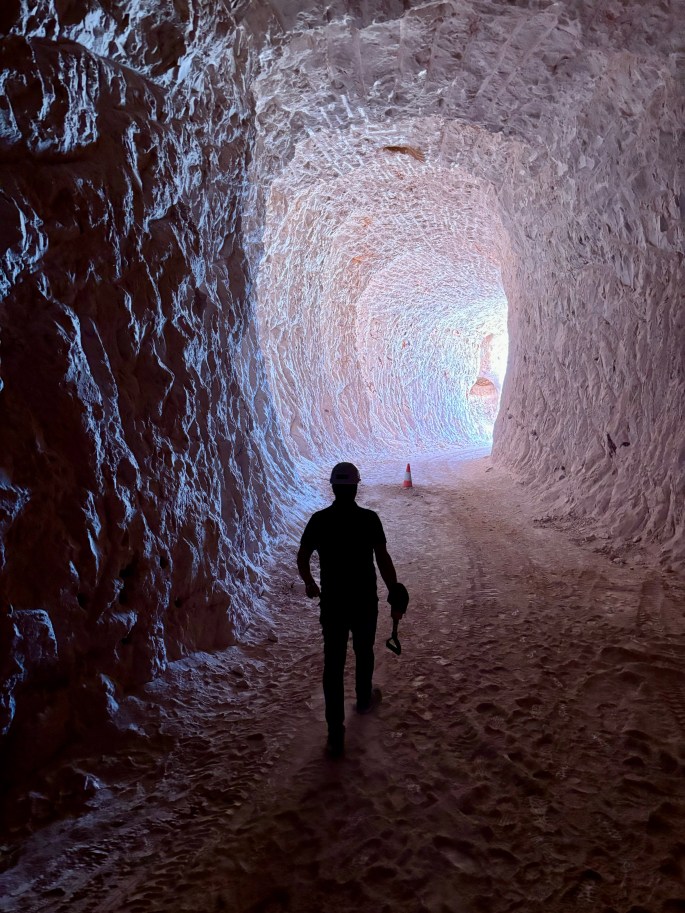
Coober Pedy is notable as residents – mostly in the mining business – traditionally built homes underground to insulate them from the intolerable heat of summer. We stayed in an underground motel….

It was very dark, very quiet and quite comfortable.

The inverted umbrella in the corner of the ceiling conceals the end of a pipe that conducts fresh air from the surface

We got to go “noodling” in one of the underground opal mines….

… but emerged – alas – with no significant finds.

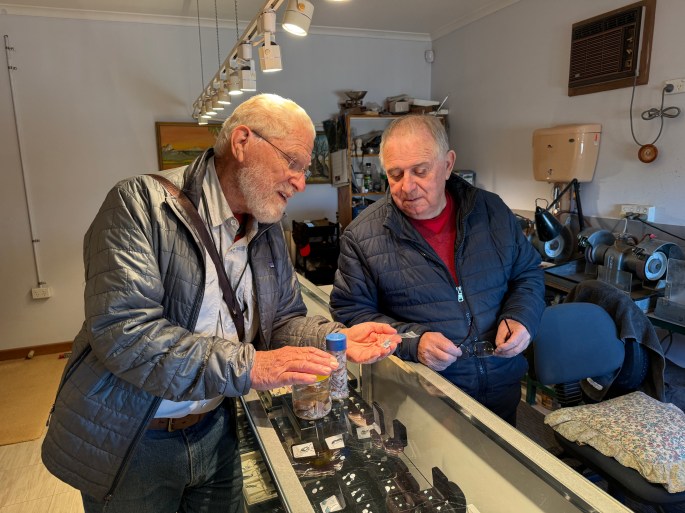
Henry did score some nice raw opal material and samples from Bill, a soon-to-be-retired Italian miner…

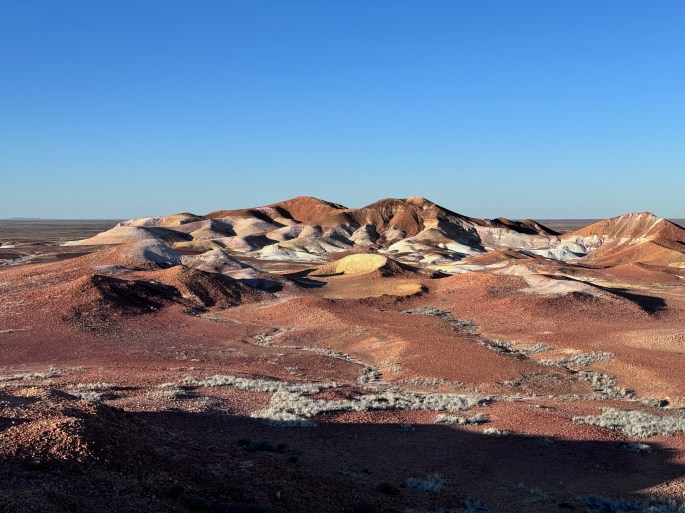
The Breakaways are another sandstone stand-out in the desert near Coober Pedy.

And we had some fun with iPhone visual effects….

A brief word about Vegemite, a distinctively Australian culinary product. It’s a paste made of the yeast that is left over after brewing beer, mixed with vegetable and spice additives.

It was first manufactured for mass consumption in 1923 and marketed as healthful for children…. Full of B vitamins. Savory. Definitely an acquired taste – not too bad when lightly smeared on very heavily-buttered toast.

Mt Dare

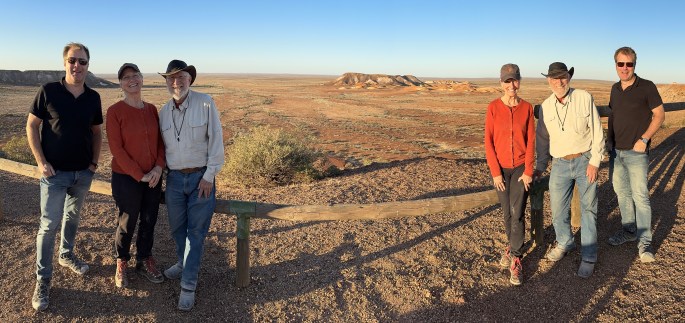
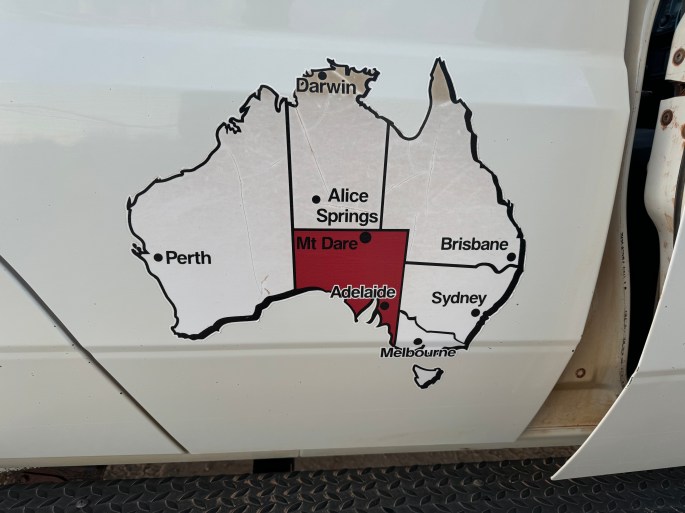
Mt Dare is almost exactly in the middle of the continent of Australia, located on the edge of the Simpson Desert.

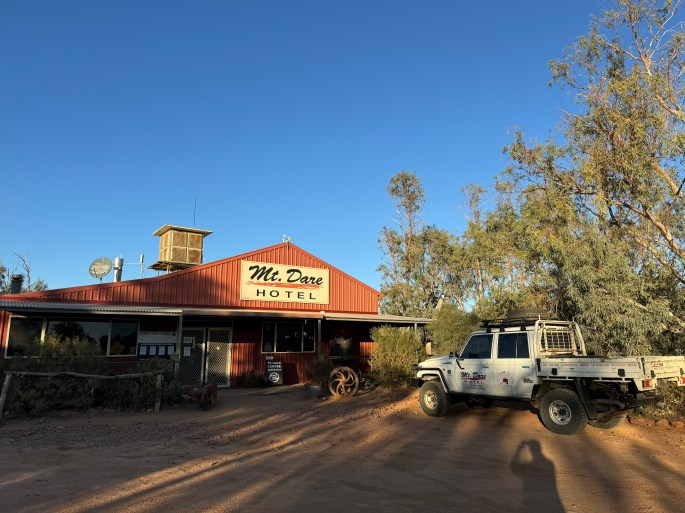
It is also a haven for travelers through the far reaches, with a pub, recreational vehicle park and simple accommodations. Witjira National Park is a bumpy hour’s drive from Mt Dare, featuring Dalhousie Springs, a natural warm-water pool that is quite pleasant in the cool winter air….

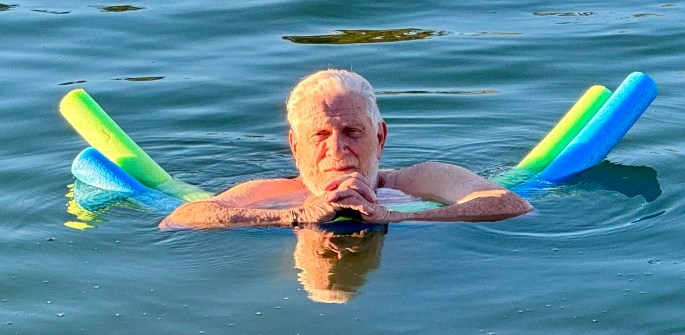
Tiny fish called gobies live in the pool and enjoy gently nibbling your skin!
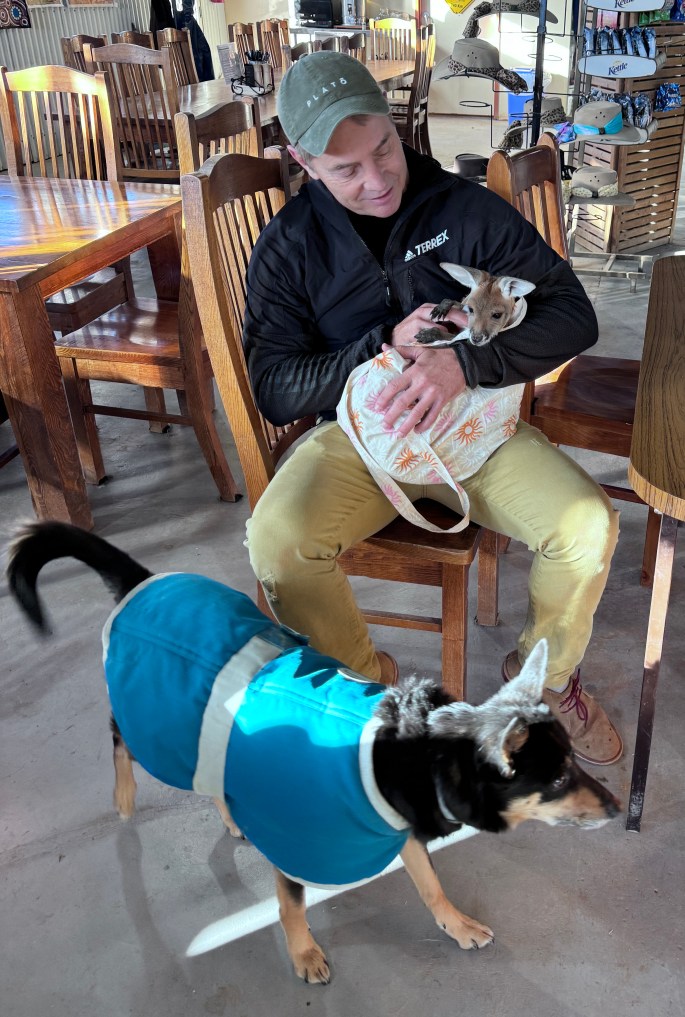
Back at the pub, the owners have a small animal menagerie, including an orphaned joey (baby kangaroo), named Didgeridoo.

Adorable now…. When he grows up, he could be as much as 6 feet tall!
He enjoys being cuddled in his pouch, while the dog gets a little jealous…..

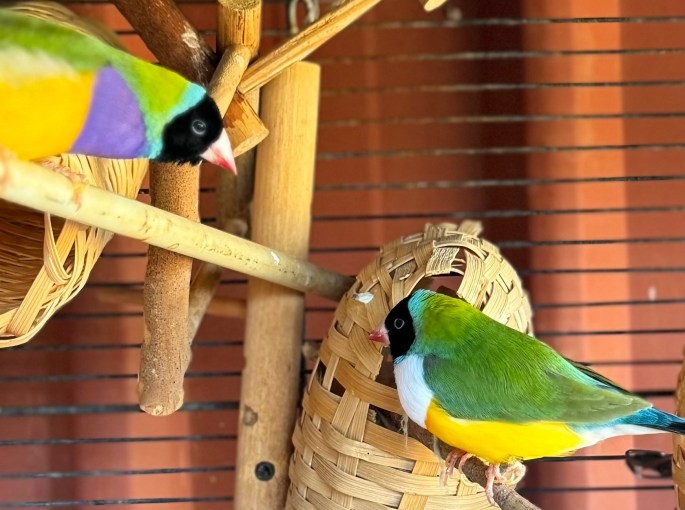
They also have a couple of Gouldian finches, gloriously vivid birds that are native to Australia.

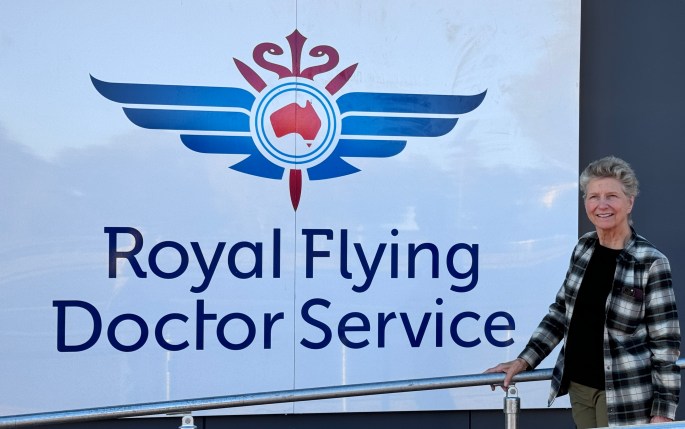
A word about the Royal Flying Doctor Service (RFDS)….

Remote, sparsely-populated locations and communities – such as William Creek, Muloorina and Mt Dare – have no medical facilities, and depend on the RFDS for crucial emergency services as well as routine health care. Founded in 1928, the RFDS is supported by the government, but also relies heavily on donations.

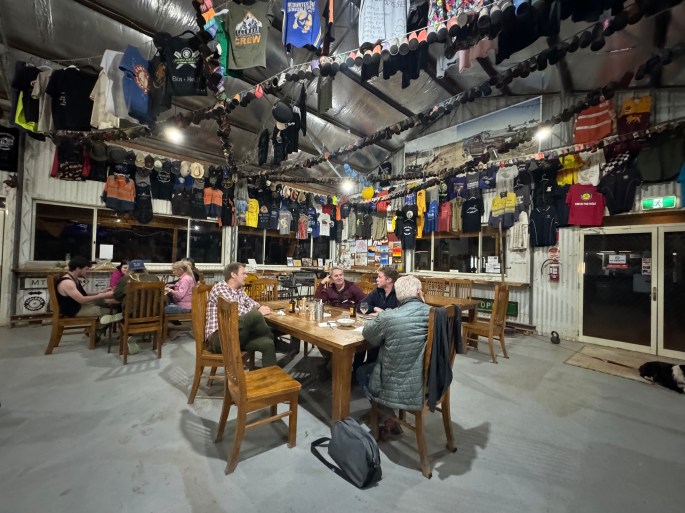
The folks at Mt Dare promote the RFDS enthusiastically. Visitors are invited to hang a memento from home – such as a beer holder or T-shirt – in the pub in exchange for a donation to the medical service.

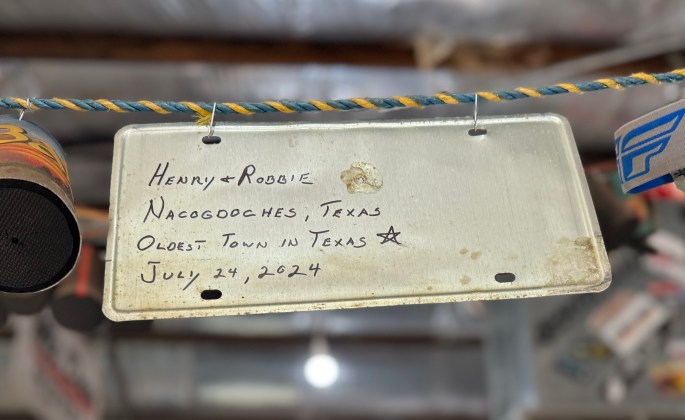
Henry just happened to have a Texas license plate and a bit of cash so that we could hang a Lone Star trinket from the ceiling…..

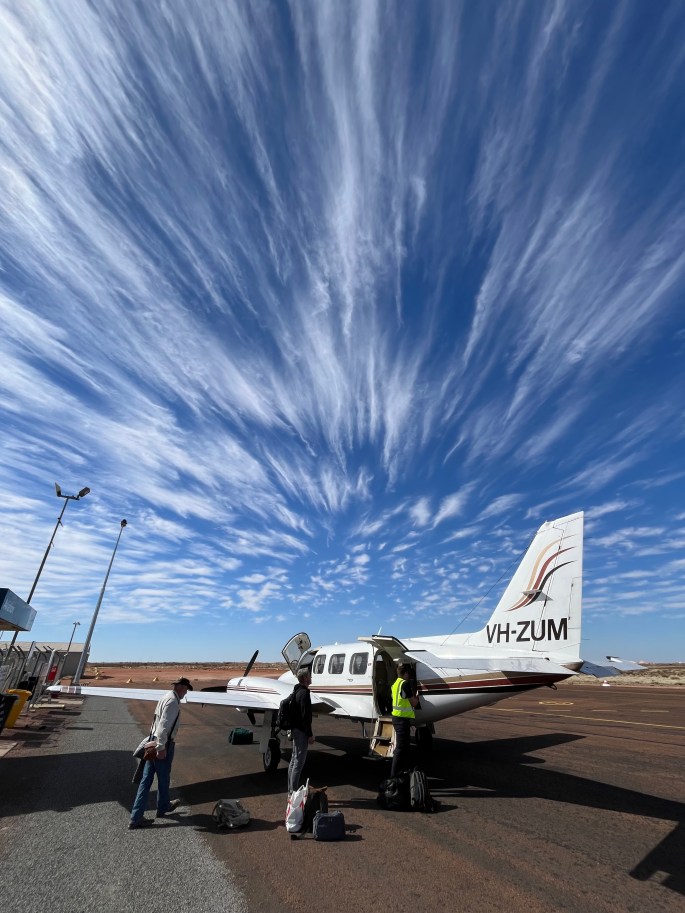
Will close this post with another pretty-plane picture as we prepare to depart Coober Pedy….